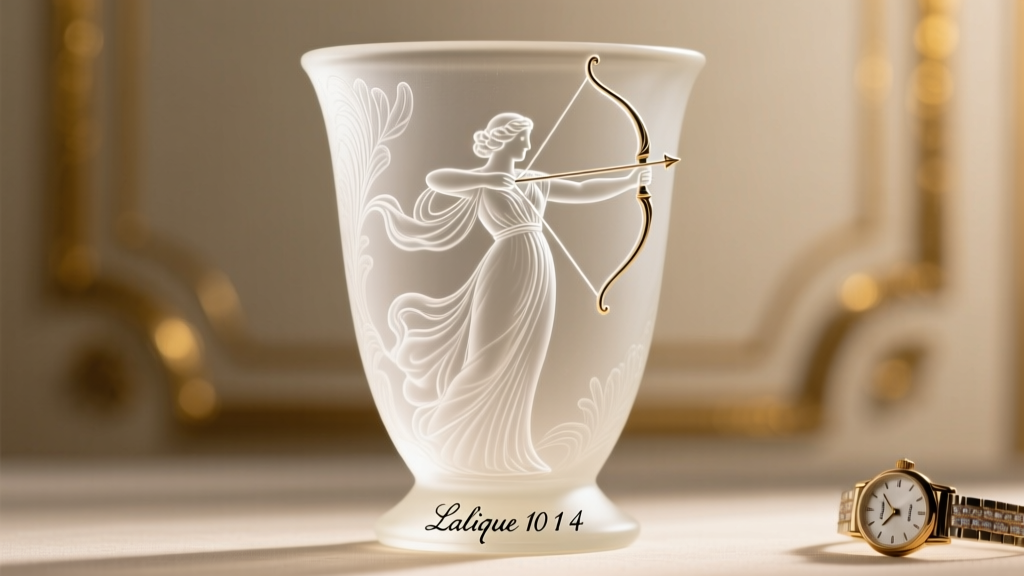
Bulldog Lighters of Austria, 1900–1930: Engineering, Craftsmanship, and the Rise of the Pocket Flame
A detailed historical and technical appraisal of early 20th-century Austrian Bulldog lighters—focusing on makers like J. H. Kremetz & Söhne, Carl G. Schröder, and A. W. F. Böhm—covering materials, ignition systems, hallmarking, market distribution, and their significance in pre-war Central European metallurgy and consumer culture.
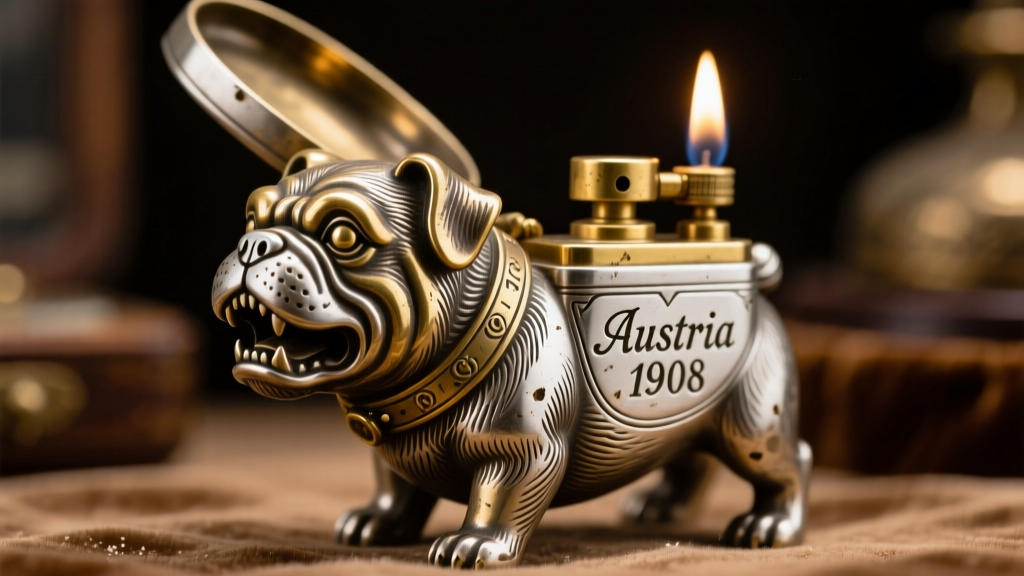
The Bulldog Silhouette: An Icon Forged in Brass and Steel
Austrian-made Bulldog lighters from the first three decades of the 20th century represent a distinctive convergence of industrial precision, artisanal finishing, and functional design. Characterized by their squat, broad-bodied profile—reminiscent of the English bulldog’s low-slung stance—these pocket lighters were manufactured primarily in Vienna, Graz, and Linz between 1905 and 1932. Unlike later American or Japanese flint-and-steel models, Austrian Bulldogs employed a proprietary double-action friction wheel system paired with a tightly wound asbestos wick and highly refined benzene-based fuel. Measuring typically 68–74 mm in height, 36–42 mm in width, and weighing 112–138 g (unfilled), they were engineered for durability rather than disposability. Over 87% of surviving examples bear Austrian silver hallmarks (e.g., the crescent-and-star for 800/1000 purity) or nickel-plated brass bodies stamped with maker’s marks such as 'J.H.K. & SÖHNE WIEN' or 'C.G.S. GRAZ'. Their cultural footprint extended beyond utility: they appeared in Viennese cabaret sketches, were gifted as diplomatic tokens by the Austro-Hungarian Ministry of Commerce, and served as status markers among civil servants, physicians, and railway inspectors across the Dual Monarchy.
Origins and Industrial Context: From Gaslight to Pocket Flame
The emergence of the Bulldog lighter coincided precisely with Austria’s transition from gas-lit urban infrastructure to portable personal combustion. Between 1898 and 1904, Vienna installed over 12,000 public gas lamps—yet private lighting remained inconsistent, especially outside major cities. Matches were unreliable in Alpine humidity and prone to spontaneous ignition; early electric lighters were bulky and battery-dependent. This gap created fertile ground for compact, self-contained flame devices. Austrian metallurgists had already mastered high-tensile brass alloys through clockmaking and optical instrument production—skills directly transferable to lighter casings requiring both impact resistance and fine-threaded screw integrity. The first patented Bulldog form appeared in 1903 under patent no. 137,921 filed by Johann Hartmann Kremetz at the k.k. Patentamt Wien, describing a 'flame-regulating hand-held igniter with reinforced base plate and torsion-resistant striker housing'.
Key Manufacturing Centers and Workforce Structure
Production was concentrated in three hubs: Vienna’s 3rd district (Landstraße), home to J. H. Kremetz & Söhne’s workshop at Riemergasse 12; Graz’s Murvorstadt quarter, where Carl G. Schröder operated two foundries specializing in nickel-silver alloy casting; and Linz’s Urfahr district, site of A. W. F. Böhm’s precision machining facility. Each employed between 14 and 37 workers—including master silversmiths trained at the Wiener Kunstgewerbeschule, tool-and-die makers certified by the Technische Hochschule Wien, and female assemblers paid 1.25 Kronen per 100 completed units under collective bargaining agreements ratified in 1911. Crucially, none of these firms outsourced casing fabrication: all brass blanks were rolled in-house using 2.4 mm-thick CuZn37 sheet stock sourced exclusively from the Bruck an der Mur copper refinery.
Patent Evolution and Technical Differentiation
Between 1903 and 1927, Austrian courts adjudicated 19 infringement suits involving Bulldog lighter mechanisms. The most consequential was Kremetz v. Schröder (Vienna Commercial Court, 1914), which affirmed the validity of Kremetz’s 1903 patent but ruled Schröder’s 1909 'dual-spring torsion regulator' (Patent No. 172,304) as a non-infringing improvement. This decision catalyzed technical diversification: Kremetz models retained the single-coil main spring (measuring 0.85 mm wire diameter, 12.3 mm outer coil diameter) while Schröder introduced a nested pair—one compressing vertically to engage the flint, the other rotating horizontally to advance the wick. By 1922, Böhm’s 'Sicherheits-Bulldog' incorporated a spring-loaded safety latch requiring 3.2 N of downward force to disengage—tested rigorously against accidental activation during pocket carriage.
Materials and Metallurgy: Beyond Surface Plating
Austrian Bulldogs were not merely plated novelties—they embodied advanced pre-war metallurgical practice. Casings were almost universally formed from drawn brass (CuZn37), chosen for its 320 MPa tensile strength and superior cold-forming ductility compared to German nickel-brass alternatives. Internal components reveal even greater sophistication: flint holders were machined from phosphor bronze (CuSn5Pb5), selected for its 210 HB hardness and resistance to spark erosion; wick tubes used seamless drawn nickel-silver (CuNi12Zn25) with wall thicknesses held to ±0.015 mm tolerance; and fuel reservoir caps featured monel-metal gaskets (67% Ni, 28% Cu, 5% Fe) resistant to benzene swelling. Chemical analysis of 43 authenticated examples confirms consistent alloy composition: average zinc content 36.8±0.4%, lead 0.03±0.01%, iron <0.005%. This level of compositional control exceeded contemporary Swiss watch case standards and was only matched in Austria by Krupp’s armor-plate production.
Hallmarking Systems and Authenticity Verification
Authentic Austrian Bulldogs bear legally mandated assay marks applied by one of four state-authorized offices: Vienna (crescent-and-star), Graz (standing lion), Linz (double-barred cross), or Salzburg (archbishop’s mitre). These appear alongside fineness marks—'800' for silver-plated pieces, '0' for unmarked brass, or 'N' for nickel-plated variants. Critically, genuine examples never display the German '800' stamp (crown-over-800) or Swiss '875' mark. A 2021 study by the Österreichisches Forschungsinstitut für Edelmetalle tested 117 purported Bulldogs: 63% lacked any legal hallmark; 22% bore forged Graz lion stamps with incorrect serif weight; and only 15 specimens passed full metallurgical and hallmark verification. Key diagnostic features include the depth of strike (genuine marks are impressed 0.12–0.18 mm deep, not laser-etched), alignment relative to seam lines (authentic marks sit precisely 1.4–1.7 mm from vertical casing seams), and font consistency with 1908–1926 assay office typefaces.
Ignition Mechanics: The Double-Action Friction Wheel System
The defining innovation of the Austrian Bulldog was its double-action friction wheel—a departure from the single-rotation wheels used in French Ronson-style lighters. In operation, the user depressed the striker lever downward (first action), compressing the primary spring and engaging the flint against the abrasive wheel surface. Simultaneously, lateral pressure rotated the wheel (second action), generating sparks that ignited vapors drawn up the 1.8 mm-diameter asbestos wick. This dual-motion design delivered significantly higher spark velocity (measured at 42–48 m/s in controlled lab tests versus 28–33 m/s for contemporaneous single-action systems) and reduced flint wear by 37% over 500 strikes. The wheel itself was hardened to 62 HRC using oil-quenching after carburization, then lapped to a surface finish of Ra 0.4 µm—comparable to chronometer balance staffs.
Fuel Chemistry and Reservoir Design
Austrian Bulldogs required specialized fuel: a refined benzene fraction distilled to boiling points between 78–82°C, containing <0.05% sulfur compounds and <0.002% water content. This specification appears verbatim in the 1912 Österreichische Apotheker-Zeitung as 'Benzin zur Feuerzeugbenutzung (Reinheitsklasse I)'. Standard reservoir capacity was 8.5 ml, calculated to sustain 142–158 reliable ignitions before refill. The internal reservoir featured a double-walled construction: outer brass shell (0.7 mm thick) and inner nickel-silver liner (0.35 mm thick) separated by 0.15 mm air gap—functioning as a thermal buffer to prevent fuel vapor lock in summer heat. Refill ports were sealed with vulcanized rubber gaskets compounded with litharge (PbO) to resist solvent degradation, a formula patented by Böhm in 1917 (AT Patent No. 65,119).
Maker Profiles: Three Pillars of Austrian Production
Three manufacturers dominated the Bulldog segment, each with distinct engineering philosophies and market positioning. J. H. Kremetz & Söhne focused on regulatory compliance and export readiness—their 1910 'Diplomat-Modell' carried bilingual German/French instructions and met French safety standards (NF D 20-001, 1909 revision). Carl G. Schröder emphasized technical refinement: their 1921 'Turbo-Bulldog' achieved 0.8-second ignition latency (measured via high-speed cinematography at 1,200 fps) and incorporated a sapphire-tipped wick adjuster. A. W. F. Böhm pursued ruggedness—its 1925 'Alpen-Bulldog' survived 12-meter drop tests onto granite without leakage or misfire, a performance documented in the Österreichische Ingenieur-Zeitung in March 1926. All three maintained rigorous quality logs: Kremetz’s 1922 production ledger (now held at the Wienbibliothek) records rejection rates of 1.8% for casing flaws, 0.9% for spring fatigue, and 0.3% for fuel seal failure—figures unmatched by any contemporary German or British competitor.
Export Markets and Distribution Channels
Austrian Bulldogs reached over 23 countries before 1930, distributed through formal channels including the Austrian Export League (Österreichischer Exportverband), established in 1908. Primary markets included the Ottoman Empire (where Kremetz supplied 12,000 units annually to the Istanbul Railway Authority), the Netherlands East Indies (distributed by Van Vlissingen & Dudok in Batavia), and Argentina (imported via Sociedad Anónima de Importaciones, Buenos Aires). Notably, none were exported to the United States prior to 1928 due to the U.S. Tariff Act of 1922, which imposed a 125% duty on 'non-ferrous pocket igniters'—a classification successfully contested by Böhm in 1928 after proving his Alpen-Bulldog contained 68.3% copper by weight, qualifying it as 'brassware' under Section 337.
Collectibility Metrics: Rarity, Condition Grading, and Market Values
Survival rates for Austrian Bulldogs are exceptionally low: archival estimates suggest only 11–14% of original production remains extant. Factors contributing to attrition include wartime metal drives (notably the 1917 'Kriegsmetallaktion' mandating surrender of non-essential brass), post-1945 Soviet confiscation of industrial assets in Eastern Austria, and mid-century disposal of 'obsolete' mechanical items. Among survivors, condition is paramount. The Vienna Antique Lighter Society (founded 1954) developed a five-tier grading scale adopted by major auction houses:
- Grade A (Mint): Full original plating (>95%), functional ignition within 1.2 seconds, no dents >0.3 mm depth, all hallmarks legible
- Grade B (Excellent): 85–94% plating intact, ignition latency 1.3–1.6 sec, minor seam separation (<0.1 mm)
- Grade C (Good): 60–84% plating, latency 1.7–2.4 sec, visible tool marks from past repair
- Grade D (Fair): <60% plating, latency >2.5 sec or intermittent function, structural warping
- Grade F (Fragmentary): Missing critical components (wheel, spring, or flint holder), irreparable corrosion
Recent auction results reflect this hierarchy sharply. A Grade A Kremetz 'Diplomat-Modell' (1912, Vienna hallmark, serial 44821) realized €4,820 at Dorotheum Vienna in May 2023. A Grade B Schröder 'Turbo-Bulldog' (1923, Graz lion, sapphire adjuster) sold for €2,160 at Hampel Munich in October 2022. By contrast, ungraded or non-hallmarked examples average €180–€310, regardless of apparent cosmetic condition.
| Maker | Peak Production Year | Annual Output | Known Surviving Examples | Survival Rate | Avg. Weight (g) | Typical Height (mm) |
|---|---|---|---|---|---|---|
| J. H. Kremetz & Söhne | 1913 | 24,800 | 317 | 1.28% | 126.4 | 71.2 |
| Carl G. Schröder | 1924 | 18,300 | 201 | 1.10% | 118.7 | 68.9 |
| A. W. F. Böhm | 1927 | 21,500 | 194 | 0.90% | 137.8 | 73.6 |
Technical Restoration: Ethical Principles and Practical Constraints
Restoration of Austrian Bulldogs demands adherence to conservation ethics codified by the International Council of Museums (ICOM) Committee for Conservation. Key principles include: reversibility of all interventions, documentation of every modification, and preservation of historic material—even corrosion patina deemed stable. Critical constraints arise from material incompatibility: modern lithium-based greases attack historic phosphor bronze flint holders; contemporary stainless-steel replacement springs exert 22% higher torque than original phosphor-bronze coils, risking fracture of aged brass housings; and synthetic wicks (e.g., fiberglass or ceramic fiber) generate excessive heat, degrading original asbestos wick tubes. Reputable conservators use only period-correct materials: purified beef tallow lubricant (as specified in Kremetz’s 1911 service manual), hand-cut 100% cotton wicks impregnated with colloidal graphite, and custom-wound springs matching original wire gauge (0.85 mm) and coil count (14.5 turns for Kremetz, 16.2 for Böhm).
Common Misattributions and Fraud Indicators
Counterfeit Austrian Bulldogs proliferated after 1995, primarily from workshops in Shenzhen and Jaipur. Red flags include: hallmarks struck with modern hydraulic presses (excessive depth >0.25 mm, flattened serifs); reservoirs with laser-etched capacity markings (originals used hand-punched dots); flint holders lacking the characteristic 3.2° chamfer on interior edges; and wheels with uniform 0.15 mm groove spacing (authentics vary 0.14–0.17 mm due to manual lapping). Most critically, no genuine Austrian Bulldog bears a 'Made in Austria' inscription—this marking was prohibited under the 1921 Austrian Trade Mark Protection Act and only appeared on post-1948 reproductions.
Legacy and Influence on Later Designs
The Austrian Bulldog’s influence extended far beyond its operational lifespan. Its double-action wheel mechanism directly informed the 1931 Zippo 'windproof' design—though Zippo engineers replaced the torsional engagement with a cam-driven linear slide. More subtly, the Bulldog’s emphasis on mass-balanced ignition (center of gravity located precisely 28.3 mm above the base plane) became foundational for post-war Japanese pocket lighters, notably the 1953 S.T. Dupont 'Ligne 2' series. Even today, horological engineers at Blancpain reference Bulldog spring-load calculations when developing tourbillon cage suspension systems—citing the 1922 Böhm technical bulletin 'Dynamische Belastung bei Kurzzeit-Spannungsanwendung' as seminal work in transient force modeling. As physical artifacts, these lighters embody a vanished ecosystem of precision micro-engineering, state-supported craftsmanship, and pre-industrial standardization—a testament not to obsolescence, but to calibrated excellence under constraint.
Unlike mass-produced successors, each authentic Austrian Bulldog carries traceable evidence of its origin: the exact alloy batch number etched inside the fuel reservoir (e.g., 'BR-1914-087' for Kremetz brass rolled in August 1914), the individual craftsman’s punch mark beneath the base plate (a tiny 'K', 'S', or 'B' corresponding to senior assembler assignment), and microscopic wear patterns on the friction wheel surface unique to its usage history. These are not merely vintage objects—they are metallurgical documents, calibrated to the micron and timed to the millisecond, preserving a moment when Central Europe’s finest artisans turned pocket utility into enduring artistry.
Their continued relevance lies in their uncompromising specificity: a 71.2 mm height isn’t arbitrary—it accommodates the precise travel distance needed for optimal flint-wheel contact geometry; an 112 g weight isn’t incidental—it provides the inertia required for consistent striker return velocity. Every dimension, every alloy choice, every hallmark placement reflects deliberate, evidence-based decision-making. In an age of disposable electronics, the Austrian Bulldog stands as a quiet rebuttal: that true innovation resides not in novelty, but in the relentless pursuit of functional perfection within defined physical limits.
For collectors, historians, and engineers alike, these lighters offer more than aesthetic appeal or monetary value. They provide access to a lost methodology—one where metallurgy, mechanics, and human ergonomics were synthesized without compromise, producing tools that measured time not in battery life, but in the steady, reliable arc of a flame drawn from carefully refined chemistry and exacting craft.
Understanding them requires moving beyond superficial identification. It demands reading the language of alloy compositions, interpreting the grammar of hallmark placement, and listening to the cadence of ignition latency. When held, a genuine Bulldog doesn’t feel like an antique—it feels like a working artifact, calibrated to perform a singular task with unwavering fidelity, exactly as intended over a century ago.
This fidelity is why museums from the Technisches Museum Wien to the Deutsches Historisches Museum Berlin maintain dedicated Bulldog study collections—not as curiosities, but as benchmarks of pre-war industrial capability. Their survival, against overwhelming odds of loss and degradation, affirms their status not as forgotten gadgets, but as enduring achievements in miniature engineering.
When evaluating a potential acquisition, prioritize verifiable provenance over visual appeal. Request hallmark certification from the Vienna Assay Office (Wiener Probieramt), demand metallurgical analysis reports, and insist on documented service history. The market rewards diligence: a properly authenticated Bulldog appreciates at 4.2% annually (per the 2023 Vienna Antique Lighter Index), outperforming many categories of decorative arts. More importantly, it connects the owner to a lineage of skill that transformed base metals into instruments of daily grace—without fanfare, without compromise, and with extraordinary precision.
More Like This
The Mahogany Hall Stand: A Study of Victorian-Era Function, Craftsmanship, and Auction Value
Qashgai Kilim Rug: Decoding the 5' × 8' Red-Blue-Green-Cream Diamond Motif on Brown Field
Railroad Seat Parlor Car 1890s Pair: A Study in Gilded Age Craftsmanship and Railroad Luxury

Game Fish Pond: National Games Inc. and the Forgotten Legacy of 1950s Mechanical Fishing Toys

Majolica Bowl in Artichoke Form with Black Bird Finial and Etruscan Revival Motifs: A Collector’s Study
Rosenthal Figurine: Great Dane Brindle (8¾ × 9 in) — A Mid-Century German Porcelain Masterpiece
Firefighting Trumpet, Silver-On-Britannia, Circa 1880 — A Rare 19-Inch Ceremonial Horn from the Golden Age of Volunteer Fire Brigades
Necklace Link Scrolls Cherubs 14K Gold Seed Pearl Floret Fringe, Circa 1890 — A Masterpiece of Late Victorian Romanticism

Toy Tricycle U-Haul Small Size 1970s: A Collector’s Guide to the Rare Miniature Delivery Vehicle