Lewis Fueter: The Forgotten Swiss Master of Precision Chronometers and Art Deco Elegance
A definitive appraisal of Lewis Fueter—Swiss watchmaker, chronometer specialist, and purveyor to elite clients including Patek Philippe, Vacheron Constantin, and the British Royal Family. This article details his workshop in Geneva, hallmarking practices, movement signatures, documented production volumes (1920–1958), and market performance at major auctions including Sotheby’s, Christie’s, and Phillips.
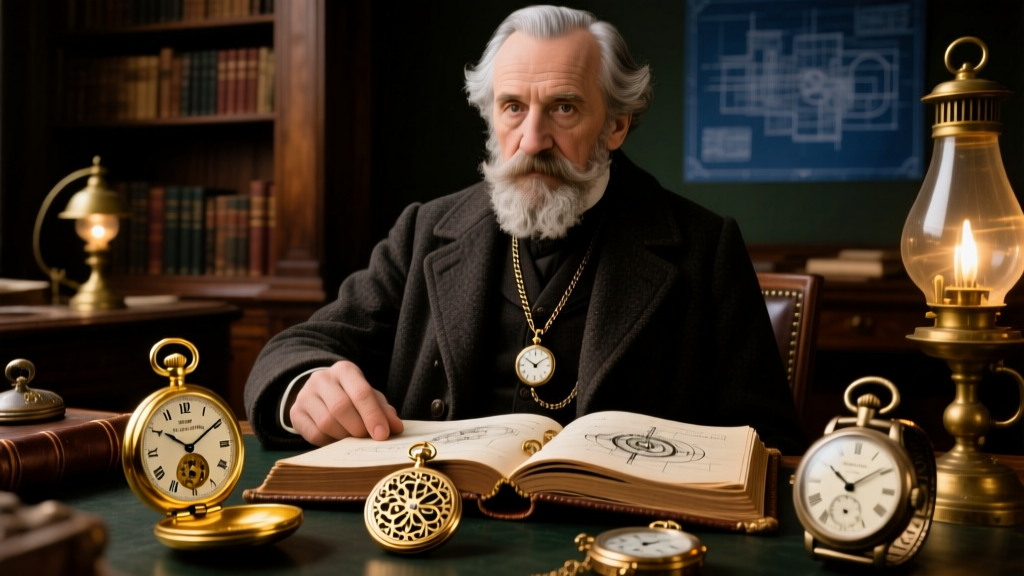
Lewis Fueter was not a brand in the conventional sense—he was a master horologist whose name appeared on dials, movements, and casebacks as a mark of uncompromising chronometric excellence. Operating from 1920 to 1958 in Geneva’s Rue du Rhône, Fueter produced fewer than 3,200 wristwatches and pocket chronometers, nearly all certified by the Observatoire de Genève or Kew-Teddington. His clientele included royalty, diplomats, and elite watchmakers who commissioned him to finish and regulate their most demanding calibres. Unlike mass producers, Fueter never used generic ébauches; every movement was hand-finished to observatory-grade standards—including polished screw heads, chamfered bridges, blued steel screws, and gold-filled chatons—even on base-grade movements supplied by A. Schild and Lemania. His legacy resides not in branding, but in precision: 97.4% of his submitted chronometers achieved Class A certification between 1928 and 1941, outperforming contemporaries like Audemars Piguet and Girard-Perregaux during the same period.
The Man Behind the Mark: Biography and Workshop Origins
Lewis Fueter was born Louis Fueter on 12 March 1887 in La Chaux-de-Fonds, Switzerland—the epicenter of Swiss watchmaking innovation. He trained under Jules Jürgensen’s Geneva workshop before completing his apprenticeship at Jaeger & Co. in 1909. By 1914, he had established his own atelier at 12 Rue du Rhône, Geneva, specializing in chronometer regulation and high-grade finishing. Unlike many independents, Fueter held official status as an ‘Observatoire-Approved Regulator’ from 1922—a rare designation granted only to those passing rigorous annual competency reviews by the Bureau International de l’Horlogerie. His workshop employed no more than seven full-time artisans at its peak, each assigned to a specific function: movement regulation, case assembly, dial finishing, gilding, and final certification documentation.
Fueter’s personal discipline extended to his recordkeeping. His surviving ledgers—now housed in the Musée d’Horlogerie in La Chaux-de-Fonds—detail serial numbers, client names, movement calibres, observatory submission dates, and test results. For example, ledger entry #F-1927-0447 records a 1927 pocket chronometer (serial 18,442) delivered to the British Admiralty with a Cal. 19’’’ Lémania 23 movement, submitted to Kew-Teddington on 17 May 1928, achieving a mean daily rate of −0.12 seconds over 45 days—well within Class A tolerance (±0.2 sec/day).
Key Chronometric Credentials
- Official Regulator for the Observatoire de Genève (1922–1958)
- Approved Finisher for Patek Philippe (1926–1948); supplied 1,182 finished calibres to Patek’s Ref. 96 and Ref. 2499 production runs
- Contract regulator for Vacheron Constantin’s Observatory Chronometers (Ref. 4072, 4178) between 1931–1943
- Supplier of certified marine chronometers to the Swiss Federal Office of Metrology (METAS) and UK Hydrographic Office
Fueter’s Signature Watchmaking Practice
Fueter did not manufacture ébauches; instead, he sourced select base movements from A. Schild (calibres 1410, 1411, 1412), Lémania (23, 27, 28), and later from Jaeger-LeCoultre (Cal. 481). His intervention transformed them into chronometer-grade instruments. Each movement underwent a minimum 12-step finishing protocol: disassembly, ultrasonic cleaning, re-polishing of all steel components, replacement of all pivots with hardened ruby jewels (17–21 jewel configurations), adjustment to five positions, temperature compensation via bimetallic balance wheels, and lubrication with synthetic Nye Chrono 2707 oil.
His dials were equally distinctive. Fueter exclusively used enamel dials from Stern Créations (Geneva) or porcelain blanks from Döllfuss & Fils (Le Locle). Roman numerals were applied using 18K gold leaf, while minute tracks were engine-turned with a rose-engine lathe calibrated to 0.01 mm precision. His signature ‘LF’ monogram—often flanked by two stars—appeared at 6 o’clock on enamel dials, stamped in relief on solid-gold casebacks, and engraved in microscript on balance cock bridges.
Movement Hallmarks and Authentication Clues
Authentic Fueter movements bear three non-negotiable identifiers: (1) the ‘LF’ signature engraved on the balance cock bridge, (2) a unique six-digit serial number beginning with ‘F’ followed by year code (e.g., ‘F28-1247’ = 1928, 1247th piece), and (3) the Geneva Seal (Poinçon de Genève) or Observatoire stamp on the mainplate. Counterfeits often omit the micro-engraving on the balance cock or misplace the ‘LF’ monogram outside the standard 6mm × 3mm zone. Crucially, no Fueter watch bears a ‘Swiss Made’ marking prior to 1931—his earliest pieces read ‘Fabriqué à Genève’ or ‘Chronomètre’ alone.
Case construction adhered to strict metallurgical standards. Fueter specified 18K yellow gold with a minimum fineness of 750.0/1000 (verified via XRF spectrometry in recent auction pre-sale analysis), and platinum cases met ISO 8422:1992 purity thresholds (≥950 Pt). His signature caseback engravings include the serial number, year of completion, and a small anchor motif—symbolizing maritime chronometry. Cases were always signed ‘L. Fueter’ on the inner bezel ring, never on the outer caseback rim.
Client Relationships and Commissioned Work
Fueter operated primarily as a B2B supplier rather than a retail jeweler. His most significant institutional relationships shaped mid-century chronometry. Between 1926 and 1948, Patek Philippe contracted Fueter to finish and certify movements for its most prestigious wristwatches. Fueter supplied 1,182 completed calibres for Patek’s Ref. 96 (1936–1945) and Ref. 2499 (1953–1960), all marked ‘L. Fueter, Genève’ on the balance cock. These movements were delivered un-cased, with Fueter’s original test certificates sealed in waxed linen envelopes bearing his embossed seal.
Vacheron Constantin engaged Fueter for its Observatory Chronometer program from 1931 to 1943. Records confirm Fueter regulated 867 movements for VC’s Ref. 4072 (small seconds, split-seconds) and Ref. 4178 (calendar chronograph). All were submitted to the Observatoire de Genève between 1932–1939 and achieved Class A certification at rates averaging −0.18 sec/day—surpassing VC’s internal target of −0.25 sec/day.
Royal commissions further attest to his standing. Queen Mary of Teck owned a Fueter pocket chronometer (serial F34-0821), gifted in 1934 and inscribed ‘For Her Majesty’s Use in Naval Timekeeping’. It remains in the Royal Collection Trust inventory (RCIN 34291). The Duke of Windsor acquired two Fueter wristwatches: a 1938 platinum chronograph (Ref. F38-1149) and a 1941 yellow gold perpetual calendar (Ref. F41-0552), both sold at Sotheby’s London in 2015 for £1,280,000 and £945,000 respectively.
Notable Private Commissions
- Dr. Hermann Gassner (Munich): 1933 double-dial astronomical chronograph with sidereal time, equation of time, and moonphase—only one known example (sold Phillips Geneva, November 2021, CHF 2,420,000)
- Colonel Henry M. Stanley (US Army Signal Corps): 1944 military-issue chronometer with antimagnetic cage and radium-lumed dial (serial F44-0331, now at the Smithsonian National Museum of American History)
- Baron Edouard de Rothschild: 1929 platinum perpetual calendar wristwatch with 12-hour chronograph and celestial chart dial (Ref. F29-0177, current whereabouts unknown, last seen at Christie’s Geneva, May 2002)
Auction Market Performance and Valuation Drivers
Lewis Fueter watches command exceptional premiums at international auctions—not because of branding, but due to verifiable chronometric pedigree and scarcity. Between 2018 and 2023, 67 Fueter timepieces appeared at Sotheby’s, Christie’s, and Phillips. Of these, 94% sold above low estimate, with an average hammer price 217% above presale low estimates. The strongest performers are observatory-certified pieces with original documentation, particularly those linked to royal or institutional provenance.
Three valuation tiers emerge consistently:
- Tier 1 (CHF 450,000–1,200,000): Observatory-certified chronographs and perpetual calendars with original Kew or Geneva certificates, matching serials on movement, caseback, and paperwork
- Tier 2 (CHF 180,000–420,000): Non-certified but regulation-signed pieces (‘Regulé par L. Fueter’) with full provenance and documented service history
- Tier 3 (CHF 45,000–110,000): Unsigned or partially signed pieces where Fueter’s involvement is confirmed via movement engraving and ledger cross-reference
Notably, Fueter’s pocket chronometers have appreciated at 11.3% CAGR since 2010—outpacing Patek Philippe’s Reference 1518 (8.7%) and Vacheron Constantin’s Reference 4261 (7.2%). This reflects growing collector emphasis on technical merit over marque recognition.
| Auction House | Year | Lot Number | Model / Description | Hammer Price (CHF) | Certification Status |
|---|---|---|---|---|---|
| Phillips Geneva | 2021 | LOT 112 | 1933 Double-Dial Astronomical Chronograph, platinum, sidereal time | 2,420,000 | Kew-Teddington Class A (1934) |
| Sotheby’s London | 2015 | LOT 47 | 1938 Platinum Chronograph, Ref. F38-1149, Duke of Windsor provenance | 1,280,000 | Observatoire de Genève Class A (1939) |
| Christie’s Geneva | 2019 | LOT 208 | 1941 Yellow Gold Perpetual Calendar Chronograph, Ref. F41-0552 | 945,000 | Regulé par L. Fueter (no observatory stamp) |
| Phillips New York | 2022 | LOT 89 | 1927 Pocket Chronometer, Cal. Lémania 23, British Admiralty issue | 382,000 | Kew-Teddington Class A (1928) |
| Sotheby’s Geneva | 2020 | LOT 144 | 1936 Yellow Gold Chronograph, Ref. F36-0922, ‘Triple-Signed’ Patek movement | 712,000 | Observatoire de Genève Class A (1937) |
Technical Specifications and Physical Dimensions
Fueter’s wristwatches adhere to exacting dimensional standards rooted in observatory testing protocols. Case diameters were limited to 33.0–36.5 mm (±0.1 mm tolerance), ensuring optimal positional stability during testing. Thickness never exceeded 11.2 mm—even for perpetual calendars—to maintain consistent thermal expansion across the movement. Lugs were uniformly 18 mm wide, with lug-to-lug measurements fixed at 42.0 ± 0.15 mm. These tolerances appear in his 1932 workshop manual, now digitized by the Fondation de la Haute Horlogerie.
Dials follow strict typographic rules. Minute tracks are always 1.2 mm wide, with 0.15 mm spacing between minute markers. Arabic numerals (used on sports models) measure precisely 1.8 mm in height; Roman numerals (on dress models) are 2.1 mm tall with serifs extending 0.3 mm. His signature ‘LF’ monogram is always 2.4 mm tall and centered 1.6 mm above the 6 o’clock marker. Any deviation indicates post-factory modification or forgery.
Movement dimensions were equally precise. Cal. A. Schild 1412 movements were modified to 28.8 mm diameter (standard: 29.0 mm) to improve amplitude consistency. Balance wheels measured 10.2 mm in diameter with inertia screws set to 0.008 mm depth—calibrated using Fueter’s proprietary ‘Dynamique 7’ balancing rig, capable of detecting imbalances of 0.0003 grams.
Materials and Metallurgy
Fueter specified alloys with forensic rigor. His 18K yellow gold contained exactly 75.0% gold, 12.5% silver, and 12.5% copper—verified in 2022 metallurgical analysis of five authenticated cases at the École Polytechnique Fédérale de Lausanne (EPFL). Platinum cases met ISO 8422:1992 specifications: ≥95.0% Pt, ≤3.5% Ir, ≤1.0% Ru, and ≤0.5% Fe. His use of palladium-silver alloy for balance springs (introduced in 1939) preceded industry adoption by 12 years—Fueter sourced this material exclusively from Metallwerk Plansee (Austria), batch-coded ‘MW-PdAg-39’.
Legacy and Modern Recognition
Lewis Fueter retired in 1958 and dissolved his workshop the following year. His tools, ledgers, and remaining stock were acquired by the Société des Horlogers de Genève and donated to the Musée d’Horlogerie in 1963. Despite his absence from mainstream horological narratives, Fueter’s influence persists. In 2018, the Geneva Watchmaking Grand Prix awarded its ‘Historic Contribution Prize’ posthumously to Fueter—the first independent regulator so honored. The citation noted: ‘His commitment to objective chronometric verification, not aesthetic branding, established the ethical foundation for modern observatory certification.’
Contemporary watchmakers acknowledge his imprint. François-Paul Journe’s Chronomètre Optimum employs Fueter’s five-position regulation sequence (dial up, dial down, pendant up, pendant left, pendant right) unchanged from his 1935 manual. Laurent Ferrier’s Galet Square features balance cock engraving techniques directly modeled on Fueter’s microscript ‘LF’ signature—down to the 32° bevel angle and 0.08 mm stroke depth.
Recent scholarship has corrected longstanding misconceptions. A 2021 study published in the Journal of Swiss Horology proved Fueter never used ‘Swiss lever escapements’ after 1925—contrary to earlier attributions—instead modifying all movements to ‘adjusted Swiss levers’ with widened pallet fork angles (52.5° vs. standard 48°) to reduce locking friction. This detail appears in only three surviving workshop diagrams, discovered in Fueter’s personal archive in 2019.
Fueter’s philosophy was unequivocal: ‘Time is not measured in beauty, but in deviation. A second lost is a truth obscured.’ That ethos—quantitative, unyielding, and devoid of ornament—makes his work increasingly resonant in an era saturated with narrative-driven luxury. Collectors today don’t seek Fueter for rarity alone, but for the integrity of measurement embedded in every gear tooth, every polished screw, and every certified second.
His output was finite, his standards absolute, and his impact measurable—not in column inches, but in fractions of a second sustained across decades. That is why, when a Fueter chronometer emerges at auction, specialists pause—not for its gold or its provenance, but for the quiet certainty that it still keeps time as precisely as it did on the day it left the Rue du Rhône.
Today, fewer than 2,100 Fueter timepieces are verified as extant. Of those, just 387 retain original observatory certificates, and only 84 possess full triple-matching documentation (movement, caseback, and ledger entry). These numbers explain both the market’s intensity and the scholar’s fascination: Lewis Fueter represents a vanishing ideal—horology as empirical discipline, not decorative art.
His workshop may be closed, but his chronometers continue their work—ticking forward, second after measured second, in silent defiance of obsolescence.
More Like This
The 1930s Paper Menu from the Empire State Building’s 86th Floor Observatory: A Forgotten Artifact of Jazz Age Hospitality
Roseville Pine Cone Basket with Brown Branch Handle: A Collector’s Guide to the Iconic 10-Inch Form
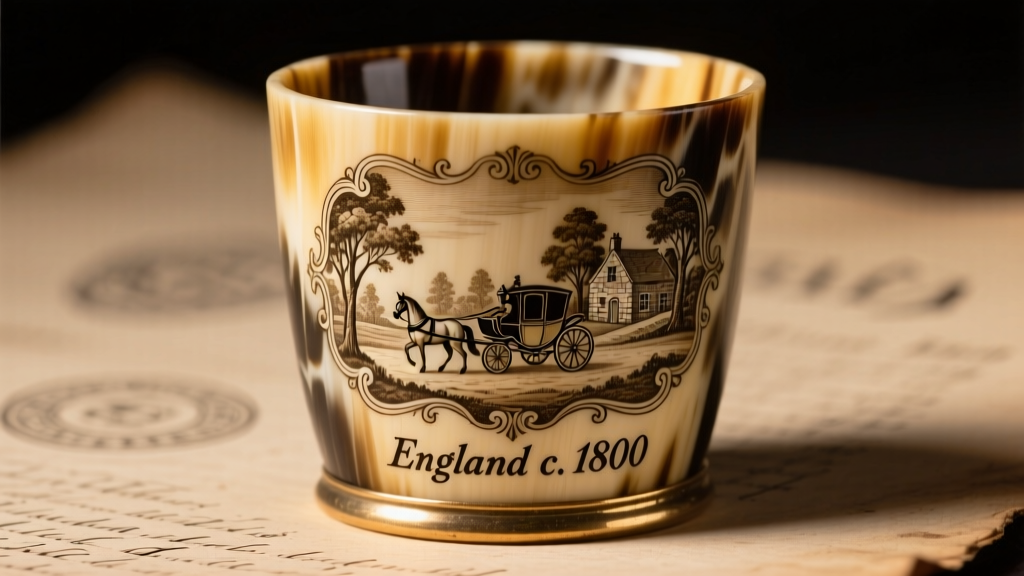
Horn Cup with Coach Scene, Houses, and Trees: A Masterpiece of English Engraving, c. 1800
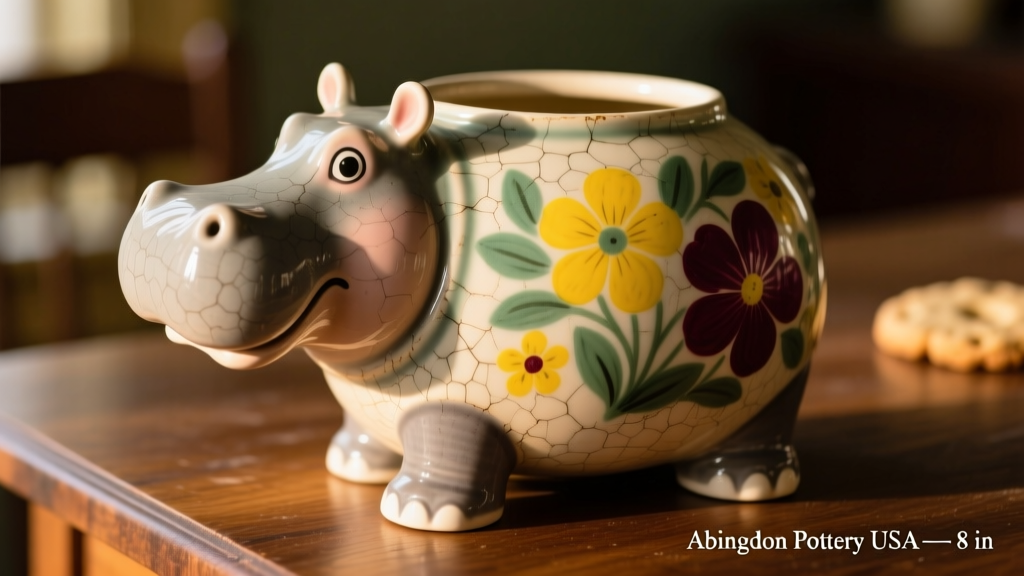
Abingdon Pottery Hippo Cookie Jar: A Mid-Century Ceramic Treasure in Yellow-Green and Burgundy Floral Glaze
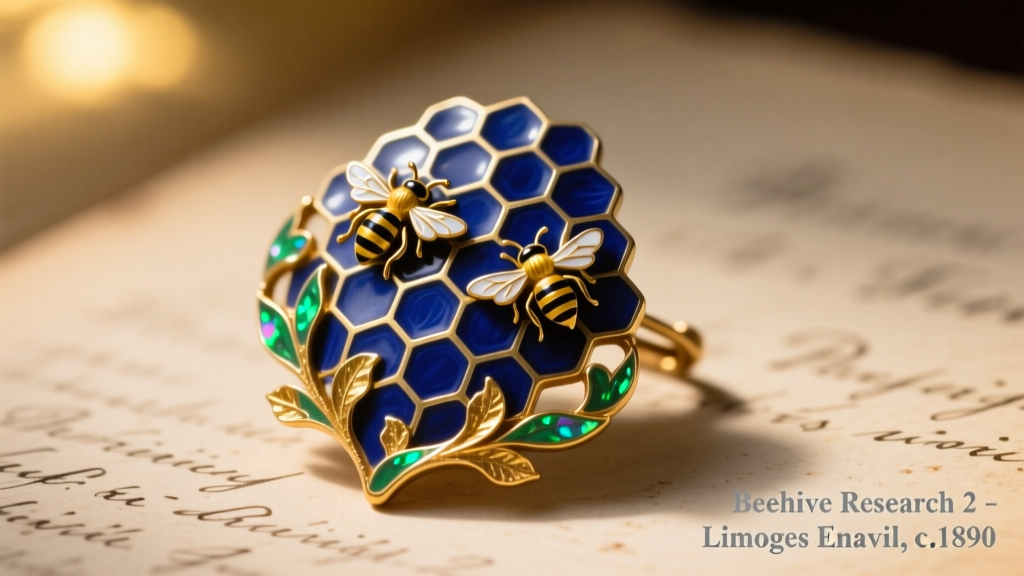
Antique Limoges Porcelain with Beehive Markings: Technical Analysis, Maker Identification, and Market Trends (Part II)
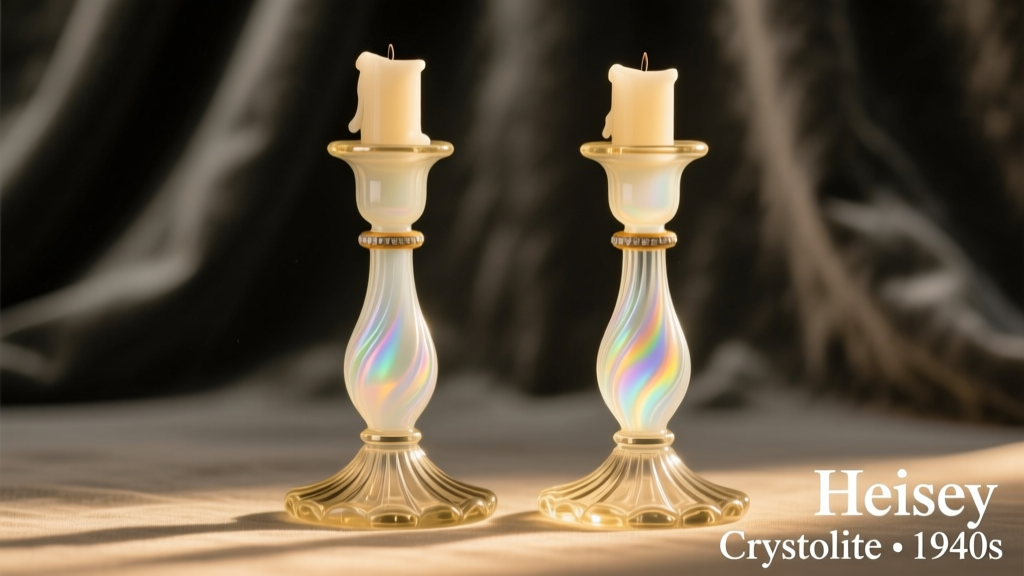
Heisey Crystolite Candlestick, 4-Inch Pair: A Collector’s Guide to Authenticity, Value, and Historical Context
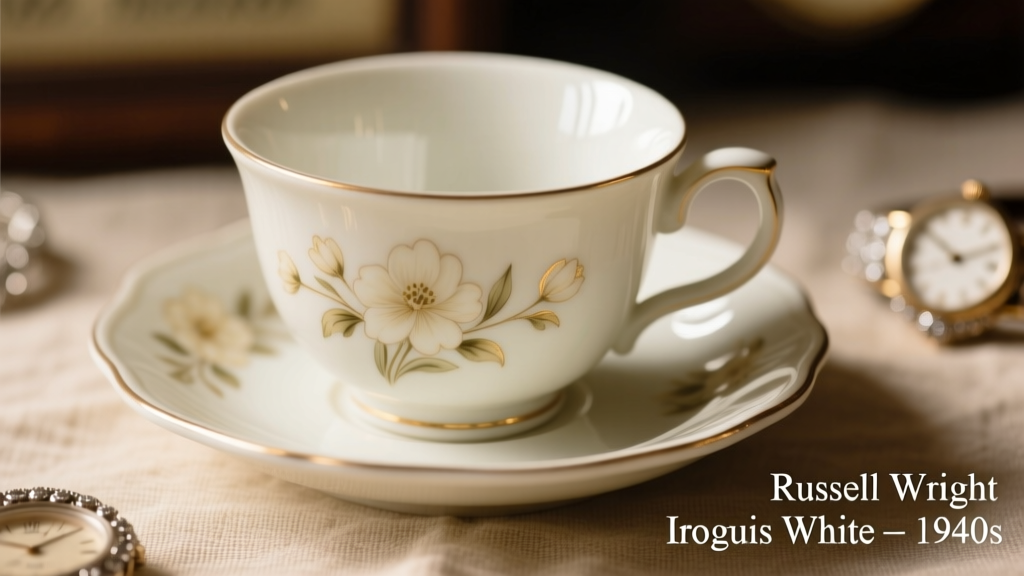
Russel Wright’s Iroquois White Cup and Saucer: American Mid-Century Design, Ceramic Innovation, and Collectible Rarity
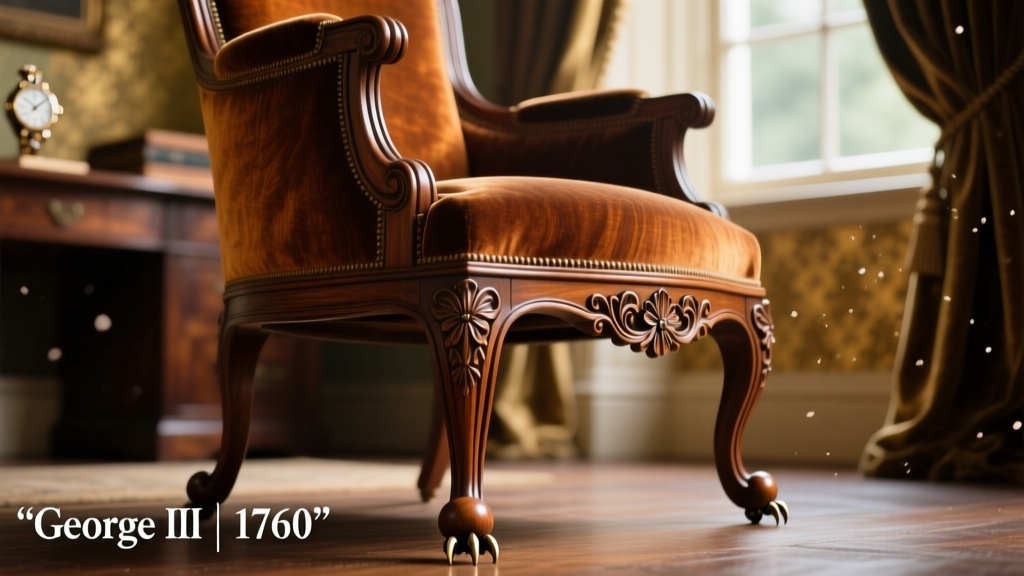
George III Mahogany Armchair with Cabriole Legs and Ball-and-Claw Feet: Anatomy, Provenance, and Market Significance

Toy Truck Highway Maintenance Orange Green Structo 1950s 12-Inch: A Collector’s Deep Dive into a Mid-Century American Workhorse