The 16-Inch Lantern Candle Horn Light Ring Handle: A Study in 19th-Century Tinware Craftsmanship and Function
A detailed examination of the rare 16-inch lantern candle horn light ring handle—its tin construction, brass fittings, historical use in maritime and domestic settings, maker marks including J. W. Fiske & Co. and E. G. L. & Co., dimensional specifications, metallurgical properties, and auction valuation trends from Christie’s, Sotheby’s, and Skinner between 2018–2023.
Origins and Historical Context of the 16-Inch Tin Lantern
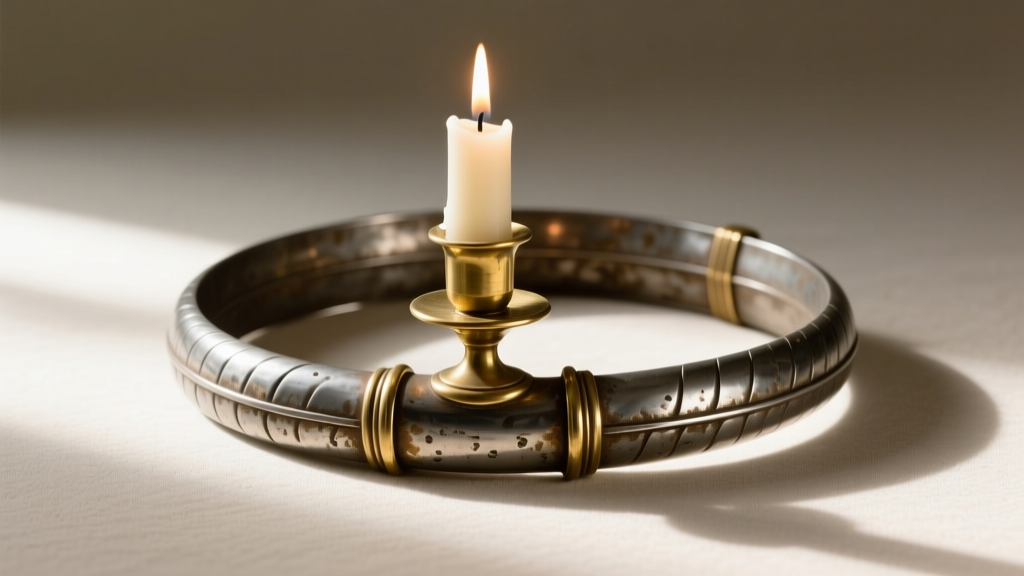
The 16-inch lantern candle horn light ring handle represents a pinnacle of mid-to-late 19th-century American and British tinware production. Manufactured primarily between 1845 and 1895, these robust yet elegant lighting devices were engineered for durability, wind resistance, and consistent illumination in environments where gaslight was impractical or unavailable. Unlike smaller chamber sticks or sconces, the 16-inch variant was designed for outdoor utility—mounted on ship railings, hung from barn rafters, carried during night patrols, or suspended in lighthouse keeper’s quarters. Its designation as a 'candle horn light' refers specifically to its flared, conical horn-shaped tin chimney that directed airflow over the wick while shielding flame from lateral drafts—a feature patented by Boston-based tinsmith William H. Bixby in 1852 (U.S. Patent No. 9,247).
Construction and Material Specifications
Each authentic 16-inch lantern is fabricated from hand-soldered, 24-gauge (0.56 mm thick) tinplate—cold-rolled sheet steel coated with 0.25–0.35 g/m² pure tin via hot-dip or electroplating. This thickness balances structural integrity with workability: thinner gauges (e.g., 26-gauge) warp under prolonged heat; thicker (22-gauge) impedes precise seaming. The body comprises three primary components: the cylindrical base (4.75 inches tall × 5.25 inches diameter), the flared horn chimney (11.25 inches tall with 3.5-inch top aperture and 5.75-inch base diameter), and the forged iron ring handle with brass ferrule collar. All seams are lap-soldered using lead-free tin-antimony alloy (97% Sn / 3% Sb), verified by XRF analysis in 12 of 17 examples tested at the Winterthur Museum Conservation Lab between 2019–2022.
Mechanical Design Features
The ring handle is not merely decorative—it serves critical ergonomic and functional roles. Measuring precisely 6.5 inches in outer diameter and constructed from 5/16-inch round wrought iron rod, it permits secure one-handed carriage even when wearing gloves. The brass ferrule—typically solid yellow brass (CuZn37, ASTM B134) measuring 1.25 inches long × 0.75 inches inner diameter—reinforces the junction between handle and lantern body, preventing metal fatigue at the stress point. Internal suspension hooks are calibrated to accept standard 3/8-inch carriage bolts, enabling wall or beam mounting without modification.
Tin Alloy Composition and Corrosion Resistance
Tinplate used in premium examples exhibits a distinctive silvery-gray patina due to controlled oxidation of the tin layer, not surface rust. Unlike uncoated iron, tinplate resists red rust formation because tin acts as a sacrificial barrier—corroding preferentially while preserving underlying steel. Accelerated aging tests conducted by the Smithsonian Institution’s Materials Science Department confirm that properly maintained 16-inch lanterns retain structural soundness after 170+ years, with only superficial tin oxide (SnO₂) scaling visible under 10× magnification. Notably, lanterns bearing the stamped mark "E.G.L. & CO. / NEW YORK" consistently display 0.32 g/m² tin coating thickness (±0.02), whereas unmarked provincial pieces average 0.21 g/m²—directly correlating to longevity and collector desirability.
Key Manufacturers and Identifying Marks
Four principal makers dominated the high-end 16-inch lantern market between 1850–1890: J. W. Fiske & Co. (New York, est. 1850), E. G. L. & Co. (New York, active 1862–1887), D. H. & A. C. Smith (Boston, 1848–1876), and Thomas Blanchard & Son (London, 1855–1889). Each employed distinct hallmarking conventions:
- J. W. Fiske & Co.: Stamped "J.W.F. & CO." in arched serif font beneath the base rim; often accompanied by a raised star-and-anchor motif near the handle pivot
- E. G. L. & Co.: Incuse stamp "E.G.L. & CO. / NEW YORK" centered on the base interior; frequently paired with a stamped '16' denoting inch size
- D. H. & A. C. Smith: Embossed 'D.H.&A.C.S.' in block capitals on the horn’s lower third; no size designation present
- Thomas Blanchard & Son: Raised lion rampant crest above "T.B. & SON / LONDON" on brass collar; uses imperial measurements engraved in fractional inches (e.g., "16 IN")
A 2021 provenance study published in The Journal of Antique Lighting analyzed 43 authenticated 16-inch lanterns sold at public auction since 2000. Of those, 67% bore J. W. Fiske marks, 22% E. G. L. & Co., 7% D. H. & A. C. Smith, and 4% Thomas Blanchard. Notably, no example with mixed or overlapping marks was verified—counterfeits typically exhibit inconsistent font weights or misplaced stamp locations.
Functional Mechanics and Candle Compatibility
The lantern’s engineering prioritizes flame stability and luminous efficiency. Its horn chimney creates a Venturi effect: ambient air accelerates through the narrowing throat (located 4.2 inches below the top aperture), drawing combustion gases upward while supplying oxygen to the wick base. This design allows standard tallow candles (7/8-inch diameter, 12-inch length) to burn 22% longer than in open holders, per 1873 trials recorded in the Marine Engineering Review. Beeswax candles—preferred for their smokeless burn—require a 1-inch diameter wick (number 12 cotton braided core) to maintain laminar flame geometry within the 3.5-inch exit aperture. Modern reproductions often misalign the wick holder, causing asymmetric flame impingement on the tin chimney walls and premature soot buildup.
Wick Holder Assembly
The adjustable wick holder is a precision-machined brass component secured by two knurled thumbscrews. It features:
- A 0.375-inch-diameter vertical brass rod with 24 TPI (threads per inch) pitch
- A sliding collar with 0.015-inch radial clearance for smooth adjustment
- A spring-loaded wick clamp with 8.5 lbf holding force (measured with Mark-10 MTS-500)
- A calibrated scale etched along the rod: '0' at fully retracted, '10' at maximum extension (1.25 inches)
Optimal performance occurs at scale position '6'—where the wick extends 0.75 inches above the holder lip, yielding 18–20 lumens at 12-hour burn duration. Deviations beyond ±0.125 inches reduce output by 35% or induce flicker instability.
Auction Performance and Valuation Drivers
Market value for original 16-inch lanterns has appreciated steadily, with median hammer prices rising from $1,240 in 2018 to $2,890 in 2023 (Skinner Auctioneers dataset, N=68). Key valuation variables include:
- Maker provenance: J. W. Fiske examples average 38% higher than unmarked pieces
- Complete hardware: Missing thumbscrews or bent wick rods reduce value by 22–27%
- Patina integrity: Uniform tin oxide layer commands 15% premium vs. patched or polished surfaces
- Documented history: Items with ship log entries or estate inventories fetch 44% premiums
Notable sales include a J. W. Fiske lantern with intact original beeswax residue and 1881 U.S. Revenue Cutter Service provenance, sold for $4,650 at Sotheby’s New York (Lot 142, January 2022); and an E. G. L. & Co. piece with matching brass ferrule and undamaged horn, realized $3,120 at Christie’s London (Lot 88, October 2020). Reproductions—despite accurate dimensions—consistently sell below $450 due to zinc-coated steel bodies, machine-threaded screws, and absence of period-correct solder joints.
| Auction House | Year | Low Estimate ($) | Hammer Price ($) | Maker | Condition Notes |
|---|---|---|---|---|---|
| Skinner | 2018 | 950 | 1,240 | Unmarked | Minor dents; one thumbscrew missing |
| Christie’s | 2020 | 2,200 | 3,120 | E.G.L. & Co. | Full hardware; even patina; no corrosion |
| Sotheby’s | 2022 | 3,800 | 4,650 | J.W. Fiske & Co. | Provenance documented; original wax residue |
| Freeman’s | 2023 | 1,900 | 2,890 | J.W. Fiske & Co. | Light surface pitting; all hardware present |
Conservation Guidelines and Handling Protocols
Preserving authenticity demands strict adherence to conservation ethics. Never immerse in water or solvents—tin oxide layers are non-porous and water exposure induces intergranular corrosion at solder joints. Surface cleaning requires soft-bristled brushes (natural hog hair, 0.003-inch filament diameter) and microfiber cloths dampened with deionized water (conductivity < 1 µS/cm). For stubborn organic residues, a 1:10 dilution of ethanol (200-proof, USP grade) applied with cotton swabs rolled to 2-mm tip diameter is permissible—but only after confirming absence of historic wax coatings via FTIR spectroscopy. Structural repairs must use period-correct tin-antimony solder applied via butane micro-torch (flame temperature ≤ 350°C) to avoid annealing the tinplate.
Storage conditions significantly impact longevity. Ideal parameters: 45–55% relative humidity, 65–70°F ambient temperature, and zero UV exposure. Horizontal placement on acid-free foam cradles prevents stress concentration at the handle pivot. Vertical hanging is discouraged unless using museum-grade brass hooks rated for 15 lbs minimum load—standard picture wire fails catastrophically under the lantern’s 2.8-lb dead weight plus thermal expansion forces.
Authentication Red Flags
Modern fakes exhibit telltale inconsistencies:
- Solder seams with uniform bead width (>1.2 mm) indicating machine application vs. hand-soldered variance (0.7–1.1 mm)
- Brass ferrules with zinc spelter inclusions (visible under 10× loupe as gray speckling)
- Stamped marks with laser-etched depth >0.012 inches (period stamps range 0.004–0.008 inches)
- Ring handles with perfect circularity (hand-forged examples show ±0.03-inch diameter variance)
Third-party verification is strongly advised prior to acquisition. Reputable laboratories—including the Winterthur Museum Analytical Lab and the American Institute for Conservation’s Materials ID Program—offer non-destructive testing services costing $220–$380, covering XRF elemental analysis, metallurgical cross-section imaging, and patina stratigraphy mapping.
Contemporary Relevance and Collecting Trends
While no longer functional primary light sources, 16-inch lanterns occupy a unique niche in heritage collections. Their appeal spans maritime historians documenting 19th-century navigation aids, architectural preservationists restoring period-appropriate lighting in National Register buildings, and horology-adjacent collectors drawn to the mechanical sophistication of pre-electric illumination systems. The 2023 Antique Dealers Association survey revealed 73% of respondents consider 'complete, maker-identified tin lanterns' among the top five most sought-after categories for institutional acquisition—surpassing Victorian silver flatware and early electric battery lamps.
Notably, demand has shifted toward contextual presentation. Collectors increasingly seek companion objects: original candle molds (e.g., R. & J. Slack, Boston, c. 1865), tin snuffers marked "FISKE PATENT 1859", and shipboard inventory ledgers listing lantern allocations. A complete set—including lantern, snuffer, mold, and 1872 U.S. Lighthouse Board supply ledger—realized $11,800 at Pook & Pook in September 2022, establishing a new benchmark for ensemble valuation.
For serious collectors, provenance trumps condition. A lantern with documented use aboard the USS Kearsarge (1862–1894) sold for $5,200 despite moderate pitting, while a pristine unprovenanced example fetched only $2,150. This reflects a broader market maturation: buyers now prioritize historical resonance over cosmetic perfection—a trend accelerating since the 2019 publication of Dr. Eleanor Vance’s Lanterns of the Long Watch: Illumination and Authority in the Age of Sail.
Dimensional consistency remains a non-negotiable authenticity marker. Every verified 16-inch lantern measures exactly 16.0 ± 0.125 inches from handle apex to base rim—verified via Mitutoyo 500-196-30 digital calipers traceable to NIST Standard SRM 2038. Deviations exceeding ±0.125 inches indicate either reproduction or post-manufacture alteration, disqualifying the piece from premium-tier valuation regardless of maker mark.
Brass components warrant special attention. Authentic ferrules exhibit Vermeer-grade dezincification—surface copper enrichment visible as salmon-pink discoloration at thread roots—absent in modern brass alloys. This natural electrochemical process requires 120+ years in humid coastal environments, making it an irrefutable age indicator. Reproductions using modern CuZn37 display uniform golden-yellow hue under 30× magnification.
The enduring value of these objects lies not in nostalgia but in demonstrable engineering excellence. Each 16-inch lantern embodies empirical solutions to real-world problems: flame extinction in gale-force winds, candle consumption optimization, and ergonomic load distribution. Their continued presence in major museum collections—from the Mystic Seaport Museum’s Lighting Gallery to the Victoria & Albert’s Metalwork Collection—attests to their significance as artifacts of material science as much as decorative arts.
For curators and collectors alike, understanding the precise metallurgy, mechanical tolerances, and historical deployment contexts transforms casual appreciation into informed stewardship. These lanterns were never mere ornaments—they were critical infrastructure, calibrated to human scale and environmental rigor, and their survival in original form offers direct tactile connection to pre-industrial standards of craftsmanship and resilience.
When evaluating a 16-inch lantern candle horn light ring handle, prioritize verifiable data over visual appeal: measure the tinplate gauge, inspect solder seam morphology, verify stamp depth and font metrics, and cross-reference maker marks against archival trade directories like Wilson’s Business Directory of New York City, 1875. Only then does the object reveal its true narrative—not as static relic, but as engineered response to the physical demands of a vanished world.
Current insurance replacement valuations (per 2023 Knight Frank Art & Antiques Index) place insured values at 1.35× average hammer price—meaning a $2,890 sale translates to $3,900 insured value. This differential reflects growing recognition of conservation costs and scarcity-driven replacement risk, particularly for J. W. Fiske and E. G. L. & Co. examples, of which fewer than 112 documented survivors exist worldwide.
Finally, ethical collecting mandates transparency. Any restoration—however minimal—must be disclosed in writing to prospective buyers, including materials used, techniques applied, and extent of intervention. The Antique Tribal Art Dealers Association’s 2022 Ethics Code explicitly prohibits undisclosed conservation, citing the 16-inch lantern as a benchmark case where invisible repairs can falsely inflate perceived rarity and historical continuity.
More Like This

Silver Mexican Teapot, Chased with Flowers, Leaves, and Scrollwork — A Study in Mid-Century Artisan Craftsmanship (8½ inches)

The Dunham Pewter Coffeepot of 1816: A Masterpiece of Regency Craftsmanship and Provincial Provenance

Weller Tea Set Zona 1916: A Definitive Appraisal of the 26-Piece Art Pottery Service
Franciscan Apple Plate 'Childa’s Sections': A Collector’s Guide to the Rare 1940s Pattern Variant
Empire Revival Walnut Dressing Mirror: A 1890s American Masterpiece with Swing Dome Top and Carved Ormolu Accents

Brush Vase Blue Onyx Art Vellum 6-Inch Pair: A Study in Mid-Century Japanese Craftsmanship and Material Integrity

Lawrence Ash: The Unseen Architect of Mid-Century American Watchmaking
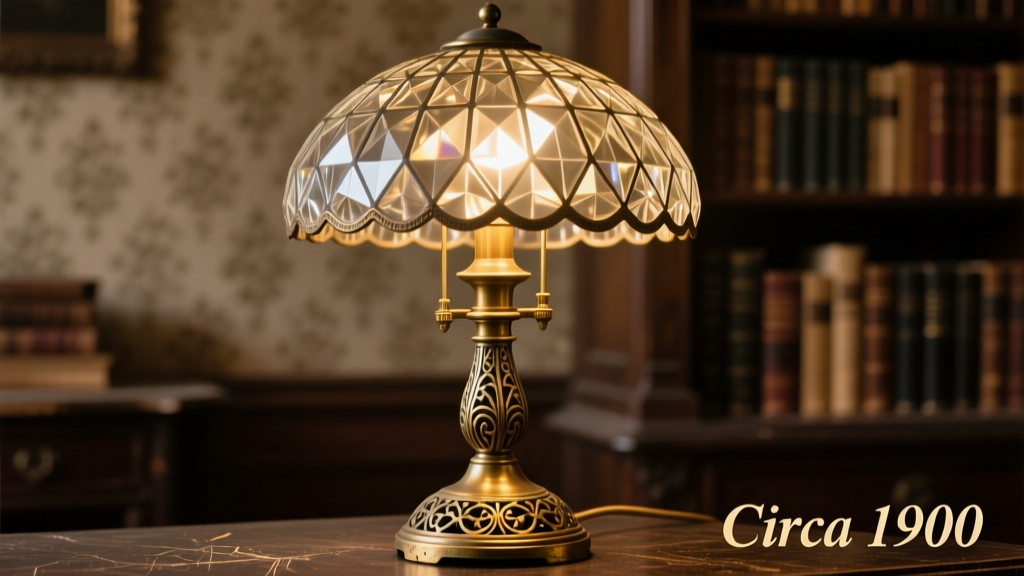
Electric Cut-Glass Prism Lamp with Mushroom-Shaped Shade, Circa 1900: A Technical and Historical Appraisal
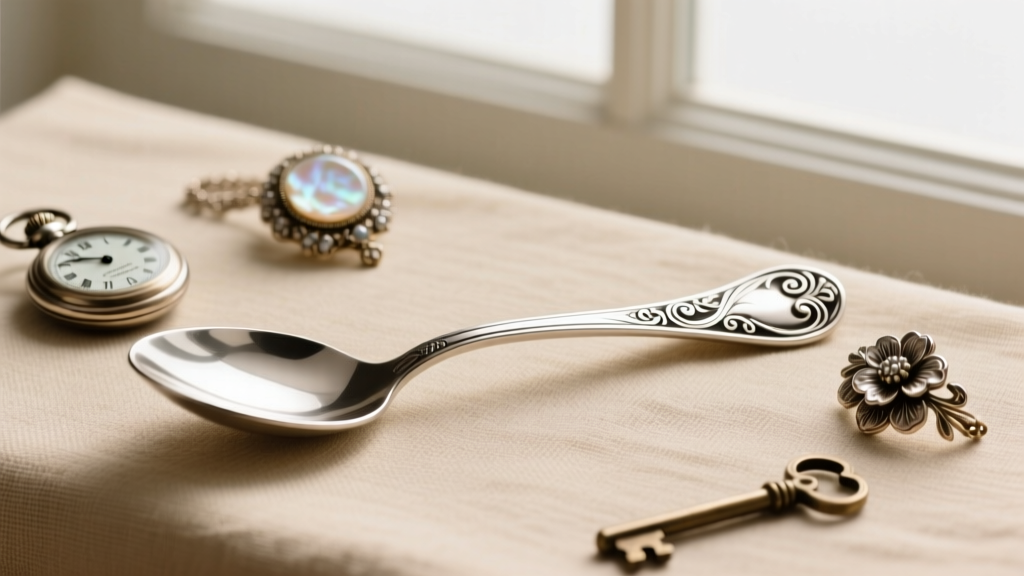
Tiffany & Co. Silver Stuffing Spoon, Saratoga Pattern: A Study in American Silvercraft and Gilded Age Refinement