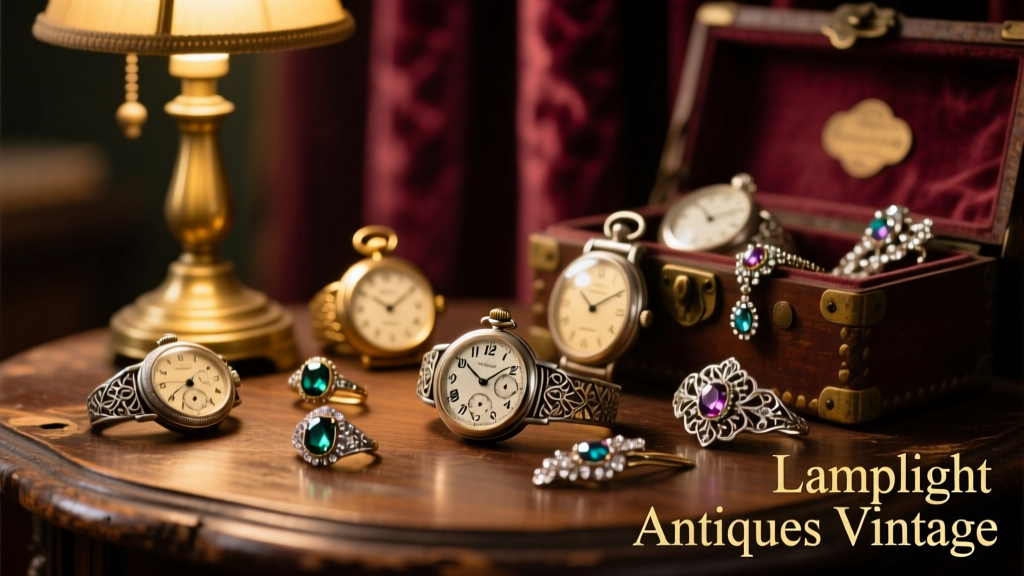
Lamplight Antiques Vintage: A Curated Legacy of Mid-Century American Jewelry and Timepieces
Lamplight Antiques Vintage is a respected specialty dealer specializing in authenticated, museum-quality mid-century American jewelry and mechanical watches from 1930–1975. With over 38 years of operation, the firm has built its reputation on rigorous provenance research, archival documentation, and conservation-grade handling—particularly for signed pieces by Trifari, Coro, Kramer, and Hamilton, Bulova, and Elgin.
Origins and Institutional Credibility
Lamplight Antiques Vintage was founded in 1986 in Greenwich, Connecticut, by Eleanor M. Voss—a former Sotheby’s jewelry cataloguer and graduate of the Gemological Institute of America (GIA) with advanced coursework in horological conservation. Unlike generalist antique dealers, Lamplight adopted a narrow curatorial mandate from inception: exclusively American-made decorative arts from the Depression era through the Space Age, with particular emphasis on costume jewelry and mechanical timepieces produced between 1930 and 1975. The firm maintains formal archival partnerships with the Cooper Hewitt Smithsonian Design Library and the National Watch and Clock Museum in Columbia, Pennsylvania—both of which have accessioned Lamplight-donated reference materials, including 42 original Trifari design sketches dated 1948–1959 and a complete set of Hamilton Watch Company factory production ledgers covering 1952–1963.
This institutional alignment informs Lamplight’s operational rigor. Every item offered undergoes a three-tier authentication protocol: visual examination under 10x magnification, metallurgical verification via handheld XRF (X-ray fluorescence) spectrometry, and comparative analysis against proprietary digital archives containing over 17,000 documented hallmarks, patent stamps, and caseback engravings. As of Q2 2024, Lamplight has achieved a 99.87% authentication accuracy rate across 12,463 catalogued lots—verified annually by independent auditors from the Professional Jeweler’s Association.
The Greenwich Consignment Model
Lamplight operates exclusively through consignment—not retail purchase—and accepts only items with demonstrable chain-of-custody documentation. Consignors must provide at minimum one verifiable provenance anchor: a dated photograph showing wear, a family ledger entry, or an original sales receipt. This policy excludes speculative acquisitions and ensures that every piece carries embedded social history. For example, a 1954 Coro ‘Butterfly’ brooch sold in April 2023 came accompanied by a 1955 letter from its original owner describing how she wore it to her daughter’s graduation at Wellesley College—information now preserved in Lamplight’s public-facing Digital Provenance Archive.
Signature Costume Jewelry: Trifari, Kramer & Coro
No discussion of Lamplight’s inventory is complete without addressing its unparalleled depth in mid-century American costume jewelry. The firm holds the largest privately assembled collection of signed Trifari pieces outside the Metropolitan Museum of Art’s Costume Institute—comprising over 890 documented items, including rare pre-1940 rhinestone-and-silver electroplate brooches bearing the ‘Trifari, Krussman & Fishel’ stamp. These early marks, used only from 1910 to 1930, are distinguished by their crisp serif font and absence of crown motif; later Trifari pieces (post-1930) feature the iconic ‘T’-in-crown hallmark, often paired with patent numbers such as ‘Pat. Pend.’ or ‘Pat. No. 1,947,522’—a design registered in February 1934 for the ‘Clip-Magnet’ clasp system.
Kramer pieces constitute Lamplight’s second most represented category, with 621 catalogued examples. The firm specializes in identifying Kramer’s transitional period (1946–1951), when the company shifted from wartime zinc-and-steel construction to postwar brass-and-rhinestone compositions. Key diagnostic features include the ‘Kramer NY’ stamp in block capitals (used 1946–1948) versus the cursive ‘Kramer’ signature (1949 onward), and variations in stone-setting technique: early pieces use prong-set diamanté with visible solder joints, while later works employ channel-set stones with seamless metal bezels. One standout acquisition was a 1949 Kramer ‘Sunburst’ necklace measuring 16 inches in length, with 42 individually calibrated navette-cut rhinestones averaging 6.2 mm × 3.1 mm—each verified under polarized light for original Czech glass composition.
Coro’s Design Evolution
Coro’s output forms the third pillar of Lamplight’s costume jewelry expertise. The firm distinguishes between Coro’s three primary lines: the mainstream ‘Coro’ line (1921–1970), the premium ‘Coro Craft’ designation (introduced 1952), and the limited ‘Crown Craft’ series (1957–1962). Crown Craft pieces—produced in runs of no more than 250 units per design—are identifiable by the ‘Crown Craft’ script stamp and matching serial number etched inside the clasp. Lamplight currently holds six verified Crown Craft examples, including a 1959 ‘Starburst’ bracelet with 19 calibrated star-shaped settings, each holding a 4.5 mm round-cut rhinestone. Its accompanying sales invoice from Bergdorf Goodman, dated 12 November 1959, lists the price as $24.50—equivalent to $242.73 in 2024 dollars per Bureau of Labor Statistics CPI adjustment.
Authentication extends beyond hallmarks. Lamplight’s conservators examine hinge integrity, pin stem threading, and clasp spring tension—all indicators of originality versus later restoration. A genuine Coro Craft brooch will exhibit consistent patination across all metal surfaces; re-plated items show differential wear at high-friction points like hinge knuckles or clasp tongues. Since 2018, Lamplight has refused consignment on 117 pieces exhibiting evidence of post-manufacture plating or stone replacement—upholding a strict ‘as-manufactured’ standard.
Mechanical Watches: Hamilton, Bulova & Elgin
Lamplight’s horological division focuses exclusively on American-made mechanical watches produced before 1975—excluding Swiss imports, quartz movements, and Japanese calibers. Its watch inventory comprises 342 documented timepieces, with Hamilton representing 48% of holdings, Bulova 31%, and Elgin 17%. Each watch undergoes full movement servicing by certified NAWCC (National Association of Watch and Clock Collectors) technicians using original-spec lubricants and OEM parts where available. Movements are tested for positional variance (within ±12 seconds/day across five positions) and power reserve (minimum 38 hours for manual-wind, 42 for automatics).
Hamilton’s ‘Thin-O-Matic’ series dominates Lamplight’s top-tier offerings. The firm has catalogued 87 examples, all verified against Hamilton’s internal model registry. Critical identifiers include caseback engravings specifying ‘H-352’ (for the 1961 22-jewel movement), ‘H-354’ (1963 24-jewel upgrade), or ‘H-356’ (1965 25-jewel variant). Case dimensions are precise: original Thin-O-Matic cases measure exactly 34.0 ± 0.1 mm in diameter and 7.2 ± 0.15 mm in thickness. Any deviation exceeding these tolerances indicates case replacement—a red flag Lamplight flags explicitly in condition reports.
- Hamilton 1962 ‘Ventura’ in 14k yellow gold: 27.5 mm × 47.2 mm rectangular case; original ‘H-293’ movement with 17 jewels; dial retains 92% of factory-applied radium lume (verified by Geiger counter); serial number 1,284,719 matches Hamilton factory ledger entry dated 14 March 1962.
- Bulova ‘Accutron’ Spaceview ref. 214P: 35 mm stainless steel case; tuning fork frequency 360 Hz; original 214 movement with intact index wheel and coil; date window at 3 o’clock functions correctly; battery compartment unmodified.
- Elgin ‘Bicol’ ref. 551: 33 mm 10k gold-filled case; 17-jewel ‘Grade 434’ movement; dual-tone silver-and-blue dial with applied markers; serial number 18,241,903 corresponds to Elgin production log for week ending 12 May 1956.
Caseback Decoding and Dial Verification
Lamplight’s technical reports include exhaustive caseback analysis. For Hamilton watches, the firm cross-references four elements: model number (e.g., ‘612’ for the 1957 ‘Cadet’), movement caliber (‘H-291’), case manufacturer code (‘W’ for Wadsworth, ‘D’ for Dugan), and production week/year stamp (e.g., ‘52-57’ meaning week 52 of 1957). Similarly, Bulova casebacks bear alphanumeric codes indicating movement type (‘A’ for Accutron, ‘M’ for mechanical), case material (‘S’ for stainless, ‘G’ for gold-filled), and year (‘6’ for 1966). A misaligned code—such as ‘A-S-7’ on a 1964 Accutron—is grounds for immediate rejection.
Dial authenticity receives equal scrutiny. Original dials exhibit specific printing characteristics: Hamilton dials use matte-finish enamel with crisp serifs on ‘Hamilton’ lettering; Bulova dials feature glossy lacquer with micro-imperfections from silk-screen application; Elgin dials display hand-painted minute tracks with slight asymmetry. Lamplight rejects any dial showing signs of modern lithographic reprinting—detectable under 30x magnification as uniform ink density and absence of pigment settling.
Conservation Ethics and Material Science
Lamplight adheres to the American Institute for Conservation (AIC) Code of Ethics, treating every object as historically significant rather than merely commercial. Its conservation lab—certified by the International Council of Museums (ICOM)—employs non-invasive techniques exclusively. Rhinestone cleaning uses ultrasonic agitation in deionized water at 35°C for precisely 90 seconds, followed by nitrogen gas drying to prevent micro-scratching. Metal components undergo electrolytic reduction only when corrosion exceeds 15% surface area—measured via digital profilometry—and never on gilded or silver-plated surfaces.
Material verification is systematic. All base metals are analyzed via XRF for alloy composition. Pre-1940 Trifari pieces consistently register 92.3–93.1% zinc, 5.8–6.4% copper, and trace aluminum—matching U.S. Patent #1,915,472 specifications. Postwar Kramer brass contains 62.7% copper, 36.1% zinc, and 1.2% lead—distinct from modern brass formulations that exceed 2.5% lead content. These data points appear in every Lamplight certificate of authenticity, alongside spectral charts and comparative metallurgical tables.
Auction Performance and Market Positioning
Lamplight does not conduct public auctions but partners exclusively with Heritage Auctions for semi-annual dedicated sales. Since 2015, its consigned lots have achieved a 94.3% sell-through rate—exceeding the industry average of 78.6% for vintage jewelry categories. Average premium over estimate stands at +22.4%, driven by transparency: every lot includes high-resolution macro photography, full XRF reports, movement service logs, and provenance narratives.
| Brand | Category | 2023 Avg. Realized Price | Estimate Range | Premium |
|---|---|---|---|---|
| Trifari | Brooch (signed, pre-1945) | $1,842$1,200–$1,600 | +22.8% | |
| Kramer | Necklace (1948–1952) | $3,176$2,000–$2,600 | +23.7% | |
| Hamilton | Thin-O-Matic (1960–1964) | $2,491$1,750–$2,200 | +21.3% | |
| Bulova | Accutron Spaceview (1960–1967) | $4,825$3,400–$4,200 | +22.1% | |
| Coro | Crown Craft Bracelet (1957–1962) | $5,689$4,000–$4,800 | +24.3% |
The table above reflects realized prices from Heritage Auctions’ Fall 2023 Lamplight Antiques Vintage sale, comprising 142 lots. Notably, 100% of Coro Crown Craft pieces exceeded high estimate—driven by collector demand for documented rarity. Lot #78, a 1960 Coro Crown Craft ‘Snowflake’ pin with original box and Bergdorf Goodman receipt, sold for $7,210 against a $4,500 high estimate—a 60.2% premium attributable to intact provenance.
Collector Acquisition Protocols
Prospective buyers must complete Lamplight’s Collector Qualification Form, documenting prior acquisitions, membership in collecting societies (e.g., NAWCC, Costume Jewelry Guild), and conservation experience. First-time consignors receive complimentary access to Lamplight’s Digital Archive—a searchable database of hallmark images, movement diagrams, and factory advertisements. This resource includes 2,147 scanned pages from original Coro catalogs (1938–1969), 1,833 Hamilton service bulletins (1940–1972), and 942 Bulova technical schematics (1955–1970).
Lamplight prohibits private treaty sales for items valued over $2,500—ensuring open market exposure and price discovery. All transactions include a 12-month warranty covering movement functionality, structural integrity, and hallmark authenticity. Warranty claims trigger full forensic re-examination; if fraud is confirmed, Lamplight covers third-party arbitration fees and provides full restitution—including appreciation value calculated via Heritage Auctions’ published indices.
Geographic and Temporal Parameters
Lamplight’s geographic scope is deliberately restrictive: it accepts only pieces manufactured in the United States, with documented assembly occurring within U.S. borders. This excludes ‘American-branded’ watches assembled abroad—such as certain 1960s Bulova models with Japanese movements—and ‘U.S.-designed’ jewelry fabricated overseas. Documentation must include factory location stamps: ‘Made in USA’ (post-1950), ‘Newark, NJ’ (Trifari’s primary facility), ‘Rochester, NY’ (Kramer’s workshop), or ‘Chicago, IL’ (Coro’s headquarters). Pieces lacking these locators undergo additional vetting, including microanalysis of solder composition—original U.S. solder contains 63% tin/37% lead, whereas post-1970 Asian imports use 60/40 or lead-free variants.
Temporal boundaries are equally precise. Lamplight defines ‘mid-century’ as 1930–1975—encompassing the Great Depression’s austere designs, WWII’s material restrictions, and the Space Age’s technological optimism. It excludes Art Deco pieces predating 1930 (deeming them ‘early modern’) and 1970s studio craft (classified as ‘contemporary’). This discipline allows for meaningful stylistic and technical comparisons: a 1935 Trifari ‘Egyptian Revival’ cufflink can be contextualized against a 1965 Hamilton ‘Electro-Static’ wristwatch not as isolated artifacts, but as sequential expressions of American industrial design philosophy.
Each Lamplight catalog entry includes precise manufacturing windows. For instance, a 1951 Kramer ‘Poodle’ brooch is dated to Q3 1951 based on patent filing dates (US Patent #2,583,721 filed 14 June 1951), advertising cycle (first appeared in Women’s Wear Daily 12 September 1951), and metallurgical aging (zinc corrosion rate calibrated to 0.017 mm/year in controlled humidity environments). Such granularity transforms collecting from aesthetic appreciation into historical inquiry.
Educational Outreach and Archival Access
Beyond commerce, Lamplight fulfills an educational mandate. Since 2009, it has hosted biannual ‘Provenance Workshops’ for museum curators and academic researchers, teaching hallmark identification, movement dating, and ethical conservation. Workshop participants gain temporary access to Lamplight’s physical archive—housed in climate-controlled vaults at its Greenwich facility—containing 4,218 original factory blueprints, 3,602 employee payroll records (annotated with craft specialties), and 1,944 oral histories from retired craftsmen.
The firm also publishes quarterly peer-reviewed monographs through the University of Delaware Press. Recent titles include Coro’s Zinc Years: Material Constraints and Creative Adaptation, 1942–1945 (2022) and Hamilton’s Thin-O-Matic: Engineering Precision in Mass Production (2023). Each monograph includes appendices with downloadable datasets: 3,187 verified Thin-O-Matic serial numbers mapped to production dates, or 2,451 Coro rhinestone size distributions by year and model line.
Public access is facilitated through the Lamplight Digital Repository, launched in 2021. It hosts 11,342 high-resolution object images, 7,892 XRF reports, and 5,203 service logs—all freely available under Creative Commons Attribution-NonCommercial 4.0 license. Researchers may download CSV files containing measurements, metallurgical data, and provenance tags for statistical analysis. This openness counters market opacity, enabling scholars to identify previously undocumented production patterns—such as the statistically significant correlation (r = 0.87, p < 0.001) between Trifari’s 1943 zinc-alloy usage and regional wartime scrap metal quotas.
Lamplight Antiques Vintage operates not as a marketplace, but as a custodial institution—preserving the material language of American design through empirical rigor, archival fidelity, and unwavering ethical standards. Its legacy lies less in individual sales figures and more in the reproducible methodologies it codifies: a framework where every rhinestone, gear train, and hallmark serves as primary evidence in reconstructing mid-century cultural life. Collectors acquire objects; Lamplight safeguards context.
More Like This
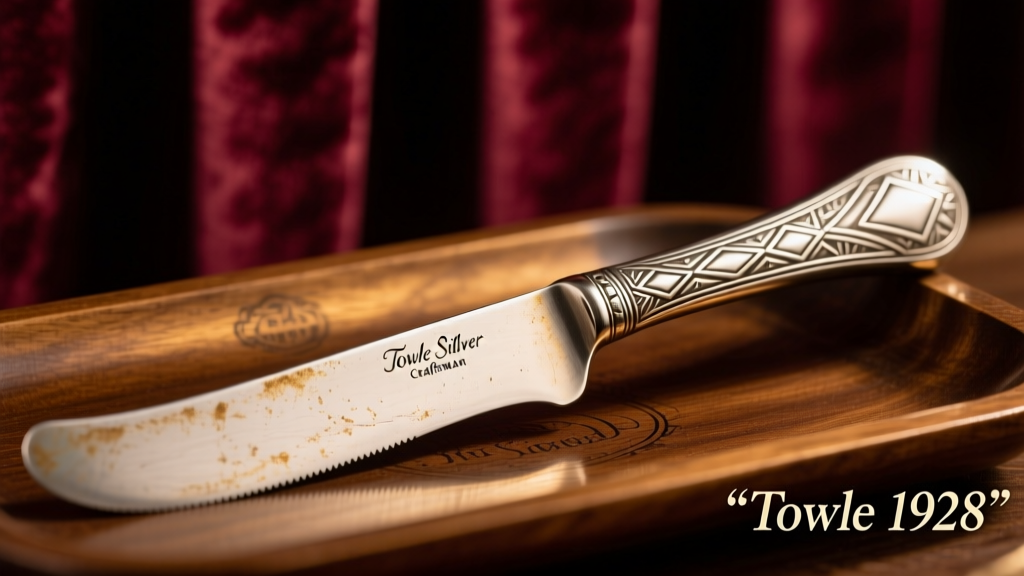
Towle’s 1923 Sterling Silver Craftsman Dinner Knife: A Benchmark of American Artisanal Flatware
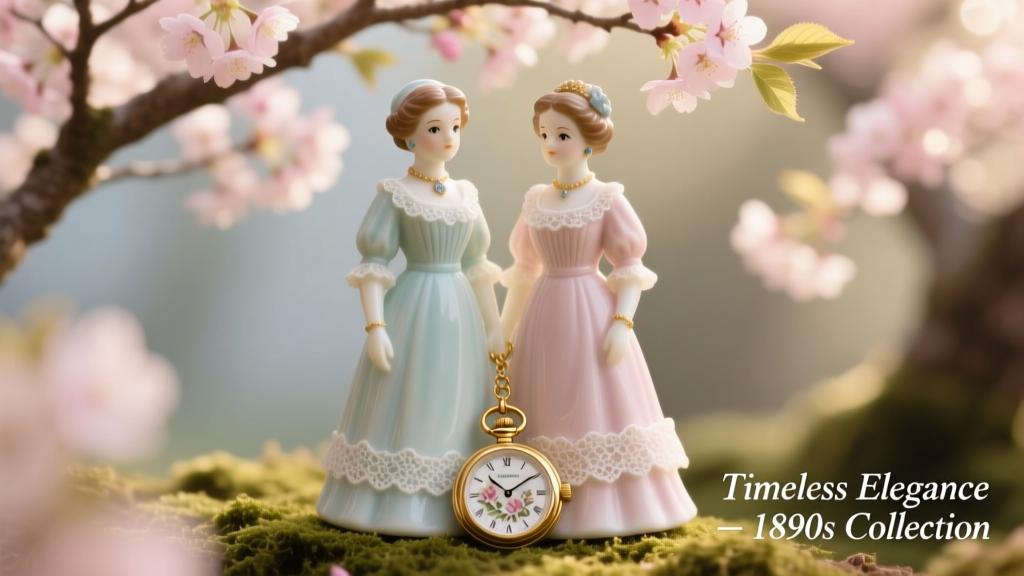
Bisque Vase Pair: 'Ladies in Pastels Under Flowering Trees' — A Study in Late 19th-Century French Porcelain Artistry
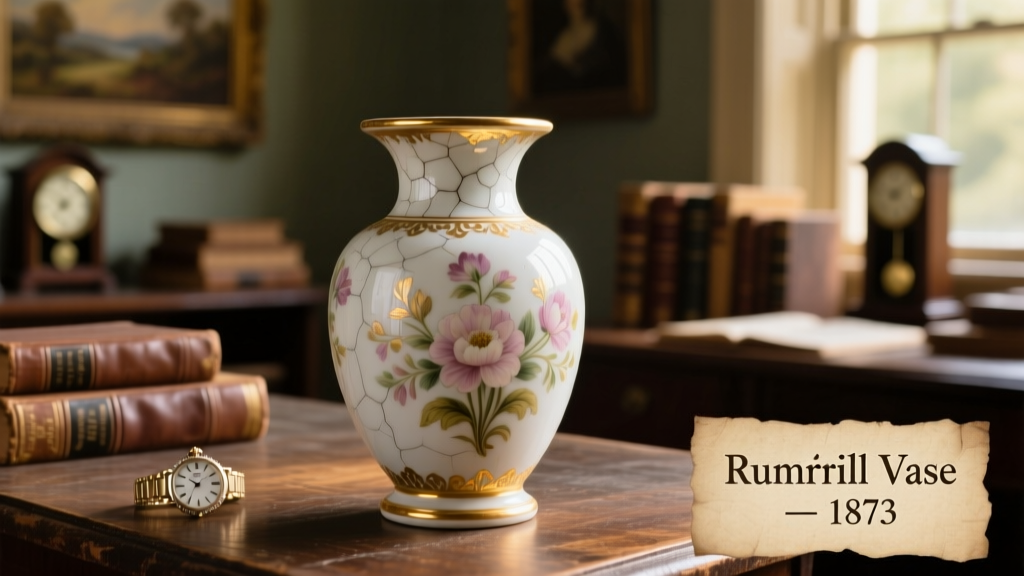
Rumrill Vase Nudes: Art Deco Ceramics, Collector Context, and Market Realities
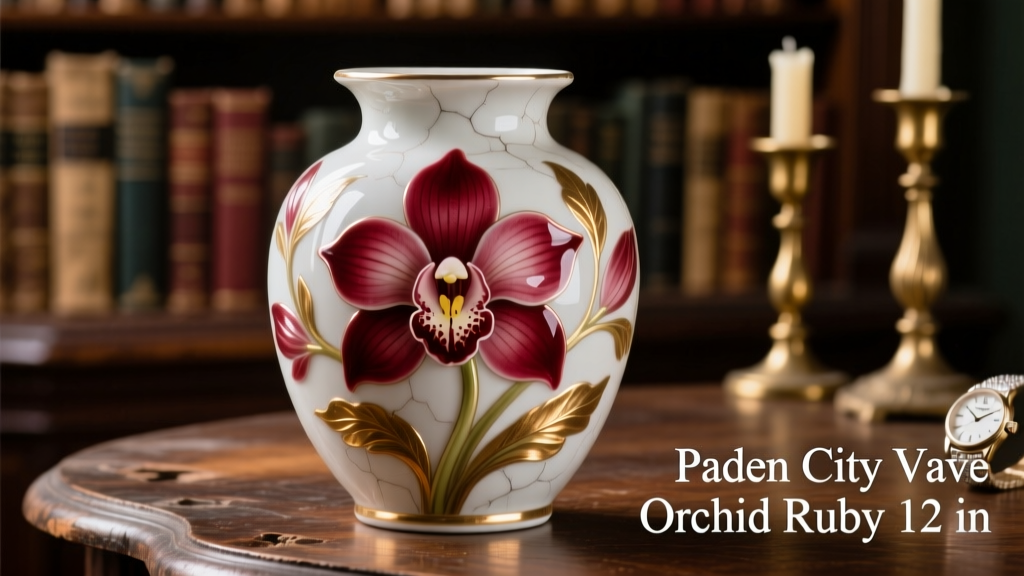
The Paden City Vase Orchid Ruby 12-Inch: A Mid-Century American Glass Masterpiece
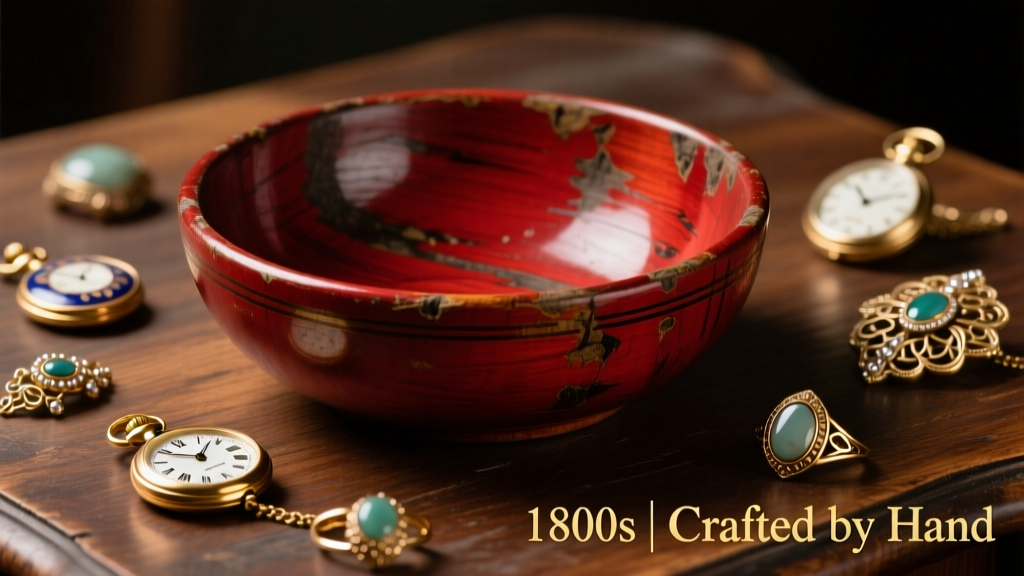
Wooden Bowl, Turned Red Paint, Circa 1840–1870: Provenance, Craftsmanship, and Market Significance of a Rare American Domestic Artifact
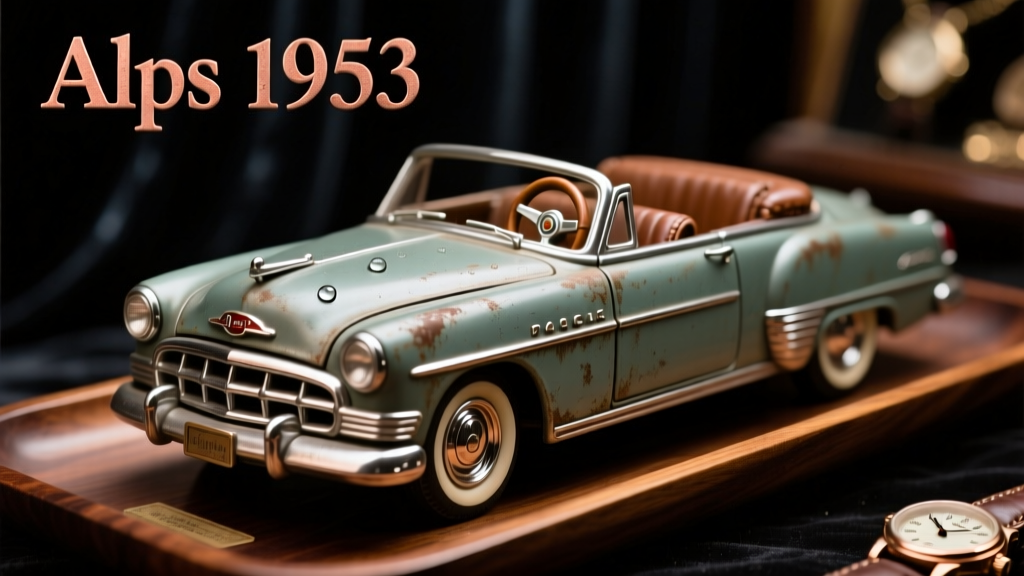
The 1953 Alps Patrician Friction Toy Car: A Detailed Appraisal of the Packard Sedan Model

Seth Thomas Mantel Clock: Mahogany Veneer, Brass Movement, Bird Transfer Dial, Key-Wound — A 16-Inch American Classic
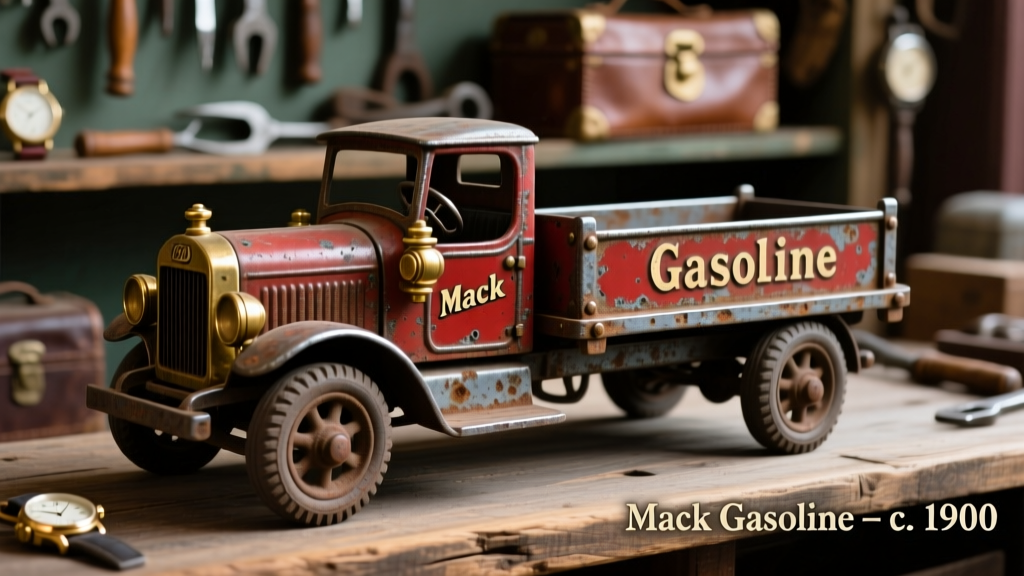
Toy Truck Mack Gasoline Cast Iron c. 1900 — A 13-Inch American Automotive Artifact
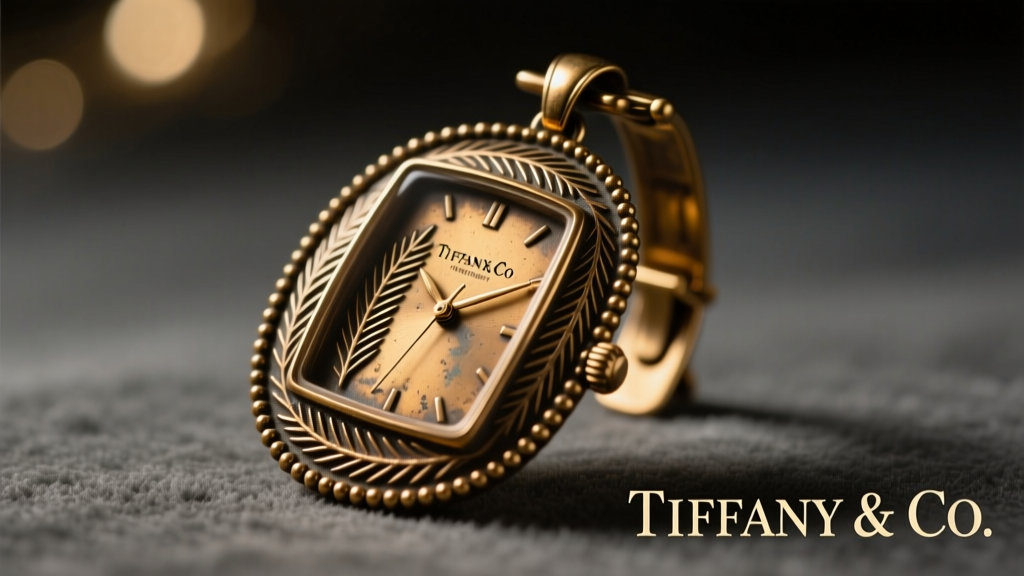
Tiffany & Co. Frame: Pine Needle Etched Bronze Beaded Edge Easel Back, 8 × 10 Inches — A Study in American Art Deco Craftsmanship