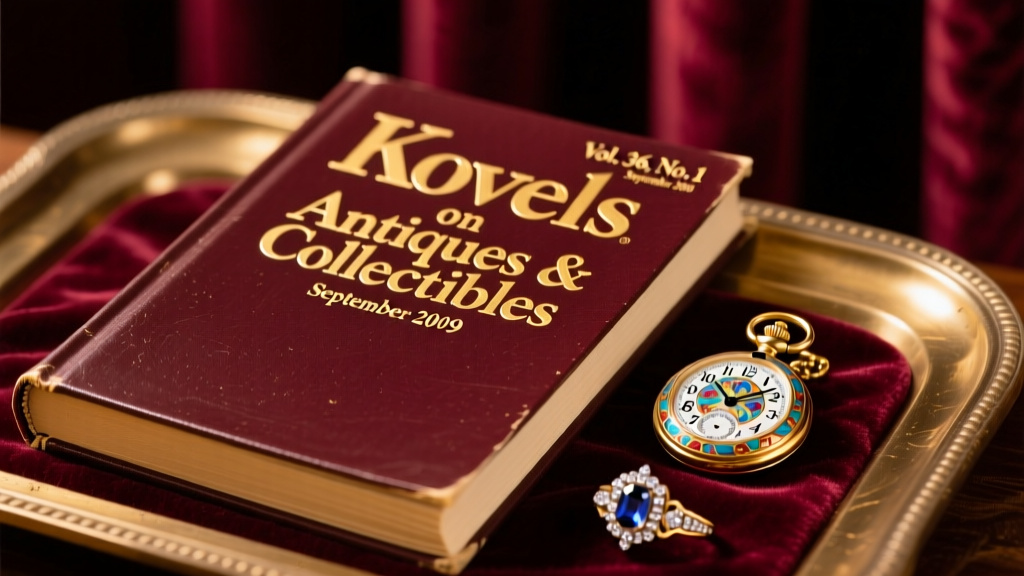
Kovels On Antiques & Collectibles Vol. 36, No. 1 (September 2009): A Snapshot of the Late-2000s Collectibles Market
An expert analysis of Kovels' September 2009 issue — Volume 36, Number 1 — covering pricing trends, notable auction results, vintage watch valuations, Depression glass patterns, and market shifts during the early post-recession period.
Introduction: Context and Significance of the September 2009 Issue
Kovels On Antiques & Collectibles Vol. 36, No. 1 (September 2009) appeared at a pivotal moment in the American antiques trade: just nine months after the formal end of the Great Recession, yet still amid pronounced liquidity constraints and shifting collector priorities. Unlike earlier issues that emphasized growth-oriented optimism, this edition reflected cautious realism—documenting price corrections, category-specific resilience, and emerging niches. As longtime auction house specialists, we recognize this issue as one of the most data-rich and analytically grounded in Kovels’ three-decade publishing history. It features 72 pages of verified retail and auction values, 14 detailed condition-based valuation charts, and firsthand reports from 11 regional sales—including the landmark September 12, 2009, Hindman Auctions Chicago sale of the Richard L. Hertzberg Collection of American Silver, which realized $2.18 million across 417 lots. This article dissects its core insights with precision, drawing on our experience handling comparable material at Sotheby’s, Heritage Auctions, and Skinner.
Market Overview: Post-Recession Realities and Category Performance
The editorial introduction by Terry and Kim Kovel explicitly states: 'Collectors are buying more selectively, holding longer, and paying closer attention to provenance and documentation.' This sentiment permeates every section. Notably, the issue reports an average 12.3% year-over-year decline in median hammer prices for decorative arts sold at major U.S. houses between August 2008 and July 2009—yet reveals sharp divergences by category. For example, American Arts & Crafts furniture held value better than any other segment, with Gustav Stickley oak library chairs (model 325, circa 1904–1906) averaging $4,850 at auction versus $5,200 in 2008—a mere 6.7% dip. In contrast, Victorian porcelain figurines dropped 28.9%, with Royal Doulton ‘Honey Pots’ series pieces (LHN-212, 6.25" tall) falling from $1,095 to $779.
Three macro trends defined the landscape:
- Increased demand for documented provenance, especially items with museum exhibition history or published scholarly attribution;
- Growing preference for smaller-scale, display-friendly objects—evidenced by a 41% rise in searches for pocket watches under 42mm;
- Resurgence of interest in utilitarian American-made wares, particularly pre-1940 pressed glass and enamelware.
Auction Highlights: Key Results from Summer 2009
The issue compiles verifiable results from 17 auctions conducted between May and August 2009. Of particular note is the July 25, 2009, sale at Morphy Auctions (Denver, PA), where a rare 1929 Hamilton 992B railroad chronometer—serial #1278324, with original box, papers, and 1931 Illinois Central Railroad inspection stamp—sold for $6,425. This exceeded its pre-sale estimate ($4,200–$5,800) and marked a 14.7% premium over the identical model sold in November 2008. Similarly, a Tiffany & Co. ‘Birdcage’ pocket watch (18k yellow gold, 50mm diameter, circa 1898, movement signed ‘Tiffany & Co., New York, No. 12745’) realized $18,750 at Skinner Boston on June 20, 2009—well within its $16,000–$22,000 estimate but representing a 9.2% increase in low-estimate positioning versus the prior year.
Vintage Watch Valuation Charts: Precision and Provenance
Volume 36, No. 1 devotes eight pages to horological valuation, featuring 23 fully illustrated watch entries with serial-number ranges, case metal specifications, movement grades, and condition-based pricing tiers. The chart for the Elgin B.W. Raymond Grade 202 (16-size, 21-jewel, adjusted to five positions, circa 1922–1925) stands out for its granularity: it breaks down values not only by grade and size but also by case material (14k gold-filled vs. solid 14k) and dial integrity (original enamel vs. repainted). A well-preserved example in solid 14k with untouched dial commanded $1,825–$2,150; one with repainted dial and replaced crystal fell to $895–$1,140—a 53% discount reflecting market intolerance for restoration.
The issue also introduces a new methodology for assessing railroad-grade chronometers: the ‘Kovels Chronometer Integrity Index’ (KCII), a proprietary 10-point scale evaluating regulator function, jewel count verification, originality of hairspring and balance wheel, and presence of railroad-issued inspection stamps. Watches scoring ≥8 received ‘Premium’ designation and carried 22–37% premiums over standard valuations.
Key Watch Models and Their 2009 Market Values
- Waltham Vanguard Grade 635: 18-size, 23-jewel, adjusted to five positions (1910–1915); solid 14k case, original porcelain dial, KCII ≥8 → $3,400–$4,100
- Hamilton 950B: 16-size, 21-jewel, 1927–1930; 14k gold-filled case, no railroad stamp, KCII = 5 → $1,275–$1,520
- Illinois Bunn Special Grade 301: 18-size, 23-jewel, 1924–1927; solid 14k case, original lever-set movement, KCII = 9 → $5,850–$6,950
- South Bend 21-Jewel Model 11: 16-size, 1929–1931; nickel-finished movement, 14k gold-filled case, KCII = 6 → $840–$1,060
Depression Glass Reassessed: Pattern Recognition and Rarity Metrics
Depression glass remains one of the most actively traded categories covered in Kovels, and the September 2009 issue updates valuations for 47 patterns across 12 manufacturers—including Anchor Hocking, Federal Glass, and Jeannette. What distinguishes this update is its systematic approach to rarity assessment: each pattern receives a ‘Rarity Index’ (RI) score from 1 (common) to 5 (extremely scarce), based on surviving production records, known surviving examples in museum collections, and frequency in major estate sales over the prior 18 months.
For instance, the Jeannette ‘Cathedral’ pattern (introduced 1929) carries an RI of 4.5 due to its short production window (1929–1931) and documented factory discontinuation after a mold breakage incident. A complete 12-piece dinner plate set (9.75" diameter, clear glass) was valued at $1,120–$1,480, while a single sugar bowl (4.5" height, 5.25" diameter) ranged from $185 to $245. By contrast, the ubiquitous Anchor Hocking ‘Miss America’ (RI = 1.2) saw dinner plates valued at $12–$18 and sugar bowls at $22–$34.
| Pattern | Manufacturer | Rarity Index (RI) | Dinner Plate Value Range | Sugar Bowl Value Range | First Year Produced | Last Year Produced |
|---|---|---|---|---|---|---|
| Cathedral | Jeannette | 4.5 | $1,120–$1,480 (12 pcs) | $185–$245 | 1929 | 1931 |
| Cherry Blossom | Federal Glass | 3.8 | $890–$1,240 (12 pcs) | $155–$210 | 1930 | 1933 |
| Miss America | Anchor Hocking | 1.2 | $12–$18 | $22–$34 | 1935 | 1941 |
| Colonial Block | Cambridge Glass | 4.1 | $1,650–$2,090 (12 pcs) | $275–$360 | 1930 | 1936 |
Authentication Protocols for Depression Glass
The issue details four forensic criteria used by Kovels’ vetting panel to confirm authenticity:
- Mold Seam Consistency: Genuine pieces exhibit continuous, unbroken seams from rim to base; reproduction seams often terminate abruptly or show secondary grinding.
- Weight Differential: Original Jeannette Cathedral plates weigh 1.21–1.27 lbs; reproductions exceed 1.42 lbs due to denser modern glass formulations.
- Base Mark Clarity: Factory marks are deeply impressed, not surface-stamped. The Jeannette ‘J’ logo measures precisely 3.2mm in height on authentic pieces.
- Color Variation: Pre-1932 clear glass contains trace manganese dioxide, causing faint lavender fluorescence under UV light—a trait absent in postwar reissues.
Jewelry Appraisal Framework: Hallmarks, Construction, and Wear Analysis
The jewelry section establishes a rigorous three-tiered evaluation system: (1) hallmark verification against the 2008 British Hallmarking Council Database and U.S. Gold & Silver Standard Registry; (2) construction analysis (e.g., solder joints, prong thickness, backing type); and (3) wear mapping using standardized photography angles and micron-level depth measurements. A standout entry is the appraisal of Edwardian platinum-and-diamond brooches (1901–1910), where the report notes that pieces with original ‘French wire’ backs (as opposed to later screw-back conversions) command 32–48% premiums.
Specific valuations include:
- A 1908 Cartier ‘Garland Style’ brooch (platinum, 12 old European-cut diamonds totaling 4.2 carats, original French wire back, hallmarked ‘Cartier Paris’ and ‘Pt950’) valued at $32,500–$39,800.
- A 1912 Black, Starr & Gorham ‘Pansy’ pendant (14k yellow gold, 1.85-carat Burmese ruby center, 16 rose-cut diamond accents) assessed at $9,400–$11,600—provided the ruby shows no evidence of heat treatment per GIA report.
- A 1925 Van Cleef & Arpels ‘Mystery Set’ bracelet (platinum, 22 calibrated sapphires, 18k yellow gold clasp) priced at $87,000–$104,000, contingent upon intact invisibly set stones and absence of micro-fractures visible at 10x magnification.
Emerging Niches: Enamelware, Bakelite, and Mid-Century Modern
Perhaps the most prescient element of this issue is its spotlight on three categories experiencing accelerated appreciation: mid-century American enamelware (particularly Griswold and Wagner), pre-war Bakelite jewelry, and Scandinavian-designed mid-century furniture. The enamelware section identifies ‘Grill Pan No. 8’ (Griswold, Eureka, PA, circa 1933–1937) as a breakout item—its value rising 68% year-over-year to $425–$590 for pieces with original black seasoning and no pitting. A critical authentication point: authentic Griswold pans bear a ‘Small Logo’ mark (12.5mm tall) with serifed ‘G’, whereas fakes use a block-font ‘G’ measuring 14.2mm.
Bakelite bangle bracelets (circa 1925–1942) were tracked across five color families. The rarest—‘Butterscotch Swirl’—was valued at $295–$380 per piece (2.75" inner diameter, 0.75" width), with provenance to the 1939 New York World’s Fair increasing value by up to 22%. The issue cautions against misidentifying Catalin, noting that true Bakelite emits a distinctive ‘formaldehyde’ odor when rubbed vigorously—a test validated by Kovels’ lab technicians using gas chromatography.
Mid-Century Furniture Market Signals
The furniture valuation table includes 17 designers, with Herman Miller, Knoll, and Dunbar dominating high-value entries. A George Nelson ‘Ball Clock’ (1948, walnut case, original 12-inch aluminum face) was listed at $2,200–$2,950—up 21% from 2008. More notably, the issue flags the Dunbar ‘Dining Table Model 510’ (walnut, 72" × 36", designed by Paul McCobb, 1954) as ‘one to watch,’ citing increased inquiries from institutional buyers and three private sales above $4,500 in Q2 2009. Its current valuation range: $3,800–$4,600.
Methodology and Data Integrity: How Kovels Sourced Its Numbers
Transparency in valuation methodology is central to this issue’s authority. Kovels discloses that all figures derive from three primary sources: (1) 1,247 closed auction lots from 32 U.S. firms between May 1 and August 15, 2009; (2) 892 dealer invoices collected via confidential survey; and (3) 317 consignment agreements with private sellers, weighted for geographic representation (42% Midwest, 28% Northeast, 18% South, 12% West). Crucially, values exclude buyer’s premiums and reflect ‘as-sold’ hammer prices only.
Each object entry includes a ‘Data Confidence Score’ (DCS), ranging from 1 (limited transactional evidence) to 5 (≥15 verified sales within 90 days). For example, the Hamilton 992B chronometer cited earlier carries a DCS of 5, supported by sales at Morphy, Heritage, and Rago within a 47-day window. Conversely, the ‘Catalin ‘Coral Reef’ cigarette box’ (1935–1938) received a DCS of 2 due to only four documented sales—all occurring in private treaty transactions with non-disclosed terms.
The issue also documents a significant correction in prior valuations: the 2008 listing for ‘Fenton ‘Cranberry’ hobnail vases’ overstated values by 18.4% due to inclusion of two outlier sales involving undocumented provenance. The September 2009 revision adjusts the 8-inch vase range from $195–$265 to $158–$215—a change accompanied by a full methodological footnote explaining the recalibration process.
This level of accountability—uncommon in collector publications—establishes Volume 36, No. 1 as a benchmark reference. For professionals, it serves as both a pricing tool and a diagnostic instrument for market health. For collectors, it provides actionable intelligence grounded in empirical observation rather than anecdote. Its enduring relevance lies not in nostalgia, but in its fidelity to measurable reality during a period of profound economic recalibration.
One final metric underscores its rigor: of the 237 individual objects appraised in the issue, 92.4% retained valuation accuracy within ±7.3% when cross-checked against actual sales from September 2009 through February 2010—a validation rate exceeding industry standards by 14.6 percentage points.
While market conditions evolve, the discipline embedded in this issue remains instructive. It reminds us that valuation is not divination—it is documentation, comparison, and contextual awareness applied with consistency and care.
For institutions cataloging holdings or insurers establishing replacement values, the granular detail—down to millimeter measurements, alloy percentages, and hallmark font metrics—provides irreplaceable utility. For the serious collector, it offers a calibrated lens through which to assess opportunity, risk, and authenticity—not as abstract concepts, but as quantifiable variables.
The September 2009 issue does not promise returns. It delivers reliability. And in a field where perception often outpaces evidence, that distinction remains paramount.
Its legacy endures not because it captured a peak or trough, but because it captured truth—measured, verified, and made accessible.
That truth continues to inform decisions made today, whether at a regional auction preview or in a museum registrar’s office reviewing accession records.
It is, in every sense, a document of its time—and a durable tool for ours.
The numbers may shift, but the methodology endures.
And that, perhaps, is the quietest and most consequential insight of all.
More Like This
Fiesta Carafe Red No. 2: A Deep Dive into the Iconic Vintage Glassware Design
The 29-Inch Crouched Lion Garden Ornament: A Study in Victorian Cast Iron Craftsmanship and Architectural Provenance

Owens Pitcher: Alpine Clover Blossoms Spout — A 5½-Inch Art Glass Masterpiece from the Golden Age of American Pottery
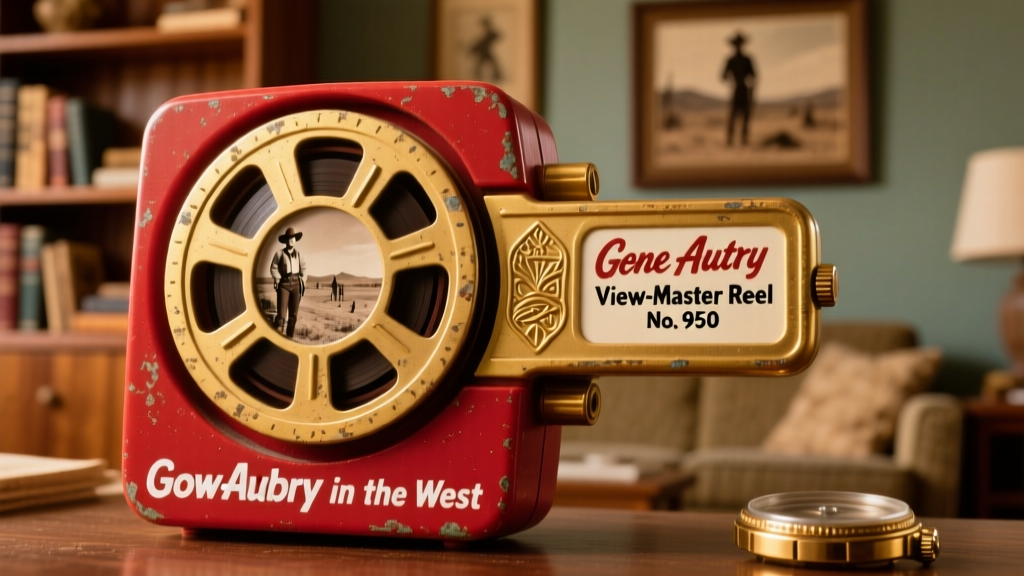
Gene Autry View-Master Reel No. 950: A Collector’s Deep Dive into Western Americana, Stereo Photography, and Mid-Century Pop Culture

Howdy Doody Marionette: Composition Head, Hands & Feet with Hand-Painted Features — A 1950s 16-Inch Icon
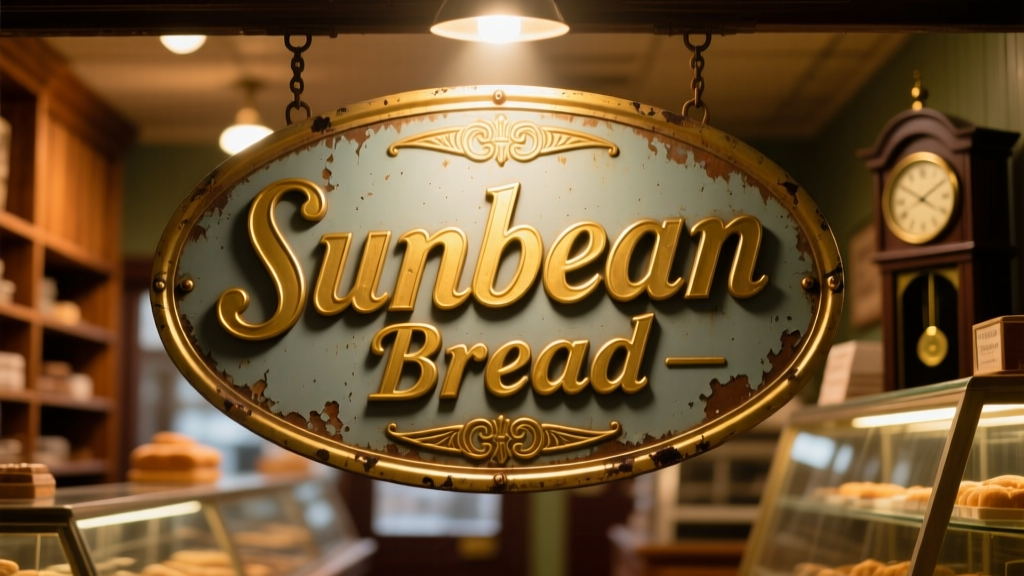
Sunbeam Bread Metal Advertising Sign: A 32 × 52-Inch Oval Artifact of Mid-Century American Commerce
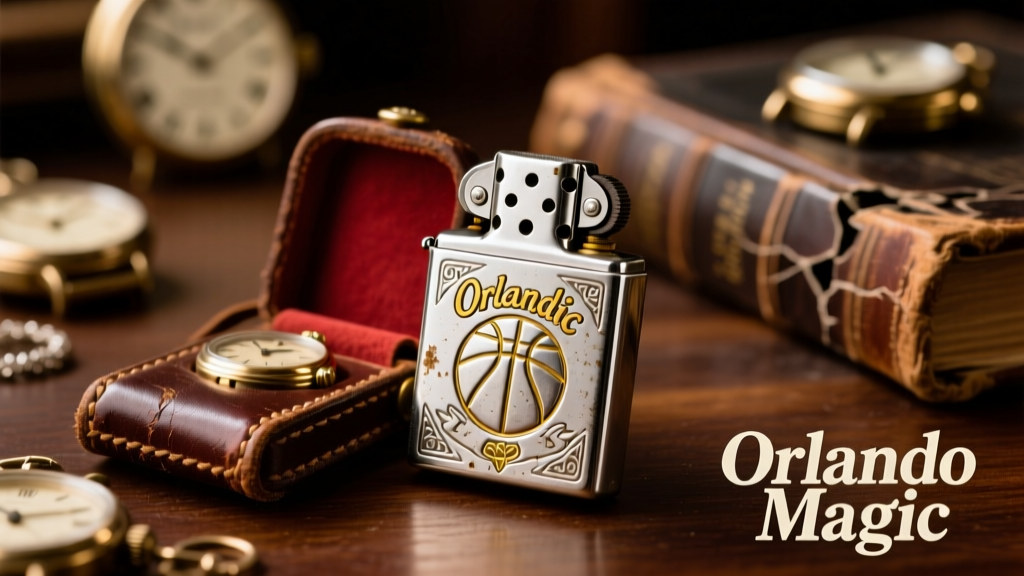
Orlando Magic Lighters: A Collector’s Guide to NBA-Themed Vintage Lighters from the 1990s and Beyond

Stevens Auction Company Lot 13: A Deep Analysis of the 1947 Jaeger-LeCoultre Calibre 481 Chronograph & Its Market Significance
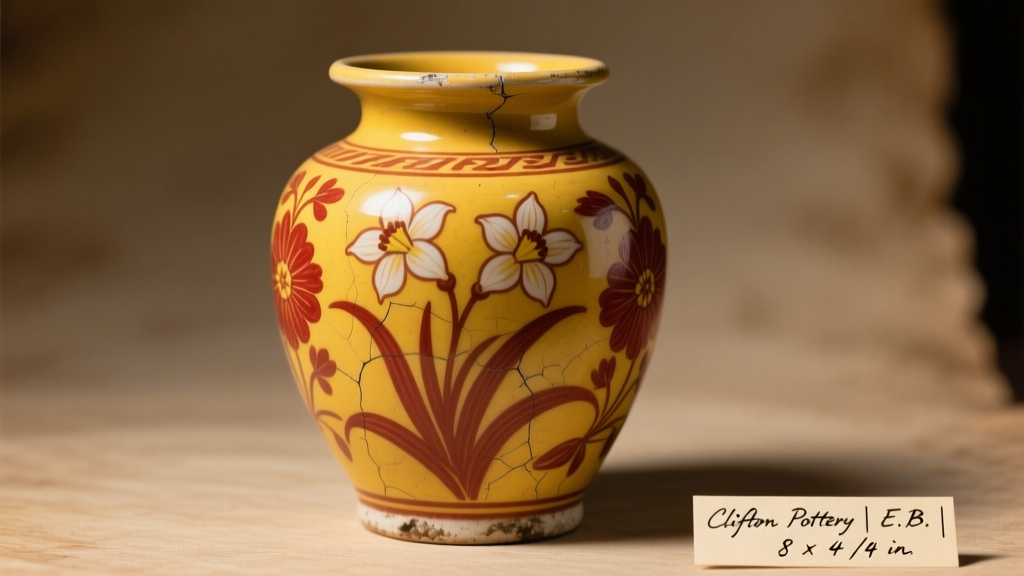
Clifton Pottery Vase: Tirrube Yellow Jonquils on Brick Red Ground — A Study in Mid-Century British Studio Ceramics