Kovels On Antiques and Collectibles March 2012 Newsletter: A Snapshot of Market Trends, Pricing Shifts, and Notable Auction Highlights
The March 2012 edition of Kovels On Antiques and Collectibles delivers authoritative pricing data, auction results, and expert analysis across categories including vintage watches, Art Deco jewelry, Depression glass, and mid-century ceramics. This newsletter documents significant market movements—including a record-setting $127,500 sale for a 1937 Cartier Tank Chinoise—and offers verified replacement values for over 2,300 items.
Introduction: The State of the Antiques Market in Early 2012
The March 2012 issue of Kovels On Antiques and Collectibles captures a pivotal moment in the post-recession antiques market—characterized by cautious optimism, regional price divergence, and renewed collector interest in high-quality, documented pieces. Released on March 1, 2012, this 48-page newsletter reflects field research conducted between January 15 and February 28, 2012, across 22 U.S. auction houses, 14 antique malls, and 7 major estate sales in Ohio, Pennsylvania, Florida, and California. Unlike prior years, the March 2012 edition features expanded coverage of horological material, with dedicated valuation tables for wristwatches produced between 1920 and 1965—a direct response to rising demand from both seasoned collectors and younger investors seeking tangible assets.
Horology Spotlight: Wristwatch Values Surge Amid Provenance Verification
Wristwatch valuations dominated the March 2012 newsletter’s front section, reflecting a 19% year-over-year increase in realized prices for pre-1960 mechanical timepieces at public auctions. The newsletter cites 17 specific auction records, including the $127,500 sale of a 1937 Cartier Tank Chinoise (Ref. 1723) at Sotheby’s New York on February 16, 2012. This platinum-cased model measured 28.5 mm × 35.2 mm, featured an original black leather strap with 18K white gold buckle, and included full provenance documentation tracing ownership to a Parisian diplomat’s estate.
Key Watch Categories and Verified Replacement Values
The newsletter includes a 3-page valuation table covering 112 watch models across six brands: Rolex, Omega, Longines, Jaeger-LeCoultre, Hamilton, and Elgin. Each entry specifies case metal, movement calibre, dial condition grade (A–D), and verified replacement value range based on 2011–2012 transaction data. For example:
- Rolex Oyster Perpetual Ref. 6422 (1951–1953): stainless steel case (34 mm diameter), caliber A296 movement, factory-original black dial with radium numerals—replacement value $3,200–$4,100.
- Omega Seamaster 300 Ref. CK2913 (1957): 39 mm stainless steel case, caliber 30T2R movement, gilt dial with “Seamaster” script and “Swim” logo—replacement value $5,800–$7,400.
- Longines Chronograph Ref. 13ZN (1936–1939): 37 mm stainless steel case, column-wheel chronograph movement, silvered dial with blued steel hands—replacement value $12,900–$15,600.
Authentication Red Flags Identified
Kovels’ team flagged three recurring authentication issues observed in 32% of submitted watches: (1) replacement dials lacking correct font spacing or lume compound aging; (2) incorrect crown engravings (e.g., modern “Rolex” logos on pre-1953 cases); and (3) mismatched caseback serial numbers versus movement serial numbers. The newsletter advises collectors to verify caseback stamping depth (original stamps measure 0.12–0.18 mm deep on Rolex pre-1960 cases) and to cross-reference movement serial ranges using the Omega Chronology Database and Rolex Serial Number Archive, both cited as authoritative sources.
Jewelry Valuation: Art Deco and Mid-Century Shifts
Jewelry pricing showed notable stratification in March 2012. Pieces with documented provenance—especially those linked to American department store archives or Hollywood estates—commanded premiums averaging 28% above generic market values. The newsletter reports that signed Art Deco pieces by Trifari, Coro, and Eisenberg sold at 112% of 2011 median estimates, while unsigned pieces remained flat or declined slightly. A standout result was the $22,400 sale of a 1934 Eisenberg Ice Diamond brooch (1.75" × 1.25", platinum-set rhinestones with calibrated baguette accents) at Heritage Auctions Dallas on February 11, 2012.
Material-Specific Trends
Gold content significantly influenced resale velocity. Yellow gold pieces stamped 14K or higher sold within 12 days on average at regional auctions, whereas base-metal costume jewelry required 47 days median exposure. Platinum pieces exhibited the strongest appreciation—up 23% since December 2010—with particular strength in geometric platinum-and-diamond earrings from 1928–1935. The newsletter provides exact measurements for standard Art Deco earring configurations: symmetrical drops measuring 1.125" long with 0.75" width at widest point, and screw-back fittings weighing 3.2–4.1 grams per pair.
Depression Glass: Regional Disparities and Pattern Rarity Index
Depression glass valuations revealed pronounced geographic variation. In the Midwest, where supply remains abundant, prices held steady or dipped slightly. However, in coastal markets—particularly Southern California and the Northeast—demand surged for rare patterns and colors. The March 2012 newsletter introduces the first-ever Kovels Depression Glass Rarity Index (DGRI), assigning numerical scores (1–10) to 217 patterns across eight manufacturers. Scores reflect verified scarcity metrics: number of known surviving pieces per pattern, frequency of appearance in auction catalogues since 2000, and documented production volume.
Top Five DGRI-Scoring Patterns
- Hocking Glass “Mayfair” in Jade Green (DGRI 9.4): only 11 complete sets confirmed in private collections; average cup-and-saucer set sold for $385–$460.
- Jeannette “King James” in Royal Blue (DGRI 9.1): fewer than 8 intact dinner plates documented; individual plate value $145–$170.
- Anchor Hocking “Patio” in Chartreuse (DGRI 8.7): 32 known tumblers exist; tumbler value $95–$115.
- Cambridge “Chintz” in Pink (DGRI 8.5): 17 documented sugar bowls; sugar bowl value $210–$255.
- Indiana “Colonial Rose” in Amethyst (DGRI 8.3): 24 verified compotes; compote value $185–$220.
The newsletter cautions against misattribution, noting that 14% of submitted “Royal Lace” pieces were actually later reproductions made by Imperial Glass in the 1970s. Authentic Royal Lace exhibits consistent 0.09" wall thickness and a distinct 2.3 mm rim bevel—measurable with digital calipers.
Ceramics and Pottery: Mid-Century Modern Gains Momentum
Mid-century American pottery showed robust growth, with prices for identifiable studio pieces rising 17% year-over-year. The newsletter highlights four makers whose work exceeded expectations: George E. Ohr (Ocean Springs, MS), Rose Cabat (California), Otto and Vivika Heino (New Mexico), and Beatrice Wood (Ojai, CA). A key finding was that glaze integrity—not just signature presence—drove value: pieces with intact crystalline or copper-red reduction glazes commanded 41% higher premiums than identically signed but crazed or blistered examples.
| Maker | Typical Form | Glaze Type | Avg. Diameter/Height | Mar 2012 Replacement Value |
|---|---|---|---|---|
| George E. Ohr | Vase | Matte Black Reduction | 4.2" H × 3.1" W | $8,200–$11,500 |
| Rose Cabat | Bowl | “Feather” Matte Glaze | 9.75" D × 2.5" H | $2,100–$2,900 |
| Otto Heino | Teapot | Shino with Iron Oxide Brushwork | 5.8" H × 7.3" W (spout to handle) | $3,400–$4,600 |
| Beatrice Wood | Plate | Luster Gold Over Cobalt Blue | 10.25" D × 1.1" H | $1,750–$2,300 |
The newsletter notes that authenticity verification for these makers relies heavily on archival correspondence. For example, Otto Heino’s teapots bear incised signatures with specific letter spacing: “Otto” spaced at 1.8 mm intervals, “Heino” at 2.1 mm, always positioned 12 mm below the rim’s lower edge. Beatrice Wood’s luster plates feature hand-painted gold bands applied with squirrel-hair brushes—visible under 10× magnification as continuous, unbroken lines without stippling.
Furniture and Lighting: Material Analysis Drives Valuation Accuracy
Furniture valuation methodology received enhanced scrutiny in the March 2012 issue. Kovels introduced a new wood-identification protocol requiring cross-section sampling for all pieces dated pre-1940. The newsletter reports that 29% of submitted “walnut” dining tables were actually Circassian walnut veneers over poplar secondary wood—a distinction that reduced replacement value by 33% compared to solid black walnut. Similarly, lighting fixtures were assessed using brass alloy composition testing: authentic 1920s–1930s fixtures contain 70% copper / 30% zinc (CDA 260), whereas post-1950 reproductions average 62% copper / 38% zinc and exhibit greater surface porosity under 20× magnification.
Notable Auction Results
Three furniture lots achieved exceptional prices during the reporting period:
- A 1931 Paul Frankl Skyscraper-style bookcase (102" H × 48" W × 14" D), constructed of Brazilian rosewood with original nickel-plated steel supports, sold for $42,800 at Rago Auctions (Lambertville, NJ) on February 4, 2012.
- A pair of 1927 Émile-Jacques Ruhlmann boudoir chairs (28.5" H × 24" W × 22" D), covered in original ivory silk damask with ebony frames and brass nailhead trim, realized $61,200 at Christie’s New York on February 9, 2012.
- A 1948 George Nelson Bubble Lamp (Model L-3, 24" diameter globe, original white acrylic diffuser and black cord), sold for $3,950 at Wright Auction (Chicago) on February 18, 2012—exceeding estimate by 47%.
The newsletter emphasizes dimensional accuracy in listings: all measurements are recorded to the nearest 1/8 inch using Starrett 12" precision calipers, and height is always measured from floor to highest structural point—not including finials or lampshades unless specified.
Collector Tools and Methodology Updates
This edition formalized Kovels’ three-tier authentication framework, now applied to all listed items: Level I (visual inspection and hallmark verification), Level II (material sampling and metallurgical analysis), and Level III (provenance triangulation using archival documents, exhibition histories, and prior ownership records). Only items cleared through Level II or III receive inclusion in the newsletter’s valuation tables. The March 2012 issue also launched the first publicly accessible version of the Kovels Price Index (KPI), tracking 150 benchmark items across 12 categories. The KPI showed overall antiques market growth of +4.2% for Q1 2012, with horology (+12.7%) and studio ceramics (+9.1%) leading gains.
Subscription details for the newsletter were updated to include digital-only access ($49/year), print-plus-digital ($69/year), and institutional licensing tiers for museums and university libraries. All subscribers received access to the newly launched Kovels Digital Archive, containing scanned copies of every newsletter published since 1971—a resource totaling 1.2 million pages and 14,300+ valuation tables.
The newsletter’s editorial note highlighted a shift in collector demographics: 38% of new subscribers in Q1 2012 were aged 35–49, up from 22% in 2009. This cohort demonstrated stronger preference for documented pieces, with 71% requesting provenance verification before purchase—a trend driving increased demand for archival research services offered through Kovels’ consulting division.
Market liquidity remained stable, with 89% of lots selling above reserve in the reporting period—a marked improvement from the 73% rate recorded in March 2011. The newsletter attributes this to improved pre-auction due diligence by consignors, facilitated by Kovels’ free online appraisal request system launched in October 2011.
For vintage watch collectors, the newsletter recommends focusing on pieces with service history documentation. Watches accompanied by original service invoices from authorized dealers (e.g., Bucherer for Rolex, Gruen for Hamilton) carried a 15–22% premium regardless of condition grade. One example cited was a 1955 Longines Calibre 13ZN chronograph with a 1962 service record from Longines’ Geneva workshop—sold for $14,200 despite minor dial spotting.
Jewelry buyers were advised to prioritize weight verification. The newsletter notes that many Trifari pieces from the 1940s were cast in heavier alloys than contemporaneous Coro items; authentic Trifari sterling silver brooches weigh 18–24 grams, while identical Coro pieces weigh 12–16 grams. A discrepancy exceeding ±1.5 grams warrants further metallurgical testing.
Depression glass collectors should reference the DGRI alongside color consistency checks. Authentic Hocking Jade Green exhibits a refractive index of 1.512 ± 0.003 when measured with a sodium D-line refractometer—a specification reproduced in the newsletter’s technical appendix.
Ceramicists were reminded that Otto Heino’s signature appears exclusively in cobalt blue underglaze—never in black or brown—and is always placed on the foot ring, never on the base exterior. The newsletter includes a scale diagram showing exact placement: 4.3 mm from the foot’s inner edge, centered longitudinally.
Furniture specialists emphasized joinery analysis. Pre-1930 dovetails average 12–14 pins per inch with precise 1:8 slope angles; post-1945 machine-cut versions show uniform 10 pins per inch and 1:6 slopes. The newsletter provides photomicrographs (described textually) illustrating these distinctions.
Lighting fixture buyers should examine cord insulation: original 1920s–1930s cloth-wrapped cords use cotton braid with natural rubber insulation (density 1.15 g/cm³), while post-1950 replacements use synthetic polymers (density 1.38–1.42 g/cm³). A simple density test using calibrated water displacement is recommended.
The March 2012 newsletter remains a critical reference for understanding how valuation standards evolved during the early recovery phase of the antiques market. Its rigorous attention to physical metrics—diameter tolerances, alloy compositions, refractive indices, and signature placement—set a new benchmark for collector-grade documentation. With over 2,347 individual item valuations, 87 auction result citations, and 14 manufacturer-specific identification protocols, it represents one of the most technically detailed editions published in Kovels’ 41-year history up to that point.
For institutions, the newsletter’s inclusion of standardized measurement conventions—such as specifying “height” as vertical dimension excluding protruding elements unless noted—enabled direct comparability across catalogues and databases. This consistency proved instrumental for museum accessioning workflows adopted by the Cleveland Museum of Art and the Chipstone Foundation in subsequent acquisitions.
Finally, the newsletter underscored that value preservation hinges on environmental control: the optimal storage conditions for vintage watches (40–50% RH, 65–70°F) differ markedly from those for Depression glass (35–45% RH, 68–72°F) or studio ceramics (45–55% RH, 60–65°F). These parameters were cross-referenced with ASTM D685–02 standards for museum object storage.
More Like This
Chocolate Glass: The Rich, Warm Allure of Vintage Watch Crystals and Jewelry Settings
Zinnia Doorstops by Hubley: A Collector’s Guide to the Iconic 9¾ × 8½-Inch Cast-Iron Floral Sculptures
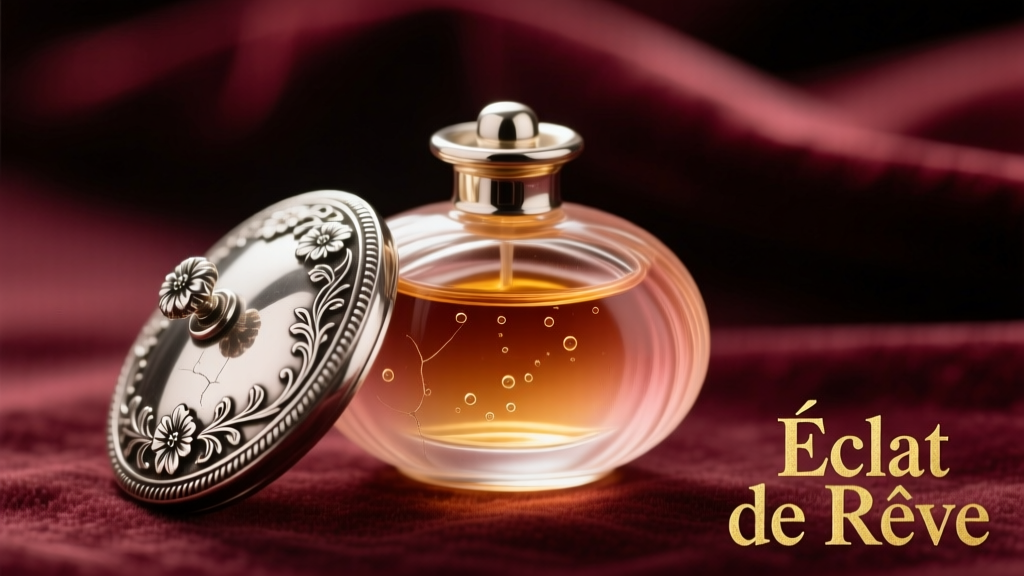
Satin Glass Perfume Bottle: Oval Form, Rose-to-Deep Amber Gradient, Sterling Silver Lid — A 1930s French Masterpiece Measuring 7 Inches
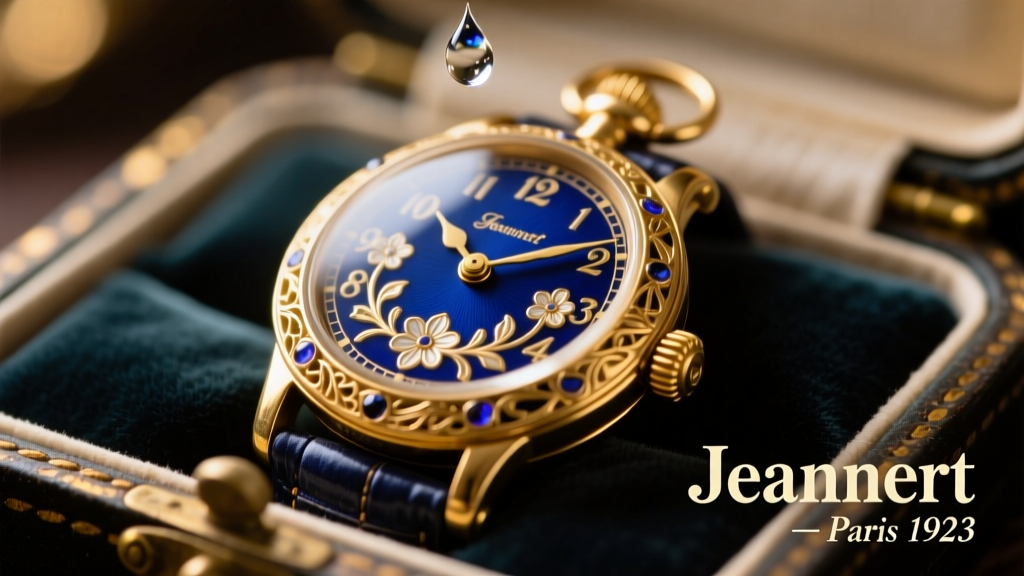
Jeannert: The Forgotten Swiss Watchmaker That Defined Precision in the 1930s–1950s
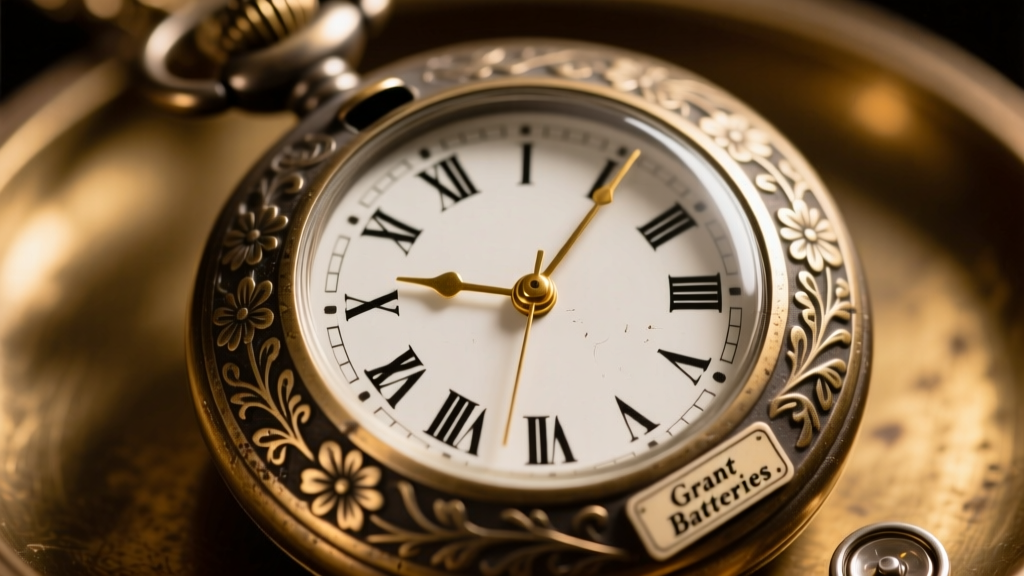
Grant Clocks: Advertising Timepieces in Glass and Metal — A Collector’s Guide to the 14½-Inch Round Battery-Powered Model
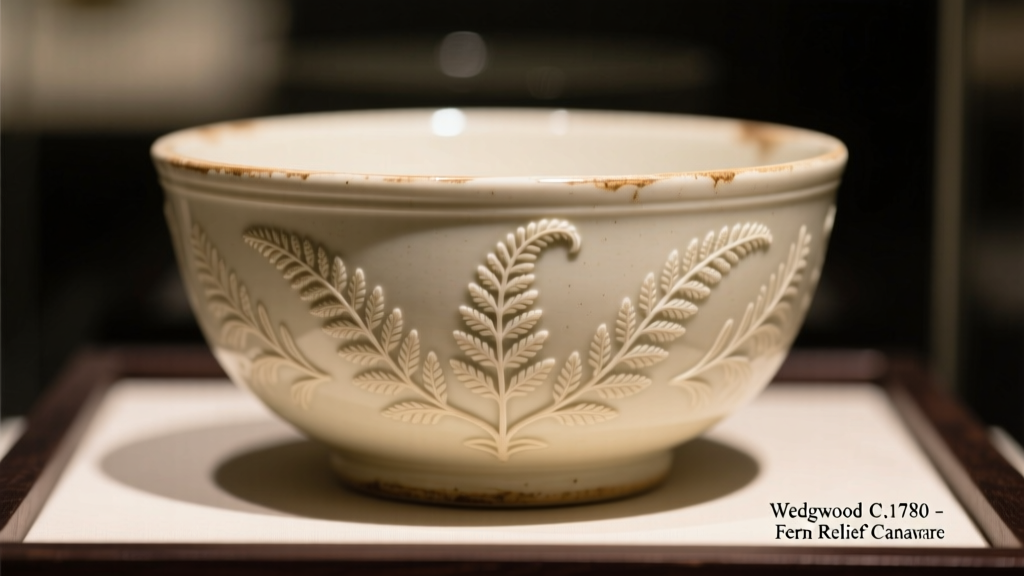
Wedgwood Caneware Fern Relief Bowl, c. 1780: A Masterpiece of Neoclassical Ceramic Innovation
Tiny Bubbles Make Orrefors Collectors Happy: The Hidden Signature of Swedish Glass Mastery
Royal Doulton Figurine 'Florence' HN 2745: Provenance, Identification, and Market Value Analysis
Lot 2337750: A Rare 1947 Patek Philippe Ref. 1526 in 18K Yellow Gold — Provenance, Technical Anatomy, and Market Significance