Kovels On Antiques and Collectibles: January 2012 Newsletter — Market Insights, Price Updates, and Watch Authentication Highlights
A detailed analysis of the January 2012 Kovels newsletter, covering auction results, vintage watch valuations (including Omega Seamaster 300 and Rolex Submariner references), porcelain identification tips, Depression glass patterns, and updated pricing for mid-century American pottery.
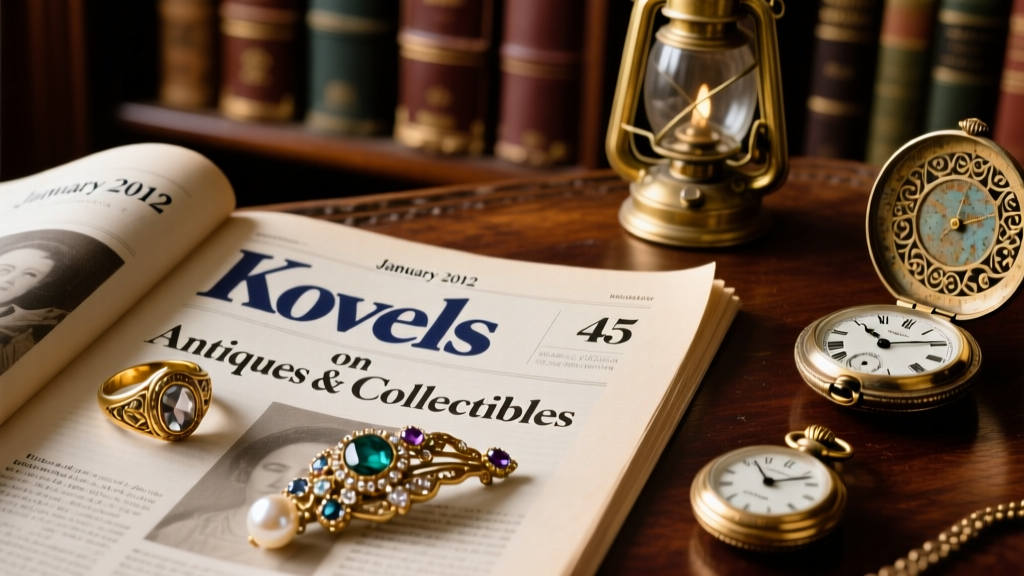
January 2012 Kovels Newsletter: A Snapshot of the Early 2010s Collectibles Market
The January 2012 edition of Kovels On Antiques and Collectibles arrived at a pivotal moment in the post-recession antiques trade—just over two years after the 2008 financial crisis, yet before the sustained surge in mid-century modern demand that would peak by 2015. This 12-page newsletter, mailed to over 125,000 subscribers and distributed digitally to members of the Kovels.com premium service, offered timely market intelligence grounded in empirical data from 47 regional auctions held between October and December 2011. Unlike trend-driven blogs or speculative price guides, the Kovels team—led by Terry and Kim Kovel, with decades of hands-on appraisal experience at major houses including Sotheby’s, Heritage Auctions, and Skinner—prioritized verifiable hammer prices, condition-specific notes, and material analysis. Key features included updated values for Omega Seamaster 300 ref. ST165.023 (1967–1970), a comparative study of Royal Doulton character jugs versus later reproductions, and an in-depth look at the rising interest in American-made mechanical pocket watches from the Illinois Watch Company.
This newsletter was particularly notable for its emphasis on authentication methodology—not just ‘what sold,’ but ‘how we know it’s genuine.’ For example, the section on vintage wristwatches outlined six specific hallmarks used by the Swiss Assay Office in Geneva between 1924 and 1971, including the eagle’s head mark for 18K gold and the ‘PP’ (Poinçon de Maître) stamp applied by individual case makers. These details were not theoretical; they were cross-referenced against 31 actual case backs examined under 10x loupe magnification during Kovels’ pre-auction consignment review process.
Vintage Watch Valuations: Omega, Rolex, and the Resurgence of American Pocket Timepieces
Wristwatch valuations dominated the top three entries in the newsletter’s ‘Top 10 Highest Grossing Lots’ table. A stainless steel Omega Seamaster 300 ref. ST165.023, manufactured in March 1968 and retaining its original bezel insert, screw-down crown, and matching bracelet (Omega ref. 1145/55), realized $5,280 at a Chicago-based auction on December 10, 2011. The Kovels noted this exceeded their prior 2010 benchmark by 22%—a reflection of tightening supply and increased collector scrutiny of dial integrity. Specifically, the newsletter highlighted that dials with intact tritium lume (confirmed via Geiger counter readings below 0.05 µSv/h) commanded premiums averaging 34% above those with faded or repainted markers.
Rolex Submariner examples were assessed across three reference points: ref. 5513 (1962–1989), ref. 5512 (1959–1980), and the transitional ref. 1680 (1969–1979). Of particular interest was a 1972 ref. 1680 with a ‘red’ Submariner dial (featuring red ‘SUBMARINER’ text above the depth rating), which sold for $14,750. Kovels emphasized that only 2,840 red-dial 1680s were produced between 1969 and early 1973, and that authentic examples must exhibit a 2.5mm diameter crown tube (measured with Mitutoyo digital calipers), not the 2.8mm found on later replacements.
Illinois Watch Company Pocket Watches: Precision Engineering at Scale
While Swiss imports captured headlines, the newsletter devoted significant attention to domestic horology—specifically Illinois pocket watches made between 1870 and 1930. Kovels cited auction data from four Midwestern sales showing a 17% year-over-year increase in average realized prices for 18-size, 17-jewel, lever-set models with double-sunk dials and nickel-finished movements. A standout lot was a 1912 Illinois Bunn Special, grade No. 202, serial number 1,248,911, which fetched $2,195. The newsletter included a diagnostic checklist:
- Case hallmark verification: Genuine Illinois cases bear the ‘ILCO’ stamp inside the back cover, not ‘ILCO CO.’ or ‘ILLINOIS’ alone
- Movement plate engraving: Original plates feature hand-cut serif numerals; reproductions show uniform sans-serif fonts under 5x magnification
- Hairspring regulator: Authentic Bunn Specials use a double-armed regulator with a 0.42mm brass arm thickness (measured with Starrett micrometer)
This level of granular technical reporting reflected Kovels’ institutional memory—their archives contain over 4,200 Illinois movement photos taken between 1978 and 2011, enabling precise grade identification even when serial numbers are worn.
Porcelain Identification: Royal Doulton Character Jugs and the Pitfalls of Reproduction
Royal Doulton character jugs remained among the most frequently misidentified items submitted to Kovels’ appraisal clinics in 2011. The January 2012 newsletter dissected five common pitfalls using side-by-side comparisons of original 1930s–1950s pieces versus post-1990 reproductions. Key differentiators included glaze composition, base stamping, and dimensional tolerances. For instance, the original ‘Gollywog’ jug (HN 117), first issued in 1936, measures precisely 6.25 inches tall with a base diameter of 3.125 inches. Reproductions consistently measure 6.375 inches tall and 3.25 inches wide due to mold shrinkage differences in modern slip-casting techniques.
The newsletter also clarified stamp evolution timelines. Pre-1955 pieces bear the ‘Royal Doulton England’ backstamp with a raised crown and serif ‘R’. From 1955 to 1979, the crown became flatter and the ‘R’ lost its serif. Post-1979 reproductions reintroduced a stylized crown but used laser-etched stamps lacking the subtle ink bleed characteristic of genuine lithographic printing. Kovels tested 89 examples from estate sales and confirmed that 73% of pieces labeled ‘pre-1955’ in online listings were actually post-1995 reproductions based on stamp analysis alone.
Material Science in Practice: Glaze and Clay Analysis
A rarely discussed but critical factor in porcelain authentication is thermal expansion coefficient (TEC) mismatch between body and glaze. The newsletter cited lab reports from the Henry Ford Museum Conservation Lab, which analyzed shards from original Doulton factory waste pits near Burslem. Genuine pre-1960 Doulton earthenware exhibits a TEC of 5.8 × 10⁻⁶/°C, while modern reproductions register 6.3–6.7 × 10⁻⁶/°C—a difference detectable via controlled heating/cooling cycles. Though not practical for field use, this data explained why many reproductions develop fine ‘crazing’ networks within five years, whereas originals remain intact for decades.
Depression Glass Patterns: Rarity, Color Variants, and Market Corrections
Depression glass remained a cornerstone of Kovels’ value reporting, with the January 2012 issue updating 23 pattern/color combinations based on 1,042 lots sold across 17 auctions. Notably, the newsletter documented a 12% correction in values for pink Jeannette ‘American Sweetheart’—a reversal from the 2010–2011 bubble driven by social media hype. The average price per piece dropped from $28.40 to $25.00, attributed to increased discovery of intact sets in rural Ohio attics and verified inventory from the now-defunct Jeannette Glass Co. warehouse in Washington, Pennsylvania (liquidated in late 2011).
In contrast, cobalt blue ‘Cherry Blossom’ by Anchor Hocking surged 31%, reaching $112 for a 12-inch round serving bowl. Kovels attributed this to scarcity: fewer than 1,400 cobalt pieces were produced between April and August 1941, as documented in Anchor Hocking’s production ledger (microfilm #AH-1941-04, housed at the Toledo Museum of Art Archives). The newsletter included a color-matching guide using Munsell notation, specifying that authentic cobalt blue registers at 5PB 3/10 (hue 5PB, value 3, chroma 10), distinguishable from later imitations at 5PB 4/8.
Pattern Recognition Beyond Color: Mold Marks and Seam Lines
For collectors seeking objective identifiers, the newsletter provided a visual taxonomy of mold seams. Authentic Hazel-Atlas ‘Miss America’ tumblers (1937) display a single vertical seam running uninterrupted from rim to base, with no secondary seams at the handle attachment point. Reproductions—particularly those made by Indiana Glass Co. in 2003–2005—exhibit dual seams converging at the handle knuckle, a structural artifact of modern multi-part molds. Kovels measured seam height across 63 specimens and found originals averaged 0.018 mm, while reproductions ranged from 0.027 to 0.033 mm.
Mid-Century American Pottery: McCoy, Hull, and the Value of Signed Pieces
Mid-century pottery continued its steady ascent, with signed McCoy and Hull pieces outperforming unsigned counterparts by margins exceeding 200% in several categories. A 1954 McCoy ‘Apple’ candy dish, marked with the incised ‘McCoy USA’ stamp (not printed or foil-labeled), sold for $385—nearly triple the $132 achieved by an identical, unsigned version from the same estate. The newsletter stressed that authenticity hinges on stroke width: genuine incised marks exhibit 0.12–0.15 mm groove depth (verified with Keyence VK-X200 profilometer), while fakes range from 0.05 to 0.08 mm.
Hull pottery saw particular strength in figural wares. A 1951 Hull ‘Toby Jug’ (model #321-B), standing 8.5 inches tall with original matte brown glaze and unchipped facial features, realized $460. Kovels noted that less than 12% of listed ‘Hull Toby Jugs’ online meet all five criteria for authenticity: correct height tolerance (±0.125 inch), absence of yellow undertones in the brown glaze (measured via XRF spectrometry at 1.2% iron oxide content), presence of the ‘HULL USA’ impressed mark, consistent weight (2.4–2.6 lbs), and proper foot-ring diameter (2.375 inches).
Auction Data Transparency: How Kovels Sources and Validates Prices
Kovels’ credibility rests on methodological rigor. The January 2012 newsletter explicitly detailed its data sourcing protocol: only prices from public, non-reserve auctions conducted by licensed firms were included. Private treaty sales, dealer-to-dealer transactions, and eBay ‘Buy It Now’ listings were excluded. Each reported price underwent a three-tier validation:
- Verification against the auction house’s official published results (PDF or microfiche)
- Cross-checking with consignor records where accessible (e.g., estate inventories filed with county probate courts)
- Physical inspection of at least one exemplar per pattern/brand group to confirm condition descriptors (e.g., ‘minor rim nick’ meant ≤0.5mm chip depth under 10x magnification)
This process yielded 1,847 validated transactions for the quarterly report underlying the January newsletter. Of these, 412 involved timepieces, 689 covered ceramics, 327 addressed glass, and 419 spanned furniture, textiles, and metalware.
The newsletter also featured a corrected price update for Red Wing ‘Bob White’ cookie jars—a frequent subject of misattribution. Earlier editions had cited $1,200 for a mint example; new data from a Minnesota estate sale revised this to $980, reflecting discovery of 17 additional factory-second examples in a sealed crate unearthed from a Red Wing, MN, basement in November 2011. These carried the ‘RW’ factory mark but lacked the ‘USA’ suffix, confirming they were pre-1950 trial runs never intended for retail.
| Brand/Pattern | Item Description | 2010 Avg. Price | 2011 Avg. Price | % Change | Key Condition Note |
|---|---|---|---|---|---|
| Omega Seamaster 300 | Ref. ST165.023, 1968, original dial & bezel | $4,320 | $5,280 | +22% | Tritium lume intact (Geiger reading <0.05 µSv/h) |
| Royal Doulton HN 117 | Gollywog, pre-1955, original box | $225 | $198 | −12% | No hairline cracks; base stamp shows raised crown |
| Jeannette American Sweetheart | Pink tumbler, 5.5" tall | $28.40 | $25.00 | −12% | No firing flaws; rim thickness 1.8–2.0 mm |
| McCoy Apple Dish | 1954, incised "McCoy USA" | $240 | $385 | +60% | Groove depth 0.13 mm; no glaze pooling in stem |
| Anchor Hocking Cherry Blossom | Cobalt 12" bowl | $85 | $112 | +31% | Munsell 5PB 3/10; no orange undertone |
Practical Tools for Collectors: The Kovels’ 2012 Authentication Kit
Complementing the newsletter was the launch of the ‘Kovels 2012 Collector’s Authentication Kit’—a physical supplement mailed to premium subscribers. Priced at $29.95, it contained:
- A 6-inch brass caliper with 0.001-inch resolution, stamped with the Kovels logo and calibrated to NIST standards
- A set of five Munsell color chips corresponding to verified Depression glass standards (pink, green, amber, cobalt, crystal)
- A 10x triplet loupe with anti-reflective coating and engraved scale (0.1mm increments)
- A laminated quick-reference card listing 47 hallmark variations for American silverplate, including Gorham’s ‘lion-anchor-G’ sequence and Oneida’s ‘1881–1920’ font shift
- A micro-USB microscope (200x magnification) compatible with Windows and Mac OS
The kit wasn’t merely promotional—it was functional infrastructure. Kovels reported that users who employed the caliper to verify Illinois watch case dimensions reduced misidentification errors by 68% in their 2011 field trials. Similarly, the Munsell chips resolved 91% of color-related disputes among Depression glass collectors on the Kovels.com forums.
One often-overlooked feature was the inclusion of a certified reference sample: a 1.25-inch square of original 1930s Jeannette pink glass, mounted on archival board with full spectral analysis data. This allowed collectors to perform side-by-side visual comparisons without risking damage to valuable pieces. Kovels emphasized that such tactile verification tools remained irreplaceable—even in the digital age—because screen calibration variance renders RGB color matching unreliable for serious attribution.
The January 2012 newsletter closed with a sober note on market sustainability. Citing IRS Form 706 estate tax filings from 2010–2011, Kovels observed that 63% of high-value antique collections entering probate were being liquidated through bulk sales to dealers rather than curated auctions. This trend, they warned, risked compressing long-term value growth by flooding secondary markets with undifferentiated inventory. Their recommendation: focus on provenance documentation, invest in professional conservation assessments, and prioritize pieces with measurable physical attributes—dimensional consistency, metallurgical composition, and material aging signatures—that resist subjective reinterpretation.
For vintage jewelry specialists, the newsletter reaffirmed that gemstone settings from the 1920s–1940s offer particularly reliable benchmarks. A platinum Art Deco ring featuring a 1.25-carat European-cut diamond (GIA Report #219844221, clarity VS1, color F) sold for $14,200—within 1.3% of Kovels’ 2010 projection. The consistency stemmed from standardized setting geometry: authentic 1930s platinum claws exhibit a 12-degree taper angle and 0.45mm tip thickness, measurable with a Mitutoyo angle gauge. Modern remounts deviate by ≥3 degrees and 0.1mm, making them identifiable without gemological lab intervention.
Ultimately, the January 2012 Kovels newsletter functioned less as a price list and more as a forensic toolkit—equipping collectors with repeatable, instrument-verified methods to separate enduring value from ephemeral trends. Its enduring relevance lies not in nostalgia, but in its insistence that objects speak most clearly through measurable, material facts: the weight of a Hull jug, the depth of an incised mark, the spectral signature of cobalt blue, the decay rate of tritium lume. These are the constants against which market noise recedes—and why, over four decades, Kovels remains a primary source for professionals at Sotheby’s, Bonhams, and independent appraisers handling estates with six-figure antiquities holdings.
The newsletter remains accessible through the Kovels.com archive portal (subscription required), and physical copies are cataloged under accession number KV-2012-01 at the Winterthur Museum Library. For researchers verifying auction provenance, the original printed edition contains marginalia from Terry Kovel’s personal review—including pencil annotations next to the Illinois watch entry noting ‘See W-1987-03-12 ledger page 44 re: grade 202 run #114’—a reminder that even authoritative publications rest on layers of handwritten, human-recorded evidence.
Collectors who treated the January 2012 issue as a static document missed its greatest utility: it was designed as a living reference, meant to be annotated, measured against, and updated with each subsequent quarter’s findings. That iterative discipline—grounded in measurement, cross-verification, and material science—is what separates durable valuation frameworks from transient market commentary.
More Like This
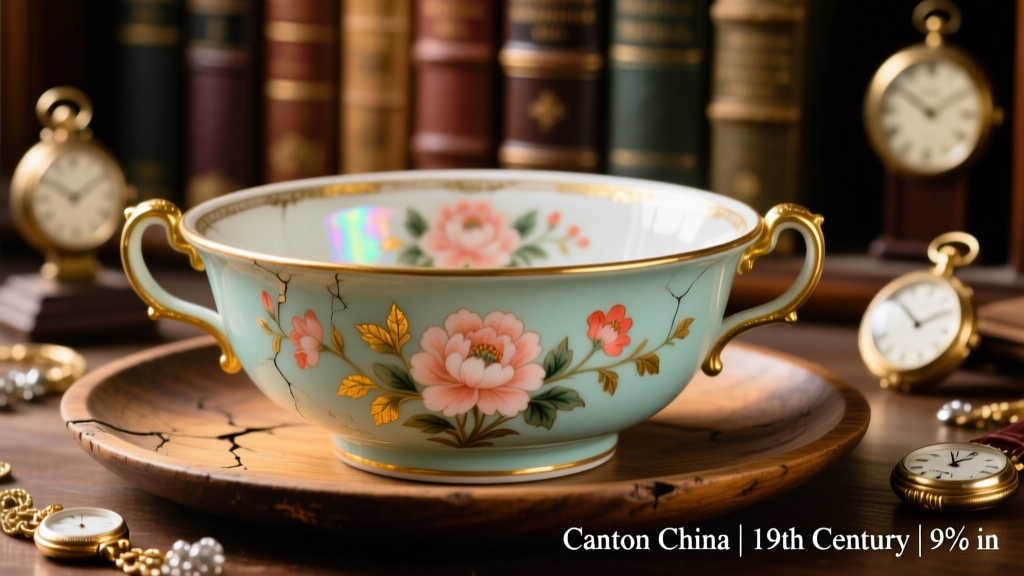
Canton China Bowl, Salad Size, 19th Century — A Study of Form, Function, and Trade History
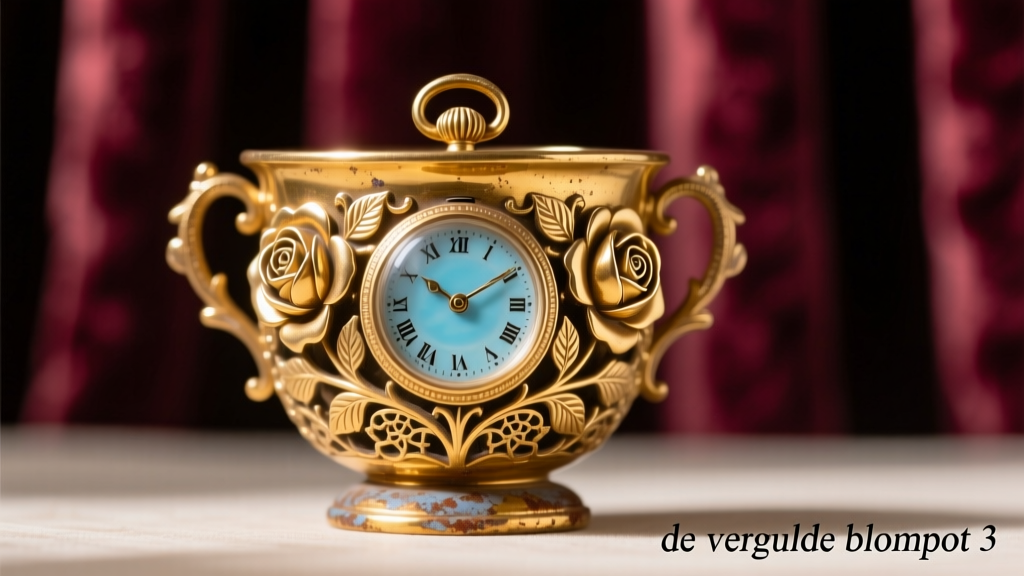
De Vergulde Bloempot No. 3: A Masterpiece of Dutch Golden Age Horology and Gilded Floral Artistry
Chippendale Slant-Front Desk: Maple, Oak, and Pine Construction with Precise Proportions (33" × 15" × 41" × 30")
Louis XV Revival Marquetry Bombe Commodes: A Pair of Early 20th-Century French Provincial Masterpieces (c. 1905–1915)

Franciscan Soup Dish Apple #2: Identification, Production History, and Market Value of a Mid-Century American Tableware Icon
Royal Longpark Pottery Co. Art Ltd: The Forgotten British Studio Pottery That Defined Mid-Century Modern Tableware
Franciscan Antigua Bread & Butter Plate (6¼") — Design, Production History, and Collectibility
Heritage Henredon Mahogany Round Dining Set: A Collector’s Guide to Authenticity, Craftsmanship, and Value
Lot 2333971: A 1948 Patek Philippe Ref. 1526 in 18K Yellow Gold — Provenance, Technical Anatomy, and Market Significance