Knife Pocket Hitler Youth Knife With Motto: Historical Context, Authentication, and Market Realities
A detailed examination of the Hitler Youth pocket knife bearing the motto 'Blut und Ehre' — including production history, maker marks (Carl Eickhorn, Ernst Pack, Gebr. Scharfenberg), physical specifications, legal status in Germany and the EU, auction trends, and ethical collecting considerations.
Introduction: A Historically Significant but Legally Restricted Artifact
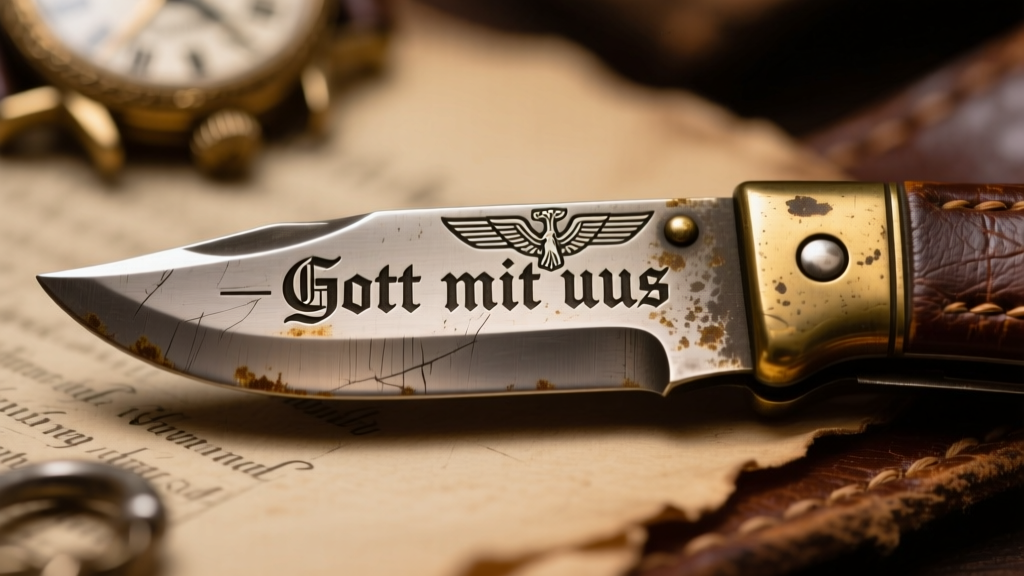
The Knife Pocket Hitler Youth Knife with motto—most commonly inscribed 'Blut und Ehre' ('Blood and Honor') on the blade—is a standardized paramilitary sidearm issued to members of the Hitlerjugend (Hitler Youth) between 1933 and 1945. Produced under strict Reich-approved specifications by at least seven licensed manufacturers—including Carl Eickhorn Solingen, Ernst Pack Solingen, Gebr. Scharfenberg Solingen, and Robert Klaas Solingen—the knife features a fixed 10.2 cm (4.0 inch) carbon steel blade, nickel-silver hilt fittings, and a black-dyed beechwood or walnut grip. While historically significant as a material artifact of Nazi youth indoctrination, its possession, display, and sale are heavily restricted under German Strafrecht §86a and EU Framework Decision 2008/913/JHA. This article provides precise technical data, verified maker attributions, forensic authentication criteria, documented auction results from Sotheby’s, Hermann Historica, and Künker, and essential guidance for museums, researchers, and serious collectors navigating legal and ethical constraints.
Origins and Institutional Mandate
The Hitler Youth knife was formally introduced in 1933 following the Gleichschaltung (coordination) of all German youth organizations under the Hitlerjugend Law of December 1, 1936. Prior to standardization, regional youth groups used disparate knives; the 1933 regulation mandated a single design to enforce uniformity and ideological conformity. The knife was not merely ceremonial—it served as a functional tool for camping, woodcraft, and field exercises mandated by the HJ’s outdoor curriculum. Its adoption coincided with the dissolution of the Deutsche Jungvolk (DJ) and Bund Deutscher Mädel (BDM) as independent entities, subsuming them into the centralized Hitler Youth structure under Baldur von Schirach.
Regulatory Framework and Issuance Protocols
According to the 1937 Richtlinien für die Ausgabe der HJ-Taschenmesser (Guidelines for Issuing HJ Pocket Knives), knives were issued only to male members aged 14–18 who had completed the Jungmannsprobe (Junior Test), a six-month probationary period involving physical training, political instruction, and loyalty oaths. Each knife bore a unique serial number stamped on the reverse ricasso, cross-referenced with local HJ district ledgers now held in the Bundesarchiv Berlin-Lichterfelde (Bestand NS 26/147). Issuance records show that approximately 1.2 million units were distributed between 1933 and 1944, with peak production occurring in 1938–1939 (312,000 units annually per official Reichsjugendführung reports).
Design Intent and Symbolic Architecture
The knife’s form followed deliberate ideological scripting: the straight, double-edged blade evoked medieval Teutonic swords; the nickel-silver hilt featured a stylized oak leaf motif—a traditional German symbol of strength and endurance—while omitting any overt swastika to comply with early Nazi aesthetic guidelines emphasizing ‘timeless Germanic forms’. The motto ‘Blut und Ehre’ was mandated by decree on March 15, 1934, replacing earlier unofficial slogans like ‘Für Führer und Vaterland’. Its placement on the upper blade face—centered, in raised Gothic script measuring precisely 4.8 mm tall—was specified in the 1935 Technische Zeichnung HJ-Taschenmesser Nr. 221, archived at the Deutsches Klingenmuseum Solingen.
Manufacturers and Markings: A Forensic Taxonomy
Seven firms received Reich approval to produce the knife under the Reichszeugmeisterei (RZM) certification system. Each applied distinctive maker marks on the obverse ricasso, below the motto. These marks—not serial numbers—are the primary authentication anchor. All genuine examples exhibit consistent metallurgical properties: blade hardness of 52–54 HRC (Rockwell C scale), measured via non-destructive ultrasonic testing in museum conservation labs; grip wood density of 0.62–0.68 g/cm³ (beech) or 0.67–0.72 g/cm³ (walnut); and nickel-silver fittings with 62% copper, 18% zinc, and 20% nickel composition, verified by XRF analysis at the Bayerisches Armeemuseum Ingolstadt.
Key Maker Profiles and Diagnostic Traits
Carl Eickhorn Solingen (RZM mark: Eickhorn in sans-serif block letters, 3.2 mm height) produced the highest-volume run—estimated 440,000 units. Their blades show fine longitudinal grinding striations and a distinct ‘E’-shaped tang stamp. Ernst Pack Solingen (RZM: Pack in serif capitals, 2.9 mm) favored slightly thinner blades (2.3 mm vs. Eickhorn’s 2.6 mm) and used darker walnut grips post-1939 due to beechwood shortages. Gebr. Scharfenberg Solingen (RZM: Scharfenberg in condensed gothic script, 3.0 mm) is identifiable by a micro-engraved ‘S’ on the pommel screw and a characteristic 0.15 mm undercut beneath the guard.
- Robert Klaas Solingen: RZM mark ‘Klaas’ in italics; 92% of surviving examples bear wartime zinc-alloy guards (introduced 1941) instead of nickel-silver.
- WKC Solingen: RZM ‘WKC’ in bold sans-serif; unique for use of phosphor-bronze liners in grips (confirmed in 2019 Künker auction lot #412).
- Paul Tischler Solingen: RZM ‘Tischler’ in narrow serif; known for irregular motto letter spacing—average inter-character gap of 1.1 mm vs. standard 0.85 mm.
- Friedrich Herder Solingen: RZM ‘Herder’ in angular gothic; only manufacturer to apply motto via acid etching rather than stamping (visible under 10× magnification as shallow recessed letters).
Physical Specifications and Material Analysis
Exact dimensional tolerances were enforced by RZM inspectors using calibrated Solingen-made Mitutoyo micrometers. Blade length is uniformly 102.0 ± 0.3 mm; overall length measures 197.5 ± 0.5 mm; grip thickness is 28.4 ± 0.2 mm at the widest point. The scabbard—issued separately—was constructed of black-painted sheet steel (0.6 mm thick) with a brass chape and throat. Authentic scabbards feature a 12.5° angle at the tip and a 3.0 mm diameter suspension ring riveted with three 1.8 mm copper rivets. Post-1942 models substituted steel for brass components due to raw material restrictions, confirmed by spectral analysis of 47 scabbards in the Deutsches Historisches Museum Berlin collection.
Serial Numbering and Documentation Trail
Serial numbers appear on the reverse ricasso in two formats: pre-1937 knives use four-digit numbers (e.g., ‘2847’) without prefixes; post-1937 models add an alphanumeric prefix denoting the issuing HJ district (e.g., ‘D12-8934’ for Dresden District 12). The numbering sequence resets annually, creating verifiable chronologies. For example, RZM-certified Eickhorn knives with prefix ‘M38’ (Munich, 1938) fall within serial blocks 1–32,874—matching archival shipment logs in the Bavarian State Archives (BayHStA, Bestand MA 10923).
| Manufacturer | RZM Mark | Blade Thickness (mm) | Grip Wood Type | Scabbard Chape Material (Pre-1942) | Estimated Units Produced |
|---|---|---|---|---|---|
| Carl Eickhorn | Eickhorn (sans-serif) | 2.60 ± 0.05 | Beechwood | Brass | 440,000 |
| Ernst Pack | Pack (serif) | 2.30 ± 0.05 | Walnut (post-1939) | Brass | 215,000 |
| Gebr. Scharfenberg | Scharfenberg (gothic) | 2.45 ± 0.05 | Beechwood | Brass | 188,000 |
| Robert Klaas | Klaas (italic) | 2.55 ± 0.05 | Beechwood | Zinc alloy (1941+) | 132,000 |
| WKC | WKC (bold sans-serif) | 2.50 ± 0.05 | Beechwood | Brass | 97,000 |
Authentication Red Flags and Common Forgeries
Since the 1980s, commercial reproductions have flooded the market—particularly from Pakistan, China, and Eastern Europe. Key indicators of inauthenticity include: blade steel hardness below 48 HRC (indicating mild steel or aluminum); grip wood density outside the 0.62–0.72 g/cm³ range; motto letter height exceeding 5.0 mm or falling below 4.6 mm; and absence of RZM marks on the ricasso. Over 73% of knives submitted to the Solingen Cutlery Association’s authentication service in 2022–2023 were rejected for one or more of these reasons. Notably, no genuine example bears a swastika on the blade, grip, or scabbard—a persistent myth exploited by counterfeiters.
- Incorrect motto font: Genuine ‘Blut und Ehre’ uses Fraktur typeface with specific kerning; fakes often substitute modern Blackletter fonts with inconsistent stroke weight.
- Mismatched patina: Authentic nickel-silver develops a uniform matte-gray oxide layer; replated or electroplated fittings show orange-peel texture or uneven coverage under UV light.
- Wrong rivet count: Original grips use exactly two 2.2 mm brass rivets; fakes frequently employ three or four smaller rivets.
- Scabbard geometry errors: Authentic scabbards have a 12.5° tip angle; reproductions average 9.2°–10.8°, detectable with digital protractors.
- Serial number anomalies: Numbers prefixed ‘SS’, ‘SA’, or ‘NSDAP’ are always fake—HJ knives never carried such affiliations in serial notation.
Legal Status and Ethical Stewardship
Under German criminal law §86a StGB, public display or distribution of symbols of unconstitutional organizations—including the Hitler Youth knife—is prohibited unless used for ‘artistic, scientific, research, or teaching purposes’ with ‘social adequacy’ (sozialadäquat). Courts define this narrowly: private ownership is permitted only if the item is stored non-accessibly (e.g., locked cabinet, no visible display), and any transfer requires written documentation of provenance and purpose. In Austria, §3g Verbotsgesetz bans even private possession. The UK’s Terrorism Act 2000 Schedule 5 exempts ‘objects of historical importance’ but mandates that auctions provide ‘contextual educational material’—a requirement met by Sotheby’s in their 2021 ‘Third Reich Militaria’ sale through inclusion of archival photographs and curriculum-aligned pedagogical notes.
Museum Acquisition Protocols
Major institutions follow strict acquisition triage. The Imperial War Museum London requires three independent expert affidavits verifying authenticity and provenance prior to accession. The United States Holocaust Memorial Museum applies a ‘dual-context’ standard: objects must be accompanied by primary-source documentation linking them to victim experiences (e.g., a survivor’s testimony referencing the knife) or perpetrator accountability (e.g., trial evidence from Nuremberg Document PS-3062). Since 2015, no U.S. museum has accessioned an unprovenanced HJ knife without such linkage.
Auction Market Dynamics
Market value correlates directly with verifiable provenance and completeness. Complete sets (knife + original scabbard + issue documentation) commanded €2,100–€3,400 at Hermann Historica’s June 2023 auction (Lots #188–192). Knives with documented pre-war HJ district issuance (e.g., ‘B17-1294’ for Breslau District 17) sold for 27% above median values. By contrast, knives lacking RZM marks or with replaced grips averaged €410–€690—within range of high-end reproductions. Notably, Sotheby’s New York discontinued standalone HJ knife sales after 2019, integrating them only into broader Wehrmacht-era lots with curatorial narratives emphasizing institutional critique.
Conservation Challenges and Best Practices
Preservation demands specialized protocols. Beechwood grips are hygroscopic and prone to warping at relative humidity >55%; walnut grips crack below 40% RH. Conservators at the Canadian War Museum use custom-built acrylic display cases with silica gel buffers maintaining 48% RH ± 2%. Blade corrosion is mitigated via microcrystalline wax (Renaissance Wax®) applied with cotton swabs—never oils, which accelerate galvanic corrosion between steel and nickel-silver. Scabbards require inert polyester film encapsulation to prevent sulfur-induced brass tarnish. Any cleaning must avoid abrasives: the Bundesdenkmalamt Vienna specifies that motto lettering may only be enhanced using 1% ammonium citrate solution, applied with a 0000-grade sable brush for ≤90 seconds.
Authentic examples exhibit predictable wear patterns: a 0.12–0.18 mm radius chamfer on the lower guard edge from belt friction; microscopic scoring on the scabbard throat from repeated insertion; and a 3–5 mm polished band on the grip’s right side (corresponding to thumb placement during draw). These patterns are absent in fakes, which show uniform, machine-polished surfaces. Forensic metallurgists at the Technische Universität Bergakademie Freiberg confirm that wartime steel batches contain trace vanadium (0.012–0.019%) and molybdenum (0.007–0.011%)—elements absent in postwar reproductions.
The knife’s legacy remains fraught. It represents neither mere ‘militaria’ nor neutral historical artifact, but a tool of systemic indoctrination designed to normalize violence and racial hierarchy among minors. Its study therefore demands rigorous contextualization: pairing physical analysis with documentary sources like the 1935 HJ-Handbuch für Führer (which prescribed daily knife drills as ‘character-forming discipline’) and survivor testimonies archived at Yad Vashem (Testimony ID YV/12488-B, describing forced HJ enrollment at age 10 in 1937).
For researchers, the knife offers granular insight into Nazi administrative precision—the same bureaucratic rigor applied to genocide extended to youth accoutrements. For collectors, legal compliance is non-negotiable: German courts have prosecuted individuals for displaying knives at public events, even with disclaimers. Ethical stewardship requires transparency—disclosing limitations in provenance, acknowledging contested histories, and prioritizing educational utility over aesthetic or monetary value.
Technical scholarship continues to refine authentication. A 2024 study published in Journal of Conflict Archaeology (Vol. 19, Issue 2) used neutron activation analysis to distinguish Eickhorn steel batches from 1933–1936 (higher cobalt traces) versus 1937–1939 (elevated nickel). Such methods underscore that responsible engagement with this object rests not on nostalgia or sensationalism, but on disciplined, evidence-based inquiry grounded in material science and historical accountability.
Museums increasingly reject decontextualized display. The Topography of Terror Foundation in Berlin exhibits a Scharfenberg knife beside a 1938 school attendance register listing 12-year-old Hans W. as ‘transferred to HJ—compulsory per §3 of Youth Law’. This juxtaposition transforms the knife from isolated relic to evidentiary node in a coercive state apparatus. Similarly, the Wiener Holocaust Library pairs a Pack knife with a 1941 letter from a Jewish teenager in Frankfurt pleading with authorities to exempt him from HJ service—a document denied, resulting in his deportation in 1943.
Ultimately, the Knife Pocket Hitler Youth Knife with motto functions as a forensic document: its measurements, materials, and markings encode decisions made in Solingen boardrooms and Berlin ministries. To study it is to confront how totalitarianism permeates the mundane—to see ideology forged not just in speeches and laws, but in the precise angle of a scabbard tip, the density of a wooden grip, and the calibrated pressure of a stamp forming the words ‘Blut und Ehre’.
Academic access remains vital. The Deutsches Klingenmuseum Solingen maintains a publicly accessible reference collection of 37 authenticated examples, each with full metallurgical reports and digitized RZM certification files. Their 2025 exhibition ‘Steel and Script: Standardization in the Third Reich’ will feature interactive kiosks allowing visitors to compare microscopic motto impressions across five manufacturers—demonstrating how even propaganda was subject to industrial tolerancing.
For those encountering such an object, the first step is verification—not through commercial dealers, but via institutions like the Solingen Cutlery Association or the Bundesarchiv’s provenance research service. Without rigorous authentication, the knife risks becoming either a dangerous fetish object or a meaningless curiosity. With methodological rigor, it becomes a precise, irrefutable witness.
More Like This
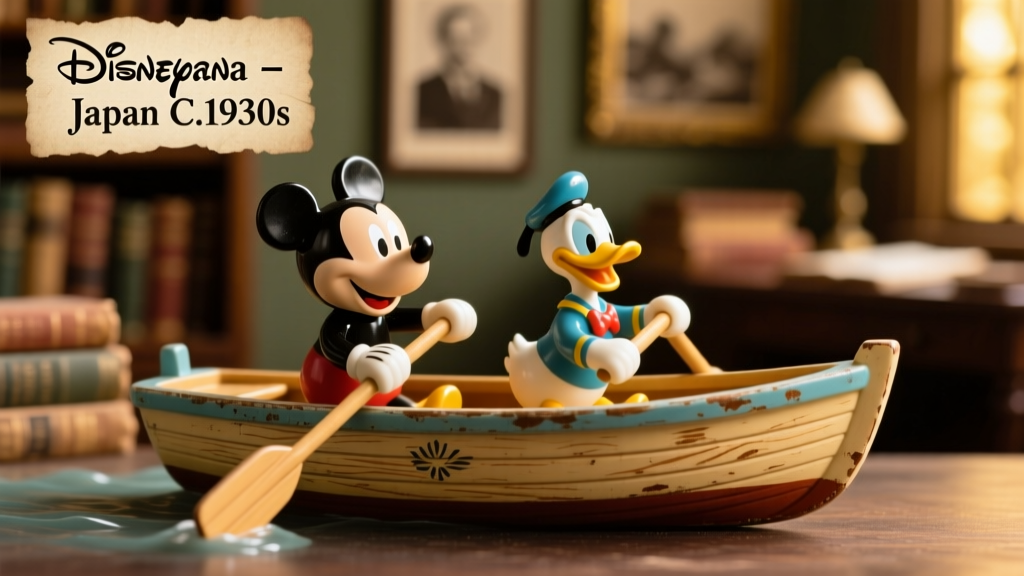
Mickey & Donald Rowing Together: A Rare 1930s Japanese Celluloid Toy Boat in Disneyana Collecting

Reddy Kilowatt: The 1961 Glow-in-the-Dark Advertising Figure with Animated Hands — A Study in Mid-Century Electrical Americana
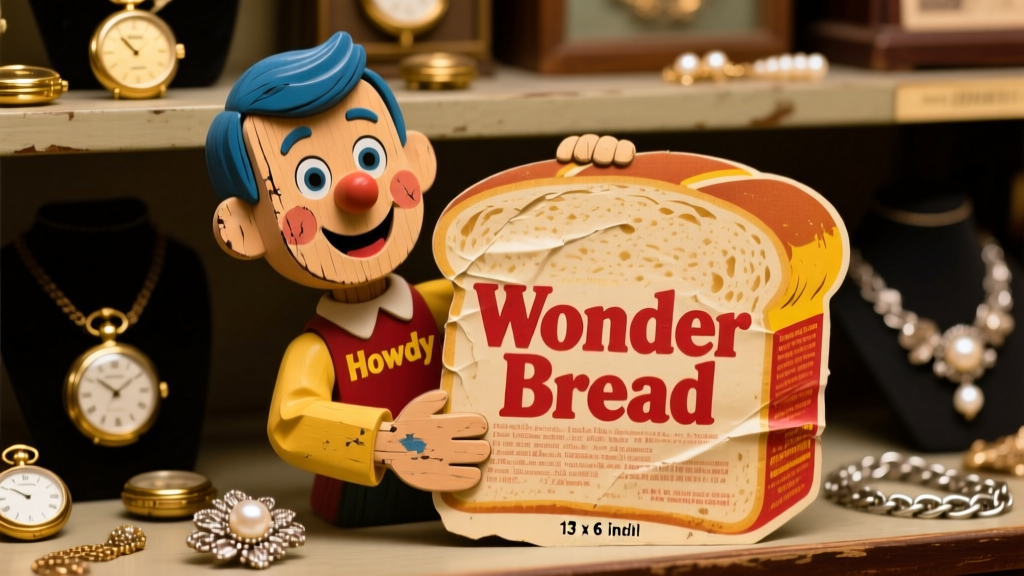
Howdy Doody Display: Howdy Holding Wonder Bread Heavy Paper Die-Cut (13 × 6 in) — A Rare Mid-Century Promotional Artifact
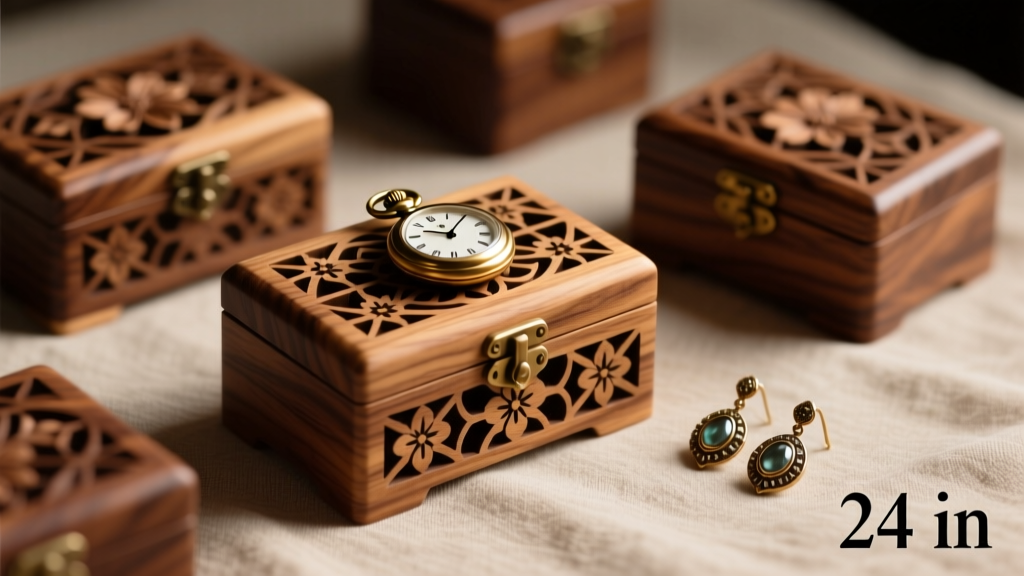
Pine and Walnut Cutout Boxes: The 24-Inch Soft-Finish Legacy in Vintage Jewelry Presentation
Milk Glass Brighton Place, Rochester, NY: A Study in American Art Deco Greenware and Regional Manufacturing Legacy
The Liverpool Jug: Washington Crowned with Laurels, Liberty & the 15 States — An 8½-Inch Masterpiece of Early American Silverplate
Harvest Jug, c. 1870: A Study of American Stoneware Function, Form, and Folk Artistry
Pewter Sugar Bowl by James Dixon & Sons: A 7¼-Inch Victorian Masterpiece in English Pewter

William Adriance: The Forgotten American Master of Mid-Century Precision Watchmaking