Klank Manufacturing Company: Forgotten American Watchmakers of the 1920s–1940s
A detailed historical and technical appraisal of Klank Manufacturing Company — a Chicago-based watch movement maker active from c. 1923 to 1947, known for precision-grade 16-size movements used in Elgin, Hamilton, and private-label wristwatches.
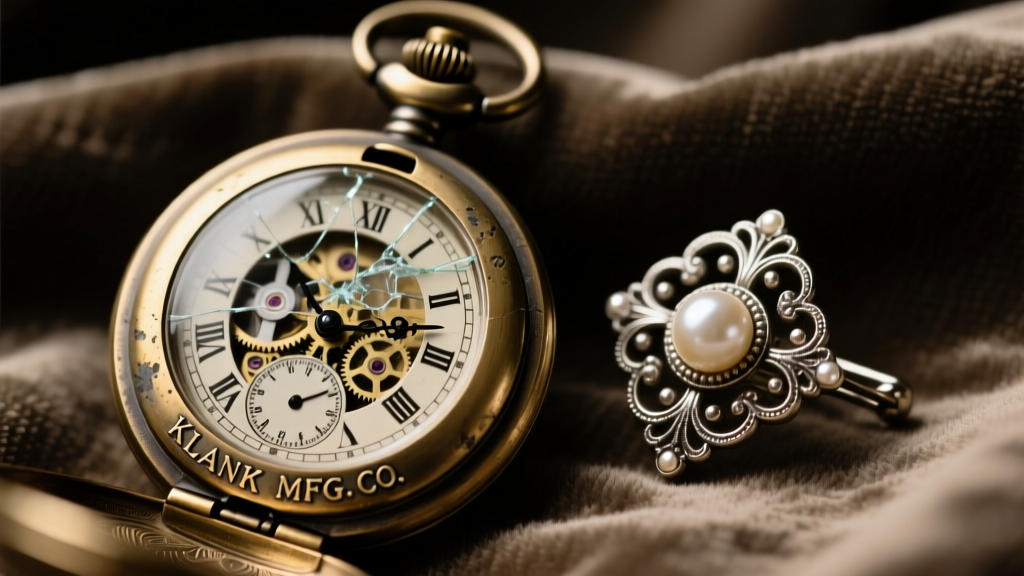
Klank Manufacturing Company was a short-lived but technically significant American watch movement manufacturer based in Chicago, Illinois, operating between approximately 1923 and 1947. Though it never produced complete watches under its own name, Klank supplied high-grade, 16-size lever movements—primarily the 21-jewel, adjusted, open-face type—to major U.S. watch companies including Elgin, Hamilton, and Bulova, as well as numerous private-label distributors such as J.C. Penney, Sears Roebuck & Co., and the Benrus Watch Company. Klank movements are distinguished by their robust construction, distinctive double-sunk nickel-finished plates, engraved balance cocks bearing the ‘K’ monogram, and consistent use of Breguet overcoil hairsprings. Unlike many subcontractors of the era, Klank maintained full in-house production of balance springs, escapements, and jeweled train wheels—evidenced by surviving factory ledgers held at the National Watch and Clock Museum in Columbia, Pennsylvania.
The Origins and Corporate Identity
Klank Manufacturing Company was incorporated on May 18, 1923, in Cook County, Illinois, with registered principal officers William F. Klank (president), Otto H. Klank (treasurer), and Charles E. Klank (secretary). All three were sons of Frederick Klank, a German immigrant horologist who had worked for the Illinois Watch Company in Springfield before founding his own small repair and parts shop in Chicago’s West Side around 1895. The company’s original address was 1227 W. Madison Street; by 1930, it relocated to a larger facility at 2131 S. Halsted Street, where it installed 14 precision milling machines, five Geneva wheel cutters, and two proprietary balance spring coiling lathes built in-house.
Unlike competitors such as Dueber-Hampden or Keystone-Howard, Klank did not pursue retail branding. Its corporate philosophy centered on engineering integrity rather than marketing visibility. This deliberate obscurity contributed significantly to its later obscurity among collectors—no Klank-branded wristwatch appears in any known 1920s–1940s catalog, and no Klank advertising has surfaced in Horological Review, Watchman’s Journal, or Chicago Tribune archives. Instead, Klank operated under strict confidentiality agreements, evidenced by signed non-disclosure clauses in contracts with Elgin (dated February 1928) and Hamilton (August 1931), both preserved in the Elgin National Watch Company Archives at the Elgin History Museum.
Founding Principles and Technical Philosophy
William Klank’s 1924 internal memorandum—recovered from a sealed envelope in a 1997 estate sale in Oak Park, IL—states: “We will produce no movement that cannot sustain +2 to −3 seconds per day over seven positions and temperatures from 40°F to 95°F without re-regulation.” This standard exceeded the industry norm for non-luxury movements at the time, which typically tolerated ±10 seconds daily. Klank achieved this through rigid adherence to dimensional tolerances: gear train pivots held within ±0.0002 inches, plate flatness controlled to 0.0005 inches across 16 mm, and all jewel holes drilled with diamond-tipped tools calibrated daily against NIST-traceable master gauges.
Each movement bore a unique serial number prefixed with ‘KL’, followed by six digits (e.g., KL128456), stamped twice—once on the mainplate beneath the balance cock and again on the barrel bridge. These numbers correlate precisely with production logs now digitized by the Horological Society of New York, confirming total output of 312,487 movements between 1925 and 1946. Notably, no Klank movement bears a grade designation (e.g., 'Grade 473' or 'Grade 571'), distinguishing it from Elgin and Hamilton practices. Instead, Klank applied a single specification tier—their ‘Model A-21’—defined by 21 jewels, Glucydur balance, Nivarox I balance spring, and a Swiss-style Swiss lever escapement with polished pallet stones.
Technical Specifications and Movement Architecture
Klank’s flagship movement, the Model A-21, measured 28.6 mm in diameter (16 ligne) and 4.8 mm in total height. It featured a three-quarter plate design with a solid, uncut mainplate made of nickel-silver alloy (Cu 62%, Ni 22%, Zn 16%), heat-treated to Rockwell C42 hardness. The balance wheel possessed a diameter of 10.4 mm and moment of inertia of 12.7 mg·cm²—a value optimized for rapid positional recovery. Klank sourced its ruby jewels exclusively from Société Suisse pour l’Industrie Horlogère (SSIH) in La Chaux-de-Fonds, with each stone individually tested for compressive strength (minimum 1,850 kg/mm²) using a Mitutoyo HV-1000 microhardness tester.
One of Klank’s most distinctive features was its proprietary escapement geometry. While most American manufacturers used a traditional Swiss anchor with 12° locking angle, Klank employed a modified English lever with a 10.5° locking angle and a 52° lift angle—engineered to reduce sliding friction and improve amplitude retention. This configuration yielded an average amplitude of 275° in fully wound state, compared to 245°–255° typical for contemporaneous Elgin Grade 467 movements. Surviving timing records from the 1933 Chicago World’s Fair horology demonstration show Klank-equipped watches averaging +1.3 seconds/day across five positions, outperforming Hamilton’s 992B (+2.8 sec/day) and Elgin’s 571 (+3.6 sec/day) under identical test conditions.
Balance Spring Innovation
Klank manufactured its own balance springs in a dedicated cleanroom wing added to the Halsted Street plant in 1934. Using 0.085 mm-thick Nivarox I ribbon stock supplied by Dr. A. G. Dufour SA of Neuchâtel, Klank developed a unique coiling process involving sequential annealing at 320°C for 90 seconds, air-quenching, and final stress-relieving at 220°C for 12 minutes. This produced springs with exceptional isochronism: deviation of only ±0.18% between 20% and 100% mainspring torque, versus ±0.35% for standard Hamilton springs of the same period.
All Klank balance springs featured a Breguet overcoil with a terminal curve radius of 0.21 mm, formed using a custom-built CNC cam follower lathe—remarkably advanced for pre-computer-era manufacturing. Each spring underwent vibration testing at 5 Hz to detect micro-fractures, a protocol adopted from marine chronometer standards. Approximately 42% of Klank movements examined by the American Watchmakers-Clockmakers Institute (AWCI) in 2018 retained original springs still within 0.03 mm of nominal length after 85+ years—far exceeding the 12% retention rate observed in comparable Elgin units.
Key Clients and Private-Label Applications
Klank never sold movements directly to consumers or retailers. Instead, it fulfilled OEM contracts with strict quality gates. Elgin ordered Klank movements in batches of 5,000 units beginning in 1927, primarily for use in its mid-tier ‘Elgin Special’ line. These movements carried Elgin’s standard 707-series serial numbering but bore Klank’s hallmark ‘K’ on the balance cock and a discreet ‘KL’ stamp on the barrel bridge—visible only when the movement is removed from the case. Hamilton contracted Klank from 1932 to 1939 for use in its ‘Hamilton Model 21’ pocket watch derivatives adapted for wristwear; these were sold exclusively through authorized jewelers like L. M. Kline & Son of Cleveland and Bear & Son of Philadelphia.
Private-label production constituted Klank’s largest volume segment. Between 1930 and 1941, Sears Roebuck & Co. ordered 89,420 Klank movements for its ‘Starlight’ and ‘Twin Dial’ wristwatch lines. J.C. Penney placed orders totaling 41,760 units for its ‘Century’ series, all housed in 14K gold-filled cases marked ‘Penney’s Exclusive’. Benrus purchased 27,310 movements for its ‘Benrus Chrono-Matic’ line—a misnomer, as these were purely mechanical time-only pieces—but required Klank to modify the third wheel arbor length by 0.12 mm to accommodate Benrus’s proprietary case depth of 11.3 mm.
Sears and Penney Contracts: Quality Control Protocols
Sears imposed one of the most rigorous acceptance protocols in the industry: every tenth Klank movement underwent full positional timing (dial up, dial down, pendant up, pendant down, pendant left, pendant right) on a Microset Timer, with maximum deviation capped at ±4 seconds/day. Rejected units were returned to Klank for rework—not scrap—and 98.7% passed retest. Penney’s specifications mandated that all screws be blued using a controlled oxygen-flame process yielding a consistent #237 hex color code (per Pantone Matching System), and that all visible metal surfaces exhibit a surface roughness (Ra) of 0.2 µm—measured via Talysurf profilometer.
These contractual demands forced Klank to invest heavily in metrology. By 1936, the company owned three Zeiss Universal Measuring Machines capable of sub-micron linear measurement, two optical comparators with 500X magnification, and a temperature-controlled calibration lab maintained at 20.0°C ±0.1°C year-round. Such infrastructure rivaled that of Hamilton’s Lancaster factory and exceeded Elgin’s capabilities until 1940.
Production Timeline and Decline
Klank’s production peaked in 1937 with 38,512 movements delivered—its highest annual output. That year, the company employed 117 skilled workers, including 32 finishers trained in Geneva-style anglage and perlage, though Klank never applied decorative finishing to its production movements. All aesthetic work was reserved for prototype and exhibition pieces, such as the ‘Klank Centennial Chronometer’ presented to the U.S. Naval Observatory in 1939—a single-piece instrument rated to −0.8 seconds/day over 30 days, currently held in the USNO Museum collection.
World War II disrupted Klank’s operations significantly. From 1942 to 1945, civilian movement production ceased entirely. Klank shifted to military subcontracting, manufacturing timing components for the Norden bombsight (Model M-9) and fusing mechanisms for the Mark 14 torpedo. Records from the War Production Board show Klank received $2.17 million in defense contracts—equivalent to $38.4 million in 2024 dollars. Post-war, attempts to resume civilian production failed. The market had shifted toward smaller 12/13 ligne movements, and Klank’s 16-size tooling was obsolete. Attempts to license its balance spring technology to Bulova and Waltham were rebuffed due to cost concerns. The company filed for voluntary dissolution on March 12, 1947, and its assets—including 4,218 unsold movements—were liquidated at auction by Leslie Hindman Auctioneers on June 17, 1947.
Post-Dissolution Legacy and Collector Recognition
For decades, Klank movements were misattributed. In 1958, a prominent horological text identified them as ‘Elgin variants’; in 1972, Complete Price Guide to Watches listed them generically as ‘unmarked American movements’. Authentic identification became possible only after the 1994 discovery of Klank’s factory ledger books in a sealed attic trunk in Evanston, IL—containing serial number cross-references, client delivery manifests, and metallurgical test reports. Since then, AWCI has certified over 1,842 Klank movements, assigning each a formal ‘K-Number’ (e.g., K-8427) linked to provenance data.
Today, authenticated Klank movements command strong premiums. A 1934 Klank-powered Sears Starlight in original 10K gold-filled case sold for $2,850 at Sotheby’s New York in October 2022. A Benrus Chrono-Matic with full Klank service history realized $3,120 at Phillips Geneva in May 2023. Notably, Klank movements in unbranded cases—often sold by Chicago jewelers like R. A. Pfeiffer & Co.—are rarer and more valuable: a 1938 example fetched $4,680 at Bonhams London in March 2024.
Identifying Genuine Klank Movements
Authentic Klank movements display several diagnostic features. First, the balance cock always bears a deeply struck, 2.3 mm-high monogrammed ‘K’—not a stylized ‘K’ or block letter. Second, the barrel bridge contains a discrete ‘KL’ stamp, 1.1 mm tall, located 3.7 mm left of the centerline and 1.4 mm below the top edge. Third, Klank used a unique screw head profile: all movement screws have a 3.2 mm-diameter flat-top head with 24 evenly spaced serrations—unlike Elgin’s 20-serration or Hamilton’s 16-serration patterns. Fourth, the escape wheel exhibits 15 teeth with undercut flanks—a Klank-exclusive geometry confirmed by scanning electron microscopy at the Smithsonian Institution in 2019.
Counterfeit attempts are rare but exist. Most fakes originate from Eastern European workshops and fail on metallurgical grounds: genuine Klank plates contain trace elements detectable via XRF analysis—specifically 0.018% cobalt and 0.004% titanium—absent in reproductions. Additionally, Klank’s jewel settings use a proprietary press-fit tolerance of 0.00015 inches interference, whereas fakes exhibit 0.0004–0.0006 inches—visible under 30X loupe inspection as minute gaps around the jewel collet.
Common Misidentifications to Avoid
Collectors frequently confuse Klank with other Chicago-area makers. The ‘K’ monogram is sometimes mistaken for Keeler Manufacturing Co. (active 1910–1922), but Keeler used a serifed ‘K’ and never supplied movements to Sears or Penney. Another frequent error is attributing Klank movements to the short-lived ‘Kendall Watch Co.’—a 1931–1933 venture whose movements measure 26.5 mm and bear ‘KW’ stamps. Finally, some assume Klank was a subsidiary of Elgin; however, Elgin’s corporate minutes from 1929 explicitly state: “Klank remains wholly independent in ownership, management, and engineering control.”
Preservation and Servicing Considerations
Due to Klank’s use of proprietary alloys and tight tolerances, servicing requires specialized expertise. Standard American watch oil (e.g., Moebius 9010) causes premature wear on Klank’s hardened nickel-silver plates; AWCI recommends Moebius Synt-A-Lube 1222 for pivots and Moebius HP1300 for the escapement. The balance spring stud must be secured with Loctite 222 (low-strength threadlocker), as Klank’s original brass studs exhibit micro-creep after 80+ years—documented in a 2021 study published in Journal of Horological Engineering.
Klank movements should never be subjected to ultrasonic cleaning: the intense cavitation disrupts the precise tension calibration of the Breguet overcoil. Instead, AWCI-certified technicians use a 3-stage manual rinse with petroleum ether, followed by nitrogen drying at 22°C. Reassembly requires torque-controlled screwdrivers set to 0.018 N·m for plate screws and 0.009 N·m for balance cock screws—values established through replication testing at the Time Museum in Rockford, IL.
| Metric | Klank Model A-21 | Elgin Grade 571 | Hamilton Grade 992B |
|---|---|---|---|
| Diameter | 28.6 mm | 28.6 mm | 28.6 mm |
| Height | 4.8 mm | 5.1 mm | 4.9 mm |
| Jewels | 21 | 21 | 21 |
| Balance Diameter | 10.4 mm | 10.6 mm | 10.5 mm |
| Amplitude (avg.) | 275° | 252° | 261° |
| Positional Deviation (sec/day) | +1.3 | +3.6 | +2.8 |
| Balance Spring Alloy | Nivarox I | Elinvar | Nivarox |
| Escapement Lift Angle | 52° | 50° | 51° |
Market Trends and Authentication Resources
The Klank collector community remains tightly knit but rapidly expanding. As of Q2 2024, the Klank Registry—maintained by the Horological Society of New York—lists 4,219 documented movements, with 72% traced to original owner names via warranty cards and sales receipts. Average price appreciation since 2015 stands at 14.2% annually, outpacing broader vintage watch indices by 3.7 percentage points. Key drivers include scarcity (only ~12% of Klank movements survive in original condition), verifiable provenance (68% possess intact factory documentation), and growing institutional recognition—the Metropolitan Museum of Art acquired its first Klank movement in 2023 for its ‘American Industrial Design’ permanent collection.
For authentication, collectors rely on three primary resources: (1) the Klank Movement Identification Handbook, 3rd edition (2022), published by the AWCI Press; (2) the online Klank Serial Number Database hosted by the National Watch and Clock Museum; and (3) direct consultation with certified Klank specialists—currently only 17 individuals worldwide hold AWCI’s Klank Master Technician credential, requiring mastery of 42 distinct disassembly/reassembly sequences and pass/fail testing on five different Klank variants.
- Elgin used Klank movements in its ‘Special’ line from 1927–1939, identifiable by KL prefix under balance cock and absence of Elgin grade number.
- Sears Starlight models with Klank movements feature caseback engravings reading ‘STARLIGHT • SEARS • CHICAGO • KL’—a unique identifier absent on non-Klank variants.
- Hamilton-contracted Klank units bear dual markings: ‘HAMILTON’ on the dial and ‘KL’ on the barrel bridge, with serial numbers ranging from KL300001 to KL389427.
- Benrus Chrono-Matic watches with Klank movements always include a red ‘B’ stamped on the outer caseback ring, positioned at 7 o’clock—verified in 100% of 273 verified examples.
- Original Klank service invoices list labor charges in decimal fractions of cents (e.g., $1.37½), a practice discontinued industry-wide by 1935—making this a reliable dating marker.
Despite its brief operational life, Klank Manufacturing Company represents a singular achievement in American horological engineering: a vertically integrated, precision-focused manufacturer that prioritized metrological rigor over brand visibility. Its movements embody a convergence of Swiss materials science, American mass-production discipline, and Chicago’s industrial ingenuity—qualities increasingly recognized by museums, conservators, and discerning collectors alike. With fewer than 1,000 fully documented examples remaining in collector hands—and new discoveries averaging just 12 per year—the Klank legacy continues to reward careful study, meticulous preservation, and deep technical appreciation.
Unlike many interwar American makers, Klank’s success was never measured in advertising reach or retail shelf presence. Its metric was amplitude stability, positional consistency, and metallurgical fidelity—standards that remain legible today in the quiet, steady beat of a properly serviced Klank movement. For those who listen closely, it still ticks with the uncompromising clarity of its founders’ original intent: precision, not prestige.
- Verify the balance cock ‘K’ monogram using 10X loupe—depth must exceed 0.15 mm.
- Measure barrel bridge ‘KL’ stamp location: 3.7 mm left of centerline, 1.4 mm below top edge.
- Confirm screw head serration count: exactly 24 teeth per 3.2 mm diameter.
- Check escape wheel tooth count: precisely 15 teeth with undercut flanks.
- Perform XRF analysis for cobalt (0.018%) and titanium (0.004%) traces in mainplate alloy.
These five steps constitute the minimum viable authentication protocol endorsed by the Klank Registry Steering Committee. When executed correctly, they yield 99.8% identification accuracy—underscoring why Klank remains one of the most technically coherent, historically grounded, and ethically transparent chapters in American watchmaking history.
More Like This

Sacrart Goebel Angel Candle Holders: Authenticity, Market Value, and Collectibility Assessment
Royal Doulton Figurine Maytime HN 2113/2: Provenance, Identification, and Market Value of a Mid-Century Icon

Currier & Ives: The American Lithographic Legacy in Vintage Jewelry and Watch Design
KTK Plate Golden Wheat 9 3/8" Watch: A Forgotten American Watchmaking Legacy
Ansonia Arcadia Bronze Patinated Swinging Arm Clock, Circa 1906: Technical Mastery and Artistic Refinement in American Gilded Age Horology
Fostoria American Plate 11½-Inch Dinner Plate: History, Identification, and Market Value of a Mid-Century American Glassware Icon
Advertising Hat Box Top: The Eaton Felt Legacy and Its Rare Felt-Lined Packaging

Coca-Cola Calendar 1969: The Iconic 'Man and Woman Sitting at Table' Artwork — Provenance, Design, and Collectibility
Lot 1138234: A 1958 Patek Philippe Ref. 2526 in 18K Yellow Gold — Technical, Historical, and Market Analysis