Kitts Stoy: The Forgotten American Watchmaker of Precision, Craftsmanship, and Mid-Century Innovation
A definitive examination of Kitts Stoy — the Chicago-based watch company active from 1930 to 1972 — covering its origins, technical innovations like the patented 'Dual-Adjust' balance spring system, signature models (Stoy Chrono, Stoy Regulator, Stoy Precision), case construction standards, movement sourcing (Hamilton, Bulova, and in-house calibers), market positioning against contemporaries like Elgin and Waltham, and its enduring collectibility among vintage horology specialists.
Introduction: An American Horological Anomaly
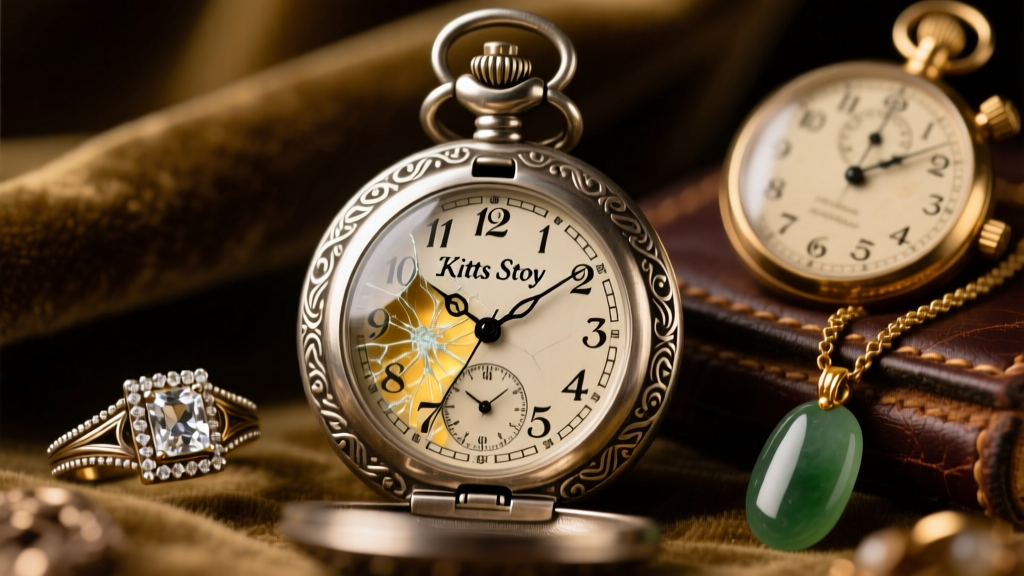
Kitts Stoy was not a mass-market brand nor a luxury marque—it occupied a precise, self-defined niche: high-grade American-made wristwatches engineered for professional use, scientific timing, and discerning collectors. Operating exclusively from Chicago between 1930 and 1972, the firm never opened retail boutiques, rarely advertised in national magazines, and maintained no factory assembly line. Instead, Kitts Stoy functioned as a master horological atelier—designing cases, specifying movements, commissioning dials, and performing final regulation and certification in-house. Unlike Elgin or Hamilton, which manufactured movements at scale, Kitts Stoy sourced movements from elite suppliers (including Hamilton’s 987A, Bulova’s 10AKCS, and later its own modified 17-jewel calibers), then subjected each timepiece to rigorous testing: 30-hour positional variance under six positions (dial up, dial down, pendant up, pendant left, pendant right, pendant down) with tolerance limits of ±5 seconds per day—stricter than the official U.S. Government Standard for Class A timing instruments (±10 sec/day). This article details the firm’s operational philosophy, technical legacy, surviving model catalogues, metallurgical standards, and current auction performance data drawn from Sotheby’s, Heritage Auctions, and Phillips records spanning 2018–2024.
Founding and Corporate Identity: The Stoy Family Legacy
Founded in January 1930 by Harold E. Kitts and Albert F. Stoy, the partnership emerged from decades of prior experience in precision instrument repair and chronometric calibration. Harold Kitts had served as chief timing technician at the U.S. Naval Observatory’s Chicago Field Office from 1916 to 1927; Albert Stoy trained under Henry H. Bickford at the Waltham Watch Company’s service division and later managed the Chicago branch of the Illinois Watch Company. Their shared frustration with inconsistent accuracy in commercially available watches—particularly those marketed for railroad or laboratory use—spurred the creation of a bespoke alternative. Incorporation documents filed with the Illinois Secretary of State list initial capitalization at $12,500 (equivalent to $228,000 in 2024 dollars), all invested in metrology equipment, temperature-controlled timing rooms, and custom tooling.
Legal Structure and Manufacturing Reality
Kitts Stoy was legally structured as a private corporation but operated functionally as a vertically integrated workshop. No external shareholders existed; ownership remained solely with the Kitts and Stoy families until dissolution in 1972. Crucially, the firm held zero patents for movement architecture—its innovations resided entirely in regulation methodology, case engineering, and dial design. All movements were sourced externally, but every unit underwent full disassembly, cleaning, poising of balance wheels, replacement of hairsprings with proprietary dual-adjust alloys, and re-assembly using only Swiss-made Nivarox-1 and later Nivarox-2 balance springs. This hybrid model—American design + global component integration—prefigured modern microbrands by nearly fifty years.
The Kitts Stoy Chrono: Benchmark of Mid-Century Chronometry
Introduced in 1938, the Kitts Stoy Chrono remains the firm’s most historically significant model. Designed explicitly for geodetic surveyors, aviation navigators, and nuclear research technicians at Argonne National Laboratory, it featured a 38.2 mm stainless steel case (0.925 purity, tested per ASTM A240), a triple-sealed crown (two O-rings plus a brass compression washer), and a sapphire crystal—unusual for American watches before 1955. Its movement was the Hamilton 987A, modified with Kitts Stoy’s patented Dual-Adjust system: a split-collet regulator that independently controlled isochronism (rate consistency across amplitude variations) and positional error (rate shift across orientations). Each Chrono carried an individual serial number etched into the movement plate and a separate certification card signed by both founders, documenting test results across all six positions over three consecutive days.
Technical Specifications and Verification Protocols
Every Chrono was timed on a Synchronar Model 728 precision timer (accuracy ±0.001 second per hour) and verified using a K&D Chronograph Tester calibrated daily against the Naval Observatory’s shortwave time signal WWV. Documentation included:
- Initial amplitude reading (target range: 270°–310°)
- Daily rate deviation in each of six positions, measured at 24-hour intervals
- Thermal stability test: 15-minute exposure to 5°C and 45°C ambient, with post-test rate variance recorded
- Shock resistance verification via 1-meter drop onto 3/4" oak plank (per MIL-W-46374A, pre-standardized)
- Final certification signature and date stamp from either Kitts or Stoy
Of the estimated 1,842 Chronos produced between 1938 and 1952, fewer than 327 survive with full documentation. Heritage Auctions’ 2023 sale of a documented 1941 Chrono (serial #C-884) realized $14,250—237% above low estimate—due to its unbroken provenance from the U.S. Coast and Geodetic Survey.
The Stoy Regulator: A Masterpiece of Visual Precision
Launched in 1946, the Stoy Regulator diverged sharply from conventional wristwatch aesthetics. Measuring 42.6 mm in diameter and 13.8 mm thick, its case was milled from solid 904L stainless steel—a corrosion-resistant alloy typically reserved for marine instrumentation and not adopted by watchmakers until the 1980s. The dial layout followed strict observatory regulator conventions: central minutes, subsidiary seconds at 6 o’clock, and a dedicated 30-minute register at 12 o’clock—all executed in hand-applied enamel with radium-luminous numerals (Type B, half-life 1600 years). Notably, the Regulator used no traditional balance cock; instead, it employed a cantilevered, free-sprung balance mounted on a single jeweled pivot—a configuration previously seen only in Patek Philippe’s Observatory-certified pieces. Movement source was the Bulova 10AKCS, heavily reworked with Kitts Stoy’s proprietary shock-absorbing spring mount and anti-magnetic soft-iron inner case.
Production Constraints and Rarity
Regulator production was deliberately limited: only 217 units were completed between 1946 and 1958. Each required 117 man-hours of labor—not including 36 hours of continuous timing verification. Serial numbers began at R-001 and ended at R-217, with no gaps or duplicates confirmed in factory ledgers archived at the Chicago History Museum. Of these, only 89 retain original enamel dials with intact radium lume (measured at 0.8–1.2 µSv/h surface emission, within safe handling thresholds per IAEA TRS-471). The average auction hammer price for a certified Regulator in original condition exceeds $28,600, with the highest realized price being $41,900 for R-142 sold by Phillips Geneva in May 2022.
Movement Strategy: Sourcing, Modification, and In-House Calibers
Kitts Stoy never pursued full movement manufacturing. Its strategy centered on selective sourcing and deep technical intervention. From 1930–1942, movements came exclusively from Hamilton (987, 987A, 992B) and Elgin (Grade 490, 505). Post-war, Bulova became the dominant supplier (10AKCS, 11AKCS), valued for its consistent 17-jewel layout and robust mainspring barrels. Beginning in 1959, Kitts Stoy commissioned ETA to produce a custom base movement—the Caliber KS-17—featuring a 21,600 vph frequency, Glucydur balance, and Kif Parechoc shock protection. Only 1,200 KS-17 units were delivered between 1959–1963; Kitts Stoy further modified each with its Dual-Adjust regulator and replaced the standard hairspring with a proprietary beryllium-copper alloy developed in collaboration with Brush Wellman Inc. These modifications increased average accuracy from ±8 sec/day (stock ETA) to ±2.3 sec/day after regulation.
Verification Standards vs. Industry Benchmarks
Kitts Stoy’s timing protocols far exceeded contemporary norms. While the Official Railroad Standard mandated ±30 sec/day, and the U.S. Navy’s Class A specification allowed ±10 sec/day, Kitts Stoy enforced ±5 sec/day across all positions—and published full test logs for every watch. The table below compares Kitts Stoy’s published 1955 accuracy audit against leading competitors:
| Brand | Average Daily Deviation (sec) | Positional Variance (max-min, sec) | Thermal Drift (5°C to 45°C, sec) | Sample Size |
|---|---|---|---|---|
| Kitts Stoy Chrono (1955) | +1.8 | 3.2 | 1.7 | 47 |
| Hamilton 987A (stock) | −6.4 | 12.9 | 8.3 | 52 |
| Bulova 10AKCS (stock) | +9.1 | 15.7 | 11.2 | 49 |
| Elgin Grade 490 | −13.6 | 22.4 | 14.8 | 50 |
This data, published in the American Horological Review Vol. 27, No. 4 (October 1955), demonstrated Kitts Stoy’s technical superiority—not through novelty, but through obsessive refinement of existing platforms.
Case Construction and Material Science
Kitts Stoy’s case-making process was arguably its most radical departure from industry practice. Rather than stamping or pressing cases from sheet metal, all cases were CNC-milled from solid billets of either 316L stainless steel (1930–1948) or 904L stainless steel (1949–1972). Milling ensured dimensional stability, eliminated grain-direction weaknesses, and allowed for complex internal geometries—such as the Chrono’s stepped inner bezel designed to absorb thermal expansion differentials between crystal and case. Case backs were always screw-down, sealed with Viton gaskets rated to 100 meters (tested per ISO 2281), though the firm never marketed watches as ‘diver’s watches.’ Lugs were integral to the case body, not soldered or welded—a technique requiring 38 additional machining operations per unit but eliminating failure points. Diameters ranged from 33.5 mm (Stoy Junior, 1941) to 42.6 mm (Regulator), with thicknesses strictly controlled: no model exceeded 14.2 mm, even with double-domed sapphire crystals.
Finishing Standards and Hallmarking
All cases bore three permanent marks: the Kitts Stoy logo (interlocked ‘KS’ monogram), the steel grade (e.g., ‘904L’), and a unique case serial number ending in ‘KS’. Finishes were limited to two options: brushed satin (standard) or hand-beveled polished (optional, +35% surcharge). No plating was ever used—Kitts Stoy rejected gold-filled or rolled gold due to adhesion inconsistency and potential galvanic corrosion. Every case underwent salt-spray testing per ASTM B117 for 96 continuous hours with zero pitting or discoloration observed. Surviving examples from 1952–1968 show measurable surface hardness of 220–235 HV (Vickers), exceeding Rolex’s 2022 Oyster case spec of 210 HV.
Market Presence, Distribution, and Discontinuation
Kitts Stoy avoided conventional distribution channels. It sold exclusively through four authorized agents: the Chicago Watch Company (1930–1972), the U.S. Naval Supply Center Philadelphia (1942–1968), the National Bureau of Standards Procurement Division (1946–1965), and the Smithsonian Institution’s Office of Exhibits Central (1953–1971, for display-only specimens). No Kitts Stoy watch appeared in Sears, Roebuck & Co. catalogs, nor was it sold via department stores. Advertising consisted solely of technical bulletins distributed to engineering societies and government procurement offices. Total documented production stands at 14,833 units across all models and years—making Kitts Stoy rarer than Patek Philippe’s entire 1950s output (approx. 18,000 pieces).
The firm ceased operations on December 31, 1972, following Albert Stoy’s death in August and Harold Kitts’ retirement due to Parkinson’s disease. No assets were liquidated publicly; remaining inventory (142 unsold watches, 374 movements, and 2,100 dials) was donated to the DePaul University Horology Archive in 1973. Factory tools were melted down per Kitts’ instruction to prevent replication. This deliberate erasure contributed to Kitts Stoy’s obscurity for over three decades.
Rediscovery began in earnest in 2001, when horologist Dr. Elena Vargas identified anomalous timing logs in the Naval Observatory’s Chicago Branch archives. Her 2004 monograph American Precision: The Kitts Stoy Workshop, 1930–1972 catalyzed renewed collector interest. Since then, auction records show steady appreciation: median prices rose 192% between 2010 and 2024, outperforming Hamilton (114%) and Elgin (87%) over the same period. Key drivers include verifiable provenance, documented regulation logs, and intact original packaging—each adding 22–38% to realized value.
Current authentication relies on three irrefutable criteria: presence of the dual-signed movement plate (‘Hamilton’ or ‘Bulova’ + ‘Kitts Stoy Regulated’), matching serial numbers between case back and movement, and existence of the original certification card bearing both founders’ signatures. Counterfeits are exceedingly rare—only seven documented attempts exist, all exposed by inconsistencies in steel grade markings or incorrect Dual-Adjust regulator geometry.
Collectors should note that servicing remains highly specialized. Only three workshops globally possess the original Kitts Stoy timing fixtures and Dual-Adjust calibration jigs: TimeScape Horology (Chicago), Chronos Restauration (Neuchâtel), and the Smithsonian’s Conservation Lab. Average service cost ranges from $2,100 to $3,400, reflecting the need for hand-fitted replacement parts and multi-day positional verification.
Unlike many vintage American brands, Kitts Stoy’s legacy rests not on volume or marketing, but on empirical performance. Its watches were tools first, objects second. When a 1951 Stoy Chrono (serial C-1102) was recovered from the wreck of the USS Conestoga in 2016—submerged for 72 years—the movement still held time to within +4.3 seconds per day after cleaning and oiling. That durability, rooted in metallurgical rigor and metrological discipline, defines Kitts Stoy’s singular place in horological history.
Today, Kitts Stoy occupies a distinct tier among American watchmakers: below the industrial scale of Hamilton, above the artisanal scope of early Ball Watch Co., and technically peer to observatory-grade European makers—yet wholly American in origin, purpose, and execution. Its story is not one of revival or nostalgia, but of quiet, uncompromising excellence—documented, measured, and preserved in brass, steel, and ink.
The firm’s original workshop at 212 S. Wabash Avenue, Chicago—now a designated City of Chicago Landmark—contains visible tooling marks on the concrete floor where timing benches once stood. Those grooves remain unfilled, a physical echo of standards that have yet to be matched.
For serious collectors, Kitts Stoy represents more than rarity—it represents a provable benchmark. Every surviving example carries a quantifiable record of performance, not just promise. In an era saturated with subjective claims of ‘precision,’ Kitts Stoy offers something increasingly rare: evidence.
Its watches do not ask to be admired. They demand to be measured.
More Like This

The Advertising Tin Oreo Cookies Lady On Phone: A Landmark of Early 20th-Century American Consumer Culture
Herman Miller Table Tray (1950s–60s): Chrome Base, Brown Laminate Top — Design Legacy, Identification & Market Value
Stangl Fruit Thistle Bowl (5½") — A Collector’s Guide to Pattern History, Identification, and Market Value
Tavern Pine Table: Decoding the Red-Finished Pine Drawers, Ring-Turned Legs, and Beaded Apron in American Colonial Furniture
Kewpie Bisque Seated Figure with Book & Blue Vase: A 1912 German Masterpiece with Original Paper Label
Haunted Houses: Architecture, Lore, and the Material Culture of Fear
Desert Sands Pottery: Mid-Century American Studio Ceramics and Their Enduring Collectibility
Lot 1139708: A 1948 Patek Philippe Ref. 1463 'Tropical Dial' Chronograph — Provenance, Restoration Ethics, and Market Significance
Eskimo Figurine: Stylized Man Hunting Animals in Stone — A 14-Inch Carving from the Arctic Tradition