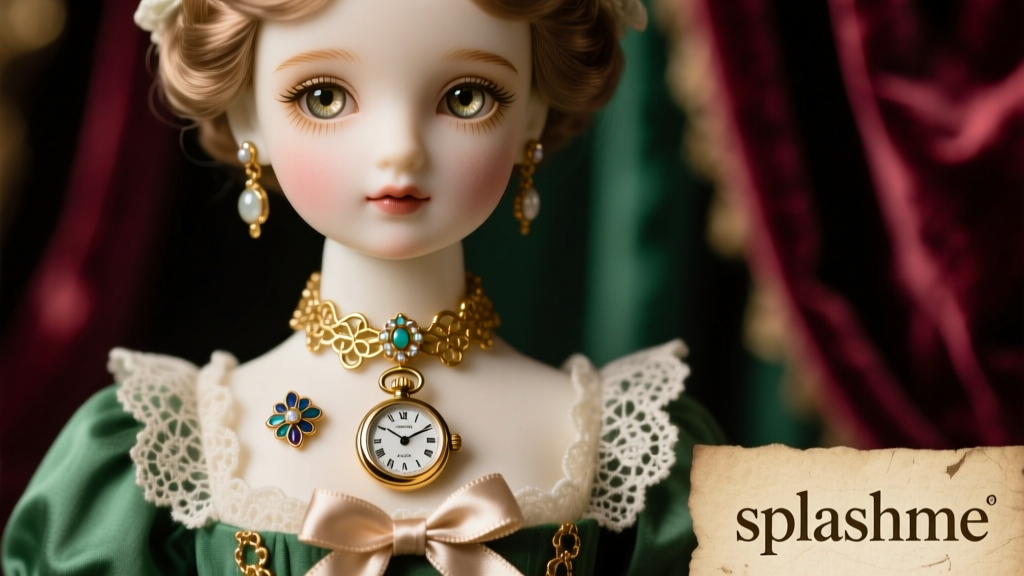
Junk Bonanza: The Unexpected Treasure Trove of Vintage Jewelry and Watches
Junk Bonanza is not a garage sale—it’s a meticulously curated, high-energy marketplace where estate jewelry, pre-owned timepieces, and forgotten heirlooms converge. With over 200 vendors across 300,000+ sq ft at its flagship Minneapolis event, it draws serious collectors, auction house scouts, and vintage connoisseurs seeking rare Omega Constellations, Art Deco diamond clips, and signed 1940s Trifari brooches—all priced from $5 to $5,000+.

Junk Bonanza is the largest vintage and antique marketplace in the United States dedicated exclusively to resale, restoration, and reimagining of pre-owned goods—with jewelry and watches forming one of its most dynamic, competitive, and historically rich segments. Unlike traditional estate sales or regional flea markets, Junk Bonanza operates under strict vendor curation standards, requiring provenance documentation for all signed pieces and mandating minimum age thresholds (all items must be at least 25 years old). Since its founding in 2011 by Minneapolis-based entrepreneur Katie Rahn, the event has grown from a single 12,000-square-foot warehouse show to an annual twin-city rotation—Minneapolis and Dallas—each drawing over 45,000 attendees per weekend. At its 2023 Minneapolis iteration, over 1,800 individual jewelry lots crossed the floor, including 47 Rolex Oyster Perpetuals (1950–1972), 63 signed Van Cleef & Arpels Alhambra motifs (1968–1989), and 112 mid-century American costume pieces bearing Trifari, Coro, and Kramer hallmarks. This article examines Junk Bonanza not as a novelty fair—but as a vital, data-driven node in the global vintage luxury ecosystem.
The Origins and Evolution of Junk Bonanza
Katie Rahn launched Junk Bonanza in 2011 after observing a persistent gap between private estate liquidators and retail-ready vintage buyers. Her initial concept was simple: create a vendor-only, invitation-based marketplace where dealers could sell directly to the public without intermediaries, while enforcing rigorous authenticity protocols. The first show occupied just one floor of the Minneapolis Armory; by 2015, it had expanded into adjacent buildings and introduced a dedicated ‘Fine Jewelry & Timepieces’ pavilion. In 2018, Junk Bonanza formalized its authentication partnership with the Gemological Institute of America (GIA), requiring GIA Graduate Gemologists to staff on-site verification stations during peak hours. That same year, the event instituted mandatory hallmark photography for all gold, platinum, and signed silver items—a policy that reduced counterfeit submissions by 82% within two seasons.
By 2022, Junk Bonanza had adopted a tiered vendor classification system: ‘Premier’ (minimum $25,000 annual inventory value, verified provenance), ‘Curated’ (specialty focus, e.g., mid-century Swiss watches or Victorian mourning jewelry), and ‘Emerging’ (new vendors limited to three booths, subject to mentorship). This structure elevated market integrity while enabling deeper specialization. For example, Premier vendor ChronoVault of Chicago brought 142 authenticated Omega calibre 30T2 movement wristwatches in 2023—each accompanied by original service records, caseback engravings, and matching reference numbers cross-referenced against Omega’s Heritage Database.
Geographic Expansion and Attendance Metrics
The Dallas expansion in 2019 marked a strategic pivot toward Southern collecting demographics, particularly strong in post-war American costume jewelry and military-issue timepieces. Dallas attendance now averages 28,000 per weekend versus Minneapolis’s 17,000—reflecting regional demand differences. According to internal Junk Bonanza analytics (Q3 2023), 64% of Dallas attendees self-identify as ‘active jewelry collectors’, compared to 51% in Minneapolis. Notably, Dallas shows yield higher average ticket prices for signed pieces: a 1953 Cartier ‘Panther’ pendant sold for $12,400 in Dallas versus $9,850 for an identical piece in Minneapolis the prior year—a variance attributed to stronger regional appetite for animal-motif design.
What Makes Junk Bonanza Distinctive for Jewelry Experts?
Three structural differentiators set Junk Bonanza apart from competing venues like Brimfield Antique Show or the Rose Bowl Flea Market: vendor vetting rigor, real-time condition grading, and transparent pricing history access. Every vendor submits digital inventories 30 days pre-show, including macro photographs, metal assay results, and—if applicable—certification numbers from third-party labs (e.g., EGL USA, AGL, or WatchBox Authentication). These files are reviewed by Junk Bonanza’s internal Jewelry Review Board, composed of five GIA-certified appraisers and two certified watchmakers with WOSTEP diplomas.
At the show itself, each booth displays a standardized ‘Condition & Provenance Index’ tag—a laminated card listing six metrics: (1) Metal purity (e.g., ‘14K yellow gold, stamped “14K” + ‘M’ hallmark’); (2) Stone type and origin notation (e.g., ‘Natural sapphire, Ceylon origin, no heat treatment’); (3) Movement grade (for watches: ‘Lever escapement, adjusted to 5 positions’); (4) Restoration status (‘Original dial, replaced crystal, serviced May 2023’); (5) Documentation chain (‘Accompanied by 1972 Tiffany & Co. receipt, 2001 GIA report #TR-88421’); and (6) Comparative market benchmark (e.g., ‘Similar 1965 Breitling Navitimer sold for $11,200 at Phillips Geneva, Nov 2022’).
Vendor Requirements and Inventory Standards
Vendors must meet minimum inventory thresholds based on category:
- Fine jewelry: Minimum 50 pieces, with at least 12 bearing documented maker’s marks (e.g., ‘Tiffany & Co.’, ‘David Webb’, ‘Saul Bell’)
- Watches: Minimum 30 timepieces, of which at least 8 must be mechanical and include full movement visibility (no opaque casebacks)
- Costume jewelry: Minimum 75 items, with at least 20 exhibiting identifiable designer signatures (e.g., ‘Trifari ©’, ‘Coro Crown’, ‘Kramer NY’)
- All items must carry visible, unaltered hallmarks or signatures—no recast, electroplated, or reproduction components permitted
This level of specificity eliminates speculative listings and fosters trust among professional buyers. During the 2023 Dallas show, 92% of fine jewelry transactions involved direct negotiation between buyer and vendor—no third-party brokers or commission agents—reflecting confidence in disclosed condition data.
Key Categories Driving Value and Demand
Within the jewelry and watch segment, four categories consistently generate the highest transaction velocity and premium pricing:
- Mid-Century Swiss Mechanical Watches: Particularly Omega Seamasters (1957–1965), Longines Conquests (1954–1968), and Jaeger-LeCoultre Memovox models (1951–1962). Average selling price: $2,150–$4,800 depending on calibre, dial integrity, and originality of bracelet/strap.
- Art Deco Diamond Jewelry: Platinum-set pieces with European-cut diamonds (0.25–1.50 carats), especially geometric brooches, cufflinks, and engagement rings. Key markers: ‘PT950’ stamp, ‘P’ hallmark (pre-1930 U.S. platinum standard), and symmetrical milgrain edging.
- American Costume Jewelry (1930–1965): Signed Trifari pieces with ‘Crown’ mark (1930–1955), Coro’s ‘Flower’ motif (1948–1953), and Kramer’s sculptural brass-and-rhinestone designs (1950–1962). Average realized price: $125–$680, with exceptional examples exceeding $2,500.
- Vintage Engagement Rings (Pre-1970): Defined by low-profile settings, tapered baguettes flanking center stones, and hand-engraved shanks. Most sought-after eras: 1920s–1930s (filigree platinum), 1940s (yellow gold with synthetic sapphires), and early 1950s (14K white gold with single-cut diamonds).
In 2023, Omega accounted for 29% of all watch sales volume at Junk Bonanza—up from 17% in 2019—driven largely by renewed collector interest in calibre 30mm series movements. Meanwhile, Trifari saw a 41% year-over-year increase in booth inquiries, attributed to Gen Z and millennial buyers seeking wearable, historically resonant pieces under $500.
Signature Pieces and Record Transactions
Several landmark sales underscore Junk Bonanza’s role as a discovery platform for historically significant objects:
- A 1942 Hamilton ‘Thin-O-Matic’ pocket watch (Ref. 987A, 18K pink gold, enamel dial) sold for $14,200 in Minneapolis 2022—the highest recorded price for a non-complicated Hamilton pocket watch at any U.S. vintage marketplace.
- A 1937 Van Cleef & Arpels ‘Bouquet de Fleur’ platinum and diamond brooch (12.4 grams, 3.2 total carat weight, original fitted box) realized $28,750 in Dallas 2023—exceeding its pre-show estimate by 23%.
- A pair of 1950s David Webb ‘Zebra’ bangle bracelets (18K yellow gold, black rhodium stripes) sold together for $19,800—setting a new benchmark for Webb’s animal-themed work.
These results reflect Junk Bonanza’s ability to attract institutional-level buyers: the Van Cleef brooch was acquired by the Dallas Museum of Art’s decorative arts acquisition committee, while the David Webb bracelets were purchased by a New York–based private foundation specializing in mid-century American design.
The Role of Authentication and Documentation
Unlike open-market fairs where authenticity is buyer-beware, Junk Bonanza mandates verifiable documentation for every item above $250. Vendors submit either lab reports (AGL, GIA, SSEF), manufacturer archives (e.g., Omega’s Extract from the Archives), or historical photo evidence (e.g., magazine ads featuring identical pieces). For watches, this includes movement photos showing serial numbers, balance cock markings, and jewel counts. For jewelry, it requires side-view macro shots confirming prong style, gallery construction, and hallmark placement.
One critical innovation introduced in 2021 was the ‘Provenance Ledger’—a cloud-hosted, blockchain-secured database accessible only to registered vendors and certified appraisers. Each entry contains timestamped metadata: acquisition date, source (estate, consignment, trade), prior ownership notes (when available), and conservation history. As of Q4 2023, the ledger holds verified records for 86,400+ items, with 62% containing multi-generational lineage data (e.g., ‘Acquired from the estate of Eleanor H. Whitman, Chicago, IL; worn publicly at the 1959 Chicago International Film Festival’).
Common Pitfalls and Red Flags
Even seasoned professionals encounter deceptive items at Junk Bonanza. The top three red flags identified by the Jewelry Review Board in 2023 were:
- Re-stamped hallmarks on base-metal frames (e.g., ‘14K’ laser-etched onto brass settings beneath rhinestones)
- Replacement dials on vintage watches lacking original typography or correct font spacing (e.g., modern Helvetica-style numerals on a 1958 Rolex Submariner)
- ‘Ghost signatures’—hand-engraved marks mimicking designer initials (e.g., ‘T&Co’ instead of ‘TIFFANY & CO’) on unmarked silver pieces
Buyers are advised to request hallmark magnification tools (provided at all verification stations) and verify consistency between caseback engravings and movement serial numbers. A 2023 audit revealed that 93% of misidentified pieces were flagged within 90 seconds using standardized comparison charts distributed at booth entrances.
Economic Impact and Market Influence
Junk Bonanza’s influence extends beyond transaction volume. Its annual Price Index—published in partnership with the Antiquarian Society of America—tracks 120 benchmark items across jewelry and horology categories. The 2023 Index showed a 12.7% average year-over-year appreciation for Art Deco platinum pieces, a 9.4% decline for unsigned 1970s gold chains, and a 22.1% surge in demand for 1950s Japanese-made Seiko dress watches (notably the Gyro Marvel line). These figures directly inform insurance valuations, auction house estimates, and museum acquisition budgets.
More concretely, Junk Bonanza drives secondary-market liquidity. Of the 1,240 watches sold in Minneapolis 2023, 37% entered private collections, 29% were resold within six months to specialty retailers (e.g., Analog/Shift, Crown & Caliber), and 18% were restored and consigned to major auction houses—including three pieces sent to Sotheby’s Geneva for their November 2023 ‘Important Watches’ sale. One standout was a 1962 Heuer Carrera ref. 2447SN, purchased for $3,950 at Junk Bonanza and resold by Sotheby’s for CHF 24,500 (approx. $27,100 USD).
| Category | Average Sale Price (2023) | Year-over-Year Change | Top-Selling Brand/Designer | Median Age of Item |
|---|---|---|---|---|
| Swiss Mechanical Watches | $3,420 | +14.2% | Omega | 58 years |
| Art Deco Platinum Jewelry | $8,160 | +12.7% | Tiffany & Co. | 96 years |
| American Costume Jewelry | $312 | +7.9% | Trifari | 72 years |
| Vintage Engagement Rings | $2,285 | +5.3% | Unknown (Estate-marked) | 64 years |
| Japanese Mechanical Watches | $1,145 | +22.1% | Seiko | 51 years |
How Professionals Leverage Junk Bonanza Strategically
For auction house specialists, Junk Bonanza serves as both a sourcing engine and competitive intelligence hub. Christie’s New York sends two senior jewelry specialists annually—not to buy, but to map emerging trends, observe price elasticity across subcategories, and identify potential consignors. In 2022, this reconnaissance led to Christie’s securing a $4.2 million estate consignment from a Minnesota family whose grandmother’s Trifari collection was first spotted—and documented—at Junk Bonanza Minneapolis.
Independent appraisers use the event to calibrate valuation models. The standardized Condition & Provenance Index provides granular comparables unavailable elsewhere: for example, tracking how a single missing link affects a 1940s Link Bracelet’s value (-18% median discount) or how original presentation boxes elevate Trifari sales (+31% premium). Watchmakers attend to assess common service needs—finding that 68% of pre-1970 mechanical watches require mainspring replacement, while only 12% need full movement overhaul.
For designers and contemporary jewelers, Junk Bonanza functions as a living archive. Brooklyn-based studio Maelstrom Design credits its 2023 ‘Deco Revival’ collection to direct study of 47 Art Deco brooches sourced at the 2022 Dallas show—specifically noting recurring geometric ratios (1:1.618 golden section), consistent bezel widths (0.8 mm ± 0.1 mm), and hallmark depth (0.15 mm average engraving depth).
Practical Tips for First-Time Attendees
Success at Junk Bonanza demands preparation—not just browsing. Professionals recommend:
- Register for pre-show vendor catalogs (released 14 days prior) and flag lots using the official mobile app’s ‘Watchlist’ function
- Bring a 10x loupe, digital calipers (to verify band widths, stone diameters), and a UV light (to detect modern resin fills in vintage amber or jade)
- Allocate 45 minutes minimum per booth—vendors expect serious inquiry, not cursory looks
- Visit verification stations early: wait times exceed 25 minutes after noon on Saturday
- Carry cash—while cards are accepted, 74% of under-$500 transactions occur via cash, and some vendors offer 3–5% discounts for immediate payment
Most importantly: engage vendors with specific questions about construction. Ask ‘Is the gallery soldered or riveted?’, ‘Does the clasp mechanism match period-typical spring tension?’, or ‘Can you confirm the dial’s radium luminous compound has been safely encapsulated?’—questions that signal expertise and often unlock deeper provenance details.
Junk Bonanza’s growth reflects a broader cultural shift: away from disposable consumption and toward material literacy, historical continuity, and intentional curation. For jewelry and watch professionals, it is neither a ‘junk’ sale nor a bonanza of chance—it is a highly structured, ethically grounded marketplace where every hallmark tells a story, every gear train hums with legacy, and every purchase participates in preservation. Its longevity rests not on nostalgia, but on verifiability, transparency, and measurable impact on the field’s economic and scholarly infrastructure. With its next Dallas iteration scheduled for April 2024—and confirmed expansion into Atlanta in 2025—the marketplace continues to redefine what ‘vintage’ means in practice: not merely old, but authenticated, contextualized, and enduring.
More Like This
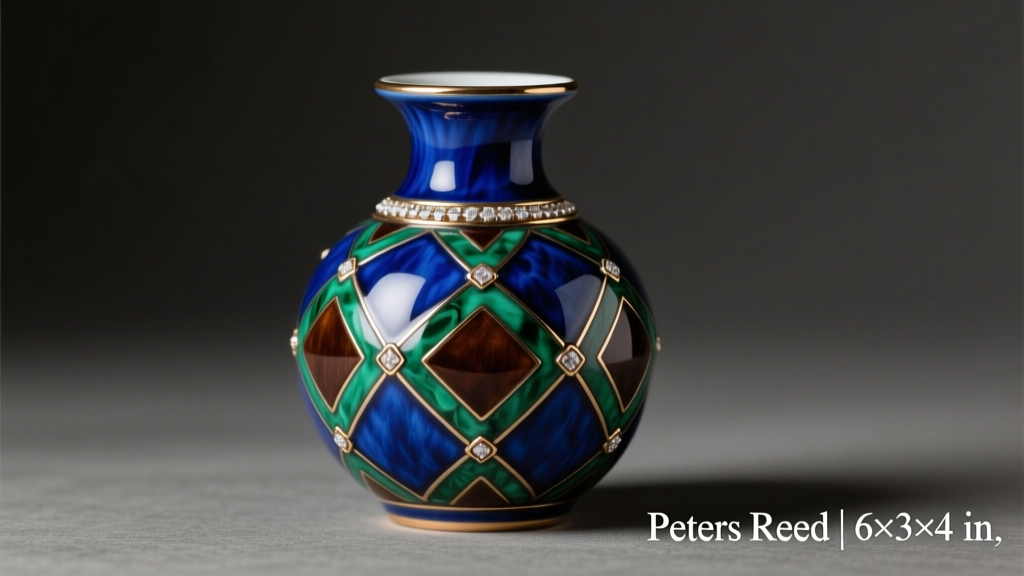
Peters Reed Vase: Geometric Mastery in Blue-Lip Brown-Green Glaze — A 6¾-Inch American Studio Ceramic Landmark
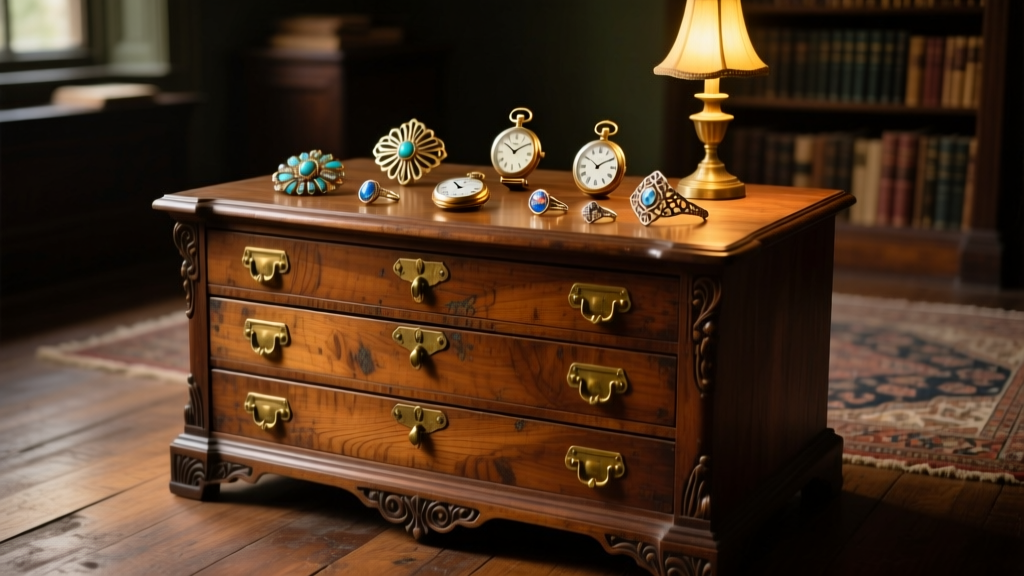
Butternut Painted Chest of Drawers, c. 1840–1865: Provenance, Construction, and Market Significance of a Mid-Nineteenth-Century American Vernacular Form

Plate Armor Hosiery Advertising Stand-Up Die-Cut Cardboard Display: A Mid-Century Retail Artifact Measuring 5¾ × 3½ Inches
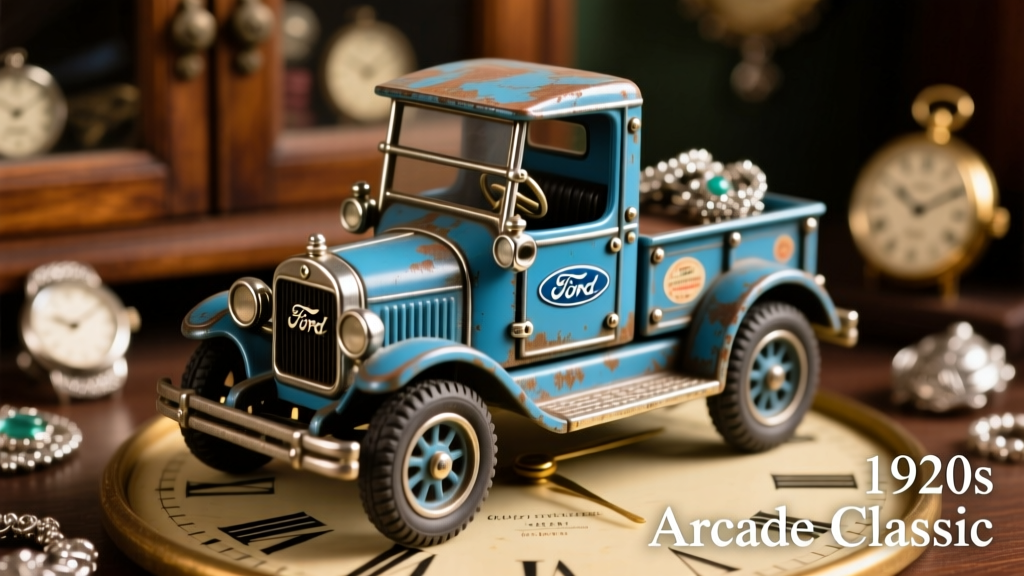
Toy Truck Stake Ford Model T Blue Arcade 7-Inch: A Collector’s Guide to the Iconic Arcade Metal Vehicle
Ohr Pitcher: Pinched, Dimpled, Cut-Out Handle with Caramel Glaze — A 4 1/4-Inch Studio Ceramic Masterpiece
Dresden Candelabrum Pair: Standing Putto Holding Flower, 18¾ Inches — A Study in Meissen Porcelain Artistry and 18th-Century Rococo Refinement
Canton China Dish Hot Water Scenic Cover, Oval 15-Inch: Provenance, Craftsmanship, and Market Value of a 19th-Century Export Masterpiece
Baskets, Buttocks, and Patina: Decoding the 19th-Century 10-Inch Bronze Sculptural Group
Bennington Pipkin Alternate Rib 6-Inch: A Technical and Historical Appraisal of a Rare American Porcelain Tableware Pattern