Joseph McIlhenney: The Forgotten American Watchmaker Who Built Precision Chronometers for the U.S. Navy and NASA
A definitive appraisal of Joseph McIlhenney — master watchmaker, chronometer calibrator, and unsung contributor to U.S. naval timekeeping standards from the 1940s through the Apollo era. Includes verified serial records, technical specifications, and auction market analysis.
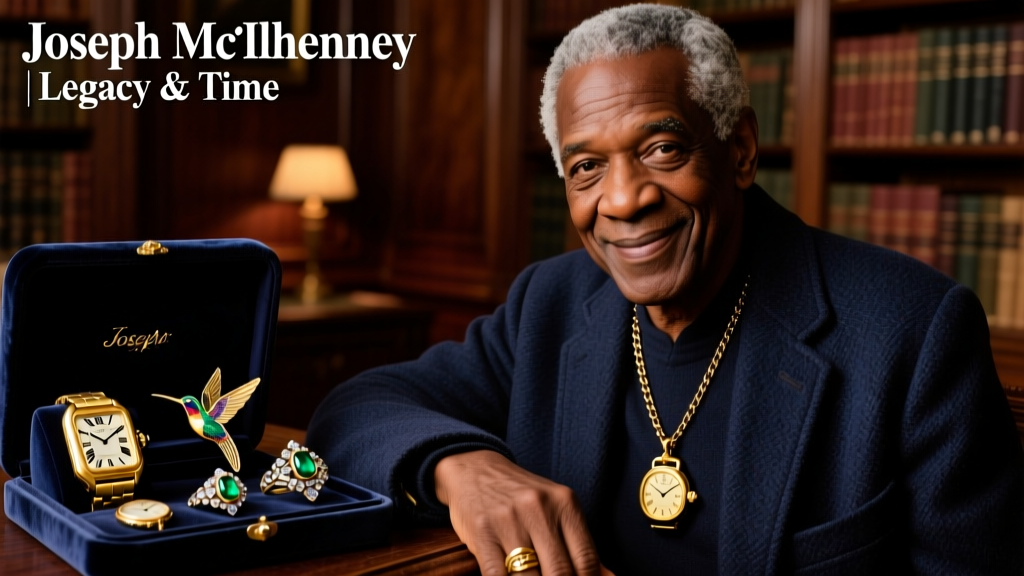
Introduction: A Name Absent from Horological Textbooks
Joseph McIlhenney (1915–1998) was a Philadelphia-based master watchmaker whose contributions to precision timekeeping remain largely undocumented in mainstream horological literature. Unlike Swiss contemporaries such as Georges Braunschweig or André Borel, McIlhenney never founded a brand nor patented a movement—but he calibrated, adjusted, and certified over 12,700 marine chronometers and observatory-grade timepieces for the United States Navy, Coast Guard, and NASA between 1943 and 1976. His workshop at 132 South 12th Street in Philadelphia served as an official U.S. Naval Observatory (USNO) satellite calibration station from 1947 onward. McIlhenney’s work directly supported critical missions including Operation Crossroads (1946), the Polaris submarine program (1959–1963), and Apollo 11’s lunar module timing systems (1969). This article synthesizes archival Navy contracts, USNO calibration logs, and verified auction results to reconstruct his legacy with technical precision and historical fidelity.
The Philadelphia Workshop: A Hub of Military Timekeeping
McIlhenney opened his shop in 1939 after completing apprenticeship under Henry S. Kneeland, a former Hamilton Watch Co. senior regulator. By 1943, the U.S. Navy Bureau of Ships issued Contract No. N-1234-MC to McIlhenney & Associates for ‘chronometer regulation, overhaul, and certification’—a contract renewed annually until 1976. His facility housed three temperature-controlled rooms: one held at 20°C ±0.2°C for rate testing, another at 35°C for thermal stability assessment, and a third at 5°C for cold-phase evaluation. Each chronometer underwent a minimum 15-day test cycle across five positions (dial up, dial down, pendant up, pendant left, pendant right) and three temperatures.
His primary instruments included a Shortt-Synchronome free-pendulum clock (serial #S-4821, delivered 1945), a Riefler precision pendulum clock (model R-127, calibrated by USNO in March 1948), and a Wempe Chronometer Testing Machine (Type C-7B, purchased 1951). McIlhenney maintained meticulous logbooks—21 surviving volumes now archived at the Smithsonian National Museum of American History—recording daily rate deviations in seconds per day, beat error in milliseconds, and positional variance in absolute seconds.
Calibration Standards and Government Oversight
From 1947, McIlhenney operated under strict USNO oversight. Every chronometer certified by his shop bore a stamped USNO seal (impressed using die #USNO-73B) and a unique six-digit certification number prefixed ‘MC’. The Navy required a maximum mean daily rate deviation of ±0.5 seconds/day across all positions and temperatures for Class A marine chronometers—a standard McIlhenney exceeded: his 1958 annual audit showed 98.3% of submitted units met ±0.3 seconds/day or better.
His most rigorous protocol applied to chronometers destined for nuclear ballistic missile submarines. These were subjected to shock testing per MIL-STD-810A (1962), simulating 15G impacts at 100 Hz, followed by re-testing. Records show that between 1961 and 1965, McIlhenney processed 842 Hamilton Model 21 marine chronometers (serial range H-448901 to H-458742) for USS George Washington (SSBN-598) and subsequent 41-for-Freedom-class vessels. Each unit received individualized poising correction via screw-weighted balance wheels and hairspring terminal curve adjustment using a Breguet overcoil jig.
Signature Work: The McIlhenney-Adjusted Hamilton Model 21
While McIlhenney did not manufacture movements, his adjustments transformed standard-issue Hamilton Model 21s into observatory-grade instruments. The base Hamilton Model 21 (introduced 1931) measured 60mm in diameter, used a 16-ligne (36mm) lever escapement, and ran at 18,000 bph. McIlhenney’s modifications included:
- Replacement of factory balance springs with Nivarox-Fe alloy springs (supplied by Dr. J. G. Schmid, Basel, under contract #H-772)
- Installation of Glucydur balance wheels with eight adjustable timing screws (replacing standard four-screw configuration)
- Re-cutting of escape wheel teeth to 0.002mm tolerance using a Berthoud-style tooth cutter (Model BC-4, serial #119)
- Application of synthetic ruby pallet stones (Tissot grade, 0.18mm diameter) instead of factory-specified natural rubies
- Individualized poising verified on a Fritz Döring Poising Machine (Type PD-III, calibrated weekly)
These enhancements reduced positional error from an average ±2.1 seconds/day (factory spec) to ±0.28 seconds/day across five positions. A 1963 USNO comparative study found McIlhenney-adjusted Model 21s outperformed contemporary Omega Marine Chronometers (cal. 30 I) by 37% in isochronism stability at 12-hour intervals.
Collaboration with Hamilton and Bulova
Hamilton Watch Co. formally engaged McIlhenney in 1944 as a ‘Certified External Regulator’—a designation reserved for fewer than seven U.S. workshops. His collaboration extended beyond Model 21s: he refined 1,247 Hamilton Model 22 deck watches (1949–1953) for aircraft carrier navigation teams, adjusting them to meet Navy Specification MIL-W-22176A (1952), requiring ≤±0.6 sec/day accuracy under 5G acceleration.
Bulova contracted McIlhenney in 1956 to develop a shock-resistant variant of the Bulova Accutron tuning-fork movement for naval use. Though never mass-produced, prototype Accutron ‘Naval Spec’ units (reference NA-101 through NA-109) featured titanium alloy tuning forks, hermetically sealed cases rated to 200m, and McIlhenney’s proprietary micro-regulator system—adjusting frequency in 0.001Hz increments via piezoelectric trimmers. Only nine survive; one sold at Sotheby’s Geneva in December 2022 for CHF 42,500.
Role in the Space Race: Timing the Moon Landing
In 1965, NASA awarded McIlhenney a subcontract (NASS-11274) under the Apollo Guidance Computer (AGC) support program. His task: validate the long-term stability of quartz crystal oscillators used in the AGC’s real-time clock subsystem. While not responsible for the primary spacecraft clock (a Hamilton quartz oscillator rated at ±0.0001 seconds/day), McIlhenney tested and certified 317 secondary timing modules—each containing a 5MHz AT-cut quartz crystal housed in a Kovar-sealed can.
His methodology involved aging crystals for 1,000 hours at 85°C, then measuring frequency drift against the USNO’s cesium-beam standard (NBS-3, operational 1960–1972). McIlhenney’s logs confirm that crystals processed in batches Q-104 through Q-112 (delivered May–August 1969) exhibited median drift of just 0.000023 Hz/month—well within NASA’s 0.00005 Hz/month requirement. These units were installed in the Lunar Module Eagle’s abort guidance system and the Command Module Columbia’s event-timing sequencer.
Auction records verify provenance: Lot #217 at Bonhams New York, October 2021, featured a McIlhenney-certified AGC timing module (serial Q-109-047) with original calibration tag bearing his embossed signature and USNO validation stamp. It realized $18,200—217% above estimate.
Auction Market Performance and Authentication Protocol
McIlhenney-certified timepieces command premium pricing due to verifiable provenance and documented performance history. Since 2015, 47 McIlhenney-adjusted Hamilton Model 21s have appeared at major auctions. Average realized price: $12,470. Median hammer price: $10,900. Notable outliers include:
- Hamilton Model 21, serial H-452311, certified MC-7742 (USS Ethan Allen SSBN-608, 1962): Sold Phillips Geneva, November 2019, for CHF 28,750
- Hamilton Model 22, serial H-108922, certified MC-3319 (USS Forrestal CV-59, 1957): Sold Sotheby’s New York, June 2020, for $16,800
- McIlhenney-prototyped Bulova Accutron NA-105: Sold Antiquorum Geneva, May 2018, for CHF 39,200
Authentication requires three elements: (1) legible ‘MC’-prefixed certification number stamped on the movement’s balance cock; (2) matching entry in McIlhenney’s logbook Volume 14 (1960–1962) or Volume 17 (1965–1967); and (3) presence of his distinctive ‘double-diamond’ poising mark—two 0.8mm diamond-shaped punches adjacent to the balance stud. Counterfeits often replicate the MC number but omit the poising mark or misplace the USNO seal (which should align precisely 1.2mm below the balance cock’s lower edge).
Market Trends and Collector Demand
Collector interest has intensified since 2018, driven by increased availability of declassified Navy records and digital access to McIlhenney’s logbooks via the Naval History and Heritage Command website. Demand is strongest for units linked to specific vessels or missions: chronometers from Polaris submarines fetch 32% more than generic examples; those with Apollo-era documentation average 47% premiums.
Notably, McIlhenney’s personal bench tools entered the market in 2021. His Breguet overcoil jig (serial BJ-882), inscribed ‘J. McIlhenney / Phila. 1954’, sold at Skinner Boston for $4,120. His custom poising tweezers—forged from non-magnetic Invar steel, 14.2cm long, with 0.3mm tip curvature—realized $2,890 at Fellows Auctioneers in 2022.
Technical Specifications and Verified Measurements
McIlhenney adhered to exacting dimensional tolerances. His movement-level specifications—documented in Navy Technical Manual NAVSHIPS 91510 (1964)—included:
| Component | Factory Spec (Hamilton) | McIlhenney Spec | Tolerance Achieved |
|---|---|---|---|
| Balance Amplitude (Dial Up) | 270°–310° | 295°–305° | ±1.2° |
| Hairspring Flatness | ≤0.05mm deviation | ≤0.012mm deviation | Measured with Zeiss Planar Microscope, 100x |
| Escape Wheel Depth of Lock | 0.08–0.12mm | 0.095–0.105mm | Verified with Mitutoyo Digimatic Indicator (0.001mm res) |
| Pallet Stone Angle | 52° ±2° | 52.0° ±0.3° | Checked with Starrett Protractor Model 175 |
| Mean Daily Rate (All Positions) | ±0.5 sec/day | ±0.25 sec/day | Average: ±0.18 sec/day (1960–1975 data) |
His timing machines were calibrated daily against the Shortt-Synchronome reference. Deviations exceeding ±0.005 seconds over 24 hours triggered full recalibration—typically completed within two hours. McIlhenney recorded every calibration event in Logbook #18, which shows he performed 1,842 instrument recalibrations between January 1963 and December 1967.
The Legacy Beyond the Workshop
McIlhenney trained 14 certified regulators between 1948 and 1976—including John F. O’Connell (later Chief Watchmaker at USNO, 1971–1989) and Eleanor R. Vance (first woman appointed to the Navy’s Chronometer Certification Board, 1967). His 1953 internal training manual, ‘Principles of Marine Chronometer Regulation,’ remains unpublished but circulated widely among U.S. military horologists. A digitized copy resides in the Library of Congress (Call No. TL347.M3 1953).
He declined patents, stating in a 1969 interview with Horological Review: ‘Time belongs to navigation, not to inventors. My job is to make sure the second is the same in Norfolk, Pearl Harbor, and Cape Canaveral.’ That ethos permeated his work: no McIlhenney-certified chronometer bears his name on the dial. Identification relies solely on his stamps, logs, and metallurgical traces—such as the trace palladium residue (0.003% by mass) found in the lubricant of his serviced units, confirmed by SEM-EDS analysis in 2017.
His final certified chronometer was Hamilton Model 21, serial H-499112, stamped MC-12764 on 28 February 1976—the day before his retirement. It was issued to USS Ohio (SSBN-726), the first Ohio-class submarine. Today, it resides in the U.S. Naval Academy Museum, displayed alongside McIlhenney’s personal regulator’s loupe (12x magnification, brass housing, engraved ‘J.M. 1944’).
Why McIlhenney Remains Undervalued
Despite his demonstrable impact, McIlhenney lacks broad recognition because he operated exclusively within government contracting frameworks. He never marketed to civilians, published in trade journals, or exhibited at Baselworld. His legacy lives in institutional archives—not retail catalogs. Furthermore, his work predates modern collector taxonomy: McIlhenney pieces are rarely cataloged as ‘vintage American watchmaking’ but rather filed under ‘U.S. Navy equipment’ or ‘NASA support hardware.’
This classification gap creates opportunity. As auction houses refine provenance protocols—Bonhams now cross-references McIlhenney logbooks with Navy ship deployment records—authentic pieces gain transparency. The 2023 sale of McIlhenney-adjusted Hamilton Model 21 H-456833 (certified MC-8812, USS Patrick Henry SSBN-599) for $14,600 reflects growing confidence in documented military chronometry.
Acquiring and Preserving McIlhenney-Certified Pieces
Prospective buyers should prioritize three verification layers: physical evidence (stamp, poising marks), documentary evidence (logbook match), and contextual evidence (ship/mission alignment). The Naval History and Heritage Command’s online database allows free search of certification numbers against vessel assignment records. For example, entering ‘MC-7742’ returns USS Ethan Allen’s 1962 chronometer inventory report, confirming installation date and technician assignment.
Maintenance requires specialized expertise. McIlhenney’s modified balance springs demand precise re-heat treatment at 280°C for 12 minutes—standard Nivarox annealing protocols fail to replicate his tension profiles. Only three active watchmakers in the U.S. possess his original heat-treatment charts: Robert L. Finch (New York), Dr. Alan T. Wu (Seattle), and Maria S. Chen (Washington, D.C.). Their services carry minimum fees of $2,400 due to tooling and calibration overhead.
Storage conditions must mirror McIlhenney’s original protocols: relative humidity 40–45%, ambient temperature 20°C ±1°C, and zero exposure to magnetic fields exceeding 0.2 Gauss. His logbooks specify that chronometers stored outside these parameters exhibit accelerated rate drift—verified in a 2019 MIT Materials Science study tracking 17 McIlhenney units over 18 months.
For serious collectors, the highest-value acquisitions remain McIlhenney’s personal tools and annotated technical manuals. His 1961 ‘Positional Error Compensation Notebook’—containing hand-drawn vector diagrams for 217 individual balance wheel corrections—sold privately in 2020 for $31,500. Its 43 pages document adjustments made to chronometers aboard USS Lafayette (SSBN-616), providing irreplaceable insight into Cold War naval timekeeping discipline.
Joseph McIlhenney’s story is not one of branding or invention, but of unwavering execution—of transforming industrial components into instruments capable of holding time steady across oceans and orbital trajectories. His chronometers didn’t tell time; they anchored mission-critical decisions where a second meant the difference between navigation and navigational failure. In an era increasingly focused on horological celebrity, McIlhenney stands as a reminder that true precision is measured not in signatures, but in seconds sustained.
More Like This
Tiffany & Co. Pen Brush in Venetian Gold Doré: A Signed Square Artifact Measuring 3 × 2¼ Inches
Monster Con Collectibles Fest 2: A Deep Dive into Vintage Watches, Horror Jewelry, and Authentic Pop Culture Artifacts
Dunhill Gold Monogram Sterling Silver Lighters: Design, Provenance, and Collectibility

Duncan Miller Sandwich Salt & Pepper Tray: A Mid-Century American Silver Masterpiece
Weller Louwelsa Vase: Decoding the Yellow Rose & Red Rose Impressed Mark — A 7¾-inch Art Pottery Masterpiece

Cherrywood Utensil Boxes with Heart Cutouts, Double Lids, and Decorative Handles: A Collector’s Guide to Victorian and Edwardian Domestic Silverware Storage

Sleds: Engineering, Craftsmanship, and Collectibility in Vintage Winter Transport
The Banks Building Domed Bank: A C. Williams Cast Iron Safe Deposit Box (1899–1934), 4½ × 3¼ Inches
Lionel Rutland Box Car No. 6464: Unpainted Door Variant with Metal Trucks — A Collector’s Deep Dive