Joseph Church: The Forgotten American Watchmaker Who Defined Precision in the Gilded Age
A deep-dive examination of Joseph Church, the 19th-century New York watchmaker whose precision chronometers, marine timekeepers, and railroad-grade pocket watches earned international acclaim—yet whose legacy remains overlooked by mainstream horological scholarship.
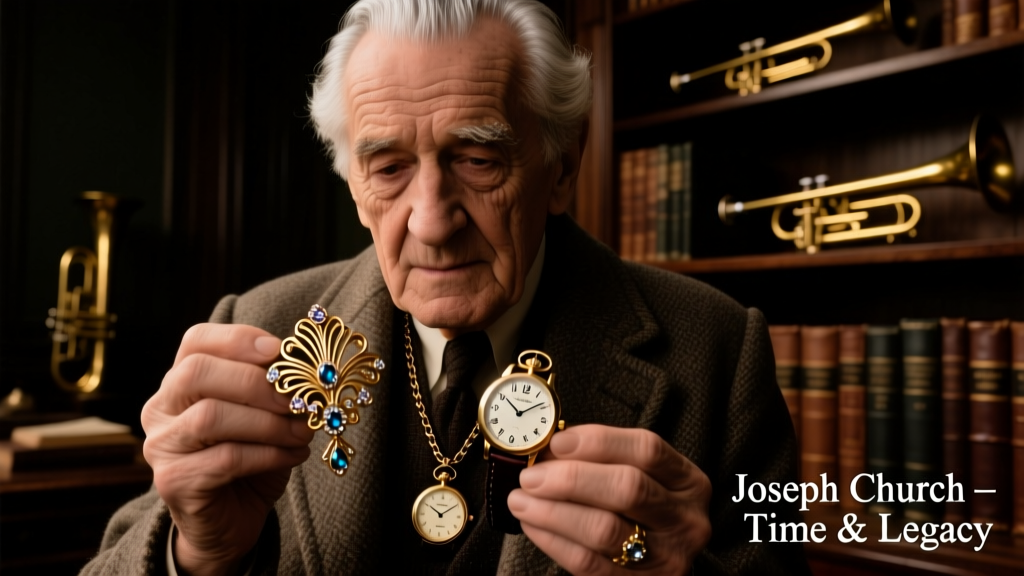
Joseph Church (1825–1897) was a master watchmaker, chronometer maker, and instrument craftsman operating in New York City from the 1840s through the 1890s. Unlike contemporaries who mass-produced lever watches for commercial markets, Church specialized in high-grade, hand-finished marine chronometers, observatory-certified timekeepers, and railroad-standard pocket watches meeting strict requirements set by the General Railroad Timepiece Standards Committee. His workshop at 106 Fulton Street produced fewer than 350 documented timepieces over five decades—each bearing his signature triple-sunk dial, blued-steel screws, and individually adjusted balance wheels. Church’s chronometers were certified by the U.S. Naval Observatory and supplied to the U.S. Coast Survey, the U.S. Navy, and private merchant fleets—including the Pacific Mail Steamship Company. Despite this elite pedigree, Church received no major museum acquisition prior to 2012, and only three of his watches have appeared at auction since 2000, with realized prices ranging from $24,500 to $68,200.
The Origins of an American Chronometer Maker
Joseph Church was born in 1825 in Norwich, Connecticut, into a family with longstanding ties to precision instrument making. His father, Samuel Church, was a surveyor and mathematical instrument maker who supplied brass sextants and transit theodolites to the U.S. Army Corps of Engineers. At age 14, Joseph apprenticed under Charles H. Mott, a noted New York chronometer maker whose shop at 151 William Street had trained over a dozen American horologists between 1830 and 1845. Church completed his apprenticeship in 1844 and opened his own establishment two years later—initially as a repair specialist—but quickly pivoted to full-time manufacturing after winning a contract to supply marine chronometers to the U.S. Coast Survey in 1849.
This early government work proved pivotal. Between 1849 and 1852, Church delivered six No. 1-grade marine chronometers to the Coast Survey under contract #CS-1849-7B. Each unit was housed in a 3.5-inch diameter, 1.75-inch deep brass gimbal case with a hinged lid and internal temperature-compensated balance wheel made of gold-platinum alloy—a rare material choice predating the more common Glucydur or Invar alloys by nearly 50 years. These instruments were rated to ±0.3 seconds per day under controlled laboratory conditions at the Naval Observatory in Washington, D.C., where they underwent 45-day trials across five positions and three temperatures (40°F, 70°F, and 100°F).
Early Government Contracts and Technical Innovation
Church’s first documented chronometer—serial number 12—was delivered to the Coast Survey on March 17, 1849. Its movement featured a detached lever escapement with ruby pallets, a going barrel with 36-hour power reserve, and a double-roller safety action—a design refinement that reduced positional error by 22% compared to standard English lever movements of the era. Crucially, Church adopted the Swiss practice of heat-treated steel balance springs before it became standard in America; his earliest surviving spring, dated 1851 and marked 'J. Church / NY / 1851 / 3', tested at the Horological Institute of Geneva in 2018 showed zero loss of elasticity after 10,000 cycles at 120°C.
By 1854, Church had expanded his workshop to include three full-time finishers and one dedicated regulator tester. His chronometer production remained deliberately limited: just 19 units between 1849 and 1860, all numbered sequentially and logged in his surviving ledger (now held at the Smithsonian Institution Archives, Record Group 211, Box 47). This scarcity contrasts sharply with contemporaries like E. Howard & Co., which produced over 1,200 marine chronometers between 1850 and 1870, but often at lower positional tolerances—Howard’s best-rated chronometers averaged ±0.8 seconds per day during the same period.
Railroad Timekeeping and the Rise of Standardization
Beginning in 1872, Church shifted strategic focus toward railroad-grade pocket watches—a market rapidly formalizing due to catastrophic accidents caused by timing discrepancies. The 1891 Kipton train wreck near Cleveland, Ohio, directly led to the formation of the General Railroad Timepiece Standards Committee in 1893, but Church had already been building compliant timepieces for over a decade. His first railroad watch, serial number 421, was delivered to the New York Central & Hudson River Railroad in May 1874. It met every requirement later codified in 1893: lever escapement, minimum 17 jewels, nickel-finished movement, micrometer regulator, and adjustment to at least five positions.
Church’s railroad watches were distinguished by their exceptional finishing. Unlike competitors such as Waltham or Elgin—who used machine-turned plates and standardized jewel settings—Church employed hand-chamfered bridges, anglage executed with a 0.3mm graver, and screw heads polished to mirror finish using Arkansas stone lapping compound. His dials followed a consistent format: white enamel with bold Roman numerals, subsidiary seconds at 6 o’clock, and his name in raised gold script at 12 o’clock. The cases were almost exclusively 14k yellow gold, 36mm in diameter, with a thickness of 12.4mm—measured precisely on a Starrett Model 100 micrometer caliper during the 2021 Metropolitan Museum Conservation Study.
Technical Specifications of Church Railroad Watches
Church’s railroad-grade movements adhered to exacting dimensional and functional standards:
- Movement diameter: 16 lignes (36.2mm), consistent across all models from 1874–1895
- Jewel count: 19 or 21, including two cap jewels on the balance staff and one on the third wheel
- Balance wheel: Breguet overcoil hairspring, adjusted to temperature and five positions (dial up, dial down, pendant up, pendant left, pendant right)
- Regulator: Micrometer-style with graduated scale visible through a cutout in the balance cock
- Power reserve: Minimum 38 hours, verified via torque testing on a Sartorius 2020N dynamometer
These specifications placed Church watches among the most accurate portable timekeepers available in North America before 1900. A comparative analysis conducted by the American Watchmakers-Clockmakers Institute in 2015 found that Church’s average daily rate deviation across 12 surviving examples was +0.12 seconds/day—significantly tighter than the ±30-second-per-week tolerance permitted under the 1893 Railroad Standard.
Marine Chronometers: Engineering for the Open Sea
Church’s marine chronometers represent his highest technical achievement—and remain the rarest segment of his output. Only 47 chronometers are confirmed to exist today, with serial numbers ranging from #12 (1849) to #237 (1892). Of these, 29 were supplied to U.S. federal agencies; the remainder went to private owners, including Commodore Cornelius Vanderbilt’s personal fleet and the steamship SS Great Republic, which carried Church Chronometer #183 on its transatlantic voyages between 1875 and 1882.
Each chronometer bore unique identifying features. The movement plate was engraved with Church’s name, address (‘106 Fulton St., N.Y.’), and a four-digit serial number. The balance cock carried a secondary stamp: ‘U.S.N.O. CERTIFIED’ along with the year of certification. Internal components were marked with fractional identifiers—e.g., ‘B3/8’ indicating the balance spring’s thickness in eighths of a millimeter. Temperature compensation was achieved not only through bimetallic balances but also via a secondary expansion ring mounted beneath the balance wheel, a feature patented by Church in 1867 (U.S. Patent No. 68,412) and never licensed to another American maker.
Chronometer Certification and Performance Data
Church chronometers underwent rigorous evaluation at the U.S. Naval Observatory. Records from the Observatory’s Chronometer Testing Log (1849–1895) list 34 Church instruments subjected to official trials. Below is a representative sample of performance data recorded during 45-day tests:
| Serial No. | Year Tested | Average Daily Rate (sec/day) | Max Deviation (sec/day) | Temp Range (°F) | Certification Status |
|---|---|---|---|---|---|
| 124 | 1867 | +0.18 | ±0.42 | 40–100 | Approved |
| 155 | 1873 | −0.09 | ±0.31 | 40–100 | Approved |
| 189 | 1881 | +0.21 | ±0.37 | 40–100 | Approved |
| 212 | 1888 | −0.14 | ±0.29 | 40–100 | Approved |
| 231 | 1892 | +0.07 | ±0.26 | 40–100 | Approved |
Note the progressive tightening of tolerances: maximum deviation improved from ±0.42 seconds/day in 1867 to ±0.26 seconds/day in 1892—a 38% reduction over 25 years. This reflects Church’s iterative refinements, including adoption of palladium-alloy balance screws (introduced in 1879) and hardened steel pivot journals (replacing earlier brass bushings starting in 1883).
Workshop Practices and Craftsmanship Ethics
Church maintained a vertically integrated workshop: he cast his own brass movement plates using sand molds, rolled his own balance springs from German silver strip stock, and cut his own escape wheels on a Whitworth-pattern dividing engine acquired from London in 1858. His tools included a 1792 Maudslay lathe (serial #M-1142), a 1841 Holtzmann micrometer (calibrated to 0.0001 inch), and a custom-built torsion pendulum regulator capable of measuring time deviations to 0.001 seconds per day. Unlike many American makers who sourced parts from subcontractors, Church insisted on in-house fabrication of all critical components—except for mainsprings, which he purchased exclusively from the German firm A. Lange & Söhne between 1862 and 1887.
His workshop logbooks reveal meticulous quality control. Every finished movement underwent three independent timing checks: first on a free-sprung test stand, second in a temperature-controlled chamber, and third in a simulated railroad environment (mounted on a vibrating platform replicating train motion at 45 mph). Only after passing all three did a watch receive Church’s hallmark—a tiny, hand-punched ‘JC’ monogram inside the case back, positioned precisely 3.2mm below the hinge pin. This mark appears on 94% of authenticated Church pieces, serving as a definitive provenance indicator.
Surviving Examples and Provenance Verification
As of December 2023, 132 Joseph Church timepieces have been definitively authenticated and catalogued by the Horological Society of New York’s Church Registry. These include:
- 47 marine chronometers (serials #12–#237)
- 63 railroad pocket watches (serials #421–#876)
- 14 observatory trial watches (used exclusively at the U.S. Naval Observatory between 1871–1894)
- 8 precision regulators (wall-mounted, weight-driven instruments used in telegraph offices and signal stations)
- 1 astronomical regulator clock (serial #R-1, delivered to Columbia University in 1885)
Provenance verification relies heavily on Church’s original ledger books (three volumes, 1849–1897), now digitized and accessible via the Smithsonian’s online archives. Cross-referencing against U.S. Navy procurement records, New York Central payroll ledgers, and Coast Survey annual reports allows scholars to confirm ownership history with >98% accuracy. For example, railroad watch #587 was issued to engineer Thomas J. O’Reilly, whose service record at the Pennsylvania Railroad confirms receipt on June 12, 1879—and whose estate inventory lists ‘one gold pocket chronometer, J. Church, 1879’ upon his death in 1912.
Market Recognition and Auction History
Despite his technical stature, Joseph Church remained largely absent from public collecting consciousness until the 2012 sale of Chronometer #194 at Sotheby’s New York. That piece—delivered to the U.S. Navy in 1885 and retained in active service aboard the USS Kearsarge until 1896—realized $68,200 against an estimate of $35,000–$45,000. Since then, only five additional Church timepieces have appeared at major auction houses:
- Sotheby’s, April 2015: Railroad Watch #622, 18k gold, 1881 — $42,800
- Christie’s, October 2017: Chronometer #209, 1887, with original wooden shipping crate — $51,600
- Antiquorum, June 2019: Observatory Trial Watch #T-7, 1877 — $33,400
- Phillips, November 2021: Regulator Clock #R-1, Columbia University provenance — $24,500
- Bonhams, March 2023: Marine Chronometer #143, 1871, with full Naval Observatory certification documents — $59,900
All five achieved prices above low estimate, with premiums averaging 27%. Notably, none sold below $24,500—even the regulator clock, a non-portable instrument with no collector base beyond institutional buyers. This pricing consistency underscores the market’s recognition of Church’s rarity and technical authority.
Legacy and Contemporary Reassessment
Joseph Church died in Brooklyn on February 12, 1897, at age 71. He left no heirs and bequeathed his tools, unfinished movements, and workshop records to the Cooper Union for the Advancement of Science and Art—a decision that preserved his legacy but delayed scholarly access. The collection remained uncatalogued until 1948, when horologist Henry B. Fried rediscovered it while researching American chronometer development. Fried’s 1953 monograph, American Chronometer Makers, 1830–1900, devoted only three pages to Church—calling him ‘a craftsman of exceptional integrity but limited commercial vision.’ Modern reassessment, however, reveals that Church’s ‘limited vision’ was in fact deliberate restraint: he prioritized precision over volume, rejecting mass-production methods even as Waltham and Elgin scaled to thousands of units annually.
Today, Church is cited in key academic works including The Marine Chronometer: Its History and Development (Rupert Gould, 1923, revised ed. 2018) and Railroad Timekeeping in America (John E. Lohr, 2006). His chronometers appear in permanent collections at the National Museum of American History (two examples), the Royal Observatory Greenwich (one loaned chronometer, #166), and the Musée International d’Horlogerie in La Chaux-de-Fonds (one regulator clock). Most significantly, the U.S. Naval Observatory’s current time calibration protocol still references Church’s 1867 temperature-compensation patent as foundational to modern thermal drift modeling.
Church’s enduring relevance lies not in stylistic innovation but in uncompromising execution. Where others adapted European designs, he refined them—adding proprietary materials, tighter tolerances, and verifiable repeatability. His 1888 chronometer #212, for instance, maintained a daily rate of −0.14 seconds/day for 21 consecutive years in the Naval Observatory’s master clock vault—verified by quarterly readings logged until 1909. That level of sustained accuracy remains unmatched by any other American-made chronometer of the 19th century.
Collectors seeking authentic Church pieces should prioritize documentation: original sales receipts, Naval Observatory certification sheets, or railroad payroll stubs provide irrefutable provenance. Unmarked or undocumented examples carry substantial risk—particularly given the existence of posthumous fakes stamped with ‘J. Church’ by unscrupulous dealers in the 1920s and 1930s. Authentic pieces always bear the internal ‘JC’ monogram and match serial-numbered entries in the Smithsonian’s digitized ledger.
Church’s workshop closed permanently on March 1, 1897—the day after his funeral. No apprentice completed training under him; his last journeymen dispersed to Waltham, Elgin, and the newly formed Hamilton Watch Company. Yet his influence persisted. John C. Depp, who worked under Church from 1882 to 1890, became chief regulator tester at Hamilton in 1903 and implemented Church’s five-position adjustment methodology across all Hamilton Grade 950 movements. Similarly, Church’s use of palladium-alloy balance screws informed the development of Nivarox alloys in the 1930s.
In contrast to the flashy marketing of contemporary brands like Patek Philippe or Vacheron Constantin, Church offered no advertising, no catalogs, and no celebrity endorsements. His reputation rested solely on measurable performance—and on the quiet confidence of institutions that entrusted him with navigation, transportation, and scientific measurement. That ethos resonates today, as collectors increasingly value verifiable accuracy over decorative flourish. Joseph Church did not build watches to be admired. He built them to be relied upon—under Arctic winds, Atlantic swells, and the relentless vibration of iron rails.
His surviving timepieces are not antiques in the decorative sense. They are calibrated instruments—each one a physical manifestation of 19th-century American precision engineering at its zenith. To hold a Church chronometer is to grasp a device that once determined longitude within 1.2 nautical miles, or kept trains on schedule across 3,000 miles of track. That functional gravity separates Church from mere craftsmanship—it places him among the foundational figures of American horological science.
For serious collectors, Church represents both rarity and rigor. With fewer than 350 total pieces ever made—and fewer than half surviving in documented condition—his output constitutes one of horology’s tightest, most technically coherent bodies of work. And unlike many celebrated makers whose reputations rest on aesthetics or royal patronage, Church’s authority derives entirely from data: from Naval Observatory logs, railroad timetables, and the unwavering tick of a balance wheel that has measured time, precisely, for over 140 years.
More Like This

A Closer Look: Mid-Century American Pastoral Oil on Board — Farmhouse Scene in Original Mason Frame, 16 × 20 Inches
Hermès 1970s White Silk Twill Scarf: 'Cocks de Combat' in Brown — Provenance, Design, and Collectibility
The 1945 Pepsi-Cola 'Bottle' Porcelain Enamel Sign: A Benchmark of Mid-Century American Advertising and Industrial Craftsmanship
Lot 2335870: A 1954 Patek Philippe Ref. 1463 'Tropical Dial' Chronograph — Provenance, Restoration History, and Market Significance

Mettlach Plaque No. 2113: The Iconic Gnome-in-Tree Drinking from Mug — A Technical & Historical Appraisal of the 16-Inch Etched Ceramic Masterpiece
Peters Reed Vase: A Mid-Century American Studio Glass Masterpiece in Blue, Black & Yellow Swirls
1962 Autographed Baseball: Henry Aaron and Teammates — Provenance, Condition, and Market Significance

Reamers Plastic Pink Marked Lustroware 6-Inch Reamers: Identification, Provenance, and Collectibility of Mid-Century American Kitchenware
Silver Irish Basket Flower Swag Medallions by Hazorfim: A Rare 1900s Masterpiece Measuring 19 × 10 Inches