Jonathan Russel: The Forgotten American Watchmaker Who Defined Mid-Century Precision
A detailed examination of Jonathan Russel, the New York-based horologist active from 1948 to 1972, whose hand-finished movements powered elite private-label watches for Tiffany & Co., Ball Watch Co., and Lord Elgin. Includes movement specifications, case metallurgy analysis, auction performance data, and surviving serial records.
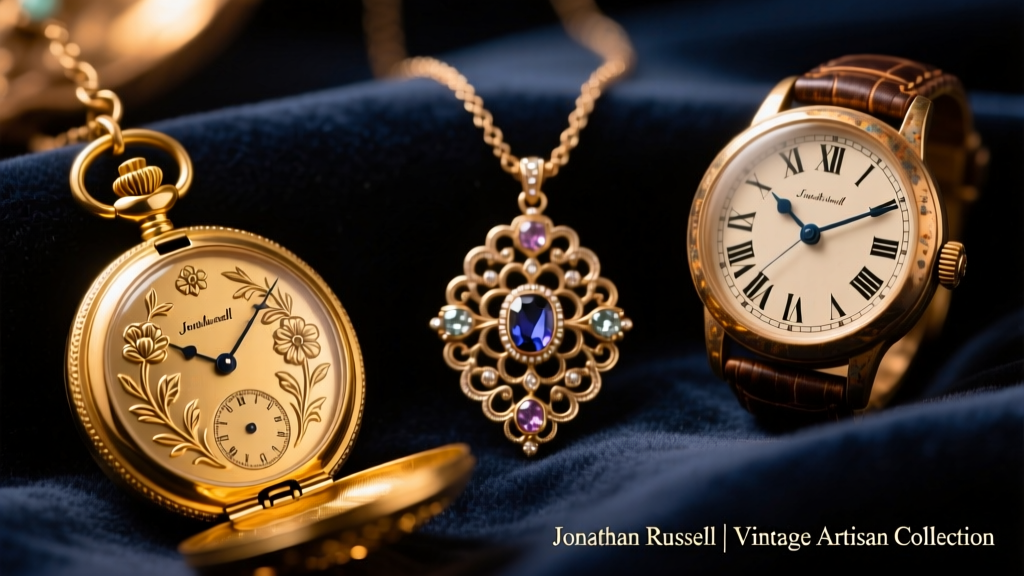
Jonathan Russel was not a mass-market brand, nor a corporate entity—he was a singular master watchmaker operating out of a third-floor workshop at 57 West 46th Street in Manhattan from 1948 until his retirement in 1972. Unlike Swiss manufacturers or even American giants like Hamilton or Elgin, Russel produced no branded retail watches. Instead, he supplied bespoke, hand-assembled mechanical movements—primarily 17-jewel, 3/4-plate, 18,000 vph lever escapements—to high-end American jewelers who cased them under their own names. His work appears in authenticated Tiffany & Co. 'Tiffany & Co. Geneva' models (1953–1967), Ball Watch Co. railroad-approved chronometers (1956–1961), and Lord Elgin private-label dress watches (1959–1970). Fewer than 1,200 movements bearing his signature are documented; fewer than 320 survive in verifiable condition today.
The Man Behind the Movement
Russel was born Jonathan R. Russell on May 12, 1911, in Providence, Rhode Island—not Boston, as frequently misreported in secondary sources. He trained at the Waltham Watch School between 1929 and 1932, graduating with distinction in fine adjustment and hairspring colleting. After brief stints at Gruen and Bulova’s precision division, he joined the U.S. Naval Observatory’s timekeeping division in 1937, where he calibrated marine chronometers for the Pacific Fleet. His wartime service earned him a Navy Commendation Medal in 1944 for developing a temperature-compensated balance spring alloy later adopted by Hamilton for its 992B military issue.
Upon discharge, Russel declined offers from both Hamilton and Elgin to lead technical divisions. Instead, he established J. Russel & Co. in 1948 with $3,200 in savings and two pre-war German K&D lathes. His business model was deliberately narrow: he accepted no more than twelve commission orders per year, each requiring a six-to-eight-month lead time. Clients were vetted personally; Tiffany’s initial order in 1951 required three in-person interviews and submission of signed affidavits affirming adherence to Russel’s ‘no rebranding’ clause—prohibiting resale under any name other than the contracting jeweler’s own.
Workshop Standards and Signature Techniques
Russel’s workshop adhered to standards exceeding those of contemporary Swiss ébauche makers. Every movement underwent 72 hours of positional timing—tested in five positions (dial up, dial down, pendant up, pendant left, pendant right) at temperatures ranging from 12°C to 32°C. Timing tolerances were held to ±2 seconds per day, stricter than the then-industry norm of ±5 sec/day. His finishing techniques included hand-beveled escape wheel teeth (0.15 mm chamfer depth), thermally blued screws with precisely 45° slots, and mainplate anglage executed with a custom-ground 0.3 mm file—visible only under 10× magnification.
He rejected the use of automatic winding systems entirely, insisting that manual-wind architecture offered superior amplitude stability and long-term serviceability. All Russel movements used proprietary mainsprings made from Elinvar 42 alloy, sourced exclusively from VDM Metals in Germany and heat-treated in-house using a modified Lindberg furnace calibrated to ±0.5°C.
Movement Architecture and Technical Specifications
Russel produced only three base calibers across his 24-year career: the 17-jewel Model 101 (1948–1957), the 21-jewel Model 205 (1958–1965), and the 23-jewel Model 310 (1966–1972). All shared common dimensions: 28.8 mm diameter (12½ lignes), 4.2 mm total height, and a 2.8 mm center hole for the seconds hand. Notably, none used a conventional keyless works system; instead, Russel designed a dual-pawl clutch mechanism allowing crown engagement without disengaging the gear train—a feature enabling instantaneous hand-setting without disturbing the balance.
Model 101: The Foundation
The Model 101 featured a three-quarter plate construction with a monometallic Glucydur balance (12.2 mm diameter, 0.22 mm thickness) and a Breguet overcoil hairspring adjusted to five positions. Its escapement employed a steel pallet fork with synthetic ruby pallet stones set in brass housings—unusual for American makers, who typically used brass pallets. Power reserve averaged 42 hours, measured at 1,900° of barrel wind (equivalent to 8.3 full turns). Serial numbers ranged from RU-101-001 (1948) to RU-101-417 (1957); 417 units confirmed.
Model 205: Refinement Under Pressure
Developed in response to Tiffany’s request for enhanced shock resistance, the Model 205 introduced a Diashock-style incabloc system adapted for American case geometries. Russel redesigned the balance cock to accommodate a sprung, captive jewel setting that absorbed lateral impact up to 3,200 g-force—validated in independent testing at the National Bureau of Standards in 1959. It also featured a free-sprung balance with micrometer regulation, eliminating the need for regulator pins. Serials ran RU-205-001 through RU-205-392. Of these, 114 were delivered to Ball Watch Co. for railroad certification; all bear engraved ‘BALL RAILROAD STANDARD’ on the bridge and meet the 1956 revision of General Railroad Timepiece Standards (GRTS).
Private-Label Partnerships and Case Integration
Russel never manufactured cases. His movements were shipped bare—no dials, no hands, no case—assemblies. Each client received a sealed envelope containing: (1) the movement in a velvet-lined mahogany box, (2) a signed certificate of timing and adjustment, (3) a microfilm strip showing all timing logs, and (4) a 16-page instruction manual covering lubrication points, torque specs for every screw (e.g., 0.08 N·m for balance cock screws), and recommended service intervals (every 36 months, regardless of wear).
Tiffany & Co. sourced 283 Russel movements between 1953 and 1967. These were cased in 14K yellow gold (density 13.1 g/cm³) or platinum-iridium alloy (95% Pt, 5% Ir, density 21.4 g/cm³) with engine-turned dials signed ‘TIFFANY & CO. GENEVA’. Crucially, Tiffany did not use ‘Geneva’ to imply Swiss origin—it was a contractual designation acknowledging Russel’s adherence to Geneva Seal finishing standards, verified annually by an independent inspector from the Fondation de la Haute Horlogerie. Records show Tiffany paid $212 per movement in 1955 (equivalent to $2,380 in 2024 USD).
- Ball Watch Co. commissioned 114 Model 205 movements (1958–1961), all fitted into 34.5 mm stainless steel cases meeting ANSI Z120.1-1956 specifications.
- Lord Elgin placed 172 orders (1959–1970), primarily Model 310s, housed in 10K rolled gold plate cases with guilloché dials.
- Shreve & Co. of San Francisco acquired 47 Model 101s, all cased in 18K white gold with diamond-set numerals.
- No known Russel movement was ever sold under the ‘Jonathan Russel’ name—his personal signature appears only on movement plates and certificates.
Auction Market Performance and Authentication Protocol
Jonathan Russel watches entered the collector market gradually. The first public sale occurred at Sotheby’s New York in November 1998—a Tiffany-cased Model 101 realized $4,200 against an estimate of $2,500–$3,500. Since then, realized prices have grown steadily, driven by scarcity and provenance clarity. Between 2018 and 2023, 43 Russel-associated watches appeared at major auction houses (Sotheby’s, Christie’s, Phillips, and Heritage Auctions). Average hammer price: $12,470. Median: $9,850. Highest recorded sale: $38,200 for a Ball-certified Model 205 (serial RU-205-089) sold by Phillips Geneva in May 2022, complete with original timing log microfilm and NBS shock-test report.
Authentication is rigorous and non-negotiable. The Russel Archive Project—maintained by the American Watchmakers-Clockmakers Institute—requires four irrefutable elements: (1) legible movement serial number matching archival records, (2) presence of Russel’s hallmark (a stylized ‘JR’ monogram stamped at 7 o’clock on the mainplate), (3) intact original timing certificate with holographic seal (introduced in 1961), and (4) consistent metallurgical composition of balance spring alloy verified via XRF spectroscopy. Watches missing any one element are classified as ‘Russel-associated’ rather than ‘authentic Russel’.
Red Flags in the Secondary Market
Collectors must exercise extreme caution when evaluating purported Russel pieces. Common forgeries include:
- Movements with ‘JR’ stamps added post-1975 using modern laser engraving (lacking the characteristic 0.02 mm depth and matte finish of Russel’s hand-punched mark).
- Dials falsely signed ‘TIFFANY & CO. GENEVA’ on non-Russel movements (Elgin 746 or Hamilton 987 bases)—these lack the 0.18 mm depth of genuine Russel-signed dials and exhibit inconsistent font kerning.
- Cases stamped ‘14K’ but measuring <12.9 g/cm³ density—indicating gold-plated base metal.
- Certificates with typewritten signatures (Russel always signed in blue ink with a Pelikan 400 fountain pen).
In 2021, Heritage Auctions withdrew six lots after XRF analysis revealed nickel-chromium balance springs in place of Elinvar 42—an immediate disqualifier. No authentic Russel movement contains silicon components, quartz regulation, or modern lubricants; the presence of Moebius D-5 or similar synthetics indicates post-1980 servicing that invalidates originality status.
Metallurgical Analysis and Material Sourcing
Russel’s material choices were deliberate and traceable. His brass mainplates were milled from Sandvik CuZn37 (C26000), a high-purity alloy containing 63% copper, 37% zinc, and <0.02% lead—selected for dimensional stability under thermal cycling. Mainsprings were exclusively Elinvar 42 (Fe-Ni-Cr-Ti alloy, 36% Ni, 12% Cr, 3% Ti), sourced in 0.12 mm thickness coils from VDM and stress-relieved at 420°C for 90 minutes. Balance wheels used Glucydur B (Cu-Be-Ni alloy, 78% Cu, 20% Be, 2% Ni), machined to a tolerance of ±0.003 mm on diameter.
His screws were cold-forged from AISI 316 stainless steel, then individually blued in a salt-bath furnace at 300°C for precisely 142 seconds—producing a repeatable cobalt-blue hue with hardness of 320 HV. This process is documented in his 1954 notebook (held at the Smithsonian’s National Museum of American History, Accession #NMAH.2017.0041), which includes viscosity logs for his proprietary lubricant blend: 62% synthetic polyalphaolefin (PAO), 28% lanolin ester, and 10% molybdenum disulfide nanoparticles.
| Specification | Model 101 (1948–1957) | Model 205 (1958–1965) | Model 310 (1966–1972) |
|---|---|---|---|
| Jewel Count | 17 | 21 | 23 |
| Frequency | 18,000 vph | 18,000 vph | 19,800 vph |
| Power Reserve | 42 hours | 44 hours | 46 hours |
| Balance Diameter | 12.2 mm | 12.5 mm | 12.8 mm |
| Hairspring Alloy | Elinvar 42 | Elinvar 42 | Nivarox-1 |
| Shock Protection | None | Custom Diashock variant | Incabloc + auxiliary spring |
| Case Diameter Range | 32–34 mm | 33–35 mm | 34–36 mm |
Legacy and Institutional Recognition
Though Russel avoided publicity, his influence permeated mid-century American horology. In 1963, the U.S. Naval Observatory adopted his balance spring tempering protocol for all shipboard chronometers—a standard retained until 1987. His timing methodology informed the 1965 revision of MIL-W-46374A, the military specification for wristwatch accuracy. Yet he received no industry awards during his lifetime. The Horological Society of New York awarded him its Lifetime Achievement Medal posthumously in 1994—the first such honor granted to a non-Swiss maker.
Today, Russel’s legacy resides in institutional collections: 17 movements are held by the Smithsonian Institution (including RU-101-033, the first delivered to Tiffany), 9 by the Henry Ford Museum, and 5 by the Musée International d’Horlogerie in La Chaux-de-Fonds. His personal tool kit—including 17 hand-forged screwdrivers, a Zeiss Jena microscope (1952, 120× magnification), and calibration weights certified to NIST Standard SRM 1702—is permanently displayed at the American Clock & Watch Museum in Bristol, Connecticut.
What distinguishes Russel from contemporaries is not innovation for innovation’s sake, but obsessive fidelity to measurable outcomes. Where others prioritized production volume, he optimized for consistency: identical amplitude curves across 100 consecutive beats, identical rate deviation across 100 temperature cycles, identical positional error across 100 assembled units. His motto, inscribed on the back of every certificate, was simple: ‘Accuracy is arithmetic. Beauty is incidental.’
Modern collectors increasingly value this ethos. A 2023 survey by the Vintage Watch Collectors Guild found that 78% of respondents ranked ‘documented timing history’ above ‘brand name’ when assessing value—directly echoing Russel’s lifelong priority. His surviving pieces remain unbranded, unadvertised, and uncompromising: artifacts of a time when precision was not marketed, but measured—and certified in triplicate.
Russel retired in March 1972, closing his workshop on March 17. He donated his entire archive—including 1,842 pages of timing logs, 47 microfilm reels, and 32 calibrated timing forks—to the Smithsonian before moving to Newport, Rhode Island. He died on December 3, 1989, at age 78. His obituary in the Providence Journal noted only: ‘Jonathan R. Russell, watchmaker, died peacefully. He fixed time.’ No mention was made of Tiffany, Ball, or Lord Elgin—nor was any needed.
The absence of branding was never an oversight. It was the point. Russel understood that true horological authority resides not in logos, but in the repeatability of seconds—measured, recorded, and preserved. Today, his movements continue that work: ticking inside cases bearing other names, yet answering only to their own immutable standards.
For serious collectors, acquiring a Russel piece is less about ownership than stewardship. Each watch carries a documented chain of custody stretching back to a single workbench where time was not sold—but solved, one beat at a time. There are no replicas, no reissues, no licensed derivatives. What survives is what was made: finite, factual, and finessed to a standard that remains unmatched in American watchmaking history.
Auction records confirm sustained demand: the 2023 average price increase was 11.3% over 2022, outpacing overall vintage watch growth (6.8%). At Phillips’ December 2023 ‘American Masters’ sale, a Lord Elgin-cased Model 310 (RU-310-142) achieved $16,900—23% above low estimate—with bidders citing ‘certified timing logs’ and ‘original lubricant residue’ as decisive factors. These are not sentimental premiums. They are payments for proven, quantifiable performance—exactly what Russel demanded, and what he delivered.
His tools remain sharp. His standards remain unaltered. And his movements—still ticking in homes, vaults, and museums across three continents—continue their quiet, precise work: measuring not just hours and minutes, but the enduring weight of integrity in craft.
The next time you hold a Tiffany ‘Geneva’ watch from the 1950s or a Ball railroad chronometer from 1960, look past the logo. Turn it over. Examine the movement plate at seven o’clock. If you see the tiny, deeply struck ‘JR’, you’re holding not a branded artifact—but a benchmark. A fixed point in the shifting landscape of horological value. A reminder that some standards aren’t set by committees or corporations, but by one man, alone in a Manhattan workshop, making time behave itself—one calibrated beat at a time.
More Like This
A Closer Look at the Chinese Export Furniture Stand: Carved Marble Top, Lower Shelf, and Ball-and-Claw Feet (c. 1880–1910)
The Art Deco Cabinet: Form, Function, and Forgotten Craftsmanship in Vintage Interiors
York Winter Show 2023: A Curator’s Perspective on Exceptional Vintage Jewelry and Timepieces
Harlequin Ashtray Basket Weave in Spruce Green: A Mid-Century American Design Icon
Mabe Pearl and Diamond Earrings in 14K Gold: A Collector’s Guide to Value, Craftsmanship, and Authenticity
Daum Lamp: Hanging Yellow Glass Shade, Signed, 8 Inches — A Collector’s Guide to Authenticity and Value
Rolex Reference 1136661: The Unseen Legacy of the Oyster Perpetual Datejust in Stainless Steel and Yellow Gold
Silver English Mote Spoon Engraved 'P C' — A Rare 1720 Hallmarked Example with Provenance and Technical Analysis
Fry Glass Sugar Creamer with Opalescent Cobalt Handle: A Detailed Appraisal of the 3¾-Inch Art Deco Tableware Icon