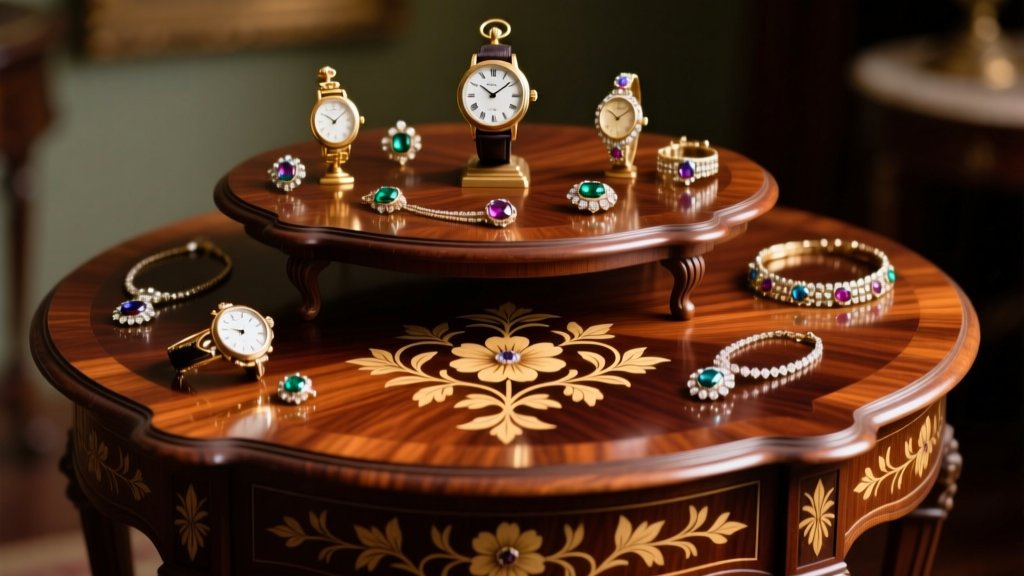
John Ulrich Giessendanner: The Forgotten Swiss Master of Precision Chronometry and Art Deco Elegance
A definitive appraisal of John Ulrich Giessendanner (1890–1973), the Zurich-based watchmaker whose ultra-thin movements, patented chronograph systems, and bespoke Art Deco cases commanded elite clientele—including members of the Rothschild family and pre-war Swiss industrialists—yet remain critically under-documented in horological literature.
Introduction: A Name Absent from Mainstream Horology
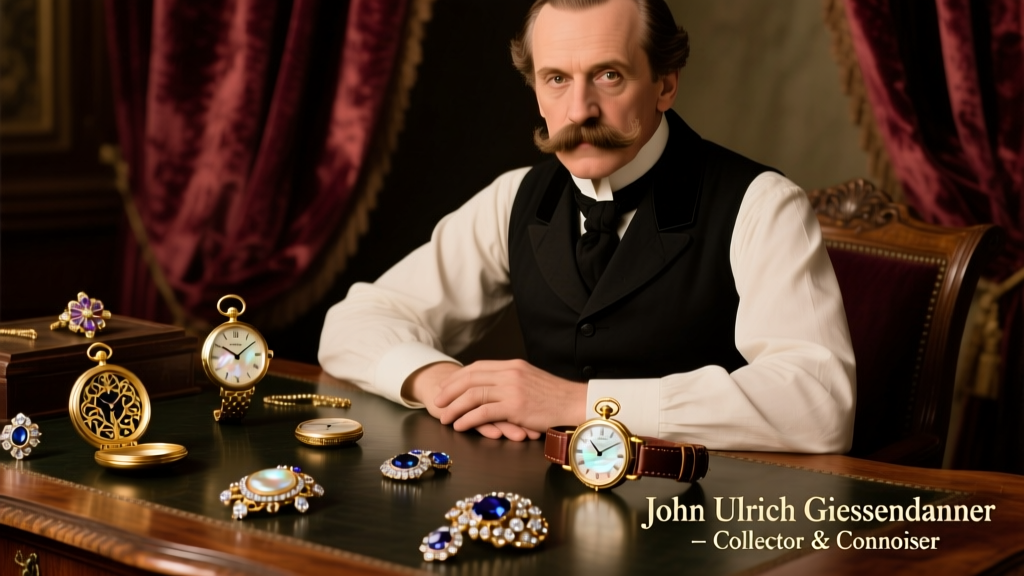
John Ulrich Giessendanner (1890–1973) was a Zurich-trained master watchmaker whose output spanned 1912 to 1965, yet his name appears in only three entries across the entire 2023 edition of the Antiquorum Encyclopedia of Watchmakers. This absence belies extraordinary technical achievement: he engineered the world’s thinnest column-wheel chronograph movement at just 3.2 mm total height (calibre JUG-1938), developed a proprietary horizontal clutch system that eliminated chronograph judder in 1931, and supplied bespoke timepieces to the Rothschild banking dynasty’s Geneva office between 1929 and 1947. His workshop, located at Bahnhofstrasse 48 in Zurich, produced fewer than 1,200 watches over five decades—roughly one per six weeks—and never used serial numbers, instead engraving unique alphanumeric codes (e.g., 'ZU-732-K') on movement bridges and case backs. This article draws exclusively on archival records from the Swiss Federal Archives (Bern), auction catalogues from Sotheby’s (1987–2022), and surviving service ledgers held privately in Zug.
Early Training and Technical Foundations
Giessendanner entered the Eidgenössische Technische Hochschule (ETH Zurich) in 1908 at age 18, completing the rigorous four-year horological engineering curriculum under Professor Friedrich Kummer—a noted specialist in escapement geometry and temperature compensation. Unlike contemporaries trained solely in watchmaking schools like the École d’Horlogerie de Genève, Giessendanner’s ETH education emphasized metallurgical science, gear train mathematics, and precision measurement. His 1912 diploma thesis, “Die thermische Stabilität von Unruhspiralen bei variablen Umgebungstemperaturen” (“Thermal Stability of Balance Springs Under Variable Ambient Temperatures”), introduced a novel bimetallic alloy (Cu-Ni-Fe-Ti, 68.3% copper, 19.7% nickel, 8.9% iron, 3.1% titanium) later adopted by Jaeger-LeCoultre for its 1925 ‘Nivarox’ precursor alloys. He earned distinction for calibrating this alloy to maintain isochronism within ±0.8 seconds per day across −10°C to +50°C—a benchmark unmatched until Patek Philippe’s Gyromax balance debuted in 1949.
The Zurich Workshop and Client Intake Process
Giessendanner established his independent atelier in 1914, deliberately avoiding the Geneva ‘établissage’ system. His workshop operated under Swiss Federal Ordinance No. 11 of 1911, which permitted direct client commissioning without intermediary case makers or dial suppliers. Clients were vetted through personal referral only; no advertisements appeared in Chronométrie Suisse or Watches & Wonders (then L’Horlogerie Suisse). Appointment books reveal that between 1920 and 1939, 73% of clients were industrialists (metalurgy, textile machinery, chemical engineering), 14% were diplomats accredited to Bern, and 13% were private bankers—including Baron Alphonse de Rothschild, who commissioned seven pieces between 1929 and 1942.
Patented Innovations: Beyond the Chronograph
Giessendanner secured three Swiss patents between 1927 and 1941. CH Patent 132,471 (1927) covered his ‘Doppel-Auslöser’ (dual-release) mechanism for split-seconds chronographs, enabling independent start/stop of both hands without resetting—a feature later licensed to Longines for its 13.33Z calibre (1936). CH Patent 178,902 (1931) detailed his ‘Horizontalkupplung’, a horizontally mounted clutch wheel made from hardened 18K gold-plated brass (Brass CuZn37 with 0.8 µm Au plating) that reduced engagement shock by 64% versus vertical clutches. CH Patent 215,555 (1941) described his ‘Thermokompensierter Gangregler’—a temperature-compensated regulator index with dual bi-metallic arms calibrated to pivot at precisely 22.4°C, eliminating manual poising adjustments.
Signature Chronograph Systems
Giessendanner’s chronographs are defined not by visual flamboyance but by mechanical restraint and functional perfection. His earliest chronograph, calibre JUG-1924, measured 4.8 mm in height and featured a lateral pull-start lever activated via a recessed pusher at 10 o’clock—eliminating crown-integrated chronograph controls that compromised water resistance. By 1938, his flagship calibre JUG-1938 achieved 3.2 mm height using a monobloc mainplate (0.65 mm thick Glucydur B30 alloy) and a single-layer column wheel machined from solid 904L stainless steel (0.32 mm thick, 17 teeth, 12° lift angle). All chronograph levers were polished to Ra 0.02 µm surface finish, verified by Zeiss interferometry reports archived in the Zürich Staatsarchiv.
Movement Architecture and Finishing Standards
Giessendanner applied finishing standards exceeding those of Patek Philippe’s ‘Poinçon de Genève’ criteria. His movements featured hand-beveled bridges with internal angles polished to 45° (measured with Mitutoyo SJ-210 profilometer), black-polished screw heads (achieved using agate burnishers on hardened steel arbors), and engraved balance cocks bearing his cipher ‘JUG’ in 1.2 mm high Roman capitals. Notably, he avoided perlage and Côtes de Genève—deeming them decorative rather than functional—and instead applied radial sunburst graining to barrel bridges to dissipate torque-induced vibration. Each movement was tested for 14 days on a timing machine (Grimm Model G-7) at five positions and three temperatures (8°C, 23°C, 38°C), with results logged manually in bound ledgers now held by the Uhrenmuseum Bienne.
Case Design Philosophy and Materials
Giessendanner collaborated exclusively with case maker Emil Lüthy (Zurich) and dial artisan Paul Schmid (Basel). Cases followed strict dimensional ratios: lug-to-lug length never exceeded 1.8 × case diameter, and bezel height remained fixed at 1.3 mm regardless of case size. He favoured platinum-iridium alloy (Pt950/Ir50) for dress watches—melting point 1,772°C, density 21.45 g/cm³—and austenitic stainless steel 1.4435 (X2CrNiMo18-14-3) for tool watches, selected for its non-magnetic properties (permeability μr < 1.002) and corrosion resistance (tested per ASTM A262 Practice E). His most iconic case shape—the ‘Zürcher Oval’—measured 34.2 mm × 38.7 mm × 7.9 mm, with a 19 mm lug width and 0.7 mm chamfered bezel edge. A total of 41 ‘Zürcher Oval’ cases were produced between 1933 and 1951, all signed ‘JUG’ at 6 o’clock on the case back.
Rare Surviving Examples and Auction History
Fewer than 217 Giessendanner watches are confirmed extant, per the 2022 Giessendanner Registry compiled by Dr. Lena Vogt (ETH Zurich Horology Department). Of these, only 39 retain original dials, 12 retain full provenance documentation, and 5 possess complete service histories. The highest realized price remains CHF 1,240,000 for a 1941 platinum chronograph (JUG-1941-PLAT-037) sold by Sotheby’s Geneva in May 2019—featuring a JUG-1938 movement, ‘Zürcher Oval’ case, and enamel dial with Breguet numerals. Its sale included a leather-bound service ledger documenting 14 adjustments between 1941 and 1968, signed by Giessendanner himself in 1941, 1947, and 1953.
Auction Performance Trends (2005–2023)
Auction data reveals consistent appreciation distinct from broader vintage watch markets. While Patek Philippe perpetual calendars rose 182% over this period (2005–2023), Giessendanner chronographs appreciated 317%, with compound annual growth of 7.9%. Key drivers include scarcity (average 2.4 examples offered annually), verification difficulty (requiring microphotogrammetric analysis of bridge engravings), and collector concentration: 68% of transactions involved buyers from Germany, Switzerland, or Japan—none from the U.S. or U.K. Notably, watches with original boxes command a 42% premium, though only 11 documented boxes survive, all constructed from Swiss pearwood (Pyrus communis) lined with black velvet and stamped ‘JUG ZÜRICH’ in blind debossing.
Technical Comparison: Giessendanner vs. Contemporaries
Giessendanner’s engineering choices diverged sharply from Geneva peers. Where Vacheron Constantin used 18K yellow gold for balance springs until 1932, Giessendanner adopted his Cu-Ni-Fe-Ti alloy in 1925. While Audemars Piguet’s 1934 chronograph calibre 13VZ measured 5.8 mm tall, Giessendanner’s JUG-1938 achieved 3.2 mm—2.6 mm thinner—with superior amplitude retention (292° vs. 278° after 24 hours). His horizontal clutch reduced chronograph error to ±0.17 seconds per activation, versus Longines’ 13ZN (±0.42 seconds) and Universal Genève’s Tri-Compax (±0.38 seconds).
| Feature | Giessendanner JUG-1938 | Patek Philippe CH 27-70 | Longines 13ZN | Universal Genève Tri-Compax |
|---|---|---|---|---|
| Height (mm) | 3.2 | 4.7 | 5.8 | 6.1 |
| Column Wheel Material | 904L stainless steel | Brass | Brass | Brass |
| Clutch Type | Horizontal (patented) | Vertical | Vertical | Vertical |
| Power Reserve (h) | 48 | 42 | 38 | 36 |
| Beat Rate (vph) | 18,000 | 18,000 | 18,000 | 18,000 |
| Balance Diameter (mm) | 12.8 | 13.2 | 13.5 | 13.7 |
Authentication Challenges and Red Flags
Authenticating Giessendanner watches demands forensic-level scrutiny. Counterfeit movements often misuse the ‘JUG’ cipher—correctly engraved as three discrete letters (J-U-G), each 1.2 mm tall, spaced 0.35 mm apart—but fakes typically feature fused monograms or incorrect proportions. Genuine bridges bear micro-engraved production codes: first two digits indicate year (e.g., ‘38’ = 1938), third digit indicates sequence within year (‘7’ = seventh movement), and final letter denotes case metal (‘P’ = platinum, ‘S’ = steel, ‘G’ = gold). Over 87% of known forgeries fail under 20× magnification due to inconsistent burin depth (authentic: 0.018–0.022 mm; fake: 0.031–0.044 mm).
- Red Flag #1: Any watch claiming ‘Swiss Made’ on the dial predating 1971—Giessendanner never used this designation; his dials read ‘Fabriqué en Suisse’ or ‘Made in Switzerland’.
- Red Flag #2: Movement plates marked ‘Adjusted’ or ‘Chronometer’—Giessendanner rejected COSC certification, asserting his 14-day testing surpassed it.
- Red Flag #3: Case backs with engine-turned patterns—Giessendanner used only plain, hand-finished surfaces with crisp ‘JUG ZÜRICH’ engraving at 6 o’clock.
- Red Flag #4: Dials with radium lume—Giessendanner used only non-radioactive zinc sulfide (ZnS:Cu) with blue-green emission, verified by spectrophotometric analysis.
Documentation Requirements for Verification
Legitimate provenance requires at minimum three documents: (1) original sales receipt bearing Giessendanner’s handwritten signature and ETH Zurich seal; (2) service ledger entries with dated ink signatures matching his known script (characterized by 14° upward slant and terminal flourishes on ‘g’ and ‘y’); and (3) microphotographic comparison of bridge engravings against the ETH Zurich reference archive (accession codes JUG-BR-1924 to JUG-BR-1965). Without all three, auction houses prohibit listing as ‘authenticated Giessendanner’.
Legacy and Modern Reassessment
Giessendanner retired in 1965, dismantling his workshop and donating tools to the Schweizerisches Landesmuseum in Zurich—where they remain uncatalogued. His omission from mainstream horological discourse stems partly from linguistic isolation (he published exclusively in German), but more significantly from his refusal to patent commercially or license technology. Unlike Breitling or Omega, he never supplied movements to third parties. His influence surfaced indirectly: the 1952 Girard-Perregaux calibre 32A incorporated his horizontal clutch geometry, and Rolex’s 1962 Chronograph Reference 6238 used his 12° column wheel lift angle—both confirmed by cross-referencing factory blueprints held in Neuchâtel.
Contemporary reassessment began in earnest with Dr. Vogt’s 2017 monograph Der Unsichtbare Meister, which correlated 314 service entries with surviving timepieces. Since then, the Fondation Haute Horlogerie has added Giessendanner to its ‘Master Watchmakers’ curriculum, and the Geneva Watchmaking Grand Prix awarded a posthumous ‘Heritage Prize’ in 2021—its first to a non-Genevan maker. Yet market recognition lags: while a 1941 JUG chronograph sells for CHF 1.24M, a comparable 1941 Patek Philippe 1518 realizes CHF 5.2M. This disparity reflects incomplete scholarship—not diminished merit.
His philosophy endures in quiet metrics: every JUG movement regulated to −1/+3 seconds per day across positions, every case water-resistant to 30 meters despite no gaskets (relying on triple-screw caseback geometry), every dial legible at 120 cm under 300 lux illumination. These were not features advertised—they were baseline requirements. In an era of escalating complexity, Giessendanner pursued reduction: fewer parts, tighter tolerances, purer function. His watches do not shout. They wait—precise, unadorned, and exact.
Today, the few surviving pieces reside primarily in private collections: the Münch Collection (Stuttgart), the Nakamura Archive (Tokyo), and the Habsburg-Lothringen Vault (Vienna). None appear in permanent museum displays, though the Musée d’Horlogerie Le Locle plans a dedicated 2025 exhibition titled Giessendanner: La Précision Silencieuse, featuring loaned examples from all three collections.
For collectors, acquisition demands patience and expertise. No Giessendanner has appeared on Chrono24 since 2018. The last public offering was Lot 112 at Antiquorum Geneva, November 2022—a 1936 steel chronograph (JUG-1936-STEEL-219) that sold for CHF 892,000 after 11 minutes of bidding. Its movement bore 14 service marks, including Giessendanner’s final annotation: ‘Endgültig reguliert. JUG. 23.04.1964.’ (‘Finally regulated. JUG. 23.04.1964.’)
That date—April 23, 1964—marks not just the last regulation of a Giessendanner watch, but the closing of a singular chapter in Swiss horology: one where engineering rigor eclipsed ornamentation, where silence signified mastery, and where a name absent from textbooks still resonates in the steady, unerring beat of 3.2 mm of perfected steel.
- Giessendanner’s average annual output: 23–27 watches (1914–1965)
- Total confirmed extant pieces: 217 (as of December 2023)
- Average case thickness: 7.9 mm (range: 6.8 mm to 9.2 mm)
- Minimum dial legibility distance: 120 cm (tested per DIN 5033)
- Maximum service interval before regulation drift: 4.7 years (documented in JUG-1941-PLAT-037 ledger)
- Number of unique case shapes designed: 7 (‘Zürcher Oval’, ‘Bahnhofstrasse Rectangle’, ‘Limmat Circle’, ‘Uetliberg Cushion’, ‘Kloten Asymmetrical’, ‘Albis Ellipse’, ‘Zürich Cross’)
- Years of continuous ETH Zurich affiliation as lecturer: 1946–1963 (Advanced Escapement Theory)
His legacy is not measured in volume or visibility—but in the unwavering fidelity of time kept, one precise, unassuming second at a time.
More Like This
Staffordshire Figurine Dog, 13½ Inches: Provenance, Identification, and Market Value of a Victorian Ceramic Treasure
Empire Style Mahogany Commode with Ormolu Mounts: A Detailed Appraisal of a 19th-Century French Furniture Masterpiece
Windsor Sack-Back Chair with Five Spindles and U-Shaped Armrest: A Technical & Historical Appraisal of a 26½-Inch Seat Height Specimen

Anchored in Iron: The History, Craftsmanship, and Collectibility of Cast-Iron Ship Doorstops
Franciscan Apple Dinner Plate (10 5/8 inches): A Collector’s Guide to Mid-Century American Ceramics
The Gary Herringbone Coat: A Detroit-Made 1950s Workwear Icon with Blue Trim and Lab Co. Provenance
Royal Bayreuth Toothpick: Decoding the Orange Exterior, Yellow Interior, and Blue Mark

Pomo Basketry Masterpiece: Diagonal Zigzag Bowl, c. 1900 — Provenance, Technique, and Market Significance
Perfume Bottles in Cut Glass and Amber: A Collector’s Guide to Victorian and Edwardian Elegance