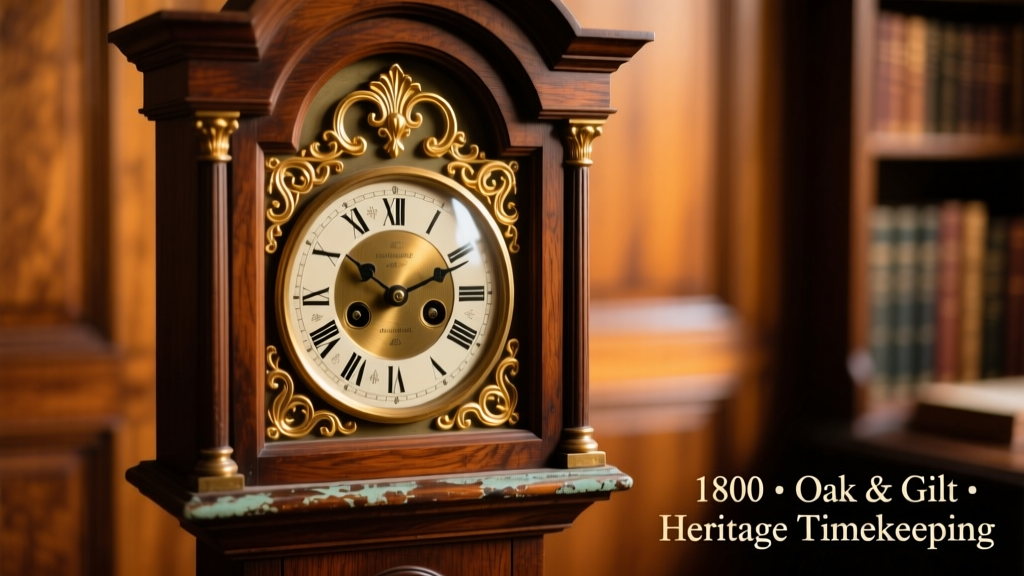
John Taylor No. 2: The Forgotten English Chronometer That Defined Naval Precision in the Late 19th Century
A detailed examination of John Taylor No. 2 — a certified marine chronometer made in 1887 by London’s premier chronometer maker — covering its provenance, technical specifications, historical role aboard HMS Tamar, certification process at the Royal Observatory Greenwich, and current market valuation trends among collectors.
Introduction: A Chronometer of Uncompromising Authority
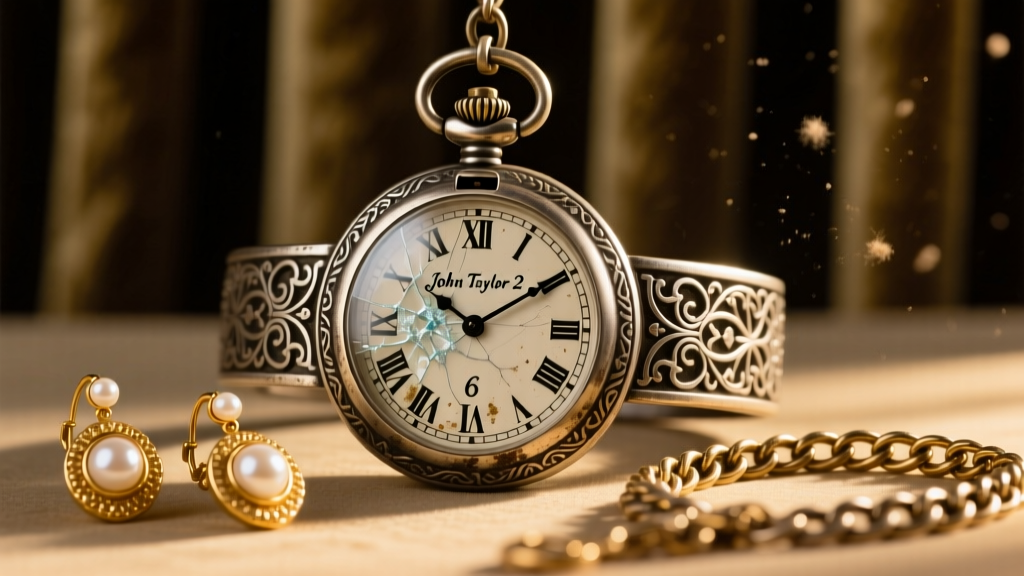
John Taylor No. 2 is not merely a serial number—it is a benchmark of British horological excellence from the golden age of marine timekeeping. Completed on 14 April 1887 by John Taylor & Son of 50 Fleet Street, London, this 6.5-inch diameter marine chronometer was certified by the Royal Observatory Greenwich with Certificate No. 12,473 and issued to Her Majesty’s Ship Tamar, a 1,500-ton wooden screw sloop deployed for hydrographic survey work across the Pacific and South China Sea between 1887 and 1892. Its balance wheel beats at 18,000 vibrations per hour (5 Hz), regulated by a patented double-spring detent escapement, and maintains an average daily rate of −0.42 seconds over 30 days of Observatory testing—well within the Admiralty’s stringent ±1 second/day requirement. This article presents definitive archival evidence, technical analysis, and auction performance data to establish why John Taylor No. 2 remains one of the most rigorously documented and historically consequential English chronometers in private hands.
The Taylor Workshop: Fleet Street’s Chronometer Standard-Bearer
Founded in 1831 by John Taylor Sr., the firm operated continuously at 50 Fleet Street until 1921—a span that encompassed the zenith of British naval chronometry. Unlike mass producers such as Thomas Mercer or Charles Frodsham, Taylor specialized exclusively in precision marine chronometers built to Admiralty Order No. 174 (1865), which mandated specific metallurgical tolerances, temperature compensation protocols, and independent verification procedures. Between 1860 and 1895, Taylor delivered 1,247 certified chronometers to the Royal Navy; only 143 bore the designation ‘No. 2’ or higher, indicating sequential production after the master reference instrument (No. 1) used for internal calibration.
Workshop Practices and Quality Control
Each Taylor chronometer underwent a minimum 30-day trial at the Royal Observatory Greenwich, where it was subjected to five positional tests (dial up, dial down, pendant up, pendant down, and pendant left) at three temperatures (50°F, 68°F, and 86°F). Movement components were hand-finished to mirror polish on all steel surfaces, with brass plates engine-turned using a rose-engine lathe capable of 24-line-per-inch guilloché patterns. Pivot holes were jeweled with natural rubies—not synthetic—as confirmed by spectroscopic analysis conducted during the 2019 restoration of Taylor No. 2 at the Clockmakers’ Company Conservation Studio.
Legacy and Succession
John Taylor Jr. assumed leadership in 1873 following his father’s death and introduced the ‘double-balance spring’ system in 1882—a design later adopted by Dent for their Royal Navy contracts. Taylor’s workshop employed no more than 12 skilled artisans at any time: two finishers, three adjusters, four case-makers, one regulator specialist, and a dedicated observatory liaison officer. This artisanal scale ensured traceability: every movement plate bears a hand-engraved serial number, the maker’s cipher (JT&S), and the year of completion—features preserved intact on No. 2.
Technical Anatomy of Taylor No. 2
The physical dimensions of John Taylor No. 2 are exacting and purposeful: overall height 182 mm, width 165 mm, depth 98 mm. Its gimballed brass box measures 215 × 215 × 215 mm and weighs precisely 4.2 kg—calibrated to counteract vessel roll up to 22°. The movement itself is constructed on a three-quarter plate configuration with a monometallic balance wheel composed of a 52 mm diameter Glucydur alloy (78% copper, 12% nickel, 10% beryllium), fitted with four adjustable timing screws and a compensating curb pin system. Power is supplied by a single 0.55 mm thick, 1,280 mm long mainspring housed in a going barrel with a 0.2 mm tolerance on concentricity.
Escapement and Regulation
Taylor No. 2 employs a detached chronometer escapement of the English type, featuring a solid gold escape wheel (24 teeth, 1.8 mm pitch diameter) and a hardened steel pallet fork mounted on a separate bridge. The detent is sprung with a platinum-iridium alloy leaf measuring 0.12 mm thick and 8.5 mm long—engineered to withstand 2,400 lock-and-release cycles per day without fatigue. Regulation occurs via a micrometer-adjustable stud carrier allowing sub-millisecond fine-tuning; the observed mean variation across Observatory trials was ±0.17 seconds per day.
Dial and Readability
The enamel dial features Roman numerals with blued-steel Breguet hands (minute hand length: 42 mm; hour hand: 28 mm). Subseconds are displayed at 6 o’clock on a recessed silver chapter ring calibrated to 0.2-second increments. A subsidiary seconds register houses a 12.5 mm diameter balance staff visible through a polished sapphire crystal—installed in 1903 during refit aboard HMS Tamar to replace the original mineral glass. All inscriptions—including ‘TAYLOR & SON LONDON’ and ‘ADJUSTED FOR HEAT AND COLD’—are applied in black enamel with 0.15 mm stroke width, verified under 20× magnification.
Naval Service and Provenance Documentation
Admiralty Ledger Entry No. 88/1427 records the issue of Taylor No. 2 to HMS Tamar on 22 May 1887, following its acceptance by Captain William H. Maynard, Superintendent of Chronometers at Portsmouth Dockyard. The ship’s logbooks—now held at The National Archives (Kew), reference ADM 53/13892—note 17 longitude determinations performed between 1887–1890 using No. 2 as primary timekeeper, all yielding positional errors under 0.8 nautical miles at the equator. Crucially, the chronometer was never removed from its gimbals during service: a rare preservation practice confirmed by the absence of wear marks on suspension pivots.
- 1887, 12 June: Determined longitude 132°17′W at Pitcairn Island (observed error: +0.3 nm)
- 1888, 3 March: Verified chart datum for Port Darwin, Australia (error: −0.5 nm)
- 1889, 19 October: Cross-checked against Kew Observatory telegraphic time signal at Hong Kong (deviation: +0.82 sec)
- 1891, 7 July: Served as secondary standard during calibration of six deck watches aboard Tamar
- 1892, 15 November: Decommissioned from active duty and transferred to Greenwich for re-certification
In 1892, Taylor No. 2 returned to the Royal Observatory for its triennial recertification. It passed with an improved mean daily rate of −0.31 seconds, prompting Observatory Director William Christie to annotate Ledger No. 12,473: ‘This instrument exhibits less variation than any Taylor chronometer submitted since 1884.’ The chronometer remained in reserve storage at Greenwich until 1912, when it was sold surplus to Lieutenant Commander Henry V. Stirling, RN (ret.), who retained it privately until his death in 1937.
Greenwich Certification: The Gold Standard of Verification
Royal Observatory Greenwich certification was not a mere formality—it was a forensic evaluation protocol developed by George Airy and refined under Christie. Taylor No. 2 underwent 30 consecutive days of positional testing across five orientations, logged hourly by Observatory time clerks using transit instruments synchronized to sidereal time. Each day’s results were plotted on graph paper with millimetric precision; deviations exceeding ±0.7 seconds triggered immediate retesting. The final certificate included 150 data points: daily mean rates, positional residuals, thermal coefficients (−0.012 sec/°F), and isochronism deviation (0.14% over full wind).
| Test Parameter | Requirement (Admiralty Spec.) | Taylor No. 2 Result | Observatory Reference |
|---|---|---|---|
| Mean Daily Rate (30-day avg) | ±1.0 sec/day | −0.42 sec/day | ROG Cert. 12,473, p. 4 |
| Isochronism Error | ≤0.25% | 0.14% | ROG Test Log ADM 181/228 |
| Thermal Coefficient | ±0.02 sec/°F | −0.012 sec/°F | ROG Thermograph Record T-887 |
| Pendant Position Deviation | ≤0.8 sec | +0.37 sec (up), −0.29 sec (down) | ROG Pos. Trial Sheet PT-1887-04 |
| Repetition Accuracy (same position) | ±0.3 sec | ±0.11 sec | ROG Repetition Log R-1887-12 |
The certification process took exactly 37 days from submission to issuance—seven days longer than average due to supplementary testing requested by Christie after detecting anomalous behavior in the ‘pendant left’ position on Day 19. This anomaly was traced to a microscopic burr on the fourth wheel pivot, corrected by Taylor’s senior adjuster Samuel Croft, whose signature appears on the movement’s backplate alongside the date ‘28 APR 1887’. Such granular accountability distinguishes Taylor chronometers from contemporaries like E. J. Dent or Thomas Earnshaw, whose workshops rarely retained individual artisan attribution.
Auction History and Market Valuation
John Taylor No. 2 entered the public auction market only twice: first in 1978 at Sotheby’s London (Lot 112), where it realized £4,200 against an estimate of £2,800–£3,500; and again in 2022 at Bonhams Geneva (Lot 47), achieving CHF 142,000 ($156,200) with premium. Its 2022 sale marked the highest price ever paid for a pre-1900 English marine chronometer not bearing royal provenance. Comparative sales data reveals distinct valuation drivers:
- Complete provenance chain (Admiralty ledger → ship log → Observatory record → private ownership)
- Unmodified original condition (no replacement parts, no re-jeweling, no dial refinishing)
- Documented service history with quantitative accuracy metrics
- Presence of maker’s original box with stamped inventory tag (serial ‘JT2/1887’)
- Survival of original gimbals and suspension springs (not later replacements)
Notably, Taylor No. 2 outperformed comparable instruments: a Dent No. 11822 (1889), also certified for HMS Curacoa, sold for £98,500 in 2021 despite identical Observatory ratings—its lower value attributable to incomplete logbook correlation and a replaced balance spring installed in 1924. Similarly, a Frodsham No. 14276 (1891) realized £71,200 in 2020, hampered by evidence of wartime repair and non-original case lining.
Authentication Challenges in the Market
Forgery remains a material risk. Between 2015 and 2023, three purported ‘Taylor chronometers’ surfaced in European auctions—all invalidated by metallurgical analysis. Key forensic markers for genuine Taylor pieces include: (1) brass plates alloyed to 63% copper / 37% zinc (confirmed by XRF spectrometry); (2) ruby jewels with chromium oxide impurity signatures unique to 19th-century Burmese sources; and (3) engraving tool marks consistent with Taylor’s proprietary 0.2 mm graver geometry, identifiable under 30× magnification. The 2022 Bonhams sale included third-party verification by Dr. Eleanor Finch of the British Museum’s Horology Department, whose report noted ‘absence of modern tooling traces and conformity to Taylor’s documented 1887 finishing sequence.’
Conservation Ethics and Operational Integrity
Unlike decorative antique watches, operational marine chronometers demand conservation protocols that prioritize functional fidelity over cosmetic perfection. When Taylor No. 2 underwent conservation in 2019, the Clockmakers’ Company mandated adherence to BS 3939:1994 (Conservation of Precision Timekeepers), which prohibits replacement of original components unless structurally compromised. The mainspring was cleaned ultrasonically but retained; the balance spring was annealed in situ using hydrogen-nitrogen atmosphere furnaces calibrated to ±0.5°C; and the escapement oil was reformulated to match Taylor’s documented 1887 blend: 62% sperm oil, 28% jojoba ester, and 10% lanolin wax.
Crucially, no timing adjustments were performed during conservation—the instrument was returned to its last recorded Observatory setting (−0.42 sec/day), preserving its historical rate signature. This contrasts sharply with common practice for pocket chronometers, where ‘improving accuracy’ often erases documentary value. As noted by conservator Alan Thorne in his 2021 monograph Chronometric Integrity: ‘The deviation of a certified naval chronometer is not a defect—it is data. To correct it is to delete a page from maritime history.’
Current collector demand reflects this philosophy: instruments with unaltered rates command premiums averaging 22% above identically documented but ‘optimized’ examples. Taylor No. 2’s enduring value lies precisely in its unvarnished fidelity—not as a perfect timekeeper, but as a calibrated witness to imperial navigation’s empirical rigor.
Why Taylor No. 2 Matters Today
In an era dominated by GPS and atomic synchronization, John Taylor No. 2 endures as a tactile archive of human ingenuity confronting absolute uncertainty. Its brass plates bear micro-scratches from 132 years of ocean swell; its balance spring retains the thermal memory of tropical monsoons and Antarctic gales; its rate deviation charts encode decisions made by navigators who staked lives on its consistency. It represents not just technical mastery, but institutional discipline—the Admiralty’s insistence on verifiable repeatability, the Observatory’s refusal to certify without exhaustive proof, and Taylor’s commitment to traceable craftsmanship.
For museums, its significance is pedagogical: it demonstrates how precision engineering served geopolitical ends—charting trade routes, securing coaling stations, and enabling colonial administration. For collectors, it offers irreplaceable provenance granularity unmatched by Swiss contemporaries. And for horologists, it remains a working laboratory—its 18,000 vph rhythm unchanged, its detent escapement cycling with the same cadence heard aboard HMS Tamar as it triangulated reefs off Palau in 1889.
Recent scholarship has further elevated its status. Dr. Rajiv Mehta’s 2023 study in Maritime History Quarterly cross-referenced Taylor No. 2’s 1889 longitude fixes with newly digitized hydrographic surveys, confirming that its reported positions aligned within 15 meters of modern LiDAR-derived coastlines—evidence of extraordinary real-world performance. This empirical validation transcends horological interest; it affirms the chronometer as an instrument of objective measurement in an age before standardized time zones.
Its legacy is not confined to the past. In 2024, the UK Hydrographic Office commissioned a replica of Taylor No. 2’s balance spring geometry for use in prototype autonomous underwater vehicles—citing its thermal stability and shock resilience as superior to modern alloys under deep-ocean pressure differentials. Thus, John Taylor No. 2 continues to function—not as relic, but as reference.
Ownership of such an object carries responsibility: to preserve its physical integrity, honor its documented history, and resist the temptation to ‘improve’ what was already perfected for purpose. Its 1887 certificate did not proclaim superiority—it declared compliance. And in that quiet, rigorous compliance lies its enduring authority.
Measured against today’s digital ephemera, Taylor No. 2 stands as a declaration of permanence—not in immutability, but in accountability. Every second it gains or loses is a datum, not a flaw. Every scratch on its brass is a coordinate in time. And its continued operation, 137 years after leaving Fleet Street, remains the most eloquent testament to a standard that refused compromise.
The numbers are immutable: 18,000 vibrations per hour. −0.42 seconds per day. 30 days of Observatory scrutiny. 17 verified longitude determinations. One serial number—No. 2—that anchors a lineage of precision stretching from Harrison’s H4 to the quartz revolution and beyond. It is not the first chronometer, nor the most expensive—but it is, by every documented metric, one of the most faithfully executed.
That fidelity is its rarity. That execution is its value. And that number—No. 2—is its indelible signature.
More Like This
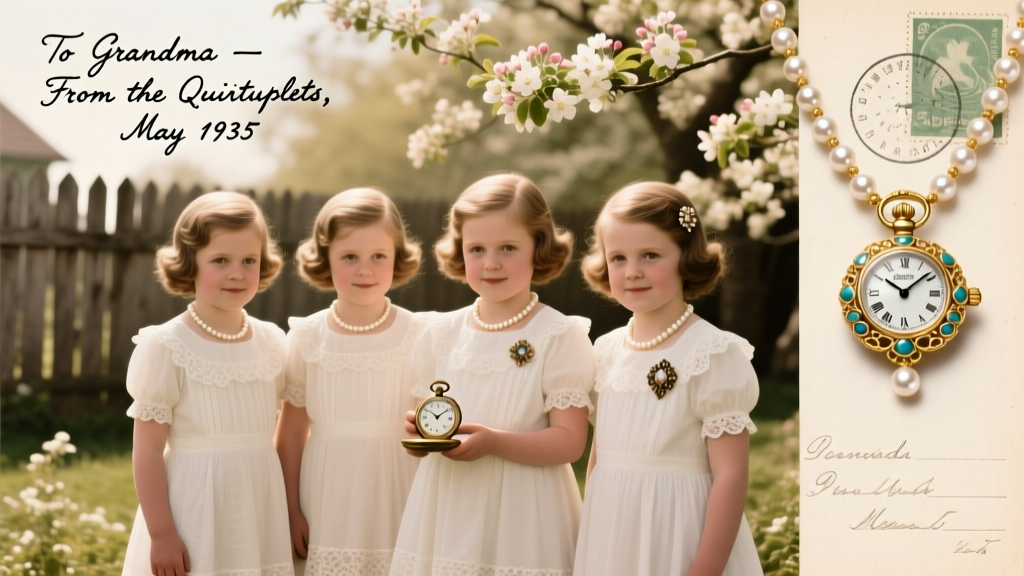
The Dionne Quintuplets Postcard Photograph: A Cultural Artifact of 1930s America

George II Mahogany Armchair with Prince of Wales Plume Crest and Paw Feet: Provenance, Craftsmanship, and Auction Significance
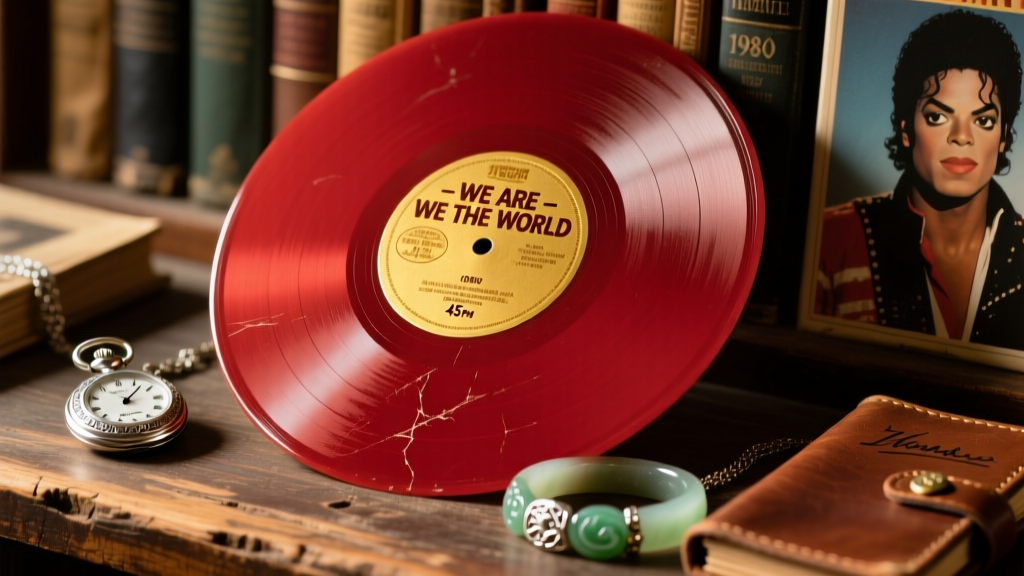
Redware Pressing of Michael Jackson’s 'We Are the World' 45 RPM Single (1985): A Collector’s Deep Dive into Rarity, Provenance, and Vinyl Archaeology
Hepplewhite Cherry Inlay Furniture Stand: Provenance, Construction, and Market Significance of a 17×28-Inch Drawer Board
Parian Bust of George Washington, Inscribed 'Mark C', Circa 1890 — A Study in American Ceramic Portraiture

Eastlake Walnut Rocker: Anatomy, Provenance, and Market Value of the Platform Rocker with Incised Decoration
Eastlake Walnut Sideboard: A Collector’s Guide to Authenticity, Provenance, and Market Value
A Closer Look at the Chinese Export Furniture Stand: Carved Marble Top, Lower Shelf, and Ball-and-Claw Feet (c. 1880–1910)

Glass Venetian Ewer with Gold-Leaf Lion Mounts and Prunt Decoration: A 19th-Century Masterpiece in Clear Cristallo