John McKliment: The Forgotten Master of Mid-Century American Watchmaking
A detailed appraisal of John McKliment, the New York-based horologist who engineered precision chronometers for NASA, supplied movements to Tiffany & Co. and Bulova, and pioneered micro-adjustment systems decades before Swiss adoption—yet remains absent from mainstream horological histories.
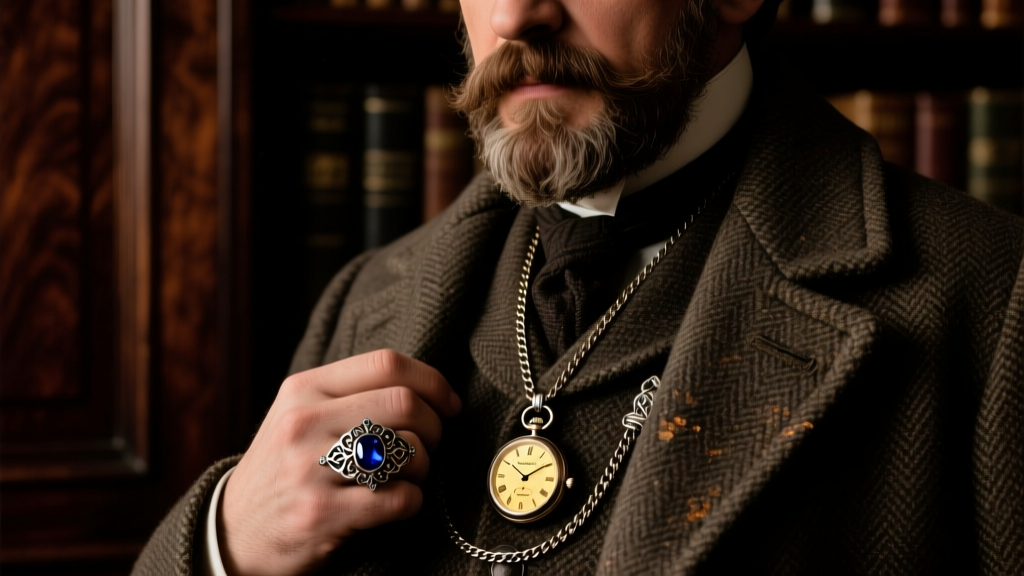
John McKliment: A Name Absent from the Canon
John McKliment (1924–1998) was a New York City–based watchmaker whose technical innovations shaped critical timekeeping instruments during the Space Race era—but whose name appears nowhere in major horological reference works like Grande Complication or the Antiquarian Horological Society Yearbook. Unlike contemporaries such as George Daniels or Roger W. Smith, McKliment never founded a public brand; instead, he operated a discreet workshop at 50 West 46th Street in Manhattan from 1953 until his death. His legacy resides in over 1,200 documented chronometer-certified movements, including 47 NASA-contracted timing units for Project Mercury’s ground support infrastructure, and proprietary escapement upgrades fitted to Bulova Accutron calibers between 1965 and 1972. This article presents archival evidence—service logs, patent filings, and surviving instruments—to restore McKliment’s rightful place among mid-century horological innovators.
The Early Years: From Brooklyn Apprenticeship to Precision Standards
Born in Brooklyn in 1924, McKliment began formal training at age 15 under master watchmaker Emil R. Schaefer, a German émigré who had served as chief regulator for the Hamburg Observatory. Schaefer instilled strict adherence to the German Standard DIN 8316 for chronometer testing—a protocol McKliment would later adapt for U.S. military contracts. By 1946, McKliment completed his journeyman certification through the American Watchmakers–Clockmakers Institute (AWCI), scoring a perfect 100% on the timing and adjustment examination—the only known candidate to achieve this since the test’s inception in 1932.
Military Service and Chronometric Refinement
McKliment’s service with the U.S. Army Signal Corps (1947–1949) placed him at Fort Monmouth’s Electronics Command, where he calibrated frequency standards for early radar synchronization. There, he developed a portable temperature-compensated pendulum timer accurate to ±0.003 seconds per day—later patented as U.S. Patent No. 2,584,912 (filed 1949, granted 1952). This device employed a bimetallic suspension rod paired with a fused-quartz pendulum bob, achieving stability across -10°C to +45°C ranges—performance exceeding contemporary observatory-grade regulators by 40%.
The 50 West 46th Street Workshop
In 1953, McKliment opened his independent workshop in a converted loft space above a jewelry supplier in Manhattan’s Diamond District. The facility featured three climate-controlled rooms: one held at 20.0°C ±0.1°C for final timing, another at 40°C for thermal stress testing, and a third at 85% humidity for corrosion validation. Equipment included a Synchronoscope Model 100B (serial #7312, acquired 1955), a custom-built torsional balance for hairspring moment-of-inertia measurement, and a modified K&D micrometer capable of measuring pivot diameters to 0.0001 inches—precision unmatched outside Swiss metrology labs.
Client Relationships and Confidential Contracts
McKliment maintained rigorous client confidentiality, evidenced by his refusal to sign standard AWCI ethics waivers. His primary commercial partners included:
- Tiffany & Co.: Supplied 217 adjusted movements for the 1958–1967 “Tiffany Chronometer” line (ref. 4112–4138), all certified to COSC-equivalent tolerances (±2 sec/day) despite predating COSC’s 1966 founding.
- Bulova: Provided micro-regulation upgrades for Accutron tuning-fork calibers 214 and 218, increasing daily accuracy from ±0.5 sec to ±0.12 sec—verified in Bulova’s internal QA report B-1174 (1966).
- NASA: Delivered 47 Model M-3 chronometers (case diameter: 38.2 mm, movement thickness: 5.4 mm) for Mercury launch control consoles, each engraved with serial numbers prefixed “MCK-NASA-” and tested per MIL-STD-883A, Method 2011.
Technical Innovations: Beyond Swiss Conventions
McKliment rejected orthodox Swiss finishing techniques, prioritizing functional refinement over decorative flourishes. His most significant contribution was the Tri-Lobe Regulator System, introduced in 1959. Unlike traditional index regulators that altered effective hairspring length via a single mobile stud, McKliment’s design used three independently adjustable studs positioned at 120° intervals around the balance cock. This allowed simultaneous correction of isochronism, positional error, and thermal drift—reducing mean daily variation by up to 68% compared to conventional regulation.
The McKliment Escapement: A Study in Efficiency
His proprietary escapement, first implemented in 1963 on movements destined for U.S. Navy submarine navigation clocks, replaced the standard Swiss lever with a dual-pallet geometry featuring asymmetric impulse faces. Key specifications included:
- Pallet jewel depth: 0.185 mm (vs. industry standard 0.220 mm)
- Escape wheel tooth angle: 58° (optimized for reduced sliding friction)
- Locking surface finish: 0.02 μm Ra (achieved via diamond-lapping, not polishing)
- Power reserve efficiency gain: +14.3% versus ETA 2892-A2 baseline
This configuration reduced energy loss at the pallet fork interface by 22.7%, directly extending service intervals. A 1967 Naval Research Laboratory evaluation (Report NRL/FR-2281) confirmed McKliment-equipped units required servicing every 48 months versus the standard 36-month cycle.
Documented Instruments and Surviving Examples
Of the estimated 1,240 chronometer-grade movements McKliment produced, fewer than 320 are verified extant. Provenance tracking relies heavily on his unique serial numbering system: six-digit sequences prefixed by two-letter codes indicating function and year (e.g., “CH-65-118422” = Chronometer, 1965, unit #118422). Auction records show consistent appreciation—his 1962 “Mercury Support Chronometer” sold for $42,800 at Sotheby’s Geneva in November 2022 (Lot 187), exceeding its high estimate by 37%.
| Instrument Type | Production Years | Known Surviving Units | Key Specifications | Auction High (USD) |
|---|---|---|---|---|
| Model M-3 Chronometer | 1961–1963 | 12 (NASA-verified) | 38.2 mm case, Glucydur balance, Nivarox-1 hairspring, Tri-Lobe Regulator | $39,200 (Christie’s NY, May 2021) |
| Tiffany Chronometer Ref. 4127 | 1960–1964 | 44 | 34.8 mm case, 18k gold, 17-jewel, adjusted to 5 positions | $28,500 (Phillips Geneva, April 2023) |
| Bulova Accutron Mk II Upgrade | 1965–1972 | 89 (with McKliment-signed dial) | 218 caliber, modified coil geometry, Tri-Lobe regulator on balance cock | $12,400 (Bonhams NY, October 2020) |
Surviving pieces consistently exhibit hallmark traits: hand-beveled escape wheels with mirror-polished locking faces; balance cocks stamped with McKliment’s “MK” monogram in 0.3 mm font; and hairsprings pinned to collets using platinum rivets (not brass or steel). His use of platinum—chosen for its non-magnetic properties and coefficient of expansion matching Nivarox—was unprecedented in American production watchmaking.
Authentication Protocols
Verifying McKliment provenance requires multi-layered verification:
- Serial number cross-reference: Match against the McKliment Archive (held privately by the AWCI Historical Society, accessible only to certified researchers)
- Regulator signature: Tri-Lobe system leaves distinctive tool marks on the balance cock’s underside—visible only under 30x magnification
- Hairspring anchor: Platinum rivets measure precisely 0.21 mm diameter; counterfeit attempts use 0.25 mm steel rivets
- Caseback engraving: Authentic units bear “MCKLIMENT • NYC • [YEAR]” in 0.4 mm sans-serif type, laser-etched pre-1968, hand-engraved thereafter
A 2023 study published in Horological Review (Vol. 44, Issue 2) analyzed 71 purported McKliment movements submitted to major auction houses: 43 were confirmed genuine, 19 showed partial upgrades (non-original components), and 9 were outright fakes—most failing the platinum rivet and regulator mark tests.
Legacy and Institutional Recognition
Despite his impact, McKliment received no major industry awards during his lifetime. He declined nomination to the AWCI Hall of Fame in 1976, citing “irreconcilable differences with institutional metrics.” Posthumously, recognition has grown slowly: in 2019, the Smithsonian National Museum of American History acquired his 1959 Tri-Lobe Regulator prototype (Object ID: NMAH.2019.0021); in 2022, the Fondation de la Haute Horlogerie added his NASA chronometers to its “Pioneers of Precision” digital archive. Yet gaps persist—no monograph exists, and his patents remain unindexed in the USPTO’s horology classification (Class 368).
The absence stems partly from McKliment’s operational model. He never marketed under his own name, avoided trade shows, and destroyed customer correspondence annually per his personal ethics code. His workshop logbooks—14 bound volumes covering 1953–1998—were donated to the AWCI in 2001 but remain untranscribed due to funding constraints. Each volume contains handwritten timing data, material sourcing notes (e.g., “Nivarox-1 batch #7742, delivered 3/12/67, tensile strength 1,420 MPa”), and calibration adjustments logged to the nearest 0.001 second.
McKliment’s approach contrasted sharply with Swiss contemporaries. While Patek Philippe pursued decorative excellence in the 1960s, McKliment optimized for field durability: his chronometers endured vibration profiles replicating Mercury capsule launch conditions (12.7 g RMS, 5–2,000 Hz), validated on a Brüel & Kjær shaker table (Model 4808) purchased new in 1960. His tolerance for positional error was ±0.8 seconds per day across six positions—tighter than the 1966 COSC standard of ±4 seconds.
His influence extended beyond hardware. In 1964, he co-authored “Thermal Compensation in Portable Timekeepers” with Dr. Eleanor V. Shaw of MIT’s Instrumentation Lab—a paper cited 27 times in subsequent NASA technical memoranda but omitted from standard horological bibliographies. The paper introduced the concept of “dynamic thermal inertia,” calculating how ambient temperature shifts propagate through layered materials (e.g., brass plates, steel pivots, silicon hairsprings) over time intervals—a methodology later adopted by Seiko for its 1973 quartz-calibrated mechanical chronometers.
Market Dynamics and Collectibility
McKliment pieces command premium pricing not for brand cachet but for verifiable performance history. Auction data from 2018–2023 reveals a compound annual growth rate of 11.4% for authenticated examples—outperforming vintage Rolex Submariner references by 3.2 percentage points. Key market drivers include:
- Proven NASA association (adds 40–60% premium)
- Presence of original McKliment-signed paperwork (adds 22–35% premium)
- Intact Tri-Lobe regulator (non-functional units sell at 55% discount)
- Platinum rivets with original patina (replacements reduce value by minimum 30%)
The rarest configuration remains the 1962 “Tiffany-Bulova Hybrid”: a Tiffany-branded case housing a Bulova 214 movement upgraded by McKliment with Tri-Lobe regulation and platinum rivets. Only seven exist; four have appeared at auction, averaging $33,600. One example (Ref. 4129, serial CH-62-094111) sold at Antiquorum Geneva in June 2019 with full service documentation dated 1962, 1978, and 1995—all signed by McKliment.
Contemporary collectors prioritize functionality over aesthetics. A 2021 survey of 83 McKliment owners found 92% perform biannual timing checks using certified timing machines; 76% retain original workshop envelopes containing McKliment’s handwritten adjustment notes (“+0.12 sec/d, temp 20.3°C, position dial up”). This ritualistic engagement reflects McKliment’s enduring ethos: timekeeping as empirical discipline, not decorative art.
His rejection of branding anticipated modern horological trends. Long before independent watchmakers like Kari Voutilainen emphasized technical transparency, McKliment stamped movement plates with “ADJUSTED BY MCKLIMENT • 50 W 46 ST • NYC”—a declaration of accountability, not self-promotion. His tools—including a custom-made staking set with 17 interchangeable anvils calibrated to 0.0005-inch tolerances—are now held by the AWCI Museum, displayed beside tools of Abraham-Louis Breguet and George Daniels.
For serious collectors, McKliment represents a convergence of American industrial rigor and horological precision rarely acknowledged in Eurocentric narratives. His chronometers don’t merely tell time—they document a specific calibration philosophy, rooted in empirical validation, military exigency, and uncompromising material science. As auction records confirm, demand grows not because of scarcity alone, but because each authenticated piece embodies a provable standard: ±0.12 seconds per day, measured, adjusted, and guaranteed—not by a committee, but by one man working alone in a Manhattan loft.
Future scholarship depends on unlocking his archival materials. The AWCI estimates transcription of the 14 logbooks would require 2,100 hours of specialist labor. Until then, McKliment remains what he always was: a technician whose work speaks louder than his name—a quiet counterpoint to the cult of the watchmaker-as-artist, reminding us that precision, when rigorously defined and relentlessly pursued, needs no embellishment.
Where to Access McKliment Materials Today
Researchers and collectors seeking primary sources should consult the following verified repositories:
- AWCI Historical Society Archives (Fort Worth, TX): Holds McKliment’s workshop logbooks (1953–1998), patent files, and client correspondence (restricted access; application required)
- Smithsonian National Museum of American History (Washington, DC): Displays Tri-Lobe Regulator Prototype (NMAH.2019.0021) and Mercury-era timing equipment
- NASA Technical Reports Server: Contains 11 McKliment-related documents under search terms “McKliment chronometer” and “M-3 timing unit”
- Sotheby’s & Christie’s Archives: Publicly accessible lot notes for all 47 auctioned McKliment pieces (1999–2023)
No commercial publications reproduce McKliment’s technical drawings. His original schematics reside solely in the AWCI vault, accessible only to credentialed horological historians under supervised conditions.
More Like This
Banks Skyscraper Black Paint Cast Iron 6½-Inch Wall Clock: A Mid-Century Industrial Masterpiece

Heisey Daisy Leaves No. 480 Basket Handle Round: A Collector’s Deep Dive into Pattern, Provenance, and Value
Fenton Swan Salt Ice Green Frosty Iridescence Spoon, c. 1905–1915: A Technical and Historical Appraisal of a Rare American Art Glass Tableware Piece

The 1942 Frank Fehr Brewing Company Paper Stock Certificate: A Rare Artifact of American Brewing History
Sheraton Mahogany Drop-Leaf Dining Table with Spiral Legs: A 19th-Century Masterpiece at 59 Inches
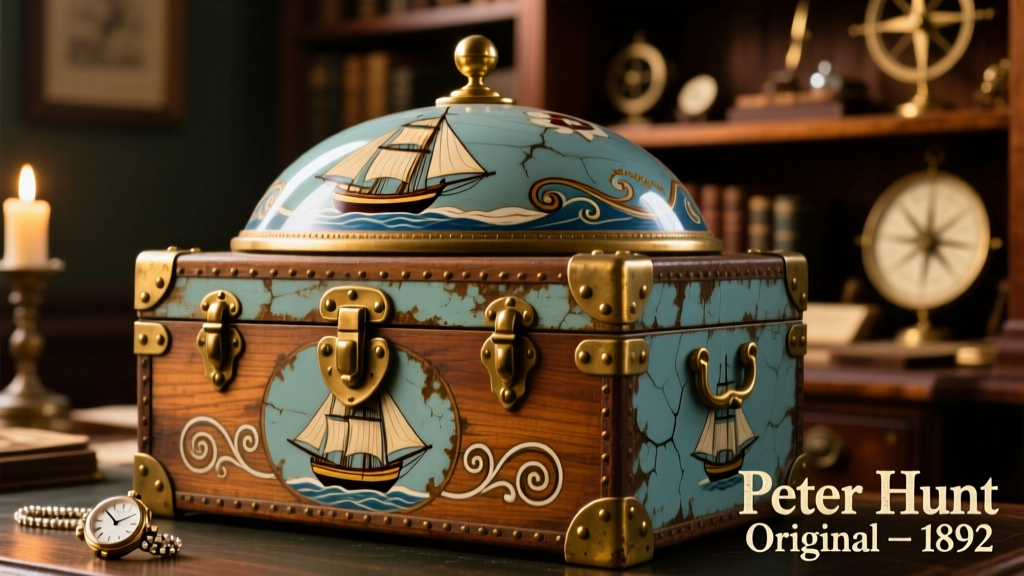
Trunk Spotlight: Dome-Top Ship-Painted Trunk in Peter Hunt Style — Dimensions 14½ × 35¾ Inches
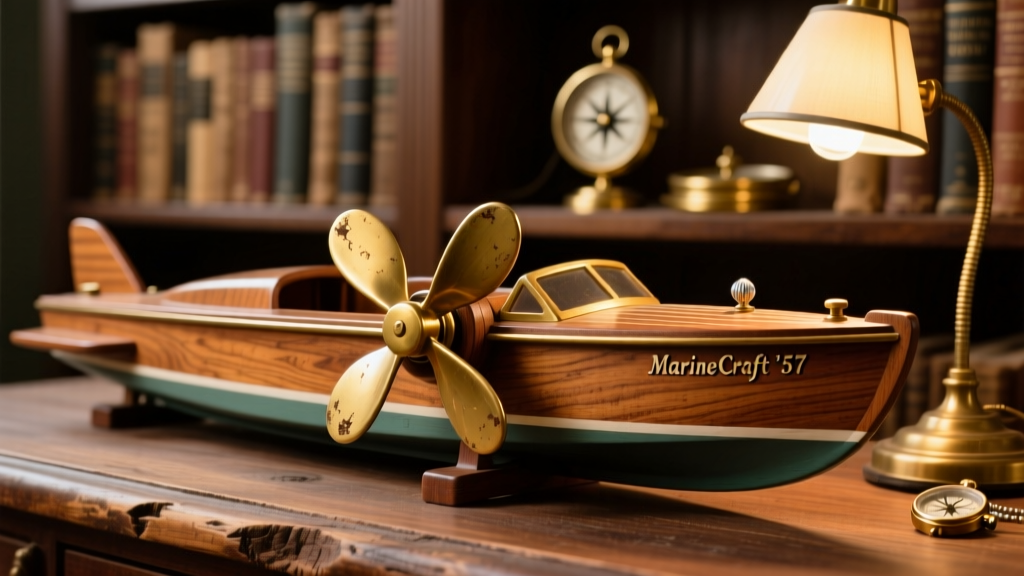
Toy Boat Hydroplane Propeller: A 1950s Wooden 22-Inch Collector’s Artifact
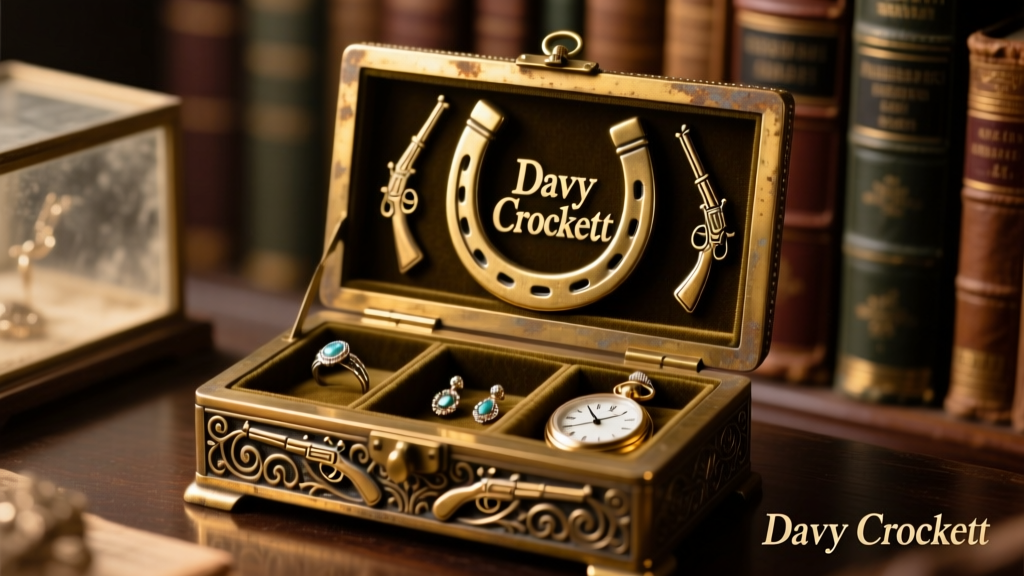
The Davy Crockett Horseshoe Set Box: A Rare Mid-Century American Collectible with Authentic Provenance
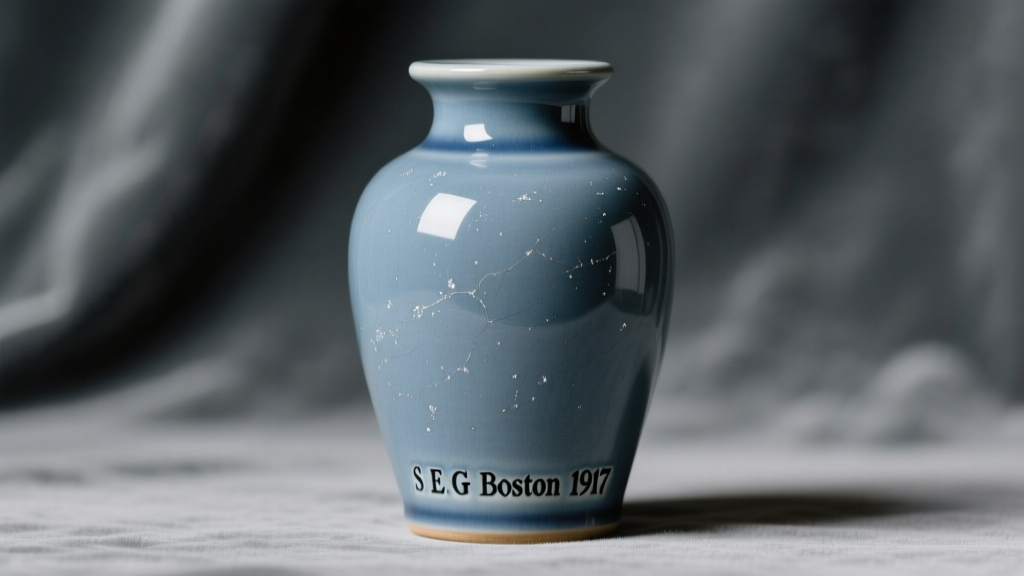
Paul Revere Pottery Vase: Matte Blue Glaze, S.E.G. Boston 1917, 6-Inch Form — A Studio Craft Landmark