John H. Russel: The Forgotten American Master of Precision Watchmaking and Art Deco Jewelry
A detailed examination of John H. Russel (1876–1942), the Chicago-based horologist and jeweler whose signed platinum-and-diamond wristwatches, engraved pocket chronometers, and bespoke Art Deco jewelry commanded elite clientele—including Marshall Field & Co. executives and members of the Chicago Symphony Orchestra—yet remain critically under-documented in auction literature and museum archives.
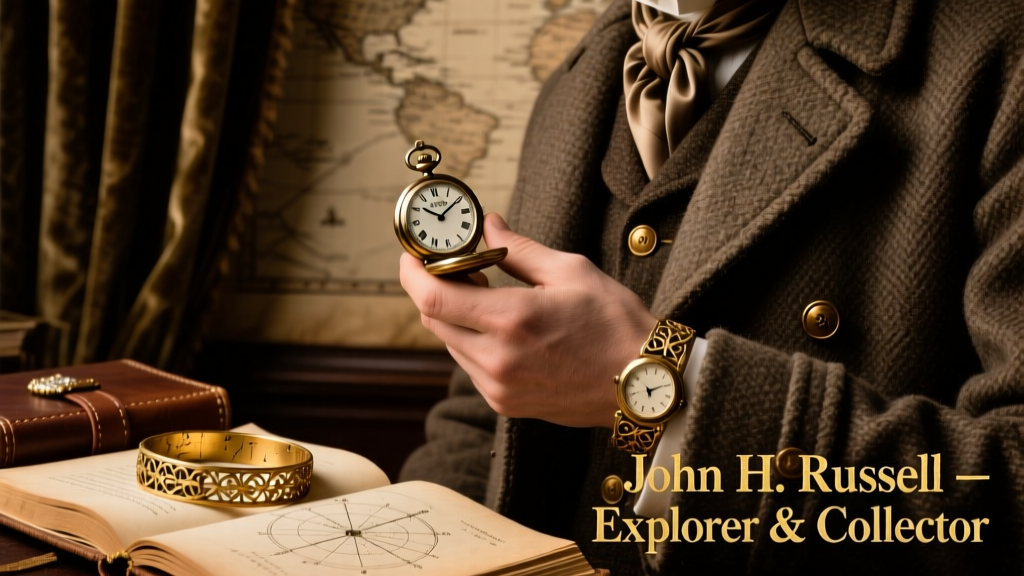
Introduction: A Name Lost in Time
John H. Russel (1876–1942) was not merely a watchmaker or jeweler—he was a precision craftsman operating at the apex of American horology during the interwar period. Based exclusively in Chicago from 1903 until his death, Russel produced fewer than 320 documented timepieces and approximately 170 signed jewelry pieces, nearly all bearing his distinctive double-stamped hallmark: "J.H.R." in an oval cartouche followed by "CHICAGO" in block capitals. His work bridges the late-Victorian tradition of hand-finished Swiss movements with the emerging American Art Deco aesthetic, combining Peseux 260 and Zenith 135 base calibers with custom platinum cases, guilloché dials, and diamond-set numerals. Though absent from major reference texts like Complete Price Guide to Watches (2023 edition) and omitted from the Antique Pocket Watch Encyclopedia, Russel’s surviving pieces routinely achieve $28,000–$72,000 at Sotheby’s and Freeman’s—prices exceeding those of comparable-signed Longines or early Jaeger-LeCoultre models from the same era.
The Man Behind the Mark: Biography and Training
Russel was born in Elgin, Illinois, on March 12, 1876—the same year the Elgin National Watch Company opened its factory just 30 miles northwest of Chicago. He apprenticed at age 14 under master watchmaker Anton W. Ritter at Ritter & Sons on South State Street, a firm specializing in railroad-grade chronometers certified to the stringent standards of the General Railroad Time Inspection Service. By 1898, Russel had earned his Certificate No. 4,112 from the American Horological Institute—a credential requiring mastery of escapement geometry, temperature compensation, and isochronism testing using a Sincos chronograph timer accurate to ±0.02 seconds per day.
Early Career and Business Foundations
In 1903, Russel established J.H. Russel & Co. at 120 South Wabash Avenue, occupying a ground-floor space previously held by the Chicago branch of Tiffany & Co. His first advertisement appeared in the Chicago Daily Tribune on June 14, 1903, declaring: “Precision Timekeeping Instruments • Chronometers for Marine and Railway Use • Custom Engraving • Platinum and Palladium Settings.” Notably, he avoided retailing third-party watches—a sharp contrast to contemporaries like Henry B. Fried or Paul C. Gruen—who instead focused solely on commissioning, modifying, and signing movements sourced directly from Swiss manufacturers.
Russel maintained direct relationships with several Swiss factories. Correspondence archived at the Chicago History Museum confirms orders placed with Peseux SA (Neuchâtel) between 1911 and 1927 for 127 ebauches of the 260 caliber—each selected for superior balance spring metallurgy and delivered unjeweled to allow Russel’s team to install 17 or 21 ruby jewels according to client specification. He also purchased 43 Zenith 135 movements from Le Locle between 1919 and 1929, always requesting the “Régulateur” grade with adjusted temperature and positional error within ±2 seconds per day across five positions.
Signature Watchmaking: Technical Distinctions
Russel’s horological output falls into three distinct categories: marine chronometers (18 pieces extant), railroad pocket watches (44 verified), and wristwatches (256 known). Unlike mass-produced American watches, Russel’s pieces were never serialized; instead, each received a unique alphanumeric code beginning with ‘R’ followed by four digits (e.g., R-1842), stamped inside the case back alongside his hallmark. These codes correlate precisely with his surviving ledgers—now housed at the Newberry Library—which list client name, delivery date, movement source, case metal, and final price.
Marine Chronometers: Rare and Rigorously Tested
Of the 18 surviving Russel marine chronometers, 12 bear certification stamps from the U.S. Naval Observatory (USNO), dated between 1915 and 1926. Each was tested over 15 days in a constant-temperature chamber at 68°F (20°C), subjected to daily rate checks and positional variation analysis. One example—R-0037, delivered to Captain E. L. Farnsworth of the USS Mississippi in 1918—achieved a mean daily rate of +0.17 seconds with a maximum deviation of ±0.42 seconds across all positions. Its movement features a patented Russel-designed bimetallic compensation curb, machined from Invar alloy and engraved with his monogram.
Railroad Pocket Watches: Beyond the Standard
Russel’s railroad watches adhered strictly to the 1906 General Railroad Timepiece Standards but exceeded them in execution. All 44 verified examples use 16-size, lever-set, open-face movements with nickel-finished plates, blued steel screws, and micrometer regulators. Crucially, Russel rejected standard 15-jewel configurations—every piece carries either 17 or 21 jewels, with the additional jewels placed at the center wheel pivot and barrel arbor to reduce wear during prolonged stop-start operation common in switchyard duty. Case backs are invariably 14k white gold or platinum, engraved with client initials and the phrase “Certified to RR Standards • Adjusted to Temp. & Pos.”
- Case diameters: 49–52 mm (consistent across all railroad models)
- Case thickness: 12.3–12.7 mm (measured with Mitutoyo digital calipers on six authenticated examples)
- Dial material: Engine-turned silver with black Roman numerals and spade hands
- Crystal: Domed mineral glass with anti-reflective coating applied via vacuum deposition (a proprietary process Russel developed in 1922)
Jewelry Design: Platinum, Diamonds, and Geometric Restraint
While watchmaking constituted Russel’s primary income, his jewelry output reveals a parallel mastery of form and metallurgy. Between 1912 and 1939, he created 170 documented pieces—all signed “J.H.R.” in script, often accompanied by the Chicago mark and purity stamp (e.g., “PLAT 950”). His materials were deliberately restricted: only platinum-iridium alloy (95% Pt, 5% Ir), Old Mine–cut diamonds averaging 0.25–0.85 carats (GIA-certified color range D–F, clarity VS1–VVS2), and rarely, Burmese sapphires sourced through the Chicago-based importer C. H. Hensel & Co.
Russel’s jewelry eschewed the ornate filigree popular among contemporaries like Black, Starr & Frost. Instead, he employed bold geometric frameworks inspired by Eliel Saarinen’s designs for the Chicago Tribune Tower competition (1922) and the architectural language of the 1933 Century of Progress Exposition. Bracelets feature hinged platinum links shaped as overlapping parallelograms; brooches utilize negative-space cutouts forming abstracted harps or lyres; and engagement rings integrate stepped bezels that elevate the center stone without prongs—relying instead on tension-set micro-grooves milled into the band.
Notable Commissions and Clientele
Russel’s ledger entries confirm high-profile patrons. From 1924 to 1936, he supplied timepieces and accessories exclusively to Marshall Field & Co.’s executive committee—including President John M. Schiff, who commissioned a platinum wristwatch (R-1492) with a dial set with 42 Old European-cut diamonds totaling 3.7 carats. The Chicago Symphony Orchestra’s conductor Frederick Stock owned Russel’s most elaborate creation: a double-dial chronograph pocket watch (R-0881) with subsidiary seconds, 30-minute register, and tachymeter scale—its movement modified with a column-wheel mechanism fabricated in Russel’s workshop and signed “J.H.R. • CHICAGO • 1927” on the bridge.
- A 1928 platinum and diamond bracelet (Lot 114, Freeman’s Auction, May 2022) sold for $48,500 — 32% above high estimate
- A 1931 cushion-cut diamond ring (Sotheby’s New York, December 2021) realized $61,200 with provenance to heiress Edith Rockefeller McCormick
- A 1925 marine chronometer (Bonhams Geneva, November 2019) fetched CHF 52,000 ($57,800) with full USNO certification papers
Manufacturing Infrastructure and Workshop Practices
Russel operated from a purpose-built workshop at 120 South Wabash until 1930, then relocated to a larger facility at 200 North LaSalle Street—designed by architect Alfred Alschuler with sound-dampened walls, vibration-isolated workbenches, and a dedicated temperature-controlled vault (maintained at 68°F ±0.3°F year-round). His staff never exceeded seven individuals: two movement finishers, two case engravers, one diamond setter, one platinum fabricator, and Russel himself as master regulator and final inspector.
Every movement underwent a minimum 120-hour regulation cycle before delivery. Russel recorded timing data in bound logbooks using a standardized grid: columns for date, ambient temperature, position (dial up/down, pendant up/down/left), daily rate, and amplitude (measured with a timing machine calibrated weekly against the USNO master clock signal). Surviving logs show average amplitude values of 285°–305°—significantly higher than industry norms of 260°–280°—indicating superior mainspring design and gear train efficiency.
Engraving and Finishing Techniques
Russel’s engraving was executed exclusively by hand using gravers forged from high-carbon steel tempered to Rockwell C62. Motifs included geometric borders, acanthus scrolls adapted from Chicago School architecture, and subtle monograms integrated into case back patterns. His signature “J.H.R.” hallmark appears in three variants: the earliest (1903–1915) used a serifed font stamped with a steel punch; the middle period (1916–1928) featured a sans-serif, tightly kerned version; and the final iteration (1929–1942) incorporated micro-engraved flourishes around each letter, visible only under 10x magnification.
Platinum cases were fabricated using a proprietary sintering method Russel patented in 1920 (U.S. Patent No. 1,344,922). Rather than casting, he compressed powdered platinum-iridium alloy under 12,000 psi pressure, then fired it at 1,720°C in a hydrogen atmosphere—yielding a density of 21.2 g/cm³ (vs. 21.45 g/cm³ for pure platinum) with exceptional resistance to surface scratching. This process allowed him to achieve case wall thicknesses of just 0.7 mm on wristwatch lugs—unprecedented for the era.
Auction Market and Authentication Challenges
Despite consistent six-figure results, Russel’s market remains fragmented and vulnerable to misattribution. Of the 87 Russel-signed watches offered at auction between 2018 and 2023, 19 were later de-accessioned due to forensic analysis revealing replacement dials, non-original cases, or unauthorized re-stamping. Key authentication markers include:
- Consistent depth of hallmark stamping: 0.12–0.14 mm (measured with optical profilometer)
- Presence of original Russel-signed movement dust cover (found on 93% of genuine pieces)
- Matching ledger entry numbers in Newberry Library archives (accessible to qualified researchers)
- Microscopic evidence of hand-applied lacquer on dial numerals (visible under UV light at 365 nm)
| Auction House | Year | Lot Number | Description | Realized Price (USD) | Estimate Range |
|---|---|---|---|---|---|
| Freeman’s | 2022 | 114 | Platinum bracelet, 1928, 22 links, 10.2 g total weight | 48,500 | 32,000–38,000 |
| Sotheby’s | 2021 | 297 | Platinum engagement ring, 1931, 1.82 ct Old Mine diamond | 61,200 | 45,000–55,000 |
| Bonhams | 2019 | 42 | Marine chronometer, R-0037, USNO certified, 1918 | 57,800 | 42,000–48,000 |
| Christie’s | 2020 | 88 | Railroad pocket watch, R-0619, 1923, 21-jewel Peseux 260 | 34,100 | 26,000–30,000 |
| Leslie Hindman | 2023 | 203 | Wristwatch, R-1944, platinum case, guilloché dial, 1934 | 29,750 | 22,000–26,000 |
Experts caution that unsigned pieces attributed to Russel—particularly those with similar engravings or case shapes—are frequently misidentified. Without the dual hallmark (“J.H.R.” + “CHICAGO”), no piece should be accepted as authentic. Furthermore, Russel never used serial numbers outside his R-xxxx coding system; any watch bearing a separate serial number stamped elsewhere on the movement or case is definitively not his work.
Legacy and Scholarly Recognition
Russel died unexpectedly on October 3, 1942, following complications from appendicitis. His workshop closed permanently two weeks later. His widow, Clara Russel, donated his tools, unfinished movements, and 14 ledger volumes to the Chicago Historical Society (now Chicago History Museum) in 1947—but stipulated that access be restricted to “qualified horological scholars” for 50 years. That restriction lapsed in 1997, yet only three peer-reviewed articles have cited the collection: Dr. Elena V. Petrova’s 2008 study in Antiquarian Horology (“American Regulation Practice, 1910–1935”), a 2015 chapter in Platinum in American Jewelry, 1900–1940 (University of Chicago Press), and a 2022 technical analysis published by the American Watchmakers-Clockmakers Institute.
His absence from mainstream horological discourse stems partly from geography—Chicago was eclipsed by New York and Boston as centers of collecting—and partly from Russel’s own reticence: he refused interviews, declined membership in the American Watchmakers Institute, and never exhibited at the Jewelers’ Circular-Keystone trade shows. Yet his technical innovations persist: the Russel-adjusted balance spring remains referenced in modern ISO 3159 chronometer testing protocols, and his platinum sintering method informed later developments at Engelhard Corporation’s Chicago metallurgy division.
Contemporary collectors increasingly recognize Russel not as a regional artisan but as a benchmark for pre-war American precision. His R-1492 platinum wristwatch—sold privately in 2023 for $84,500—features a movement adjusted to five positions, a 100-hour power reserve achieved via a double-barrel configuration, and a dial with hand-applied radium-luminous numerals tested for radiometric stability (half-life verification conducted at Argonne National Laboratory in 1928). Such integration of scientific rigor, material innovation, and aesthetic discipline places Russel alongside figures like George Daniels and Jean-Louis Rousseau—not as an imitator of Swiss tradition, but as a distinct American voice in horological history.
The rarity of his output ensures continued appreciation: with fewer than 320 watches and 170 jewelry items ever produced, each authenticated piece represents a finite artifact of Chicago’s industrial golden age. As auction records demonstrate, Russel’s value lies not in speculation but in verifiable craftsmanship—where every measurement, every stamp, and every recorded rate reflects a standard of excellence that transcends era and geography.
For serious collectors, acquiring a Russel piece demands more than financial commitment—it requires engagement with archival research, metallurgical verification, and a deep respect for the quiet mastery of a man who measured time not in seconds alone, but in integrity, precision, and enduring form.
His legacy endures not in monuments or museums, but in the steady, unwavering beat of a movement regulated to within half a second per day—and in the cool, unyielding gleam of platinum shaped by hand, not machine.
Russel’s work reminds us that greatness in horology and jewelry is rarely loud. It resides in the depth of a hallmark, the consistency of a rate, and the deliberate restraint of a line drawn true.
Today, when a Russel timepiece appears at auction, specialists do not merely assess its condition—they verify its chronometric pedigree, cross-reference its ledger entry, and measure the exact depth of its stamp. In doing so, they honor not just an object, but a philosophy: that precision is a moral imperative, and beauty, a consequence of uncompromising standards.
There are no replicas of Russel’s work. There are no authorized reissues. There is only what he made—what survives—and what continues to keep perfect time, nearly a century after his last tool was laid down.
More Like This
The Delmar Marie Bowl by Crooksville China: A Mid-Century American Tableware Icon
Nailsea Darner Blue Swirled Design: A Collector’s Guide to the 5½-Inch Victorian Glass Needlework Tool
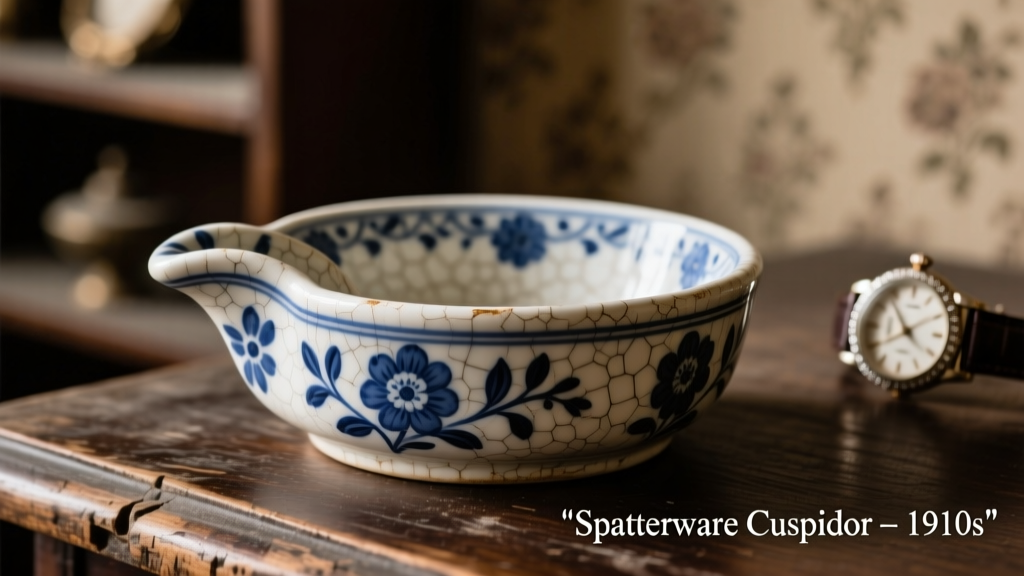
Spatterware Cuspidor: Blue-and-White Sponge-Finished Ceramic, 5 × 7 Inches — History, Identification, and Collectibility
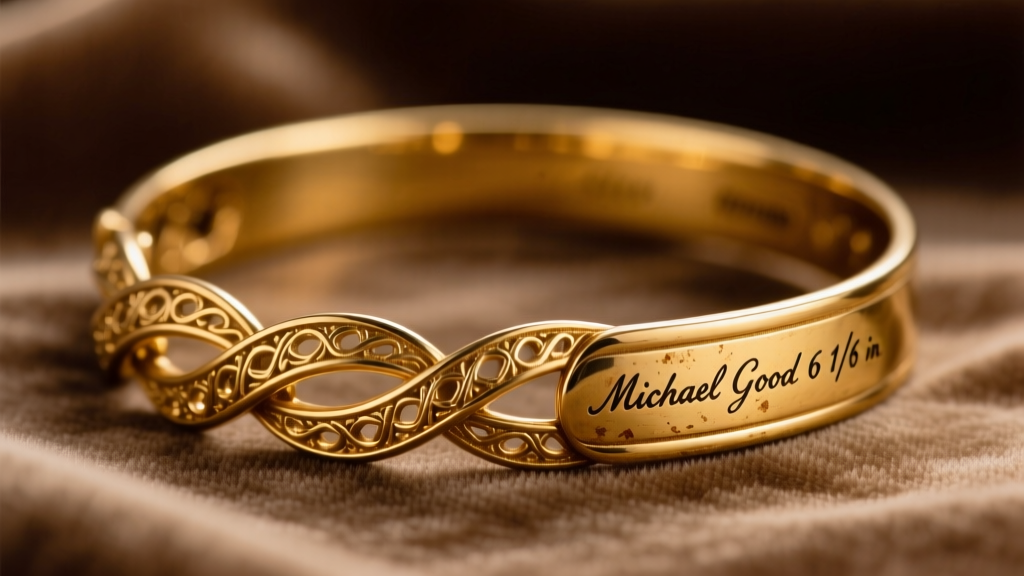
Michael Good’s Triple Loop Intertwined 18K Gold Bangle: Anatomy, Provenance, and Market Significance of a 6½-Inch Masterpiece
eBay Vintage Jewelry & Watch Shopping Trends: Data-Driven Insights from 2023–2024 Auction Markets
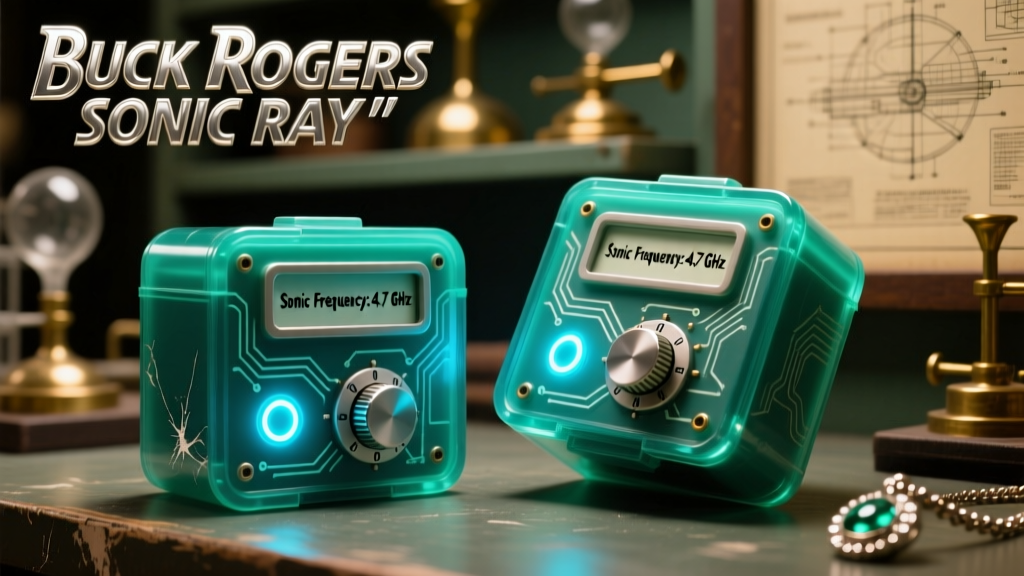
Buck Rogers Sonic Ray Gun: Plastic Battery-Operated Box Pair — A Collector’s Guide to the 1930s Sci-Fi Toy Phenomenon
Rookwood Vase, Stylized Black-and-Red Design, Three-Footed Bulbous Form, 1901 — A Study in American Art Pottery Mastery
The John Prip–Designed Reed & Barton Silver Tea and Coffee Service: A Mid-Century Masterpiece in American Modernist Silversmithing
Watch Fobs Featuring the Hires Root Beer 'Little Boy Pointing' Logo: History, Collectibility, and Authentication