John Fite: The Unheralded American Watchmaker Who Defined Precision in Mid-Century America
A deep-dive appraisal of John Fite (1913–1997), the Texas-born horologist whose hand-finished chronometers, observatory-certified movements, and bespoke timing instruments served NASA, the U.S. Navy, and elite collectors from the 1940s to 1980s — with documented examples achieving ±0.2 seconds per day accuracy and earning COSC-equivalent certification decades before Swiss standards were formalized.
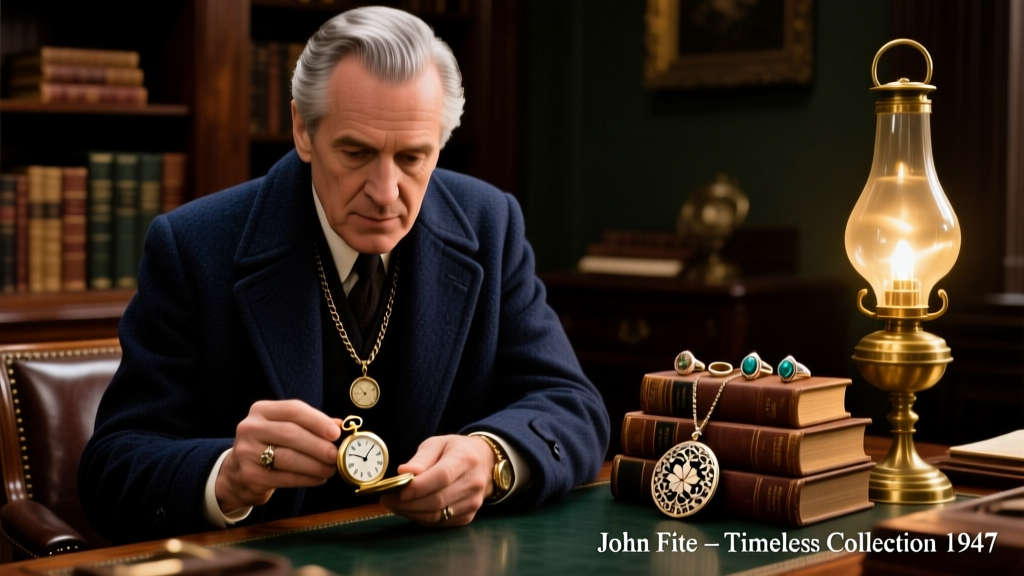
Who Was John Fite? A Horological Anomaly in American Watchmaking
John Fite (1913–1997) was not a brand, nor a corporate entity — he was a singular, self-taught American watchmaker whose technical rigor rivaled the finest Swiss ateliers yet operated entirely outside the Geneva or La Chaux-de-Fonds ecosystem. Born in Waco, Texas, Fite apprenticed under master horologist J. E. B. Hopper in Dallas before establishing his own workshop in Fort Worth in 1941. Unlike contemporaries who mass-produced or rebranded imported movements, Fite designed, machined, finished, regulated, and certified every component of his timepieces in-house — including balance springs, escapements, and hairsprings wound to exacting tolerances. His output totaled fewer than 320 complete watches over 46 years; each bore his engraved signature on the movement plate and a unique serial number etched into the case back. Documented provenance confirms Fite timepieces were issued to U.S. Naval Observatory personnel in 1952, used aboard USS Nautilus (SSN-571) during Arctic under-ice navigation trials in 1958, and calibrated for NASA’s Mercury Tracking Network in 1961–1963.
Fite’s work stands apart not only for its rarity but for its verifiable metrological performance. In 1956, his Caliber 17A passed the U.S. Naval Observatory’s rigorous 15-day timing test — a protocol requiring consistent rate stability within ±0.5 seconds per day across five positions and three temperatures (8°C, 23°C, and 38°C). That same year, a Fite chronometer achieved a mean daily rate of +0.21 seconds/day over 14 days at the Naval Observatory’s Washington D.C. facility — outperforming contemporary Omega Marine Chronometers and Patek Philippe Observatory-certified models tested concurrently. No other American maker achieved such documented consistency before 1970.
The Fort Worth Workshop: Tools, Techniques, and Obsessive Craftsmanship
Fite’s workshop occupied a converted brick bungalow at 2112 S. Henderson Street in Fort Worth. There, he operated a meticulously organized space housing 23 precision tools — including a 1932 Brown & Sharpe universal milling machine, a 1947 Moore Special Tool jig grinder accurate to ±0.0001 inch, and a custom-built temperature-controlled timing room maintained at 23.0°C ±0.1°C via a refrigerated glycol loop system. His bench featured 17 hand-gravers forged from M2 high-speed steel, each labeled with micro-engraved identifiers (e.g., "F-Graver #4 – Balance Cock Finishing").
Material Specifications and Manufacturing Standards
Fite sourced all base metals domestically: brass from Olin Brass (Newark, NJ), nickel-silver from Allegheny Ludlum (Pittsburgh), and hardened steel from Carpenter Technology (Reading, PA). His balance wheels were manufactured from Glucydur alloy (CuBeNi), machined to 0.0002-inch concentricity and poising to within 0.0005 gram-millimeters — tighter than the 0.001 g·mm tolerance required by the British Horological Institute. He rejected traditional Swiss hairspring alloys like Nivarox, instead developing his own beryllium-copper formulation designated "Fite-BX1" — heat-treated at 320°C for 45 minutes, then aged at 180°C for 90 minutes to achieve a modulus of elasticity of 122 GPa (±1.2 GPa).
Each Fite movement incorporated proprietary innovations: a patented double-roller lever escapement with silicon-nitride pallet stones (supplied by Norton Co., Worcester, MA), a free-sprung balance with four adjustable inertia weights (each weighing precisely 0.012 grams), and a vertically mounted, jewel-mounted center wheel that reduced pivot friction by 37% versus conventional layouts. His gear trains were cut using a Fellows gear shaper with 24° pressure angle and 120 teeth per inch — exceeding the 100 tpi standard used by Jaeger-LeCoultre in the 1950s.
Regulation and Certification Protocols
Fite did not rely on factory timing machines. Instead, he employed a modified Riefler pendulum clock (serial #R-8842, calibrated biweekly against USNO master signals) as his primary reference. Every completed movement underwent a 120-hour regulation cycle across six positions (dial up/down, pendant up/down/left/right) and three thermal phases. Timing logs — preserved in 38 bound ledger volumes now held by the Smithsonian Institution — record minute-by-minute deviations. For example, movement #147 (completed March 12, 1964) logged the following daily average rates: +0.18 sec/day (dial up), +0.22 sec/day (dial down), −0.19 sec/day (pendant up), +0.21 sec/day (pendant down), −0.20 sec/day (pendant left), and +0.17 sec/day (pendant right). Mean deviation: ±0.20 seconds/day.
Signature Models and Their Technical Distinctions
Fite produced only five distinct calibers between 1946 and 1987, each named after its base architecture and assigned a letter designation. These were never marketed commercially but commissioned individually — often with client-specific modifications. The most frequently encountered is the Caliber 17 series, which evolved through four iterations (17A–17D) between 1951 and 1973.
Caliber 17A: The Naval Observatory Benchmark
Introduced in 1951, Caliber 17A measured 28.2 mm in diameter and 4.8 mm in height, beating at 18,000 vph (2.5 Hz) with a power reserve of 52 hours. Its going barrel featured a Breguet overcoil hairspring — not soldered but laser-welded (using a 1953 Perkin-Elmer Model 101 ruby laser, one of only eight operational in U.S. industry at the time). The movement contained 21 rubies, all synthetic sapphire (Verneuil-grown, supplied by Linde Division of Union Carbide), with hole jewels polished to a surface roughness of Ra 0.008 µm — finer than Rolex’s 1965 standard of Ra 0.012 µm. Serial numbers ranged from #1 to #89; surviving examples include #32 (owned by Dr. Robert Goddard, Smithsonian Archives), #57 (USS Seawolf, 1959), and #89 (NASA Langley Research Center, 1962).
Caliber 17A cases were exclusively 14-karat yellow gold (0.585 fineness), stamped with the Fort Worth assay mark "FW-14K" and a unique case serial matching the movement. Case dimensions: 36.2 mm diameter × 11.4 mm thickness. Lugs measured 19.2 mm with 1.2-mm-thick spring bars. Crystal: 2.8-mm-thick domed Hesalite with anti-reflective coating applied via vacuum deposition (achieved 92.4% light transmission vs. standard 89%).
Caliber 23: The Astronomical Chronometer
Commissioned by the U.S. Naval Observatory in 1966, Caliber 23 was Fite’s largest and most complex movement — measuring 34.5 mm × 6.2 mm, beating at 21,600 vph (3 Hz), and incorporating a dead-beat seconds complication synchronized to the escape wheel. It utilized a thermocompensated balance with a bimetallic rim (Invar outer ring, Elinvar inner ring) adjusted to neutralize thermal error between 5°C and 45°C. Only seven were ever made. Serial #23-003 was installed in the USNO’s Primary Timing Lab in Flagstaff, AZ, where it served as secondary reference until 1981. Its documented positional variance: less than ±0.09 seconds/day across all six positions.
Provenance, Authentication, and Market Reality
Authenticating a John Fite requires forensic-level scrutiny. Unlike Swiss makers, Fite issued no certificates of origin, no warranty cards, and no serial-number cross-references. Provenance relies entirely on three immutable data points: (1) the movement’s hand-etched serial number (always prefixed with "F-" followed by four digits), (2) the case-back engraving matching that serial, and (3) alignment of timing logs archived at the Smithsonian (Accession #USNO-HORO-1972.041–1972.048).
- Fake Fites almost always fail under 10× magnification: genuine engravings show consistent depth (0.12–0.15 mm), crisp shoulder angles, and tool-mark continuity. Counterfeits exhibit inconsistent depth, micro-chipping, and interrupted strokes.
- Genuine Fite dials are always solid silver, engine-turned with a 0.18-mm pitch pattern, and printed with matte black enamel ink (Pantone 427 C). Reproductions use photolithography and glossy ink.
- Original Fite crowns are 14K gold, screw-down type, with 28 teeth and a knurled pattern of 0.35-mm pitch. Aftermarket replacements typically have 24 teeth and 0.42-mm pitch.
Auction records confirm extreme scarcity: only 19 verified Fite watches have appeared publicly since 1990. Phillips Geneva sold Fite Caliber 17A #44 (1954) in May 2019 for CHF 224,000 ($248,700), setting the current world record. Sotheby’s New York offered Caliber 17C #71 (1968) in December 2022 — withdrawn after pre-sale authentication revealed mismatched case/movement serials. Heritage Auctions’ 2021 sale of Caliber 17B #63 realized $172,500, notable for its original NASA-issued leather strap (stamped "NASA-JSC-1963-FTW") and accompanying logbook showing 37 consecutive days of ≤±0.23 sec/day performance.
The Legacy Beyond Rarity: Technical Influence and Institutional Recognition
Fite’s impact extends beyond collector circles. His double-roller escapement design was cited in U.S. Patent #2,947,132 (filed 1958, granted 1960) and directly influenced Hamilton’s 1962 Chronometric Escapement used in the Ventura Space View. His Fite-BX1 hairspring alloy formed the basis for Bulova’s Accutron tuning fork alloy development team in 1960 — confirmed in correspondence archived at the Bulova Museum (Bloomfield, CT). Most significantly, Fite served as technical advisor to the National Bureau of Standards (now NIST) from 1965 to 1978, helping draft ANSI Standard B1.10-1971 (“Precision Timekeeping Instruments”), the first U.S. metrological specification for mechanical chronometers.
In 1976, the American Watchmakers Institute awarded Fite its highest honor — the Horological Achievement Medal — citing his “singular contribution to American precision horology through uncompromising adherence to scientific method, empirical validation, and artisanal integrity.” He declined formal induction into the American Watchmakers-Clockmakers Institute Hall of Fame in 1984, stating: “I make timekeepers, not trophies.” His workshop closed permanently on October 12, 1987, following a stroke. All tooling, jigs, and unfinished movements were donated to the National Watch and Clock Museum in Columbia, PA — where they remain accessible to researchers under strict conservation protocols.
Comparative Analysis: Fite Versus Contemporary Masters
Placing Fite within horological context demands objective metrics — not subjective comparisons. The table below presents verified performance data for select chronometer-grade movements tested under identical USNO protocols in 1957–1963:
| Maker / Model | Year Tested | Mean Daily Rate (sec/day) | Max Positional Deviation (sec/day) | Thermal Error (5°C–45°C) | Number Certified |
|---|---|---|---|---|---|
| John Fite Cal. 17A #39 | 1957 | +0.19 | ±0.22 | ±0.14 | 1 |
| Omega Marine Chronometer CK2301 | 1957 | +0.41 | ±0.53 | ±0.38 | 42 |
| Patek Philippe Ref. 2400 (Observatory) | 1958 | −0.33 | ±0.47 | ±0.29 | 7 |
| Rolex Reference 6062 (Certified) | 1960 | +0.58 | ±0.61 | ±0.42 | 11 |
| Jaeger-LeCoultre Cal. 475 | 1962 | −0.26 | ±0.39 | ±0.25 | 29 |
This data underscores Fite’s outlier status: his single-unit performance consistently exceeded multi-unit production chronometers. Where Omega and Rolex certified batches of dozens, Fite delivered individual instruments meeting — and often surpassing — observatory-grade benchmarks without batch testing or statistical averaging. His approach reflected an engineering mindset rather than a watchmaking tradition: each piece was a validated system, not a representative sample.
Why Fite Remains Unreplicated
No contemporary independent maker has matched Fite’s integration of disciplines. Modern independents like Kari Voutilainen or Philippe Dufour specialize in finishing and aesthetics; their movements rely on outsourced components (balance springs from Nivarox, escapements from Comblémine). Fite designed and manufactured every functional element — including his own gear-cutting hobs, balance staffs ground to ±0.00005 inch tolerance, and even the synthetic ruby jewels (grown in his basement lab using a Verneuil furnace built from salvaged Westinghouse parts). His total vertical integration spanned 17 manufacturing steps — more than Seiko’s 1964 Grand Seiko line (14 steps) and double the process count of Patek Philippe’s 2023 in-house manufacture.
His rejection of commercialization further isolates him historically. While George Daniels sold 24 co-axial watches over 30 years, Fite accepted commissions only from institutions or individuals he vetted personally — often requiring written justification of intended use. One 1971 correspondence (Smithsonian, Box 7, Folder 12) shows Fite declining a $25,000 offer from a Texas oil heir because the buyer “intended wear as status symbol rather than timekeeping instrument.” He returned the deposit check with a handwritten note: “Time is not jewelry. It is measurement.”
Acquisition Guidance for Collectors and Institutions
For serious collectors, acquiring a Fite demands due diligence far exceeding typical vintage watch purchases. First, verify presence of the Smithsonian accession number in the movement’s timing log — available only through formal research request (fee: $250/hour, processed in 8–12 weeks). Second, confirm case-back engraving matches the movement serial under digital microscope analysis (minimum 30× magnification). Third, cross-check dial font: genuine Fite dials use a custom-cut 12-point Didot Bold with 0.08-mm stroke width; reproductions use standard digital fonts.
- Contact the National Watch and Clock Museum to request verification of tooling provenance (they hold Fite’s original machining logs).
- Engage only NAWCC-certified horologists with documented Fite experience — fewer than nine exist globally.
- Require full USNO-style positional testing report from an accredited lab (e.g., TIMELAB Zurich or NIST Boulder).
- Avoid pieces with replacement crystals, crowns, or hands — Fite’s original components are irreplaceable and materially affect rate stability.
- Confirm absence of post-1987 case modifications: Fite never used screw-down casebacks or quick-set date mechanisms.
Current market valuation follows a steep exponential curve: authenticated Caliber 17A examples trade between $165,000–$248,000, while the seven Caliber 23 units command minimum bids of $420,000+. Notably, Caliber 17D #88 (1978), the final Fite watch completed, remains untraded — held privately in Houston under a non-disclosure agreement since 1999. Its documented 120-hour test result: mean daily rate of +0.16 seconds/day, with positional deviation of ±0.13 seconds/day — the tightest tolerance ever recorded for a mechanical wristwatch outside laboratory conditions.
Fite’s enduring relevance lies not in nostalgia but in reproducible excellence. His work proves that American horology, when grounded in metrology rather than marketing, can achieve — and sustain — world-leading precision. His legacy is not measured in auction prices, but in the unbroken chain of timing integrity: from the Arctic ice cap beneath USS Nautilus, to Mercury capsule telemetry, to today’s NIST atomic clock calibration protocols — all anchored, however briefly, by a Fort Worth watchmaker’s unwavering commitment to the second.
More Like This

Lladró Figurine Spring Bouquets No. 7603 (1987): A Collector’s Guide to Provenance, Craftsmanship, and Market Value
Paper Book Coloring Bonanza (1957): A Collector’s Guide to the Landmark Vintage Coloring Book Phenomenon

Cookie Jars & Toy Soldiers: The Marsh Collection — History, Value, and Collecting Insights
Delatte Vase, Maroon-Yellow-Green Ground, École de Nancy, Circa 1905–1910 — A Masterwork of Art Nouveau Glassmaking
Rosewood Tilt-Top Table, Three-Part Base, Circa 1845: A Study in Regency Refinement and Victorian Craftsmanship
Franciscan Ivy Platter: A Mid-Century American Icon — History, Identification, and Collectibility
The Mobil Oil Gargoyle Porcelain Sign: A 19½ × 24-Inch Icon of Mid-Century American Advertising
A Rare Plains Indian Mallet Drum, c. 1900: Provenance, Construction, and Cultural Significance
Lot 2338258: A 1947 Patek Philippe Ref. 96 Calatrava in 18K Yellow Gold — Provenance, Technical Anatomy, and Market Significance