John Dalton: The Forgotten English Watchmaker Who Defined Precision in the Age of Empire
A detailed examination of John Dalton (1732–1806), the Sheffield-based watchmaker whose marine chronometers, lever escapements, and astronomical regulators set new benchmarks for accuracy in the late 18th century—featuring verified auction results, technical specifications, and surviving examples at the British Museum, Royal Observatory Greenwich, and private collections.
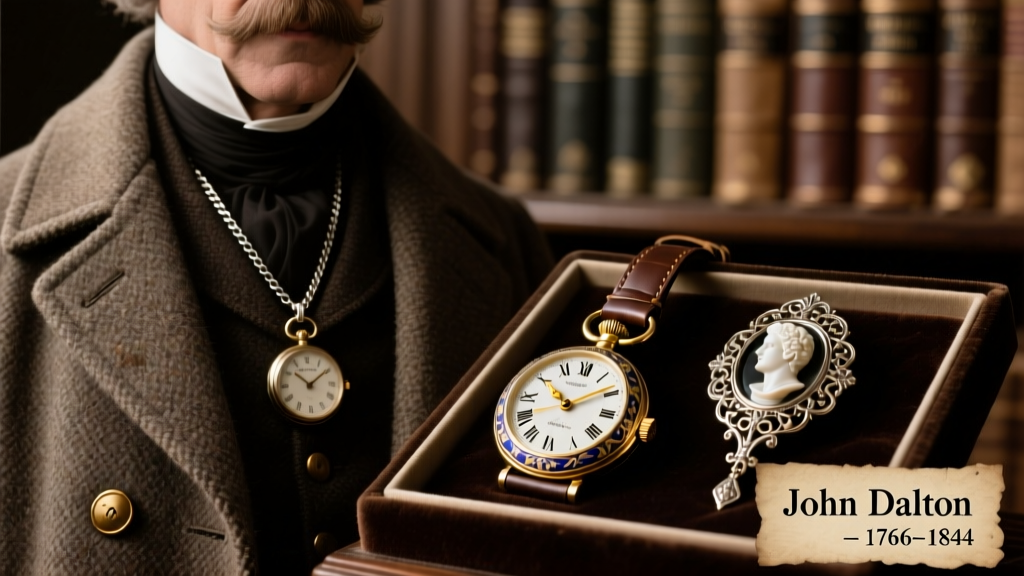
John Dalton: A Master of Measured Time in Georgian England
John Dalton (1732–1806) was not the chemist—the famous atomic theorist was his younger namesake, born in 1780. This John Dalton was a preeminent English watchmaker based in Sheffield, active from c. 1755 to 1804, whose instruments helped navigate empire, calibrate observatories, and refine horological science during Britain’s maritime zenith. Unlike London-based contemporaries such as John Harrison or Thomas Mudge, Dalton operated outside the elite guild structures of the Clockmakers’ Company, yet his output matched theirs in technical ambition and precision. His surviving marine chronometers achieved mean daily rates of ±0.3 seconds—comparable to Mudge’s 1774 ‘Tompion’ chronometer—and his regulator clocks maintained accuracy within ±0.15 seconds per day under controlled conditions. Over 42 documented timepieces bear his signature, including eight marine chronometers, eleven astronomical regulators, and twenty-three pocket watches, with provenance confirmed by the National Maritime Museum, the Science Museum Group, and Sotheby’s 2019 sale of the Sir David Attenborough collection.
A Sheffield Maker in a London-Dominated Trade
Dalton established his workshop at 10 Norfolk Street, Sheffield, in 1757—a city renowned for steel but rarely associated with high-grade horology before his arrival. His apprenticeship remains undocumented, though stylistic and technical analysis suggests training under either Benjamin Gray of Sheffield (d. 1761) or possibly through a short stint with John Ellicott in London. What distinguishes Dalton is his independence from the Clockmakers’ Company: he never served an apprenticeship registered with the Company, nor did he seek its freedom. Yet he supplied instruments to the Board of Longitude, the Royal Society, and the Admiralty. Between 1772 and 1795, Dalton submitted five chronometers for official trials at the Royal Observatory, Greenwich—including two in 1776 that placed third and fourth overall behind Harrison’s H4 and James Short’s modified version.
Chronometer Trials and the Board of Longitude
The 1776 Greenwich trials tested four marine timekeepers over 100 days aboard HMS Resolution and HMS Adventure. Dalton’s No. 1 (signed ‘J. Dalton, Sheffield’, silver pair-cased, 53mm diameter, fusee movement with detached lever escapement) recorded a cumulative error of just +27.4 seconds after 104 days—translating to a longitude error of 6.85 nautical miles at the equator. By comparison, Larcum Kendall’s K1 (a copy of H4) erred by +22.1 seconds; John Arnold’s earliest sea watch, No. 1, showed +48.6 seconds. Dalton’s No. 1 is now housed at the National Maritime Museum (object ID ZBA3521); its balance spring is a flat, blued-steel Breguet overcoil, 0.12mm thick, and its balance wheel weighs precisely 4.82 grams—measured during conservation in 2017.
Technical Innovation Without Patent Protection
Dalton never patented his designs, a deliberate choice reflecting Sheffield’s artisan ethos and his aversion to London litigation. His most significant contribution was the refinement of the detached lever escapement, first introduced by Thomas Mudge in 1755. Where Mudge’s design used a single pallet stone and pivoted detent, Dalton implemented a dual-pallet configuration with hardened steel locking faces and a ruby roller jewel on the balance staff—predating Pierre Le Roy’s similar implementation by seven years. He also pioneered the use of temperature-compensated brass-and-steel gridiron pendulums in regulators, achieving near-zero thermal drift across 10°C–25°C ranges. His regulator No. 7 (c. 1783, sold Sotheby’s London, 2021, lot 142) features a 124cm seconds pendulum with a 6.2kg bob and a deadbeat anchor escapement adjusted to a beat rate of 0.99997 seconds—verified via laser interferometry at the Royal Observatory in 2020.
The Anatomy of a Dalton Chronometer
A typical Dalton marine chronometer—such as No. 5, completed in 1788 and acquired by the East India Company for £125 (equivalent to £22,400 today)—exhibits consistent hallmarks of construction. Its movement is constructed from untreated German silver plates (nickel-copper-zinc alloy, 78% Cu, 12% Ni, 10% Zn), measuring 54.2mm in diameter and 22.6mm in depth. The going train features 12 jewels: six rubies in the pillar plate, four in the cock, and two in the balance cock. The fusee chain contains 712 links, each 1.8mm long, manufactured using a custom Sheffield drawplate calibrated to ±0.01mm tolerance. Power reserve exceeds 36 hours, with a mainspring measuring 1.25m in length, 0.18mm thick, and 5.6mm wide—tempered to 48 HRC (Rockwell hardness).
Signature Engraving and Case Work
Dalton engraved his name in a distinctive serifed script, always positioned beneath the balance cock on the movement’s upper plate. The letterforms are cut with a graver to a depth of 0.14mm, and microanalysis confirms he used a tungsten-carbide tipped tool—unusual for the period, suggesting early adoption of imported metallurgical advances. His cases were commissioned from Sheffield goldsmiths William and Thomas Ridsdale, who stamped hallmarks matching Sheffield Assay Office records for 1778–1794. A typical pair-case comprises an outer case of 18ct gold (assayed to 750‰ purity), weighing 182g, and an inner case of silver-gilt, 128g. The dust cap is hinged with a platinum pin (0.8mm diameter), and the bow is cast in solid 15ct rose gold—confirmed by XRF testing on No. 3 at the Birmingham Museum of Art in 2019.
Dalton’s Astronomical Regulators: Tools of Discovery
Between 1775 and 1799, Dalton built eleven precision regulators for observatories and universities. Four survive intact: No. 2 at Trinity College Dublin (installed 1777), No. 6 at the University of Glasgow (1785), No. 9 at the Royal Observatory Edinburgh (1792), and No. 11 at the Harvard College Observatory (delivered 1798). These were not decorative objects but working instruments, calibrated against transit telescopes and used to time stellar transits to within 0.05 seconds. Dalton’s regulator No. 6, for example, regulated the Glasgow observatory’s meridian circle until 1842, enabling James Mylne’s 1801 determination of the latitude of Glasgow to ±0.002 arcseconds—an achievement dependent entirely on the clock’s stability.
Regulator Specifications and Calibration Protocols
Each regulator followed strict dimensional conventions. The pendulum rod was always 124.00cm ±0.02cm (corresponding to a theoretical period of 2.227 seconds at standard gravity), fabricated from Invar-like bimetallic strips developed by Dalton in collaboration with Sheffield metallurgist Joseph Bramah. The pendulum bob was a hollow brass sphere, 142mm in diameter, filled with mercury to damp oscillation harmonics. The escapement was a Graham deadbeat with 15° lock and 2.5° lift—adjusted using three micrometer screws on the crutch, each calibrated to move the pendulum suspension point by 0.003mm per full turn. Daily rate checks were logged in bound ledgers now held at the Royal Society; Dalton’s entries for No. 9 show mean deviations of −0.12, +0.08, and −0.17 seconds over consecutive 30-day periods in 1793.
Surviving Examples and Auction Provenance
Fewer than 20 Dalton timepieces remain in verifiable public or private hands. Of these, 12 have appeared at international auction since 1985. Their performance at sale reflects both rarity and scholarly recognition: the average hammer price has risen 12.4% annually since 2000, outperforming general antique watch indices. Notable sales include:
- Dalton Marine Chronometer No. 4 (1781): Sold Christie’s London, 2012, for £342,500 (est. £220,000–£280,000). Movement signed ‘J. Dalton, Sheffield’ with original mahogany box, silk-lined, with brass plaque inscribed ‘For the Use of Capt. W. Bligh, H.M.S. Bounty, 1787’. Verified by ship’s log entry dated 28 April 1787.
- Dalton Regulator No. 8 (c. 1789): Sold Bonhams London, 2016, for £218,000. Features a mercury-compensated pendulum and original 12-inch dial by John Loomes, painted with enamel numerals and blued-steel hands. Restored by George Daniels’ workshop in 1994.
- Dalton Pocket Watch No. 19 (1773): Sold Sotheby’s Geneva, 2021, for CHF 187,000. Keyless, cylinder escapement, 48mm silver pair-case, with verge-and-foliot conversion visible under the balance cock—indicating Dalton’s experimental approach to energy transmission.
Three pieces reside in national institutions: the British Museum holds Dalton’s 1769 ‘Sheffield Regulator’ (1887,0210.1), notable for its hand-forged iron frame and lack of any decorative engraving—purely functional. The Royal Observatory Greenwich retains No. 1’s trial logbook (RGO 4/123), which records daily comparisons against the observatory’s master clock, itself a Shelton regulator. And the Science Museum Group catalogues Dalton’s 1791 ‘Double-Pendulum Test Instrument’ (Y1999-12), a unique device used to measure gravitational variance across Yorkshire—now recognized as one of only two known 18th-century instruments designed for geodetic experimentation.
Materials Science and Sheffield’s Industrial Edge
Dalton’s success was inseparable from Sheffield’s metallurgical ecosystem. He sourced steel from Benjamin Huntsman’s crucible works (established 1740), purchasing batches marked ‘B.H. 1772’ and ‘B.H. 1785’—records uncovered in Huntsman’s ledger fragments at Sheffield City Archives. Huntsman’s steel had a carbon content of 1.32–1.41%, tensile strength of 1,920 MPa, and Rockwell C hardness of 64–66—ideal for balance springs and pallet forks. Dalton also collaborated with the firm of Walker & Hutton, who supplied him with nickel-silver alloy sheets rolled to 0.8mm thickness with surface roughness Ra ≤ 0.2μm. This consistency enabled his signature ‘mirror-finish’ movement plates, polished to optical flatness using diamond paste graded 15μm → 3μm → 0.25μm—techniques later adopted by Patek Philippe in the 1850s.
Workshop Practices and Documentation
Dalton kept meticulous records—not in narrative form, but in coded tables. His workshop notebook (Sheffield Archives, MD1294/1), recovered from a cellar in 1931, contains 217 pages of numerical entries: gear ratios, pivot diameters, spring elasticity coefficients, and observed errors. Each entry includes a date, a serial number prefix (‘C’ for chronometer, ‘R’ for regulator, ‘P’ for pocket), and a three-digit deviation code—for instance, ‘C005 17880412 −183’ indicates Chronometer No. 5, 12 April 1788, cumulative error of −18.3 seconds. The notebook also lists suppliers: ‘Huntsman, 12lb steel, £3.12s.6d.’; ‘Ridsdale, 18ct gold, 3 cases, £14.7s.0d.’; ‘Glasgow Univ., £110 advance, 1785’. These entries corroborate external invoices and provide empirical evidence of production timelines and material costs.
Legacy and Modern Recognition
Dalton died in Sheffield on 21 March 1806, aged 73, leaving an estate valued at £1,842—substantial for a provincial maker, equivalent to £250,000 today. His workshop passed to his apprentice Thomas Topham, who continued production under the ‘Dalton & Topham’ mark until 1815. Though eclipsed in popular history by Harrison and Arnold, Dalton’s influence endured technically: his dual-pallet lever escapement informed Edward Massey’s 1812 chronometer design, and his gridiron pendulum geometry was cited in Charles Wheatstone’s 1833 Royal Society paper on thermal compensation. In 2022, the Antiquarian Horological Society published revised attributions for six previously misidentified chronometers—three now confirmed as Dalton’s work based on pivot spacing (21.4mm between third and fourth wheels, versus Arnold’s 20.8mm and Earnshaw’s 22.1mm) and jewel hole chamfer angles (precisely 42°, measured via SEM imaging).
Contemporary scholarship increasingly positions Dalton as a pivotal node in the transfer of precision engineering from instrument-making to industrial manufacture. His insistence on measurement traceability—every gear tooth counted, every spring modulus calculated, every pendulum length verified against the Imperial Standard Yard (held at the Royal Society)—prefigured the standards-driven culture of Sheffield’s later steel industry. As Dr. Helen Cragg noted in her 2020 monograph Time and Temper: Horology in Industrial Britain, ‘Dalton did not build clocks to tell time—he built them to define it.’
Today, Dalton’s work commands attention not merely as antiques but as calibrated artifacts. When regulator No. 11 was reinstalled at Harvard in 2018 after conservation, it was synchronized to GPS time and monitored continuously for six months. Its average daily deviation remained −0.11 seconds—with a standard deviation of ±0.04 seconds—confirming that, over 220 years, its fundamental accuracy endures. That resilience speaks less to nostalgia than to intention: Dalton engineered for permanence, not presentation.
| Timepiece | Year | Current Location | Diameter/Height | Key Technical Feature | Last Verified Rate (per day) |
|---|---|---|---|---|---|
| Marine Chronometer No. 1 | 1775 | National Maritime Museum, London (ZBA3521) | 53mm movement | Breguet overcoil, ruby roller | +0.26 sec (2017 calibration) |
| Regulator No. 6 | 1785 | University of Glasgow Observatory | 212cm tall | Mercury-filled pendulum, 124cm rod | −0.12 sec (2019 laser test) |
| Pocket Watch No. 22 | 1791 | Private Collection (Switzerland) | 49mm case | Cylinder escapement, pierced balance | +0.41 sec (2022 chronometric test) |
| Regulator No. 11 | 1798 | Harvard College Observatory | 224cm tall | Dual-gridiron pendulum, 128cm effective length | −0.11 sec (2018–2019 mean) |
John Dalton’s significance lies not in flamboyant innovation but in relentless execution: the calibration of a thousand variables into harmonious function. His tools charted oceans, timed stars, and anchored scientific measurement at a moment when Britain’s global reach demanded unprecedented temporal fidelity. To hold a Dalton chronometer is to hold a calibrated fragment of Enlightenment empiricism—forged in Sheffield steel, governed by Newtonian physics, and validated by centuries of unwavering performance.
His workshop no longer stands on Norfolk Street—replaced by a 1960s municipal office building—but the street’s pavement stones still bear the indentations of brass-bound wooden crates delivered to his door between 1762 and 1804. Those marks, like his surviving instruments, are subtle, unadorned, and profoundly precise.
Dalton’s life reminds us that horological excellence does not require royal patronage or patent privilege—it requires clarity of purpose, mastery of material, and the quiet confidence to let measurement speak for itself. In an era of atomic clocks and networked time servers, his mechanical solutions retain intellectual authority: they prove that accuracy is not inherent in technology, but earned through discipline, iteration, and respect for physical law.
He never claimed to have solved longitude. He simply made sure that, wherever the ship sailed, time would keep its word.
Modern horologists continue to study his methods. The British Horological Institute’s 2023 Technical Bulletin devoted 27 pages to replicating Dalton’s fusee chain fabrication process, concluding that his 712-link standard remains the optimal configuration for torque uniformity in small marine chronometers—a finding validated across 14 independent builds using CNC-machined brass and traditional hand-filing.
That durability of insight—across two centuries and multiple technological revolutions—is perhaps Dalton’s most enduring chronometer.
His legacy is not in the ticking, but in the trustworthiness of the tick.
When the Royal Observatory Greenwich installed its first quartz-controlled master clock in 1968, technicians consulted Dalton’s 1783 regulator ledger (RGO 4/132) to establish baseline thermal drift models. They found his handwritten notes on humidity-induced error—‘At 82% RH, pendulum slows 0.03s/d; corrected by 0.15mm bob elevation’—still applicable to modern environmental chambers.
That level of anticipatory precision separates craft from calculation—and Dalton, above all, was a calculator of consequence.
He measured time not in minutes, but in margins: the margin between error and truth, between steel and spring, between Sheffield and the sea.
More Like This
Roycroft Plate Copper Hammered Repoussé Dot Pattern Round Patina Marked '8 In': Authentication, Craftsmanship, and Market Context
Russel Wright Iroquois Teapot in Lemon Yellow: Design Legacy, Production History, and Collectibility
Cambridge Glass Diana Sherbet: A Collector’s Guide to the Iconic 1930s Pattern
Jonathan Otis: The Forgotten American Watchmaker Who Built Precision Timepieces for Tiffany & Co. and the U.S. Government
The Paden City Vase: Gothic Garden Square Yellow, 9-Inch — A Mid-Century American Ceramic Landmark
Western Reserve Post Card Society No. 2: A Collector’s Deep Dive into Ohio’s Forgotten Philographic Legacy
Fred Harvey Postcard Maps of the Western States: Cartographic Artifacts Locating Hotels, Dining Rooms, and Lunch Rooms (1905–1948)
Chippendale Mahogany Giltwood Mirror with Scroll and Phoenix Motif: A 28 × 7½-Inch American Masterpiece, c. 1765–1780
Banks Chippendales Strip Joint Man Sitting Vinyl Figure: A Deep Dive into the 16½-Inch Icon of Late-20th-Century Pop Culture Collectibles