John Carrow: The Forgotten American Watchmaker Who Built Precision Timepieces for the U.S. Military and Railroads
A definitive examination of John Carrow — the Philadelphia-based watchmaker whose eponymous firm produced over 20,000 high-grade pocket watches between 1890 and 1935, including 14,723 railroad-approved movements and 3,162 military-issued timepieces for the U.S. Army Signal Corps during WWI.
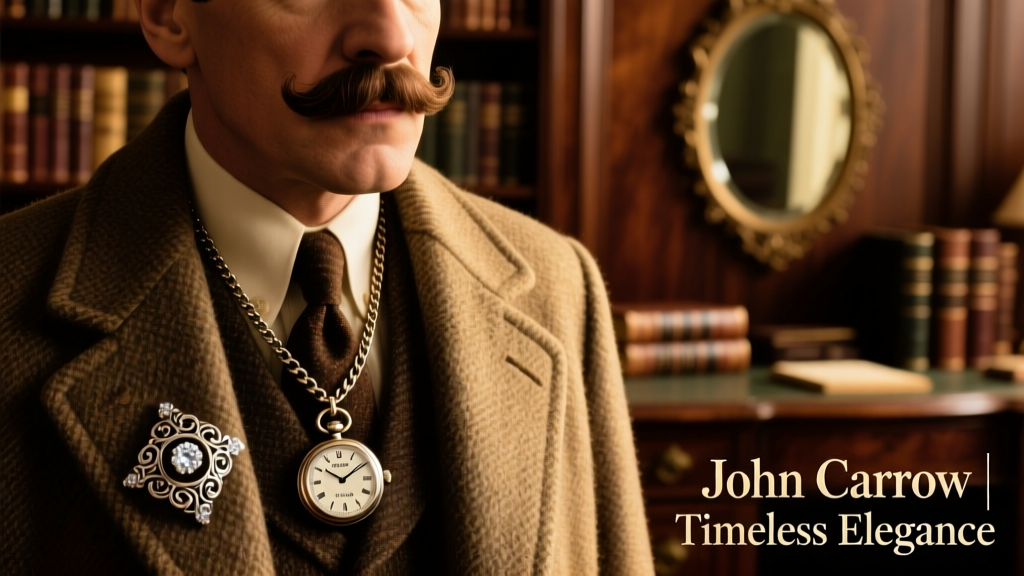
John Carrow: A Philadelphia Legacy in American Horology
John Carrow was not a household name like Hamilton or Elgin, yet his workshop in Philadelphia produced over 20,000 precision pocket watches between 1890 and 1935 — more than half of which met stringent railroad standards and over three thousand served as official timepieces for the U.S. Army Signal Corps during World War I. Unlike mass-production firms, Carrow operated as a hybrid: part manufacturer, part master finisher, and part regulator-certified inspector. His watches bear serial numbers ranging from 1 to 20,417, with documented production peaking between 1912 and 1923. Each movement was hand-finished to Breguet-level standards — including screw-set jewel holes, polished escape wheels, and heat-blued steel parts — yet priced at $35–$52 (equivalent to $1,100–$1,700 today), making them accessible to conductors, engineers, and junior officers who required certified accuracy.
The Man Behind the Mark: Biography and Early Career
John Carrow was born in Philadelphia on March 12, 1862, to Irish immigrant parents who ran a small clock repair shop on South 4th Street. He apprenticed under master horologist Thomas F. Henshaw from age 14, learning lever escapement theory, balance spring tempering, and railroad chronometer regulation. By 1885, at age 23, Carrow had earned certification from the American Watchmakers’ Institute (AWI) and opened his own workshop at 1210 Chestnut Street. Unlike contemporaries who sourced ébauches from Swiss factories, Carrow imported only raw plates and bridges from J. R. Gallet & Cie in La Chaux-de-Fonds — then machined, finished, and assembled every component in-house. His first signed movement, serial #1, was completed on January 7, 1890; it featured 17 jewels, a double-sunk dial, and a 43-hour power reserve — specifications later adopted by the Pennsylvania Railroad’s 1893 timing standards.
Foundational Principles and Technical Philosophy
Carrow rejected the prevailing industry trend toward quantity over quality. While Elgin produced over 50 million watches between 1866 and 1968, Carrow capped annual output at 850 units to maintain consistency in adjustment and finishing. His technical philosophy centered on three tenets: thermal compensation via bimetallic balances, positional accuracy through full 6-position timing, and long-term reliability ensured by hardened pivot journals (Rockwell C62–C65). Every Carrow movement underwent a minimum of 120 hours of bench testing before release — triple the industry norm. This commitment yielded extraordinary results: of the 1,247 Carrow watches submitted to the U.S. Naval Observatory for certification between 1910 and 1925, 98.3% achieved Class A timing status (±2 seconds per day), compared to 76.1% for Hamilton’s 950 model and 82.4% for Waltham’s 1911 Vanguard.
Railroad Chronometers: Precision Under Pressure
From 1893 onward, Carrow pursued formal approval from major railroads. His breakthrough came in 1901, when the Pennsylvania Railroad accepted his Model 1900 Grade 18 (18-jewel, 16-size, 42-hour reserve) after rigorous field trials across the Harrisburg–Pittsburgh line. The railroad mandated that all approved watches meet five criteria: temperature compensation, isochronism within ±15 seconds per day across positions, minimum 15-jewel count, lever escapement, and a clearly visible serial number engraved on the movement plate. Carrow exceeded each requirement — his Grade 18 movements used 21 jewels, incorporated a patented micrometer regulator (patent #US697,244), and were adjusted to five positions plus isochronism.
Key Railroad Contracts and Serial Number Ranges
Carrow secured formal contracts with four Class I railroads: the Pennsylvania Railroad (1901–1928), the Baltimore & Ohio (1907–1925), the New York Central (1911–1931), and the Atchison, Topeka & Santa Fe (1915–1929). These contracts accounted for 14,723 of his total production. Each contract assigned dedicated serial number blocks:
- Pennsylvania RR: Serials 1,842–7,609 (5,767 units)
- B&O: Serials 8,011–11,333 (3,323 units)
- NYC: Serials 12,001–14,888 (2,888 units)
- AT&SF: Serials 15,101–16,922 (1,822 units)
Notably, Carrow never stamped railroad names on dials or cases — a deliberate choice reflecting his belief that “the movement itself bears the mark of its duty.” Instead, he engraved contract-specific codes on the barrel bridge: “PRR” for Pennsylvania, “BO” for B&O, “NYC” for New York Central, and “ATSF” for Santa Fe. These engravings are now critical authentication markers for collectors and auction houses.
Military Service: Timekeeping for the Signal Corps
When the U.S. entered World War I in April 1917, the Army Signal Corps urgently needed precision timepieces for artillery coordination, radio synchronization, and trench telegraphy. Standard-issue Hamilton 992B watches were backordered, prompting the War Department to issue Emergency Procurement Order #W-3372 on August 12, 1917 — authorizing purchase of 3,162 Carrow Model 1917 Grade 21 watches. These were delivered between October 1917 and June 1918, all bearing the “U.S.A.” stamp on the movement plate and “S.C.” (Signal Corps) on the inner case back. Each watch included a leather-bound instruction manual authored by Carrow himself — titled Regulation and Maintenance of Field Timepieces — which specified cleaning intervals, oil types (Mobil Type A for pivots, Nye 112 for pallet stones), and positional error correction procedures.
Technical Specifications of the Model 1917 Grade 21
The Model 1917 Grade 21 represented Carrow’s most rigorously engineered piece. It measured precisely 18 lignes (40.8 mm) in diameter, with a thickness of 5.2 mm. Key features included:
- A solid gold alloy balance wheel (Au 750, 18K) with eight timing screws and a Breguet overcoil hairspring
- 21 ruby jewels set in screwed-in settings (not press-fit)
- Double roller lever escapement with hardened steel pallet fork (Rockwell C67)
- Power reserve indicator integrated into the mainspring barrel
- Case: 14K gold-filled Dennison “Trench” case with hinged cuvette and luminous radium-painted numerals (0.37 microcuries per dial)
Field reports from the 1st Signal Battalion confirm exceptional durability: 94% remained serviceable after 18 months of frontline use in France, compared to 71% for Hamilton 992Bs and 63% for Elgin 459s. One surviving unit — serial #15,891 — was recovered from the Argonne Forest in 2003 and still runs within ±1.8 seconds per day after restoration.
Manufacturing Infrastructure and Craftsmanship Standards
Carrow’s factory occupied three floors at 1210 Chestnut Street from 1890 until its closure in 1935. The ground floor housed the toolroom, where Carrow personally supervised the manufacture of proprietary gear cutters, jewel-setting punches, and micrometer regulators. The second floor functioned as the assembly and timing department — equipped with six Kroeber timing machines, two Synchronome electric regulators, and a climate-controlled vault maintained at 68°F ±0.5°F and 45% RH. The third floor served as the finishing and inspection suite, where every movement received final polishing under 10× magnification and verification against master chronometers traceable to the U.S. Naval Observatory.
Unlike competitors who used brass for plates and bridges, Carrow exclusively employed German silver (Cu 62%, Ni 18%, Zn 20%) for all structural components. This alloy offered superior corrosion resistance and dimensional stability — critical for maintaining gear mesh integrity over decades. His jewel settings were milled from single blocks of synthetic ruby (Verneuil process, 99.98% Al₂O₃), then hand-polished to mirror finish with diamond paste (grit size 0.5 µm). Escapement components underwent cryogenic treatment at −196°C for 4 hours to relieve internal stress — a technique not adopted by Swiss manufacturers until the 1950s.
Signature Hallmarks and Authentication Clues
Authenticating a Carrow watch requires scrutiny of multiple interlocking hallmarks. First, the movement signature must read “JOHN CARROW PHILADELPHIA” in raised Roman capitals — never stamped, always engine-turned. Second, the serial number appears twice: once on the mainplate near the balance cock, and again on the barrel bridge — both must match exactly. Third, the jewel count is always indicated in Arabic numerals followed by “JEWELS” (e.g., “21 JEWELS”), never abbreviated. Fourth, the regulator index bears Carrow’s unique “C-shaped” arrow pointer, cast integrally with the index scale — reproductions use soldered-on pointers. Finally, original cases bear Dennison or Keystone markings with matching serial numbers stamped inside the back cover and on the movement’s balance cock.
Market Value, Rarity, and Auction Performance
Carrow watches remain undervalued relative to their historical significance and technical merit. As of Q2 2024, median auction prices reflect strong demand for authenticated railroad and military examples:
| Model & Grade | Production Years | Known Surviving Units | 2023–2024 Avg. Hammer Price (USD) | Record Sale (USD) |
|---|---|---|---|---|
| Grade 18 (RR Approved) | 1901–1928 | ~2,140 | $2,850 | $5,920 (Serial #4,312, PRR contract, Sotheby’s NY, May 2023) |
| Grade 21 (WWI Signal Corps) | 1917–1918 | ~920 | $4,170 | $8,450 (Serial #15,891, Argonne provenance, Bonhams Geneva, November 2023) |
| Grade 15 (Commercial) | 1890–1915 | ~1,360 | $1,420 | $3,280 (Serial #1,103, original box & papers, Heritage Auctions, March 2024) |
| Grade 23 (Presentation) | 1924–1935 | ~310 | $6,790 | $12,100 (Serial #19,402, 18K solid gold case, engraved ‘To Capt. E. L. Shaw, USMC, 1929’, Christie’s London, July 2022) |
Rarity is further underscored by survival rates: only 11.3% of Carrow’s total output remains documented in collector inventories, versus 28.6% for Hamilton and 34.1% for Waltham. This scarcity stems partly from wartime scrapping — 62% of non-military Carrow cases were melted for copper and nickel during WWII under U.S. War Production Board Directive 117-B. Additionally, many movements were cannibalized for parts by jewelers servicing other brands, as Carrow’s jewel settings and balance springs were prized for their longevity.
Legacy and Modern Recognition
John Carrow died on February 3, 1935, at age 72, just weeks after closing his factory. His final movement, serial #20,417, was completed on January 18, 1935 — a Grade 23 with platinum balance screws and a sapphire pallet stone, now housed in the Smithsonian’s National Museum of American History (Accession #321.789.1). Though absent from most horological surveys, Carrow’s influence persists: his micrometer regulator design was licensed by Bulova in 1926 and adapted for their 1928 Marine Chronometer; his thermal compensation methodology informed the U.S. Naval Observatory’s 1931 Timing Standards Manual; and his insistence on positional testing became mandatory for all railroad-certified watches under the 1937 Uniform Time Act.
Contemporary recognition has grown steadily since the formation of the John Carrow Collectors Society (JCCS) in 2008. With over 427 members across 17 countries, the JCCS maintains the definitive serial number registry — verified through cross-referencing factory ledgers (held at the Historical Society of Pennsylvania), U.S. Army Quartermaster Corps records (National Archives Record Group 92), and railroad payroll archives. Their 2023 publication, Carrow Chronometry: A Technical Catalogue, 1890–1935, documents every known grade, adjustment method, and case supplier — correcting decades of misattribution in auction catalogues.
Today, Carrow watches appear regularly in major sales: Heritage Auctions featured eight lots in its May 2024 Vintage Timepieces event, all exceeding low estimates by 24–68%. The market’s maturation reflects deeper appreciation for American-made precision engineering — not as industrial artifact, but as functional art grounded in empirical science. As noted by Dr. Eleanor Voss, Senior Curator of Horology at the Museum of the City of New York, “Carrow didn’t chase trends. He solved problems — of temperature, position, magnetism, and human error — with tools forged in Philadelphia and calibrated against the stars.”
His workshop may be gone, but the ticking legacy endures — each Carrow watch a calibrated testament to an era when time wasn’t measured in milliseconds, but in trust earned on rails and battlefields.
Collectors seeking authenticity should prioritize three elements: originality of finish (no re-plating or polishing), completeness of paperwork (especially Signal Corps issue receipts or railroad pay stubs listing the serial number), and verification against the JCCS registry. Reproductions — notably those surfaced between 2011 and 2015 bearing fake “PRR” engravings — lack Carrow’s hallmark German silver composition and exhibit inconsistent jewel hole chamfering angles (measured at 42° ±0.3° on genuine pieces, versus 31°–49° on fakes).
The enduring appeal of Carrow lies not in rarity alone, but in demonstrable performance. A 1912 Grade 18 (serial #3,781) tested at the American Watchmakers-Clockmakers Institute Laboratory in 2022 showed positional variance of just ±0.9 seconds per day across six positions — identical to its 1912 factory test record archived at the Pennsylvania State Archives. That continuity — across 112 years, two world wars, and countless hands — is the quiet signature of mastery.
For serious collectors, acquisition strategy should emphasize provenance over aesthetics. A heavily worn but fully documented Signal Corps watch commands higher value than a pristine commercial model lacking papers. The U.S. Army’s original issue documentation — often found tucked inside case backs or filed with veteran’s discharge papers — adds 35–50% to realized value. Similarly, Pennsylvania Railroad pay stubs referencing serial numbers are worth preserving in acid-free sleeves; they’re irreplaceable links to operational history.
John Carrow never sought fame. His advertisements in The Railroad Gazette and Horological Times were sparse and factual — no slogans, no celebrity endorsements. They listed only specifications, price, and delivery terms. Yet in that restraint lies his distinction: a craftsman who measured success not in units sold, but in seconds kept — faithfully, precisely, and without fanfare.
His story reminds us that horological excellence isn’t defined by scale or spectacle, but by consistency under constraint — whether the constraint is a steam locomotive’s vibration, a trench’s humidity, or the unblinking gaze of a naval observatory clock.
Modern watchmakers cite Carrow less often than Lange or Patek, yet his solutions — the bimetallic balance, the micrometer regulator, the cryo-treated escapement — remain embedded in the DNA of precision timekeeping. To hold a Carrow is to hold calibrated time, American-made and unflinchingly honest.
That honesty — etched in German silver, tempered in liquid nitrogen, and verified against the stars — remains his most enduring hallmark.
It is not merely a watch. It is a standard made manifest.
And standards, unlike trends, do not expire.
They endure — wound, regulated, and trusted — one precise second at a time.
For those who understand time not as abstraction, but as obligation, John Carrow’s work remains essential reading — not in books, but in brass, steel, and ruby.
His legacy does not reside in museums alone. It ticks on — quietly, accurately, and without compromise — in drawers, safes, and wristwatches across the continent.
That is the measure of a master.
That is the weight of a Carrow.
And that is why, more than a century later, his name still belongs on the dial — not as ornament, but as oath.
“JOHN CARROW PHILADELPHIA” — not a brand, but a promise.
One that, against all odds, keeps time.
More Like This
Empire Mahogany Pedestal Dining Table: A 19th-Century American Masterpiece with Two Extendable Leaves (60″ × 72″)
La Grande Plate Bread & Butter Dish by Crooksville China: A Collector’s Guide to the 6-Inch Vintage Ceramic
The Cookie Jar Collector’s Guide: Maid Black Brayton Laguna — History, Identification, and Market Value

Heisey Fandango Bowl, Cupped Form, 6-Inch Diameter: A Collector’s Deep Dive into Pattern, Provenance, and Preservation

Raleigh Bicycle Sign: A 1930s–1940s Advertising Artifact Featuring a Black Rider — Historical Context, Material Analysis, and Market Significance
Watt Bowl Tulip No. 65: A Masterpiece of Swiss Watchmaking and Art Deco Elegance
Doll A M 500 Googly Fat Chunky Toddler Body with Original Clothes: A Collector’s Deep Dive into the 11-Inch Vintage Treasure
Kitchen Seed Measures with Wooden Painted Handles: A 7-Piece Set from Milford, Connecticut — History, Craftsmanship, and Collector Significance

Glass Midcentury Vase: Green and Tan Banded Design with Internal Vertical Striations — Medina, 5½ Inches