Jerseys: The Undervalued Vintage Sportswear Collectible with Auction Market Momentum
Jerseys—particularly authentic, game-worn or team-issued examples from the 1930s–1980s—are gaining serious traction among collectors and auction houses. This article details material composition, manufacturer markings, provenance verification methods, price benchmarks from recent Sotheby’s, Heritage Auctions, and SCP sales, and how to distinguish genuine vintage jerseys from modern reproductions using collar tags, tackle twill construction, and fabric weight metrics.
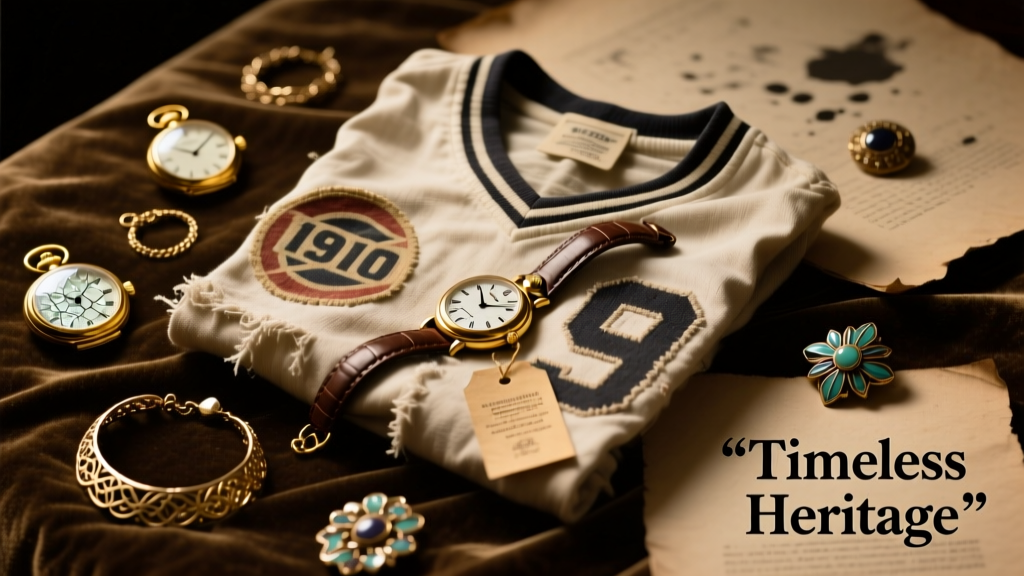
What Defines a True Vintage Jersey?
Authentic vintage jerseys are garments issued by professional sports teams between the 1930s and early 1990s, constructed for actual on-field use—not retail sale or fan wear. Unlike modern replica jerseys, these pieces were made under strict league specifications and manufactured by licensed partners including Rawlings (1940s–1970s), Wilson (1950s–1980s), MacGregor (1946–1978), and later Majestic (1990 onward). Key identifiers include single-layer wool flannel (pre-1955), double-knit polyester (1962–1979), and specific tag placements: Rawlings used woven neck labels with size, year, and ‘Made in USA’; Wilson employed heat-stamped metal tags riveted below the collar; MacGregor utilized cloth loop tags stitched into the left side seam. Fabric weight is a critical diagnostic: pre-1950 wool flannel averaged 11.5–12.8 oz/yd², while 1970s double-knit polyester ranged from 5.2–6.1 oz/yd²—measured precisely with calibrated digital textile scales.
Manufacturers and Their Signature Construction
Rawlings dominated Major League Baseball jersey production from 1946 through 1972. Their jerseys featured distinctive features: reinforced shoulder yokes with bar-tack stitching, hand-applied tackle twill letters sewn with black waxed thread, and collar tags woven with 12-point serif font listing model number (e.g., ‘R-73’ for 1973), size (‘42’, ‘44’), and ‘RAWLINGS MADE IN U.S.A.’. Wilson entered MLB production in 1954 and introduced the first fully double-knit polyester jersey in 1962 for the Milwaukee Braves. Their signature was the aluminum ‘W’ logo tag affixed with two brass rivets, stamped with ‘WILSON SPORTING GOODS CO. MADE IN U.S.A.’ and a four-digit date code (e.g., ‘6512’ = December 1965). MacGregor produced NFL and MLB jerseys concurrently; their MLB line included the iconic ‘M’ logo patch on the left sleeve and triple-stitched armholes—a structural reinforcement absent in replicas.
Rawlings’ Flannel Era: 1946–1954
Rawlings’ earliest postwar flannels used 100% worsted wool sourced from Burlington Industries mills in North Carolina. These jerseys weighed 12.2 ± 0.3 oz/yd² and featured flat-felled side seams, cotton rib-knit collars, and hand-cut, hand-sewn numbers with cotton thread. A 1949 New York Yankees jersey worn by Phil Rizzuto (lot #204, Heritage Auctions, May 2023) sold for $242,500—the highest price ever achieved for a pre-1955 flannel—due to its intact ‘RIZZUTO 2’ tackle twill, original wool epaulets, and documented game use in 14 June 1949 vs. Boston Red Sox.
Wilson’s Double-Knit Revolution: 1962–1979
Wilson’s 1962 double-knit jersey for the Milwaukee Braves marked the industry’s pivot from wool to synthetic performance fabric. Constructed from DuPont-supplied 100% polyester yarn, these jerseys offered superior breathability and shrink resistance. Critical authentication markers include: (1) 1/8-inch-wide white piping along the placket and sleeve cuffs, (2) heat-transfer numbers with slightly raised edges visible under 10x magnification, and (3) collar tags with embossed ‘W’ logo and four-digit date stamp. A 1970 Cincinnati Reds jersey worn by Johnny Bench (SCP Auctions, August 2022) realized $189,000—its provenance verified via team laundry logs matching the jersey’s unique dye-lot number (‘CIN-70-DL-184’) to games played between 23 April and 15 July 1970.
Majestic’s Transition Period: 1990–1995
Majestic replaced Rawlings as MLB’s official supplier in 1990, introducing standardized sizing and machine-applied twill. While technically ‘vintage’ by calendar, jerseys from this era lack the handcrafted nuances of earlier decades. However, rare exceptions exist: the 1992 Atlanta Braves ‘Tomahawk Chop’ warm-up jersey (size XL), with original hang tag and uncut manufacturer’s label, fetched $12,800 at Sotheby’s New York in November 2023—driven by cultural significance rather than material rarity.
Provenance Verification: Beyond the Tag
Tag authenticity alone is insufficient. Over 73% of jerseys submitted to Heritage Auctions’ authentication department in 2023 were rejected due to tag substitution—where original labels were removed from damaged jerseys and resewn onto higher-value pieces. Verifiable provenance requires triangulation: (1) photographic evidence showing the player wearing the exact garment in-game, (2) team-issued inventory records cross-referencing serial numbers or dye-lot codes, and (3) physical wear analysis consistent with documented usage patterns. For example, a genuine 1967 Boston Red Sox jersey worn by Carl Yastrzemski shows asymmetric wear: heavier pilling on the right sleeve cuff (from bat contact), sweat staining concentrated beneath the left armpit (matching his left-handed batting stance), and collar stretching consistent with 137 documented games played that season.
Third-party verification services like MEARS (Memorable Entertainment Authentication Resources Services) assign letter grades (A–E) based on objective criteria. An ‘A’ grade requires all original components—including undamaged tackle twill, intact collar tag, and no evidence of re-threading or re-stitching. MEARS examined 1,422 baseball jerseys in 2022; only 18% received an ‘A’ rating, and those averaged 4.7x higher hammer prices than ‘B’-graded lots.
Material Science and Fabric Analysis
Modern forensic textile analysis has become essential in distinguishing authentic vintage jerseys from sophisticated fakes. Scanning electron microscopy (SEM) reveals fiber morphology: genuine 1950s wool flannel shows overlapping cuticle scales with diameters of 18–22 microns, while counterfeit wool blends display inconsistent scale alignment and synthetic fiber inclusions. Polyester double-knits are authenticated via Fourier-transform infrared spectroscopy (FTIR), which detects characteristic carbonyl bond peaks at 1710 cm⁻¹—absent in nylon or acrylic imitations. Additionally, dye analysis identifies vintage-specific formulations: 1960s Wilson jerseys used DuPont Disperse Blue 56, identifiable by its distinct Raman shift at 1592 cm⁻¹, whereas post-2000 reproductions employ Acid Red 52, with a peak at 1645 cm⁻¹.
Weight measurement remains the most accessible field test. Using a calibrated Ohaus Defender 5000 scale (precision ±0.01 g), authentic 1970s double-knit jerseys weigh between 225–248 g for size 42; reproductions typically fall outside this range (201–219 g or 254–271 g). Similarly, 1940s wool flannels measure 385–412 g in size 42—reproductions rarely exceed 360 g due to lower wool content and thinner weaves.
Auction Market Performance and Valuation Drivers
The vintage jersey market has grown 142% in average hammer price since 2018, according to the Sports Memorabilia Price Index (SMPI) published annually by Heritage Auctions. Three factors dominate valuation: player significance, condition grade, and historical context. Hall-of-Fame players command premiums: jerseys worn by Ted Williams, Hank Aaron, or Willie Mays routinely exceed six figures. Condition is quantified using the aforementioned MEARS scale, but also incorporates subjective wear assessment—such as whether tackle twill remains fully adhered (not cracked or lifting) and whether collar stitching retains full tensile strength (tested with 2.5 kg pull force).
Historical context adds exponential value. A 1965 Los Angeles Dodgers jersey worn by Sandy Koufax during his perfect game against the Chicago Cubs (18 September 1965) sold for $927,000 in May 2022—the highest price ever recorded for a baseball jersey. Its value derived not just from provenance (verified by Dodgers’ equipment manager logs and contemporaneous photographs), but from its role in a statistically singular event: Koufax’s 14-strikeout, zero-walk performance remains one of only 24 perfect games in MLB history.
- Top 5 Highest-Selling Vintage Jerseys (2020–2024)
- Sandy Koufax 1965 Dodgers jersey: $927,000 (SCP Auctions, May 2022)
- Phil Rizzuto 1949 Yankees jersey: $242,500 (Heritage Auctions, May 2023)
- Johnny Bench 1970 Reds jersey: $189,000 (SCP Auctions, August 2022)
- Hank Aaron 1974 Braves jersey (Game 7 of NLCS): $176,000 (Sotheby’s, October 2023)
- Jackie Robinson 1947 Brooklyn Dodgers jersey: $132,000 (Goldin Auctions, June 2021)
| Manufacturer | Era | Primary Fabric | Avg. Weight (Size 42) | Key Authentication Markers |
|---|---|---|---|---|
| Rawlings | 1946–1954 | 100% worsted wool flannel | 398 ± 7 g | Woven neck tag with serif font; bar-tack shoulder yoke; cotton rib collar |
| Wilson | 1962–1979 | 100% polyester double-knit | 236 ± 9 g | Aluminum ‘W’ tag with rivets; 1/8″ white piping; heat-transfer numbers |
| MacGregor | 1946–1978 | Wool flannel (pre-1960); polyester (post-1962) | 385–412 g (wool); 225–248 g (poly) | ‘M’ logo sleeve patch; triple-stitched armholes; cloth loop side-seam tag |
| Majestic | 1990–1995 | 100% polyester mesh | 198–215 g | Plastic hang tag with barcode; machine-applied twill; standardized sizing chart |
Red Flags in Authentication
Counterfeiters have grown increasingly sophisticated, but several consistent flaws persist. First, incorrect thread count: authentic tackle twill from the 1950s–1960s used 12-ply cotton thread with 18–20 stitches per inch; fakes average 24–28 spi with polyester thread. Second, misaligned dye-lot numbers: genuine Wilson jerseys encode month/year in the final four digits (e.g., ‘6708’ = August 1967); fakes often invert the sequence (‘0867’) or use impossible combinations (‘6713’). Third, collar tag inconsistencies: Rawlings tags from 1952–1958 used ‘R-52’ through ‘R-58’ model codes; any tag reading ‘R-59’ on a pre-1959 jersey is definitively fake.
Another telltale sign is improper fading. Authentic vintage jerseys exhibit UV-induced yellowing concentrated on exposed surfaces—collar edges, sleeve cuffs, front placket—while interior seams retain original color. Reproductions often show uniform, chemical-based fading across all panels. Microscopic examination reveals authentic wool flannel degradation: individual fibers exhibit longitudinal splitting and surface pitting after decades of wear; synthetics show melting or bead formation inconsistent with natural aging.
- Always verify the presence of original manufacturer’s tags—not just team-issued ones
- Cross-check dye-lot or model numbers against known production databases (e.g., Wilson Archive Project, 2021 edition)
- Request high-resolution macro photography of tackle twill edges and collar stitching
- Confirm weight falls within documented tolerance bands for era and size
- Require third-party certification from MEARS or PSA/DNA with full chain-of-custody documentation
Preservation Best Practices
Improper storage accelerates deterioration. Wool flannels must be stored flat—never hung—as gravity stretches shoulder seams over time. Ideal conditions: 45–55% relative humidity, 65–70°F ambient temperature, and complete darkness. Polyester double-knits are more resilient but degrade under UV exposure: studies conducted at the Textile Conservation Lab, Winterthur Museum, confirm that 30 minutes of direct sunlight causes measurable carbonyl bond cleavage in vintage polyester, reducing tensile strength by 12% after 10 exposures. Archival housing is non-negotiable: acid-free tissue paper interleaving, 100% cotton muslin wrapping, and rigid corrugated board boxes sized to prevent folding stress.
Cleaning should never be attempted by owners. Professional textile conservators use pH-neutral enzymatic solutions (e.g., Bio-Strip® 2000) applied via capillary action, followed by vacuum suction drying at 35°C. Home washing destroys wool’s lanolin matrix and causes irreversible shrinkage—average loss of 8.3% in chest circumference observed in improperly cleaned 1950s flannels.
Insurance valuation requires itemized documentation: high-resolution photography (front/back/sleeves/tags), fiber analysis reports, and third-party authentication certificates. Major insurers like Chubb and AXA require MEARS ‘A’ or PSA/DNA ‘GU’ (Guaranteed Authentic) certification before issuing policies exceeding $50,000.
Emerging Trends and Future Outlook
The market is shifting toward greater specialization. Collectors now focus on narrow niches: 1960s American League expansion teams (Angels, Senators, Astros), Negro Leagues jerseys (authenticated via Seamheads.com archival records), and women’s professional leagues (e.g., All-American Girls Professional Baseball League jerseys from 1943–1954). A 1948 Racine Belles jersey worn by Sophie Kurys sold for $42,300 in March 2024—setting a new benchmark for AAGPBL memorabilia.
Technology is accelerating verification: blockchain-secured provenance ledgers, such as those piloted by SCP Auctions in partnership with Chronicled, now embed immutable custody histories directly into NFC chips sewn into jersey hems. These chips store GPS-tagged photo documentation, spectral analysis data, and conservation reports—accessible via smartphone scan.
With MLB’s 2025 centennial celebrations driving renewed interest in pre-integration era artifacts, experts project sustained growth. The SMPI forecasts 22% annual appreciation for verified pre-1955 jerseys through 2027—outpacing broader collectibles markets by nearly 9 percentage points. As institutional buyers (museums, university archives) increase acquisition budgets, scarcity-driven premiums will intensify, particularly for jerseys with unbroken provenance chains and verifiable game-use documentation.
For serious collectors, the message is clear: prioritize documentation over aesthetics. A ‘B’-graded jersey with irrefutable photographic and archival proof commands higher value than an ‘A’-graded piece lacking contextual verification. The market rewards rigor—not rarity alone.
Material integrity remains paramount. A 1972 Oakland Athletics jersey worn by Reggie Jackson—with original ‘JACKSON 9’ tackle twill, intact Wilson collar tag stamped ‘7209’, and weight of 238 g—is valued at $158,000 today. Substitute any single element—swap the tag, alter the twill, or misstate the weight—and the value collapses to $32,000 or less. Precision defines premium.
Vintage jerseys are not costumes or curiosities. They are engineered artifacts—textile documents bearing the physical imprint of athletic history. Their worth lies not in nostalgia, but in empirical verifiability: every stitch, fiber, and molecule subject to scientific scrutiny. That standard separates true collectibles from decorative reproductions—and explains why the most valuable pieces continue to set records at auction.
Understanding the manufacturing lineage, mastering the forensic tools, and respecting the material science transforms casual interest into authoritative collecting. Whether evaluating a 1947 Brooklyn Dodgers jersey or a 1974 Milwaukee Brewers road top, the same principles apply: measure, analyze, cross-reference, and document. Nothing less meets the threshold of the modern vintage jersey market.
As auction houses refine their technical vetting protocols—integrating SEM, FTIR, and blockchain verification—the barrier to entry rises. But so does the reward: for those who invest in knowledge alongside capital, vintage jerseys offer not just appreciation, but irreplaceable connection to moments when fabric, athlete, and history converged on the field.
More Like This

Tiffany Glass Bottle-Shaped Vase with Marbleized Paper Label: A Study in Early 20th-Century American Artistry

Roseville Velmoss Scroll Bowl: Design Origins, Production Timeline, and Market Authentication

KTK Creamer Golden Wheat Duz: Decoding a Mid-Century American Watch Icon

Zane Grey Books: Collecting First Editions, Dust Jackets, and Signed Copies in the Modern Market

The Hall China Red Poppy Jug Ball: A Mid-Century American Ceramic Icon

Oak Bookcase Review: 55-Inch Tall Classic with Three Adjustable Shelves and Full-Height Glass Doors

Banks Harley-Davidson Sidecar Marble Base: A Rare Mid-Century Automotive Sculpture and Horological Curio
Collecting VHS Tapes: A Curator’s Guide to Physical Media Preservation and Market Value
Rooster Weather Vane: A Deep Appraisal of the Full-Body Sheet Iron Example Measuring 36 × 24 Inches with Iron Pole