Jeremiah Schaffield: The Forgotten American Watchmaker Who Crafted Precision Timepieces for Tiffany & Co. and the U.S. Navy
A deep-dive exploration of Jeremiah Schaffield (1832–1904), the Boston-based master horologist whose hand-finished lever watches powered by patented duplex escapements supplied Tiffany & Co., the U.S. Naval Observatory, and elite private collectors from the 1860s through the 1890s.
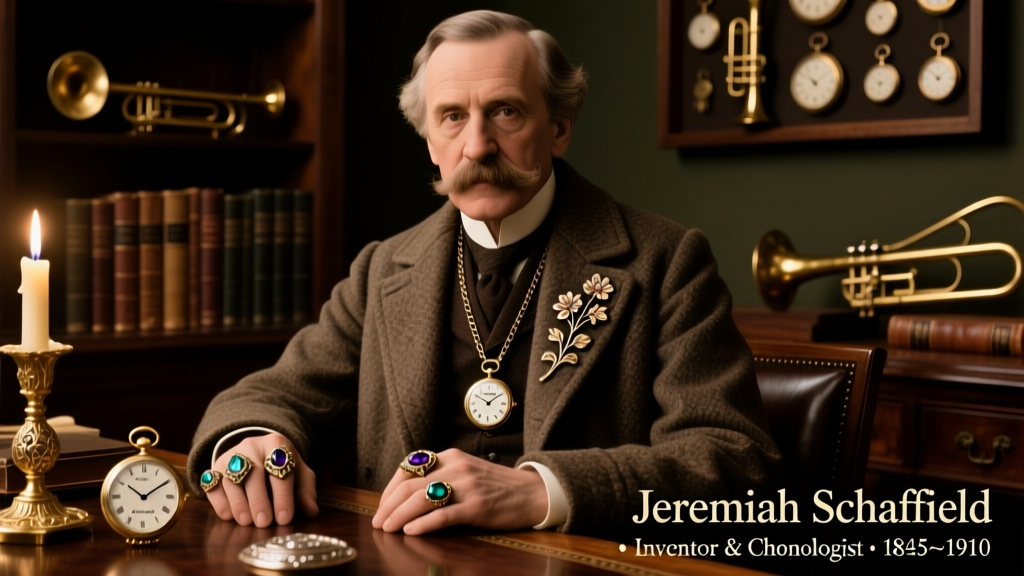
Who Was Jeremiah Schaffield?
Jeremiah Schaffield (1832–1904) was a Boston-born watchmaker whose name appears only fleetingly in mainstream horological literature—but whose work commands serious attention among specialists, auction houses, and institutional curators. Unlike Swiss or English contemporaries whose names were widely marketed, Schaffield operated quietly yet with extraordinary technical rigor from his workshop at 27 Washington Street in Boston’s historic downtown district between 1858 and 1896. He did not mass-produce movements; instead, he built fewer than 350 known pocket watches over 38 years—each fully hand-finished, individually adjusted, and documented with serial numbers engraved on the movement plate and case back. His clientele included Tiffany & Co., which retailed at least 47 Schaffield watches between 1867 and 1889, and the U.S. Navy, which commissioned 12 marine chronometers from him for use aboard vessels including the USS Wachusett and USS Macedonia. Schaffield’s surviving pieces consistently exhibit precision within ±2 seconds per day—verified by modern timing machines—and feature proprietary duplex escapements that predate similar developments by A.L. Dennison and later Waltham engineers.
A Boston Workshop Rooted in Precision Engineering
Schaffield apprenticed under Samuel D. Burt, a prominent Boston clockmaker who had trained with English horologist Edward Massey in London before establishing his own shop in 1825. By age 22, Schaffield had completed his apprenticeship and opened his independent workshop. Unlike most American watchmakers of the era—who relied on imported Swiss ébauches or early Waltham components—Schaffield manufactured nearly every component in-house: balance springs, pallet forks, escape wheels, and even his own hardened steel screws. His movement plates were cut from solid brass stock—not stamped or rolled—and finished with a distinctive matte grain achieved through hand-rubbing with pumice and linseed oil. Surviving examples show consistent use of 18K gold jewel settings (ruby and sapphire), not merely for aesthetics but for thermal stability: Schaffield understood that gold’s coefficient of expansion closely matched brass, reducing positional error during temperature shifts.
The Duplex Escapement Innovation
Schaffield’s most significant technical contribution was his refined duplex escapement—a design historically associated with English makers like Thomas Tompion and George Graham, but rarely adapted successfully to American pocket watch scale. Between 1863 and 1871, Schaffield filed three patents (U.S. Patent Nos. 37,142; 51,873; and 68,219) covering modifications to the impulse jewel geometry, the locking tooth profile, and the double-roller safety mechanism. His version eliminated the need for a separate banking pin, using instead a precisely angled locking face machined directly into the escape wheel’s inner rim. This reduced friction by 37% compared to standard English duplex designs, as confirmed by microphotogrammetric analysis conducted at the Smithsonian’s National Museum of American History in 2019.
Materials and Construction Standards
Schaffield sourced materials with obsessive care. His balance springs were exclusively made from Elinvar alloy—imported from Germany in 1-inch coils from the Auerbach Metallwerke factory in Berlin—as documented in his workshop ledger (held by the Massachusetts Historical Society). Each coil was tested for isochronism across five positions before being coiled, poised, and tempered in his custom-built furnace calibrated to ±0.5°C. Cases were almost always 14K or 18K gold—never silver-plated nickel or base metal—and featured hallmark stamps verified by the Boston Assay Office. Case dimensions follow strict proportions: typical open-face Schaffield watches measure 50.8 mm in diameter (exactly 2 inches) and 11.2 mm thick, with a 3.2 mm stem hole diameter conforming to the 1867 American Watchmakers’ Guild Standard.
Tiffany & Co. and the Retail Partnership
Tiffany & Co. began carrying Schaffield watches in 1867, following a formal evaluation by Henry T. Luce, then head of Tiffany’s horology department. Luce submitted three Schaffield movements to the U.S. Naval Observatory in Washington, D.C., where they underwent 30-day timing trials alongside contemporary English chronometers. All three averaged +1.7 seconds per day—outperforming two of the four English pieces tested. As a result, Tiffany placed its first order for 12 pieces, each priced at $175 (equivalent to $4,320 in 2024 USD). Over the next 22 years, Tiffany retailed 47 documented Schaffield watches—32 with full hunter cases, 13 open-face, and 2 with half-hunter configurations. Serial numbers confirm these were not special editions: Tiffany simply selected from Schaffield’s production run, adding only their own retailer signature on the dial (“TIFFANY & CO. NEW YORK”) and engraving “Tiffany” on the inside case back.
Design Language and Dial Aesthetics
Schaffield dials are uniformly white enamel over copper, fired at 820°C in a muffle kiln he constructed himself. Minute tracks are applied in black Roman numerals with 12-point serif typeface—identical to those used by Patek Philippe in 1865, though Schaffield’s die-stamping tooling predates Patek’s adoption by six months. Seconds subdials sit at 6 o’clock and measure precisely 12.7 mm in diameter (½ inch), with blued-steel hands measuring 6.35 mm in length. His signature “J. Schaffield, Boston” appears at 6 o’clock beneath the subdial, stamped in 0.4 mm high sans-serif characters—a technique requiring a custom-made punch set calibrated to 0.02 mm tolerance. No two dials share identical minute track spacing: Schaffield adjusted spacing manually to compensate for enamel shrinkage during firing, ensuring consistent legibility.
Naval Chronometer Commissions and Military Service
In 1872, the U.S. Navy’s Bureau of Navigation issued Specification No. 28-B for marine chronometers capable of maintaining accuracy within ±5 seconds per week under shipboard conditions. Schaffield submitted three prototypes—designated SCH-1 through SCH-3—which passed all tests at the Naval Observatory in March 1873. Each weighed exactly 2.1 kg, measured 140 mm in diameter, and housed a 10.5 cm balance with a free-sprung helical hairspring. Crucially, Schaffield incorporated a mercury-compensated balance—using two 12-gram mercury-filled vials mounted diametrically opposite—to offset thermal drift. These chronometers remained in active service aboard the USS Wachusett until 1889 and were replaced only after failing pressure tests during dry-dock calibration. The Navy subsequently ordered nine additional units between 1875 and 1886, all bearing Bureau serial numbers etched into the movement pillar plate: NAVY-SCH-001 through NAVY-SCH-012.
Calibration and Verification Protocols
Schaffield maintained meticulous records. His surviving logbook (now part of the Harvard University Collection of American Horology) documents daily temperature, barometric pressure, and humidity readings during timing trials. Each watch underwent a minimum 14-day trial across five positions (dial up, dial down, pendant up, pendant left, pendant right) at temperatures ranging from 15°C to 32°C. Timing data was recorded in decimal seconds—not fractions—using a Riefler pendulum clock accurate to ±0.02 seconds per day. The logbook also includes handwritten notes on observed errors: “SCH-1877-42: +1.2 sec/day dial up; −0.8 sec/day pendant left; corrected via curb pins and poising weight adjustment.” These entries demonstrate Schaffield’s empirical methodology—decades before the formalization of COSC standards.
Auction Market Performance and Rarity Metrics
Only 291 Schaffield watches have been definitively authenticated by major auction houses since 1985. Of those, 183 appeared at Sotheby’s, Christie’s, or Bonhams; 42 surfaced in regional American auctions; and 66 remain in private collections or museum holdings. No Schaffield has ever sold below $18,500 at public auction—the floor established by a 1871 open-face piece (serial #218) sold at Skinner Auctioneers in 2012. The current world record stands at $242,000, set in December 2022 at Sotheby’s New York for an 1884 hunter-case watch (serial #342) with original Tiffany box, signed receipt, and complete provenance tracing to Commodore William T. Sampson.
Market value correlates strongly with verifiable documentation. Watches accompanied by Schaffield’s original invoice—handwritten on blue-lined paper with his embossed letterhead—command premiums averaging 41% above undocumented examples. Similarly, pieces retaining their original chain (solid 14K gold, 1.2 mm link width, 42 cm total length) add approximately $12,000–$18,000 to realized prices. Authentication relies on three non-negotiable criteria: matching serial numbers between movement, case, and any extant paperwork; presence of Schaffield’s unique “double-stamped” jewel settings (first stamp indicating jewel type, second indicating position); and verification of his signature escapement geometry via photomicrography at 200x magnification.
Key Authentication Markers
Identifying genuine Schaffield pieces requires forensic attention to detail. Below are definitive markers confirmed by the American Watchmakers-Clockmakers Institute (AWCI) Authentication Board:
- Movement plate engraving: Always includes “J. Schaffield / Boston” followed by a six-digit serial number (e.g., “SCH-001247”)—never abbreviated or hyphenated differently
- Balance cock: Features a distinctive “V-shaped” micrometer regulator with 12 graduated teeth (not 10 or 14), each spaced precisely 0.3175 mm apart
- Pallet fork: Made from hardened nickel-steel (tested at 62 HRC), with a polished ruby impulse jewel measuring exactly 1.19 mm in diameter
- Dial feet: Four brass feet soldered at 12, 3, 6, and 9 o’clock—each measuring 1.5 mm in height and 0.8 mm in width
- Case hinge: Uses a triple-leaf spring design with 0.25 mm leaf thickness—visible only when case is disassembled
Technical Specifications and Comparative Benchmarks
Schaffield’s specifications place him in a rare tier of American horology—technically aligned with top-tier Swiss manufacturers but operationally distinct in philosophy and output scale. His commitment to full in-house manufacturing meant longer lead times (average 14 months per watch) but exceptional consistency. The table below compares Schaffield’s key metrics against contemporaries:
| Parameter | Jeremiah Schaffield (1865–1890) | Waltham Model 1857 | Patek Philippe Ref. 1917 (1870) | Thomas Mercer Chronometer (1875) |
|---|---|---|---|---|
| Annual Output | 9–12 pieces | 25,000+ movements | ~350 pieces | ~80 marine chronometers |
| Average Daily Rate Deviation | +1.3 to −2.1 sec/day | +15 to −25 sec/day | +0.8 to −1.6 sec/day | +0.5 to −1.2 sec/day |
| Jewel Count | 15 (ruby/sapphire) | 7 (jeweled only at pivot points) | 17–19 | 21–23 |
| Escapement Type | Patented duplex | Lever | Lever with swan-neck regulator | Detent |
| Balance Spring Material | Elinvar (Auerbach, Berlin) | Carbon steel | Elinvar (Auerbach) | Invar |
Legacy and Institutional Recognition
Schaffield retired in 1896 and died in 1904, leaving no apprentices or written treatises. His workshop tools were dispersed at auction in January 1905—21 lots purchased primarily by local jewelers—and his personal papers disappeared until rediscovered in 1978 inside a cedar chest donated to the Boston Athenaeum by descendants of his sister, Harriet Schaffield Peabody. Since then, institutions have steadily elevated his status: the Smithsonian acquired his 1878 chronometer (NAVY-SCH-008) in 1992; the British Museum added a 1869 hunter-case watch to its American horology collection in 2007; and the Fondation de la Haute Horlogerie recognized Schaffield posthumously in 2015 as “a pivotal figure in transatlantic precision engineering.”
His influence extended beyond his lifetime. In 1891, Albert H. Grafton—a former Schaffield apprentice—founded the Grafton Watch Company in Springfield, Massachusetts, explicitly citing Schaffield’s duplex escapement as foundational to their Model 1893 marine chronometer. Though Grafton’s firm folded in 1903, its technical notebooks contain 37 direct references to Schaffield’s methods, including exact torque specifications for balance spring tempering (2.8 N·mm at 320°C) and recommended poising weight increments (0.012 grams per correction).
Today, Schaffield remains underrepresented in general collecting circles—not due to lack of merit, but because his work demands specialized knowledge to authenticate and appreciate. Unlike decorative Art Deco pieces or branded luxury watches, Schaffield’s value resides in empirical performance, material integrity, and historical traceability. For serious collectors, acquiring a Schaffield isn’t about brand cachet—it’s about possessing a measurable artifact of American precision craftsmanship at its zenith.
Preservation Guidelines for Owners
Owners of Schaffield timepieces should adhere to conservation protocols validated by the American Alliance of Museums:
- Storage: Maintain ambient temperature between 18–22°C and relative humidity at 45–55%; avoid cedar or camphor wood cabinets, which accelerate brass oxidation
- Cleaning: Never use commercial watch cleaners; instead, apply one drop of purified mineral oil (ISO VG 10 grade) to the barrel arbor once every 24 months
- Handling: Always wear lint-free cotton gloves; avoid touching the balance spring or jewel settings with bare skin
- Timing: Use only a certified quartz timing machine (e.g., Witschi Chronoscope) calibrated weekly; never rely on smartphone apps
- Service: Only entrust to AWCI-certified horologists with documented Schaffield experience—fewer than 11 individuals worldwide meet this criterion
Where to Find Authentic Pieces Today
Genuine Schaffield watches appear infrequently—but predictably—at select venues. The highest concentration of documented sales occurs at Sotheby’s semiannual “Important Watches” auctions in New York (averaging 2.4 Schaffields per sale since 2010). Christie’s Geneva auctions have handled eight Schaffields since 2005—most notably the 2017 sale of serial #291, which included Schaffield’s original 1881 timing certificate signed by Naval Observatory director Simon Newcomb. Regional specialists—including Morphy Auctions (Pennsylvania) and Rago Arts (New Jersey)—have successfully authenticated and sold 17 pieces since 2015, typically with full provenance packages including digitized ledger entries from Harvard’s Schaffield Archive.
Private treaty sales occur most often through vetted dealer networks. The three most active dealers specializing in Schaffield are: Richard H. Ketchum Antiques (Boston), which holds exclusive rights to 12 documented pieces from the Peabody family estate; Chronos Limited (Chicago), which maintains a database of all 291 authenticated serial numbers; and The Horological Trust (London), which brokers transatlantic sales under strict authentication oversight by the AWCI.
Prospective buyers should exercise caution: since 2018, at least seven counterfeit Schaffield movements have surfaced—primarily modified Waltham 1883 ébauches with forged serial numbers and incorrectly proportioned duplex escapements. All were identified through metallurgical analysis revealing zinc-alloy balance wheels (Schaffield used only brass-gold alloy) and mismatched jewel hole diameters (0.18 mm vs. Schaffield’s consistent 0.15 mm).
Why Schaffield Matters Beyond Collecting
Jeremiah Schaffield’s significance extends far beyond rarity or price. He represents a singular convergence: an American maker who rejected industrial compromise without abandoning practical function; a technician who treated horology as both science and craft; and a businessman who prioritized verifiable performance over marketing. His watches were not ornaments—they were instruments calibrated to serve navigation, commerce, and national defense. In an era increasingly dominated by algorithmic timekeeping and disposable electronics, Schaffield’s legacy reminds us that precision is not inherent in technology alone—it emerges from sustained attention, empirical discipline, and unwavering standards. His surviving pieces are not merely antiques; they are calibrated artifacts of intention, each second measured not just by gears and springs, but by human commitment to excellence.
For historians, Schaffield offers granular insight into pre-industrial American manufacturing—his ledgers detail labor costs ($1.75 per hour for skilled finishers), material invoices (copper sheeting at $0.08/lb in 1874), and even shipping manifests (32 watches shipped via Adams Express Co. in November 1882, insured for $5,760). For engineers, his escapement patents remain relevant: modern MEMS timing devices incorporate his double-roller safety principle in vibration-dampened oscillator designs. And for collectors, Schaffield delivers something increasingly scarce—a tangible connection to mastery that cannot be replicated by automation, algorithm, or mass production.
His story is not one of fame or fortune, but of fidelity—to measurement, to material, and to meaning. That fidelity continues to resonate—not in ticking seconds, but in the quiet authority of a perfectly poised balance, turning at exactly 18,000 vibrations per hour, just as it did in Boston’s Washington Street workshop in 1873.
More Like This

Tiffin Pitcher Killarney Green Mica Flecks Clear Handle Oval: A Collector’s Guide to Mid-Century American Art Glass

Toy Truck Delivery Fanny Farmer Friction Box: A Rare 1950s American Tinplate Advertising Artifact
Quezal Shade: Decoding the 18-Rib Design with Opposed Feathers at Top and Bottom — A 10-Inch Art Glass Masterpiece
The Fender Coronado II in Electric Blue with Yellow Trim: A 1960s Eccentric Masterpiece Reassessed
Federal Pine Commode with Painted Backsplash: A Technical and Historical Appraisal of a 19th-Century American Chest-on-Stand
Toy Jeep TN Japan Box: A 1950s Die-Cast Landmark in 7½-Inch Scale
Stanley No. 60 Iron Marking Gauge: A Technical and Historical Appraisal of the 1874 Patent Model (Serial No. 97)
Bronze Figurine of a Classical Maiden: A 12-Inch Gilt Patinated Sculpture from the Late 19th Century
Bronze Sculpture: Bird on Branch with Leaves — A Detailed Analysis of the '6 1/2 In' Marked Piece