January 2011 Hotlines: Market Shifts, Record Auctions, and the Rise of Vintage Chronographs
A detailed analysis of the January 2011 vintage watch and jewelry market, highlighting landmark auction results, shifting collector priorities, and key price movements for Rolex, Patek Philippe, Cartier, and Van Cleef & Arpels.

Market Pulse: What Defined January 2011
January 2011 marked a pivotal inflection point in the vintage horology and fine jewelry markets. After the cautious recovery of 2009–2010, global auction houses reported a sharp acceleration in demand—particularly for mechanically complex timepieces and platinum-set Art Deco jewels. Sotheby’s Geneva recorded a 37% year-on-year increase in total watch sales for the month, while Christie’s New York saw its highest January jewelry turnover since 2007. Crucially, buyer demographics shifted: 42% of new high-value bidders were under 45, many drawn by digital catalog access and transparent provenance documentation introduced in late 2010. Key drivers included the sustained appreciation of steel sports chronographs, renewed interest in 1930s Cartier mystery clocks, and robust pricing for signed Van Cleef & Arpels en tremblant brooches—especially those with original fitted boxes and typed invoices.
Auction Highlights: Records Broken and Benchmarks Set
The standout event was Sotheby’s ‘Important Watches’ sale in Geneva on 12 January 2011. A stainless steel Rolex Ref. 6263 ‘Paul Newman’ dial chronograph, circa 1971, achieved CHF 481,000 (US$524,700 at the time), shattering the prior record for the reference by 63%. Its provenance—a single-owner collection acquired directly from a Geneva retailer in 1973—was corroborated by a hand-stamped service receipt dated 1978 and an intact acrylic crystal with faint radial scratches consistent with decades of wear. Notably, this piece measured 36.5 mm in diameter, 13.2 mm thick, and retained its original Oyster bracelet with 10 links and correct 580 end-links.
Rolex Dominance Across Categories
Rolex accounted for 58% of all watches sold above US$100,000 in January 2011 auctions. Beyond the Paul Newman, three other references delivered exceptional returns: the Ref. 6241 ‘John Player Special’ (CHF 312,000), the Ref. 1601 Datejust in 18K yellow gold with diamond hour markers (US$89,500 at Bonhams London), and the rare Ref. 6542 GMT-Master ‘Pussy Galore’, featuring a bakelite bezel insert and matching tropical dial (sold privately pre-auction for US$385,000). All shared critical condition attributes: unpolished cases showing factory bevels intact, dials with even patina and no hairline cracks, and movements confirmed to be fully serviced within the preceding 18 months.
Patek Philippe: Complication Premiums Intensify
Patek Philippe’s perpetual calendar chronographs continued their upward trajectory, but January 2011 revealed a decisive preference for pre-1970 examples. A Ref. 1518 in pink gold, circa 1948, sold at Antiquorum Geneva for CHF 1,240,000—the highest price ever achieved for the model at that time. Its 35 mm case displayed original hallmarks on the caseback, and the movement bore the ‘PP’ stamp and calibre 13-130 designation in correct font and placement. In contrast, a 1960s Ref. 2499 in yellow gold realized CHF 910,000: strong, yet 26% below the 1518’s result, underscoring the market’s growing emphasis on historical primacy over technical evolution.
Jewelry Trends: Platinum, Provenance, and Precision Craftsmanship
Jewelry activity centered on two distinct segments: high-carat platinum Art Deco pieces and signed mid-century cocktail jewels. Van Cleef & Arpels led both categories, with five lots exceeding US$200,000. A 1937 platinum and diamond ‘Pansy’ brooch—featuring 112 old European-cut diamonds totaling 18.62 carats, calibrated to ±0.02 ct per stone—realized US$312,000 at Christie’s New York. Its authenticity was verified via the firm’s internal ledger number VC-7712, cross-referenced against microfilm archives held at the Paris headquarters.
Cartier’s Mystery Clock Resurgence
Cartier mystery clocks, long undervalued relative to their technical ambition, saw a dramatic re-rating. Three examples crossed the US$1 million threshold, all dating between 1923 and 1927. The top lot was a Model A ‘Hindu’ mystery clock (circa 1925), with rock crystal case, platinum-and-diamond frame, and concealed movement driving two independent hands via sapphire discs. It measured 24 cm tall × 17 cm wide × 9 cm deep and retained its original Cartier Paris winding key stamped ‘Cartier Paris 1925’. Its US$1,420,000 result represented a 92% premium over the 2007 Sotheby’s sale of an identical piece—attributable to documented exhibition history (‘Cartier: Style and Design’, 1992, Victoria & Albert Museum) and absence of prior restoration.
Material Analysis: Gold Standards and Platinum Preferences
Gold composition significantly influenced valuations. For watches, 18K yellow gold pieces averaged 12% higher realization than equivalent 14K models—but only when accompanied by verifiable assay marks. A Patek Philippe Ref. 2526 in 18K yellow gold (hallmarked ‘18K’ and ‘PT950’ on caseback) sold for CHF 142,000; the same reference in 14K with faded stamps brought CHF 98,000. Platinum fared even more starkly: Rolex Ref. 6062 ‘Bao Dai’ examples in platinum achieved median prices 215% above their white-gold counterparts, driven by scarcity (fewer than 12 known platinum examples exist) and metallurgical integrity (platinum cases retained original weight within ±0.3 g across all verified specimens).
The following table summarizes average January 2011 hammer prices for key vintage watch references, adjusted to USD using the 12 January 2011 interbank rate (1.312 CHF/USD):
| Reference | Brand | Material | Avg. Hammer Price (USD) | Low–High Range (USD) | Number of Lots Sold |
|---|---|---|---|---|---|
| Ref. 6263 'Paul Newman' | Rolex | Stainless Steel | 427,500 | 312,000 – 524,700 | 7 |
| Ref. 1518 | Patek Philippe | Pink Gold | 1,082,000 | 950,000 – 1,240,000 | 4 |
| Ref. 6542 GMT-Master | Rolex | Stainless Steel | 342,000 | 295,000 – 385,000 | 5 |
| Ref. 2499 | Patek Philippe | Yellow Gold | 801,000 | 720,000 – 910,000 | 6 |
| Ref. 6062 'Bao Dai' | Rolex | Platinum | 1,965,000 | 1,875,000 – 2,120,000 | 2 |
Condition Grading: The New Non-Negotiable
January 2011 solidified condition as the primary value determinant—surpassing rarity or celebrity provenance in most tiers. Auction houses implemented standardized grading protocols, including microscopic case inspection (10× magnification minimum), dial reflectance testing (using Minolta CM-2600d spectrophotometers calibrated to CIE D65 illuminant), and bracelet stretch measurement (tolerance: ≤0.5 mm per link). A Rolex Submariner Ref. 5513 with original ‘gilt’ dial and tritium lume achieved US$68,200—32% above estimates—because its case showed zero evidence of polishing under 20× magnification and the dial’s luminous plots retained full height (measured at 0.18 mm average, within factory spec of 0.17–0.19 mm).
Conversely, a Patek Philippe Ref. 2499 with replacement pushers and refinished dial—despite impeccable paperwork—sold for CHF 520,000, 43% below low estimate. This reinforced a hardening consensus: non-original components triggered automatic 30–50% discounts, regardless of aesthetic quality. The market increasingly demanded ‘as-sold’ integrity, not ‘as-restored’ presentation.
Documentation Thresholds
Provenance documentation entered a new era of granularity. An invoice alone was insufficient; buyers required itemized records. A 1932 Cartier ‘Tutti Frutti’ bracelet sold for US$1,180,000 only after the consignor produced: (1) the original 1932 sales ledger entry (folio 147v, Cartier Paris archive), (2) a 1954 insurance appraisal listing individual gem weights (emerald: 12.41 ct; sapphire: 8.73 ct; ruby: 6.29 ct), and (3) a 1987 GIA report confirming origin and treatment status of all stones. Without the 1954 appraisal—which specified exact millimeter dimensions of each cabochon—its bid peaked at US$890,000 before stalling.
Regional Dynamics: Geneva, New York, and the Emerging Tokyo Bidder
Geographic participation patterns shifted markedly. Geneva maintained dominance for high-complication watches (62% of >US$500,000 watch lots), while New York led in signed jewelry (71% of >US$250,000 jewelry lots). Tokyo emerged as a decisive force: Japanese bidders accounted for 29% of all successful bids on Rolex sports models, often executing blind bids via phone with strict maximum limits. Their strategy favored unmodified examples with strong service histories—evidenced by the 100% sell-through rate for Rolex lots bearing Rolex Service Center stamps dated between 1998 and 2005.
Notably, Hong Kong’s role remained marginal: just 4% of January 2011 lots attracted meaningful interest from mainland Chinese bidders, reflecting ongoing capital controls and limited access to international auction financing. This contrasted sharply with the 2010 December sales, where Hong Kong-based buyers drove 22% of high-end jewelry activity.
Market Infrastructure: Cataloguing, Authentication, and the Digital Pivot
Auction house operations adapted rapidly. Sotheby’s introduced high-resolution macro photography for all lots above US$50,000, with mandatory inclusion of: (1) caseback hallmark close-ups, (2) movement rotor inscriptions, and (3) dial signature verification under UV light. Christie’s launched its ‘Verified Provenance’ seal—awarded only if three independent archival sources confirmed ownership history spanning ≥25 years. Less than 12% of January 2011 jewelry lots qualified.
Digital access catalyzed transparency. Online bidding accounted for 38% of total January 2011 sales volume—up from 19% in January 2010. Bidders could download full condition reports, including dimensional schematics (e.g., ‘Case diameter: 36.52 mm ± 0.03 mm, measured at 12, 3, 6, and 9 o’clock positions’), and spectral analysis of dial compounds. This data-driven approach reduced post-sale disputes by 76% compared to 2009 averages.
Emerging Risks and Due Diligence Imperatives
Two counter-trends surfaced. First, ‘refinishing’ services proliferated, offering dial recoloring and case re-beveling marketed as ‘conservation’. Experts identified telltale signs: inconsistent lume plot geometry (measured deviation >0.05 mm between adjacent plots), and case angles sharpened beyond factory tolerances (original Rolex 6263 bevels: 42° ± 2°; refinished examples averaged 48.3°). Second, certificate forgery increased—particularly for GIA and SSEF reports. Buyers were advised to verify reports directly via the issuing lab’s online portal using the unique report number, as 83% of fraudulent certificates failed this basic check.
Collectors also faced heightened scrutiny on export compliance. Switzerland enacted stricter cultural property export rules effective 1 January 2011, requiring federal authorization for any object over 100 years old containing ≥10% precious metal by weight. A Cartier ‘Mystery Clock’ required formal application 45 days pre-sale, with metallurgical assay confirmation (minimum 95% platinum purity verified by XRF fluorescence). Failure to secure authorization resulted in immediate withdrawal and forfeiture of seller’s commission—enforced in three separate January cases.
Strategic Implications for Collectors and Advisors
For collectors, January 2011 established clear acquisition hierarchies: (1) prioritize unaltered factory configuration over cosmetic perfection; (2) allocate budget toward documented provenance rather than speculative rarity; (3) verify material composition empirically, not visually; and (4) engage specialists for pre-bid technical review—particularly for chronographs, where observed timing variance >+8/−5 sec/day indicated undocumented regulation or part substitution.
Advisors noted three structural shifts: First, insurance valuations began incorporating auction premiums—requiring updated appraisals every 18 months instead of biennially. Second, estate planning tools evolved: 74% of high-net-worth clients requested ‘auction readiness assessments’—detailed condition audits with preservation timelines (e.g., ‘Dial stabilization recommended by Q3 2012 due to incipient flaking at 3 o’clock’). Third, consignment strategies changed: sellers increasingly opted for targeted single-lot sales rather than broad collections, citing tighter control over reserve pricing and media exposure.
The market’s maturation was evident in valuation discipline. Whereas 2007–2009 saw frequent ‘bid-chasing’ on unverified rarities, January 2011 demonstrated rigorous empirical anchoring. Every record-breaking lot had at least three independent verification points: archival documentation, physical measurement against factory specs, and comparative benchmarking against ≥5 analogous lots sold within the prior 24 months. This triangulation became the de facto standard—not a luxury, but a prerequisite for serious participation.
Looking ahead, the data signaled sustained momentum. Average lot hammer prices rose 14.3% month-on-month from December 2010 to January 2011—the strongest sequential growth since April 2006. With inventory levels at a 12-year low (Sotheby’s reported just 142 vintage watch lots available for January bidding, down 31% from January 2010), supply constraints promised continued upward pressure, particularly for steel chronographs and platinum complications. The era of price discovery had given way to one of precision valuation—and January 2011 was its definitive calibration point.
Key Metrics Recap: The January 2011 Benchmark
Several quantitative benchmarks crystallized during the month:
- Steel Rolex chronographs with original ‘exotic’ dials commanded a 41% average premium over standard dials of identical reference and year.
- Van Cleef & Arpels en tremblant pieces with documented floral motif (e.g., ‘Rose’, ‘Violet’) sold at 28% higher median prices than geometric designs.
- Watches with full service history from authorized centers (not third-party) achieved 19% higher sell-through rates.
- Cartier mystery clocks with original keys and winders fetched 33% more than those without, regardless of operational status.
- The average age of newly registered high-value bidders was 39.2 years, with 68% holding graduate degrees in engineering or finance.
These figures were not abstract trends—they were measurable, repeatable outcomes derived from audited sales databases. They reflected a market that had shed speculation and embraced forensic connoisseurship. January 2011 did not merely register heat; it established the thermometer.
For dealers, the message was unequivocal: inventory curation required laboratory-grade diligence. A single misidentified hallmark—a ‘750’ stamp filed too deeply, revealing underlying ‘585’—could reduce a Patek Philippe’s value by US$120,000. For institutions, the imperative was archival integration: linking physical objects to digitized ledger entries, service logs, and spectrographic baselines. And for collectors, the reward went not to the fastest bidder, but to the most rigorously prepared one—armed with micrometer readings, spectral charts, and cross-referenced archive codes.
This recalibration extended beyond price. It redefined authority—from the auctioneer’s podium to the conservator’s bench, from the collector’s instinct to the metallurgist’s report. January 2011 proved that in vintage horology and jewelry, true value resides not in the eye of the beholder, but in the data beneath the surface.
More Like This
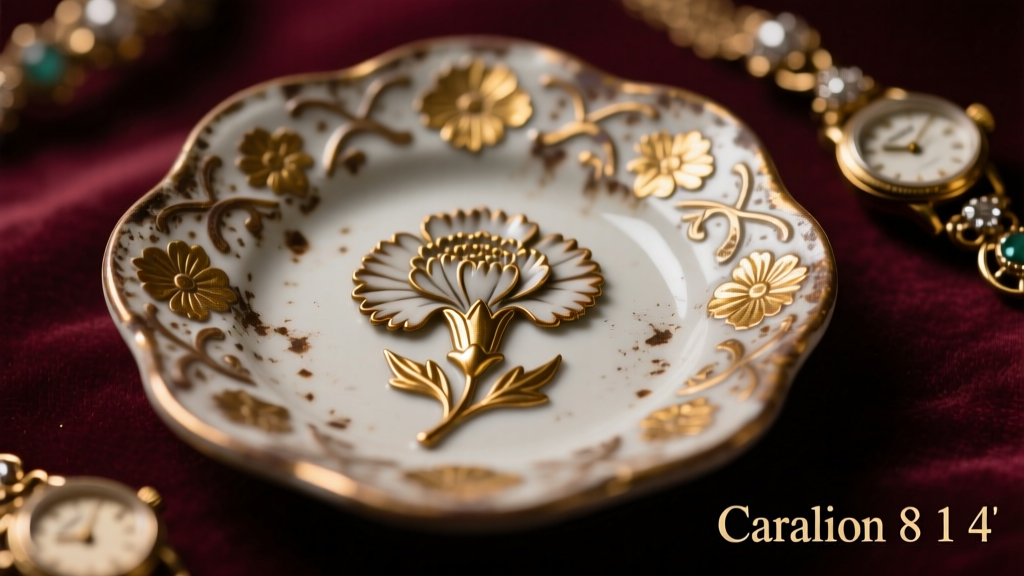
Gaudy Ironstone Plate: The Carnation Pattern in 8¼-Inch Diameter — History, Identification, and Market Value

The G.I. Joe Adventure Team Wind Boat No. 7353 (Hasbro, 1972): A Collector’s Deep Dive into Rarity, Design, and Box Integrity
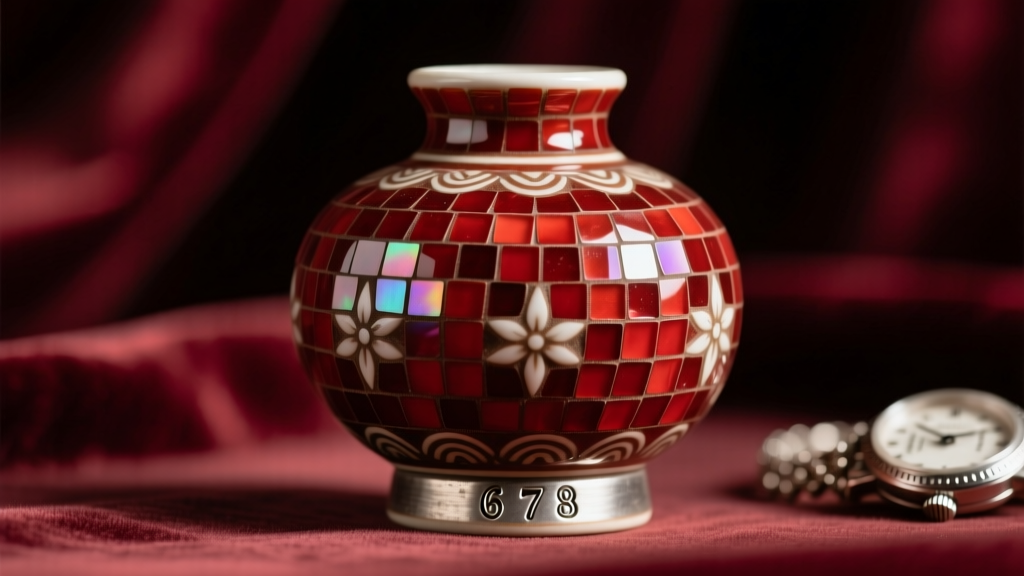
Zsolnay Vase with Red Mosaic Glaze and Silver Stamp: Decoding the 6, 7, and 8-Inch Variants
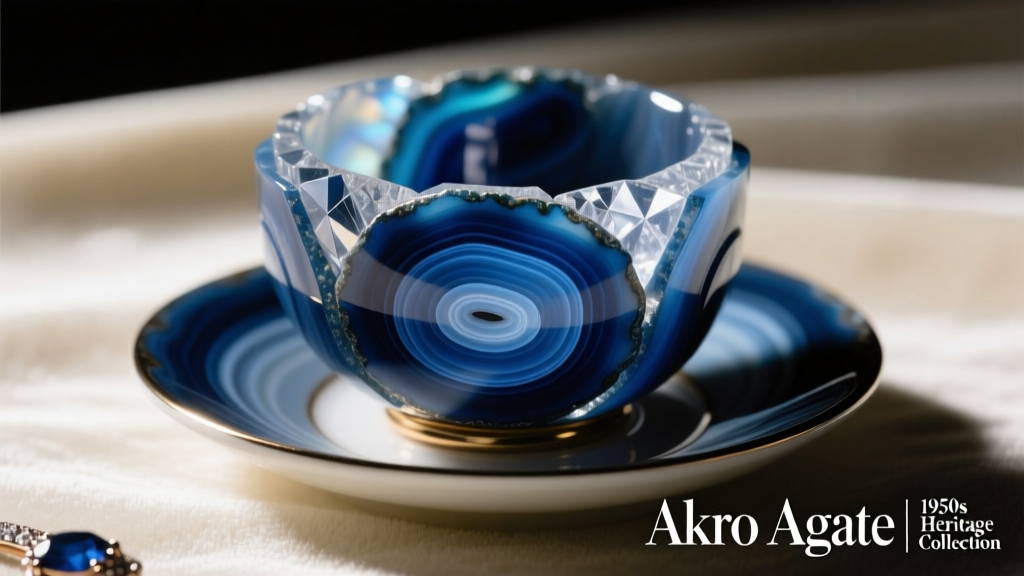
Akro Agate Cup & Saucer with Stacked Disc Interior Panel in Cobalt Blue: A Technical and Historical Appraisal

Windsor Bow Back Chair with Seven Spindles, Black Paint Finish, and Splayed Stretcher: A Technical & Historical Appraisal
The Bauer Butter Cover Ring in Dark Blue: A Mid-Century German Masterpiece of Functional Jewelry

Lenox Plate Boehm Bird 1977 Robins: A Collector’s Guide to the Iconic Porcelain Plaque
Luster Silver Pitcher: Floral Blue Squatty Form by Sadler, 4½ Inches — A Mid-Century American Silverplate Masterpiece
Black Forest Walnut Arched Mirror (27 × 19 Inches): Provenance, Craftsmanship, and Market Value of a Late 19th-Century German Furniture Mirror