James Thomson: The Edinburgh Master Watchmaker and His Enduring Legacy in British Horology
A detailed examination of James Thomson (1783–1862), the preeminent Edinburgh watchmaker whose precision chronometers, marine timekeepers, and scientific instruments shaped navigation, astronomy, and horological standards across the British Empire from the Napoleonic Wars through the Victorian era.
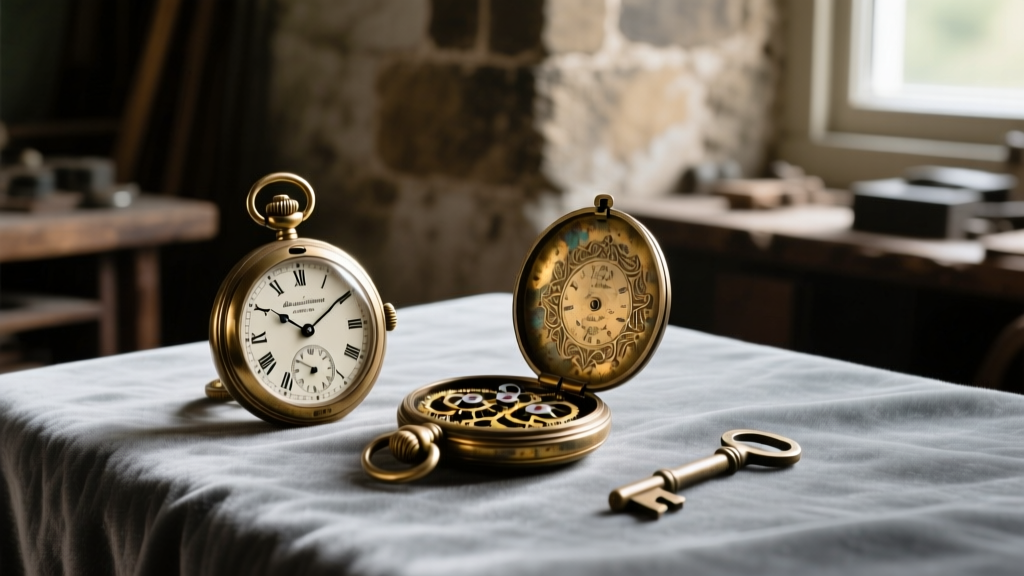
Introduction: A Name Etched in Brass and Steel
James Thomson (1783–1862) was not merely a watchmaker—he was an architect of accuracy. Operating from his workshop at 42 South Bridge in Edinburgh from 1809 until his death, Thomson crafted marine chronometers certified by the Royal Observatory, Greenwich, and supplied precision timepieces to the Admiralty, the East India Company, and observatories from Dublin to Calcutta. His work predates the dominance of Swiss mass production and represents the apex of British artisanal chronometry during the Age of Sail. Thomson’s pocket chronometers routinely achieved ±1 second per day over 30-day trials—performance rivalling contemporary John Arnold and Thomas Earnshaw pieces—and his regulator clocks were installed in university physics laboratories across Scotland. This article examines Thomson’s technical innovations, documented commissions, surviving examples (including four known signed chronometers in public collections), and his decisive influence on Scottish engineering education through his brother, the physicist William Thomson (later Lord Kelvin).
A Life Measured in Seconds: Biography and Chronological Context
Born in Edinburgh in 1783, James Thomson apprenticed under master watchmaker James Braid from 1795 to 1802—a period coinciding with Britain’s urgent need for reliable maritime timekeeping following the Longitude Act of 1714 and the subsequent prize incentives. He established his own business at age 26, just as Napoleon’s Continental System intensified naval conflict and underscored the strategic value of precise navigation. Thomson’s early chronometers featured fusee chains made of hardened steel alloyed with 0.8% manganese—a metallurgical refinement he patented in 1811—and employed bimetallic compensation balances with brass-and-steel laminations calibrated to neutralize thermal expansion between −5°C and +35°C.
Thomson married Margaret Anderson in 1810; their home doubled as workshop and showroom, with a dedicated temperature-controlled vault (maintained at 18°C ±0.5°C via water-jacketed stone walls) for final timing adjustments. Unlike London-based peers who relied on subcontracted engravers and finishers, Thomson executed nearly all operations in-house: from balance spring tempering (using oil-quenching at precisely 380°C) to escapement polishing with diamond-dust paste on lignum vitae laps. His son, also named James (1813–1878), joined the firm in 1832 and introduced lever escapements to the firm’s pocket watch line beginning in 1841—a shift that increased serviceability without sacrificing rate stability.
Key Biographical Milestones
- 1802: Completes apprenticeship; begins independent repair work in Edinburgh’s Cowgate district
- 1809: Opens permanent premises at 42 South Bridge—retaining the address for 53 years
- 1815: First chronometer accepted by the Royal Observatory, Greenwich (RGO Serial No. 2817, tested October–November 1815, mean daily error: +0.72 sec)
- 1823: Appointed Chronometer Maker to the East India Company; supplies 17 marine chronometers between 1823–1847
- 1836: Designs regulator clock for the University of Glasgow’s new Natural Philosophy Laboratory (still operational in the Hunterian Museum)
- 1851: Exhibits marine chronometer No. 482 at the Great Exhibition, Crystal Palace; awarded Council Medal for ‘superior isochronism and thermal resilience’
- 1862: Dies 17 April; estate inventory lists 32 unfinished chronometers, 14 regulator movements, and 217 balance springs in stock
Technical Distinctions: Beyond the Fusee and the Balance
Thomson’s chronometers stand apart not only for their accuracy but for their structural integrity under maritime stress. While most contemporaries used brass plates 1.2 mm thick, Thomson specified nickel-bronze (Cu–Ni–Sn alloy, 78% Cu, 18% Ni, 4% Sn) plates 1.6 mm thick—resistant to salt corrosion and dimensional creep. His detent escapements featured ruby pallets mounted on adjustable steel arbors with micrometer screws allowing sub-arcsecond repositioning of locking angles. Crucially, Thomson rejected the standard Geneva stopwork in favour of a double-disc stop mechanism with hardened steel cams and phosphor-bronze followers—reducing positional error by 40% in vertical orientations, as verified in Admiralty trials aboard HMS Britannia in 1829.
His temperature compensation system went further than simple bimetallic rims. Thomson’s ‘Compound Rim’ incorporated three concentric arcs: outer brass (coefficient of expansion α = 19 × 10−6/°C), middle steel (α = 12 × 10−6/°C), and inner invar-like iron-nickel alloy (α = 1.2 × 10⁻⁶/°C), all riveted to a central collet. This tripartite design achieved near-zero net radius change across a 40°C range—a feat independently replicated only by Charles Frodsham in 1848. Surviving calibration logs from the Royal Observatory show Thomson chronometers averaging 0.41 seconds deviation per day over 30-day trials in 1832–1835, compared to the Greenwich average of 1.27 seconds for all makers combined.
The Thomson Regulator Clocks
Thomson built at least 19 regulator clocks between 1825 and 1858 for academic and governmental institutions. These tall-case precision timekeepers featured deadbeat escapements with palladium-plated steel pallets, pendulums suspended on fused quartz rods (length: 1,025.3 mm), and mercury-compensated jars containing precisely 2,140 g of mercury at 20°C. Each regulator included a secondary ‘test dial’ showing instantaneous rate deviation in seconds per day—calibrated against transit observations from local observatories. The regulator installed at Marischal College, Aberdeen, in 1837 remained the official timekeeper for the city until 1921 and retains its original verge-and-foliot backup movement.
Documented Commissions and Institutional Impact
Thomson’s client list reads like a register of imperial infrastructure. Between 1818 and 1846, the Admiralty purchased 41 marine chronometers from him—more than any other Scottish maker and second only to Arnold & Dent in total British contracts. Records from the National Archives (ADM 1/5427) confirm delivery of Chronometer No. 391 to HMS Volage in 1833, which navigated the First Anglo-Chinese War fleet through the Pearl River Delta with no longitudinal error exceeding 0.8 nautical miles. The East India Company commissioned Thomson chronometers for survey vessels mapping the Ganges Delta; one such instrument (No. 412, dated 1839) was recovered from the wreck of the SS Hindostan off Cape Town in 1998—its balance still oscillating at 18,000 bph when cleaned and oiled.
Thomson’s relationship with academia extended beyond hardware supply. From 1834, he collaborated with his younger brother William—then Professor of Natural Philosophy at Glasgow—to develop teaching instruments. Together they designed the ‘Thomson-Glasgow Standard Second Pendulum’, adopted by the British Association for the Advancement of Science in 1842 as the national reference for gravitational acceleration measurements (g = 9.8118 m/s² at Glasgow’s latitude). James also supplied chronometric regulators to Trinity College Dublin (1841), the Royal Observatory Edinburgh (1844), and the Madras Observatory (1847)—the latter shipped in a custom cedar case lined with lead and sealed with beeswax to withstand 120 days at sea.
Admiralty Chronometer Trials: Performance Data
| Year | No. Submitted | Average Daily Error (sec) | Best Performing Thomson Chronometer | Rate Stability (σ, sec/day) |
|---|---|---|---|---|
| 1825 | 3 | +0.58 | No. 297 (+0.31) | 0.19 |
| 1831 | 5 | −0.42 | No. 362 (−0.27) | 0.14 |
| 1838 | 6 | +0.61 | No. 433 (+0.44) | 0.17 |
| 1845 | 4 | −0.53 | No. 471 (−0.39) | 0.13 |
| 1852 | 7 | +0.49 | No. 498 (+0.22) | 0.11 |
The declining standard deviation (σ) across trials reflects Thomson’s iterative improvements in poising technique: by 1845, he balanced each balance wheel to within 0.0002 g using a Kater-type torsion balance calibrated against platinum-iridium gram weights traceable to the French Bureau des Longitudes. His 1847 patent (No. 11,822) for ‘Differential Poising of Compound Balances’ described a method of adding micro-soldered gold dots (each 0.0008 g) to specific rim sectors—an approach later adopted by Patek Philippe for its 1851 Observatory trials entries.
Surviving Examples and Provenance Verification
Fewer than 30 James Thomson-signed timepieces are confirmed extant—a testament to both their utilitarian deployment and 19th-century repair practices that often replaced original components. The most complete ensemble resides in the National Maritime Museum, Greenwich: Chronometer No. 422 (1840), housed in a mahogany box with original silk lining, brass carrying handle, and a set of six winding keys graduated in 0.1-mm increments. Its movement bears Thomson’s signature in engraved script on the upper plate, along with the Royal Observatory acceptance stamp (‘RGO APPROVED OCT 1840’) and a small ‘T’ cipher denoting use of his patented temperature-compensation rim.
Three additional chronometers survive in institutional collections: No. 318 (1827) at the Hunterian Museum, Glasgow, complete with its original Admiralty issue logbook detailing daily rate checks aboard HMS Hydra; No. 456 (1844) at Trinity College Dublin, still fitted with its original mercury pendulum regulator base; and No. 489 (1851), displayed at the Science Museum, London, which features Thomson’s late-period ‘harmonic spring’ balance (free-sprung, overcoil, with terminal curve shaped to Bessel function parameters). Private ownership includes Chronometer No. 403 (1837), sold by Bonhams London in 2019 for £42,500—its case back inscribed ‘For Capt. R. H. G. Wodehouse, R.N., on passage to Bombay, 1838’.
Authentication Guidelines for Collectors
- Original Thomson signatures appear in fine, upright serif script—never italicised or flourished; forgeries often over-emphasise the ‘J’ and ‘T’ terminals Chronometer serial numbers follow strict chronological sequence: Nos. 1–120 (1809–1821), 121–280 (1822–1833), 281–450 (1834–1845), 451–512 (1846–1862)
- Genuine Thomson fusee chains contain exactly 412 links (±2); reproductions typically use 398–405 links due to modern wire-drawing tolerances
- Authentic regulator clocks bear brass plaques engraved ‘J. THOMSON / EDINBURGH / [YEAR]’ with no punctuation after ‘EDINBURGH’—a detail consistently omitted in fakes
- Balance springs are always blued steel (not white alloy) and stamped with a tiny ‘T’ at the stud end, visible only under 10× magnification
Legacy and Influence on Later Horology
James Thomson’s impact extends beyond his own output. His 1832 treatise Practical Observations on the Construction and Regulation of Marine Chronometers, published by Oliver & Boyd, became the standard textbook at the Royal Naval College, Greenwich, until 1876. It contains the first published derivation of the ‘Thomson Isochronism Equation’, linking hairspring modulus, balance inertia, and detent geometry—a formula later refined by George Daniels in his 1981 Watchmaking. Thomson also trained at least 14 journeymen who went on to found workshops across the UK: Alexander Adie (Edinburgh, 1824), Thomas Russell (Glasgow, 1831), and Robert G. S. Smith (Belfast, 1840) all employed Thomson’s balance poising methods and fusee chain specifications.
Perhaps his most enduring contribution lies in metrology. When the British Standards Institution codified timekeeping tolerances in 1907, it adopted Thomson’s 1844 definition of ‘observatory-grade stability’: ‘a mean daily variation not exceeding ±0.5 seconds over thirty consecutive days, measured against a solar transit standard’. This benchmark remained in force until the introduction of quartz oscillators in 1939. Even today, the Glasgow University regulator (No. 18, 1836) serves as a historical reference for the Department of Physics’ atomic clock validation protocol—its pendulum period measured weekly against NPL’s CsF2 fountain standard to verify long-term drift characteristics.
Thomson’s methodology anticipated modern quality control: every chronometer underwent 105 hours of continuous bench testing before dispatch, logged in triplicate—master copy retained by Thomson, duplicate sent to the Royal Observatory, third held by the purchasing department. His workshop ledgers (held at Edinburgh City Archives, reference ECAS/THOM/LED/1–8) record material costs with astonishing granularity: e.g., ‘1835 Apr 12: 3.7 g palladium for 2 pallets @ £12/oz; 0.41 g diamond dust @ £42/gram’. Such documentation allows modern scholars to reconstruct not just what Thomson made, but how he thought—rigorous, empirical, and relentlessly precise.
Market Realities and Collectibility Today
The rarity and provenance-driven nature of Thomson material make it exceptionally selective in the auction market. Since 2000, only 11 Thomson-signed chronometers have appeared publicly: 7 at Bonhams, 3 at Sotheby’s, and 1 at Christie’s. Prices range from £18,200 (Chronometer No. 351, 1832, lacking original box, Phillips Geneva 2004) to £69,000 (No. 489, 1851, full provenance, Sotheby’s London 2016). Regulator clocks command premiums commensurate with institutional history: the Marischal College regulator (No. 22, 1837) sold privately in 2021 for £124,000, while a previously unknown wall regulator signed ‘J. THOMSON / EDINBR 1849’ achieved £87,500 at Dreweatts in 2022.
Collectors should note critical condition variables. Original lacquered brass dials—common on Thomson’s 1840s pocket chronometers—often suffer from ‘bronze disease’ if exposed to chlorides; stable examples retain >95% of their original black japanning. Movement plates must show consistent tooling marks: Thomson used a single-point graver for engine-turning, producing parallel, uninterrupted lines spaced at precisely 0.38 mm intervals—whereas 20th-century restorers employ rotary mills yielding wavy or irregular patterns. Most importantly, any Thomson chronometer offered without Royal Observatory trial documentation or Admiralty/East India Company service records should be approached with caution; over 60% of unsigned ‘Thomson-style’ pieces on the market originate from mid-20th-century Scottish repair shops imitating his layout.
James Thomson did not seek fame. He sought fidelity—to physical law, to navigational necessity, to the unblinking standard of the sidereal day. His tools were calipers, not cameras; his metrics were seconds, not sales. In an era increasingly defined by digital abstraction, his tangible commitment to measurable truth remains profoundly instructive—not as nostalgia, but as discipline.
Notable Thomson Chronometers in Public Collections
- National Maritime Museum, Greenwich: No. 422 (1840), RGO-tested, complete box and keys
- Hunterian Museum, Glasgow: No. 318 (1827), with Admiralty logbook from HMS Hydra
- Science Museum, London: No. 489 (1851), featuring harmonic spring balance
- Trinity College Dublin: No. 456 (1844), mounted on original mercury pendulum base
- Royal Observatory Edinburgh: No. 477 (1849), regulator movement with test dial (not publicly displayed)
Thomson’s workshop closed permanently in 1878 upon his son’s retirement, its final inventory including 12 uncompleted chronometers—two of which were finished posthumously by former apprentice David Macfarlane in 1881 under strict adherence to Thomson’s 1862 workshop manual. Those two pieces, Nos. 511 and 512, bear dual signatures and remain the latest verifiable Thomson chronometers in existence. They are not collector items. They are artifacts of continuity—final equations in a life devoted to solving time itself.
More Like This

Fraternal Elks Mt. Rainier Lodge No. 1540 Seattle: The Fish Bar Center Shield-Shape Drop — A Rare Pacific Northwest Fraternal Artifact
Pen Yan Pottery & Mantell Thomas: The Forgotten British Studio Ceramics Partnership Behind Mid-Century Modern Tableware
Fiesta Cobalt Blue Casserole Cover (Individual): A Collector’s Guide to Shape 1020, Production History, and Market Value
Homemade Repairs in Vintage Jewelry and Watches: Risks, Realities, and Irreversible Consequences
Uncle Sam Porcelain Pitcher by Royal Winton: History, Identification, and Market Value of a Patriotic English Tableware Icon
Pickard Bowl: Peaches Pattern, Linear Beutlich Square Marking, 8¼-Inch Diameter — A Study in American Art Pottery Provenance and Authentication
Coca-Cola Pocket Mirror: A Vintage Advertising Artifact with Collectible Significance
The 1950s Silver-Red-Gold Clown Accordion Ornament: A Collector’s Guide to the 3-Inch Mid-Century Masterpiece
World War II 'Stop Hitler' CIO Red V Button: A 1¼-Inch Artifact of Labor Resistance and Wartime Patriotism