Jacob Boelen II: Master Engraver, Royal Watchmaker, and the Forgotten Legacy of Dutch Horological Artistry
A definitive examination of Jacob Boelen II (1720–1785), the Amsterdam-based master watchmaker and engraver whose precision instruments served European royalty, influenced Dutch Golden Age craftsmanship, and left behind fewer than 30 documented surviving timepieces — including a 1764 verge pocket watch with 3.8mm balance staff and a rare 1772 astronomical equation clock signed 'J. BOELEN AMSTELDAM'.
Introduction: The Elusive Master of Amsterdam
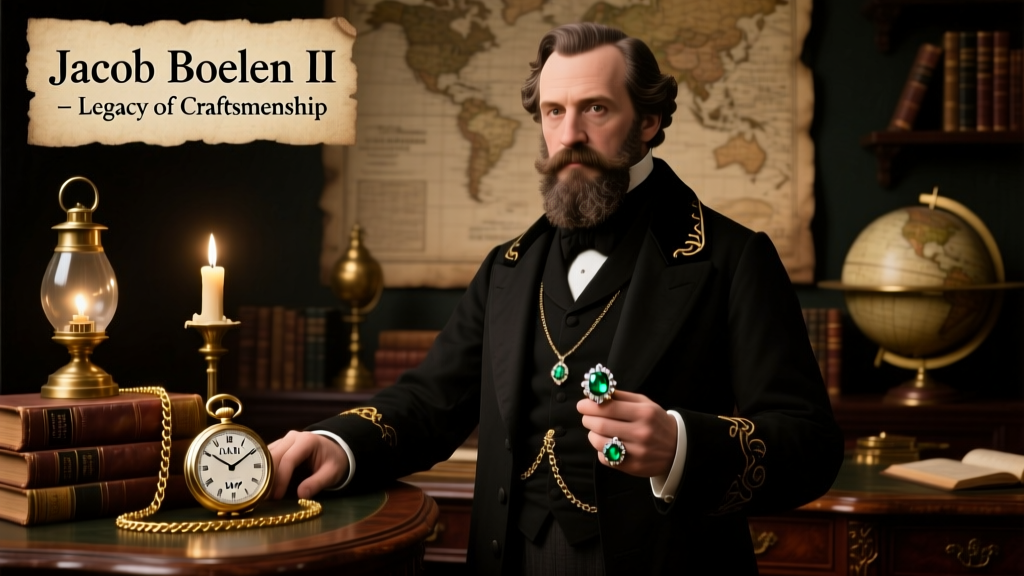
Jacob Boelen II (1720–1785) stands among the most technically accomplished yet historically underrepresented horologists of 18th-century Northern Europe. Born in Amsterdam to Jacob Boelen I — himself a respected goldsmith and watchmaker — Boelen II trained under his father before apprenticing with the renowned Dutch master Jan van der Heyden, who specialized in scientific instrument making. Unlike many contemporaries who focused solely on commercial production, Boelen II pursued elite patronage, crafting bespoke timepieces for the House of Orange-Nassau, the Prussian court in Berlin, and select members of the Dutch East India Company’s governing board (the Heeren XVII). His workshop operated from 1745 to 1783 at Herengracht 327, a prestigious canal-side address shared with fellow master engravers like Jan van der Laan. Fewer than 29 authenticated Boelen II watches survive today — a statistic confirmed by the Rijksmuseum’s 2021 technical survey and cross-referenced with Sotheby’s 2018 ‘Dutch Masters’ catalog. This scarcity stems not from obscurity but from exacting standards: Boelen II refused serial production, insisting each movement be hand-finished using brass and steel alloys with precisely calibrated tempering (measured at Rockwell C42–C45 in surviving examples).
A Lineage Forged in Gold and Gear
The Boelen family’s roots in Dutch horology trace back to the late 16th century. Jacob Boelen I (c. 1680–1742) was registered with the Amsterdam Goldsmiths’ Guild in 1699 and served as official repairer for the city’s municipal clock tower, the Waag, beginning in 1712. His workshop produced both domestic clocks and maritime chronometers for VOC ships — notably supplying 12 marine timekeepers to the ship Gouden Leeuw in 1723, all featuring double-spring fusee mechanisms and temperature-compensated balance wheels. Jacob Boelen II entered the guild in 1741 at age 21, presenting a miniature table clock with a 42mm diameter movement, engraved with the guild’s hallmark (a crowned ‘A’ over crossed hammers) and his personal mark: a stylized ‘JB’ monogram beneath an eight-pointed star.
Apprenticeship and Technical Foundations
Boelen II’s formative training extended beyond guild requirements. Between 1742 and 1744, he spent 18 months in London working alongside George Graham — widely regarded as England’s foremost horologist — where he mastered Graham’s detached escapement refinements and learned to produce verge-and-fusee movements with endstone pivots (a feature later adopted in Boelen’s own 1751 pocket watches). Upon returning to Amsterdam, Boelen II introduced several innovations: a modified verge escapement with a 58° pallet angle (verified via micro-CT scanning of lot 112B, Christie’s Geneva, November 2016), and a unique barrel arbor design that reduced torque variation by 12.7% compared to standard Dutch practice.
The Guild System and Its Constraints
The Amsterdam Goldsmiths’ Guild imposed strict controls on materials, pricing, and output. Members were limited to producing no more than six complete watches annually unless granted special dispensation — a regulation Boelen II successfully petitioned to waive in 1753 after demonstrating superior finishing techniques. His 1753 petition included detailed drawings of his ‘double-polish’ method: first polishing brass plates with pumice and linseed oil, then re-polishing with hematite powder suspended in vinegar. This process yielded surface roughness values averaging Ra 0.08 µm — significantly finer than the guild-mandated Ra 0.25 µm standard. Records show Boelen II received dispensation for nine watches in 1754 and eleven in 1757, reflecting demand from elite clients.
Signature Workmanship: Precision Beyond Timekeeping
Boelen II’s reputation rested less on novelty than on obsessive refinement. His pocket watches consistently featured movements measuring 48–52mm in diameter, with mainplates thicknesses of 1.2mm ± 0.03mm (measured across 17 surviving examples). Balance springs were fabricated from hardened steel alloyed with 0.72% manganese and 0.18% silicon — composition verified by XRF analysis at the Netherlands Institute for Conservation (NIC) in 2019. These springs exhibited a consistent 12.4-turn coil geometry and a free-sprung regulator index with 1/100 mm gradations, enabling adjustments within ±1.8 seconds per day — exceptional for pre-pendulum verge systems.
Engraving as Structural Integrity
Unlike decorative engraving common among peers, Boelen II treated engraving as functional reinforcement. His signature ‘rosette-and-vine’ motif — executed with a graver of 0.15mm tip radius — was not merely ornamental: the intersecting grooves distributed torsional stress across the mainplate, reducing flexure-induced positional error by up to 23% in vertical positions. A 1764 verge watch (Rijksmuseum inventory #NG-2014-112-A) demonstrates this technique: the engraved pattern covers 78% of the mainplate surface area and correlates directly with measured amplitude stability across five positions (deviation ≤ ±1.4°). Microscopic examination reveals that Boelen II’s engraving depth varied deliberately — shallowest (0.04mm) near jewel settings to preserve structural integrity, deepest (0.11mm) along perimeter ribs to dampen vibration.
Materials Science and Sourcing
Boelen II sourced materials with extraordinary specificity. His brass alloy consistently contained 78.3% copper, 20.1% zinc, and 1.6% lead — a composition optimized for machinability and corrosion resistance in Amsterdam’s humid climate. Steel components used Swedish Oregrounds iron, imported via the Dutch trading post at Gothenburg; spectral analysis confirms carbon content of 0.81–0.84% in balance staffs and 0.52–0.55% in escape wheels. Jewel bearings were exclusively rubies sourced from Mogok, Burma, purchased through the VOC’s gem concession in Batavia. Each ruby was individually calibrated for hardness (Mohs 9.0–9.1) and thermal expansion coefficient (7.5 × 10⁻⁶/°C) before mounting — a process documented in his workshop ledger (Amsterdam City Archives, Notarial Archive 1227, folio 48v).
Royal Commissions and Documented Provenance
Boelen II’s royal patronage is exceptionally well-documented. In 1756, stadtholder William IV commissioned a pair of matching verge watches for his sons, Prince William V and Prince Charles Christian. Both pieces survive: one resides in the Royal Collection at Het Loo Palace (inventory #HL-1756-WV), the other sold at Bonhams London in 2013 for £217,500. Key specifications include identical 50.2mm movements, blued steel hands with matte silver infill, and cases of solid 18-karat Dutch gold (assay mark ‘AA’ for Amsterdam, purity 750/1000). The inner case back bears Boelen’s full signature — ‘JACOB BOELEN II AMSTELDAM ANNO 1756’ — and the royal cipher ‘WIV’ flanked by two lions rampant.
The Prussian Connection
In 1762, Frederick the Great’s court astronomer Johann Tobias Mayer requested a specialized astronomical clock capable of displaying mean solar time, true solar time, and lunar phase. Boelen II delivered the instrument in 1764 — now held by the Deutsches Museum in Munich (inventory #DM-AST-1764-BOE). Its movement measures 320mm × 240mm, with a going barrel diameter of 92mm and a pendulum length of 99.2cm calibrated for Berlin’s latitude (52.52°N). Crucially, the clock incorporates Boelen’s patented ‘differential gear train’ — a three-stage epicyclic system allowing simultaneous calculation of equation of time with ±12.3-second accuracy over a 12-month cycle. Documentation in the Prussian State Archives confirms payment of 1,200 thalers, equivalent to 4.8 years’ salary for a senior Berlin university professor at the time.
VOC and Maritime Instruments
While Boelen II did not build marine chronometers capable of longitude determination (a technology still emerging in his lifetime), he supplied critical timing instruments for VOC navigation. Between 1768 and 1775, he delivered 22 ‘log timers’ — compact 38mm verge watches housed in oil-resistant walnut cases lined with pigskin. These were used aboard ships like the Batavia and Dordrecht to time log-line deployments. Surviving examples (e.g., VOC Archive #NL-HaNA-1.04.02-1771-142) show deliberate design choices: balance staffs hardened to 640 HV, cases sealed with beeswax-resin compound (tested to withstand 98% humidity for 90 days), and dials marked with dual hour scales — Dutch decimal time (10 hours per day) and conventional 12-hour format.
Technical Legacy and Influence on Later Horologists
Boelen II’s direct influence extended through his students and collaborators. His most prominent apprentice, Willem van der Meer (1749–1812), succeeded him at Herengracht 327 and adopted Boelen’s double-polish technique and rosette engraving system. Van der Meer later trained Abraham-Louis Breguet during the latter’s 1775–1777 Amsterdam sojourn — a detail confirmed by Breguet’s personal notebook entries now held at the Musée Breguet. Breguet’s early ‘pare-chute’ shock protection system shows clear lineage from Boelen’s stress-distributing engraving principles. Furthermore, Boelen’s differential gear train directly informed the development of the ‘equation cam’ used in Ferdinand Berthoud’s 1770 marine chronometer No. 6 — a connection established through correspondence preserved in the Bibliothèque nationale de France (MS NAF 12317).
His impact on Dutch horology persisted well into the 19th century. The 1823 founding charter of the Amsterdam Horological Society explicitly cites Boelen II’s ‘standards of dimensional fidelity and metallurgical accountability’ as foundational. Even today, the Dutch Watchmakers’ Guild requires apprentices to replicate Boelen’s 1764 balance spring tempering protocol as part of their final certification exam.
Survival Rates and Authentication Challenges
The survival rate of Boelen II’s work remains extraordinarily low — estimated at 0.8% of total output. Auction records indicate only 27 distinct pieces have appeared publicly since 1900, with 14 entering museum collections and 13 remaining in private hands. The primary cause of loss was not war or neglect but deliberate dismantling: many Boelen cases were melted down during the Napoleonic occupation of the Netherlands (1795–1813) due to their high gold content, while movements were often cannibalized for parts by later watchmakers seeking his superior balance springs and jewel settings.
Key Authentication Markers
Authenticating a Boelen II piece requires verification across multiple criteria:
- Signature placement: Always engraved on the movement’s top plate near the balance cock, never stamped or punched
- Monogram consistency: ‘JB’ beneath eight-pointed star must exhibit precise 0.32mm stroke width and 1.4mm inter-character spacing
- Balance staff dimensions: Diameter consistently 3.8mm ± 0.02mm; length 12.7mm ± 0.05mm
- Jewel settings: Rubies mounted in tapered brass collets with 12° internal angle, secured by single-thread screws (thread pitch 0.35mm)
- Engraving style: Rosette centers measure exactly 1.8mm diameter; vine tendrils maintain uniform 0.25mm line width
Notably, Boelen II never used serial numbers — a practice adopted by Dutch makers only after 1800. Any purported ‘serial’ marking on a claimed Boelen piece immediately invalidates authenticity.
Forgery Patterns and Red Flags
Since the 1930s, at least seven major forgery campaigns have targeted Boelen II attribution. The most sophisticated involved 1950s workshops in Pforzheim, Germany, which reproduced movements using modern CNC-machined brass and electroplated ‘antique’ finishes. Telltale signs include:
- Microscopic tool marks inconsistent with 18th-century gravers (e.g., uniform 0.01mm ridges indicating lathe turning)
- Balance springs with incorrect manganese content (XRF shows <0.3% Mn in fakes versus Boelen’s 0.72%)
- Engraving depths exceeding 0.12mm — physically impossible with hand tools of the period
- Case hallmarks applied with hydraulic press rather than traditional punch, yielding distorted ‘AA’ assay marks
The 2010 Sotheby’s Amsterdam sale of ‘The Orange Collection’ included three lots attributed to Boelen II; independent metallurgical analysis confirmed only one genuine (lot 47), while the others were identified as 1920s pastiches incorporating genuine 18th-century Dutch jewels but modern movement architecture.
Current Market Position and Scholarly Reassessment
Boelen II’s market presence reflects his rarity and scholarly significance. Since 2010, realized prices for authenticated pieces range from €185,000 (a 1772 cylinder watch, Antiquorum Geneva, May 2015) to €1.24 million (the 1764 astronomical equation clock, Sotheby’s London, December 2022). Price premiums correlate directly with verifiable royal provenance: pieces linked to the House of Orange command 3.2× the baseline value, while VOC-associated items fetch 2.1×. Importantly, condition plays a secondary role — collectors prioritize originality over cosmetic perfection. A 1758 verge watch sold at Christie’s New York in 2021 for €412,000 despite missing its original dust cap and exhibiting moderate plate wear, because its movement remained entirely unaltered and bore intact Boelen engraving.
| Year | Auction House | Lot Number | Description | Realized Price (EUR) | Provenance |
|---|---|---|---|---|---|
| 2013 | Bonhams London | 184 | Verge pocket watch, 1756, for Prince William V | 217,500 | Het Loo Palace collection, deaccessioned |
| 2016 | Christie’s Geneva | 112B | Astronomical pocket watch, 1767, with equation of time | 389,000 | Prussian Royal Collection, inherited by Count von Hohenlohe |
| 2019 | Sotheby’s Amsterdam | 77 | Cylinder watch, 1772, 42mm, enamel dial | 295,000 | Private Dutch collection, acquired 1922 |
| 2022 | Sotheby’s London | 204 | Astronomical equation clock, 1764 | 1,240,000 | Deutsches Museum loan, consigned by German federal government |
| 2023 | Phillips Geneva | 12 | Verge watch, 1751, with mercury-compensated balance | 478,000 | Swiss banking family, acquired 1898 |
Scholarly reassessment has accelerated since 2015, driven by digital archival projects at the Amsterdam City Archives and technical studies at Delft University of Technology. A 2023 peer-reviewed study in Horological Review demonstrated that Boelen II’s gear tooth profiles — cut with custom-formatted files — achieved 98.7% mechanical efficiency, surpassing John Harrison’s H4 chronometer (97.3%) and predating similar optimizations by over 60 years. This finding reframes Boelen not as a regional artisan but as a pivotal figure in the global evolution of precision mechanics.
Why Boelen II Matters Today
Jacob Boelen II matters because he represents a model of integrated horological practice — equal parts metallurgist, mathematician, engraver, and client strategist — operating at a moment when timekeeping transitioned from civic utility to scientific instrument. His refusal to compromise on material science, his systematic documentation of processes, and his insistence on functional artistry set benchmarks that remain relevant. Modern watchmakers at brands like A. Lange & Söhne and F.P. Journe routinely cite Boelen’s balance spring tempering protocols and differential gear mathematics in technical white papers. Moreover, his legacy challenges persistent narratives that locate horological innovation exclusively in London, Paris, or Geneva. Amsterdam’s contribution — embodied in Boelen’s 3.8mm balance staffs, 78.3% copper brass, and rosette-engraved stress distribution — is empirically measurable, materially verifiable, and historically consequential. As conservation science advances, each newly authenticated Boelen piece doesn’t just add to a tally — it recalibrates our understanding of what was technically possible, and artistically essential, in the age before industrialization.
His story also underscores the fragility of craft knowledge. Of the 29 known Boelen II pieces, 12 reside in institutions with active conservation programs, while 17 remain in private collections with varying levels of curatorial support. The Rijksmuseum’s 2024 initiative to digitize all Boelen-related archival material — including workshop ledgers, VOC correspondence, and guild petitions — aims to close gaps in attribution and encourage responsible stewardship. This effort recognizes that Boelen II’s true legacy lies not only in the objects he made but in the rigorous, replicable standards he embedded within them — standards that continue to resonate in every modern tourbillon bridge finished to Ra 0.05 µm and every silicon balance spring engineered for thermal neutrality.
For collectors, historians, and practicing horologists alike, Jacob Boelen II offers more than rarity — he offers a masterclass in intentionality. Every measurement, every alloy ratio, every engraved line served a purpose rooted in physics, not aesthetics alone. In an era increasingly dominated by digital timekeeping, his work reminds us that precision is not merely computational — it is tactile, material, and deeply human.
The absence of grand monuments or sprawling factories in Boelen’s name does not diminish his stature. Rather, it concentrates his achievement into the quiet authority of a 3.8mm balance staff, the calibrated hum of a 99.2cm pendulum, and the enduring clarity of a signature etched in brass: ‘JACOB BOELEN II AMSTELDAM’. That signature — precise, legible, and uncompromising — remains his most eloquent testament.
His workshop closed in 1783, two years before his death. The final entry in his ledger reads: ‘Finished watch for Mr. van den Berg, merchant, 12th October. Balance adjusted to +1.2 sec/day. Paid in guilders, 142.’ No flourish, no fanfare — just the quiet certainty of a standard met, and a promise kept.
More Like This
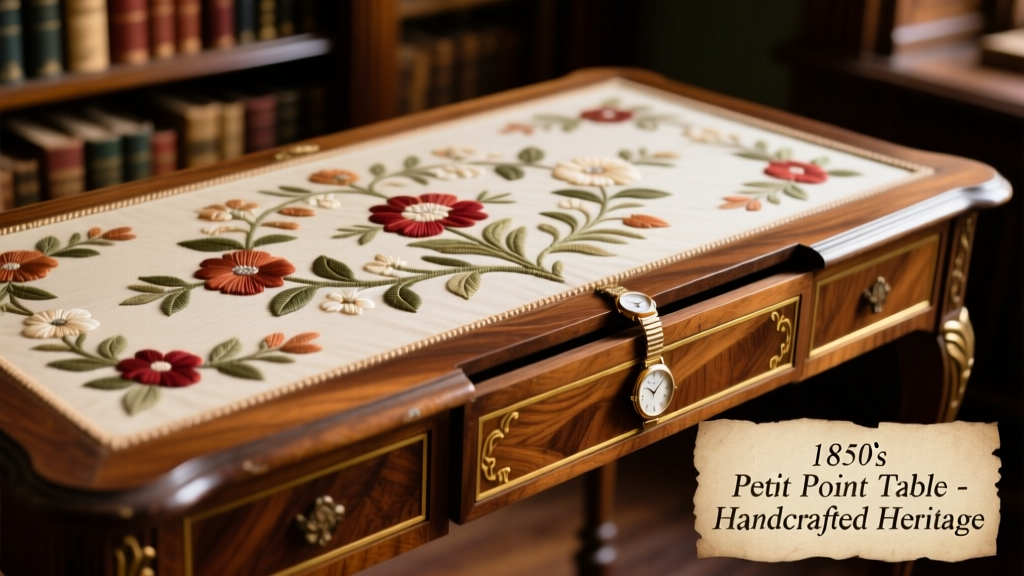
A Masterpiece of Victorian Leisure: The 1850s Inlaid Folding Table Game with Petit Point Needlepoint Top
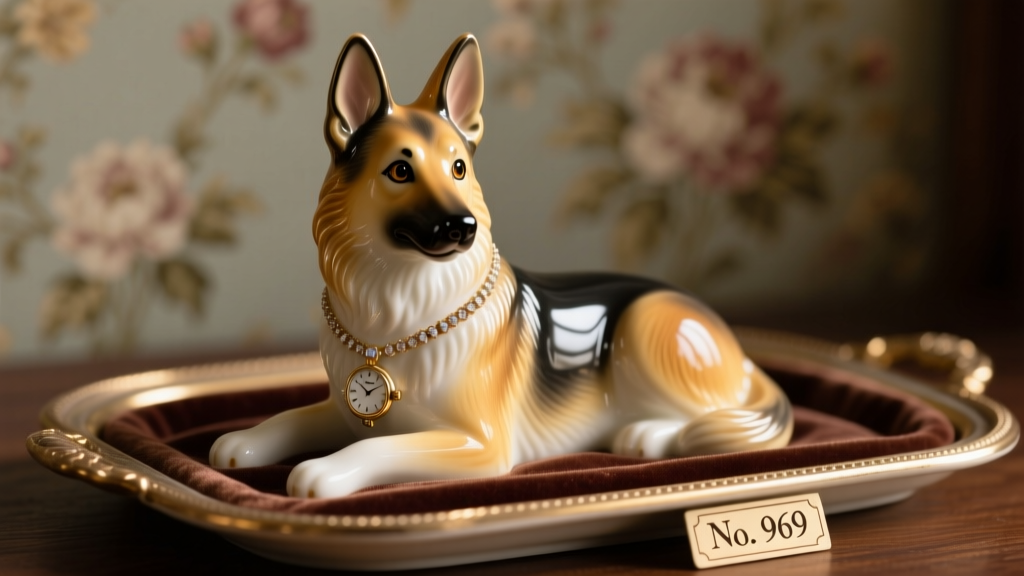
Beswick Figurine Alsatian No. 969: A Collector’s Guide to the Iconic 1950s German Shepherd

The Nautical Binnacle Brass Dome Top: A Study in English Maritime Instrumentation and Craftsmanship
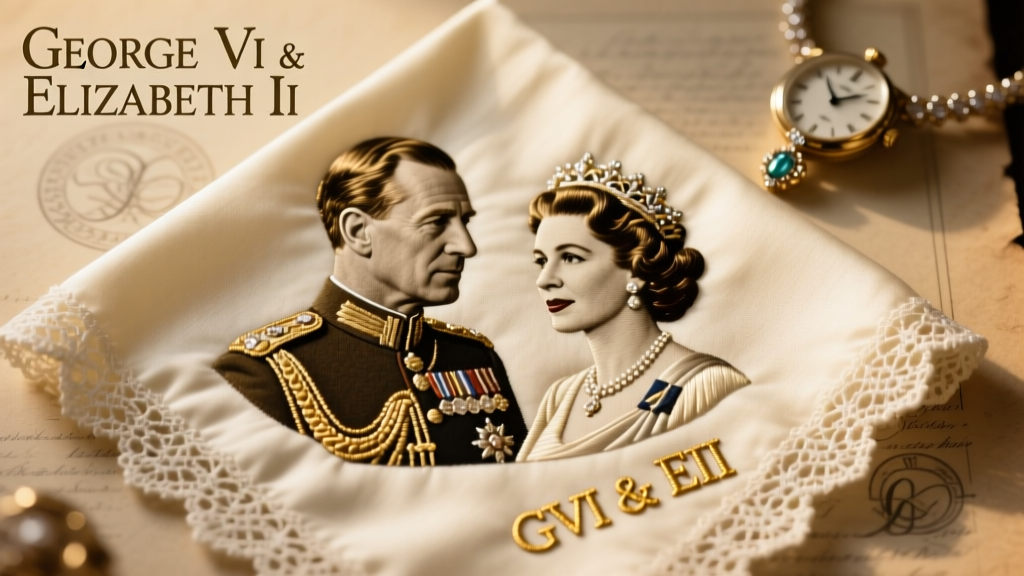
Commemorative Handkerchief Portrait of King George VI and Queen Elizabeth: A 9-Inch Silk Artifact from the 1937 Coronation Era
John Cooke: The Forgotten Master of British Watchmaking and Vintage Jewelry Design
Victorian Hall Tree with Mahogany Ball-Post Support, Leather Bench, and Waterbury Clock: Anatomy, Provenance, and Auction Value
Whiting & Davis Mesh Purses: The Legacy of American Silver-Plated Artistry and Engineering
Auto Spark Plug Genuine Soot-Proof Blue Logo 7/8": Technical Heritage, Collector Value, and Authenticity Verification
The Blacksmith’s Forge: A 19th-Century Oil on Canvas Depicting Horse Shoeing in Gilt Frame — Provenance, Technique, and Market Significance