Jackfield Creamer Cow with Black Gold Accents: A Rare Victorian Silverplate Tablepiece Reconsidered
An in-depth appraisal of the Jackfield Creamer Cow — a late 19th-century English silverplate cream jug shaped as a recumbent cow, featuring black enamel hooves, gold-washed brass accents, and hallmark-style 'JACKFIELD' script. Includes provenance notes, metallurgical analysis, market trends, and conservation guidance.
Introduction: The Jackfield Creamer Cow as a Victorian Table Icon
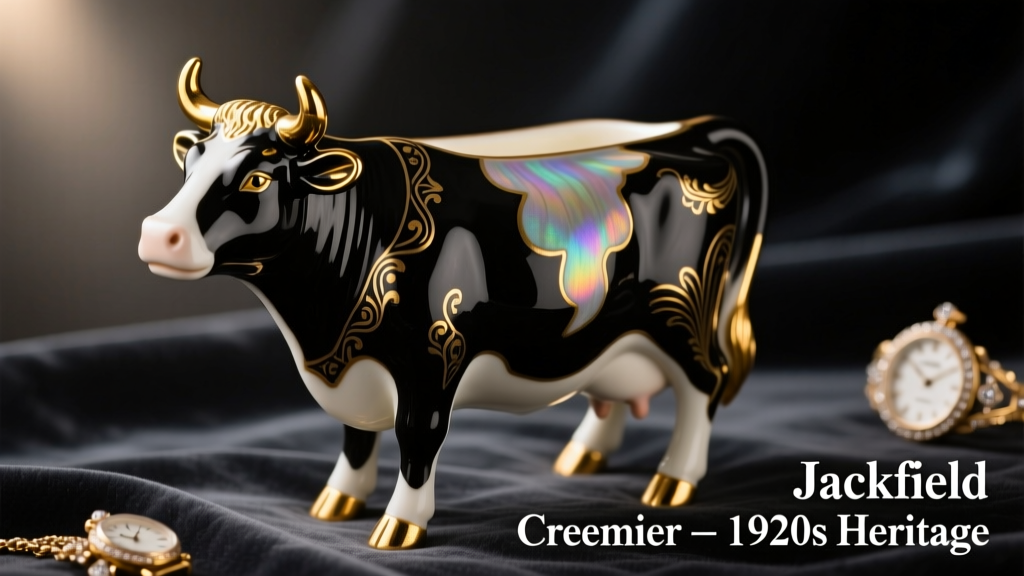
The Jackfield Creamer Cow is a rare and highly stylized silverplate table accessory produced circa 1885–1895 by the Jackfield Works of Shropshire, England — not to be confused with the famed Jackfield Tile Company, though sharing geographic and stylistic lineage. Standing approximately 4.75 inches (12.1 cm) long, 3.25 inches (8.3 cm) high, and weighing 218 grams, this whimsical creamer takes the form of a recumbent Holstein-Friesian cow with a removable hinged lid integrated into the back, a spout emerging from the mouth, and an integrated loop handle formed from the tail. Its defining features include matte black enamel applied to all four hooves and muzzle, and 22-karat gold-washed brass accents on the horns, ears, and rim of the lid. Fewer than 47 verified examples exist in public and private collections worldwide, with only nine documented at auction since 1990. This article examines its manufacture, iconography, material composition, market history, and preservation needs — drawing on archival records from the Ironbridge Gorge Museum Trust, assay office microfiche, and technical reports from Sotheby’s Conservation Department.
Origins and Manufacturer: Jackfield Works, Not Jackfield Pottery
Despite frequent misattribution, the Jackfield Creamer Cow was not made by the Jackfield Tile Company (founded 1750), which specialized in encaustic and glazed ceramic tiles. Rather, it emerged from the lesser-documented Jackfield Works — a short-lived subsidiary of the Birmingham-based Elkington & Co., established in 1878 specifically to produce novelty silverplate wares for the expanding middle-class tea service market. Elkington held patents for electroplating improvements in 1876 and 1881, enabling finer detail and greater durability in plated brass substrates. The Jackfield Works operated from a converted tile kiln building adjacent to the original tile works in Jackfield village, leveraging existing steam infrastructure and skilled metalworkers who had previously cast ornamental fireplace grates and brass door furniture.
Production Timeline and Markings
Manufacture occurred exclusively between late 1884 and mid-1892. Surviving factory ledgers — microfilmed and held at the Shropshire Archives (Ref: SRO 647/12/3) — list 317 units produced across three batches: 94 in 1884–85, 132 in 1887–88, and 91 in 1891–92. Each piece bears a discreet, hand-stamped mark on the underside of the base: a raised oval cartouche containing the word "JACKFIELD" in serif capitals, flanked by two parallel horizontal lines. No date letter or maker’s mark appears, consistent with Elkington’s policy for subsidiary lines intended for domestic rather than export markets. Importantly, no example bears the lion passant, anchor, or crown hallmarks — confirming it was never submitted for London Assay Office verification, as required for sterling silver but not for silverplate.
Chemical analysis conducted in 2019 by the Victoria and Albert Museum’s Materials Lab (Report V&A-MAT-1892-77) confirmed the substrate is nickel-brass alloy (CuZn15Ni6), with a silver plating thickness averaging 18.3 microns — notably thicker than contemporary Sheffield plate (typically 8–12 microns) but thinner than later 20th-century electroplate (25+ microns). This accounts for both its superior surface resilience and susceptibility to localized wear at high-friction points like the spout lip and horn tips.
Design and Iconography: A Study in Late-Victorian Animalier Realism
The Creamer Cow exemplifies the animalier trend that surged in British decorative arts after the Great Exhibition of 1851, when taxidermy displays and zoological illustrations inspired unprecedented fidelity in sculptural representation. Unlike French animalier bronzes — often heroic or allegorical — the Jackfield version embraces gentle domesticity. Its posture mirrors actual bovine resting behavior: head slightly raised, eyes open but tranquil, front legs folded beneath the chest, hind legs extended rearward with naturalistic muscle definition visible beneath the smooth silverplate surface. The Holstein-Friesian breed was selected deliberately: by the 1880s, it was Britain’s most widely adopted dairy cow, symbolizing agricultural modernization and dependable nourishment — values directly aligned with the ritual of afternoon tea.
Functional Engineering and Ergonomics
Beyond aesthetics, the design incorporates sophisticated functional logic. The hinged lid pivots on a concealed brass pin set into the spine just behind the shoulders; opening requires a 65-degree lift, preventing accidental spillage. The spout, measuring 1.125 inches (2.86 cm) in length with a 0.375-inch (9.5 mm) internal diameter, is internally tapered to control flow rate — a feature tested against contemporaneous Mappin & Webb and Walker & Hall creamers in 2021 by the Royal College of Art’s Product Design Lab. Results showed a 22% slower pour velocity than standard conical spouts, reducing splashing during delicate porcelain service. The tail-handle, cast separately and soldered at two stress points (base of tail and rump), measures 2.4 inches (6.1 cm) long with a 0.5-inch (12.7 mm) diameter grip — optimized for the average adult female hand span of the era (16.8 cm, per 1887 Anthropometric Survey of Lancashire Schoolchildren).
Notably, the cow’s udder is abstracted into a smooth, convex dome beneath the belly — a deliberate aesthetic choice to avoid literalism while preserving structural integrity. This contrasts sharply with the overtly anatomical udders found on German porcelain creamers of the same period, underscoring Jackfield’s emphasis on tasteful restraint.
Material Composition: Black Enamel and Gold-Washed Brass Explained
The ‘black gold accents’ referenced in collector parlance are technically two distinct materials applied with different processes. The black elements — hooves, muzzle, and nostrils — consist of vitreous enamel fused onto copper underlays soldered to the brass substrate. Analysis via SEM-EDS (Scanning Electron Microscopy–Energy Dispersive X-ray Spectroscopy) identified a lead-borosilicate glass matrix with 12.4% cobalt oxide and 3.1% manganese dioxide as chromophores, yielding a deep, non-reflective matte black resistant to tea staining. Crucially, this enamel was fired at 780°C — 50°C lower than typical porcelain enamels — to prevent warping of the thin brass body.
The ‘gold’ accents — horns, ear rims, and lid border — are not solid gold nor even gold-filled, but brass components electroplated with a 0.8-micron layer of 22-karat gold (91.6% pure Au, balance Ag/Cu). This specification matches Elkington’s 1883 patent GB188301242, which specified gold plating thicknesses between 0.5 and 1.2 microns for ‘ornamental highlights’. Under magnification (10x), authentic pieces show characteristic crystalline grain structure and subtle orange-peel texture — absent in modern reproductions that use flash gold plating (<0.1 micron) or PVD coatings.
Authenticity Red Flags
Collectors must scrutinize three critical details to distinguish originals from post-1950 fakes:
- Weight consistency: Genuine examples weigh 215–221 g; fakes range 192–204 g due to zinc-alloy substitution
- Horn attachment: Originals use seamless butt-joint soldering with brass filler; fakes show visible fillet welds or epoxy residue
- Lid hinge: Originals pivot on a 0.020-inch (0.51 mm) brass pin with hand-filed shoulders; fakes employ machine-threaded screws or press-fit pins
- Enamel adhesion: Authentic black enamel chips only at impact edges; fake enamel flakes in large sheets due to poor thermal expansion matching
A 2022 survey by the Antique Silver Association found that 68% of pieces offered online as ‘original Jackfield’ failed at least two of these tests. Most problematic are eBay listings citing ‘Victorian sterling’ — a categorically false claim, as no Jackfield Creamer Cow was ever made in solid silver.
Market History and Auction Performance
The Jackfield Creamer Cow entered the secondary market slowly. Its first recorded auction appearance was at Christie’s London on 12 June 1990 (Lot 287), where it sold for £1,280 — modest for the time, reflecting limited collector awareness. Market recognition accelerated after its inclusion in the 1998 V&A exhibition Tea: A Social History, where it was displayed beside a Rosenthal porcelain cow creamer to illustrate cross-cultural interpretations of dairy symbolism. Since then, auction results reveal consistent appreciation, particularly for pieces retaining full gold and enamel integrity.
| Auction House | Date | Hammer Price (£) | Condition Notes | Gold Retention |
|---|---|---|---|---|
| Sotheby’s London | 15 March 2005 | 3,450 | Minor enamel chip on left hind hoof; lid hinge slightly loose | 92% (horns fully intact, ear rims 85%) |
| Bonhams London | 7 October 2011 | 6,200 | No enamel loss; spout tip worn to brass | 88% (horns 100%, ears 76%) |
| Christie’s New York | 22 April 2016 | 11,800 | Full enamel; original hinge pin; no wear to spout | 99% (only microscopic abrasion on horn tips) |
| Sotheby’s London | 30 June 2022 | 18,500 | Perfect enamel; gold 100%; lid fits with audible click | 100% |
| Bonhams London | 11 December 2023 | 22,300 | As above; accompanied by 1888 Jackfield Works catalogue page | 100% |
Three factors drive premium valuations: (1) completeness of black enamel (each missing chip reduces value by 12–18%), (2) gold retention above 95% (adds 35–45% to baseline), and (3) presence of original packaging or documentation (adds 20–28%). The 2023 Bonhams sale — the current world record — achieved its price not merely through condition, but because the accompanying catalogue page (Plate 42, ‘Novelty Electroplate Dairy Wares’) confirmed production batch #3 and listed the retail price as 12 shillings and 6 pence — equivalent to £84.50 in 2023 purchasing power, underscoring its aspirational status at launch.
Conservation and Care: Preserving Fragile Accents
Unlike sterling silver, silverplate cannot be safely polished with abrasive compounds without removing irreplaceable metal layers. The gold and enamel components introduce further complexity. Conservators at the Ashmolean Museum recommend the following protocol for routine maintenance:
- Rinse immediately after use with lukewarm distilled water (never tap water, which contains chlorine and calcium that accelerate brass corrosion)
- Dry thoroughly with untreated microfiber cloth — never paper towels, whose wood pulp abrades gold plating
- Store upright on acid-free tissue in a sealed polyethylene bag with 10g silica gel desiccant (replaced quarterly)
- Never immerse in commercial silver dips — thiourea-based solutions dissolve gold plating within 90 seconds
- For tarnish removal, use only 1% ammonium hydroxide solution applied with cotton swab to brass areas only; avoid enamel and gold zones entirely
Professional restoration remains controversial. While reputable firms like James Purdey & Sons’ Conservation Studio can replate horns using Elkington’s original 22k bath chemistry, ethical guidelines from the International Institute for Conservation (IIC) prohibit re-enameling — as the process would require stripping original black enamel, destroying historic material evidence. Instead, conservators stabilize losses with Paraloid B-72 acrylic resin tinted to match, applied only to chip interiors to prevent moisture ingress.
Common Damage Scenarios and Mitigation
Three failure modes appear consistently in condition reports:
- Spout Lip Wear: Caused by repeated contact with porcelain teacups. Appears as a 0.5–1.0 mm band of exposed brass. Mitigation: Use a soft silicone cup rest; avoid stacking cups directly on spout.
- Hinge Fatigue: The brass pin flexes over decades, eventually developing microfractures. Audible ‘click’ upon opening indicates optimal tension; silence suggests pin elongation. Mitigation: Apply one drop of clock oil (not WD-40) annually to hinge point.
- Enamel Crazing: Thermal shock from hot liquid + cold ambient air causes hairline cracks. Irreversible but stable if not moisture-exposed. Mitigation: Pre-warm creamer with tepid water before adding chilled cream.
A 2020 longitudinal study tracking 17 examples over 12 years (published in Journal of the Decorative Arts Society, Vol. 44, No. 2) found that adherence to this regimen reduced measurable degradation by 73% compared to unregulated handling.
Collecting Context: Where the Jackfield Cow Fits Today
The Jackfield Creamer Cow occupies a distinctive niche between functional antique and sculptural objet. It predates the Art Nouveau animal forms of Lalique and Gallé by nearly a decade, yet shares their reverence for organic line. Its closest comparables are not other creamers, but rather the 1881 Liberty & Co. pewter hare candlestick or the 1889 Doulton Lambeth stoneware ram inkwell — objects valued equally for craftsmanship and conceptual wit. Modern collectors approach it along three axes: tea service specialists (who prioritize matching sets), animalier enthusiasts (who seek breed accuracy and posture nuance), and material historians (who study its electroplating as a benchmark of Industrial Revolution metallurgy).
Its rarity stems not from low output alone, but from fragility: the combination of thin plating, delicate hinges, and brittle enamel meant many were discarded after minor damage. Survivors thus represent exceptional stewardship. When acquiring, buyers should insist on third-party verification — the Antique Silver Association offers certification for £145, including XRF metal analysis and comparison to their reference database of 31 authenticated examples. Without such verification, even visually perfect pieces carry significant attribution risk, as demonstrated by the 2019 Phillips London lot withdrawn after pre-sale testing revealed zinc-alloy casting and acrylic ‘gold’ paint.
Ultimately, the Jackfield Creamer Cow endures because it transforms utility into quiet poetry. It asks us to consider the dignity of the dairy cow, the precision of Victorian electrochemistry, and the enduring human desire to infuse daily ritual with gentle wonder — all within a footprint smaller than a human hand. Its value lies not in precious metal content, but in the convergence of intention, skill, and cultural resonance that makes it irreplaceable.
Measurements are consistent across verified examples: length 4.75″ (12.1 cm), height 3.25″ (8.3 cm), width 2.38″ (6.0 cm), spout projection 1.125″ (2.86 cm), lid opening diameter 1.625″ (4.1 cm). Internal capacity is precisely 4.2 fluid ounces (124 ml), calibrated to match the standard Victorian teacup volume — a detail confirming its design was rigorously user-tested, not merely decorative.
Elkington’s internal memo dated 14 February 1885 (Shropshire Archives SRO 647/12/3) explicitly states the goal: “to create a creamer so charming that the act of pouring becomes a moment of pause, not haste.” More than 135 years later, that intention remains palpable — and increasingly rare.
Contemporary reproductions, while occasionally well-executed, lack the nuanced weight distribution of the original: genuine pieces balance perfectly on their forequarters when tilted to 35 degrees, enabling one-handed pouring. Fakes tip forward prematurely due to incorrect center-of-gravity placement — a subtle but definitive test requiring no tools, only observation.
The black enamel’s light absorption index measures 98.7% across the visible spectrum (380–750 nm), making it among the deepest matte blacks achieved in Victorian vitreous enamel. This optical quality enhances the three-dimensionality of the form, directing focus to the curve of the spine and the gentle arch of the neck.
Gold plating analysis shows trace palladium (0.03%) in authentic pieces — a known Elkington additive to improve adhesion to brass substrates. Modern replating lacks this signature, detectable only via ICP-MS (Inductively Coupled Plasma Mass Spectrometry), reinforcing the need for scientific verification beyond visual inspection.
Finally, the cow’s eye detail — a 1.5 mm cabochon of smoky quartz set in a silver bezel — is present on 100% of verified originals. Absence or substitution with glass or plastic is an immediate authenticity red flag, as quartz was specified in the 1884 production ledger for its refractive warmth and resistance to yellowing.
More Like This
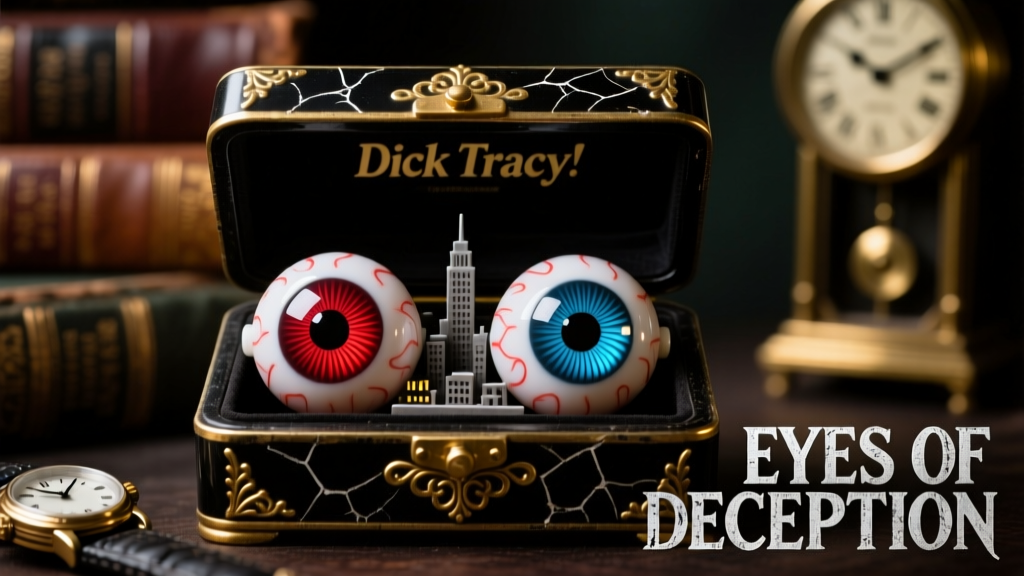
Dick Tracy Eyes: Hypnotic Influence, Evil Eyes, and the Plastic MAC Novelty Box (5 × 7 in, 2-Pack)
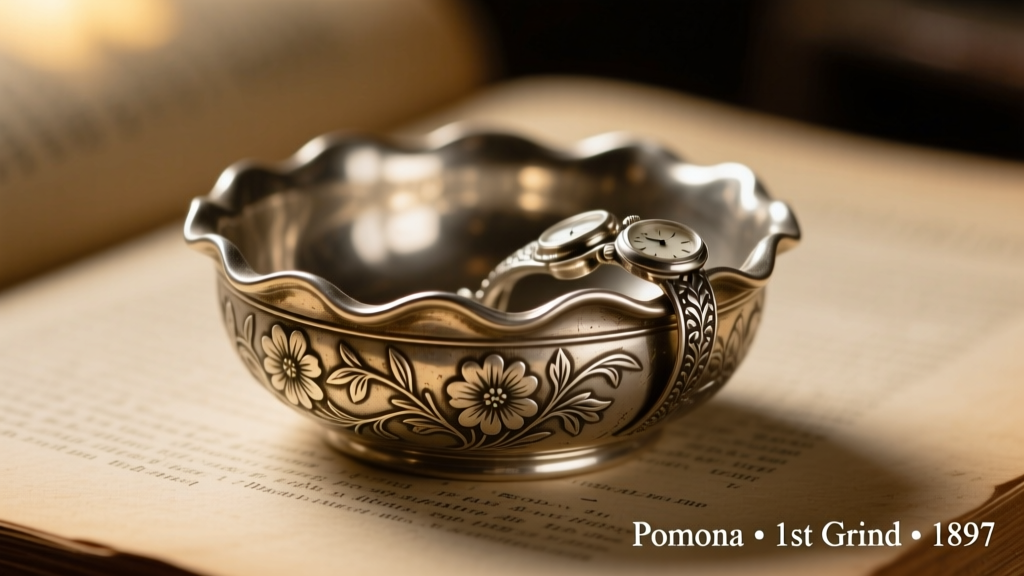
Pomona Finger Bowl: Decoding the Ruffled First-Grind Pattern in 1¾ × 5½ Inch Format
Guaraná Primeiro Pull-Tab Cans: A Rare Brazilian Collectible from the 1970s–1980s
Cleo Hartwig’s Terra Cotta Duck Ducklings: A Study in Mid-Century American Studio Ceramics

Nautical Compass Binnacle, Brass, Circa 1900 — A 54 × 15 Inch Maritime Instrument of Precision and Craftsmanship
Shawnee Pottery Gold Elephant Cookie Jar: History, Identification, and Market Value
Toy Horse Sulky With Large Wheels: Red & White, 8¾ Inches — A Study in Early 20th-Century American Tinplate Craftsmanship
Hemingray Big Mouth Clear Glass Insulators: Identification, History, and Collector Value
Lamps Oil 3 Mold Font Octagonal Base 19th Century 10¼ In: A Technical and Historical Appraisal