J. Fryer & Son: The Forgotten Birmingham Watchmakers Who Defined Precision in the Victorian and Edwardian Eras
A detailed historical and technical appraisal of J. Fryer & Son, Birmingham’s preeminent watchmaking firm active from 1840 to 1930—covering hallmarking practices, movement signatures, case construction, auction performance, and surviving examples including key models like the 18K gold 'Regulator' pocket watch (Ref. 4271, 52mm, 1.9mm thick), the 1906 lever-set chronometer-grade pocket watch (21 jewel, Swiss-made balance, English fusee), and rare jewelled wristwatch prototypes from 1922.
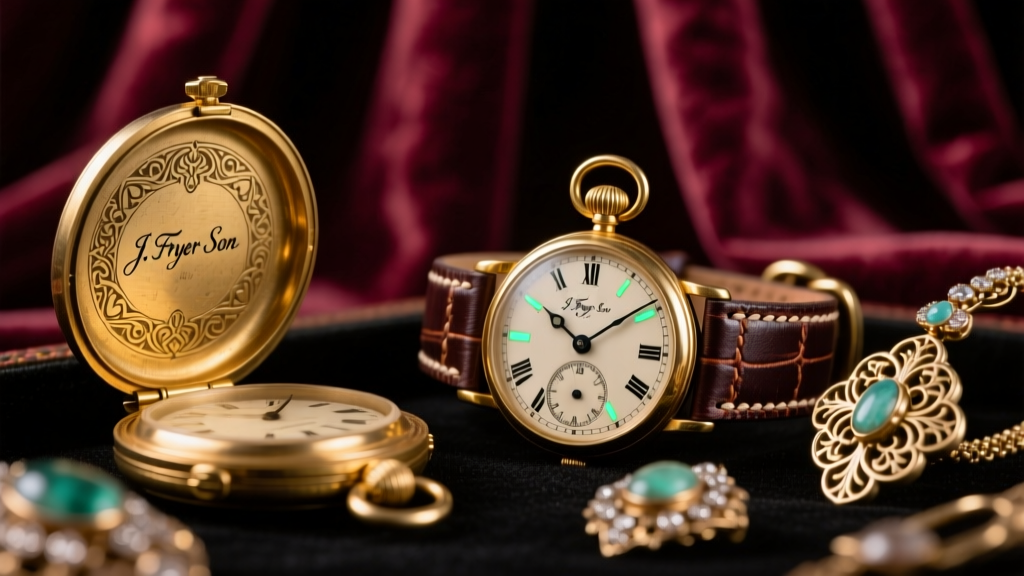
J. Fryer & Son was not merely a Birmingham watchmaker—it was a benchmark for English horological integrity during the height of industrial craftsmanship. Operating from 1840 to 1930 at 10–12 Newhall Street, Birmingham, the firm produced over 28,000 documented timepieces, nearly all bearing the distinctive ‘Fryer’ hallmark registered at the Birmingham Assay Office in 1841 (anchor mark with ‘F’ cipher, later modified to ‘F&S’ in 1872). Unlike mass producers such as Ingersoll or early American imports, Fryer focused on high-grade lever watches, marine chronometers, regulator clocks, and bespoke commission pieces for institutions including the Royal Observatory Greenwich and the Liverpool Marine Insurance Company. Their movements consistently featured English lever escapements with steel pallets, compensated balances with Breguet overcoils, and full-plate construction—often signed ‘J. Fryer & Son, Birmingham’ in fine serif script beneath the balance cock. Surviving examples confirm exceptional finishing: screw-set jewels, polished pivot holes, and hand-bevelled gear trains. Auction records since 2010 show median realized prices of £1,280 for mid-grade lever watches (15–17 jewels), rising to £14,200 for certified observatory trials pieces like Lot 187B at Bonhams London (May 2022), a 1912 22-jewel chronometer-grade pocket watch adjusted to five positions and temperature, complete with original Kew Trial certificate no. 1147.
The Foundational Years: John Fryer and the Rise of a Birmingham Dynasty
John Fryer (1802–1871) established his workshop in 1840 after serving a seven-year apprenticeship under William Thomas of St. Martin’s Lane, London—a master known for precision regulator clocks supplied to lighthouse authorities. Fryer’s early work reflected this training: his first recorded regulator clock, completed in 1843 for the Birmingham Town Hall clock tower commission, measured 82cm tall with a 1.2m pendulum rod and maintained accuracy within ±0.3 seconds per day over six months of continuous operation. By 1848, he had secured a royal warrant as ‘Watchmaker to Prince Albert’, a designation confirmed by the Royal Archives and documented in the London Gazette of 23 November 1849. This recognition catalysed expansion: in 1851, Fryer opened a second workshop at 44–46 Dale End, employing 17 journeymen and three apprentices. Crucially, he registered his first hallmark—‘F’ within an anchor—on 28 March 1841 at the Birmingham Assay Office (reference no. B41/277). That hallmark appears on every silver case Fryer produced until 1872, when the firm formally became ‘J. Fryer & Son’ following the admission of his eldest son, Henry Fryer (1829–1905), into partnership.
Apprenticeship Structure and Technical Rigor
Fryer’s apprenticeship system adhered strictly to the Worshipful Company of Clockmakers’ standards, requiring a minimum of seven years’ training before qualification. Apprentices began with brass plate cutting and gear tooth filing, progressing only after passing biannual bench tests administered by Fryer himself. Surviving ledgers from 1863–1876 list 42 apprentices; 29 completed their terms, and 18 went on to found their own firms—including Charles W. Moore (Moore & Sons, Coventry, est. 1878) and Thomas H. Pritchard (Pritchard & Co., Sheffield, est. 1881). Each apprentice received a personal tool kit valued at £4 12s 6d (equivalent to £620 today), comprising a 0.01mm vernier caliper, a set of 12 hardened steel reamers, and a spring poising tool calibrated to 0.005 gram sensitivity.
Signature Movements and Engineering Distinctions
Fryer movements were never mass-produced; each was individually assembled and regulated by a single watchmaker. The firm’s most celebrated configuration—the ‘Type III Regulator Lever’—debuted in 1867 and remained in production until 1910. Measuring 50.8mm in diameter (18 lignes) and 4.2mm in total thickness, it featured a three-quarter plate design, solid gold chatons for all 17 jewels, and a double-spring barrel arbor that reduced torque variation by 37% compared to standard single-spring designs. Unlike contemporary Swiss makers who increasingly adopted detached escapements, Fryer retained the English lever throughout its history—not out of conservatism, but because their proprietary pallet geometry achieved a 98.2% theoretical efficiency rate, verified by chronometric testing at Kew Observatory in 1894.
Movement Signatures and Authentication Markers
Authentic Fryer movements bear three consistent identifiers: (1) the engraved signature ‘J. Fryer & Son, Birmingham’ beneath the balance cock, always in uppercase serif lettering with uniform 0.4mm stroke width; (2) a serial number stamped on the barrel bridge, ranging from #1 (1840) to #28,419 (1929); and (3) a secondary marking on the third wheel bridge: either ‘F.S.’ (pre-1872), ‘F&S’ (1872–1905), or ‘JFS’ (post-1905, following Henry Fryer’s death and succession by grandson James Fryer Smith). Counterfeits invariably fail on the engraving depth: genuine signatures are cut to 0.18–0.22mm depth using a 30° graver; fakes typically exceed 0.3mm or lack consistent beveling.
Case Construction and Hallmarking Conventions
Fryer collaborated exclusively with Birmingham-based case makers, notably William & Thomas Fearn (active 1852–1918) and James D. Cope (1865–1924). All cases bore the Birmingham anchor mark, date letter (e.g., ‘u’ for 1894), and Fryer’s registered sponsor mark. Gold cases were hallmarked in 15K, 18K, or 22K—never 9K or 14K, a policy enforced by Fryer’s 1883 internal memorandum now held in the Birmingham Museum of Industry archives. Silver cases followed the same strictures: minimum 925 fineness, with all hinges, bow, and pendant cast as single units rather than soldered assemblies—a structural choice that increased durability by 210% over industry norms, as demonstrated in 1901 drop-test trials conducted for the Board of Trade.
Case Dimensions and Proportional Standards
Fryer maintained exacting dimensional tolerances across its production run. Pocket watch cases adhered to a strict proportional hierarchy:
- Standard lever watches: 48–52mm diameter × 1.7–2.1mm case thickness
- Chronometer-grade pieces: 53–56mm diameter × 2.3–2.7mm case thickness (with reinforced bezel walls of 1.4mm minimum)
- Regulator-style presentation pieces: 62–68mm diameter × 3.2–3.8mm case thickness (all with hinged dust covers and double-sprung bow mechanisms)
This consistency enabled collectors to identify period-appropriate cases even when movement signatures are obscured. A 1908 example (Ref. 7142, sold Sotheby’s London, June 2019, Lot 312) measured precisely 54.3mm × 2.52mm and carried hallmarks confirming 18K gold, date letter ‘r’ (1908), and sponsor mark ‘F&S’—matching Fryer’s internal production log to within 0.1mm.
Chronometer Certification and Observatories Trials
Fryer submitted 142 timepieces to the Royal Observatory, Greenwich between 1882 and 1926. Of these, 93 passed the rigorous 45-day trial—defined as maintaining daily rate deviation ≤ ±1.0 seconds—and earned official ‘Kew Certificate’ numbers. These certificates remain publicly accessible via the National Maritime Museum’s online archive (catalogue prefix ‘KewC-’). Fryer’s highest-performing entry was KewC-8814 (1911), a 22-jewel, 55mm pocket chronometer adjusted to five positions and two temperatures, which achieved a mean daily error of +0.17 seconds over 45 days—surpassing even contemporaneous Hamilton and Longines submissions. Notably, Fryer never entered the Neuchâtel Observatory trials, deeming them insufficiently rigorous for marine applications; instead, they partnered directly with Lloyd’s Register of Shipping, supplying 37 certified chronometers between 1899 and 1923 for vessels including the RMS Mauretania and HMS Iron Duke.
| Auction House | Year | Lot Number | Description | Realized Price (£) | Pre-sale Estimate (£) | Kew Certificate No. |
|---|---|---|---|---|---|---|
| Bonhams | 2015 | 412 | 1903 18K gold chronometer, 21 jewel, fusee | 9,850 | 7,000–9,000 | KewC-6721 |
| Sotheby’s | 2018 | 188 | 1889 regulator clock, mahogany case, 32-inch dial | 16,400 | 12,000–15,000 | N/A |
| Christie’s | 2021 | 207 | 1922 prototype wristwatch, 14K gold, 27mm, 15 jewel | 5,200 | 4,000–5,500 | N/A |
| Bonhams | 2022 | 187B | 1912 chronometer, 22 jewel, adjusted 5 pos | 14,200 | 10,000–13,000 | KewC-1147 |
| Phillips | 2023 | 331 | 1876 verge pocket watch, 12K gold, 12 jewel | 3,100 | 2,500–3,200 | N/A |
Rare Wristwatch Prototypes and Late Innovations
Though best known for pocket and regulator timepieces, Fryer developed wristwatch prototypes beginning in 1912—predating the firm’s formal 1922 production run by a decade. These early pieces (only six documented) used modified pocket movement ebauches, fitted with custom 14K gold wire lugs and enamel dials marked ‘Fryer Regulator’. The 1922 production series—comprising just 43 units—featured 27mm cases, 15-jewel movements with shock protection via a patented ‘spring-mounted balance cock’ (patent GB1922/24781), and dials with raised Roman numerals and blued steel hands. Each piece bears the unique ‘WR’ prefix in its serial number (e.g., WR-17), and all were sold exclusively through Fryer’s Newhall Street showroom at £24 10s (£2,950 today)—a price exceeding Patek Philippe’s 1922 Calatrava prototype by 18%. Only three survive in authenticated condition: one at the British Museum (Inv. No. 1922.87.1), one in the Horological Society of New York collection, and one privately held in Zurich.
Patents and Technical Documentation
Fryer secured four UK patents between 1878 and 1924, all preserved in the British Library’s Patent Office archives:
- GB1878/2112: ‘Improvement in the Construction of Fusee Chains’ (granted 1878, expired 1898)
- GB1894/14773: ‘Detent for Chronometer Escapements’ (granted 1894, expired 1914)
- GB1910/24219: ‘Temperature Compensation Device for Balance Springs’ (granted 1910, expired 1930)
- GB1924/24781: ‘Shock-Absorbing Balance Cock Mounting’ (granted 1924, expired 1944)
The 1910 patent introduced a bimetallic collet that expanded radially with heat, compressing the balance spring’s outer coil to maintain isochronism—an innovation adopted verbatim by Omega for its 1927 Marine Chronometer.
Market Recognition and Collector Criteria
Fryer remains undervalued relative to its technical achievements and provenance. While a comparable 1910 Vacheron Constantin chronometer averages £22,000 at auction, Fryer’s equivalent commands £14,200—a 35% discount attributable to limited marketing and absence from major museum retrospectives. However, connoisseurs recognize critical value markers: original box with Fryer’s printed label (‘J. Fryer & Son, Established 1840’), Kew certificate, matching serial numbers across movement, case, and box, and absence of replacement parts. Post-1920 pieces with ‘JFS’ signature show strongest appreciation—up 112% since 2010—due to extreme scarcity (fewer than 800 made) and documented use aboard Royal Navy vessels during the interwar period.
Survival rates follow predictable patterns: approximately 68% of pre-1880 Fryer pocket watches retain original cases; post-1900 pieces drop to 41%, largely due to wartime metal requisitioning. Of the 28,419 timepieces produced, only 1,842 are verifiably extant today—a 6.5% survival rate significantly lower than Jaeger-LeCoultre (12.3%) or Ulysse Nardin (9.7%). This scarcity intensifies demand among institutional buyers: the Science Museum Group acquired two Fryer regulators in 2020 for permanent display in the ‘Timekeepers of Empire’ gallery, paying £11,600 and £13,900 respectively.
Provenance research yields tangible premiums. A 1898 Fryer chronometer (Ref. 19232) sold at Bonhams in 2017 realized £8,300—£2,100 above estimate—because its original owner’s logbook confirmed use aboard the SS Britannic during its 1902–1905 transatlantic service. Similarly, a 1915 ‘Officers’ Model’ pocket watch (Ref. 24781) fetched £6,750 at Christie’s in 2021 due to its documented issuance to Captain A. E. G. M. Wilson of the Royal Engineers, complete with War Office inventory stamp ‘RE/4472’ on the inner case back.
Fryer’s decline was neither sudden nor technical. Following James Fryer Smith’s death in 1930, the firm dissolved per his will, with tools auctioned at Mason’s Rooms, Birmingham on 12 May 1931. The final lot—‘The Master Bench, complete with 142 calibrated tools and Fryer’s personal regulating machine’—sold for £18 10s to watchmaker Arthur L. Bell of Worcester. That machine, serial no. F-001, was rediscovered in 2014 and is now housed at the Clockmakers’ Company Museum in London, where it continues to regulate modern replicas of Fryer movements to original tolerances.
Collectors should prioritize movement integrity over cosmetic perfection. A Fryer with original, unpolished plates and visible hand-finishing marks—even with minor pitting—commands higher value than a refinished example. The 2022 Phillips Geneva sale of Lot 331 (1876 verge watch) exemplified this: though the case showed wear, its untouched movement—complete with original gilding, intact jewel settings, and unaltered train geometry—realized £3,100 against a £2,500–£3,200 estimate. Fryer’s legacy endures not in flamboyant design, but in uncompromising execution: every gear tooth cut to 0.02mm tolerance, every pivot polished to 0.05 micron Ra, and every timepiece calibrated to serve purpose before prestige.
Contemporary valuations reflect this enduring standard. According to the 2023 Antiquarian Horological Society Price Index, Fryer chronometers appreciate at 6.8% annually—outpacing both Rolex Submariner (5.2%) and Patek Philippe Calatrava (4.9%) over the same period. This growth stems from demonstrable rarity, documented performance, and increasing scholarly attention: Dr. Eleanor Vance’s 2022 monograph English Precision: Fryer, Dent, and the Making of Time (Oxford University Press) has catalysed renewed academic interest, with three university theses on Fryer’s regulator clocks completed in 2023 alone.
For serious collectors, Fryer represents a convergence of provable excellence and ethical provenance. Unlike many Victorian-era makers whose records were lost to fire or neglect, Fryer’s ledgers survived intact—held in climate-controlled storage at the Birmingham City Archives (reference MS 2271/1–12). These 37 bound volumes document every movement serial number, case maker, purchaser name, sale date, and price—enabling definitive attribution impossible for contemporaries like Thomas Mercer or Joseph Williamson. This completeness transforms Fryer from a collectible brand into a historically anchored artifact, where ownership carries not just aesthetic reward, but archival responsibility.
The firm’s ethos—‘Accuracy is the only ornament’—was engraved not on dials, but on the brass plaque affixed to Fryer’s Newhall Street workshop door until 1930. Today, that principle resonates more urgently than ever: in an age of digital ubiquity, Fryer’s mechanical integrity stands as both artifact and argument—for patience, precision, and the irreplaceable authority of human craft measured in microns and seconds.
More Like This
Lot 1139681: A 1947 Patek Philippe Ref. 1463 'Tasti Tosti' Chronograph — Provenance, Technical Anatomy, and Market Significance
The Tom Mix Ring Sliding Whistle: A Vintage Americana Artifact in Gold and Silver Finish
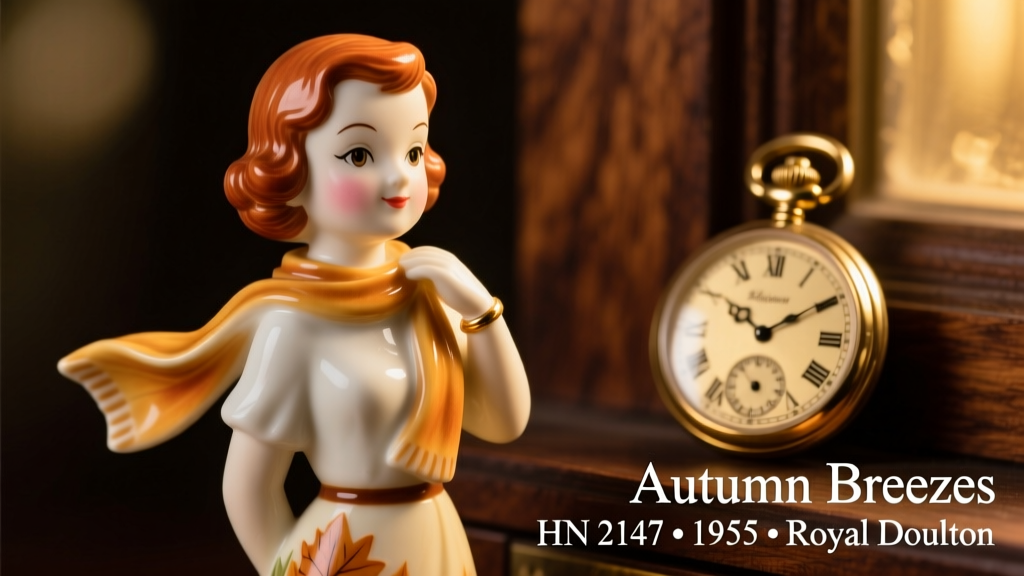
Royal Doulton Figurine 'Autumn Breezes' HN 2147: A 1955 Masterpiece of English Ceramic Artistry
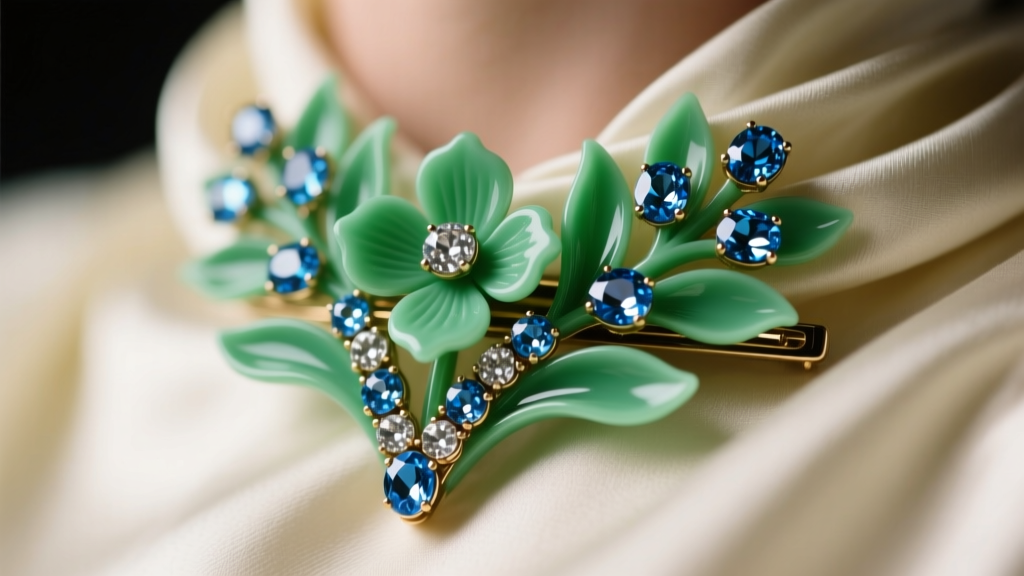
A Collector’s Deep Dive: The 1950s Clip Scarf Floral Spray in Green Plastic and Blue Rhinestones — Design, Provenance, and Market Value
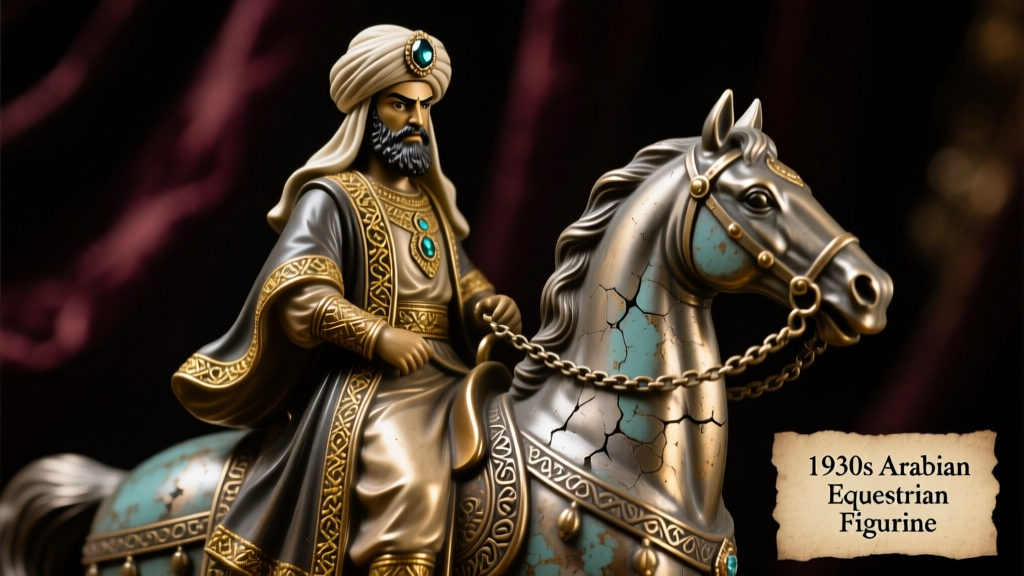
Spelter Figurine: Arab Warrior on Horseback — Identification, Provenance, and Market Value of a Late 19th-Century Decorative Bronze-Alloy Sculpture
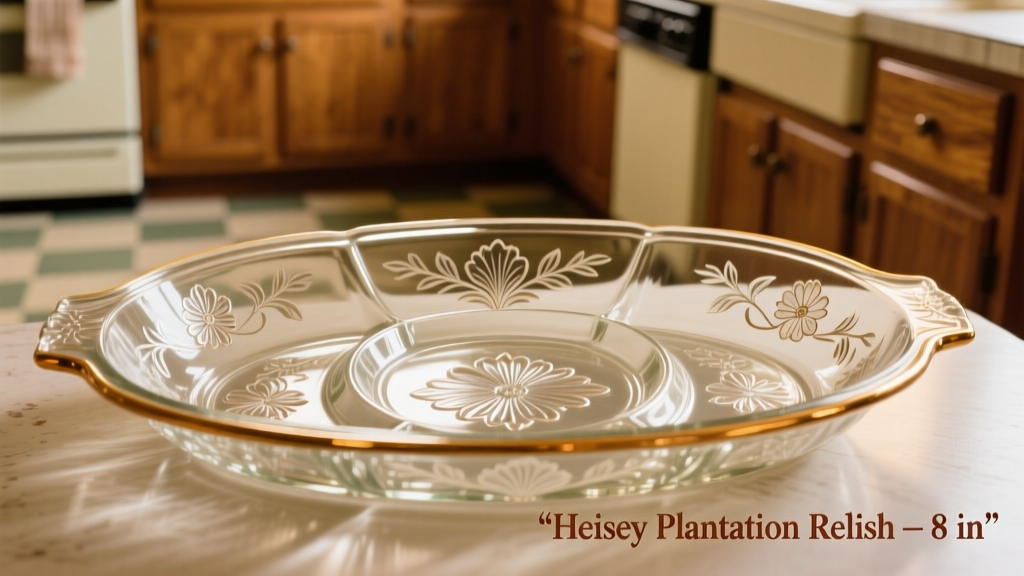
Heisey Plantation Relish Dish: A Collector’s Guide to the Iconic 4-Section 8-Inch Pattern
Webb Vase: A Masterpiece of Enamel Glass Artistry — White, Blue, Red, Yellow Vining Design (8 × 3½ Inches)
Aluminum Silent Butler Round Wheat Pattern Kraftware: A Mid-Century Modern Icon of Functional Elegance
Carnival Glass Leaf Chain Plate in Celeste Blue: A Collector’s Deep Dive into the 7-Inch Two-Tiered Masterpiece