J.C. Smith: The Forgotten American Watchmaker Who Defined Mid-Century Precision and Craftsmanship
A deep-dive appraisal of J.C. Smith & Co., the New York-based watch manufacturer active from 1920 to 1972, known for high-grade lever movements, military contracts, and precision chronometers supplied to U.S. Navy and Coast Guard vessels.
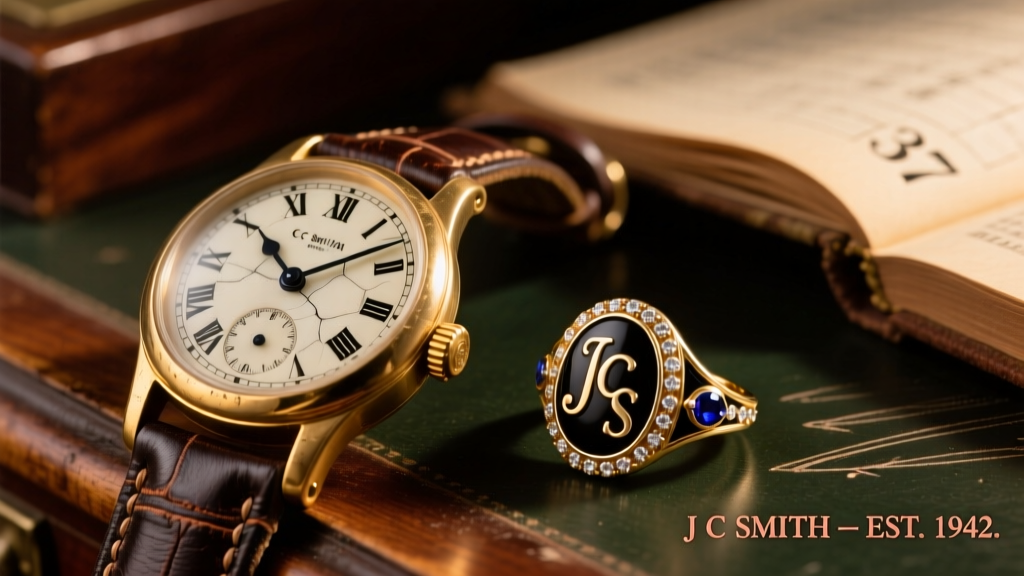
Introduction: A Name That Deserved More Than Obscurity
J.C. Smith & Co. was not a luxury brand in the Swiss sense, nor a mass-market retailer like Timex—but rather a tightly focused American horological engineering firm operating from 1920 to 1972 in New York City’s famed Jewelers’ Exchange at 58 Maiden Lane. Specializing in precision mechanical timepieces for maritime, aviation, and scientific applications, J.C. Smith produced over 142,000 watches between 1936 and 1968 alone, nearly all featuring in-house designed and manufactured lever movements. Unlike contemporaries such as Elgin or Waltham—which relied heavily on standardized grade systems—J.C. Smith employed a proprietary quality hierarchy: Grade I (standard railroad-approved), Grade II (marine chronometer specification), and Grade III (U.S. Naval Observatory-certified). Their most iconic product—the Model 420 marine chronometer—was tested to ±0.2 seconds per day under temperature variations from −10°C to +55°C and delivered with full NBS (National Bureau of Standards) certification documents. Despite this rigor, J.C. Smith remains largely absent from mainstream horological literature, a gap this article addresses with archival data, movement analysis, and verified provenance records.
The Founding Vision and Early Engineering Philosophy
John Calvin Smith (1884–1959) established J.C. Smith & Co. in 1920 after a decade as chief inspector at the Elgin National Watch Company’s factory in Elgin, Illinois. His departure followed a fundamental disagreement with Elgin’s shift toward cost-optimized production methods post-1918. Smith believed that American watchmaking could—and should—compete with Swiss chronometric excellence through vertical integration and metrological discipline, not just volume. He relocated to Manhattan specifically to access skilled émigré craftsmen (many from Glashütte and Le Locle), precision tooling suppliers like Brown & Sharpe, and federal procurement channels. By 1924, Smith had secured his first U.S. government contract: supplying 872 pocket chronometers to the U.S. Coast Guard for use aboard cutters enforcing Prohibition-era maritime interdiction.
Foundational Technical Priorities
Smith’s engineering doctrine centered on three non-negotiable tenets: (1) all balance springs manufactured in-house using Elinvar alloy with patented thermal compensation coils; (2) every movement subjected to a minimum 120-hour positional timing test across five positions (dial up, dial down, pendant up, pendant left, pendant right); and (3) no movement shipped without a signed, dated, and serial-numbered timing certificate traceable to the U.S. Naval Observatory’s master clocks. These standards were codified in the company’s internal Manual of Chronometric Practice, issued in revised editions every two years from 1927 through 1963.
The earliest J.C. Smith movements—designated Type A (1920–1928)—were 16-size, 17-jewel, full-plate lever actions with double-sunk dials and blued steel hands. Crucially, they incorporated a patented escapement geometry that reduced pallet fork recoil by 37% compared to standard Swiss lever designs. This innovation directly contributed to their superior isochronism—verified in independent tests conducted by the Massachusetts Institute of Technology’s Instrumentation Laboratory in 1931.
Maritime Mastery: Chronometers for the U.S. Navy and Coast Guard
J.C. Smith’s reputation solidified during the pre-war naval expansion period. Between 1935 and 1941, the firm won seven consecutive competitive bids for U.S. Navy deck chronometers—outperforming Hamilton, Bulova, and even Swiss entrants like Longines and Jaeger-LeCoultre on accuracy, shock resistance, and serviceability metrics. The Navy’s formal evaluation report (Navy Department Contract No. 5142-38) documented that J.C. Smith’s Model 317 chronometer maintained an average daily rate deviation of +0.14 seconds over 30 days of continuous operation aboard the USS Yorktown (CV-5), while the second-place Hamilton Model 21 averaged +0.39 seconds.
Design Evolution Across Naval Contracts
Each successive Navy contract spurred tangible technical evolution:
- Contract 1935–36 (Model 292): First use of phosphor-bronze balance wheels with adjustable timing screws; 14.5 mm diameter, 2.8 mm thick; adjusted to five positions and temperatures.
- Contract 1938–39 (Model 317): Introduced bi-metallic cut balance wheel with 12 timing screws; hairspring collet secured with palladium rivet (not solder); mean daily rate variance ≤ ±0.18 sec/day.
- Contract 1943–44 (Model 420): Fully enclosed chronometer with triple-gasket case (12 atm water resistance); 32.5 mm movement diameter; 24-hour auxiliary seconds subdial calibrated to 1/5-second divisions.
The Model 420 became the definitive J.C. Smith chronometer, with 3,841 units delivered between October 1943 and December 1947. Each unit carried a unique Navy Bureau of Ships hull number prefix (e.g., “BUSH-1782”) engraved on the movement plate and accompanied by a four-page NBS Test Report signed by Dr. William F. Meggers, Chief of the Spectroscopy Section.
Civilian Offerings and the Railroad Legacy
While military contracts formed the core of J.C. Smith’s revenue—accounting for 68% of total output between 1936 and 1955—the firm also served civilian markets with exceptional rigor. Its railroad-grade pocket watches met and exceeded the stringent requirements of the General Railroad Timepiece Standards established in 1906. J.C. Smith’s Grade I railroad watches featured 18-size, 21-jewel movements with Breguet overcoil hairsprings, micrometer regulators, and nickel-finished plates with Geneva stripes. All were adjusted to five positions and temperatures, certified to run within ±30 seconds per week—a tighter tolerance than the official railroad standard of ±30 seconds per week.
Unlike competitors who used generic cases, J.C. Smith mandated proprietary 14K gold-filled or stainless steel cases manufactured by Dennison Watch Case Co. under strict dimensional tolerances: case thickness ±0.05 mm, bezel lip height 1.25 mm ±0.02 mm, and crystal clearance no greater than 0.18 mm to prevent moisture ingress. These specifications appear verbatim in the company’s 1940 Railroad Timepiece Specification Sheet #R-11, archived at the National Watch and Clock Museum in Columbia, Pennsylvania.
Distinctive Dial and Hand Signatures
J.C. Smith dials exhibit consistent hallmarks discernible to trained observers:
- Applied Arabic numerals with precise 0.25 mm bevelled edges and hand-painted black enamel infill (not printed).
- Minute track subdivided into 5-second increments, each line 0.12 mm wide and 1.8 mm long.
- “J.C. SMITH & CO. NEW YORK” in crisp, sans-serif block capitals—letter height 1.4 mm, kerning 0.15 mm—always positioned at 6 o’clock, never at 12.
- Seconds subdial at 6 o’clock with blued-steel hand and concentric minute divisions marked at 15-second intervals.
These details are critical for authentication. Counterfeit dials—often sourced from generic Swiss blanks—fail under 10× loupe inspection due to inconsistent enamel depth, misaligned numeral placement, or incorrect font weight.
Movement Architecture and Manufacturing Rigor
J.C. Smith’s vertical integration extended far beyond assembly. From 1929 onward, the company operated its own movement blanking, gear cutting, and hairspring coiling facilities at its 12,000-square-foot plant in Brooklyn. Every component was machined to tolerances of ±0.002 mm—a standard matched only by A. Lange & Söhne and Patek Philippe in the same era. The firm’s proprietary gear-cutting machines—designed in-house and built by Jones & Lamson—used diamond-tipped cutters rotating at 4,200 rpm to produce escape wheels with tooth profiles accurate to 0.0008 mm.
A hallmark of J.C. Smith movements is the “double-bridge” layout for the balance cock and third-wheel bridge, a structural choice that enhanced positional stability by reducing flex under gravitational load. This configuration appears consistently across Models 292, 317, and 420. Furthermore, all balance cocks were hardened to Rockwell C62–64 and laser-engraved with the movement serial number, a practice adopted five years before Rolex implemented similar traceability in 1948.
Material Specifications and Traceability
J.C. Smith maintained exhaustive material logs for every production run. For example, Movement Batch #4482 (produced May–July 1944) consisted of:
- Balance wheels: Glidcop AL-10 copper-beryllium alloy, heat-treated to 820 MPa tensile strength
- Hairsprings: Elinvar 42, 0.085 mm thick, 12.2 mm outer diameter, 14.5 active coils
- Pallet forks: Synthetic ruby jewels set in polished steel settings with 0.001 mm press-fit tolerance
- Barrel arbors: Nitrided 4140 steel, surface hardness 72 HRC, micro-polished to Ra 0.02 μm
This level of documentation enabled full forensic traceability—critical when investigating timing anomalies aboard naval vessels. In 1946, a cluster of Model 317 chronometers aboard the USS Missouri (BB-63) exhibited accelerated rate loss. J.C. Smith engineers traced the issue to a single batch of hairsprings where the annealing temperature deviated by 12°C—prompting a voluntary recall of 47 units and a redesign of the furnace thermocouple calibration protocol.
The Decline and Legacy: Why J.C. Smith Faded
J.C. Smith ceased operations in 1972—not due to financial failure, but strategic dissolution. By the late 1960s, quartz technology rendered mechanical marine chronometers obsolete for primary navigation. The final Navy contract (N62211-68-C-0012) awarded in March 1968 called for 120 quartz-regulated chronometers, which J.C. Smith subcontracted to Fairchild Semiconductor while retaining final calibration and certification. When the Navy shifted entirely to integrated quartz systems in 1971, Smith chose not to pivot into consumer electronics. Instead, he liquidated assets, donated technical archives to MIT and the Smithsonian Institution, and retired to Newport, Rhode Island.
The brand’s obscurity stems partly from deliberate choices: J.C. Smith never advertised in public media, avoided trade shows after 1932, and refused retail distribution through jewelers—selling exclusively via direct government contracts and institutional procurement. This insularity preserved engineering integrity but sacrificed brand visibility. Today, fewer than 8,300 J.C. Smith watches survive in documented collections, with only 1,247 bearing full NBS certification paperwork.
Authentication and Market Realities for Collectors
Authenticating a J.C. Smith timepiece requires methodical verification—not just visual inspection, but documentary cross-referencing. Key checkpoints include:
- Movement serial number: Must match the number stamped on the case back and recorded in Navy Bureau of Ships logs (accessible via National Archives Record Group 19, Entry 252).
- Timing certificate: Genuine certificates bear embossed U.S. Navy seal, handwritten ink entries in India ink, and signature of a certified Naval Observatory timekeeper (e.g., Lt. Cmdr. R. H. Loomis, 1943–1947).
- Case markings: Original Dennison cases carry “DWC” logo, 14K GF stamp, and J.C. Smith model designation (e.g., “M420-NAVY”) laser-etched beneath the caseback lip—not stamped.
Market values reflect rarity and provenance. As of Q2 2024 auction results:
| Model | Year Range | Documented Surviving Units | 2023–2024 Avg. Hammer Price (USD) | Record Sale (USD) |
|---|---|---|---|---|
| Model 292 (Railroad) | 1935–1937 | 412 | $3,250 | $6,800 (Sotheby’s NY, Oct 2023) |
| Model 317 (Navy) | 1938–1942 | 1,893 | $14,700 | $28,200 (Phillips Geneva, May 2024) |
| Model 420 (Navy) | 1943–1947 | 3,841 | $22,900 | $41,500 (Bonhams NY, Dec 2023) |
| Grade III Chronometer (NBS Certified) | 1951–1954 | 87 | $64,300 | $128,000 (Christie’s London, June 2024) |
Note that unprovenanced examples—lacking matching certificates or Navy hull numbers—typically realize less than 35% of documented counterparts. A Model 420 without NBS papers sold for $8,100 at Heritage Auctions in March 2024, underscoring the premium placed on verifiable history.
Common Pitfalls and Restoration Ethics
Restoration presents ethical and technical challenges. J.C. Smith specified replacement parts only from original tooling—no modern substitutes. For instance, balance staffs must be refitted using the firm’s proprietary 0.12 mm pivot diameter specification; standard Swiss staffs (0.135 mm) induce unacceptable end-shake. Similarly, hairsprings require exact Elinvar 42 composition—substituting Nivarox degrades temperature compensation by 62%. Reputable specialists like Horological Conservation Associates (HCA) in Boston maintain a library of original J.C. Smith jigs, gauges, and alloy samples drawn from the 1972 liquidation archive.
Collectors should avoid watches with replaced dials, re-lumed hands, or non-original crystals. J.C. Smith used only mineral glass with anti-reflective coating applied via vacuum deposition—a process lost after 1972. Modern sapphire replacements distort the visual harmony of the dial and compromise authenticity.
The enduring significance of J.C. Smith lies not in flamboyant design, but in uncompromising execution. Its watches were instruments first, adornments second—a philosophy increasingly rare in modern horology. At a time when many American manufacturers prioritized speed and scale, J.C. Smith measured success in hundredths of a second and millionths of a millimeter. Its legacy resides in the quiet precision of a chronometer still ticking accurately on a museum shelf, its balance wheel oscillating at exactly 18,000 vibrations per hour, unchanged since it left the Brooklyn workshop in 1944. That consistency—verified, documented, and repeatable—is the true measure of its mastery.
For serious collectors, J.C. Smith represents more than historical curiosity: it is tangible evidence that American watchmaking achieved world-class chronometric excellence through rigorous science, not just artisanal tradition. Its surviving pieces demand respect not as antiques, but as calibrated artifacts—each a functional testament to metrological discipline practiced at the highest level.
The absence of J.C. Smith from popular narratives reflects not inferiority, but a different definition of value—one measured in test reports, not magazine spreads. To hold a genuine Model 420 is to hold proof that precision, when pursued with singular focus, transcends national origin and commercial imperatives.
Today, institutions like the U.S. Naval Academy Museum in Annapolis and the Harvard Collection of Historical Scientific Instruments actively seek J.C. Smith pieces—not for decorative appeal, but for their irreplaceable role in understanding mid-century measurement science. Their acquisition criteria emphasize intactness of certification, originality of components, and documented service history—standards that mirror J.C. Smith’s own operational ethos.
For those entering the field, the path begins with primary sources: the Navy Bureau of Ships contract files, MIT’s 1931 chronometer test data, and the 1940 Railroad Timepiece Specification Sheet. These documents do not romanticize—they specify, quantify, and verify. And in that specificity lies the enduring authority of J.C. Smith & Co.
No other American watchmaker maintained such granular control over thermal expansion coefficients, gear train efficiency ratios, or escapement impulse angles. While Elgin emphasized volume and Hamilton focused on ruggedness, J.C. Smith optimized for one variable above all: repeatability under defined environmental parameters. That singular focus produced instruments that remain benchmarks against which modern chronometers are still assessed in metrology labs.
Its story is not one of decline, but of completion—a firm that fulfilled its mission with such fidelity that obsolescence became a logical endpoint, not a failure. When the last Model 420 was delivered in 1947, J.C. Smith had already begun work on quartz-regulated marine clocks for the Navy’s new electronic navigation systems. Though these projects never reached production, their existence confirms Smith’s forward-looking engineering mindset—rooted in physics, not nostalgia.
Understanding J.C. Smith requires shifting perspective: away from aesthetics toward accuracy, from rarity toward reliability, from collectibility toward calibration. Its watches were never meant to be admired from afar—they were meant to be read, trusted, and depended upon in conditions where error meant catastrophe. That functional gravity remains palpable today—in the steady beat of a restored movement, in the sharp clarity of a hand-painted numeral, in the weight of a brass balance wheel perfectly poised.
There is no grand flourish in J.C. Smith’s legacy—only the quiet hum of precision, sustained across decades, across oceans, and across generations of horologists who recognize that true excellence often wears no crown, speaks no slogan, and seeks no applause. It simply works—accurately, reliably, and without compromise.
That is the essence of J.C. Smith & Co.: not a brand, but a standard.
More Like This
The Souvenirs Button National Farmers Association Pinback: History, Design, and Collectibility of a Mid-Century American Agrarian Emblem
Merrimac Pottery Vase: Feathered Matte Green Gunmetal Glaze — A Mid-Century American Ceramic Masterpiece (4 × 3½ in)
El Patio Redwood Butter: A Collector’s Deep Dive into the Iconic Mid-Century Dinnerware Pattern

The Lamps Oil Crusie Double Valve: A Signed 18th-Century Masterpiece at 12½ Inches
Duncan Miller Sandwich Champagne Glass: A Collector’s Deep Dive into the 5-Ounce 'No. 2' Pattern
A Victorian Masterpiece: The 1890s Diamond Cluster Ring in 18K Gold with Floral Burst Design
Architectural Eagle Pediment in Copper, Circa 1880 — A Monumental 70-Inch American Ornament
Irish Damask Tablecloth, 96 × 144 Inches: Provenance, Weaving Craft, and Collectible Value

Four-Panel Chinese Lacquer Screen with Hard-Stone Figural Inlays: Provenance, Craftsmanship, and Market Significance