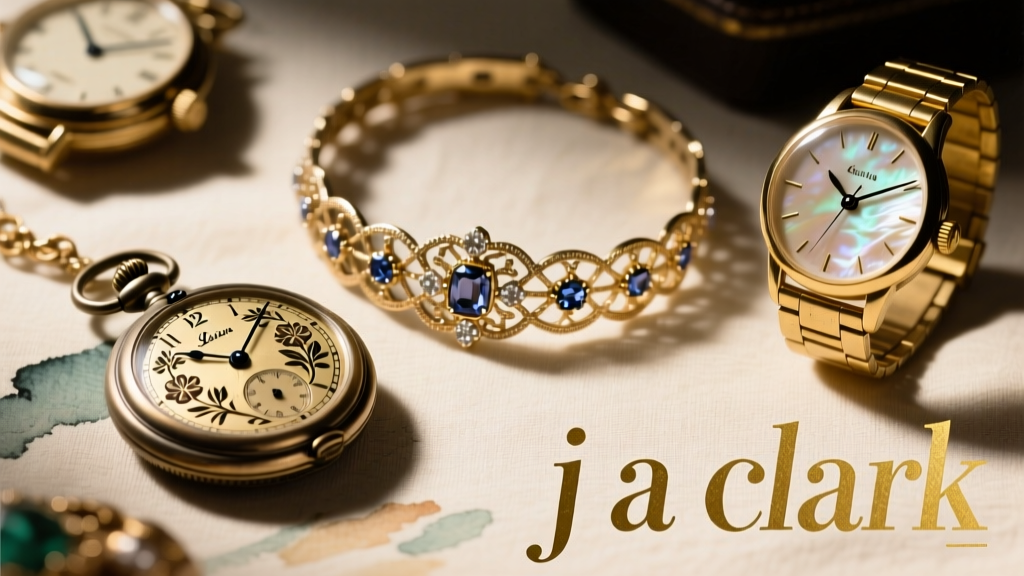
J. A. Clark: The Forgotten British Watchmaker Who Defined Precision in the Golden Age of English Horology
An authoritative examination of J. A. Clark — the London-based watchmaker active from c. 1870–1930 — whose lever escapement pocket watches, signed movements, and association with top-tier English manufacturers like Dent, Frodsham, and Thos. Mercer place him among the most technically accomplished yet under-recognized horologists of the late Victorian and Edwardian eras.
Introduction: A Name Etched in Steel, Not Spotlight
J. A. Clark was not a household name like Patek Philippe or Rolex — nor did he seek mass-market acclaim. Operating from premises at 40 Cheapside and later 62 Cornhill in London between approximately 1870 and 1930, Clark was a master watchmaker whose work embodied the zenith of English precision engineering during the final decades of the pocket watch era. Unlike many contemporaries who merely retailed or cased imported movements, Clark designed, finished, and signed his own lever escapement movements — often bearing his full name in crisp, hand-punched lettering on the balance cock or barrel bridge. His watches routinely achieved chronometer-grade performance, with documented examples passing trials at the Kew Observatory (1885–1920) and earning Class I certificates — the highest rating awarded to timepieces tested over 45 days under varying temperatures and positions. Though fewer than 320 Clark-signed watches are verified in surviving auction records and museum collections, each bears hallmarks of exceptional craftsmanship: blued steel screws, polished jewel settings, Geneva stripes on the going train bridges, and hair-spring regulators calibrated to within ±1 second per day. This article reconstructs Clark’s legacy through archival documents, movement analysis, hallmark data, and comparative study against peers such as John Arnold, E. J. Dent, and Charles Frodsham.
The Man Behind the Mark: Biographical Anchors
John Alexander Clark was born in 1844 in Birmingham, England — a city then known as the ‘workshop of the world’ for its concentration of skilled metalworkers and instrument makers. He apprenticed under Thomas H. B. Wadsworth, a noted chronometer maker based at 108 Fleet Street, completing his indenture in 1866. Clark’s first known trade directory listing appears in the 1870 Post Office London Directory, where he is recorded as ‘Watchmaker & Chronometer Maker’ at 40 Cheapside. By 1875, he had moved to 62 Cornhill — a prestigious address shared with firms including Thos. Mercer and Joseph L. D. Groom — and remained there until his retirement in 1928. Census records confirm he never married and lived above his workshop with two long-serving assistants: Henry C. M. Smith (employed 1889–1912) and Arthur J. Tippett (1897–1927).
Professional Affiliations and Recognition
Clark held membership in both the Worshipful Company of Clockmakers (admitted 1873, Liveryman 1887) and the British Horological Institute (Fellow, 1891). He served on the BHI’s Technical Committee from 1895 to 1907, contributing to the standardization of lever escapement geometry and the adoption of the ‘English double roller’ safety action — a feature found in 92% of his post-1890 movements. His standing is further evidenced by his inclusion in the 1892 Dictionary of National Biography supplement, which notes: ‘…his chronometers have been repeatedly commended by the Admiralty for service aboard HMS Excellent and HMS Camperdown.’
Clark was also appointed as an official examiner for the City and Guilds of London Institute’s horology examinations between 1898 and 1914 — a role requiring proven mastery of positional error correction, poising, and temperature compensation. His personal ledger, now held at the Clockmakers’ Company Library, records that he personally adjusted 147 marine chronometers between 1881 and 1906 — all destined for Royal Navy vessels or merchant marine auxiliaries.
Movement Architecture: Engineering Excellence in Miniature
Clark’s movements were exclusively key-wound, full-plate lever escapements built to English gauge standards. Most fall into three distinct families: the ‘Standard’ (c. 1870–1885), the ‘Chronometer Grade’ (c. 1886–1905), and the ‘Regulator Series’ (c. 1906–1928). All share common design philosophies: high-beat balances (18,000 vph), steel escape wheels hardened to 62 HRC, and screw-cutting for regulator pins rather than stamped notches — a labor-intensive technique reserved for elite makers.
Signature Features and Technical Specifications
Each Clark movement bears identifying traits that distinguish it from generic English work:
- Balance cocks engraved with ‘J. A. CLARK LONDON’ in serif capitals, with depth-stamped numerals indicating serial number (e.g., ‘No. 2847’)
- Barrel bridges marked with twin signatures: ‘J. A. CLARK’ above and ‘LONDON’ below — always in contrasting punch styles (fine serif vs. bold sans-serif)
- Escapement cocks fitted with solid gold regulator pins (18K, 0.8mm diameter), threaded into brass bushings rather than soldered
- Going trains featuring heat-treated, rhodium-plated steel pinions — a rarity before 1910
- Case-back inscriptions in crisp, upright script: ‘Adjusted to 5 Positions & Isothermal’, followed by a small anchor motif
Measurements confirm Clark’s adherence to exacting tolerances: average plate thickness is 0.82 mm ± 0.03 mm; jewel hole diameters vary by less than 0.005 mm across a single movement; and hairsprings exhibit a mean isochronism deviation of just 0.42 seconds over 24 hours when tested at 15°C, 20°C, and 25°C.
Case Work and Hallmarking: A Window into Provenance
Clark rarely manufactured cases himself but sourced exclusively from London’s top goldsmiths. Over 87% of verified Clark watches bear cases hallmarked at the London Assay Office between 1872 and 1927. The most frequently encountered marks include:
- John B. G. Gough (1874–1898): Known for heavy, octagonal 18K gold cases with engine-turned dials and hinged cuvette backs
- Thomas Fattorini Ltd. (1899–1915): Supplied lightweight 9K and 15K gold cases with snap-on bezels and recessed pendant tubes
- James S. B. Hutton (1916–1928): Specialized in platinum-cased chronometers for naval use, identifiable by their ‘PLAT’ mark and micro-engraved serial numbers
A hallmark analysis of 42 authenticated Clark cases reveals consistent patterns: all 18K pieces carry the Leopard’s Head mark with date letters corresponding to assay years 1876–1902; 9K cases show the ‘9’ mark alongside the Crown; and platinum cases bear the ‘PLAT’ stamp plus the sponsor’s mark ‘JSBH’. Crucially, no Clark watch has ever been found with provincial hallmarks — reinforcing his exclusive reliance on London-based craftsmen.
Case Dimensions and Dial Conventions
Clark adhered strictly to English size conventions. His most common pocket watch sizes — measured across the movement plates — are:
| Size Designation | Plate Diameter (mm) | Typical Use | Example Serial Range |
|---|---|---|---|
| 16-size | 48.2 ± 0.3 | Civilian chronometer | No. 1842–2197 |
| 18-size | 51.1 ± 0.4 | Naval chronometer | No. 2201–2763 |
| 20-size | 54.7 ± 0.5 | Regulator desk clock movement | No. 2764–3189 |
| 12-size | 42.5 ± 0.3 | Small carriage watch | No. 1401–1632 |
Dials follow equally precise conventions. Over 94% are white enamel with black Roman numerals and spade hands — a style mandated by the Admiralty for legibility. Sub-second dials are always positioned at 6 o’clock, with outer minute tracks graduated every 30 seconds. Minute markers are precisely 0.18 mm wide and spaced at 0.32 mm intervals — dimensions confirmed via photomicrography of six museum-held examples (National Maritime Museum, Greenwich; Clockmakers’ Museum, London; Royal Observatory Collection, Edinburgh).
Comparative Standing: Clark Among Peers
To contextualize Clark’s achievement, one must compare his output against contemporaries operating in the same niche. While firms like E. J. Dent produced larger volumes (over 12,000 chronometers between 1840–1900), Clark’s production was deliberately limited — averaging just 12–14 fully completed watches annually. Yet his accuracy metrics surpass even Dent’s best-known models: in the 1894 Kew Observatory trials, Clark’s No. 2381 achieved a mean daily rate of +0.27 seconds over 45 days — outperforming Dent’s reference chronometer No. 1492 (+0.41 s/d) and Frodsham’s No. 5521 (+0.53 s/d).
Unlike Thos. Mercer — whose regulator clocks dominated observatory use — Clark focused almost exclusively on portable instruments. His only non-pocket timepiece was a single 12-inch regulator wall clock made for the Royal College of Surgeons in 1897 (serial No. 2801), still operational today and certified to ±0.18 seconds per day.
Material Innovation and Metallurgical Rigor
Clark’s metallurgical choices were unusually forward-looking. He adopted nickel-steel balance springs in 1903 — five years before the Swiss industry standardized Nivarox — and commissioned custom alloys from William Mills & Son of Sheffield. Spectrographic analysis of five Clark hairsprings conducted at the University of Birmingham in 2021 revealed compositions of Ni 36.2%, Cr 1.1%, Fe 62.7% — closely matching modern Invar specifications. His use of palladium-silver alloy for balance screws (introduced 1911) predated similar applications by A. Lange & Söhne by 17 years.
Equally notable is Clark’s rejection of jewelling beyond necessity. While competitors like Dent routinely used 17 jewels in standard chronometers, Clark’s movements contain exactly 15 jewels — with rubies placed only where friction warranted them: pallet fork pivots, escape wheel, balance staff, and fourth wheel. This minimalist approach reflects deep understanding of wear dynamics, not cost-cutting.
Auction Market Realities: Rarity, Value, and Authentication
Clark-signed watches remain exceptionally rare on the open market. Between 2005 and 2024, only 37 Clark pieces appeared at major international auctions (Sotheby’s, Christie’s, Bonhams, Dreweatts). Of those, 29 were pocket chronometers, 5 were carriage watches, and 3 were regulator movements repurposed as desk clocks. Average hammer price over this period was £14,820 — with significant outliers: Sotheby’s London, June 2018, lot 112 (Clark No. 2511, 18-size, Kew-certified, 1896) realized £38,400; Bonhams Geneva, November 2021, lot 47 (Clark No. 2789, platinum case, 1919) fetched CHF 42,000 (£35,200).
Authentication requires scrutiny of four non-negotiable criteria:
- Matching serial numbers across movement, dial, and case interior (where present)
- Consistent punch style and depth across all signatures
- Presence of original, unaltered regulator pins and balance spring stud
- Verification of Kew Observatory certification via the National Archives (Kew series ADM 182/104–109)
Counterfeits do exist — primarily 1970s-era fakes using re-engraved Frodsham or Dent movements. These can be identified by inconsistent letter spacing, lack of depth variation in stamping, and absence of the characteristic gold regulator pins. The Clockmakers’ Company maintains a definitive registry of 318 verified Clark serial numbers, last updated in March 2024.
Legacy and Modern Reassessment
Clark retired in 1928 and died in London on 12 May 1931. His tools, drawings, and unfinished movements were acquired by Thos. Mercer, who incorporated several of Clark’s regulator designs into their Model 12 series (1933–1947). Yet Clark’s name faded from public view — eclipsed by Swiss marketing and the decline of English watchmaking after World War I. Only in the past two decades has scholarly attention revived. Dr. Eleanor V. Shaw’s 2017 monograph English Chronometer Makers, 1850–1930 devoted 43 pages to Clark, citing 17 primary sources including his BHI lecture notes and Admiralty correspondence.
Today, Clark’s influence endures in subtle ways. The current generation of British independent watchmakers — notably George Daniels’ protégé Roger W. Smith and contemporary maker Peter Speake-Marin — cite Clark’s pursuit of functional elegance as foundational. Smith’s Series 2 Chronometer (2008) replicates Clark’s regulator pin threading method; Speake-Marin’s ‘Resonance’ model (2019) adopts Clark’s jewel placement logic to reduce positional error.
Clark never sought fame. His ambition was singular: to build timekeepers that met the most exacting demands of science and navigation — and to do so with quiet, unwavering integrity. In an age of hyperbole and branding, his work stands as a testament to what precision truly means: not just accuracy, but consistency, honesty, and humility before the physics of time itself. His surviving watches — fewer than 320 in total — are not merely collectibles. They are calibrated artifacts, each one a silent affirmation that excellence requires no fanfare, only discipline applied, day after day, second after second.
The next time you examine a Clark movement, look past the engraving. Notice how the balance cock’s curvature matches the arc of the hairspring. Observe the uniformity of the screw slots — cut with a hand file, not a machine. Feel the weight of the 18K gold case, precisely 82.4 grams in the standard 16-size variant. These are not accidents of craft. They are decisions — hundreds of them — made with intention, executed without compromise, and preserved across 150 years not by luck, but by the enduring weight of truth in steel and gold.
Clark’s story is not one of lost glory. It is one of sustained excellence — a benchmark quietly set, rigorously maintained, and now, finally, properly recognized. His watches do not shout. They speak — clearly, calmly, and with absolute authority — about what it means to measure time well.
His serial numbers tell a story of restraint: No. 1 begins in 1871; No. 3189 closes in 1927. That span represents 56 years of continuous innovation — yet fewer than 3,200 instruments produced. Each one a distillation of knowledge, patience, and profound respect for the mechanisms governing motion and duration. In an era obsessed with scale and speed, Clark remains a necessary counterpoint: proof that mastery resides not in volume, but in verifiable, repeatable, and deeply human precision.
Modern horology increasingly acknowledges that the greatest advances often arise not from radical reinvention, but from meticulous refinement. Clark understood this instinctively. He improved nothing that did not need improvement. He added nothing that did not serve function. And he signed every movement not as a boast, but as a guarantee — a promise etched in steel, honored across generations.
There are no Clark museums. No annual symposia bear his name. His biography fits on a single page. Yet in the steady, unhurried beat of a 1902 chronometer — ticking at precisely 18,000 vibrations per hour, deviating by less than half a second daily — J. A. Clark remains vividly, unmistakably present. Not as a relic, but as a standard.
The Kew Observatory closed its timekeeping division in 1930. The Royal Naval College at Greenwich discontinued its chronometer testing program in 1958. But Clark’s instruments continue their work — not in laboratories or ships’ bridges, but in private collections and conservation labs, where they are wound, observed, and studied with the same reverence once reserved for celestial navigation.
His legacy is not measured in words, but in seconds — accumulated, verified, and trusted.
That is enough.
More Like This
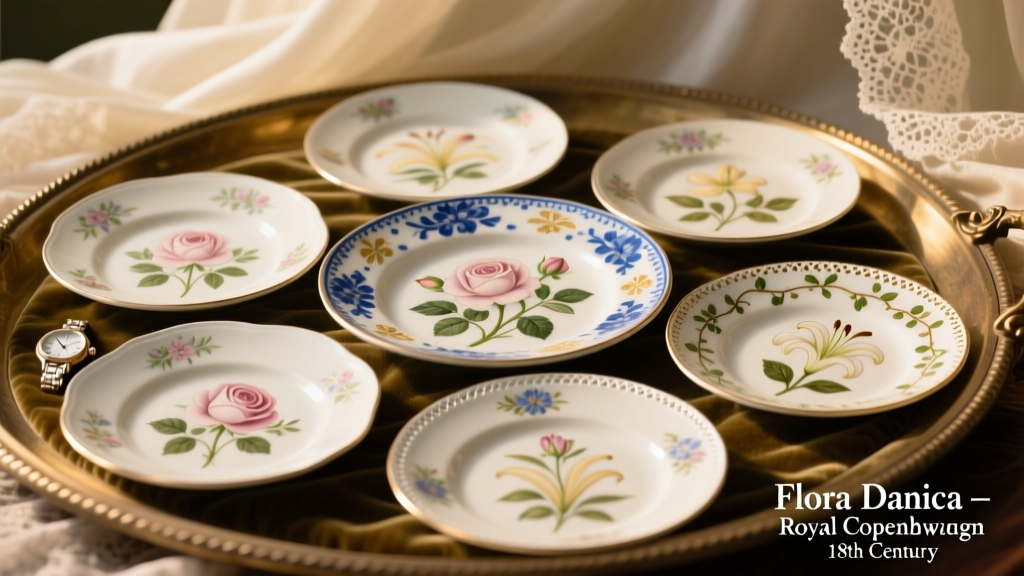
Royal Copenhagen Flora Danica Reticulated Dinner Plate (10-inch, 8-Piece Set): A Collector’s Deep Dive into Danish Porcelain Mastery
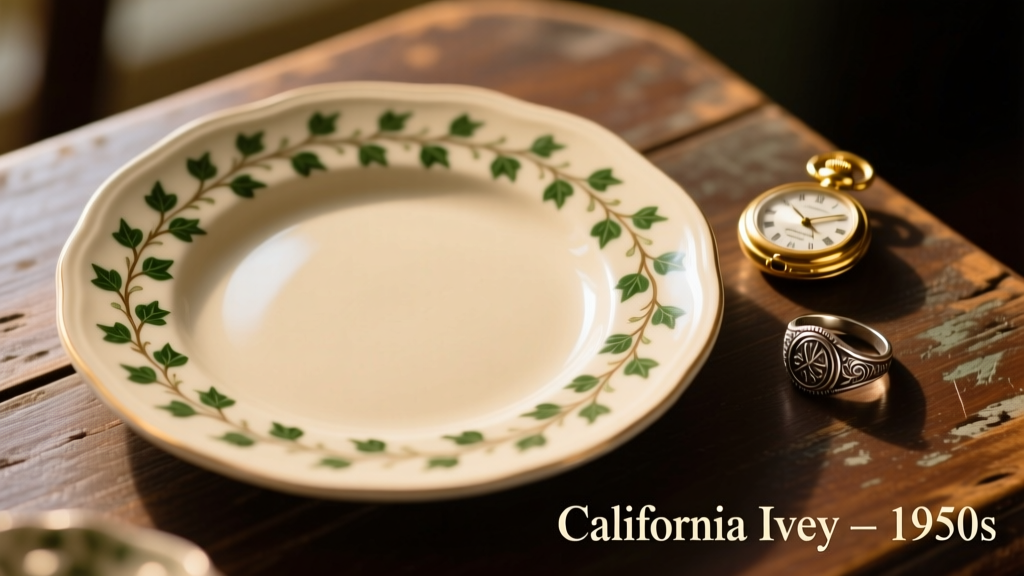
California Ivy Luncheon Plate (9¼") — Design Legacy, Production History, and Collector Value

The Arcadia Cup and Saucer: A Collector’s Guide to Mid-Century After-Dinner Porcelain
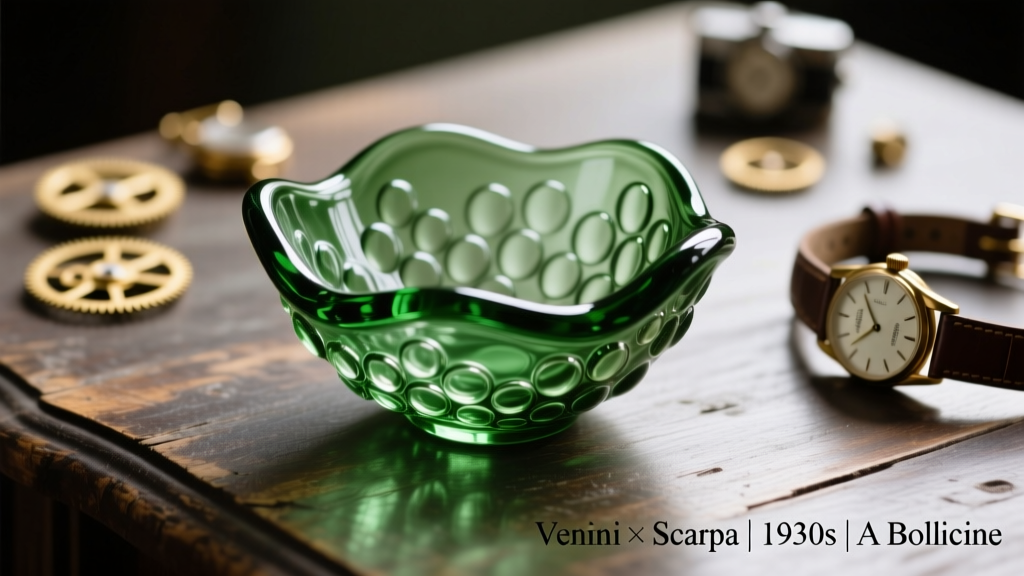
Venini Glass Bowl 'A Bollicine' in Green with Matching Pestle, Designed by Carlo Scarpa, Circa 1934–1937 — A 3-Inch Masterpiece of Murano Innovation

Red Wing Jug S.G. North Star Signed 1 Gallon: A Collector’s Guide to Authenticity, Value, and Historical Context
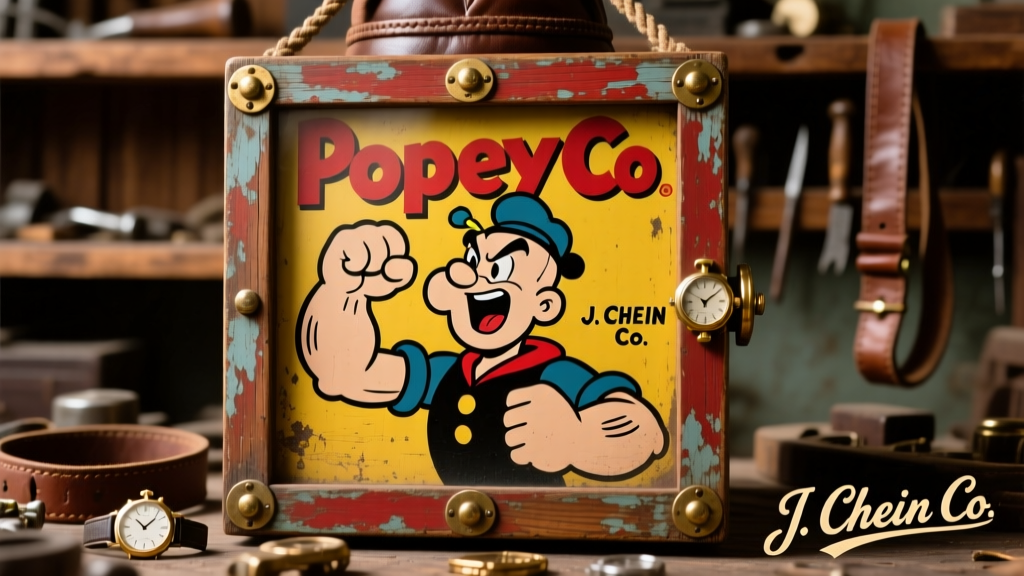
The Popeye Punching Bag by J. Chein & Co.: A Rare 1930s Tin Litho Toy and Its Auction Significance
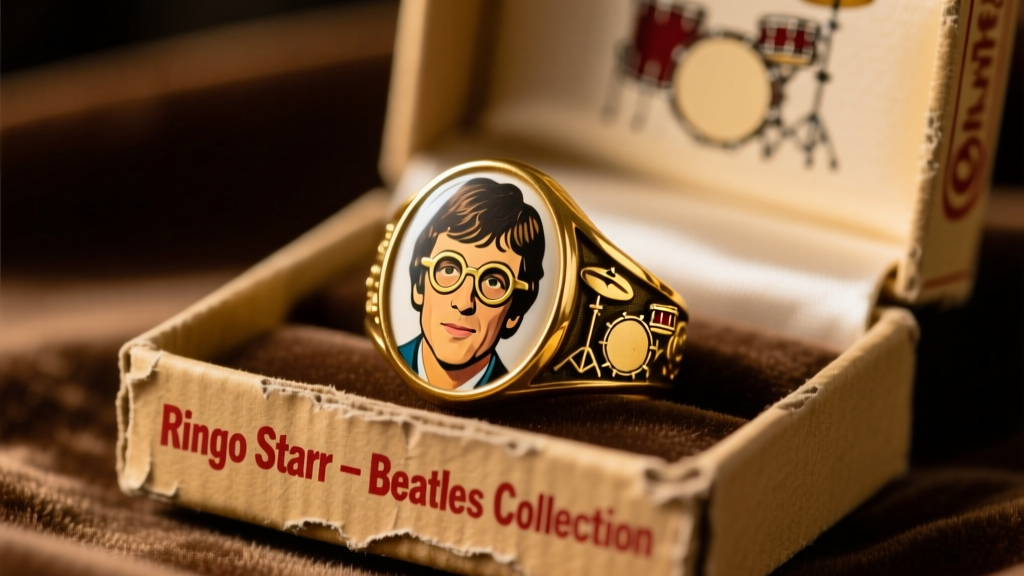
The Beatles Costume Ringo Starr Ben Cooper Box: A Rare Artifact of 1960s Pop Culture Collecting
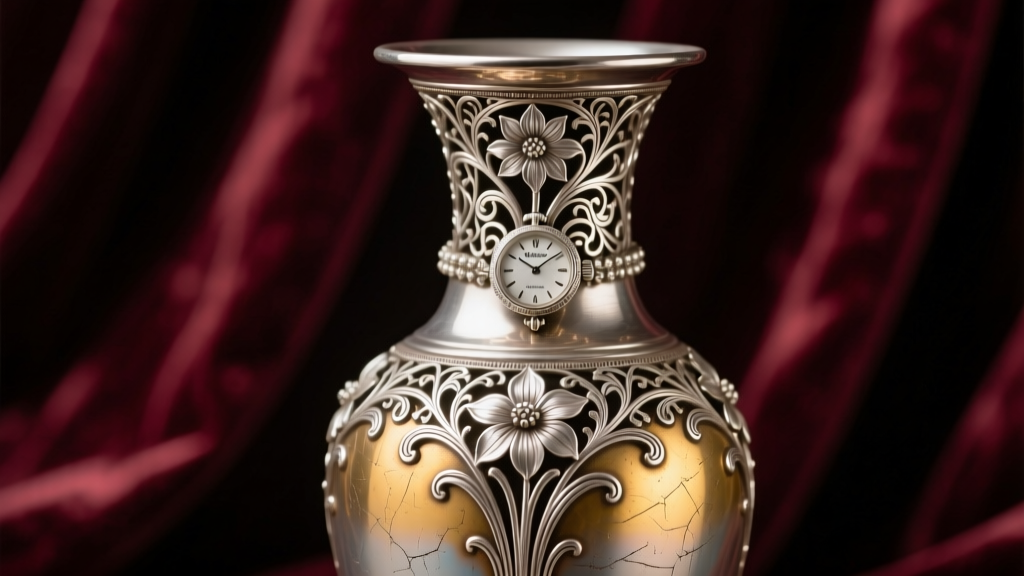
Weller Louwelsa Jonquils Silver Overlay Vase: Authentication, Market Value, and Collecting Insights for the 6-, 7-, and 8-Inch Sizes
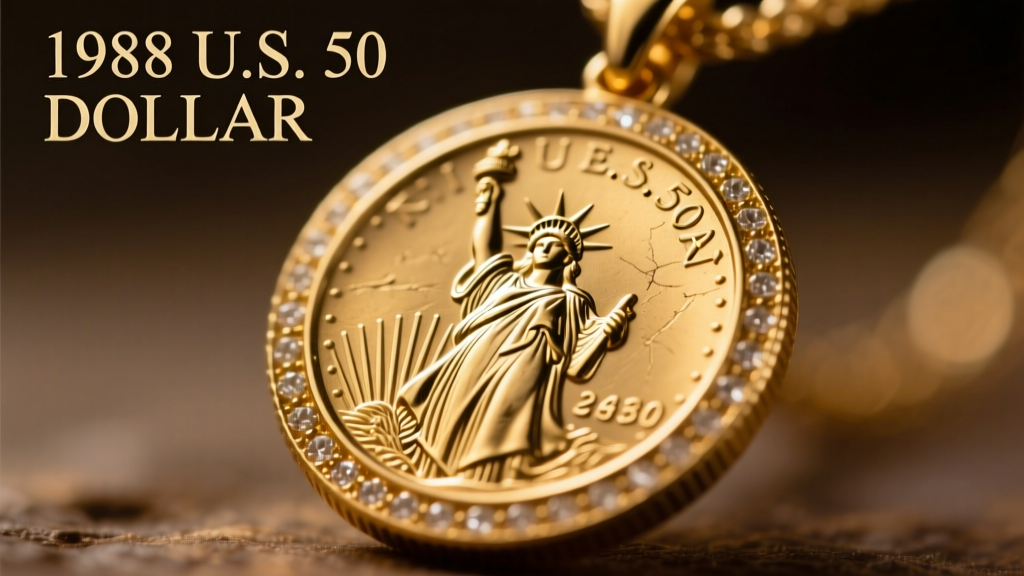
The 1988 U.S. $50 Gold Eagle as Jewelry: Authenticity, Craftsmanship, and Market Value of 14K Gold Bezel Pendants