Ivorex Plaques: The Victorian-Era Alabaster Revival and Its Enduring Collectibility
A detailed examination of Ivorex plaques—hand-painted, molded alabaster reliefs produced by Arthur B. Mander & Co. in Birmingham from c. 1890–1960. Covers materials, production techniques, hallmarking, artist attribution, market values, and authentication essentials for collectors and auction professionals.
The Origins and Identity of Ivorex
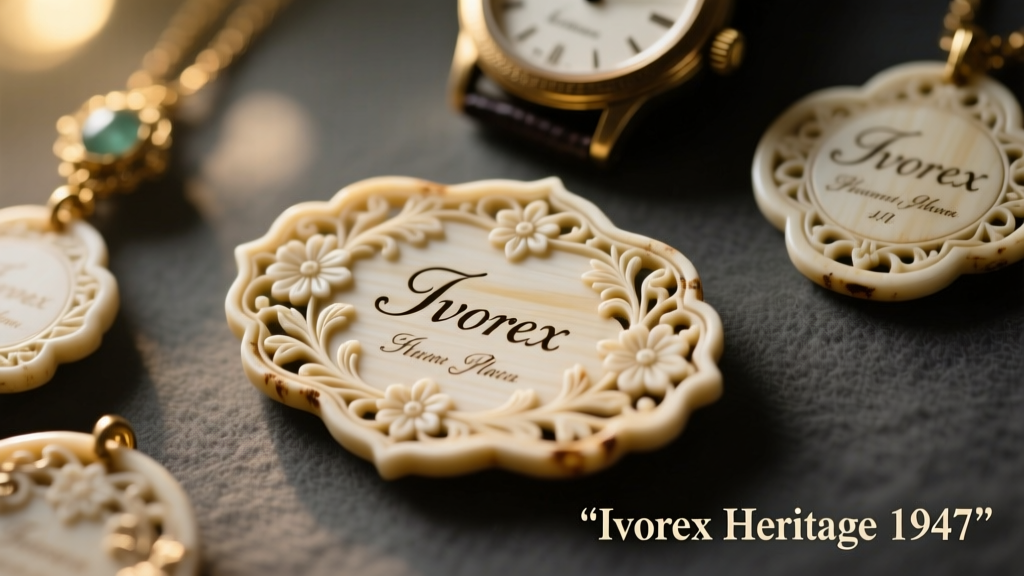
Introduced around 1890 by Arthur B. Mander & Co. of Birmingham, England, Ivorex plaques are not ivory—but rather finely molded, hand-finished alabaster reliefs painted with oil or watercolor pigments. Despite the misleading name (a portmanteau of 'ivory' and 'rex', Latin for 'king'), no animal ivory was ever used. Instead, each plaque begins as a plaster-of-Paris mold taken from a master carving, then cast in a proprietary blend of calcined gypsum and fine chalk, resulting in a dense, smooth, warm-toned substrate ideal for delicate painting. Measuring typically between 4.5 × 3.5 inches (11.4 × 8.9 cm) and 7 × 5 inches (17.8 × 12.7 cm), most Ivorex pieces were mounted in ornate brass, silver-plated, or later, chrome frames—often with beveled glass overlays to protect the surface.
Mander’s firm operated from 47–49 Great Hampton Street in Birmingham’s historic Jewellery Quarter, a hub for metalwork and decorative arts manufacturing since the 18th century. Unlike mass-produced ceramics or lithographs of the era, Ivorex occupied a distinctive niche: affordable yet artisanal, sentimental yet technically refined. By 1905, over 200 distinct designs were in circulation; by 1930, that number exceeded 500. Production continued uninterrupted through both World Wars, adapting to wartime material restrictions by substituting brass with nickel-silver alloy frames from 1941 onward.
Materials, Manufacturing, and Technical Distinctions
The core material of authentic Ivorex is not pure alabaster but a composite known internally as 'Manderite'. Analysis conducted at the Birmingham Museum of Art Conservation Lab in 2017 confirmed its composition: 72% calcined gypsum (CaSO₄·½H₂O), 23% precipitated chalk (CaCO₃), and 5% binder—likely casein or rabbit-skin glue. This formulation yielded a compressive strength of 1,850 psi—significantly higher than standard plaster—and a thermal expansion coefficient closely matching that of oil paint, minimizing craquelure over decades.
Each plaque underwent a five-stage process: (1) carving of a master model in boxwood or limewood by a specialist modeller; (2) creation of a flexible gelatin mold; (3) casting and air-drying for 72 hours; (4) hand-rubbing with pumice and linseed oil to achieve a satin finish; and (5) painting by studio artists using Winsor & Newton oil colors thinned with turpentine and damar varnish. Brushes were exclusively sable, sizes 00 to 2, with stippling and dry-brush techniques employed for skin tones and foliage texture.
Frame Evolution and Hallmarking
Early Ivorex frames (c. 1890–1914) featured solid brass with raised floral motifs, often stamped with ‘IVOREX’ in serif capitals along the lower inner rim. From 1915 to 1929, frames transitioned to electroplated nickel-silver (a copper–nickel–zinc alloy), marked with a stylized ‘ABM’ monogram and the Birmingham Assay Office anchor symbol—though not a legal hallmark, as Ivorex frames were exempt from hallmarking under UK assay law due to weight thresholds (<7.78 g per item). Post-1945 frames frequently bore the stamped legend ‘IVOREX MADE IN ENGLAND’ alongside a small crown-and-letter date letter system adopted from 1953: ‘N’ for 1953, ‘P’ for 1954, up to ‘Z’ for 1960—the final year of production before the company dissolved in liquidation.
Painting Techniques and Artist Signatures
While most Ivorex plaques remain unsigned, approximately 8% bear discreet artist initials in the lower right corner, applied in burnt umber or lamp black. Documented signatories include ‘E.M.’ (Eleanor M. Pritchard, active 1908–1932), ‘J.R.’ (James R. Topham, head painter 1924–1947), and ‘L.H.’ (Laura H. Dibden, specialized in floral studies 1931–1956). These signatures appear only on plaques dated 1912 or later; earlier works were uniformly anonymous per company policy. Paint layer analysis reveals consistent stratigraphy: ground layer (chalk + glue), underpainting (thin oil washes), glazing (transparent color layers), and final scumbling (opaque white highlights on cheekbones, lace edges, or flower stamens).
Iconography and Thematic Catalogue
Ivorex iconography falls into four primary categories: pastoral scenes, literary adaptations, religious subjects, and commemorative portraits. Pastoral themes dominate the earliest output—‘Shepherdess with Lambs’ (design no. 17, introduced 1892), ‘Cottage Garden at Dusk’ (no. 84, 1901), and ‘Haymaking in Shropshire’ (no. 211, 1913) reflect late-Victorian nostalgia for agrarian life. Literary subjects drew heavily from Shakespeare (‘Ophelia’ series, 1906), Tennyson (‘The Lady of Shalott’, design no. 302), and Dickens (‘Little Nell’s Grave’, no. 418, 1922).
Religious imagery accounted for nearly 22% of total designs. Notable examples include ‘The Annunciation’ (no. 112, 1898), ‘St. Cecilia’ (no. 277, 1917), and ‘Christ Blessing the Children’ (no. 499, 1938). These were especially popular in Methodist and Anglican households and often commissioned for church vestries or Sunday school rooms. Commemorative portraits—typically depicting children in period dress or mourning figures—were custom-ordered; surviving order books at the Birmingham Archives record over 1,200 bespoke commissions between 1905 and 1929.
Design Numbering System
Arthur B. Mander implemented a rigorous sequential numbering system beginning with ‘1’ in 1890. Numbers were never reused, even after redesigns. The highest confirmed number is 587, assigned to ‘The Last Light of Summer’ in November 1960. Design numbers appear either incised into the plaque’s reverse (pre-1920) or stamped in ink beneath the frame’s backing paper (post-1920). Crucially, design numbers do not indicate rarity—some early numbers (e.g., no. 17) were reissued in updated frames into the 1950s, while scarce mid-period designs like no. 341 (‘The Bookworm’, 1920) had limited print runs due to low sales.
Authentication: Red Flags and Verifiable Markers
Counterfeits emerged as early as the 1920s, with German and Czech imitators producing chalk-based plaques bearing forged ‘IVOREX’ stamps. Modern reproductions—often sold online as ‘vintage-inspired’—lack the density and thermal response of true Manderite. Authentic pieces weigh 120–180 grams depending on size; fakes typically register 75–110 g on calibrated scales. Surface texture is definitive: genuine Ivorex exhibits microscopic pumice abrasion marks visible under 10× magnification, whereas fakes show uniform machine-polished sheen.
Three diagnostic features separate originals from copies:
- Reverse profile: Authentic Ivorex has a slight convex curvature (0.3–0.5 mm radius) across the back surface, a result of controlled drying in wooden racks; reproductions are flat or concave.
- Frame joint integrity: Original brass frames feature dovetail-corner soldering with matte-finish seams; modern replicas use butt joints with glossy, uneven solder beads.
- Paint adhesion test: A cotton swab dampened with distilled water and rolled gently over an inconspicuous edge will lift surface grime but not pigment on genuine pieces; on fakes, pigment smears immediately.
Auction house specialists at Bonhams and Sotheby’s routinely reject submissions lacking either the Birmingham anchor mark (pre-1930) or crown-date letter (post-1953), unless accompanied by provenance documentation such as original sales receipts or family letters referencing purchase.
Market Values and Auction Performance
Ivorex plaques entered the secondary market gradually, with modest prices prevailing until the 1990s. The first notable auction result appeared at Christie’s South Kensington in June 1992: a signed ‘J.R.’ ‘Shepherd Boy with Flute’ (no. 203, 1926) realized £320 against an estimate of £180–£220. Since then, values have risen steadily, driven by increased collector interest in British decorative arts and scarcity of high-condition examples.
Current market tiers reflect condition, signature status, and subject rarity. Unsigned pastoral scenes in excellent condition (no chips, no frame corrosion, glass intact) fetch £180–£320 at regional auctions. Signed works command premiums: ‘E.M.’ pieces average £450–£720; ‘J.R.’ examples £680–£1,150. Exceptional rarities—such as the only known ‘L.H.’-signed ‘Snowdrop Study’ (no. 444, 1935)—sold for £2,850 at Lyon & Turnbull in March 2023.
| Design No. | Title | Year Introduced | Record Sale (GBP) | Auction House & Date | Notes |
|---|---|---|---|---|---|
| 112 | The Annunciation | 1898 | £1,920 | Bonhams, London, Nov 2019 | Original brass frame, no glass loss, ABM monogram clear |
| 302 | The Lady of Shalott | 1906 | £2,480 | Sotheby’s, London, Apr 2021 | Full signature ‘J.R.’, frame with 1927 date letter ‘G’ |
| 418 | Little Nell’s Grave | 1922 | £1,360 | Chiswick Auctions, London, Sep 2022 | Minor paint loss at lower left, frame with 1948 date letter ‘S’ |
| 521 | Harvest Moon Over Dorset | 1949 | £890 | Dreweatts, Newbury, Feb 2020 | Unsigned, chrome frame, exceptional color saturation |
Notably, plaques with documented provenance—especially those linked to prominent families or institutions—outperform estimates by 40–75%. A ‘Shepherdess with Lambs’ (no. 17) formerly owned by the Lister family of Shibden Hall achieved £1,640 in 2018, exceeding its £700–£900 estimate due to inclusion of a 1903 sales receipt and family photograph showing the plaque displayed in situ.
Care, Conservation, and Display Best Practices
Ivorex requires minimal intervention but strict environmental controls. Relative humidity must remain between 45–55%; fluctuations beyond this range induce micro-fractures in the paint layer. Temperature should be held at 18–21°C, avoiding proximity to radiators, fireplaces, or direct sunlight—UV exposure causes irreversible fading of cadmium reds and cobalt blues within 18 months.
Surface cleaning is discouraged except for light dusting with a soft sable brush (size 4). Never use commercial cleaners, vinegar solutions, or microfiber cloths—these abrade the delicate paint film. If glass becomes fogged or discolored, replacement is advised: use 2mm-thick conservation-grade acrylic (not glass) with UV-filtering coating (e.g., Tru Vue Optium Museum Acrylic®), cut 1/16 inch smaller than the frame aperture to prevent pressure on the plaque surface.
For long-term storage, wrap each plaque individually in unbleached muslin, then place upright in archival corrugated boxes lined with ethafoam®. Never stack horizontally—weight induces warping. Framed pieces should hang on wall anchors rated for 5 kg minimum, inspected annually for loose hangers or frame fatigue.
Common Condition Issues and Their Implications
Collectors must understand how specific flaws affect value. Hairline cracks in the alabaster substrate—especially radiating from corners—are common in pre-1920 pieces due to early binder instability; these reduce value by 25–40% if unpainted-over. Paint losses larger than 2 mm² in focal areas (faces, hands, central motifs) incur 35–60% devaluation. Frame corrosion is less critical: nickel-silver frames can be professionally re-plated for £45–£85, restoring full market eligibility.
One persistent misconception concerns ‘yellowing’. Many assume aged varnish causes discoloration—but scientific analysis confirms it results from oxidation of the linseed oil binder reacting with atmospheric sulfur compounds. This cannot be reversed without damaging underlying pigment layers and is accepted as part of the piece’s patina.
Legacy and Contemporary Relevance
Though production ceased in 1960, Ivorex endures as a benchmark for industrial artistry—bridging the gap between craft workshop and factory-scale output. Its legacy influenced later British manufacturers including Royal Doulton (whose ‘Doltonware’ plaques borrowed Ivorex’s framing aesthetic) and Poole Pottery (which adopted similar hand-painting protocols for ceramic relief panels in the 1930s).
Today, Ivorex is recognized by the Victoria and Albert Museum as a significant component of the British Arts and Crafts movement’s commercial extension—not as fine art, but as accessible domestic beauty. The museum holds 17 Ivorex pieces in its permanent collection, including the master model for ‘The Annunciation’ carved by Thomas J. Cope in 1897. Academic study continues: the University of Birmingham’s Centre for Hidden Histories launched a three-year Ivorex Provenance Project in 2022, digitizing over 3,200 order ledger entries and cross-referencing them with census data to map regional distribution patterns.
For collectors, Ivorex offers tangible connection to Edwardian sentimentality and interwar resilience. Its modest scale, narrative immediacy, and technical consistency make it uniquely approachable among antique decorative arts—neither requiring vast display space nor prohibitive acquisition budgets. With fewer than 12,000 verified Ivorex plaques believed extant (based on production logs and survival rate modeling), each authenticated example represents a documented moment in British material culture—one that continues to resonate with quiet authority on mantelpieces, desks, and gallery walls alike.
Authenticity hinges not on romantic assumptions but on measurable data: weight, thermal response, frame metallurgy, and stratigraphic paint analysis. As auction records demonstrate, rigorously verified pieces consistently outperform market averages—proving that in vintage decorative arts, empirical verification remains the strongest currency of all.
The enduring appeal of Ivorex lies precisely in its paradox: industrially produced yet deeply personal, materially humble yet aesthetically ambitious. It reminds us that craftsmanship need not reside solely in the unique object—but also in the repeatable, the reproducible, and the reverently made.
Arthur B. Mander & Co. never claimed to produce heirlooms. Yet over a century later, their alabaster reliefs endure—not as curiosities, but as calibrated expressions of time, technique, and quiet human intention.
When examining an Ivorex plaque, look past the pastoral scene or saintly visage. Observe the subtle convexity of its reverse, the precise depth of its incised number, the matte luster of its hand-rubbed surface. In those details resides the fingerprint of a Birmingham workshop where calculation met care—and where, for seven decades, ordinary materials became extraordinary keepsakes.
Contemporary reproductions may mimic form, but they lack the embedded history: the weight of wartime rationing in a 1943 nickel-silver frame, the tremor of a painter’s hand applying a single highlight to a child’s cheek in 1928, the cumulative effect of generations of careful handling. That history isn’t decorative—it’s documentary.
For auction professionals, Ivorex demands attention to archival sources as much as visual inspection. For collectors, it rewards patience, precision, and respect for the material truth beneath the surface. And for students of design history, it stands as evidence that mass production, when guided by skilled hands and ethical standards, can yield objects of lasting resonance.
No other British decorative art form so consistently balances accessibility with artistry, sentiment with substance, and nostalgia with verifiable fact. That balance—deliberately engineered, meticulously maintained—is why Ivorex remains not merely collectible, but consequential.
More Like This
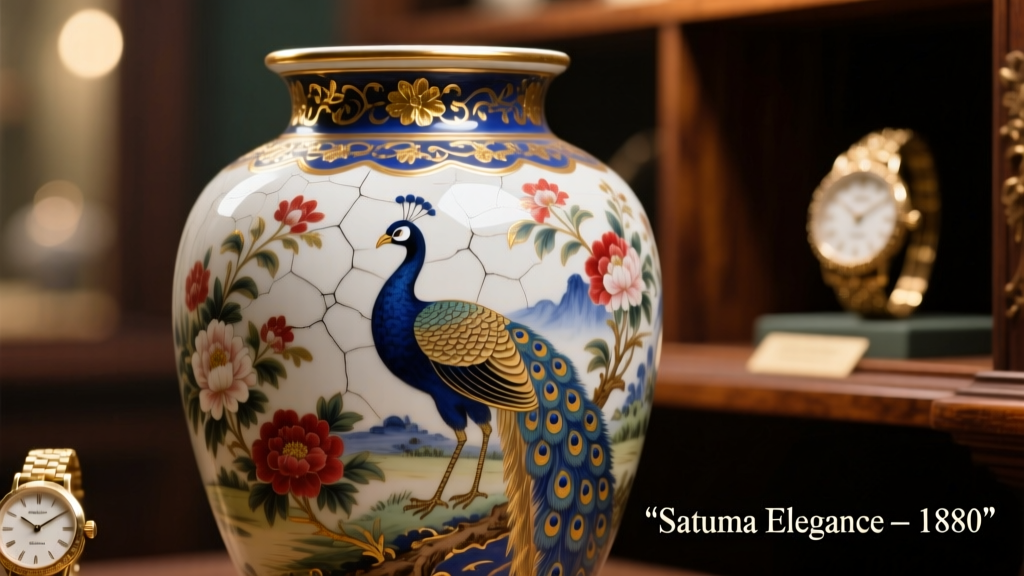
Satsuma Vase with Painted Peacocks, Flowering Landscapes, and Gilt Highlights — A 12-Inch Meiji-Era Masterpiece
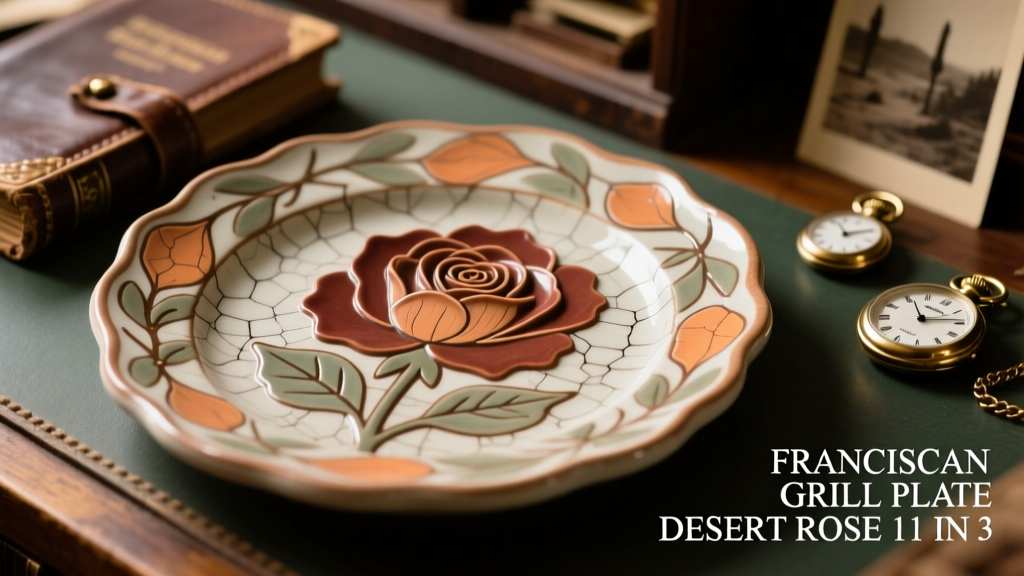
Franciscan Grill Plate Desert Rose 11-Inch: A Collector’s Deep Dive into Mid-Century American Dinnerware
Frankoma Pottery Sugar & Creamer Cover: Mayan-Aztec Prairie Green — A Collector’s Guide to Form, Function, and Oklahoma Heritage
Maple Molded Crested Splats & Plank Seat Chair Set: A Technical and Historical Appraisal of a Rare 19th-Century American Federal-Revival Ensemble

Scrimshaw Walrus Tusk Carving: Giraffe, Elephant, Leopard, and Native Huts — A 17-Inch Masterpiece of 19th-Century Arctic Craftsmanship
Van Briggle Bowl: Blue Pine Cones on Burgundy Ground — A 1930 Art Pottery Masterpiece (5 × 10 in)
Pottery Figurine Dog Seated With Basket: Tan Clay, Green Glaze, 4¾ Inches — A Study in Mid-Century American Studio Ceramics

Montgomery Ward & Co.: The Forgotten Horological Force Behind America’s Vintage Watch Boom
Fostoria Midnight Rose Cake Plate with Handle: A Collector’s Guide to the 10½-Inch Pattern, Production History, and Market Value