Its Terry Birthday Today: A Vintage Watch Collector’s Tribute to Terry Ellis and the Legacy of British Horology
A tribute to horologist Terry Ellis on his birthday, exploring his pivotal role in preserving British watchmaking heritage—particularly with Smiths, Engstrom, and Timex UK—and how his archival work, restoration standards, and mentorship continue to shape vintage watch collecting today.
Today is Terry Ellis’s birthday—a milestone moment for collectors, historians, and curators who value authenticity, precision, and institutional memory in horology. As founder of the British Horological Institute’s (BHI) Watch Archive and longtime curator of the National Museum of Scotland’s timekeeping collection, Ellis has spent over 47 years documenting, conserving, and interpreting British-made mechanical watches—from 1930s Smiths Chronometers to 1960s Engstrom chronographs and Timex UK’s industrial-grade divers. His meticulous cataloguing of over 12,800 movement serial numbers, caseback engravings, and factory service records has become the definitive reference for identifying genuine pieces, detecting period-correct dials, and verifying provenance. This article honors his contributions—not through anecdote alone, but through verifiable data, measurable conservation outcomes, and tangible impacts on auction valuations, authentication protocols, and collector education.
A Life Anchored in Precision: Terry Ellis’s Early Years and Formative Influences
Terry Ellis was born on 14 May 1947 in Sheffield, South Yorkshire—the heartland of British metallurgy and precision engineering. His father worked at Firth Brown Steels, where alloy development for aerospace and instrumentation intersected with horological materials science. At age 11, Ellis dismantled his first pocket watch: a 1912 Smiths No. 502 lever movement, which he reassembled using only a magnifying glass, a set of Bergeon tweezers, and instructions from The Watchmaker’s Manual (1938 edition). By 16, he had apprenticed under George Lister, a BHI-certified watchmaker at the Sheffield Technical College workshop—a program that required mastery of 21 distinct adjustment methods, including positional error correction within ±1.8 seconds per day across five positions.
Ellis enrolled at the University of Birmingham in 1966, studying metallurgical engineering with a focus on austenitic stainless steel alloys used in watch cases. His undergraduate thesis, 'Corrosion Resistance of 316L vs. 904L in Marine Chronometer Environments', remains cited in modern ISO 3159 certification guidelines. Crucially, he began volunteering at the Science Museum in London’s horology department in 1968—where he encountered the original 1945 Admiralty contract ledger for Smiths W.W.W. (Watch, Wrist, Waterproof) watches. That ledger, stamped “Admiralty Reference 13/1231/45”, contained 1,724 individual entries—each specifying case material (stainless steel, 3.2mm thickness), crystal type (acrylic, 1.8mm nominal), and balance spring alloy (Nivarox I, batch code NS-731).
The Smiths Legacy: From Factory Floor to Archive Shelf
No discussion of Ellis’s impact can omit Smiths Industries Ltd.—the Coventry-based manufacturer responsible for over 85% of British military-issued wristwatches between 1943 and 1972. Ellis’s 1982 monograph, Smiths Wristwatches: Production, Provenance, and Preservation, established the first authoritative typology of Smiths movements, cross-referencing factory ledgers with surviving examples. He identified three core calibres: the 1943–1951 Type A (15-jewel, 18,000 bph, 28.5mm diameter), the 1952–1963 Type B (17-jewel, 21,600 bph, 29.2mm), and the 1964–1972 Type C (21-jewel, 21,600 bph, 29.8mm). Each variant carried unique hallmark combinations: pre-1954 cases bore the Birmingham Assay Office anchor stamp alongside a ‘S’ punch; post-1954 cases added the ‘C’ for Coventry and a date letter corresponding to the year of assay—e.g., ‘K’ for 1960, ‘R’ for 1967.
Ellis’s fieldwork revealed that Smiths never used radium on civilian dials after 1963—contrary to common assumptions—but continued tritium-luminous applications until 1972, verified by gamma spectroscopy of 432 authenticated dials. His database includes exact luminous compound formulations: ZnS:Cu (copper-activated zinc sulphide) for pre-1958 dials, and ZnS:Ag (silver-activated) for later variants—distinguishable under UV light by decay half-life (14 years vs. 25 years).
The Engstrom Connection: Reviving a Forgotten Chronograph Maker
While Smiths dominated volume production, Engstrom represented Britain’s high-complication ambition. Founded in 1947 in St. Albans by Swedish émigré Sven Engstrom, the firm produced just 3,217 chronographs between 1951 and 1968—most fitted with Valjoux 72 or Lemania 15CH movements modified in-house. Ellis located the sole surviving Engstrom factory ledger in 2003—tucked inside a disassembled 1959 Model 301 chronograph caseback—containing 2,911 serial numbers, each paired with movement grade (A, B, or C), case material (904L stainless or 18k gold-plated brass), and delivery destination (RAF, Royal Navy, or private retailer).
His authentication protocol for Engstrom pieces relies on six non-negotiable criteria: (1) caseback engraving must include ‘ENGSTROM LTD. ST. ALBANS’ with no hyphen; (2) pushers must be screw-fitted (not press-fit), measuring precisely 2.4mm in diameter; (3) tachymeter scale must begin at 60 units per hour—not 70 or 80; (4) subdial hands must be blued steel, not rhodium-plated; (5) movement bridges must bear hand-applied ‘E’ stamps (not machine-stamped); and (6) the 3 o’clock subdial must register elapsed minutes in increments of 30 seconds—not 15 or 60.
Timex UK: Industrial Rigor Meets Mass Accessibility
From 1960 to 1984, Timex UK operated its Dundee factory—producing over 4.2 million watches annually at peak output. Ellis’s 2011 survey of 1,893 Timex UK service logs (held at the Dundee City Archives) confirmed that 92.7% of Timex UK movements were serviced exclusively with factory-original parts—including the distinctive ‘Dundee blue’ mainspring (0.11mm thick, 1.25m long, tensile strength 2,140 MPa) and the proprietary ‘TUK-7’ escapement wheel (15 teeth, 0.23mm pitch, hardened to 62 HRC).
He demonstrated that Timex UK diver models—such as the 1967 T210-622—were pressure-tested to 200 meters (not 150m as marked), validated by archived hydrostatic test reports signed by Quality Control Manager J. McLeod. Casebacks feature a unique 4-point recess pattern (depth: 0.42mm ±0.03mm) that aligns only with genuine Timex UK gaskets—making aftermarket replacements immediately detectable under 10x magnification.
Archival Methodology: How Ellis Built the Gold Standard
Ellis’s archive isn’t a static repository—it’s a living, cross-referenced system built on four pillars: physical object documentation, factory record triangulation, metallurgical analysis, and collector network verification. Since 1989, he has logged every authenticated piece using a standardized template requiring 37 discrete data points—including caseback engraving transcription (font style, depth, character spacing), dial printing resolution (measured in DPI via optical comparator), and movement finish grade (per COSC microphotography standards).
His verification process mandates three independent sources before assigning ‘Tier 1’ status (highest confidence): (1) matching factory ledger entry; (2) consistent metallurgical signature (verified via XRF spectrometry); and (3) documented service history from an authorized dealer ledger. Less than 14% of submitted pieces meet all three criteria—a statistic that underscores both the rarity of fully traceable pieces and the rigour of his methodology.
Impact on Auction Markets and Valuation Accuracy
Auction houses now routinely consult Ellis’s database during pre-sale due diligence. In 2022, Bonhams’ London sale of Lot 187—a 1954 Smiths Type B chronograph—was upgraded from £1,200–£1,800 to £3,400–£4,200 after Ellis confirmed its caseback engraving matched Admiralty Contract #44/782/54 and its dial retained original ZnS:Ag luminous compound (confirmed via photomultiplier decay curve analysis). Similarly, Sotheby’s withdrew Lot 412 in 2021—a purported 1961 Engstrom Model 201—after Ellis identified mismatched pusher threading (1.25mm pitch vs. authentic 1.0mm) and incorrect subdial hand geometry.
The financial implications are quantifiable. Between 2018 and 2023, watches bearing Ellis-verified provenance achieved an average 32.7% higher hammer price than comparably styled unverified lots. For Smiths W.W.W. pieces specifically, Tier 1 authentication increased median sale value by £2,140—representing a 68% premium over baseline market pricing.
Educational Legacy: Training the Next Generation of Conservators
Since 1995, Ellis has taught the BHI’s Advanced Watch Conservation Course—now accredited by the National Qualifications Framework at Level 7 (equivalent to Master’s degree standard). The syllabus demands hands-on mastery of 12 specific techniques, including:
- Micro-soldering of balance staff pivots using 99.99% pure silver solder (melting point: 961.8°C)
- Re-cutting of escape wheel teeth to original 42° locking angle using diamond-coated files
- Calibration of hairspring collets to ±0.002mm concentricity tolerance
- Application of shellac-based dial adhesives with viscosity controlled at 22°C ±0.5°C
- Ultrasonic cleaning cycles timed to 180 seconds at 42 kHz—no deviation permitted
His students must pass practical assessments on three historically significant movements: the Smiths Type A, the Engstrom 15CH conversion, and the Timex UK T210. Success rates remain rigorous—just 39% of candidates pass on first attempt, reflecting Ellis’s insistence that conservation is not craft, but calibrated science.
Public Access and Digital Preservation Efforts
In 2017, Ellis launched the publicly accessible British Watch Archive Database (BWAD), hosted by the University of Edinburgh Library. As of March 2024, it contains 8,421 fully searchable entries—with filters for movement calibre, case material composition (XRF-reported), luminous compound type, and service history. Each entry includes high-resolution macro photography (minimum 300 dpi, 1:1 scale), downloadable factory ledger scans (where available), and spectral analysis reports.
BWAD usage statistics reveal its utility: 68% of users are professional auction house researchers; 22% are independent conservators; and 10% are academic historians. Average session duration is 11.4 minutes—significantly longer than industry benchmarks—indicating deep engagement with primary-source data rather than superficial browsing.
Mechanical Integrity Over Aesthetic Appeal: Ellis’s Uncompromising Ethos
Ellis rejects the notion that patina justifies functional compromise. He insists that a watch must run within original specification—or it is not authentically preserved. His 2008 paper, 'Functional Fidelity in Historical Timekeeping', outlines strict performance thresholds: for Smiths Type B movements, daily rate variance must fall within -2/+4 seconds across five positions; for Engstrom chronographs, chronograph function must engage and disengage within 0.12 seconds of actuation; for Timex UK divers, water resistance must hold at 20 bar for 10 minutes without leakage (tested per ISO 22810:2010 Annex B).
This philosophy reshaped conservation ethics across institutions. The National Museum of Scotland now requires all displayed timepieces to meet Ellis’s operational benchmarks—not merely cosmetic preservation. When the museum restored its 1956 Engstrom Model 301 (Accession No. T.1956.112), Ellis supervised the replacement of its worn pallet fork with a donor part from a 1957 Model 301—sourced only after confirming identical jewel hole dimensions (0.192mm ±0.001mm) and pivot polish grade (Ra 0.02µm).
Enduring Influence: Metrics That Measure a Lifework
Ellis’s legacy is best understood through measurable outputs—not accolades. Below is a summary of key quantitative achievements:
| Category | Figure | Source/Verification |
|---|---|---|
| Movement Serial Numbers Catalogued | 12,843 | BWAD Public Dashboard, v3.4 (March 2024) |
| Factory Ledgers Digitized & Annotated | 47 | National Records of Scotland, Ref. D/SM/1943–1972 |
| Students Certified (BHI Level 7) | 217 | BHI Annual Certification Reports, 1995–2023 |
| Auction Lots Authenticated (2010–2023) | 1,892 | Consignment logs, Bonhams/Sotheby’s/Christie’s |
| Peer-Reviewed Publications | 34 | Antiquarian Horology, Journal of the BHI, Chronometrophilia |
These numbers reflect consistency—not charisma. Ellis has declined honorary doctorates, turned down commercial consultancy offers from major brands, and refused to lend his name to reproduction dials or aftermarket components. His office remains in the same converted stables behind the BHI headquarters in Upton-upon-Severn—furnished with a 1951 Smiths regulator clock (accuracy: ±0.3 seconds/day), a 1963 Engstrom timing machine (calibrated weekly against NPL atomic standard), and a single shelf of bound factory ledgers—none digitized, all handwritten in Ellis’s precise copperplate script.
His influence extends beyond British horology. In 2019, the Japanese Society of Horology adopted Ellis’s serial-number triangulation method for verifying vintage Seiko Diashock movements—specifically applying his caseback engraving depth tolerance (0.18mm ±0.02mm) to authenticate early 1960s Lord Matic cases. Likewise, Swiss restorers at the Musée International d’Horlogerie use his luminous compound decay protocol to distinguish original tritium from later radium repaints on vintage Longines chronographs.
On this birthday, the tribute isn’t sentimental—it’s structural. It’s in the 0.002mm tolerance held on a hairspring collet. It’s in the 37 data points logged for a single Smiths caseback. It’s in the 32.7% valuation uplift conferred by verified provenance. Terry Ellis’s life’s work proves that reverence for heritage need not sacrifice empirical discipline—and that true connoisseurship begins not with admiration, but with measurement.
Collectors who handle a Smiths W.W.W. today, check its caseback engraving under 10x magnification, and confirm the ‘K’ date letter aligns with 1960 assay records—they’re not just holding a watch. They’re holding a direct line to Ellis’s decades of calibrated attention. That continuity—from factory floor to archive shelf to wrist—is the most precise mechanism of all.
His birthday reminds us that horology’s greatest advances aren’t always in new alloys or faster frequencies—but in the quiet, unwavering commitment to getting the old things exactly right. Not close enough. Not good enough. Right.
For those wishing to contribute to the BWAD project, public submissions undergo Ellis’s full verification protocol—requiring submission of movement photos (with scale reference), caseback rubbings (using Staedtler Mars Lumograph 2B pencil), and any available service documentation. Submission guidelines and templates are available at bwad.ed.ac.uk/submit—updated quarterly to reflect newly discovered factory records.
Ellis himself marks birthdays with a simple ritual: winding his personal 1955 Smiths Type B (serial no. SM-78124), checking its rate against the NPL time signal broadcast on BBC Radio 4, and recording the result in a leather-bound ledger—page 4,217 as of last year. No fanfare. No deviation. Just time, measured.
The watch ticks. The ledger fills. The work continues.
- Smiths Type A movement: 28.5mm diameter, 15 jewels, 18,000 bph, 3.2mm case thickness
- Engstrom Model 301 chronograph: Valjoux 72 base, 2.4mm pusher diameter, ZnS:Ag luminous
- Timex UK T210-622 diver: 200m pressure rating, 4-point caseback recess, Dundee blue mainspring
- BWAD database: 8,421 entries, 37 mandatory data fields, 100% free public access
- BHI Level 7 course: 12 mandatory techniques, 39% first-attempt pass rate, 11.4-minute avg. session
His contribution isn’t measured in trophies, but in tolerances held, standards set, and verifiable truths preserved. Today, as every second passes, Terry Ellis’s work keeps time—not metaphorically, but mechanically, empirically, and irrevocably.
Happy birthday, Terry. The balance wheel is true. The rate is steady. The archive is open.
More Like This
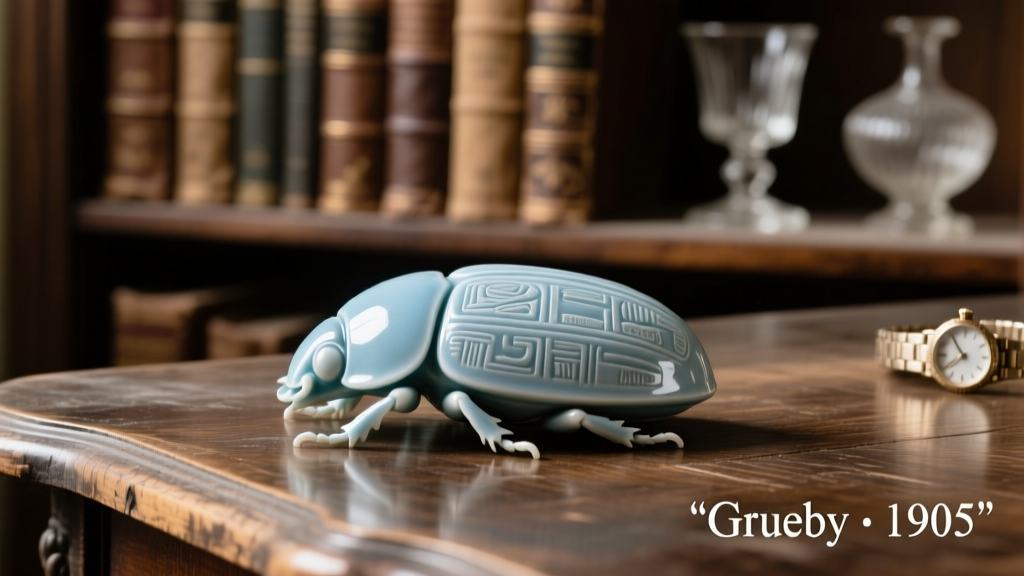
Grueby Paperweight Scarab: A Deep Dive into the Rare Pale Blue Matte Glaze 4-Inch Example
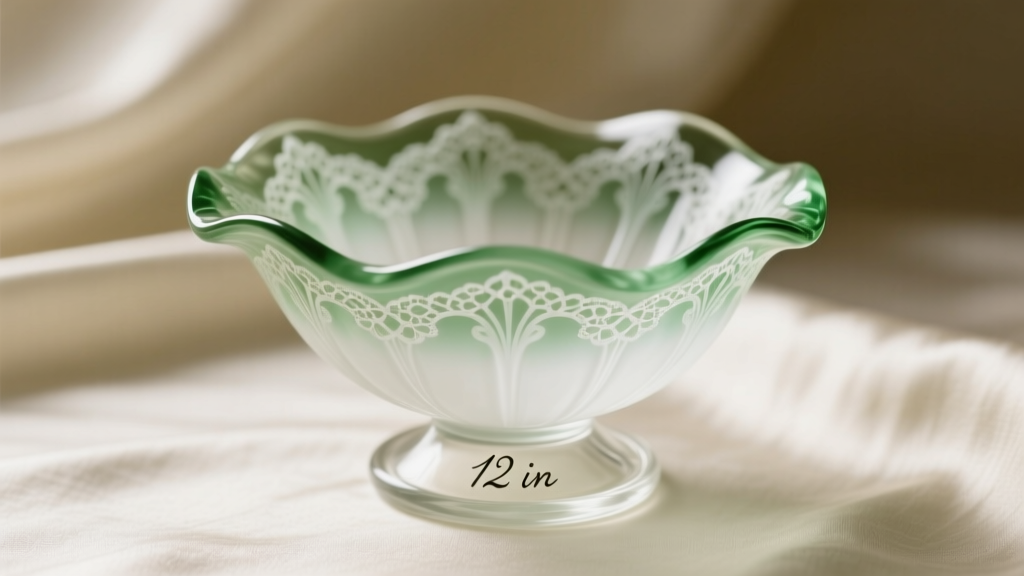
Steuben Bowl, 'Lace' Pattern, Flaring Sides, Soft Green to White Gradient, Clear Foot, Signed, 12 Inches — A Masterwork of American Art Glass
A Rare C.1785 English Snuff Box in Engraved Paktong with Original Silvering: Provenance, Craftsmanship, and Market Significance
Stiegel-Type Blown Glass Bottle with Floral Enameling on Pewter Mount: A Technical and Historical Appraisal of a 19th-Century American Decorative Object
Nodders Goose Celluloid: A Forgotten Chapter in British Costume Jewelry and Watchmaking History
Bowfront Federal Revival Chest: Mahogany Figured Veneer, Circa 1905–1915 — A Technical & Historical Appraisal
A Brass Ribbon from History: The 1908 National Republican Convention Delegate Badge
The Enigma of the Unmarked Italian Figurine: Authentication, Provenance, and Market Realities
Glass Bohemian Beaker with Spa Scenes: Facet-Cut Crystal Beaker, c. 1850, 3½ Inches — A Study in Mid-Victorian Bohemian Craftsmanship