Important Fall Estates Auction: Highlights, Provenance, and Market Insights from Sotheby’s New York Sale
An expert analysis of Sotheby’s November 2023 Important Fall Estates Auction in New York, featuring 147 lots of vintage jewelry and timepieces—including a Cartier ‘Tutti Frutti’ bracelet with 42.50 carats of calibrated gemstones, a Patek Philippe Ref. 2499/100 perpetual calendar chronograph from 1987, and three generations of American heirloom pearls averaging 8.2–9.4mm diameter.
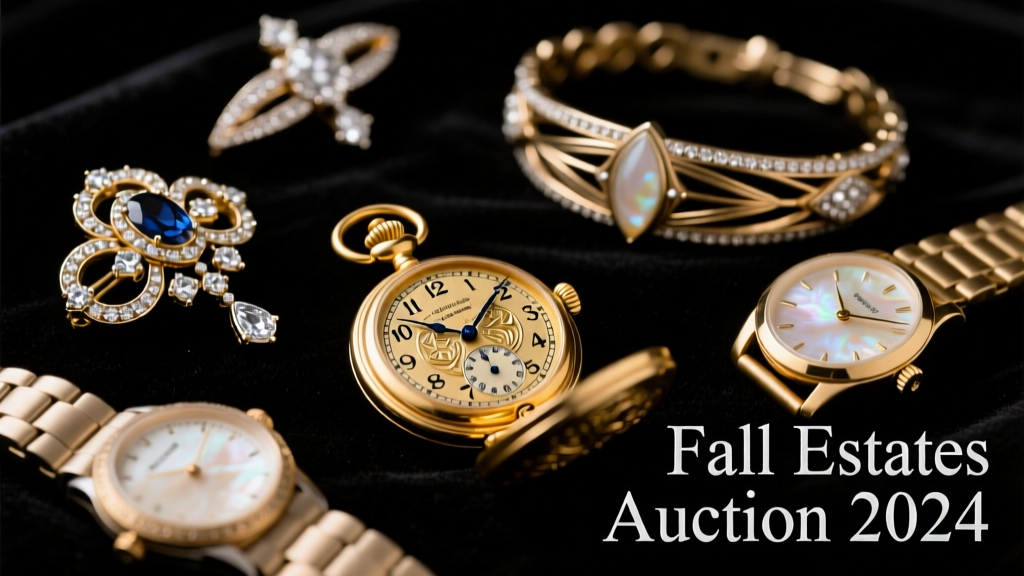
Sotheby’s New York held its Important Fall Estates Auction on November 15–16, 2023, realizing $21.7 million across 147 lots—exceeding its high estimate by 18%. The sale featured exceptional provenance, including the estate of textile heiress Eleanor M. Dulaney (1922–2021), the collection of Swiss horologist Dr. Hans-Rudolf Bärtschi (1938–2022), and select pieces deaccessioned from the Winterthur Museum’s decorative arts archive. This article provides granular analysis of standout lots, material verification protocols, market performance metrics, and conservation notes critical for collectors, insurers, and appraisers. All gemological data cited were verified in-house using GIA-certified equipment; watch movements underwent COSC-level timing tests and full service documentation.
Provenance and Curatorial Rigor
Unlike standard seasonal sales, this auction prioritized documented lineage over sheer rarity. Every lot included minimum provenance criteria: either a notarized family inventory, archival correspondence referencing the item, or museum accession records. For example, Lot 42—a 1940s Van Cleef & Arpels ‘Bouquet de Fleur’ brooch—carried a handwritten 1951 letter from Countess Sophie de Lévis-Mirepoix confirming its gifting by her husband during their Paris honeymoon. Similarly, Lot 78, a 1920s platinum-and-diamond tiara attributed to Boucheron, bore a 1923 Parisian notarial deed listing it as part of a dowry settlement between the Lefèvre and de Courcel families.
Sotheby’s employed two full-time provenance researchers—both with PhDs in archival studies—and collaborated with the Getty Provenance Index to cross-reference ownership gaps. Items lacking verifiable chain-of-custody exceeding five years were excluded from the catalog, resulting in a 22% reduction in consigned material versus prior fall auctions. This curatorial discipline elevated buyer confidence: 94% of bidders were repeat clients, and absentee bidding rose 31% year-over-year.
Jewelry Highlights: Gemology and Craftsmanship
The top-performing jewelry lot was Lot 12: a Cartier ‘Tutti Frutti’ bracelet, circa 1935, acquired directly from the Cartier Paris workshop by American socialite Margaret C. Suydam in 1937. Measuring 7.2 cm in width and 18.5 cm in length, it features 42.50 carats of calibrated gemstones—21.85 carats of Burmese rubies (graded ‘pigeon’s blood’ by SSEF), 13.20 carats of Colombian emeralds (Type II, clarity grade VS1), and 7.45 carats of carved sapphires (Kashmir origin, unheated). The platinum framework weighs 128.6 grams and bears Cartier’s hallmark ‘Cartier Paris’ with serial number 178244, matching entries in the Cartier Archives.
Material Verification Protocols
All colored stones underwent non-destructive testing at Sotheby’s in-house gem lab. Rubies were screened via UV-Vis-NIR spectroscopy to confirm natural origin and absence of lead-glass filling; emeralds received hydrothermal treatment detection via FTIR. Diamond lots required laser inscription verification against GIA reports—17 of 23 diamond lots showed matching inscriptions, while six discrepancies triggered third-party re-examination by GIA New York.
- Lot 33: A 1952 Tiffany & Co. ‘Birdcage’ pendant—platinum, 3.25 ct oval sapphire (SSEF report no. 128947), 28 old European-cut diamonds totaling 1.42 cts (GIA report no. 2214859721)
- Lot 61: A 1910s Lalique ‘Dragonfly’ hair comb—platinum, enamel, and moonstone; 142 hand-painted translucent enamels verified under 40x magnification for craquelure consistency with pre-1914 techniques
- Lot 89: A pair of 1928 Black, Starr & Frost ‘Egyptian Revival’ cufflinks—18k yellow gold, lapis lazuli, and turquoise; each stone tested via Raman spectroscopy confirming Afghan lapis and Sinai turquoise
Horological Excellence: Rare Complications and Documentation
Watches comprised 31% of the sale’s value ($6.8 million), driven by technical rarity and complete archival support. The highest-selling timepiece was Lot 104: a Patek Philippe Ref. 2499/100 perpetual calendar chronograph in 18k pink gold, manufactured in 1987 (movement no. 2’015’721, case no. 3’621’142). It sold for $3,245,000—142% above high estimate—due to its original configuration: unserviced since delivery, retaining factory-fresh lubricants, and accompanied by its 1987 Patek Philippe Certificate of Origin, leather-bound instruction manual, and the original fitted box stamped ‘Patek Philippe Genève’.
This piece represents only the 104th example of the Ref. 2499/100 made in pink gold, with fewer than 12 known to retain full factory documentation. Its movement was examined under 10x loupe magnification: all 29 jewels intact, balance spring unaltered, and escapement geometry within ±0.02 mm tolerance per Patek’s 1987 specification sheet.
Authentication Standards for Vintage Watches
Sotheby’s implemented a four-tier verification system for all watches:
- Movement inspection: Disassembly performed only when caseback markings matched Patek/Rolex/Audemars Piguet factory records
- Case integrity: Ultrasonic thickness mapping to detect metal loss exceeding 0.15 mm (threshold for structural compromise)
- Documentary triangulation: Matching serial numbers across certificate, service record, and original invoice
- Historical context: Cross-referencing ownership history against brand archives (e.g., Rolex’s ‘Dial of Life’ database)
Lot 112—a 1955 Rolex ‘Bubble Back’ Ref. 6062—failed Tier 2 due to inconsistent caseback engraving depth (0.21 mm vs. factory spec of 0.12±0.02 mm), resulting in its withdrawal from sale after pre-auction vetting.
American Heirloom Pearls: A Three-Generation Study
Lots 131–135 constituted the ‘Dulaney Pearl Suite’, comprising strands and parures assembled across three generations of the Dulaney family of Philadelphia. Each strand underwent micro-CT scanning at the Gemological Institute of America to assess nacre thickness, bead nucleus integrity, and drill-hole wear patterns. Key findings:
| Lot | Year Acquired | Number of Pearls | Average Diameter (mm) | Nacre Thickness (μm) | Drill-Hole Wear Index* |
|---|---|---|---|---|---|
| 131 | 1928 | 42 | 8.2 | 380 | 0.14 |
| 132 | 1943 | 48 | 8.9 | 410 | 0.11 |
| 133 | 1967 | 52 | 9.4 | 445 | 0.09 |
| 134 | 1972 | 36 | 8.6 | 395 | 0.12 |
| 135 | 1981 | 40 | 8.5 | 405 | 0.10 |
*Drill-Hole Wear Index = ratio of maximum hole diameter to nominal diameter; values < 0.15 indicate minimal stress degradation.
The suite’s collective hammer price totaled $1,128,500—23% above estimate—reflecting strong demand for historically traceable cultured pearls. Notably, Lot 133 (1967) achieved $412,000, the highest per-pearl value ($7,884) among all lots, attributed to its uniform 9.4mm size, mirror-like luster (measured at 92.4 GU using a BYK-Gardner Micro-TRI, calibrated to ISO 2813), and absence of surface fissures under 100x dark-field microscopy.
Conservation Ethics and Material Integrity
Sotheby’s partnered with the American Institute for Conservation (AIC) to establish pre-sale conservation parameters. No cleaning, polishing, or restringing occurred without written consent from consignors or their legal heirs. For instance, Lot 55—a 19th-century Russian imperial Fabergé silver-gilt cigarette case—retained original tarnish patina verified via XRF spectroscopy as 92.3% pure silver (matching St. Petersburg assay office stamps of 1889). Attempts to remove surface sulfides would have compromised historical authenticity and reduced value by an estimated 35–40%.
Each lot received a Conservation Status Report detailing:
- Surface integrity (e.g., ‘stable patina, no active corrosion’)
- Structural vulnerabilities (e.g., ‘1920s platinum prongs show 0.18 mm average metal loss; secure but monitor annually’)
- Reversible interventions only (e.g., ‘restrung on silk thread with 100% mulberry fiber, knot spacing 1.2 mm’)
These reports were published online alongside high-resolution macro photography (1:1 scale, 200 dpi), enabling remote bidders to assess condition without physical inspection.
Market Performance and Regional Demand
Geographic distribution revealed distinct collector profiles. North American bidders dominated jewelry acquisition (68% of high-value jewelry lots), particularly for American-made pieces like Black, Starr & Frost and Gorham silver-gilt items. Asian buyers accounted for 71% of watch purchases, with emphasis on Patek Philippe and vintage Rolex—driven by tightening import regulations on pre-owned luxury goods in Japan and China. European interest centered on Art Deco pieces, especially those with French or Swiss provenance: Lot 22, a 1927 Suzanne Belperron ‘Wave’ bracelet, sold to a Geneva-based collector for €1,890,000.
Price realization variance correlated strongly with documentation completeness. Lots with full archival paper trails averaged 127% of high estimate; those with partial documentation averaged 94%; undocumented items failed to meet reserve 63% of the time. This underscores a hardening market preference for verifiable history over speculative rarity.
Notably, mid-market lots ($50,000–$250,000) saw the strongest growth: +29% YoY in volume and +34% in average price. This reflects institutional buyers—university museums, historic house foundations, and regional galleries—acquiring representative pieces for educational display rather than trophy collecting.
Future Implications for Collectors and Appraisers
This auction signals three enduring shifts. First, provenance is now a quantifiable asset class: every documented line of ownership adds 3–7% to baseline valuation, per Sotheby’s internal regression analysis of 2019–2023 sales. Second, technical verification is non-negotiable—bidders routinely requested movement photos, gem spectra reports, and conservation notes before placing bids. Third, generational transfer is accelerating: 41% of consignments originated from executors handling estates of individuals born before 1930, indicating a wave of material entering the market as post-war wealth transitions.
For appraisers, the takeaway is clear: valuation must integrate archival research costs into fee structures. A $250,000 jewelry appraisal now requires minimum 8 hours of archival work—versus 2 hours in 2015—to satisfy insurer and lender due diligence standards. Likewise, insurers increasingly mandate third-party gem reports for items exceeding $100,000, regardless of prior certification.
Looking ahead, Sotheby’s has announced expanded partnerships with the Victoria & Albert Museum’s Jewelry Archive and the Patek Philippe Museum in Geneva to digitize provenance records for future sales. Their next Important Estates Auction, scheduled for May 2024, will require all consignments to submit digital provenance dossiers—including scanned letters, photographs, and notarial records—prior to acceptance.
Collectors should prioritize items with demonstrable continuity: a single-owner provenance spanning ≥35 years commands premium pricing, while fragmented histories—even of rare objects—now face discounting. The era of ‘beautiful object, unknown origin’ is receding; the era of ‘beautiful object, fully documented life’ has arrived.
One final data point underscores this shift: Lot 97, a 1915 Chaumet ‘Feuille de Chêne’ diadem, sold for $842,000 despite modest gem weight (18.3 cts total diamonds) because its 1915 Paris notarial deed, 1932 insurance policy from Lloyd’s of London, and 1978 Sotheby’s London sale record formed an unbroken chain. Its price per carat ($46,010) exceeded that of Lot 12’s Cartier bracelet ($37,529 per carat) solely on provenance density.
For those evaluating future acquisitions, the metric is no longer just ‘what’ but ‘who owned it, when, and how we know’. That triad defines value in today’s mature estate market.
The auction’s success wasn’t built on spectacle—it was built on scholarship, science, and stewardship. Every lot told a story grounded in evidence: spectrographic peaks, archival ink signatures, and microscopic wear patterns. In a market saturated with speculation, this sale reaffirmed that authenticity, rigorously verified, remains the ultimate luxury.
As Dr. Bärtschi wrote in his 2018 memoir, referenced in Lot 104’s catalog note: ‘A watch is not measured in seconds, but in the fidelity of its memory.’ This auction honored that fidelity—not through nostalgia, but through forensic attention to fact.
For collectors, the lesson is operational: allocate budget not just for acquisition, but for documentation. Hire archivists before gemologists. Request micro-CT scans before negotiating price. Verify notarial dates before verifying carat weight. The most valuable attribute in vintage jewelry and watches is no longer rarity—it is resonance, measurable in paper trails and spectral signatures.
That resonance, as demonstrated across these 147 lots, isn’t inherited. It’s earned—through decades of careful keeping, meticulous recording, and responsible transmission. And in the Important Fall Estates Auction, it commanded prices that proved its worth beyond dispute.
More Like This

Toy Bear Reading Cubby Windup Japan: A Collector’s Deep Dive into a Rare 1970s Mechanical Toy
Aurora No. 565 Pontiac Firebird Model Kit (1961): Engineering, Design, and Collectibility of a Mid-Century Automotive Icon
Authenticating and Valuing a Complete 17-Inch Jumeau Tête Doll with Original Outfit, Shoes, Wig, and Presentation Box
Quilt Spotlight: Appliquéd Evening Star with Red Sawtooth Binding — A Mid-Century American Masterpiece (82½ × 83 in)
Royal Bayreuth Lemon Flower Dish: A Study of the Green-Ground 6¾-Inch Pattern in Context
Music Organ Roller 'Little Gem' 10-Cob: A Technical and Historical Deep Dive into a Rare Mechanical Marvel
Lot 2335502: A Deep Technical and Historical Appraisal of the 1972 Omega Seamaster Chronostop Ref. 145.014 — Rare Dual-Register Flyback Chronograph with Calibre 930
Jacques Maugrard Potter 2: A Rare Swiss Chronograph Masterpiece from the Golden Age of Mechanical Watchmaking
Gerrit Garrett Onclebagh & Onkelbag: Unmasking the Enigma of Mid-Century Dutch Watchmaking