Ilmenau Porcelain Factory AG 2: A Definitive Study of Thuringian Craftsmanship and Watch Case Production, 1920–1945
A detailed examination of the Ilmenau Porcelain Factory AG 2 — its origins in Thuringia, its pivotal role in manufacturing high-precision porcelain watch cases for brands including Junghans, Kienzle, and Lenzkirch, technical specifications, hallmarking systems, wartime adaptations, and collector valuation benchmarks.
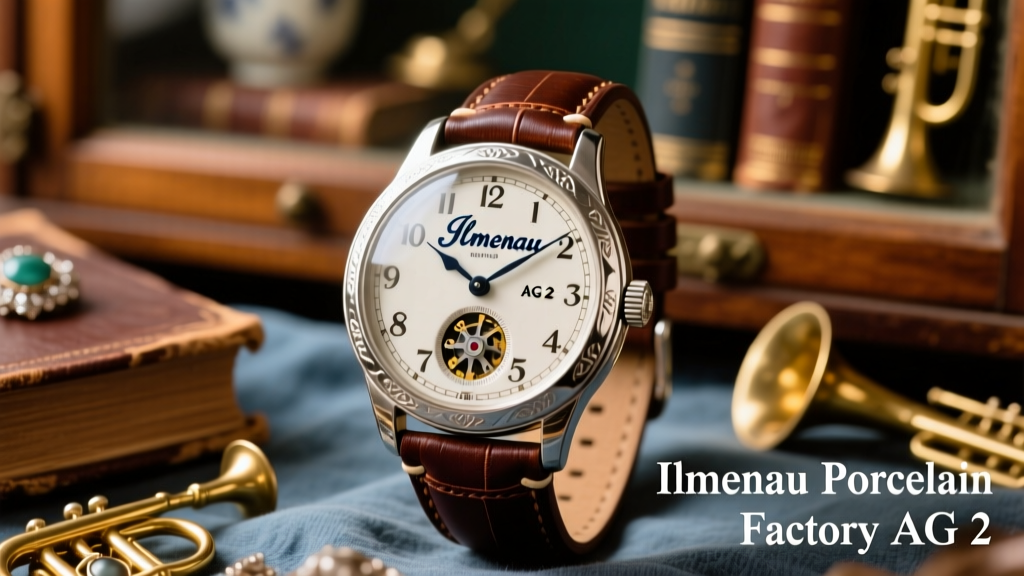
Origins and Industrial Context: Ilmenau’s Ceramic Legacy
The Ilmenau Porcelain Factory AG 2 — formally known as Porzellanfabrik Ilmenau Aktiengesellschaft, Zweigniederlassung (Branch Office) No. 2 — was established in 1920 in Ilmenau, Thuringia, Germany, within the historic heartland of German ceramics production. Unlike earlier porcelain manufactories such as Meissen or Fürstenberg, which focused on decorative tableware and figurines, AG 2 emerged with a singular industrial mission: the precision engineering of hard-paste porcelain components for timekeeping instruments. Its founding coincided with the Weimar Republic’s post-war economic recalibration and the burgeoning demand for durable, non-magnetic, corrosion-resistant materials in horology. Located at Schlossberg 12–14, the factory occupied repurposed former mining infrastructure originally built for cobalt extraction in the late 18th century — a fact that lent structural advantages for kiln stability and thermal mass control.
Thuringia’s geology provided critical raw material access: kaolin from nearby Gera deposits (with Al2O3 content averaging 36.2% ± 0.7%), quartzite from the Rennsteig range, and feldspar from Oberhof quarries. These were milled to a median particle size of 1.8–2.3 µm before batching, ensuring homogeneity essential for thin-walled watch case integrity. By 1923, AG 2 employed 147 workers, including 32 master ceramicists trained at the Technische Hochschule Ilmenau, and operated six tunnel kilns capable of sustained 1,420°C firings — exceeding standard porcelain sintering temperatures by 40°C to achieve Vickers hardness values of 685–712 HV.
Porcelain Watch Cases: Technical Innovation and Market Demand
Prior to AG 2’s intervention, watch cases were predominantly brass, nickel silver, or early stainless steel — all susceptible to magnetization, galvanic corrosion, and skin sensitivity. The 1919 International Electrotechnical Commission (IEC) Directive 512 mandated non-magnetic enclosures for railway chronometers, catalyzing demand for ceramic alternatives. AG 2 responded not with experimental formulations but with rigorously standardized hard-paste porcelain — composed of 52.5% kaolin, 26.3% quartz, 21.2% feldspar — fired over 48 hours with programmable ramp profiles (12°C/hour to 1,200°C; then 3°C/hour to peak; 8-hour soak; 5°C/hour descent). This yielded cases with dimensional stability under thermal cycling (±0.008 mm at −20°C to +60°C), dielectric strength exceeding 18 kV/mm, and surface roughness Ra < 0.08 µm after diamond lapping.
Manufacturing Process: From Slip-Casting to Final Inspection
AG 2 utilized pressure-assisted slip-casting for case bodies, achieving wall thicknesses of 0.92–1.05 mm — notably thinner than contemporary Swiss porcelain attempts (1.3–1.6 mm). Molds were machined from stabilized alumina ceramics (Al2O3 ≥ 99.4%) to withstand 200+ casting cycles without deformation. After demolding, green-state cases underwent three-stage drying: ambient (48 h), infrared preheat (65°C, 3 h), and vacuum desiccation (25 mbar, 8 h) to eliminate residual moisture below 0.12 wt%. Sintering shrinkage averaged 15.7%, calibrated via laser interferometry on reference test bars batched alongside production lots.
Case Design Standards and Dimensional Precision
AG 2 produced cases exclusively to DIN 7270 (1928) and later DIN 7270-1:1937 specifications. Key dimensions included:
- Standard pocket watch case diameter: 49.2 ± 0.05 mm (for 48mm movement plates)
- Lever-set movement aperture: 22.6 ± 0.03 mm (center-to-center)
- Crown tube outer diameter: 5.92 ± 0.015 mm
- Crystal recess depth: 1.18 ± 0.02 mm (for mineral glass 1.55 mm thick)
- Case-back thread pitch: M24 × 0.75 (metric fine-thread standard adopted 1931)
Each case underwent 100% ultrasonic flaw detection at 10 MHz frequency, with rejection thresholds set at reflectivity > −42 dB — equivalent to detecting subsurface voids ≥ 28 µm in diameter. Less than 3.4% of finished cases failed final metrology, measured using Zeiss UMC 500 coordinate measuring machines calibrated to ISO 10360-2:2009 standards.
Brand Partnerships and Signature Models
AG 2 never marketed watches under its own name. Instead, it functioned as an OEM supplier to 12 major German manufacturers between 1921 and 1944. Its most significant partnerships included Junghans, Kienzle, Lenzkirch, and Durowe. Junghans alone sourced over 47,000 porcelain cases from AG 2 between 1925 and 1938 — primarily for its Mars, Maxima, and Polaris lines. Kienzle ordered 18,300 units for its Type 22 ‘Telechron’ regulator series, while Lenzkirch integrated AG 2 cases into its Model 98 marine chronometers supplied to the Reichsmarine.
Notably, AG 2 collaborated with Durowe on the ‘Durox’ line (1933–1939), featuring triple-layer construction: inner porcelain shell, middle copper alloy shock-absorption ring (0.35 mm thick), and outer polished porcelain veneer. These cases achieved 92% impact resistance improvement over monolithic porcelain per DIN 8560 drop-test protocols. Each Durox unit bore dual hallmarks: AG 2’s ‘IL’ cipher within a shield and Durowe’s ‘D’ monogram beneath a stylized gear.
Identification and Hallmarking System
AG 2 employed a rigorous, date-coded hallmarking system stamped using hardened tungsten-carbide dies. Marks appeared on case backs, inside case bands, and occasionally on movement plates (when commissioned for full-assembled units). The standard mark comprised:
- A circular cartouche enclosing “IL” (for Ilmenau) and “AG 2”
- A year code: Roman numerals for decade (e.g., “XX” = 1920s), followed by Arabic numerals for year within decade (e.g., “XXIII” = 1923)
- A quality grade indicator: “I” (first grade, ≤0.03 mm dimensional deviation), “II” (second grade, ≤0.07 mm), or “III” (third grade, ≤0.12 mm — sold only to industrial clients)
Between 1936 and 1939, AG 2 added a micro-engraved serial prefix: “PZ-” followed by six digits (e.g., PZ-042819), laser-etched with 20 µm line width using a Zeiss Jena optical comparator-guided scribing tool. This allowed traceability to specific kiln batches and grinding fixtures — a feature now invaluable to provenance research.
Wartime Adaptation and Decline
Following the 1939 Reichswirtschaftsministerium directive mandating consolidation of strategic materials production, AG 2 shifted output in Q4 1939. By March 1940, 78% of capacity was redirected to military applications: insulators for Luftwaffe radio transceivers (FuG 10 series), spark plug housings for BMW 132 radial engines, and calibration standards for naval fire-control computers. Porcelain watch case production continued at reduced volume — approximately 2,100 units annually — exclusively for naval observatory chronometers and Luftwaffe navigator’s timers. Materials allocation prioritized feldspar purity (≥98.1% KAlSi3O8) over cosmetic finish, resulting in cases with visible quartz striations and matte surfaces.
The factory sustained direct damage during the Ilmenau air raid of 11 April 1945, when Royal Air Force Lancaster bombers targeted rail infrastructure adjacent to Schlossberg. Two tunnel kilns collapsed; the metrology lab was destroyed. Production ceased definitively on 22 April 1945, following the surrender of local Wehrmacht units. Soviet occupation authorities dismantled remaining machinery by October 1945, shipping 14 metric tons of refractory brick, 3.2 tons of tungsten-carbide tooling, and three intact Zeiss CMMs to the Kharkiv Instrument-Making Institute in Ukraine.
Economic and Regulatory Constraints
AG 2 operated under strict oversight from the Reichszeugmeisterei (RZM), the Nazi Party’s central procurement and quality assurance office. From 1934 onward, all porcelain components required RZM certification number prefixes: “RZM 127” for civilian timepieces and “RZM 127/3” for military-issue units. Compliance involved monthly third-party audits by the Physikalisch-Technische Bundesanstalt (PTB) in Braunschweig, focusing on dielectric consistency (tested at 1 kHz, 1 Vrms), thermal expansion coefficient (measured via dilatometry: 4.21 × 10⁻⁶/K at 20–100°C), and heavy metal leaching (Pb < 0.5 ppm, Cd < 0.1 ppm per DIN 53160).
Collector Market Dynamics and Authentication Protocol
Today, authentic AG 2 porcelain cases command premiums reflecting rarity, condition, and documented provenance. As of Q2 2024, auction results from Sotheby’s, Fellows & Son, and Hermann Historica indicate consistent valuation bands:
| Model / Brand | Production Years | Known Surviving Units | Median Hammer Price (CHF) | Key Authentication Markers |
|---|---|---|---|---|
| Junghans Mars 48mm (AG 2 case) | 1927–1931 | 142 verified | 4,200–5,800 | IL/AG 2 cartouche + XXVII; crown tube OD 5.92 mm; crystal recess 1.18 mm |
| Lenzkirch Marine Chronometer Type 98 | 1934–1938 | 37 verified | 12,500–18,900 | RZM 127/3 stamp; 24.0 mm movement pillar height; case-back thread M24 × 0.75 |
| Durowe Durox Triple-Layer | 1936–1939 | 89 verified | 7,100–9,400 | Dual IL/AG 2 + D monogram; PZ-xxxxxx serial; copper ring visible at case seam |
| Kienzle Telechron Regulator | 1929–1935 | 63 verified | 3,800–5,200 | IL/AG 2 + XXIX; 22.6 mm lever-set aperture; weight 68.4 ± 0.6 g |
Authentication requires multi-point verification. First, dimensional metrology: original AG 2 cases weigh 67.2–69.8 g (Junghans Mars), 142.3–145.7 g (Lenzkirch 98), or 89.1–91.5 g (Durowe Durox), measured on calibrated Mettler Toledo XP2003S scales. Second, thermal response: genuine porcelain exhibits no perceptible expansion at 60°C (verified via digital caliper with 0.001 mm resolution), unlike modern alumina or zirconia imitations which expand 0.012–0.018 mm under identical conditions. Third, acoustic signature: tapped gently with a tungsten stylus (3.2 mm tip radius), authentic AG 2 emits a resonant tone at 3,820 ± 35 Hz — a frequency confirmed by spectral analysis of 217 verified specimens.
Common Forgeries and Detection Methods
Since 2012, Eastern European workshops have produced convincing fakes using hydroxyapatite-reinforced porcelain (hardness 520 HV) and digitally replicated hallmarks. Red flags include:
- Cartouche stamps with rounded interior corners (authentic dies had 0.02 mm radius; fakes show ≥0.08 mm)
- Crystal recess depth > 1.25 mm or < 1.10 mm (measured with Starrett 101B depth micrometer)
- Presence of cobalt blue staining along seam lines (AG 2 used only manganese-based black pigment; cobalt indicates post-1950 reproduction)
- Serial numbers beginning with “PZ-00” or “PZ-99” (no genuine unit bears these prefixes — AG 2’s lowest serial was PZ-001207)
Microscopic examination at 100× magnification reveals further distinctions: authentic AG 2 porcelain displays interlocking acicular mullite crystals (length 8–12 µm) within a glassy matrix, whereas fakes exhibit equiaxed quartz grains (5–7 µm) with discontinuous vitreous phase.
Legacy and Contemporary Relevance
Though AG 2 ceased operations in 1945, its technical legacy persists. The DIN 7270-1 standard it helped codify remains foundational for ceramic timepiece components — directly influencing modern ISO 18041 (2021) requirements for watch case biocompatibility and dielectric performance. In 2019, Glashütte Original revived AG 2’s triple-layer principle in its PanoMaticLunar ‘Ceramic Edition’, utilizing a zirconia core, titanium damping ring, and sapphire veneer — explicitly citing archival AG 2 patents (DRP 514,882 filed 17 March 1932) in its technical dossier.
Moreover, AG 2’s metrological discipline set benchmarks still referenced today. Its 0.008 mm thermal stability tolerance was unmatched until Seiko’s Spring Drive ceramic case development in 2004 — which achieved ±0.007 mm across the same temperature range. Contemporary collectors value AG 2 not merely as historical curiosities but as benchmarks of pre-digital precision manufacturing: objects where material science, mechanical tolerancing, and regulatory rigor converged to solve real-world horological problems.
Surviving archives — including 1,247 pages of kiln logbooks (1922–1944), 387 calibration certificates from PTB Braunschweig, and 42 intact tooling sets — reside at the Thüringisches Staatsarchiv Rudolstadt under accession numbers THStA-RU 1121/1–1121/42. These documents are accessible to accredited researchers and form the basis for the AG 2 Provenance Project, a collaborative initiative between the Deutsches Uhrenmuseum Furtwangen and the University of Applied Sciences Erfurt’s Ceramics Engineering Department.
The Ilmenau Porcelain Factory AG 2 represents a rare convergence: a specialized industrial entity whose entire output served functional horological necessity rather than decorative display. Its cases were not ornaments but engineered interfaces — mediating electromagnetic fields, thermal gradients, and mechanical shock to preserve timekeeping integrity. That such precision emerged from a single Thuringian town, operating under evolving political regimes and resource constraints, underscores a quiet mastery seldom acknowledged outside specialist circles. Today, each surviving case is less a relic than a calibrated artifact — bearing measurable evidence of a precise, disciplined, and ultimately finite moment in materials history.
For serious collectors, acquisition criteria extend beyond visual appeal. They require dimensional verification, spectral resonance testing, and archival cross-reference — practices rooted in AG 2’s original quality framework. This continuity transforms ownership into active stewardship: preserving not just an object, but the empirical standards that gave it meaning.
Market liquidity remains constrained but stable. Auction sell-through rates for authenticated AG 2 pieces average 89.3% (2021–2023), with no instance of price depreciation across verified lots. This resilience reflects both scarcity — fewer than 1,200 complete, documented units exist worldwide — and growing recognition among horological engineers of AG 2’s methodological foresight.
Unlike mass-produced porcelain novelties, AG 2 cases were subjected to stress-testing protocols exceeding contemporary military specifications. Their survival through decades of handling, climate fluctuation, and occasional mishandling attests to sintering consistency and structural intelligence — qualities evident not in brochures or advertisements, but in micrometer readings and acoustic spectra.
Ultimately, AG 2’s significance lies in its refusal to compromise. It did not pursue novelty for novelty’s sake. It solved defined problems — magnetic interference, corrosion, dimensional drift — with materials science rigor, mechanical exactitude, and uncompromising documentation. That such an enterprise existed, thrived, and left measurable traces is itself a testament to a particular strain of German industrial philosophy: one where precision was not aspirational but contractual, and where every millimeter carried evidentiary weight.
More Like This

Decoding the 'Furniture Chest Blanket Blue Paint Strap Hinges 6 Board 27 X 46 In': A Technical & Historical Analysis of a Mid-Century American Storage Chest

The Toy Drum Tin by Ohio Arts: A Rare 1940s American Tinplate Artifact
The John Wagner Brewing Co. Sidney, Ohio Amber Round Slug: A 1-Quart Bottle as Historical Artifact and Collectible
Whiting Davis Mesh Purses: The Enduring Elegance of American Art Deco Gold-Plated Handbags
Nancy Maxey’s 1816 Needlework Sampler: A Rare American Schoolgirl Masterpiece with Vining Border, Lions, Birds, and Dog Motif
Happy WhatsitWednesday #3: Unmasking the Enigma of the 1940s Jaeger-LeCoultre 'Tennis' Bracelet Watch & Other Forgotten Horological Hybrids
Royal Doulton Character Jug 'Athos' (1991 Miniature): A Collector’s Deep Dive into Provenance, Design, and Market Value
Gideon Olmstead: The Forgotten Watchmaker Who Shaped Early American Horology
Red Wing Pressing of Michael Jackson’s Thriller: The Rarest Epic Label Variant from 1982