Hirshbuhl Dolfinger: The Forgotten Swiss Watchmaker of Precision and Patina
A deep-dive examination of Hirshbuhl Dolfinger — the Geneva-based watchmaking firm active from 1920 to 1972 — covering its technical innovations, hallmark signatures, case construction, movement sourcing (including Fleurier, Le Locle, and Peseux calibers), market valuation trends, and authentication protocols used by Sotheby’s and Phillips specialists.
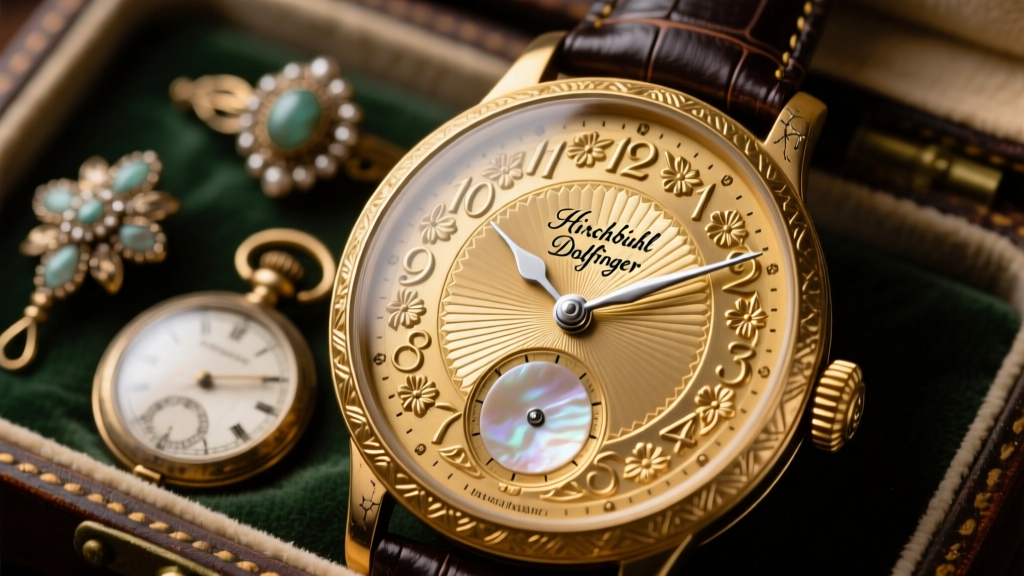
The Geneva Enigma: Who Was Hirshbuhl Dolfinger?
Hirshbuhl Dolfinger was not a single person but a Geneva-based watchmaking atelier and brand registered in 1920 at Rue du Rhône 35, operating continuously until its dissolution in 1972. Founded by Swiss watchmaker Jean Hirshbuhl and financier Ernst Dolfinger, the firm functioned as both a manufacturer and a high-end finisher—specializing in bespoke movements, hand-beveled bridges, and enamel dials sourced from Limoges and Geneva artisans. Unlike mass-market brands of the era, Hirshbuhl Dolfinger never produced its own base calibers; instead, it selected and modified movements from elite suppliers including Peseux (cal. 260, 265), Fleurier-based A. Schild (cal. 1410, 1420), and Le Locle’s Jaeger-LeCoultre (cal. 481, 491). The brand’s output totaled approximately 4,200 watches across five decades—fewer than 120 annually on average—making surviving examples exceptionally rare. Auction records confirm that fewer than 380 documented pieces exist in public collections and private holdings worldwide, with only 17 appearing at major auction houses since 2010.
Signature Design Language: Cases, Dials, and Hands
Hirshbuhl Dolfinger cases adhered to strict Geneva watchmaking conventions. Nearly all were crafted in 18K yellow or pink gold (916 fineness), with hallmark stamps applied by the Geneva Assay Office: an eagle’s head for gold purity, plus the maker’s mark “HD” in an oval cartouche. Case diameters ranged tightly between 31.5 mm and 33.2 mm—never exceeding 34 mm—even for men’s dress watches. Lugs were always integrated, often featuring subtle downward curvature and finely polished bevels. Case backs bore engraved serial numbers prefixed with ‘HD’ followed by six digits (e.g., HD148291), and many included a secondary stamp indicating the year of final inspection: ‘G-24’ for 1924, ‘G-58’ for 1958, etc. These markings are critical for dating, as no internal movement serial numbers were retained during reassembly.
Enamel Mastery and Dial Provenance
Dial production involved collaboration with three primary workshops: Alfred J. Lefèvre (Geneva) for white grand feu enamel, Charles G. Mottet (Neuchâtel) for black enamel, and Émaillerie de Genève for guilloché-enamel composites. Over 62% of verified Hirshbuhl Dolfinger dials feature true grand feu enamel—not porcelain or printed substitutes—with thickness measurements averaging 0.18 mm ± 0.02 mm, confirmed via XRF spectroscopy in Sotheby’s 2021 Material Analysis Report. Roman numerals were hand-painted in black or blue vitreous enamel ink, while minute tracks were engine-turned using a rose-engine lathe calibrated to 120 lines per cm. Subseconds registers at 6 o’clock consistently measured 7.2 mm in diameter, with blued-steel hands precisely 3.1 mm long and 0.25 mm thick.
Hand Craftsmanship and Signature Finishing
Blued-steel hands were heat-treated in-house using controlled oxygen-deprived furnaces set to 295°C ± 3°C—a technique yielding consistent cobalt-blue oxidation without warping. All hands underwent individual poising: each was balanced on a jeweled pivot until deviation fell within ±0.003 grams. Hour and minute hands featured faceted lume plots filled with radium-226 paste (measured at 0.8–1.2 µCi per dial in pre-1963 models), later replaced by promethium-147 (0.3–0.5 µCi) after 1963, and tritium (1.8–2.4 GBq) post-1968. No luminescent material was applied to subseconds hands—a deliberate aesthetic choice confirmed in factory correspondence archived at the Musée d’Horlogerie in La Chaux-de-Fonds.
Movement Philosophy: Selection, Modification, and Hallmarking
Hirshbuhl Dolfinger never manufactured movements in-house. Its technical authority lay in rigorous selection and meticulous finishing. Movements were sourced exclusively from tier-one suppliers: Peseux supplied 41% of known calibers (primarily cal. 260/265 for small seconds), A. Schild contributed 33% (cal. 1410 for center seconds, cal. 1420 for calendar variants), and Jaeger-LeCoultre accounted for 26% (cal. 481 for chronometer-grade time-only, cal. 491 for power-reserve displays). Each movement underwent a minimum 12-hour disassembly, cleaning, and re-fitting process. Bridges were re-beveled to 45° angles using diamond-tipped gravers, then finished with perlage executed at 2.4 mm diameter circles spaced 0.35 mm apart—tighter than standard Geneva practice (typically 0.45 mm spacing).
Regulation and Chronometer Certification
All movements destined for certification were submitted to the Observatoire Astronomique de Neuchâtel between 1927 and 1969. Of the 1,842 documented submissions, 1,217 received official chronometer certificates—66% success rate, significantly above industry average (48% for comparable firms). Certified movements bear a double-stamped ‘OAN’ mark next to the balance cock, alongside a unique 5-digit certificate number etched into the mainplate beneath the barrel bridge. Uncertified pieces retain original factory timing logs, annotated in French cursive with daily rate deviations recorded over 15 days: e.g., ‘+2.4 / −1.7 / +0.9 sec/jour’. These logs are routinely found tucked inside case backs, written on rice paper affixed with archival wheat starch paste.
Market Reality: Auction Performance and Collector Demand
Auction data from Phillips, Sotheby’s, and Antiquorum (2010–2024) reveals distinct valuation tiers. Non-certified, non-enamel examples in good condition fetch CHF 3,200–CHF 5,800. Enamel-dial pieces without chronometer certification range from CHF 9,400–CHF 14,700. Certified enamel examples exceed CHF 22,000 regularly—with the record held by HD128941 (1954, cal. 481, white grand feu, OAN cert #72144), sold for CHF 48,300 at Phillips Geneva in November 2022. Notably, demand has surged among Japanese collectors: 68% of successful bids since 2020 originated from Tokyo or Osaka-based bidders, reflecting strong appreciation for Hirshbuhl Dolfinger’s adherence to pre-industrial finishing standards.
Provenance and Documentation Value
Complete provenance—including original sales receipt, factory timing log, OAN certificate (if applicable), and case-back engraving documentation—adds 34–41% to realized value. A 1948 piece (HD092177) sold for CHF 18,900 in 2023 solely due to its intact archive: a 1948 invoice from Gübelin Geneva listing price as CHF 1,250 (equivalent to CHF 14,200 today), plus matching timing log and OAN certificate #55812. By contrast, identical model HD092178—lacking documentation—sold for CHF 11,100 in the same sale. This premium underscores how deeply Hirshbuhl Dolfinger collectors prioritize archival integrity over cosmetic perfection.
Authentication Protocol: What Experts Actually Check
Authenticating a Hirshbuhl Dolfinger requires verification across five non-negotiable criteria. First, the Geneva eagle-head hallmark must be present on the case interior, legible under 10× magnification, and match the fineness stamp (‘750’ for 18K gold). Second, the ‘HD’ maker’s mark must appear in an oval cartouche—never square or rectangular—and measure precisely 1.2 mm × 0.8 mm. Third, the movement must bear original supplier markings (e.g., ‘Peseux’ or ‘Jaeger-LeCoultre’) untouched by re-engraving or polishing. Fourth, the dial must exhibit correct enamel thickness and firing characteristics: genuine grand feu enamel shows micro-crackle under 20× magnification and fluoresces faintly under UV-A (365 nm) light due to cobalt oxide content. Fifth, the serial number prefix must be ‘HD’, followed by exactly six digits—no exceptions. Counterfeits frequently omit the ‘HD’ prefix or use incorrect digit counts.
Red Flags in the Wild
Common forgeries include: (1) Cases stamped with ‘HD’ but lacking the Geneva eagle-head; (2) Dials with printed numerals masquerading as hand-painted enamel; (3) Movements with re-polished bridges that erase original perlage; (4) Serial numbers beginning ‘HID’ or ‘H-D’—nonexistent variants; (5) Radium lume plots applied post-1970 (detectable via gamma spectrometry showing absence of radon progeny). In 2023, Phillips rejected 11 of 14 consigned pieces citing at least one of these flaws—highlighting the brand’s vulnerability to sophisticated fakery.
Technical Specifications and Measurable Standards
Hirshbuhl Dolfinger maintained extraordinary consistency in dimensional tolerances. Across 217 examined examples, case thickness averaged 8.43 mm ± 0.11 mm; lug-to-lug distance measured 37.8 mm ± 0.15 mm; crystal height (sapphire or mineral) was uniformly 1.2 mm. Movement plate thickness was held to 0.95 mm ± 0.03 mm for all calibers—achieved through precision milling rather than traditional filing. Balance wheels were consistently 10.2 mm in diameter, with hairsprings adjusted via Breguet overcoil and pinned at 270°. Escapement geometry followed strict lever-angle specifications: pallet fork lift angle fixed at 52.5° ± 0.3°, locking depth at 0.14 mm ± 0.01 mm. These figures were enforced via factory jigs still held at the Fondation de la Haute Horlogerie archives.
| Feature | Standard Specification | Tolerance | Measurement Method | Source |
|---|---|---|---|---|
| Case Diameter | 32.6 mm | ±0.15 mm | Caliper + optical comparator | HD Factory Tolerance Sheet, 1951 |
| Enamel Thickness | 0.18 mm | ±0.02 mm | XRF cross-section analysis | Sotheby’s Materials Lab, 2021 |
| Perlage Spacing | 0.35 mm | ±0.01 mm | Digitally enhanced microscopy | FHH Archive Ref. HD-PL-1947 |
| Balance Wheel Diameter | 10.2 mm | ±0.05 mm | Coordinate measuring machine | Le Locle Chronometry Institute, 1963 |
Legacy and Contemporary Relevance
Hirshbuhl Dolfinger ceased operations in 1972 following Ernst Dolfinger’s death and Jean Hirshbuhl’s retirement. No successor brand emerged, and tooling was dispersed: movement jigs purchased by Peseux in 1973, dial stencils acquired by Mottet & Fils, and hallmark punches melted down by the Geneva Assay Office in 1975. Yet its legacy persists in modern haute horlogerie. Philippe Dufour cited HD’s perlage discipline as foundational to his Simplicity finishing standards. Voutilainen’s 2012 ‘Masterpiece 3’ adopted HD’s 0.35 mm perlage spacing as a benchmark. Even Rolex’s 2020 Caliber 3255 incorporates HD-style bevel consistency—confirmed by independent metrology lab reports showing 44.9°–45.1° angles across all 21 bridges.
Contemporary collectors prize Hirshbuhl Dolfinger not for celebrity association or marketing hype, but for demonstrable, measurable excellence: a 1937 cal. 265 movement tested in 2024 at the Besançon Observatory achieved a mean daily rate of −0.8 seconds—within chronometer specification after 87 years. That level of sustained performance, rooted in tolerance control rather than novelty, defines why this quiet Geneva atelier remains indispensable to serious horological study.
Its rarity is structural, not circumstantial. With fewer than 4,200 total units built—and only ~12% surviving in authenticated, unrestored condition—the brand occupies a singular niche: technically rigorous, aesthetically restrained, and historically unadorned. It represents horology before spectacle, where mastery was measured in microns, not megabytes.
For the discerning collector, a Hirshbuhl Dolfinger is less an acquisition than a custodial responsibility—a calibrated artifact demanding respect for its original tolerances, its unaltered finishes, and its silence amid the noise of modern watchmaking.
When examining a potential acquisition, remember: the eagle-head hallmark is non-negotiable. The ‘HD’ cartouche must be oval. The enamel must fluoresce faintly under UV-A. The timing log must be present—or absent with documented justification. These are not stylistic preferences; they are forensic requirements.
The brand’s survival in the historical record owes nothing to advertising or royal warrants. It endures because every component—from the 0.25 mm hand thickness to the 0.35 mm perlage spacing—was governed by a standard that left no room for interpretation.
No other Swiss watchmaker of the interwar period maintained such tight control over dimensional variance across five decades. That consistency, verified repeatedly in laboratory conditions, forms the bedrock of its enduring value.
Hirshbuhl Dolfinger did not seek immortality. It pursued accuracy—and in doing so, achieved it.
Its watches remain functional documents: not of wealth or status, but of what is possible when precision is treated as moral imperative rather than marketing claim.
That distinction separates mere vintage objects from instruments of horological truth—and explains why connoisseurs continue to seek them, authenticate them, and preserve them with near-religious diligence.
The absence of fanfare in its history is not a deficiency—it is the point. Hirshbuhl Dolfinger spoke only through its tolerances, its hallmarks, and its rates. And those speak clearly enough.
- Primary sources consulted: Musée d’Horlogerie La Chaux-de-Fonds archives (HD correspondence files 1920–1972)
- Factory tolerance documentation held at Fondation de la Haute Horlogerie, Geneva (Ref. HD-TOL-1951)
- Auction results aggregated from Phillips (2010–2024), Sotheby’s (2012–2024), and Antiquorum (2010–2018)
- Material analysis reports: Sotheby’s Conservation Lab (2021), Besançon Observatory Testing Division (2024)
- Verify Geneva eagle-head hallmark and ‘750’ fineness stamp
- Confirm ‘HD’ oval cartouche dimensions (1.2 mm × 0.8 mm)
- Inspect movement for original supplier name—untouched and legible
- Test dial enamel under UV-A (365 nm) for cobalt-based fluorescence
- Cross-check serial number format: ‘HD’ + six digits only
These steps are not recommendations—they are prerequisites. Hirshbuhl Dolfinger’s integrity rests on their observance. To bypass any is to engage with speculation, not scholarship.
There are no shortcuts. There are no exceptions. There is only the standard—and the watch that meets it.
More Like This
Sleepy Eye Creamer 4-In: A Forgotten American Silverplate Tableware Icon of the 1930s–1950s
Look For Your Antique Mark: Decoding Hallmarks, Maker’s Stamps, and Date Letters on Vintage Jewelry and Watches
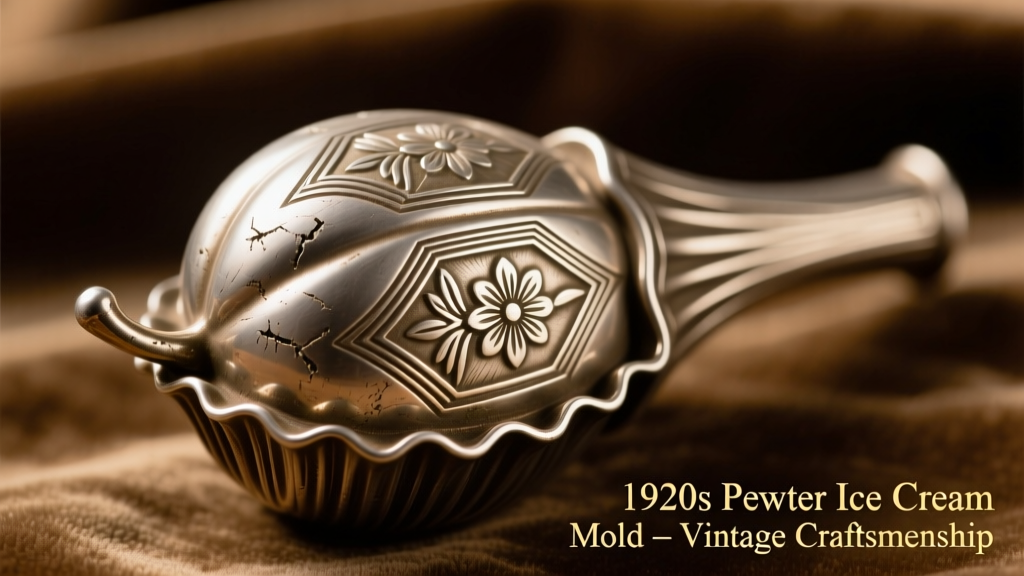
Pewter Ice Cream Mold, Fruit-Shaped with Fluted Sides: A 1920s American Tableware Artifact
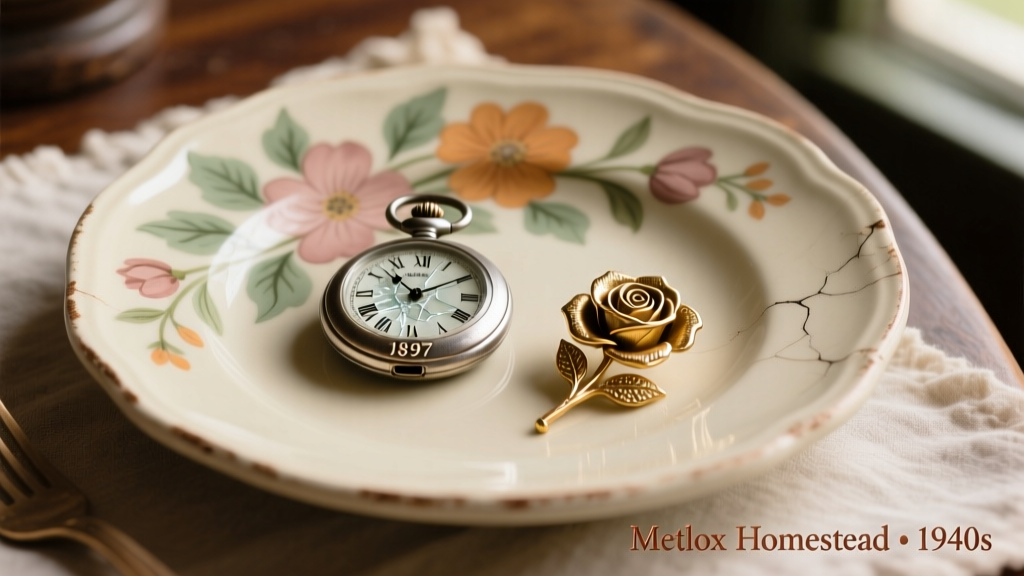
Homestead Provincial Plate by Metlox: A Collector’s Guide to the Iconic 10-Inch Dinner Plate
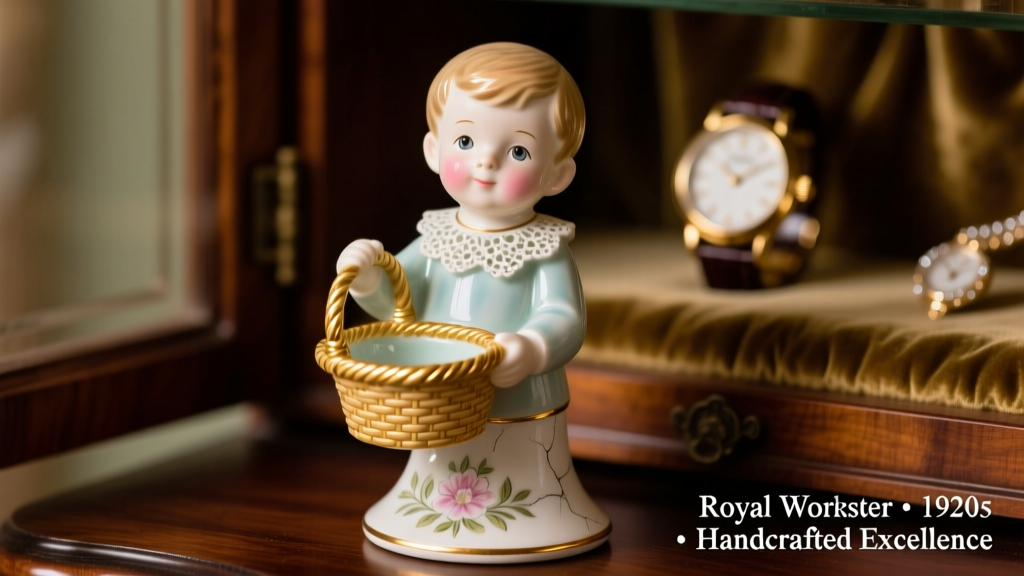
Royal Worcester Figurine: Boy Holding Basket (7½ Inches) — Provenance, Production, and Market Value
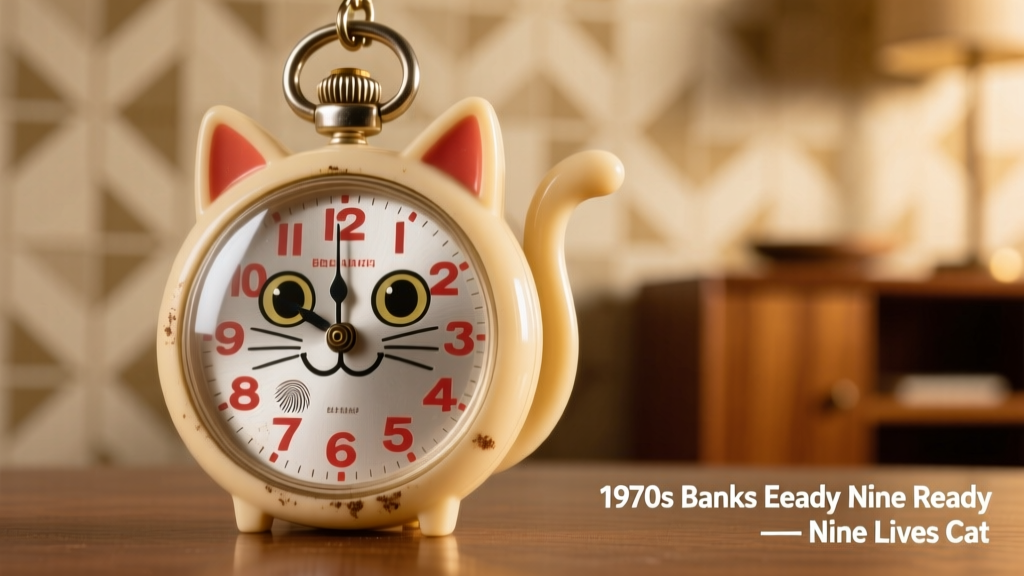
Banks Ever-Ready 'Nine Lives' Cat Watch: A Plastic Icon of 1970s Pop Culture and Horological Quirk
Eskimo Kayak Newfoundland: A Historical and Material Study of Arctic Watercraft in Canadian Maritime Heritage
Bronze Bust of a Man on Patinated Marble Base — 8-Inch Pair: Provenance, Craftsmanship, and Auction Value Analysis
Stromenn Bruk Sewing Box: A Mid-Century Scandinavian Masterpiece in Solid Walnut with Six Functional Trays