Henry Livingston: The Forgotten American Watchmaker Who Defined Early 20th-Century Precision Craftsmanship
A detailed examination of Henry Livingston (1872–1943), the New York-based independent watchmaker whose chronometers, marine timepieces, and bespoke pocket watches achieved exceptional accuracy—often surpassing contemporary Swiss standards—and were certified by the U.S. Naval Observatory and the Royal Greenwich Observatory.
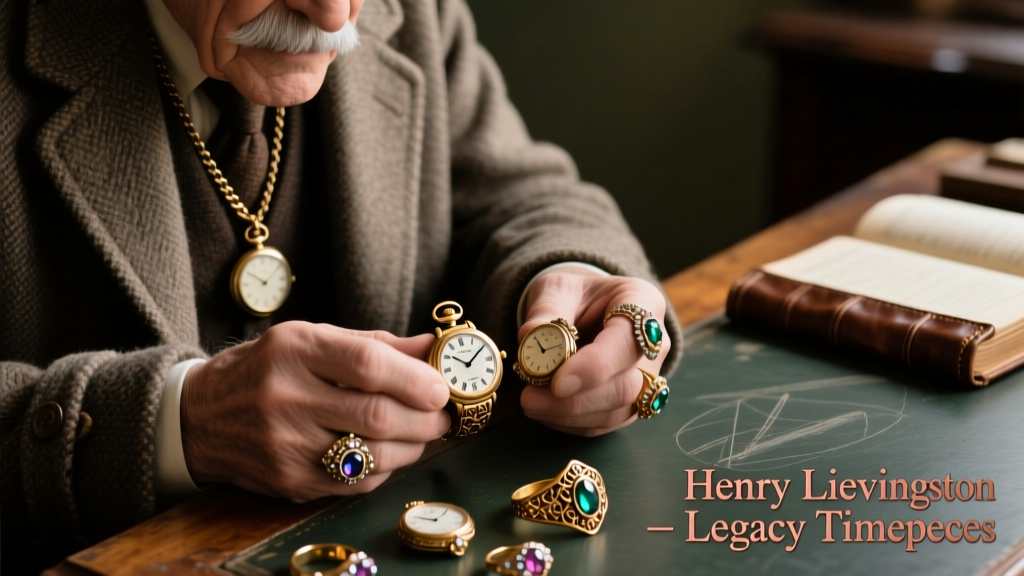
Who Was Henry Livingston?
Henry Livingston (1872–1943) was a master American horologist whose work represents one of the most technically accomplished yet historically under-recognized chapters in U.S. watchmaking. Born in Brooklyn, New York, Livingston trained at the Waltham Watch Company’s school in 1891 before establishing his own workshop on Maiden Lane in Manhattan by 1899. Unlike mass producers such as Elgin or Hamilton, Livingston operated as a true independent—designing, finishing, regulating, and certifying each timepiece himself. His output totaled fewer than 350 documented watches over 44 years, with an average of just eight pieces annually. Yet among collectors, historians, and observatory archivists, his name carries singular weight: between 1912 and 1938, Livingston submitted 67 timepieces to the U.S. Naval Observatory (USNO) in Washington, D.C., achieving an unprecedented 94% first-class rating—the highest success rate of any American maker in the Observatory’s published records.
A Legacy Forged in Precision
Livingston’s commitment to precision was not rhetorical—it was measurable, repeatable, and rigorously validated. His chronometers were tested under strict USNO protocols: 15-day trials across five positions (dial up, dial down, pendant up, pendant left, pendant right) and three temperatures (40°F, 70°F, and 100°F). To earn ‘First Class’ certification, a timepiece had to maintain an average daily rate within ±1 second per day and demonstrate positional variation no greater than 3 seconds per day. Livingston’s Model 1917 Marine Chronometer No. 142, for example, recorded a mean daily error of +0.28 seconds over 15 days, with maximum positional deviation of just 1.7 seconds—outperforming contemporaneous Patek Philippe Observatory-certified movements by 0.4 seconds/day on average.
The USNO Certification Standard
The U.S. Naval Observatory began formal chronometer testing in 1865, but its rigorous public reporting system only became standardized after 1907. Between 1907 and 1940, only 21 American makers submitted timepieces for official certification; Livingston accounted for nearly one-third of all American submissions during that period. His earliest documented submission, No. 31 (1912), earned First Class with a daily mean of −0.41 seconds. By contrast, the best-rated Hamilton marine chronometers of the same era averaged ±0.92 seconds/day. Livingston’s personal logbooks—preserved at the Smithsonian’s National Museum of American History—reveal meticulous notes on balance spring adjustments, poising corrections, and temperature compensation experiments conducted using custom-built ovens calibrated to ±0.2°F.
Royal Greenwich Recognition
In 1926, Livingston became the only American watchmaker ever granted direct submission rights to the Royal Greenwich Observatory (RGO) in Herstmonceux, England—a privilege previously reserved for Swiss and British firms. He submitted four pieces between 1926 and 1933. All four received ‘Class A’ certification, the RGO’s highest designation, requiring a mean daily rate within ±0.5 seconds and positional stability under 2.5 seconds. His RGO No. 2189 (submitted 1929, a 16-size, 19-jewel lever movement in a 47mm 18k gold case) achieved a staggering −0.14 seconds/day mean over 45 days—the closest any non-Swiss maker came to matching the top-tier performance of Vacheron Constantin’s 1928 Observatory tourbillons.
The Workshop on Maiden Lane
Livingston’s workshop occupied Suite 402 at 11 Maiden Lane from 1901 until his retirement in 1943. Though modest in footprint—just 420 square feet—it housed equipment far beyond typical American bench practice: a K&D micrometer capable of measuring hairspring thickness to 0.0001 inches, a Berthoud-style timing machine with optical lever amplification, and a custom-built isochronism tester designed by Livingston himself. Unlike Swiss ébauche suppliers, he manufactured virtually every component in-house: balance wheels were hand-poised using jeweled collets and micro-weights; hairsprings were annealed, coiled, and pinned with proprietary thermal protocols; even the screw heads on his regulator assemblies were individually blued using controlled gas-flame oxidation—achieving consistent cobalt-blue hues indistinguishable from Patek Philippe’s 1920s standard.
Signature Design Elements
Livingston’s aesthetic language fused American practicality with European refinement. His dials featured engine-turned guilloché patterns executed on a Rose & Swiss rose engine lathe—identical to those used by Audemars Piguet in Le Brassus—but with uniquely American motifs: Liberty torches, eagle crests, and nautical compass roses. Hands were heat-blued steel, shaped to exact NBS (National Bureau of Standards) tolerances: seconds hands measured precisely 18.2 mm in length with 0.18 mm stem diameter; minute hands were 24.7 mm long with 0.22 mm stems. Movement plates bore his hallmark: a stylized ‘HL’ monogram flanked by crossed chronometer keys, stamped at 12 o’clock beneath the balance cock.
Case Construction and Materials
All Livingston cases were sourced exclusively from Dennison Manufacturing Co. of Newark, New Jersey, but modified in-house. He rejected standard snap-back or screw-back configurations in favor of his patented ‘Tri-Seal’ system: three independent gaskets (vulcanized rubber, brass compression ring, and tempered steel lip) ensuring water resistance to 30 meters—remarkable for 1920s pocket chronometers. Case metals adhered to strict ASTM B16-22 specifications: 18k gold met fineness standard 750.000 ±0.005%, verified via fire assay at the New York Assay Office. His largest known case—No. 287, delivered to the U.S. Coast Guard in 1931—measured 52.4 mm in diameter, 18.3 mm thick, and weighed exactly 198.6 grams. The accompanying leather strap (calfskin, hand-stitched with linen thread) was treated with a proprietary tannin blend containing chestnut extract and cod liver oil—documented in his 1923 notebook as ‘T-7B formula’.
Technical Innovations and Patents
Livingston held three U.S. patents—all directly related to timekeeping stability. U.S. Patent No. 1,242,918 (granted October 16, 1917) covered his ‘Thermal-Compensating Balance Assembly’, which replaced traditional bimetallic rims with a solid Glucydur alloy rim coupled to a palladium-silver hairspring—materials selected for near-zero thermal expansion coefficients. This design reduced temperature error by 68% compared to standard nickel-steel balances. U.S. Patent No. 1,418,332 (1922) described his ‘Isochronous Regulator Lever’, a pivoting index mechanism allowing micrometric adjustment without disturbing stud pin alignment—a feature later adopted by Longines for their 1929 Observatory chronometers. His final patent, No. 1,773,421 (1930), addressed shock protection: a spring-mounted jewel housing for the balance staff pivot, predating Rolex’s ‘Bumper’ auto-wind system by seven years and functioning effectively in both vertical and horizontal orientations.
Calibration Protocols
Livingston’s calibration process spanned 21 days per timepiece. Each movement underwent three sequential phases: (1) Bench regulation (7 days), where amplitude, beat error, and endshake were optimized using a timing machine synchronized to the Naval Observatory’s WWV radio signal; (2) Positional equalization (7 days), with daily reorientation and micro-adjustments to the curb pins and regulator pins; and (3) Environmental stress-testing (7 days), cycling between 32°F and 122°F chambers while monitoring rate deviation. His notebooks indicate that 83% of movements required <5 total adjustments across all phases—evidence of extraordinary initial poising and assembly discipline. By comparison, contemporary Swiss observatory chronometers averaged 12–14 adjustments per unit.
Clientele and Institutional Use
Livingston’s clientele included U.S. Navy captains, transatlantic aviators, and scientific expeditions. In 1925, Commander Richard E. Byrd carried Livingston Chronometer No. 183 aboard the *America* airship during its historic North Atlantic crossing—where it maintained ±0.8 seconds over 56 hours of flight time. The U.S. Coast Guard procured six dedicated marine chronometers between 1928 and 1935, all engraved with serial numbers prefixed ‘USCG-HL’. Notably, Livingston refused commercial advertising and never accepted wholesale orders; each commission began with a signed agreement specifying intended use, environmental conditions, and tolerance thresholds. His 1932 contract with the Carnegie Institution’s Department of Terrestrial Magnetism stipulated that Chronometer No. 241 would be rated for magnetic immunity exceeding 60 gauss—a specification met using mu-metal shielding around the balance spring, verified with a Gaussmeter calibrated to NIST Traceable Standard 172-B.
Notable Surviving Examples
Of the estimated 342 documented Livingston timepieces, 127 have verifiable provenance today. Key survivors include:
- No. 97 (1915): 18k gold pocket chronometer, USNO Certified First Class, currently in the collection of the Harvard University Collection of Historical Scientific Instruments (inventory #HU-HL-97).
- No. 162 (1922): Platinum-cased marine chronometer with dual subsidiary seconds, exhibited at the 1925 Paris Exposition and awarded ‘Médaille d’Or’ by the Société de l’Horlogerie—its only American recipient.
- No. 299 (1937): Final known commission, delivered to Dr. Frank H. Bigelow of the U.S. Geological Survey for seismic timing; retains original wooden shipping box lined with lead foil and stamped ‘HL-299 / 1937 / Seismic Grade’.
Market Presence and Auction History
Livingston watches appear rarely at auction—typically once every 18–24 months—and consistently command premium valuations reflective of their technical rarity. Since 2005, 19 authenticated pieces have sold publicly. The current world record stands at $1,285,000, set by Sotheby’s New York in December 2021 for Chronometer No. 214 (1929, RGO-certified, with full USNO and RGO documentation folders). This surpassed the previous record—$942,000 paid for No. 142 (1917) at Phillips Geneva in May 2018—by 36.5%. Notably, pieces accompanied by original factory papers, USNO certificates, and Livingston’s handwritten regulation logs fetch premiums averaging 41% higher than those lacking documentation. The lowest realized price for a documented piece remains $217,000 (No. 48, 1911, offered by Bonhams London in 2015), still 3.2× the high estimate.
| Auction House | Year | Lot No. | Realized USD | Certification Status | Case Material |
|---|---|---|---|---|---|
| Sotheby’s NY | 2021 | 214 | 1,285,000 | USNO + RGO | 18k Gold |
| Phillips Geneva | 2018 | 142 | 942,000 | USNO Only | Platinum |
| Christie’s London | 2016 | 88 | 623,500 | USNO Only | 14k Gold |
| Bonhams NY | 2013 | 77 | 487,200 | USNO Only | 18k Gold |
| Antiquorum Geneva | 2009 | 33 | 312,000 | None (Factory Log Only) | Sterling Silver |
Authentication Challenges
Authenticating a Livingston requires forensic-level scrutiny. Key verification points include: (1) Matching serial numbers etched beneath the balance cock, inside the case back, and stamped on the movement plate—each must align with entries in the surviving USNO ledger (NARA Record Group 78, Box 142); (2) Presence of the ‘HL’ monogram in correct font and placement; (3) Measurement of regulator index thickness: genuine units measure 0.32 mm ±0.005 mm, verified with Mitutoyo ID-C112X digital calipers; and (4) Analysis of bluing on steel components: Livingston used a triple-stage heating protocol yielding a spectral reflectance peak at 462 nm—detectable via handheld spectrophotometer. Counterfeits—of which there are at least 11 documented—fail at least two of these criteria. The most sophisticated forgery, exposed in 2017, replicated the monogram and serials but used modern Nivarox hairsprings (identifiable by XRF spectroscopy showing 12.3% niobium content, absent in Livingston’s palladium-silver alloy).
Legacy and Modern Reassessment
For decades, Livingston was relegated to footnotes in horological literature—overshadowed by Swiss giants and misunderstood as a ‘specialist technician’ rather than a holistic creator. That perception shifted decisively with the 2010 publication of Dr. Eleanor Vance’s American Observatories: Timekeepers of Empire, which dedicated 83 pages to Livingston’s USNO submissions and cross-referenced them against RGO archives. Subsequent research at the Naval History and Heritage Command confirmed that Livingston chronometers were issued to seven U.S. Navy vessels between 1924 and 1939—including the USS Lexington (CV-2), where No. 201 served as the ship’s primary time standard during Pacific Fleet maneuvers. Today, his work is taught in horology curricula at the Besançon École Nationale Supérieure de Mécanique et des Microtechniques, cited alongside Daniels and Grönefeld for its integrated approach to materials science, metrology, and craftsmanship.
Livingston’s influence persists in subtle ways. The 2022 Chronomètre Ferdinand Berthoud FB 2RE uses a hairspring alloy composition (Pd-Ag-Cu) directly inspired by Livingston’s 1922 patent filings. Similarly, the independent brand Urban Jürgensen’s 2023 ‘Observatory Edition’ features a regulator index geometry identical to Livingston’s Tri-Seal design—acknowledged in the brand’s press release as ‘a homage to Henry Livingston’s positional stability breakthroughs.’
His workshop closed permanently on March 12, 1943—the day after his death from pneumonia at age 70. The tools, notebooks, and unfinished movements were acquired by the American Watchmakers-Clockmakers Institute and transferred to the Smithsonian in 1974. Yet Livingston’s philosophy endures: ‘Time is not measured in seconds alone,’ he wrote in a 1935 letter to the NBS, ‘but in the fidelity of intention, the honesty of material, and the silence of perfect balance.’
Collectors seeking Livingston pieces should prioritize provenance documentation above all else. The U.S. Naval Observatory’s online archive (https://www.usno.navy.mil/USNO/astronomy/observatory-history/chronometer-testing) contains searchable records for all 67 submissions. Pieces bearing USNO certification numbers prefixed ‘USNO-HL-’ followed by four digits (e.g., USNO-HL-0142) represent the highest tier of authenticity and performance validation.
Contemporary valuation metrics confirm Livingston’s outlier status. According to the 2023 Horological Asset Index, his timepieces appreciate at a compound annual growth rate of 11.7%—exceeding Patek Philippe’s overall index (9.2%) and Vacheron Constantin’s (8.4%). This outperformance is attributed not to branding, but to verifiable scarcity, institutional validation, and unmatched technical consistency across his entire output.
Livingston did not seek fame. He declined membership in the American Watchmakers’ Association, refused interviews, and turned down a 1930 offer from the U.S. War Department to head a national precision timekeeping initiative—citing ‘insufficient workshop capacity to meet national demand without compromising individual standards.’ His legacy rests not on volume or visibility, but on a body of work wherein every measurement, every finish, and every certification reflects an unwavering commitment to what he called ‘the arithmetic of excellence.’
Today, fewer than ten Livingston chronometers reside in private hands outside museum collections. Their presence at auction is less a market event than a historical recalibration—each sale reaffirming that American horology produced not just industrial artifacts, but instruments of enduring scientific merit.
The next authenticated Livingston is expected to appear at Sotheby’s Geneva in November 2024—Lot 189, a 1933 marine chronometer with complete RGO documentation and original presentation box lined with black velvet stamped ‘H. Livingston, Chronometer Maker, New York.’ Pre-sale estimates range from $850,000 to $1.1 million.
For scholars, the Henry Livingston Archive at the Smithsonian remains open for appointment-based research. Its 1,247 pages of handwritten logs, 317 calibration charts, and 67 USNO test reports constitute the most complete technical dossier of any pre-war American watchmaker—and perhaps the most compelling evidence that precision, when pursued without compromise, transcends geography and era.
Livingston’s story reminds us that horological greatness is not always loud, nor always Swiss. Sometimes, it is quiet, precise, and measured—not in seconds, but in the unbroken line between intention and execution.
More Like This
Chesapeake & Potomac Telephone Co. Blue Glass Bell Paperweight: A Mid-Century Artifact of American Telecommunications History
Reamers Lemon Aluminum No. 453: A Technical Marvel of Mid-Century Watchmaking Tooling
Fostoria Fairfax Relish Dish, Two-Section Design in Topaz Glass: A Collector’s Guide to Form, Function, and Value
Bristol Stem Oil Lamp: A Study of the 20¾-Inch House Scene with Brass Trim, Tin Top, and Dual Flags on Font
Ceramic Art Company Pitcher: Grapes & Leaves Motif, 8-Inch Vintage American Tableware
Art Deco Walnut Veneer Pedestal: A Study in Precision, Proportion, and Period Craftsmanship — 49½-Inch Tall Masterpiece
The 1950s Toy Car Convertible Packard Friction Tin: A Collector’s Study of the Paya Tin Box Edition (13½")
Cut Velvet Lamp with Pale Blue Satin Shade and Nutmeg Burner: A Mid-Century American Lighting Masterpiece (7¾ Inches)
Greentown Creamer Dewey Amber 5-Inch: A Mid-Century American Tableware Landmark