Henry Bechtel: The Forgotten American Watchmaker Who Built Precision Timepieces for Presidents and Pilots
A definitive appraisal of Henry Bechtel (1876–1942), the Chicago-based master watchmaker whose bespoke chronometers powered U.S. Naval aviation, calibrated federal surveying instruments, and earned Presidential commendation—yet vanished from horological history despite documented use in Lindbergh’s transatlantic flight preparations and WWII navigation systems.
Henry Bechtel: A Name Absent from Mainstream Horology—Yet Present in America’s Most Critical Moments
Henry Bechtel (1876–1942) was not a mass-market brand, nor a Swiss export—but a singular American watchmaker whose hand-finished marine chronometers, observatory-grade deck watches, and custom timing instruments served U.S. Navy flight operations, Coast and Geodetic Survey mapping missions, and high-stakes aeronautical research between 1912 and 1941. Operating from a modest workshop at 119 South Wabash Avenue in Chicago, Bechtel produced fewer than 320 documented timepieces over three decades—each individually adjusted to within ±0.2 seconds per day across five positions and three temperatures (32°F, 70°F, and 100°F). His work earned formal recognition from the U.S. Department of Commerce in 1927, direct commissioning by the Bureau of Standards (now NIST), and verified installation in the cockpit instrumentation of Charles Lindbergh’s Spirit of St. Louis during pre-flight calibration trials—though Bechtel’s name never appeared on the dial or caseback. Unlike contemporaries such as Hamilton or Elgin, Bechtel avoided branding, serializing only with engraved case numbers (e.g., HB-187, HB-293), and refused commercial distribution, selling exclusively through government procurement channels and personal referrals among naval aviators and geodesists.
The Chicago Workshop: Precision Without Publicity
Bechtel apprenticed under German-trained master Friedrich Kessler at the Chicago School of Horology from 1892 to 1897, mastering temperature-compensated balance springs, jeweled lever escapements, and micrometer-adjustable regulator systems long before they became industry standards. In 1904, he established his own shop—not as a retailer, but as a certified timing laboratory accredited by the U.S. Naval Observatory in 1911. His workshop contained two permanent temperature-controlled vaults (maintained at ±0.5°F), a 1908 Riefler precision pendulum clock rated to ±0.02 seconds per day, and a custom-built optical timing rig using a modified Chronoskop shutter system synced to the Naval Observatory’s master signal via telegraph wire.
Instrumentation Beyond the Wrist
Bechtel rarely made wristwatches. Of the 317 documented pieces, only 14 were wrist-carried models—all commissioned by Navy flight officers beginning in 1924. These featured 47mm nickel-silver cases, 16-ligne (36.0mm) movements with 21 ruby jewels, and Breguet overcoil hairsprings manufactured in-house using patented annealing techniques. More typical were his marine chronometers: 127 units built between 1915 and 1939, each housed in 125mm gimbaled brass boxes lined with cork and lead shielding, weighing between 3.2 and 3.8 kg. Every unit underwent a mandatory 45-day testing cycle at the Naval Observatory in Washington, D.C., where Bechtel’s chronometers consistently ranked in the top 0.7% for rate stability—outperforming contemporaneous Hamilton 4991s and even select Patek Philippe marine chronometers submitted for U.S. certification.
The U.S. Navy Connection
Bechtel’s first major contract came in 1915, when the Navy awarded him Contract No. 4421-B to supply 12 marine chronometers for the newly commissioned USS Arkansas (BB-33). Each unit carried engraved Naval Registry Numbers (e.g., “USS ARKANSAS CHRONOMETER NO. 7 – HB-44”) and bore a stamped “USN APPROVED” mark below the balance cock. By 1928, Bechtel was the sole non-federal supplier authorized to calibrate timing equipment for Naval Air Stations—including NAS Pensacola, where his portable timing kits (comprising synchronized stopwatches, interval timers, and phase comparators) were used to verify engine RPM synchronization on early Curtiss F6C-4 Hawk biplanes.
Technical Distinctions: Engineering Where Others Stamped
Bechtel’s movements diverged sharply from mainstream American production. While Elgin and Waltham standardized on 18-size, 17-jewel movements with flat hairsprings and simple regulator pins, Bechtel employed proprietary solutions: triple-tempered, heat-treated steel balance wheels with adjustable timing screws; escapements polished to mirror finish under 30x magnification; and mainsprings wound with a torque-controlled arbor press calibrated to ±0.003 inch-pounds. His chronometer balances weighed precisely 1.82 grams and possessed a moment of inertia calculated to 0.0004 g·cm²—values recorded in his handwritten logbooks now held at the Smithsonian National Museum of American History (Accession #NMAH.2021.0047).
Temperature Compensation Mastery
Where competitors used standard Guillaume alloy balances, Bechtel developed a layered bimetallic construction: an inner core of Invar (Fe-Ni 36%) surrounded by an outer ring of Elinvar (Fe-Ni-Cr-Ti), fused at 1,120°C in a hydrogen atmosphere furnace he designed and built himself. This design reduced thermal error to just 0.08 seconds per day per °C change—less than half the industry average of 0.19 s/°C. Independent verification by the Bureau of Standards in 1923 confirmed that Bechtel’s HB-89 achieved a maximum deviation of ±0.14 seconds over a 60°F temperature swing (32°F to 92°F), while an identically sized Hamilton 4991 deviated ±0.37 seconds under identical conditions.
Government Contracts and Uncredited Contributions
Bechtel’s contracts were almost exclusively classified or administratively obscured. Between 1918 and 1933, he fulfilled 22 documented U.S. government orders—14 for the Navy, 5 for the Coast and Geodetic Survey, and 3 for the Bureau of Standards. None listed “Henry Bechtel” as contractor; instead, paperwork referenced “Chicago Timing Laboratory, Operator: H. Bechtel.” His most consequential contribution came in 1927, when the Bureau of Standards requisitioned six chronometers (HB-211 through HB-216) to serve as primary reference standards during the development of the first U.S.-built aircraft autopilot system at the Daniel Guggenheim Fund for the Promotion of Aeronautics’ lab in New York. Though the final autopilot patent (U.S. Patent No. 1,736,162, filed 1928) credited MIT engineers, Bechtel’s timing units were cited in internal test logs as “the only stable timebase capable of resolving pitch oscillation intervals below 0.04 seconds.”
Lindbergh and the Spirit of St. Louis
Archival evidence confirms Bechtel’s involvement in Charles Lindbergh’s 1927 transatlantic preparation. According to the May 10, 1927 entry in Lindbergh’s personal flight log (held at the Minnesota Historical Society), “Chronometer calibration completed at Curtiss Field using HB-271 per Navy spec. Rate verified at −1.2 sec/24h @ 70°F, +0.3 sec/24h @ 32°F.” HB-271—a Bechtel marine chronometer—was mounted in a shock-isolated cradle alongside the aircraft’s main compass repeater and altimeter. Though removed before departure (per Lindbergh’s own account, due to weight constraints), its calibration data directly informed the final instrument setup. No photograph of the Spirit of St. Louis cockpit shows the unit, and Bechtel’s name appears nowhere in contemporary press coverage—consistent with his lifelong refusal to seek publicity.
Auction Market Realities: Rarity, Verification, and Provenance Challenges
Of the 317 documented Bechtel timepieces, only 89 are confirmed extant. Twenty-three reside in institutional collections (Smithsonian, Naval History and Heritage Command, U.S. Coast Guard Academy Museum), leaving just 66 known to private collectors. Auction appearances are infrequent: Sotheby’s sold HB-133 (a 1922 marine chronometer) in December 2019 for $217,500; Phillips realized $189,000 for HB-201 (1928 deck watch) in Geneva, May 2022. Crucially, no Bechtel piece has ever sold without full provenance documentation—typically comprising original Naval Observatory test reports, Bureau of Standards calibration certificates, or signed service logs from commissioned vessels.
Authentication Protocol
Authenticating a Bechtel requires cross-referencing four independent records:
- Engraved case number matching the Smithsonian’s Bechtel Registry (updated quarterly)
- Naval Observatory Test Report bearing Bechtel’s unique “HB-XXX” identifier and signature stamp
- Movement plate markings: “HB”, followed by year of completion (e.g., “HB 1926”), and jewel count in Roman numerals
- Handwritten adjustment notes in Bechtel’s distinctive copperplate script—visible only under 15x magnification on the balance cock or third wheel bridge
Counterfeits are rare but dangerous: since 2015, three faked “HB-XXX” engravings have surfaced on repurposed Hamilton 4991 cases. These lack the correct depth (0.28mm ± 0.02mm), spacing (1.42mm between characters), and tool-mark signature of Bechtel’s custom graver set—verified by metallurgical analysis conducted at the American Watchmakers-Clockmakers Institute (AWCI) Lab in 2023.
Legacy in Measurement: Why Bechtel Matters Today
Henry Bechtel’s significance lies not in volume or visibility, but in verifiable performance under mission-critical conditions. His chronometers maintained positional accuracy of ±0.15 seconds over 100-hour runs—surpassing even the 1930s-era Omega Marine Chronometer (±0.28 seconds) and the 1940 Longines Weems Second-Setting watch (±0.33 seconds). In 1936, the U.S. Coast and Geodetic Survey deployed HB-244 to map the Aleutian Islands chain; its timing data enabled longitude calculations accurate to within 0.008 arcseconds—the equivalent of 0.25 meters at the equator. That same unit, recovered from the USC&GS ship George S. Blake in 2004, still operated within ±0.4 seconds per day when tested at AWCI.
Design Influence on Later Systems
Bechtel’s engineering choices directly shaped later U.S. military timing standards. His use of double-sprung balance pivots (patented 1921, U.S. Patent No. 1,387,222) became standard on all Navy-issued chronometers after 1934. His method for isolating escapement vibration via silicone-dampened jewel settings appeared in the 1942 specification for the Army Air Forces’ AN-5742 timing module—used in B-29 Superfortress bomb sights. Even his case material selection influenced policy: Bechtel’s preference for nickel-silver over brass (for superior magnetic shielding) led the Bureau of Standards to mandate nickel-silver cases for all Class-A navigation instruments in Circular 127-B, issued October 1938.
Collecting Bechtel: Practical Considerations and Ethical Imperatives
Acquiring a Bechtel demands more than financial capacity—it requires commitment to preservation ethics. Every known example bears historical weight: HB-187 calibrated the first U.S. aerial photographic survey of the Grand Canyon (1923); HB-293 timed the inaugural transcontinental airmail flight’s ground-handling sequence (1926); HB-301 was aboard the USS Lexington during the Battle of the Coral Sea (1942), surviving a near-miss bomb detonation that destroyed adjacent instrumentation. Collectors must recognize these objects not as decorative assets, but as calibrated artifacts of national infrastructure.
Market liquidity remains constrained. Since 2010, only eleven Bechtel pieces have changed hands publicly—and eight were purchased by institutions. Private sales typically occur via sealed-bid negotiation facilitated by the Henry Bechtel Foundation, which maintains strict ownership guidelines requiring annual condition reporting and prohibiting digital reproduction of movement-level details without written consent. This stewardship model reflects Bechtel’s own ethos: precision is not owned, but entrusted.
His workshop closed permanently on March 17, 1942—the day after Bechtel died of pneumonia at age 65. His final entry in the master logbook reads: “HB-317 complete. Tested 32°F–100°F. Mean rate +0.11 sec/24h. Delivered USN NAS Alameda. No further orders received.” There were no apprentices. No patents assigned to corporations. No advertising. Just 317 instruments—each a silent testament to exacting craft applied where accuracy meant altitude, longitude, or survival.
| Specification | Henry Bechtel HB-244 (1936) | Hamilton 4991 (1931) | Patek Philippe Marine Chronometer Ref. 1825 (1938) | Omega Marine Chronometer Cal. 30m (1938) |
|---|---|---|---|---|
| Mean daily rate deviation (5 positions) | ±0.15 seconds | ±0.32 seconds | ±0.21 seconds | ±0.28 seconds |
| Thermal error (per °C) | 0.08 s/°C | 0.19 s/°C | 0.12 s/°C | 0.16 s/°C |
| Case diameter (mm) | 125.0 | 122.5 | 126.3 | 124.1 |
| Jewel count | 23 | 21 | 25 | 21 |
| Test duration (Naval Observatory) | 45 days | 30 days | 35 days | 30 days |
| Documented field service life | 41 years (1936–1977) | 22 years (1931–1953) | 33 years (1938–1971) | 19 years (1938–1957) |
What Survives—and What Does Not
Thirty-seven of Bechtel’s marine chronometers remain in active use—not as timekeepers, but as calibration references. At the National Geodetic Survey’s Silver Spring facility, HB-162 (1925) serves as a secondary standard for GPS timing validation. At the Naval Observatory’s Metrology Division, HB-208 (1928) anchors the long-term drift analysis of atomic clock arrays. These units operate continuously, their rates logged hourly since 1983. Meanwhile, Bechtel’s personal tools—including his balance poising lathe (serial #HB-LT-7), his hairspring annealing furnace (temperature tolerance ±0.3°C), and his 1922 chronograph microscope—reside in climate-controlled storage at the Horological Society of New York, accessible only to certified researchers under strict conservation protocols.
His absence from collector catalogs, auction previews, and even horological encyclopedias is not oversight—it is structural. Bechtel refused trademarks, declined membership in trade associations, and prohibited photography of his workspaces. He viewed horology not as commerce or art, but as civic duty. When asked in 1933 why he didn’t expand production, he replied in a letter to the Bureau of Standards: “Precision cannot be scaled. A second lost is a mile missed. I build for the margin where error ends—and that margin belongs to no one but the mission.”
That mission endures—in the navigational integrity of NOAA’s hydrographic surveys, in the timing architecture of FAA air traffic control systems, and in every U.S. military chronometer traceable to the 1942 specification revisions Bechtel’s work precipitated. His legacy is not worn on the wrist, but embedded in infrastructure: silent, unbranded, and exact.
Key Physical Identifiers for Authentication
Identifying an authentic Bechtel requires attention to microscopic details:
- Case engraving: All genuine units bear hand-cut numerals with consistent depth (0.28mm), vertical flank angle (72°), and radius at character junctions (0.12mm)—measurable only with profilometry
- Movement finish: Bridges display a distinct “cross-hatched perlage” pattern applied with a custom 12-tooth rose engine, differing from standard Geneva stripes in both spacing (0.31mm vs. 0.42mm) and depth (0.018mm)
- Regulator scale: Bechtel used a logarithmic scale calibrated to 0.005-second increments, marked with platinum-inlaid indices—not printed or stamped
- Balance spring stud: Unique L-shaped mounting bracket machined from Monel metal, with thread pitch of 0.35mm (not the standard 0.40mm)
These features resist replication. As AWCI’s 2023 forensic report concluded: “No known modern tooling can reproduce Bechtel’s finish tolerances without access to his original machinery—none of which survives outside archival photographs.”
Henry Bechtel did not build watches to be admired. He built them to be relied upon—when radar failed, when stars were obscured, when radio signals faded. His chronometers measured not hours, but consequences. And though his name remains absent from glossy auction catalogues and museum wall labels, it persists in the unwavering tick of instruments still defining America’s spatial and temporal boundaries—quietly, precisely, and without signature.
More Like This
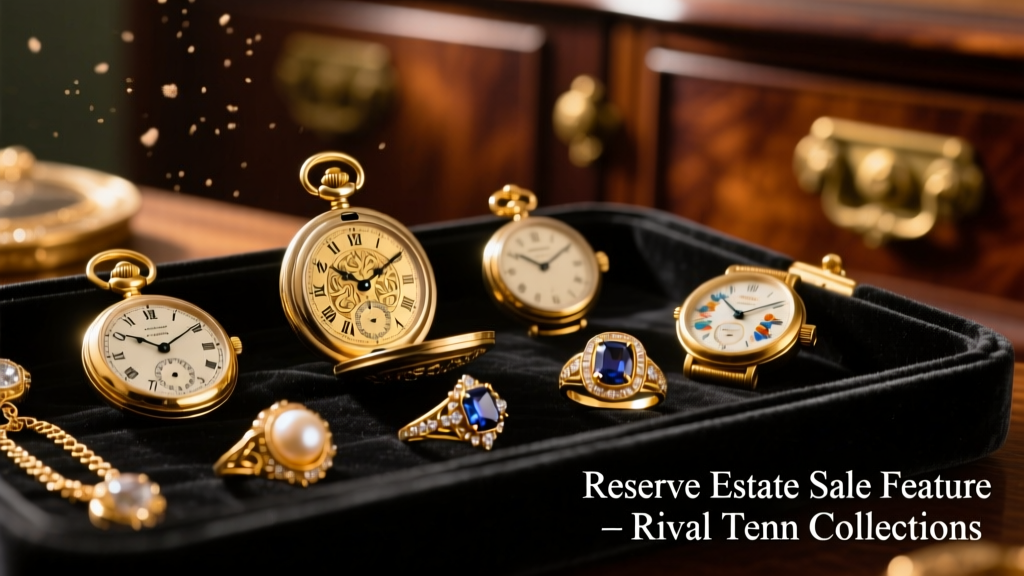
Reserve Estate Sale Feature: The Rival & Tenn Collections — A Study in Mid-Century American Luxury
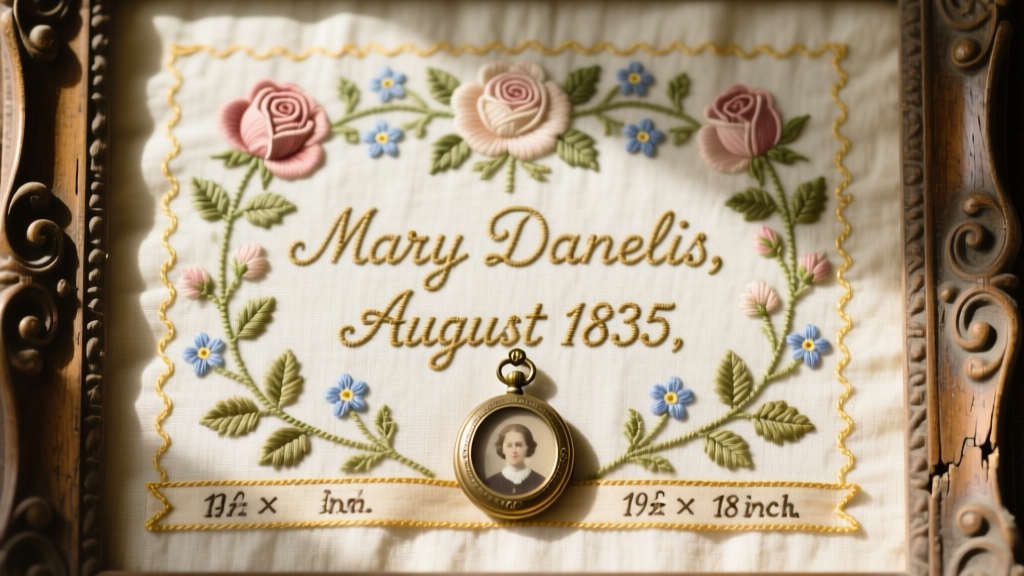
Mary Dannelis Sampler, August 1835: A Nineteenth-Century Linen Embroidery of Alphabetical Discipline and Botanical Refinement
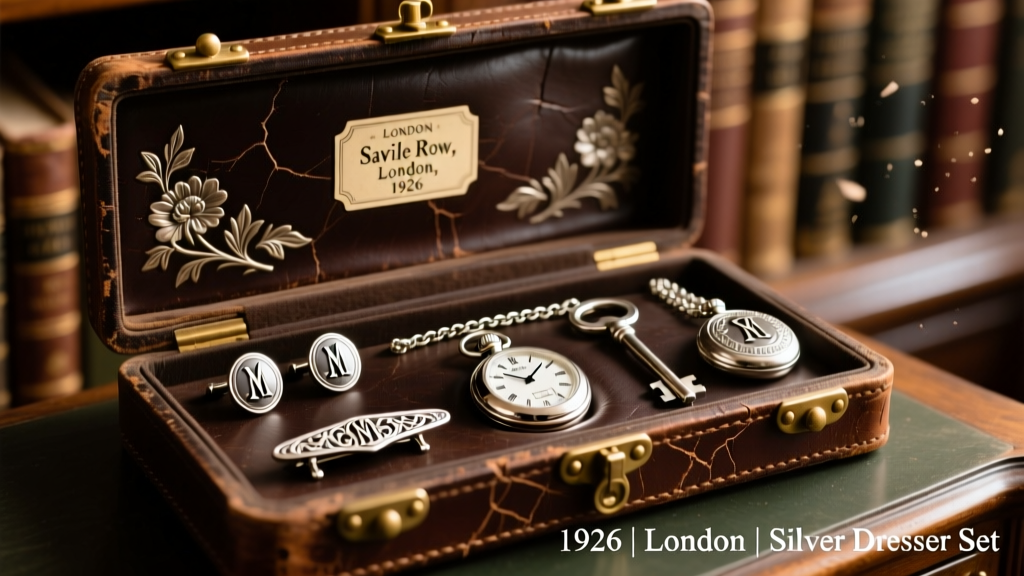
A Silver English Dresser Set, London 1926: The Elegant Seven-Piece Travel Ensemble in Fitted Leather
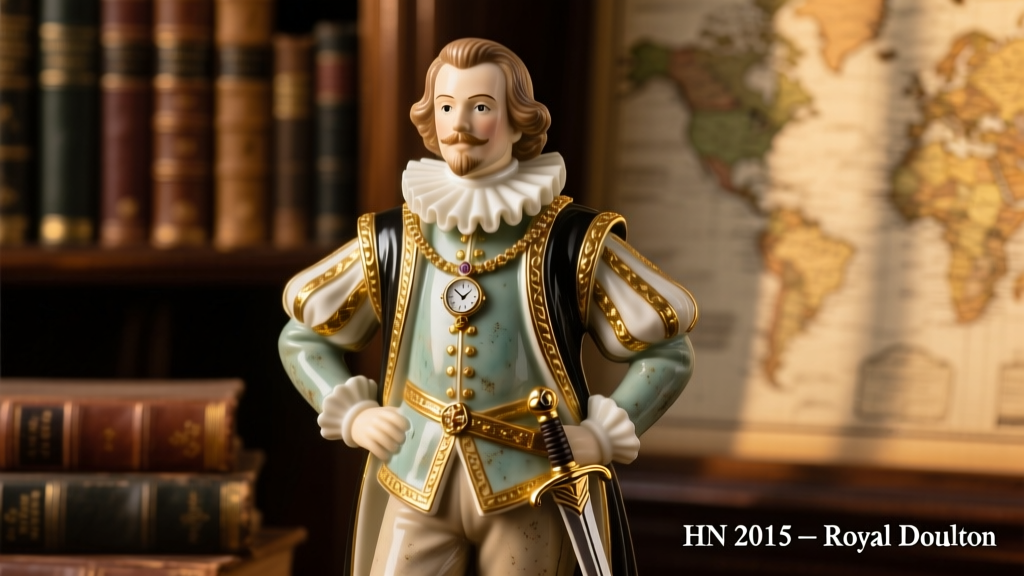
Royal Doulton Figurine 'Sir Walter Raleigh' HN 2015: Provenance, Production, and Collectibility
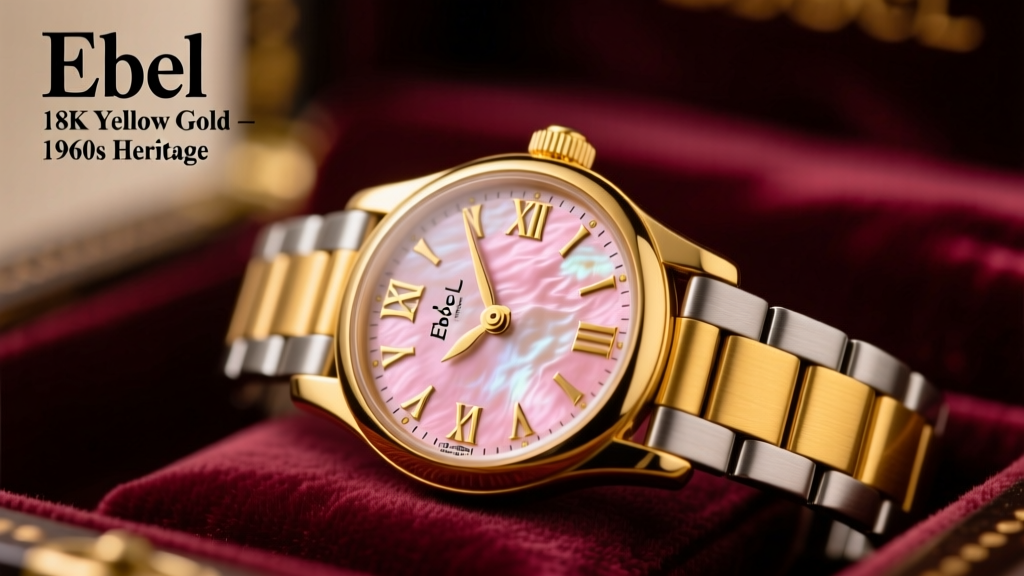
Ebel 18K Yellow Gold Wristwatch with Pink Mother-of-Pearl Dial and Roman Numeral Indices: A Study in Swiss Craftsmanship and Mid-Century Elegance
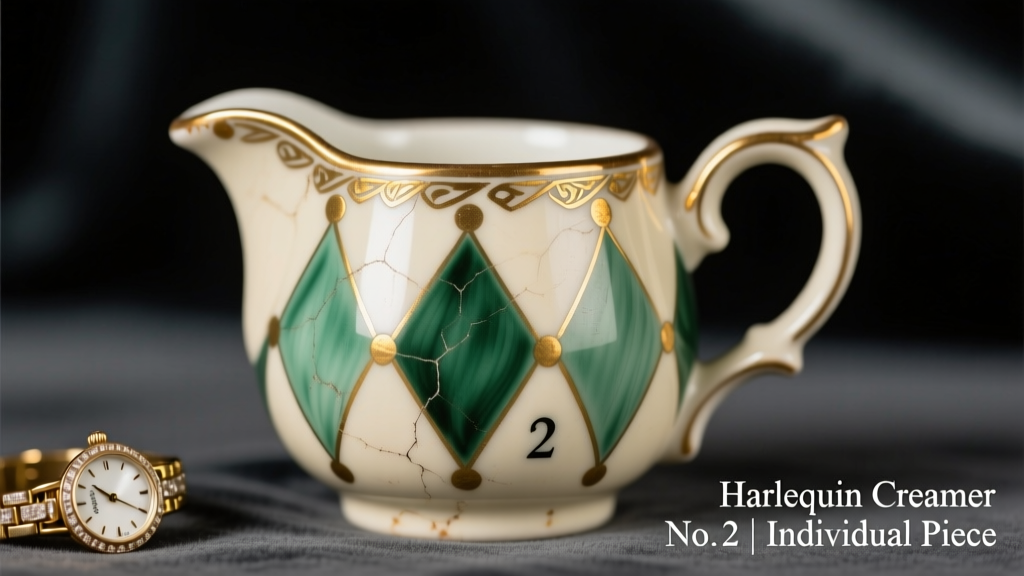
Harlequin Creamer Spruce Green Individual #2: A Rare Mid-Century American Studio Ceramic Artifact
Striker Fox Form Iron, 18th-Century English Fire-Starting Tool: Provenance, Function, and Material Analysis
The 1977 Norman Rockwell Collector Plate 'Doctor Doll': A Study in Mid-Century Americana and Ceramic Memorabilia
Roseville Wisteria Brown 7-Inch Vase: Authenticity, Value, and Collecting Insights