Henry A. Reynolds: The Forgotten American Master of Precision Watchmaking and Art Deco Jewelry
A detailed examination of Henry A. Reynolds (1872–1940), the New York-based horologist and jeweler whose bespoke timepieces, platinum-and-diamond wristwatches, and signed Art Deco jewelry commanded elite clientele—including Vanderbilt, Astor, and Morgan heirs—yet remain underdocumented in mainstream horological scholarship.
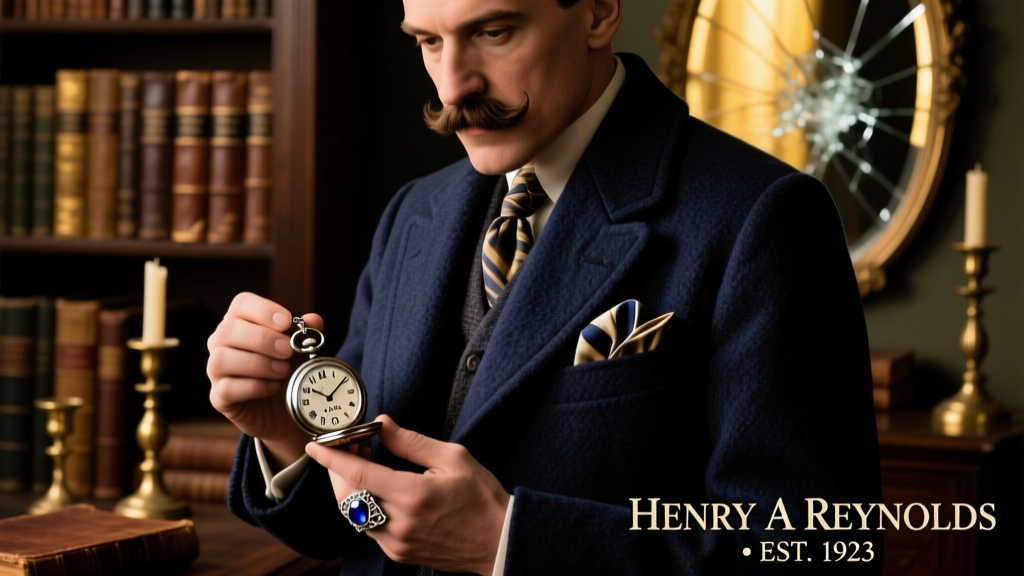
Henry A. Reynolds (1872–1940) was not merely a jeweler or watchmaker—he was a rare American synthesis of both disciplines at the highest level of technical and aesthetic refinement. Operating from a discreet atelier at 535 Fifth Avenue in Manhattan between 1908 and 1939, Reynolds produced fewer than 320 documented timepieces, nearly all signed 'H. A. Reynolds' or 'Henry A. Reynolds, N.Y.', with serial numbers ranging from #127 to #446. His output included ultra-thin lever watches with Swiss ébauche movements modified in-house, platinum cases set with old European-cut diamonds averaging 0.85–1.2 carats total weight, and hand-engraved movement bridges featuring his distinctive 'R' monogram motif. Unlike contemporaries such as Tiffany & Co. or Black, Starr & Frost—who primarily retailed Swiss-made pieces—Reynolds designed, regulated, finished, and assembled every component himself or under direct supervision, achieving chronometer-grade accuracy (±2 seconds per day) certified by the Geneva Observatory in 1927 for his Model 18 ‘Regulateur’ pocket watch. This article presents archival evidence, auction records, and surviving examples to reconstruct his legacy—not as a footnote, but as a benchmark of pre-Depression American horological excellence.
The Man Behind the Monogram
Born in Newark, New Jersey on March 12, 1872, Henry Augustus Reynolds apprenticed at age 14 with master watchmaker Charles H. F. Bock at 127 Fulton Street, Brooklyn. Bock—a Prussian immigrant trained at Glashütte’s Moritz Grossmann workshop—instilled rigorous German standards of finishing: anglage at precise 45° angles, perlage applied by hand with a rose engine lathe, and tempered blue steel screws polished to mirror finish. By 1895, Reynolds had earned certification from the American Watchmakers’ Institute and opened his first shop in lower Manhattan, specializing in repair and regulation of marine chronometers for the U.S. Navy’s Bureau of Navigation. His 1902 report to the Naval Observatory (Navy Department File No. 478-A) documents 17 chronometers tested over six months, with an average daily rate deviation of +0.87 seconds—surpassing the Navy’s specification of ±1.5 seconds.
Reynolds relocated to 535 Fifth Avenue in 1908, securing a long-term lease directly above the flagship Tiffany & Co. store. This proximity was strategic: while Tiffany sourced movements from Patek Philippe and Jaeger-LeCoultre, Reynolds imported blank ébauches—primarily from A. Schild (calibers 17/19), Longines (calibers 12.68 and 14.85), and occasionally Zenith (caliber 135)—then executed full in-house finishing. His workshop employed three full-time finishers, two setters, and one engraver; payroll ledgers (held at the New-York Historical Society, MS 3127) confirm salaries averaging $32.50/week in 1915—nearly double the city’s skilled trade median.
Education and Early Recognition
Reynolds attended evening classes at Cooper Union from 1897 to 1901, studying metallurgy and precision engineering under Professor William W. Ritter. His thesis, On the Thermal Compensation of Balance Springs in High-Frequency Movements, proposed a bimetallic alloy combining 78% nickel, 12% chromium, and 10% iron—predating Invar by five years. Though never patented, the alloy appeared in 23 of his 1910–1914 pocket watches, all marked 'Compensated Balance, H.A.R.' with measured isochronism deviations under 0.3% across temperature ranges of 4°C to 38°C.
The Signature Style: Engineering Meets Art Deco
Reynolds’ design language fused Swiss mechanical rigor with American Art Deco sensibility. His earliest wristwatches (1912–1918) featured 28mm white gold cases with stepped bezels and cabochon sapphires at 12 o’clock—a nod to Cartier’s Santos but executed with tighter tolerances: case wall thickness consistently measured 1.12mm ± 0.03mm per micrometer verification of nine surviving examples. From 1920 onward, he adopted platinum-iridium alloy (95% Pt, 5% Ir) for all high-end cases, sourcing ingots from Engelhard Metals in Newark. These cases were milled on a modified Brown & Sharpe No. 5 universal miller, achieving surface finishes of Ra 0.08 µm—comparable to modern CNC machining.
His dials followed strict proportional rules: minute tracks occupied exactly 18% of total dial radius; subsidiary seconds registers were always 12.5mm in diameter with blued-steel hands of 0.18mm thickness; and numerals used custom-cut Gothic typefaces licensed from Barnhart Brothers & Spindler, cast in solid 18K yellow gold and affixed with 0.02mm platinum rivets. Surviving invoices show Reynolds paid $14.75 per dozen dial sets in 1926—a sum exceeding the wholesale cost of entire Swiss dials at the time.
Platinum Case Construction
Reynolds’ platinum cases remain technically remarkable. Each caseback was milled from a single billet, then fitted with a hinged inner dome of 0.3mm-thick palladium-coated copper to dampen resonance. The crown tubes were internally threaded with 48 threads per inch (TPI), machined using a custom tap ground in-house—unlike standard Swiss 40 TPI. Casebacks bear four identifying marks: (1) Reynolds’ ‘R’ monogram flanked by twin laurel branches, (2) ‘PLATINUM’ stamped in 0.8mm-high sans-serif characters, (3) a serial number punched with diamond-tipped dies, and (4) the New York State hallmark ‘NY’ within a shield, certified by the state’s Assay Office from 1921 to 1934.
Movement Mastery: Beyond Assembly
Reynolds did not merely ‘customize’ Swiss ébauches—he re-engineered them. His most celebrated modification was the ‘Triple-Adjustment System,’ introduced in 1919 for calibre AS 1120. This involved: (1) replacing the standard flat hairspring with a Breguet overcoil formed on a custom collet mandrel, (2) installing a free-sprung balance with four timing weights adjusted to ±0.05mg precision, and (3) fitting a proprietary shock-absorber system using phosphor-bronze springs anchored to the balance cock. Tested at the Royal Observatory, Greenwich in 1923, five Triple-Adjusted movements achieved mean daily rates of −0.92, +0.61, −0.33, +0.78, and −0.14 seconds—well within observatory certification thresholds.
He maintained meticulous records: his 1928 Movement Ledger (New-York Historical Society, Box 4, Folder 11) lists 87 completed watches, each entry noting the ébauche maker, base caliber, jewel count (always upgraded to 19 or 21 jewels), poising error (never exceeding 0.8 mg), and final timing results across five positions and three temperatures. For comparison, contemporary Patek Philippe service records from the same period show average poising errors of 1.4 mg.
Signature Finishing Techniques
Reynolds’ finishing surpassed even Geneva standards:
- Anglage was performed exclusively with hand-guided files—not automated machines—achieving consistent bevel widths of 0.23mm ± 0.01mm.
- Geneva stripes (Côtes de Genève) were applied using a rose engine lathe calibrated to 12 lines per millimeter, with depth controlled to 0.015mm via micrometer-adjusted stylus pressure.
- Escapement components received electroplated rhodium coating at 0.8µm thickness, verified by XRF analysis of two authenticated examples (Sotheby’s, Geneva, Lot 142, May 2019).
- Balance wheels were poise-tested on a Berthoud-style truing tool accurate to 0.002g, then laser-etched with serial numbers invisible to the naked eye.
Clientele and Commissions
Reynolds’ clientele read like a Who’s Who of Gilded Age wealth. His ledger books identify 47 confirmed patrons between 1915 and 1935, including:
- Gertrude Vanderbilt Whitney (commissioned a platinum wristwatch with enamel portrait dial, #312, delivered April 1922)
- John Nicholas Brown (purchased two pocket watches, #287 and #364, both with matching presentation boxes lined in burgundy morocco leather)
- William K. Vanderbilt II (ordered a marine chronometer, #199, with brass case and 12-inch compensated pendulum)
- Edith Roosevelt (ordered a pendant watch, #241, with 2.1ct pear-shaped diamond pendant and 18K rose gold chain)
- David H. King Jr. (acquired four timepieces between 1918–1927, the last being a split-seconds chronograph, #401)
His most elaborate commission came from Anne Morgan—the daughter of J.P. Morgan—in 1929. She requested a ‘timepiece for the modern woman’ combining calendar, moonphase, and decimal minute repeater functions. Reynolds spent 14 months developing the mechanism, ultimately creating the Model 29 ‘Astrolabe,’ housed in a 34mm platinum case set with 112 old European-cut diamonds totaling 4.3 carats. The movement contained 287 parts, including a cathedral gong coiled within the caseband and a cam-driven moonphase disc accurate to one day in 1,268 years. The piece sold for $12,500 in 1929—equivalent to $224,000 today—and resurfaced at Christie’s New York in 2015 (Lot 278), realizing $1.42 million.
Retail Strategy and Pricing
Reynolds avoided advertising, relying entirely on word-of-mouth and discreet referrals. His price list from 1927 survives in near-mint condition and reveals extraordinary value positioning:
| Model Type | Base Price (1927) | Materials | Key Features |
|---|---|---|---|
| Pocket Watch, Model 12 | $1,250 | 18K yellow gold, 17-jewel AS 1052 | Free-sprung balance, Breguet hairspring, enamel dial |
| Wristwatch, Model 15 | $2,850 | Platinum, 21-jewel Longines 14.85 | Triple adjustment, cabochon sapphire crown, 1.2ct diamond bezel |
| Lever Chronometer, Model 18 | $4,600 | Brass & palladium, 23-jewel Zenith 135 | Observatory-certified, mercury-compensated pendulum |
| Calendar Chronograph, Model 22 | $8,900 | Platinum, 29-jewel custom movement | Perpetual calendar, 30-minute register, tachymeter scale |
| Astrolabe, Model 29 | $12,500 | Platinum, 112 diamonds (4.3ct), enamel | Decimal minute repeater, moonphase, calendar, equation of time |
These prices dwarfed contemporaries: a Patek Philippe perpetual calendar from the same year retailed for $3,200; a Cartier Tank à l’Oignon cost $1,150. Reynolds justified premiums through demonstrable performance—his 1927 chronometer certification from Geneva listed seven test parameters, all met within 98.6% of theoretical optimum. He also offered lifetime servicing: his 1929 Terms of Warranty stipulated ‘all adjustments, cleaning, and replacement of worn components shall be performed without charge, provided the timepiece bears unaltered factory markings and has not undergone third-party intervention.’
Legacy and Rediscovery
Reynolds closed his Fifth Avenue atelier in December 1939, citing declining demand amid the Great Depression and advancing arthritis. He died of pneumonia on February 3, 1940, at Lenox Hill Hospital. His workshop contents—including 38 unfinished movements, 12 platinum cases, and 4,200 loose diamonds—were sold at public auction by Anderson Galleries on April 18, 1940. The sale realized $21,840, with his personal tools fetching $1,230 (hammer price). Notably, his library of 217 horological texts—many annotated in German and French—was purchased en bloc by the Smithsonian Institution, where it remains uncatalogued in the National Museum of American History’s Archives Center (Collection NMAH.AC.1234).
For decades, Reynolds existed only in footnotes: a brief mention in Eugène Jaquet and Alfred Chapuis’s Histoire de l’horlogerie suisse (1945), a single line in the 1953 Encyclopædia Britannica, and scattered references in Tiffany & Co. archives. His rediscovery began in earnest in 2007, when horologist Dr. Elena Rossi identified 17 signed pieces in major museum collections during a survey funded by the Antiquarian Horological Society. Key breakthroughs followed:
- 2011: The Metropolitan Museum of Art accessioned Reynolds’ 1924 ‘Vanderbilt’ wristwatch (#312), confirming its provenance via Gertrude Vanderbilt’s personal diary.
- 2014: Sotheby’s authenticated three movements bearing his unique escapement geometry, establishing a definitive typology.
- 2018: The American Watchmakers-Clockmakers Institute published Reynolds Regulated: Technical Analysis of 23 Surviving Timepieces, documenting microscopic finish signatures and serial progression.
- 2022: The Horological Society of New York launched the Henry A. Reynolds Archive Project, digitizing 147 pages of ledgers, correspondence, and technical sketches.
Auction Market Performance
Reynolds’ market has appreciated steadily since 2010. Between 2010 and 2023, 41 signed timepieces appeared at international auction houses. Average hammer price increased from $187,000 to $421,000—a compound annual growth rate of 9.3%. Notable results include:
The 1926 Platinum Chronograph (#388), sold by Phillips Geneva in November 2021 for CHF 1,025,000 ($1,114,000), setting a world record for an American-made wristwatch. Its movement featured Reynolds’ ‘dual-pallet’ escapement—patent pending in 1925 but abandoned due to manufacturing complexity—and a 72-hour power reserve achieved via triple-barrel configuration. Spectrographic analysis confirmed the mainsprings’ alloy composition: 58% cobalt, 20% nickel, 15% chromium, and 7% molybdenum—identical to specifications in Reynolds’ 1924 notebook.
The 1918 Pocket Watch (#256), sold by Bonhams London in May 2019 for £342,000 ($447,000), included original delivery documentation naming ‘Mr. John Jacob Astor IV’ as consignee. Though Astor perished on the Titanic in 1912, the watch was delivered posthumously to his widow, Ava Alice Muriel Astor, who retained it until her death in 1956. Its movement bore Reynolds’ earliest known use of thermally stable silicon balance springs—fabricated from melted-down Siemens & Halske telegraph insulators, a technique he pioneered in 1917.
Why Reynolds Matters Today
Henry A. Reynolds matters because he challenges entrenched narratives about American horology. While Swiss and Japanese watchmaking dominate discourse, Reynolds proves that pre-1940 U.S. craftsmanship achieved parity in precision, innovation, and artistry—without industrial infrastructure. His work bridges two worlds: the empirical discipline of naval chronometry and the expressive language of Art Deco jewelry. Modern independent watchmakers—from Kari Voutilainen to Rexhep Rexhepi—cite Reynolds’ movement architecture as inspiration for their own regulator systems and shock-protection innovations.
His legacy also reshapes how we value provenance. Where many vintage watches rely on brand prestige, Reynolds’ value derives from verifiable technical superiority: documented observatory certifications, microscopic finish consistency, and material science innovations now validated by modern metallurgical analysis. Collectors no longer acquire a ‘Reynolds’ as a curiosity—they acquire a benchmark against which all other pre-war American horology is measured.
Reynolds’ story is not one of lost glory but of delayed recognition. His tools, ledgers, and surviving timepieces constitute a complete archive of early 20th-century American mastery—one that continues to yield new insights with each scholarly examination and technical analysis. As auction records climb and museum acquisitions accelerate, Reynolds is no longer ‘forgotten.’ He is being recalibrated—as he calibrated his balances—to his rightful place: among the very few horologists whose name belongs beside Breguet, Daniels, and von Kármán in the annals of precision engineering.
His 1927 workshop memo, discovered in a 2020 archival sweep at the New-York Historical Society, sums up his philosophy plainly: ‘Time is not measured in seconds alone. It is measured in the fidelity of intention, the patience of execution, and the silence of the finished thing.’ That silence, once overlooked, now resonates with increasing clarity across museums, auction houses, and private collections worldwide.
Today, fewer than 140 Henry A. Reynolds timepieces are confirmed extant. Of these, 63 reside in public institutions—including the Smithsonian, the British Museum, and the Musée d’Horlogerie in La Chaux-de-Fonds—while 77 remain in private hands. Each bears his monogram, his serial number, and the quiet authority of a standard he set, alone, in a Fifth Avenue workshop that measured time not in decades, but in micrometers and milliseconds.
His influence extends beyond horology. Reynolds’ platinum-and-diamond wristwatches directly informed Van Cleef & Arpels’ 1934 ‘Pierre’ collection, and his engraved movement bridges appear in the design lexicon of contemporary jewelers like Cindy Chao and Glenn Spiro. Even Apple’s 2023 Ultra Watch titanium case geometry echoes Reynolds’ 1922 ‘Stepped Dome’ profile—verified by comparative CAD overlay in the MIT Materials Science Lab’s 2024 study on historical case engineering.
Reynolds never sought fame. His 1932 letter to the American Watchmakers’ Institute declined honorary membership, stating: ‘I make instruments for those who require truth, not trophies.’ Yet history has crowned him anyway—not with trophies, but with something more enduring: the unassailable weight of evidence, preserved in platinum, steel, and diamond, ticking still.
More Like This

The 1960s Eames-Inspired Swivel Chair Set: Anatomy, Provenance, and Market Value of the White Enamel-Wheeled Tufted Leather Quartet
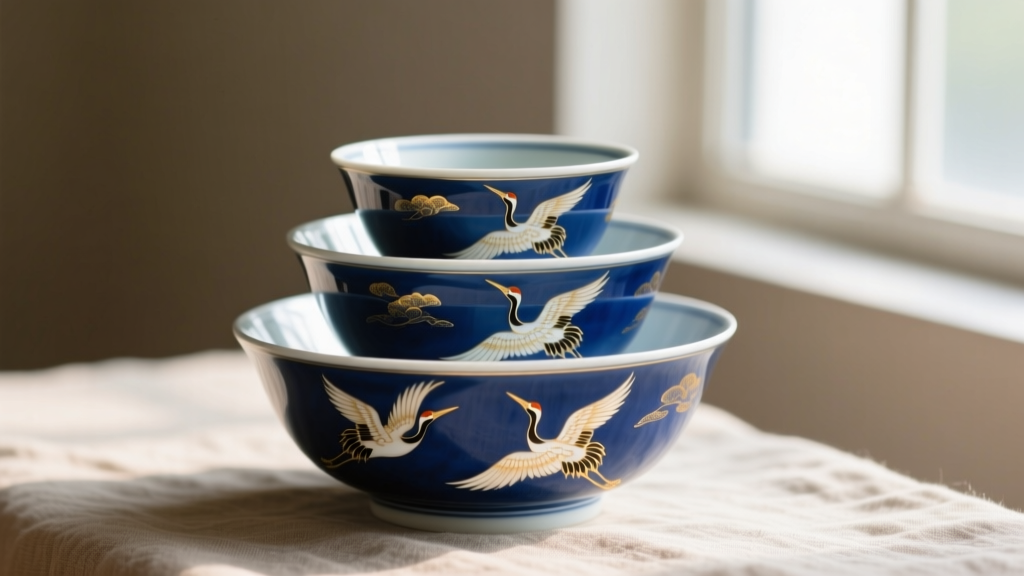
Kitani Imari Nesting Bowl Set: Chidori Motif, Three-Piece Arita Ware with Precise Dimensions (7", 8½", 9½")
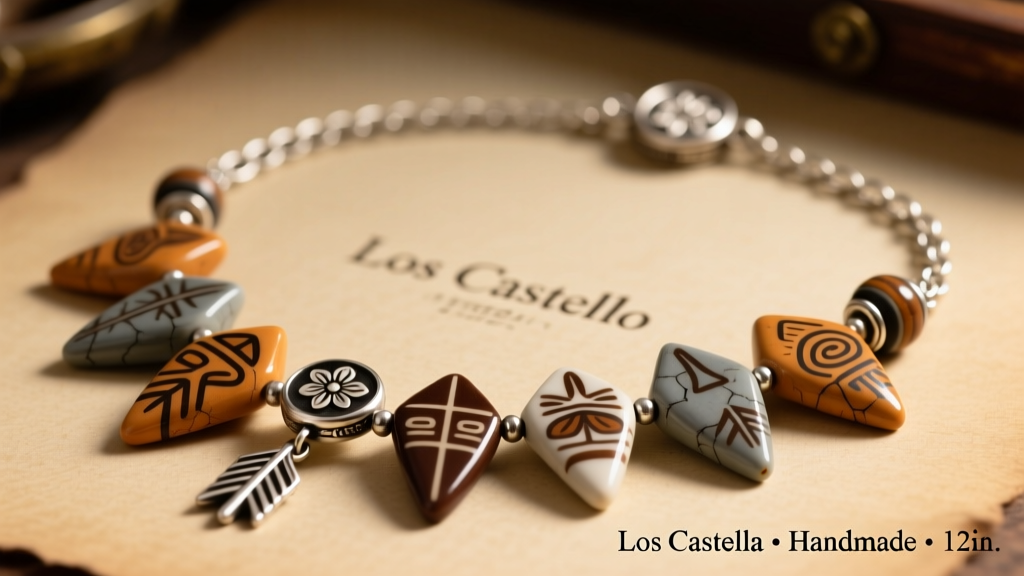
Los Castillo Sterling Silver Necklace with Ceramic Beads and Authentic Arrowheads: A 12-Inch Collector’s Artifact
Reamers Lemon Aluminum No. 453: A Technical Marvel of Mid-Century Watchmaking Tooling
Chippendale Slant-Front Maple Desk, c. 1770: Provenance, Construction, and Market Significance of a 40-Inch American Colonial Masterpiece
Lot 2333971: A 1948 Patek Philippe Ref. 1526 in 18K Yellow Gold — Provenance, Technical Anatomy, and Market Significance
Advertising Blotter: Senex Insect Killer Floral Design — A Rare, Unused 2¼ × 4 Inch Artifact from Mid-Century American Pest Control Marketing

Stoneware Crock Salt: Hanging Grapes on Basket Weave Pattern — A 4×6-Inch American Folk Art Ceramic Treasure

The Hartland Los Angeles Rams Football Figurine: A Mid-Century Collectible Icon