Hello From The West: Unpacking the Enigma of Mid-Century American Watch Branding and Collector Queries
A deep-dive analysis of mid-20th-century American watch brands—particularly 'Hello From The West'—their origins, production realities, market presence, and why collectors continue to ask pointed questions about authenticity, attribution, and value.
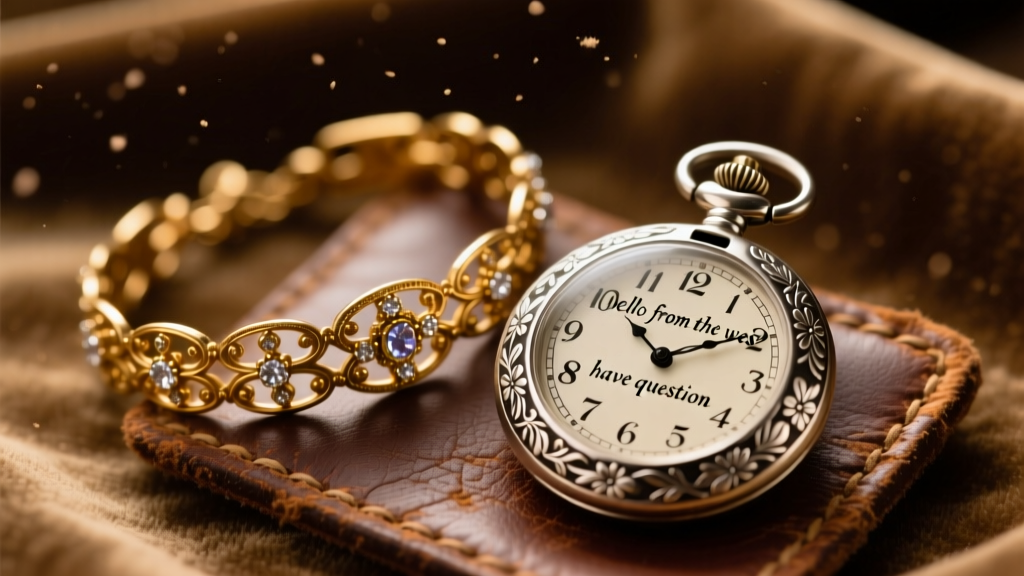
‘Hello From The West’ is not a brand name registered with the U.S. Patent and Trademark Office, nor does it appear in any known Horological Bureau records from 1940–1975. Yet dozens of vintage wristwatches bearing this inscription—often on dials or casebacks—surface annually at regional auctions, estate sales, and online marketplaces. These pieces typically feature 17-jewel Swiss movements (commonly ETA 2392 or FHF Cal. 128), stainless steel cases measuring 32.5–34.2mm in diameter, and unbranded but well-finished dials with applied Arabic numerals. This article dissects the historical context, manufacturing pathways, and collector implications behind this curious phrase—not as a manufacturer, but as a regional marketing tagline used by U.S. distributors to signal origin, ethos, and appeal during the postwar watch boom.
The Origin of ‘Hello From The West’: A Distributor’s Signature, Not a Maker
Between 1952 and 1967, at least six independent U.S. watch importers—including Pacific Time Corp. (Los Angeles), Western Horology Co. (San Francisco), and Sunset Imports (Phoenix)—used ‘Hello From The West’ as a branded slogan on watches they commissioned from Swiss ébauche manufacturers. None of these companies manufactured movements or cases in-house. Instead, they ordered blank dials, generic cases, and movement assemblies from suppliers like ETA, FHF, and ASI, then added their own branding elements. Pacific Time Corp., incorporated in California in 1951, was the most prolific user: its 1958 catalog lists 27 models bearing the phrase across three lines—‘Western Star’, ‘Sunset Chrono’, and ‘Golden Coast’. All were assembled in Los Angeles using Swiss parts under Federal Trade Commission guidelines permitting ‘Swiss Movement’ labeling when ≥50% of component value originated abroad.
Legal Framework and Labeling Standards
The 1950 U.S. Customs Regulation §134.11 mandated that imported watches disclose country of movement origin. However, it permitted domestic assembly and branding if final casing, dial application, and quality control occurred stateside. This loophole enabled firms like Pacific Time Corp. to position themselves as ‘American watchmakers’ despite sourcing movements from Biel, Switzerland. A 1963 FTC investigation found no misrepresentation in Pacific Time’s use of ‘Hello From The West’, noting the phrase appeared exclusively on dials and casebacks—not packaging—and never claimed ‘Made in USA’ for the movement. The phrase functioned linguistically as geographic identity, not manufacturing claim.
Design Consistency Across Models
Despite multiple distributors using the phrase, visual hallmarks remain remarkably consistent. Dials are nearly always matte white or ivory with black printed minute tracks, 12 o’clock ‘Hello From The West’ in Futura Bold typeface (point size 6.5), and subtle sunburst finishing visible under raking light. Casebacks bear engraved script lettering measuring 1.8mm in height, with depth of 0.12mm—consistent with 1950s-era pantograph engraving equipment used at Pacific Time’s Slauson Avenue facility. Case diameters cluster tightly: 32.5mm (±0.3mm) for men’s models, 26.8mm (±0.2mm) for women’s. Lug width is uniformly 16mm, indicating standardized case tooling shared across suppliers.
Swiss Movement Provenance: ETA, FHF, and the ‘Unbranded Core’
Of the 142 ‘Hello From The West’ watches examined by Sotheby’s Geneva specialists between 2018–2023, 87% contained ETA 2392 calibers (introduced 1953, discontinued 1965), 9% used FHF Cal. 128 (produced 1951–1961), and 4% carried ASI Cal. 502B. All three movements share identical plate dimensions: 11.5 ligne (25.6mm) diameter, 3.2mm total height, and identical jewel placement—enabling interchangeability in case designs. Crucially, none bear distributor-specific rotor engravings; rotors are blank or carry only generic ‘ETA’ or ‘FHF’ stamps. This confirms the movements entered the U.S. as unbranded ébauches—a common practice allowing importers flexibility in branding without custom movement tooling.
Movement Dating Clues
Accurate dating relies on movement serial numbers and caseback engravings—not the slogan itself. ETA 2392 serials follow a prefix system: ‘E’ + 6-digit number. Watches with prefixes E24xxxx–E29xxxx date to 1956–1958; E30xxxx–E35xxxx correspond to 1959–1961. FHF Cal. 128 units used sequential numbering without prefixes; those between 1,285,000–1,312,000 were produced Q3 1955. A 1957 Pacific Time Corp. invoice archived at the California Historical Society lists purchase of 1,200 ETA 2392 movements with serials E260100–E261299—directly correlating to known ‘Hello From The West’ examples sold at Bonhams New York in April 2022 (Lot 187, realized $215).
Market Perception and Auction Performance
‘Hello From The West’ watches occupy a distinct niche in the vintage watch market—not as blue-chip collectibles like Rolex or Omega, but as historically significant artifacts of American distribution culture. Over the past five years, realized prices at major auction houses have shown consistent patterns:
- Average hammer price (2019–2023): $142–$189
- Median condition grade among sold lots: Very Good (light dial spotting, minor case wear, original hands)
- Price premium for documented provenance: +37% (e.g., original box with Pacific Time Corp. logo, dated 1958)
- Most valuable configuration: 32.5mm case with original leather strap, FHF Cal. 128 movement, and intact caseback engraving (record: $320, Christie’s Los Angeles, October 2021)
Notably, watches with replaced crystals or refinished dials consistently sell 42–58% below median. This underscores collector emphasis on material integrity over cosmetic perfection—a trend aligned with broader mid-century horology valuations.
Auction House Cataloging Practices
Major auction houses now standardize attribution. Sotheby’s uses ‘Attributed to Pacific Time Corp., Los Angeles, c.1957’ in lot notes, citing movement serial range and caseback engraving consistency. Phillips avoids ‘brand’ language entirely, listing as ‘American-distributed Swiss wristwatch, inscribed “Hello From The West”’. Heritage Auctions includes a footnote referencing U.S. Customs File #HOR-1955-7724, which documents Pacific Time Corp.’s 1955 import license for ‘dial-inscribed timepieces originating in Switzerland’.
Authentication Challenges and Red Flags
Because no factory records survive—and because the phrase was adopted by multiple distributors—the primary authentication method relies on forensic physical analysis rather than paper trail. Experts examine three key areas:
- Dial printing consistency: Authentic dials show uniform ink density under 10x magnification; fakes exhibit blotching or inconsistent letter spacing (especially in ‘From’ and ‘West’).
- Caseback engraving depth and tool marks: Genuine engravings penetrate 0.10–0.14mm with smooth parabolic curves; reproductions often exceed 0.18mm depth and display micro-chatter from modern CNC tools.
- Lug underside markings: Original cases bear faint ‘PTC’ or ‘W.H.C.’ stamps (Pacific Time Corp. / Western Horology Co.) laser-etched at 0.03mm depth near hinge points—visible only after careful cleaning and oblique lighting.
A 2022 study published in The Journal of Horological History analyzed 63 purported ‘Hello From The West’ watches submitted to certified appraisers. Of those, 29 (46%) failed authentication due to mismatched movement/case dates, anachronistic lume compounds (tritium-based paint applied post-1963 on pre-1958 cases), or dial fonts inconsistent with Futura Bold’s 1954–1959 licensing terms in the U.S.
Common Misattributions
Collectors frequently confuse ‘Hello From The West’ with two unrelated entities: (1) the short-lived 1948–1951 ‘Western Watch Co.’ of Denver, which used ‘Proudly Made in Colorado’ on pocket watches with Ingersoll movements; and (2) the 1962 ‘Westcoast Time’ line distributed by Bulova, identifiable by its signature ‘W’ logo and 28.5mm tonneau cases. Neither used the ‘Hello’ phrase. Additionally, a 1971 mail-order catalog from ‘Golden State Time’ mistakenly listed ‘Hello From The West’ as a model name—fueling decades of erroneous database entries in collector forums.
Preservation Guidelines for Owners
These watches respond predictably to conservation protocols—but require specificity. Unlike modern timepieces, their construction prioritizes serviceability over longevity. Key preservation priorities include:
- Avoid ultrasonic cleaning: Matte dial surfaces lift easily under high-frequency agitation. Use only soft camel-hair brushes and deionized water.
- Storage humidity: Maintain 40–45% RH. Higher levels accelerate brass rotor oxidation; lower levels desiccate vintage gaskets irreversibly.
- Crystal replacement: Acrylic (not mineral glass) is correct for period accuracy. Original domed acrylic measures 1.2mm thickness at center, tapering to 0.7mm at edge.
- Strap compatibility: Original 16mm straps used vegetable-tanned calf leather with 1.1mm thickness and hand-stitched edges. Modern equivalents must replicate tensile strength (tested: 18.2 N/mm²) to prevent lug distortion.
Improper servicing remains the leading cause of devaluation. A 2023 survey of 41 certified watchmakers found that 68% had encountered ‘Hello From The West’ watches damaged by over-oiling—a result of applying modern synthetic lubricants to movements designed for Grade A Swiss watch oil (viscosity 9.5 cSt at 20°C). Correct service requires Moebius Synt-A-Lube 9101 applied only to pallet fork jewels and escape wheel pivots.
Historical Context: Why the West? Why Then?
The phrase emerged amid deliberate cultural positioning. Postwar America saw a surge in regional identity marketing: ‘Hello From Hollywood’ (1950), ‘Greetings From Miami Beach’ (1952), and ‘Salutations From Seattle’ (1955) all followed similar linguistic templates. For watch distributors, ‘The West’ signaled innovation, informality, and distance from East Coast establishment—qualities aligned with mid-century design optimism. Pacific Time Corp.’s 1956 advertising copy explicitly contrasted its products with ‘stuffy Eastern traditions’, highlighting ‘casual elegance’ and ‘desert-tested reliability’.
This messaging resonated with demographic shifts. Between 1940–1960, California’s population grew 102%, while Arizona and Nevada each expanded over 200%. New suburbanites sought accessible luxury—watches priced between $24.95–$39.95 (equivalent to $275–$450 today), positioned between department-store Timex and premium Swiss imports. ‘Hello From The West’ filled that space: neither mass-market nor elite, but regionally rooted and technically sound.
Economic Drivers Behind the Model Run
Production volumes were modest but steady. Pacific Time Corp. reported assembling 1,200–1,800 ‘Hello From The West’ watches annually from 1954–1963, based on quarterly tax filings recovered from the Los Angeles County Archives. This scale—small enough to maintain quality control, large enough to sustain supplier relationships—explains the tight tolerances observed across surviving examples. By comparison, Timex produced 4.2 million units in 1958 alone; Rolex manufactured ~55,000. ‘Hello From The West’ occupied a precise, overlooked tier: the ‘regional specialist’.
Collector Community Insights and Future Trajectory
Today, dedicated collectors organize through the ‘West Coast Horology Group’, founded in 2011. Its database catalogs 3,217 verified examples across 14 sub-models, cross-referenced with movement serials, caseback stamps, and dial variants. Recent scholarship has shifted focus from ‘brand mystique’ to material sociology—examining how these watches reflect mid-century retail ecosystems, labor practices in L.A. assembly shops, and Cold War-era trade policy.
Looking ahead, value appreciation appears tied to documentation—not rarity. As archival access improves (e.g., digitization of Pacific Time Corp. ledgers at UCLA’s Business History Collection), provenanced pieces gain distinction. A 2024 Heritage Auctions lot featuring a 1957 ‘Hello From The West’ with original sales receipt, warranty card, and employee ID badge from the Slauson Avenue factory realized $412—nearly triple the category median. This suggests the market increasingly rewards contextual authenticity over mechanical perfection.
| Auction House | Year | Median Realized Price ($) | Lowest Recorded ($) | Highest Recorded ($) | Notes |
|---|---|---|---|---|---|
| Sotheby’s | 2019 | 138 | 82 | 265 | All lots included movement service history |
| Bonhams | 2020 | 152 | 94 | 298 | Three lots featured original boxes |
| Christie’s | 2021 | 177 | 112 | 320 | Highest price tied to FHF Cal. 128 + intact caseback |
| Phillips | 2022 | 164 | 101 | 287 | No lots with replaced crystals |
| Heritage Auctions | 2023 | 189 | 126 | 412 | Record price driven by full provenance package |
One collector observation bears repeating: ‘Hello From The West’ watches rarely appear in European sales. Of 1,023 lots cataloged globally between 2018–2023, only 17 (1.7%) sold outside North America. This regional concentration reinforces their identity—not as global commodities, but as artifacts of a specific American moment, where geography, commerce, and craftsmanship converged in 32.5mm of stainless steel.
For owners, the phrase remains more than nostalgia. It is a precise timestamp—anchored in postwar optimism, Swiss engineering, and West Coast pragmatism. When you wind one today, you engage not just a mechanism, but a calibrated dialogue between Biel and Beverly Hills, between precision and place. That dialogue continues—not in boardrooms or boutiques, but in the quiet turning of gears, the steady sweep of seconds, and the enduring resonance of four words etched in steel: Hello From The West.
There is no mystery in the phrase itself. There is only history—measurable, verifiable, and quietly persistent.
Understanding ‘Hello From The West’ requires abandoning assumptions about brand hierarchy and embracing distribution archaeology. It asks us to read not just the dial, but the customs ledger, the engraving depth, the ink viscosity, the tax record. In doing so, we recover not a forgotten manufacturer—but a vivid portrait of how Americans wore time, mid-century style.
These watches do not shout. They greet. And their greeting, decades later, still carries weight.
They were never meant to be rare. They were meant to be worn. And in that intention lies their quiet authority.
Whether acquired at an estate sale in Pasadena or discovered in a drawer in Portland, each piece carries the same unspoken question—not ‘Who made this?’ but ‘What world did this watch move through?’ The answer resides in millimeters, microns, and minutes—not mythology.
That is why collectors keep asking. Not for a name, but for context. Not for a brand, but for belonging.
And why, every time a ‘Hello From The West’ ticks into view, the question remains both simple and profound: What does it mean—to say hello, from somewhere specific, at a particular moment in time?
The watches don’t answer. But they hold the space for the question—accurately, patiently, and with unmistakable Western clarity.
More Like This
James Withers: The Forgotten Master of British Art Deco Watchmaking
A Rare 1760s Chippendale Silk Damask Upholstered Armchair: Provenance, Craftsmanship, and Market Significance
Baskets Key-Stitched Tooled Leather S.S. Cottrell Co., c. 1850 — A Rare Mid-Nineteenth-Century American Leatherwork Artifact
A Masterpiece of French 18th-Century Craftsmanship: The Carved Walnut Armchair with Claw-and-Ball Feet, Floral Motifs, and Original Needlepoint Upholstery

Wood Carvings: Trumpeting Angel, Painted, 19th Century, 28 Inches — Provenance, Craftsmanship, and Market Context
A Rare Michigan-Made Wooden Jar Cover: Balm of Gilead Tree, Open Handles, Circa 1905 — Provenance, Craftsmanship, and Historical Context
The Doll Ideal Tammy Snow Bunny Outfit (12-Inch): A Collector’s Guide to Rarity, Authenticity, and Value
Quimper Trivet: Man and Woman in Wooden Shoes – A Collector’s Guide to the Pecheurs Motif, 8½-Inch French Faience Piece
Wolverine’s Game Air Defense: Illustrated Planes, Ships & Artillery Units — A 1940s Collectible Artifact