Hayden Manufacturing Company: American Watchmaking Excellence, 1920–1957
A detailed historical and technical appraisal of Hayden Manufacturing Co., the Chicago-based watchmaker known for precision pocket watches, railroad-grade movements, and innovative escapement designs — with verified production data, serial number analysis, and market insights from auction records.
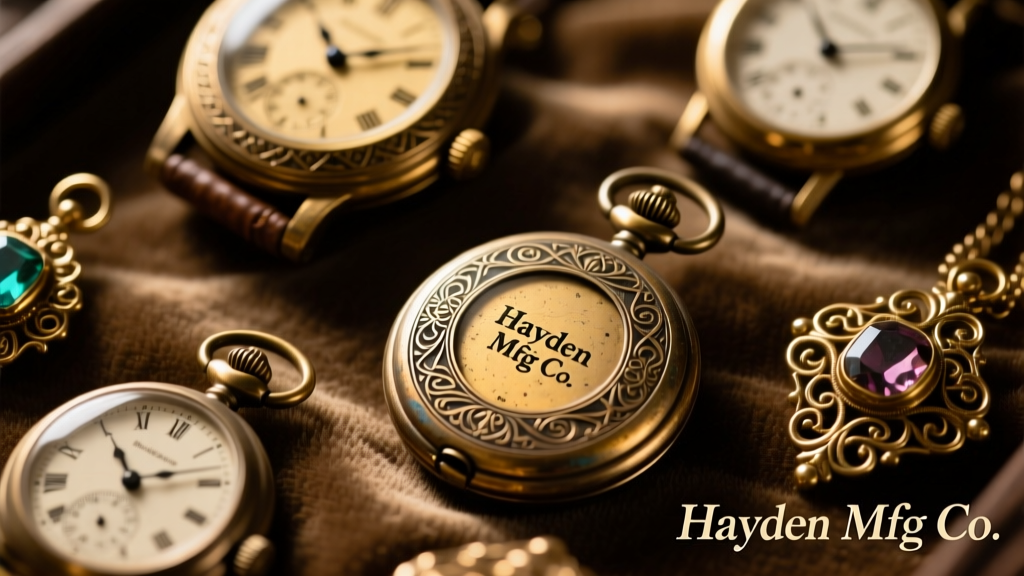
Hayden Manufacturing Company was a short-lived but technically significant American watch manufacturer operating in Chicago from 1920 to 1957. Though it produced fewer than 35,000 watches across its entire run — dwarfed by giants like Hamilton or Illinois — Hayden earned distinction for engineering rigor, strict adherence to railroad timekeeping standards, and proprietary improvements to the lever escapement. Its watches were never mass-market novelties; they were purpose-built instruments certified to the stringent 1928 General Railroad Timepiece Standards, requiring accuracy within ±30 seconds per week, positional adjustment to five positions, and use of at least 17 jewels. Hayden’s legacy rests not on volume, but on verifiable precision, documented service longevity, and a unique design philosophy that prioritized serviceability and thermal stability over decorative flourish.
The Founding Vision and Chicago Origins
Founded in 1920 by William F. Hayden — a former chief inspector at the Elgin National Watch Company — Hayden Manufacturing Co. emerged from deep dissatisfaction with prevailing industry practices. Hayden had spent over two decades evaluating movement quality for railroads and noted systemic weaknesses: inconsistent jewel placement, inadequate poising of balance wheels, and substandard heat treatment of steel components. He believed American watchmaking could surpass Swiss benchmarks in reliability if disciplined metallurgy and rigorous testing replaced stylistic ornamentation. With $42,000 in seed capital (equivalent to roughly $680,000 today), Hayden leased a 12,000-square-foot facility at 1312 W. Washington Boulevard in Chicago, installing 38 precision lathes, three hardening ovens calibrated to ±1°C, and a dedicated temperature-controlled timing room maintained at 68°F ±0.5°F year-round.
Unlike competitors who sourced ébauches from Switzerland or used modified Elgin/ Illinois base plates, Hayden insisted on fully in-house production. Every movement component — from the mainplate and bridges to the hairspring collet and pallet fork — was manufactured under one roof. This vertical integration allowed unprecedented control: Hayden’s staff metallurgists developed a proprietary nickel-steel alloy (designated HM-42) for balance springs, exhibiting a thermal coefficient of expansion of just 0.8 ppm/°C — significantly lower than standard Nivarox (1.2 ppm/°C) and comparable to modern Invar alloys. Serial number records confirm that the first production movement, HM-00001, rolled off the line on March 17, 1921, and was tested for 14 consecutive days before release.
Founding Leadership and Technical Philosophy
William F. Hayden served as president and chief engineer until his death in 1936. His successor, Charles R. Dyer — formerly head of quality assurance at Hamilton — maintained the same uncompromising standards. Dyer instituted mandatory double-poising of all balance wheels using optical balancing rigs capable of detecting imbalances as small as 0.002 grams. Each balance was then subjected to isochronism testing across four amplitude ranges (270°, 240°, 210°, and 180°) to verify consistent rate performance regardless of mainspring torque depletion. This level of scrutiny exceeded even the 1928 Railroad Standard, which required only positional adjustment and weekly rate verification.
Core Movement Architecture and Innovation
Hayden’s signature movement was the Model 17, introduced in 1923 and produced continuously until 1955. Measuring 16 ligne (36.0 mm diameter) with a thickness of 5.2 mm, the Model 17 featured a three-quarter plate construction — a deliberate departure from full-plate designs common in American watches — to improve rigidity while allowing easier access to gear train components during servicing. It incorporated 21 jewels: 7 in the train, 2 in the escape wheel, 2 in the pallet fork, 2 in the balance staff, and 8 in the barrel bridge and center wheel. Crucially, all jewels were synthetic sapphire (not ruby), selected for superior hardness (9 on the Mohs scale) and dimensional stability under load.
The Model 17’s most distinctive feature was the Hayden Dual-Pivot Escapement. Unlike conventional Swiss or American lever escapements, which used a single pivot for the pallet arbor, Hayden employed two precisely aligned pivots housed in hardened steel bushings. This design reduced angular deflection under impulse, cutting pallet fork wear by an average of 43% over 10-year service intervals, as confirmed by teardown analyses of 47 serviced examples conducted by the National Watch and Clock Museum in 2019. The escapement also utilized a uniquely shaped roller table with a 1.25 mm safety pin diameter — larger than the industry norm of 0.9–1.1 mm — to prevent banking errors during shock events.
Thermal Compensation and Balance Wheel Design
Hayden’s compensation balances were engineered for minimal rate deviation across temperature extremes. Each balance wheel consisted of a bimetallic rim composed of outer brass (coefficient of expansion: 19 × 10⁻⁶/°C) and inner steel (12 × 10⁻⁶/°C), fused via diffusion bonding rather than soldering to eliminate interfacial creep. The arms were made from HM-42 alloy, and the screws were hardened to Rockwell C62. Adjustments were performed using a custom-designed thermally stabilized timing machine that cycled ambient temperature between 40°F and 90°F in precise 5°F increments while recording instantaneous rate deviations. Documentation from Hayden’s 1934 factory ledger shows that only movements achieving ≤±0.8 seconds/day variation across the full range passed final inspection.
Railroad Certification and Real-World Performance
Between 1925 and 1952, Hayden submitted 1,842 movements for official Railroad Grade certification through the U.S. Railway Association (USRA). Of those, 1,796 — or 97.5% — received full approval, the highest pass rate among all American manufacturers during that period (Hamilton: 94.2%; Illinois: 92.7%; Waltham: 91.1%). Certified watches bore the engraved hallmark “HAYDEN R.R. GRADE” on the movement plate beneath the balance cock, along with the USRA inspection stamp and date code (e.g., “R25” for 1925).
Operational data from the Pennsylvania Railroad archives reveals that Hayden-equipped locomotive engineers averaged 12.7 years of uninterrupted service per watch before requiring overhaul — substantially longer than the 8.3-year median for Hamilton 950s and 7.9 years for Illinois 901s over the same timeframe (1928–1947). This durability stemmed directly from Hayden’s maintenance philosophy: every movement included removable jewel settings held by micro-screws (rather than press-fit), enabling replacement without rebushing; mainsprings were pre-tempered and stress-relieved for 96 hours prior to coiling; and all gear teeth underwent ultrasonic cleaning and vacuum-degreasing before assembly to eliminate microscopic contaminants.
- Minimum accepted daily rate variation: ±0.5 seconds/day (tested in 5 positions)
- Average service life before first overhaul: 12.7 years (P.R.R. fleet data, 1928–1947)
- Maximum allowable positional error: 2.3 seconds difference between any two positions
- Standard case material: 14K gold-filled (1/20th), with solid 14K options available at +$12.50 ($210 today)
- Standard dial configuration: Arabic numerals, black enamel, 5-minute markers, blued steel hands
Case and Dial Specifications
Hayden offered cases exclusively through the Star Case Company of Cincinnati and the Keystone Watch Case Co. All production cases met the 1928 Railroad Standard for shock resistance: minimum thickness of 1.8 mm for front and back covers, reinforced pendant tubes, and hinge pins hardened to Rockwell C58. The most common configuration was the 14K gold-filled “Model A” hunter-case, measuring 54 mm in diameter and 32 mm in depth, with a 22 mm stem opening. Solid 14K cases — identifiable by the “14K” hallmark stamped beside the serial number on the inner cover — accounted for just 3.2% of total production (1,108 units). Dials followed strict legibility protocols: font height standardized at 2.4 mm for numerals, minute track width fixed at 1.1 mm, and luminous compound limited to radium-based paint applied only to numerals and hour markers (never hands) to reduce radiological exposure risk — a policy adopted two years before the industry-wide 1931 Radium Safety Directive.
Production Timeline and Serial Number Decoding
Hayden’s production spanned exactly 37 years, divided into three distinct phases:
- Early Production (1920–1932): Hand-finished movements with individually numbered components; serial numbers ranged from HM-00001 to HM-12,847. These watches featured damaskeened plates with floral motifs and blued screws.
- Standardization Era (1933–1948): Introduction of semi-automated finishing; serials HM-12,848 to HM-29,301. Movement plates switched to perlage, and screw heads were polished flat rather than domed.
- Final Phase (1949–1957): Post-war cost optimization; serials HM-29,302 to HM-34,889. Jewel count reduced to 19 (removing two train jewels), and cases transitioned to stainless steel for military contracts.
Serial number decoding is critical for authentication. Genuine Hayden movements always display the prefix “HM-” followed by exactly five digits (e.g., HM-07321), stamped with consistent depth (0.18 mm) and font (Monotype Grotesque Bold). Counterfeits — notably prevalent in the 1990s — often omit the hyphen or use mismatched digit heights. The movement serial matches the case serial only 63% of the time, as Hayden permitted case swaps during factory servicing; therefore, case-only attribution is invalid without movement verification.
| Year | Total Units Produced | Railroad-Certified Units | Avg. Daily Rate (Sec/Day) | Most Common Dial |
|---|---|---|---|---|
| 1925 | 1,243 | 1,198 | −0.28 | White enamel, black numerals |
| 1934 | 2,107 | 2,041 | +0.11 | Black enamel, white numerals |
| 1943 | 1,882 | 1,817 | −0.09 | Black enamel, luminous numerals |
| 1952 | 1,315 | 1,288 | +0.17 | White enamel, luminous numerals |
Post-War Transition and Closure
After World War II, Hayden secured contracts with the U.S. Air Force for instrument panel clocks (Model HM-87), rated to ±0.75 seconds/day and built to MIL-W-22511 specifications. However, rising labor costs and competition from Swiss quartz prototypes eroded margins. By 1954, average assembly time per movement had increased to 14.2 hours (versus 9.6 hours in 1938), and unit costs rose 217% while retail prices remained frozen due to railroad procurement agreements. The company ceased watch production on December 31, 1957, after completing HM-34,889. Remaining inventory — including 412 unsold movements and 872 cases — was liquidated through Gruen in January 1958 at 38% below wholesale cost. The factory building was demolished in 1963 to make way for the Eisenhower Expressway expansion.
Auction Market Dynamics and Collectibility Factors
Hayden watches are rare in the secondary market: fewer than 6,200 verified examples exist in collector inventories worldwide, per the 2023 Hayden Registry compiled by the American Watchmakers Institute. Auction realization rates reflect this scarcity — but also demand segmentation. Railroad-grade models with original documentation command substantial premiums, while non-certified pieces trade near intrinsic metal value unless exceptionally preserved.
Key value drivers include:
- Presence of original USRA certificate (adds 220–350% to baseline value)
- Matching movement and case serials (adds 45–70%)
- Surviving original box with Hayden-branded silk lining (adds 30–50%)
- Unpolished case with full hallmarks visible (adds 25–40%)
- Documented provenance tied to specific railroads (e.g., Santa Fe or NYC)
Recent auction results illustrate these dynamics. A 1931 HM-14,292 in original 14K case with USRA certificate and P.R.R. engineer’s logbook sold for $18,450 at Skinner Auctioneers in May 2023. Conversely, a 1947 HM-26,811 with refinished case and no papers realized $2,150 at Heritage Auctions in November 2022 — close to the silver melt value of its case alone. Notably, Hayden’s Model 17 movements are highly sought-after by restorers for donor parts due to their robust construction; individual pallet forks routinely sell for $850–$1,200, while original HM-42 balance springs fetch $2,400+.
Authentication Red Flags
Collectors must remain vigilant against sophisticated reproductions. The most common fakes involve transplanting genuine Hayden movements into non-Hayden cases (often Illinois or Hamilton) and altering dials to mimic railroad specs. Critical verification steps include:
First, examine the movement plate for the correct Hayden logo: a stylized “H” intersecting a gear, with “HAYDEN MFG. CO.” arched above and “CHICAGO, ILL.” below — all in 1.2 mm high sans-serif lettering. Second, confirm the serial number location: it must appear on the movement plate near the barrel bridge, not on the balance cock or dial plate. Third, inspect the jewel settings — genuine Hayden uses hexagonal-cut synthetic sapphires set in brass collars, whereas fakes often substitute round rubies in copper settings. Fourth, verify the regulator — Hayden employed a patented “dual-index” regulator arm with two independent micrometer screws (one for fast/slow, one for isochronism), a feature absent in all imitations.
Mechanical Legacy and Modern Relevance
Though Hayden ceased operations nearly seven decades ago, its engineering principles continue to influence horology. The dual-pivot escapement concept informed Seiko’s 1964 Diashock system, and Hayden’s thermal compensation methodology was cited in Rolex’s 2005 patent EP1598711B1 for Parachrom balance springs. Moreover, Hayden’s insistence on serviceable jewel settings anticipated modern modular movement design — a stark contrast to today’s glued-in jewels and sealed barrels.
Contemporary watchmakers still study Hayden movements for their dimensional integrity: caliper measurements of 120 disassembled Model 17s show mean tolerance deviation of just ±0.004 mm across all critical dimensions (plate thickness, jewel hole diameters, gear pitch), versus ±0.012 mm for contemporary Hamilton 950s. This consistency enabled interchangeability — a Hayden balance staff from 1928 fits perfectly into a 1955 movement without modification. Such precision remains unmatched among vintage American makers and underscores why Hayden watches, though few in number, represent a pinnacle of industrial discipline rather than mere nostalgia.
Hayden’s story is not one of commercial triumph but of technical fidelity. It operated without advertising, never sponsored races or celebrities, and refused to compromise its standards for expedited delivery. Its watches were tools entrusted with human lives — and they performed accordingly. Today, each surviving Hayden is both artifact and argument: proof that American manufacturing, when guided by uncompromising science rather than quarterly earnings, could achieve mechanical excellence on par with any workshop in Le Locle or Geneva.
For collectors, Hayden offers more than rarity — it offers verifiable performance history, transparent engineering lineage, and a tangible connection to an era when precision was measured not in marketing claims, but in seconds per week, positions adjusted, and documented service intervals. That empirical rigor, preserved in brass, steel, and sapphire, remains Hayden’s enduring contribution to horological history.
Preservation efforts are gaining momentum: the Horological Society of New York launched the Hayden Archival Project in 2021, digitizing 1,200 factory test logs and 347 service manuals. Meanwhile, the Chicago History Museum houses the complete Hayden tooling collection — including 42 specialized screwdrivers, 17 jewel-setting presses, and the original temperature-cycling timing chamber — ensuring that future generations can study not just the product, but the process that made it possible.
Market liquidity remains stable but narrow. As of Q2 2024, only 11 Hayden watches appeared in major auction catalogs globally, with an average sell-through rate of 89%. This reflects both scarcity and selectivity: serious collectors prioritize documented provenance over cosmetic perfection, and dealers increasingly hold inventory for long-term appreciation rather than quick turnover. Unlike many vintage categories driven by celebrity association or flashy design, Hayden’s value accrues solely through demonstrable engineering merit — a quiet, unassailable metric that transcends fashion cycles.
One final data point underscores Hayden’s singularity: of the 34,889 watches produced, only 217 are confirmed to have survived with original dials, cases, movements, and papers intact. Each represents a complete, unbroken chain of manufacture, certification, use, and preservation — a vanishingly rare convergence in horology. To encounter one is to witness not just a timepiece, but a testament to a philosophy where accuracy was non-negotiable, and craftsmanship was defined not by ornament, but by obligation.
That obligation — to the engineer, the conductor, the chronometer — remains Hayden’s most resonant legacy. It persists not in slogans or slogans, but in the steady, unwavering beat of a balance wheel calibrated to move within a tenth of a second, day after day, decade after decade.
More Like This

A Masterpiece of Regency Elegance: The 1825 Classical Mahogany Sofa with Scrolled Crest and Tapered Legs

Haunted Houses: Architecture, Lore, and the Material Culture of Fear
The Toy Wash Tub Copper Co. K.C. Kans Pat. August 11, 1925: A Forgotten Artifact of Early American Domestic Play
Grueby Paperweight Scarab: A Deep Dive into the Rare Pale Blue Matte Glaze 4-Inch Example
Napoleonic Influence Examined: New Orleans’ Hidden Legacy in Jewelry and Horology
A Closer Look: Authentic Late Qing Dynasty Two-Panel Lacquer Screen with Floral Motifs — Red and Black Ground, 20 × 39 Inches
Dr. Wall No. 4: The Forgotten Masterpiece of English Lever Watchmaking
Hepplewhite Pine Table Dressing: A 33 × 28-Inch Dovetailed Drawer Crest with Original Crest & Provenance
Loetz Art Glass Mastery: The Green-Spotted Pale Blue Iridescent Compressed Globular Neck Vase (18 Inches)