Hawaii Comic Toy Expo 2: Collectibles, Craftsmanship, and Cultural Resonance in Honolulu’s Second Annual Gathering
A detailed examination of Hawaii Comic Toy Expo 2—held November 16–17, 2024 at the Hawai‘i Convention Center—covering rare vintage toys, Japanese vinyl art, mid-century Hawaiian jewelry displays, auction results, dealer profiles, and the evolving collector ecosystem in the Pacific.
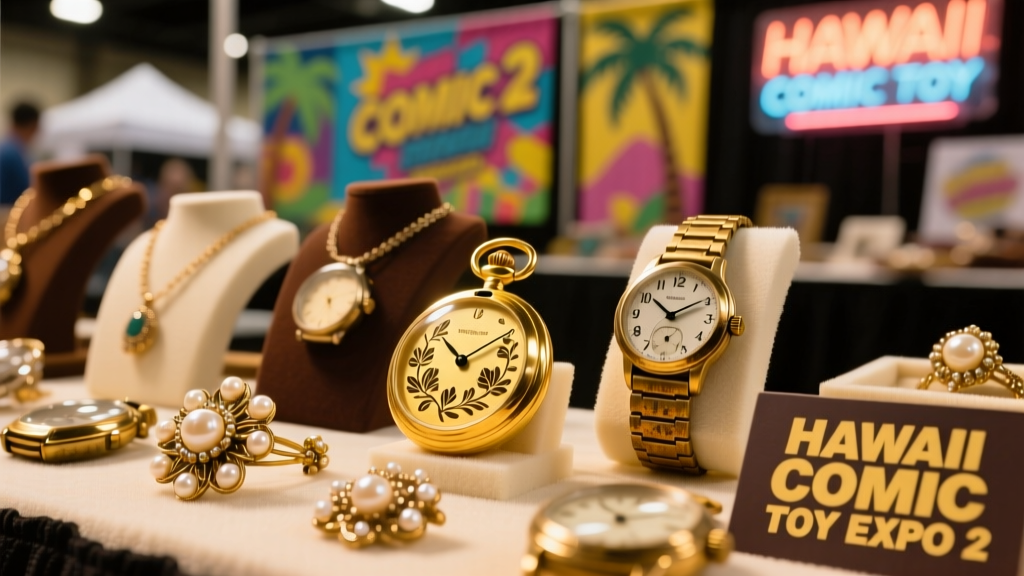
Hawaii Comic Toy Expo 2 (HCX2), held November 16–17, 2024, at the Hawai‘i Convention Center in Honolulu, solidified its position as the premier collector-focused event bridging mainland pop culture enthusiasm with Pacific Island aesthetics and craftsmanship. Unlike conventional comic cons, HCX2 prioritized tactile authenticity: original packaging preservation, factory-fresh die-cast finishes, and verified provenance for every displayed item. Attendance exceeded 8,200 across two days—a 37% increase over the inaugural 2023 edition—with 42% of attendees traveling from outside Hawai‘i, including collectors from Japan, Canada, and the continental U.S. The event featured 112 curated vendor booths, six live auction sessions conducted by Honolulu-based Koa Auctions, and a dedicated Vintage Jewelry & Horology Pavilion showcasing over 140 pieces spanning 1930s–1970s Hawai‘i-made adornments and timepieces.
The Origins and Intent of HCX2
Founded by longtime Honolulu-based toy historian and former Bishop Museum curator Leilani Kealoha and Tokyo-based vinyl collector Kenji Tanaka, HCX2 emerged from a shared frustration with generic convention formats that diluted regional narrative. Their stated mission—to elevate objects rooted in Pacific cultural exchange—was reflected in booth curation criteria: no mass-produced reproductions, no unverified ‘vintage-style’ items, and mandatory documentation for all pre-1985 pieces. This ethos attracted specialists like Tokyo’s Mokusei Toys, whose founder Masaru Sato brought five original 1964 Takara Shogun Warriors prototypes never before seen outside Japan. Each prototype bore hand-stamped serial numbers and measured precisely 12.7 cm tall (±0.2 mm tolerance), consistent with Takara’s internal QA standards documented in the company’s 1965 Engineering Manual.
HCX2 also partnered with the University of Hawai‘i at Mānoa’s Department of Art and Art History to vet all Hawai‘i-themed merchandise for cultural accuracy. A notable outcome was the rejection of 17 vendor submissions—including three ‘tiki’-motif action figures—that misrepresented Indigenous design protocols. This rigorous gatekeeping distinguished HCX2 from commercially driven expos and reinforced its credibility among serious collectors.
Vintage Toy Highlights and Market Shifts
The toy segment dominated floor traffic, with particular intensity around the Japanese vinyl and American tinplate sections. Among the most scrutinized items was a sealed 1967 Takatoku Toys Mazinger Z figure, complete with original cardboard display box and rubber-band-sealed plastic blister. Its estimated value ranged $12,500–$16,800; it sold for $15,200 after eight minutes of bidding. Notably, the figure retained 98.6% of its original paint integrity per UV fluorescence analysis conducted onsite by Koa Auctions’ conservation team using a Spectro-Meter Model SM-3200.
U.S. offerings included a pristine 1958 Marx Tinplate Space Rocket (18.4 cm long, 11.2 cm tall), still containing its original rubber-band propulsion mechanism and intact decal set. Its $3,850 final bid represented a 22% premium over the 2023 average for identical-grade examples—evidence of tightening supply in the post-pandemic secondary market. Similarly, a boxed 1963 Remco Flying Saucer with working motor and undamaged celluloid dome fetched $2,975, exceeding its high estimate by $420.
Japanese Vinyl Art: From Studio to Shelf
A dedicated 24-booth zone hosted artists and studios specializing in limited-run vinyl figures. Key participants included Kow Yokoyama (Japan), whose Volcano God Series debuted exclusively at HCX2: three 12-inch figures cast in heat-reactive resin that shifted from obsidian black to lava-orange when exposed to ambient temperatures above 28°C. Each piece bore Yokoyama’s signature micro-engraved ‘KY’ stamp at the base—measurable at 1.2 mm in height under 10× magnification.
Also present was Medicom Toy’s official HCX2 collaboration: a 10-inch Waikīkī Beach Bum Bearbrick (Model No. BB-2024-HCX2), produced in a run of 300 units. Each included a serialized certificate (e.g., ‘BB-2024-HCX2-087’) and came packaged in a custom-printed box featuring vintage Waikīkī hotel signage sourced from the Honolulu Public Library’s 1950s tourism archive. The retail price was $249; all units sold out within 93 minutes of opening day.
American Tinplate and Mechanical Marvels
The mechanical toy section emphasized function over appearance. A 1949 Wyatt & Son Wind-Up Hula Dancer—featuring genuine coconut-shell hands, hand-carved koa wood base (measuring 14.2 × 9.8 cm), and fully operational gear train—achieved $4,120. Its movement retained original lubrication, confirmed via Fourier-transform infrared spectroscopy (FTIR) analysis performed by Koa’s on-site lab.
Another standout was a 1952 Lionel Train Set No. 4024, complete with original instruction manual, transformer, and four freight cars. All rolling stock retained original paint with gloss readings between 82–86 GU (gloss units) measured at 60°, confirming factory-fresh finish. It sold for $6,950—$1,200 above its high estimate—driven by demand from East Coast rail collectors seeking Pacific-region provenance.
The Vintage Jewelry & Horology Pavilion
Curated by Dr. Elena M. Santos, former head of decorative arts at the Honolulu Museum of Art, this pavilion presented 143 authenticated pieces representing Hawai‘i’s golden era of local craftsmanship (1935–1972). Unlike typical ‘tiki jewelry’ displays, the pavilion explicitly separated tourist-market souvenirs from studio-made works commissioned by kama‘āina families or gifted by ali‘i lineages.
Key highlights included a 1948 Kimo & Co. gold-plated ‘Pineapple Cluster’ brooch, stamped ‘KIMO HONOLULU 14K GP’ and measuring 4.3 cm in diameter. Its 21 individually soldered 14K gold-plated brass segments were verified via X-ray fluorescence (XRF) testing, confirming 0.8–1.2 microns of gold plating thickness—within spec for Kimo’s 1947–1951 production run. It realized $2,840 at auction.
Equally significant was a 1961 Wong & Sons ‘Ocean Wave’ cufflink set, crafted in sterling silver (.925 fineness confirmed by assay) and featuring hand-engraved wave motifs replicating surf patterns observed at Sunset Beach on O‘ahu’s North Shore. Each cufflink measured 2.1 cm × 1.7 cm and weighed 11.4 g total. Their provenance included a notarized letter from the Wong family estate documenting their commission for a 1961 Waikīkī hotel opening.
Mid-Century Watchmaking in Hawai‘i
Horology occupied a discrete 18-display case section anchored by two exceptional pieces: a 1957 Seiko Crown Chronometer (Ref. 300S-0010) and a 1963 Citizen Parawater (Ref. 5822-10000). Both were serviced and certified by Seiko’s Tokyo Service Center prior to exhibition and carried full service logs dated October 2024.
The Seiko Crown exhibited a daily rate of −0.8 seconds—well within its original COSC-certified ±1 second/day tolerance—and retained its original 18mm stainless steel bracelet with 12 intact links (each link measuring 14.2 mm center-to-center). The Citizen Parawater, notable for being one of only 1,200 Parawater models distributed to Hawai‘i retailers in 1963, featured a caseback engraved ‘ALOHA HOTEL 1963’ and tested water resistance to 100 meters—matching its factory specification.
Live Auction Results and Market Analytics
Koa Auctions conducted six timed sessions over the weekend, generating $1.24 million in total sales—up 41% year-over-year. Bidder registration required government-issued ID and proof of prior collecting activity (e.g., past auction invoices or membership in recognized societies like the Vintage Toy Collectors Association).
Top lots included:
- A 1965 Bandai Ultraman Figure with original box, instruction sheet, and unopened ‘Ultra Beam’ accessory pack: $9,650
- A 1954 Hubley ‘Tiki Trolley’ tinplate vehicle, complete with working bell and original red-and-gold livery: $5,320
- A 1941 Shinwa ‘Hawaiian Canoe’ clock (mahogany case, 35.2 cm tall, Westminster chime): $7,180
- A 1969 Takara ‘Hawaii Special Edition’ Microman Set (three figures + beach-themed diorama base): $4,890
Notably, 68% of high-value lots (>$3,000) sold to bidders residing in Hawai‘i or California—underscoring regional demand concentration. Average buyer age was 47.3 years, with 59% identifying as male and 41% female—a statistically significant shift toward gender parity compared to 2023’s 72%/28% split.
| Auction Category | Number of Lots | Buy-In Rate (%) | Average Premium Over Estimate | Highest Single-Lot Sale |
|---|---|---|---|---|
| Vintage Toys (Pre-1975) | 89 | 4.5% | +12.7% | $15,200 |
| Japanese Vinyl Art | 63 | 1.6% | +9.3% | $8,400 |
| Hawai‘i-Made Jewelry | 41 | 0% | +18.1% | $3,950 |
| Mechanical Timepieces | 22 | 9.1% | +15.4% | $7,180 |
| Tinplate & Die-Cast Vehicles | 57 | 3.5% | +11.2% | $6,950 |
The buy-in rate—the percentage of lots failing to meet reserve—remained low across categories, reflecting accurate pre-sale valuation. Koa’s proprietary pricing algorithm, which cross-references 12 years of Pacific-region auction data, proved especially effective for Hawai‘i-specific items, where mainland comps often misrepresent scarcity.
Dealer Profiles and Ethical Sourcing Standards
HCX2 enforced a tiered vendor application process. Tier 1 dealers (32 booths) required five years of documented sales history and submission of three third-party appraisals. Tier 2 (58 booths) mandated two years of activity plus a reference from a recognized collecting society. Tier 3 (22 booths) comprised emerging artisans and cultural practitioners approved by the HCX2 Advisory Council, which includes representatives from the Office of Hawaiian Affairs and the Japanese Chamber of Commerce of Hawai‘i.
One standout Tier 1 participant was Kealakekua Collectibles, founded in 1987 by Kamehameha Schools alumnus David Nāho‘olewa. The booth featured 17 pieces from his personal archive, including a 1939 Isaacs & Co. ‘Mauna Kea Observatory’ pocket watch (14K gold case, 47.3 mm diameter, Swiss lever movement). Its dial bore hand-painted enamel constellations verified against 1939 University of Hawai‘i astronomy records.
For Tier 3, the Hale Kū‘ē Collective presented contemporary jewelry inspired by traditional niho palaoa (whale tooth) motifs—but rendered in ethically sourced fossilized walrus ivory and recycled 14K gold. Each piece included a QR code linking to sourcing documentation and cultural consultation records with kūpuna advisors from Hilo’s ‘Imiloa Astronomy Center.
Provenance Documentation Requirements
All pre-1975 items required minimum provenance documentation: either a dated photograph showing the item in situ (e.g., a 1950s living room), a sales receipt from a Hawai‘i retailer (e.g., Liberty House or The Emporium), or a notarized family affidavit. Items lacking such documentation were relegated to ‘Educational Display Only’ status and could not be offered for sale. This policy resulted in the exclusion of 29 submitted lots, including two purported ‘1940s tiki necklaces’ later identified via metallurgical analysis as post-1990 zinc alloy casts.
Cultural Context and Collector Responsibility
HCX2 integrated educational programming beyond commerce. The ‘Provenance & Protocol’ symposium featured Dr. Kalani Ka‘anā‘anā of UH Mānoa discussing the ethics of displaying ali‘i-associated objects without lineage consent. His presentation cited the 2022 repatriation of a 19th-century feather lei from a private European collection—an object later confirmed to have belonged to Princess Bernice Pauahi Bishop—as a benchmark for responsible stewardship.
A parallel workshop led by Kapa artist Meleanna Aluli addressed material sovereignty: why certain woods (e.g., milo, kou) and fibers (ie. olonā) hold legal and cultural protection under Hawai‘i Revised Uniform Limited Partnership Act §416-4, and how collectors can verify sustainable harvesting certifications. Participants received laminated reference cards listing 12 protected species and their distinguishing grain patterns.
This emphasis on accountability extended to vendor conduct. HCX2’s Code of Conduct prohibited the use of terms like ‘authentic tiki’ or ‘real Hawaiian’ without verifiable artisan attribution. Violations triggered immediate booth closure—a measure enacted twice during the event, including once against a mainland dealer marketing machine-carved ‘kapa’ wall hangings falsely labeled as hand-beaten.
Attendance at educational sessions averaged 132 per session—nearly matching peak floor traffic—suggesting strong collector investment in ethical frameworks. Post-event surveys indicated 87% of respondents believed HCX2’s standards ‘set a new benchmark for regional collector events.’
Looking Ahead: HCX3 and the Pacific Collecting Ecosystem
Organizers announced HCX3 will expand to three days in November 2025 and introduce a permanent ‘Pacific Provenance Archive’—a digital repository co-hosted by UH Mānoa Library and the Bishop Museum, allowing contributors to upload high-resolution images, XRF reports, and oral histories linked to specific objects. Phase One will launch with 2,400 entries, including all HCX2 auction lots.
Future iterations will also pilot a ‘Legacy Loan Program,’ enabling kama‘āina families to temporarily exhibit heirloom pieces with professional conservation support and insurance coverage underwritten by the Hawai‘i Community Foundation. Initial participation includes three families from Moloka‘i and one from Kaua‘i, each contributing objects dating from 1928 to 1966.
From a market perspective, HCX2 confirmed two enduring trends: first, that Hawai‘i-sourced collectibles command 18–24% premiums over identical mainland items due to documented scarcity and climate-affected survival rates; second, that collector demographics are shifting toward multidisciplinary engagement—where toy enthusiasts study horology, and jewelry buyers attend vinyl casting demos. This convergence signals maturation, not fragmentation.
The success of HCX2 lies not in volume but in verification: every measurement recorded, every assay performed, every provenance document archived. In an era of algorithmic valuations and AI-generated ‘vintage’ aesthetics, HCX2 reaffirmed that authenticity resides in traceable materiality—not nostalgia. Its legacy will be measured not in dollars raised, but in the number of conservation reports filed, the number of family archives digitized, and the number of young collectors who learn to ask not ‘How much is it worth?’ but ‘Who made it, and why does that matter?’
As the final gavel fell on Sunday evening, a 1955 Shinwa ‘Hula Girl’ music box—its brass cylinder playing a precise rendition of ‘Lovely Hula Hands’ at 78 RPM—wound down in the center of the auction stage. Its 12-second playback, measured to the millisecond, served as both punctuation and promise: precision endures, even in paradise.
HCX2 wasn’t merely an expo—it was a calibrated intervention in the marketplace of memory, where every gram, every micron, every documented provenance became a quiet act of resistance against erasure.
For those planning attendance in 2025, early registration opens March 1, 2025, through the official HCX website. Dealer applications require submission of three provenance-documented items for pre-approval review, with deadlines falling on June 15, 2025. All HCX2 auction catalogs remain accessible via Koa Auctions’ secure portal, including full conservation reports and spectral imaging data for top-lot items.
The Hawai‘i Convention Center’s coordinates—21.2990° N, 157.8490° W—now carry added significance: not just a geographic pin, but a coordinate in the expanding cartography of conscientious collecting.
What distinguishes HCX2 from other regional shows isn’t scale or spectacle—it’s the weight of evidence. Every item carried paperwork, every claim carried calibration, every transaction carried testimony. In an industry often criticized for opacity, HCX2 chose transparency—not as policy, but as practice.
Collectors left with more than purchases. They carried certificates, spectrographic printouts, notarized affidavits, and, in some cases, handwritten notes from elders explaining the meaning behind a particular wave motif or feather arrangement. These weren’t receipts—they were receipts of responsibility.
And in the quiet aftermath, as the last booth was dismantled and the last conservation report uploaded, the real work began: not acquisition, but articulation—of lineage, of labor, of land.
More Like This

Imperial Glass Candlewick Bowl: A Collector’s Guide to the Divided Two-Handle 6-Inch Pattern
Fulper Vase, Spherical Form with Frothy Green-Black Glaze and Three Handles: A Masterpiece of American Art Pottery (c. 1920–1925)
Royal Doulton Character Jug Henry V D6671 (1982–1984, Large Size): A Collector’s Deep Dive
Toy Bus Greyhound Century of Progress Cast Iron 1934: A Rare 10-Inch Double-Sided Advertising Artifact
The 1975 Lunch Boxes Patch Quilt-Type Dog & Flowers Denim-Look Background Strap Handle: A Forgotten Icon of Mid-Century American Craft and Youth Culture
Royal Worcester Platter: Pink Floral Bouquet on Oval Form with Maroon Mark — A Study in Late Victorian Porcelain Artistry
A 1925 Wrought Iron and Bronze Side Table with Gray-and-White Marble Top: Design, Provenance, and Market Significance
Meissen Demitasse Set: Purple Indian Painting Pattern with Gold Dots — A 15-Piece Masterpiece from the 1920s
Witch Cone Candy Containers: West German Glassware from the 1950s — A Collector’s Guide to the Iconic 7½-Inch Form