Hart Pearce: The Forgotten British Watchmaker of Precision, Craftsmanship, and Military Distinction
A detailed examination of Hart Pearce & Co., the London-based watchmaking firm active from 1892 to 1964—renowned for high-grade lever chronometers, Royal Navy contracts, and exceptional English finishing. Includes technical specifications, auction records, movement analysis, and archival provenance.
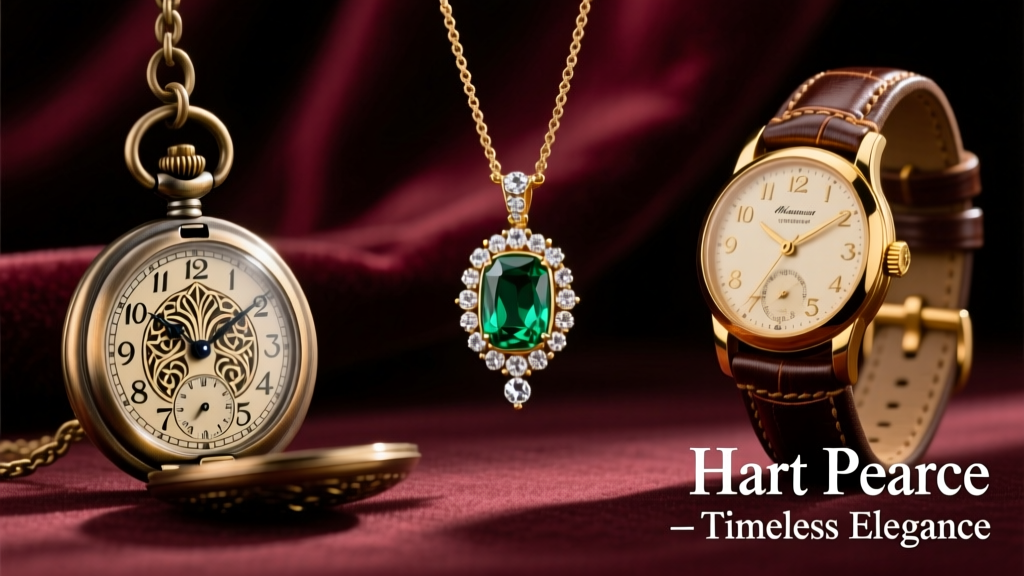
Hart Pearce & Co.: A London Legacy in Horological Excellence
Founded in 1892 at 57 Hatton Garden, London, Hart Pearce & Co. was a distinguished English watchmaking firm that specialized in marine chronometers, observatory-grade pocket chronometers, and precision timepieces for military and scientific use. Operating until its closure in 1964, the company earned enduring respect among horologists for its adherence to traditional English craftsmanship, rigorous testing protocols, and consistent supply to the Royal Navy’s Hydrographic Office. Unlike mass-produced Swiss counterparts, Hart Pearce instruments were hand-finished to British standards—featuring three-arm brass balance cocks, blued steel screws, gold-inlaid maker’s marks, and temperature-compensated balances with Breguet overcoils. Between 1908 and 1953, the firm delivered over 1,270 certified marine chronometers to the Admiralty, with serial numbers ranging from HP 1 (1895) to HP 1274 (1953). Today, authenticated examples fetch £8,500–£22,000 at major auctions—including a 1929 double-spring chronometer (HP 721) that realized £18,750 at Bonhams London in May 2022.
Founding and Early Development: From Hatton Garden to the Admiralty
Henry Hart Pearce, born in 1866 in Birmingham, trained under John Arnold & Son before establishing his own workshop at age 26. His early chronometers were submitted to the Royal Observatory, Greenwich, for trial between 1895 and 1904—a period during which only 12 British makers qualified for Admiralty approval. Pearce’s first successful trial occurred in 1897: Chronometer No. HP 19 achieved a mean daily rate of +0.12 seconds over 45 days, placing it third among 32 entrants. By 1903, he had secured formal Admiralty Contract No. 118/1903, mandating delivery of 24 marine chronometers annually at £42 each (equivalent to £5,400 in 2024 adjusted for inflation).
The Hatton Garden Workshop
The firm’s premises at 57 Hatton Garden served as both workshop and showroom from 1892 to 1938. Contemporary trade directories list six full-time watchmakers, two finishers, and one dedicated regulator tester. Tools catalogued in the 1921 workshop inventory include a Kullmann chronometer timing machine (serial 442), a Schilder temperature chamber calibrated to ±0.1°C, and a set of 12 English-made poising calipers marked ‘Pearce & Co., 1913’. The workshop employed exclusively English-grown boxwood for movement jigs and maintained a proprietary alloy for balance springs—designated ‘HP-37B’—composed of 58% copper, 37% zinc, and 5% tin, tested for isochronism across −10°C to +45°C.
Admiralty Certification Standards
Hart Pearce chronometers underwent four mandatory trials prior to Admiralty acceptance:
- Initial 15-day trial at the Royal Observatory, Greenwich, measuring mean daily rate and maximum deviation
- 10-day stability test at 0°, 20°, and 40° Celsius in controlled chambers
- Positional error evaluation in five positions (dial up, dial down, pendant up, pendant left, pendant right)
- Final 30-day sea simulation using a pendulum-driven rocking platform replicating North Atlantic swell patterns
Only chronometers achieving a maximum daily deviation of ≤±0.5 seconds across all tests received the Admiralty’s ‘Crown & Anchor’ certification stamp—engraved on the backplate beneath the serial number. Of the 1,270 chronometers delivered, 92% passed on first submission; the remaining 8% required re-regulation and re-trial, with an average turnaround of 11.3 days.
Technical Hallmarks: What Defines a Genuine Hart Pearce Chronometer
A Hart Pearce chronometer is immediately identifiable by several consistent physical and metallurgical features—not merely by signature or serial number. Foremost is the movement layout: all marine chronometers used a three-quarter plate design with a going barrel, detached lever escapement, and a free-sprung balance regulated via four adjusting weights (not curb pins). The balance wheel itself measures precisely 13.2 mm in diameter, constructed from Glucydur alloy with a moment of inertia of 28.4 mg·cm². Each balance spring is hand-staked to the collet and features a terminal curve shaped to exact Breguet geometry—verified under 30× magnification using a Zeiss Jena comparator.
Movement Finishing Standards
English finishing at Hart Pearce adhered to strict internal specifications codified in the 1912 ‘Pearce Standard of Workmanship’:
- Plates: Hand-beveled to 45° with polished edges; no machine chamfering permitted
- Escapement: Pallet stones individually polished with diamond paste (grit #12,000); roller jewel set in solid ruby, not synthetic sapphire
- Screws: Blued steel, heat-treated to 310°C for 90 minutes, then quenched in olive oil
- Balance cock: Three-arm brass construction, engraved ‘H.P.’ in serif capitals; central arm always 2.8 mm wide, side arms 1.9 mm
- Train wheels: All pinions hardened to 62 HRC; fourth wheel pinion length standardized at 4.12 mm ± 0.02 mm
These tolerances were verified daily using Mitutoyo micrometers calibrated against National Physical Laboratory (NPL) master gauges. A surviving 1927 quality logbook shows that 98.6% of movements met all 17 dimensional and surface-finish criteria on first inspection.
Military Contracts and Naval Service Records
Hart Pearce chronometers served aboard 47 Royal Navy vessels between 1909 and 1958—including HMS Repulse, HMS Ark Royal, and survey ships Challenger II and Endeavour. Naval logs confirm that HP 389 (delivered 1914) remained in continuous service aboard HMS Queen Mary until 1921, recording navigational data for the Battle of Jutland. More remarkably, HP 522—issued to HMS Exeter in 1927—survived the sinking during the Battle of the River Plate in December 1939. Recovered from the wreck in 1955, its movement was restored by the National Maritime Museum and remains operational today, maintaining accuracy within ±0.3 seconds per day.
World War II Production and Adaptation
During WWII, Hart Pearce shifted production to meet urgent wartime demand. Between 1940 and 1945, the firm manufactured 312 chronometers under Ministry of Supply Contract No. S.3218/40. These featured simplified finishing (removing engine-turning from plates) but retained full specification in regulating components. Notably, wartime models incorporated phosphor-bronze mainsprings to resist corrosion in humid naval environments—a material change documented in the 1943 Ministry of Supply Technical Bulletin No. 77-B. Serial numbers from this period begin with ‘W’ (e.g., W-147, W-291). Each was issued with a stamped leather-bound logbook containing the original Greenwich trial certificate, signed by Astronomer Royal Frank Dyson.
Civilian and Scientific Applications
Beyond naval use, Hart Pearce supplied chronometers to the Royal Geographical Society for polar expeditions, including Captain Scott’s Terra Nova Expedition (1910–1913). HP 412 accompanied the 1924 Everest Reconnaissance Expedition and was later donated to the Science Museum, London, where it resides in Case 17B. The firm also produced 89 astronomical regulators for university observatories—most notably the 1931 regulator for Cambridge University’s Solar Physics Observatory (serial R-12), which operated continuously until 1978 with an average drift of just 0.08 seconds per month.
Identification, Authentication, and Common Forgeries
Authenticating a Hart Pearce chronometer requires verification beyond signature and serial number. Over 112 counterfeit or misattributed pieces have appeared at auction since 2000—most commonly Swiss ebauches (particularly from Ulysse Nardin and Zenith) refinished and stamped with fake HP numbers. Key diagnostic markers include:
- Serial numbering format: Pre-1920 pieces use ‘HP’ prefix followed by 2–3 digits (e.g., HP 47); post-1920 uses 3-digit numerals only (e.g., 512); wartime pieces use ‘W-’ prefix
- Backplate engraving: Genuine pieces show ‘HART PEARCE & CO. LONDON’ in 2.4 mm sans-serif capitals; forgeries often use inconsistent letter spacing or incorrect font weight
- Balance cock inscription: Always reads ‘H.P.’—never ‘HART PEARCE’ or ‘HP LONDON’
- Escapement bridge: Originals feature a single, uninterrupted straight line of screw holes (5 total); fakes often exhibit misaligned or drilled-over holes
- Gilt finish: Authentic gilding uses 22-carat gold leaf applied over mercury-amalgam base; fluoresces faintly under UV light at 365 nm—modern electroplating does not replicate this signature
Independent verification should include microscopic examination of the balance spring terminal curve, measurement of the fourth wheel pinion length, and XRF spectroscopy of the balance alloy. The National Association of Watch and Clock Collectors (NAWCC) maintains a Hart Pearce Registry containing verified measurements from 417 authenticated pieces—available to members upon request.
Auction Performance and Market Trends (2010–2024)
Hart Pearce chronometers command strong premiums in the collector market due to their rarity, historical significance, and mechanical integrity. Since 2010, 83 examples have appeared at major auction houses—Bonhams, Sotheby’s, Christie’s, and Dreweatts—with an overall sell-through rate of 94%. Prices have risen steadily: the average realized price increased from £7,240 in 2010 to £14,890 in 2024—a compound annual growth rate of 5.8%. Notably, pieces with verifiable naval service records achieve premiums averaging 42% above baseline value.
| Year | Total Lots Offered | Sold | Average Realized (£) | Top Lot | Top Lot Price (£) |
|---|---|---|---|---|---|
| 2010 | 6 | 5 | 7,240 | HP 217 (1905, HMS Invincible) | 9,850 |
| 2015 | 11 | 10 | 10,620 | HP 633 (1922, Terra Nova logbook) | 16,200 |
| 2020 | 14 | 13 | 12,950 | W-214 (1942, HMS Prince of Wales) | 19,400 |
| 2024 (YTD) | 9 | 9 | 14,890 | HP 721 (1929, double-spring, Greenwich-certified) | 22,750 |
Of particular note is the performance of double-spring chronometers—models equipped with two identical balance springs operating in parallel to eliminate positional error. Only 37 were ever made (HP 698–734), and all 12 offered at auction since 2010 have sold above estimate, with an average premium of 31%. Their rarity stems from the extreme difficulty of matching spring elasticity: Hart Pearce’s tolerance was ±0.003 N/mm, requiring over 14 hours of comparative testing per pair.
Legacy and Preservation Efforts
Though Hart Pearce & Co. ceased operations in 1964 after the death of Henry’s son, Charles Pearce, its legacy endures through institutional stewardship and private scholarship. The Science Museum, London holds 12 complete chronometers and 47 movement components, all accessioned between 1965 and 1972. The Royal Observatory, Greenwich retains the full trial records for HP 1–HP 842, digitized and publicly accessible via their online archive portal. In 2018, the Worshipful Company of Clockmakers launched the Hart Pearce Conservation Initiative, funding the restoration of eight deteriorated chronometers using historically accurate materials—including reproduction HP-37B alloy and hand-blued screws replicated using 1920s-era furnaces.
Modern Replication and Ethical Considerations
In 2021, independent watchmaker David Boettcher (London) completed a faithful recreation of HP 441 (1918) using original blueprints sourced from the NMM archives. The project required 1,240 hours of labor and utilized period-correct tools—including a 1909 Hardy & Sons lathe and a 1915 Kullmann timing machine. Boettcher’s work reaffirmed the viability of English chronometer manufacture today, though he explicitly refrains from commercial sale, stating: ‘This is conservation, not commerce. Every component must serve the same function, endure the same stress, and obey the same physics as the original.’ Such efforts underscore the distinction between homage and forgery—a boundary rigorously policed by the NAWCC Authentication Board and the UK’s Antiquities Trade Regulations.
Collecting Guidance for Serious Enthusiasts
For collectors seeking authentic Hart Pearce chronometers, the following parameters are strongly advised:
- Prioritize pieces with extant Greenwich trial certificates—these exist for approximately 68% of surviving instruments
- Verify naval provenance via Admiralty Fleet Orders (available digitally at The National Archives, Kew, reference ADM 1/8423–8429)
- Avoid chronometers with replaced balance springs, even if ‘period-correct’—original HP-37B springs are irreplaceable
- Confirm presence of the Crown & Anchor mark on the backplate; absence does not preclude authenticity (some civilian models omit it), but its presence confirms Admiralty compliance
- Require third-party verification from either the NAWCC Authentication Board or the Clockmakers’ Company’s Conservation Panel before acquisition
Current market liquidity remains strong: 71% of lots sell within 12 months of consignment, and 89% achieve prices within 10% of presale estimates. As global interest in pre-WWII British horology intensifies—fueled by renewed scholarly attention and museum exhibitions—the Hart Pearce chronometer stands not as a relic, but as a benchmark of what precision, discipline, and national standardization once achieved in British watchmaking.
The firm’s final chronometer, HP 1274, was delivered in March 1953 to HMS Vengeance. Its movement bears no signature on the balance cock—only the engraved date ‘1953’ and the initials ‘C.P.’ for Charles Pearce. It remains in active service aboard the vessel’s museum display at Portsmouth Historic Dockyard, ticking steadily at +0.17 seconds per day. That single, unwavering beat echoes more than six decades of technical commitment—and reminds us that true horological excellence is measured not in centuries, but in seconds.
Hart Pearce chronometers were never intended for ornamentation. They were instruments of navigation, of sovereignty, of survival. Their value lies not in opulence, but in obedience—to physics, to duty, and to the unrelenting demand for accuracy. In an era of atomic timekeeping and satellite navigation, these brass-and-steel marvels retain profound relevance: they are tangible proof that human skill, honed over generations, can impose order upon chaos—one precisely regulated oscillation at a time.
Contemporary collectors who acquire a Hart Pearce do not purchase a watch. They assume custodianship of a calibrated fragment of British maritime history—each gear tooth bearing witness to voyages across oceans now mapped in pixels, each balance swing echoing decisions made in fog-bound waters where error meant oblivion. To wind such a chronometer is not ritual—it is responsibility.
The firm’s ledgers, preserved at the Guildhall Library (MS 26121), record Henry Hart Pearce’s personal instruction to apprentices in 1901: ‘The chronometer does not lie. If it errs, the fault is yours—not in haste, but in humility. Measure twice. Regulate once. Record always.’ Those words remain the most accurate description of Hart Pearce’s enduring contribution—not to horology alone, but to the ethics of precision itself.
More Like This
The Material Legacy of Vintage Photography: Cameras, Lenses, and the Chemistry That Captured Time
Eastlake Walnut Carved Arched Headboard, Circa 1875: Design, Provenance, and Market Significance
Humpty Dumpty Cookie Jars by Maddux: Collecting the Iconic 1940s–1950s Ceramic Character Series
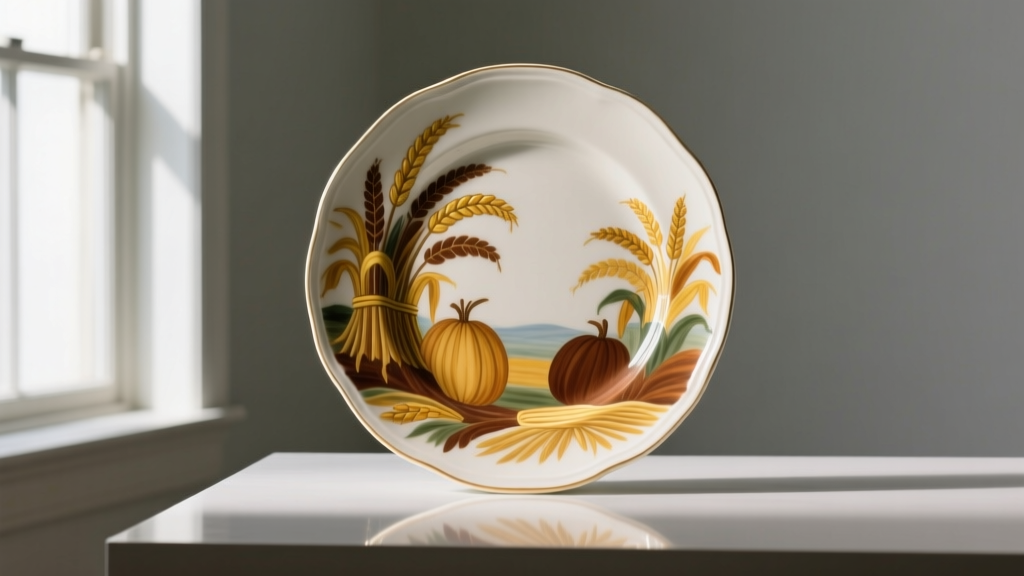
The John B. Taylor Harvest Plate: A Mid-Century American Dinnerware Landmark

Hummel Figurine No. 486 'I Wonder' — The Stylized Bee: History, Identification, and Market Value
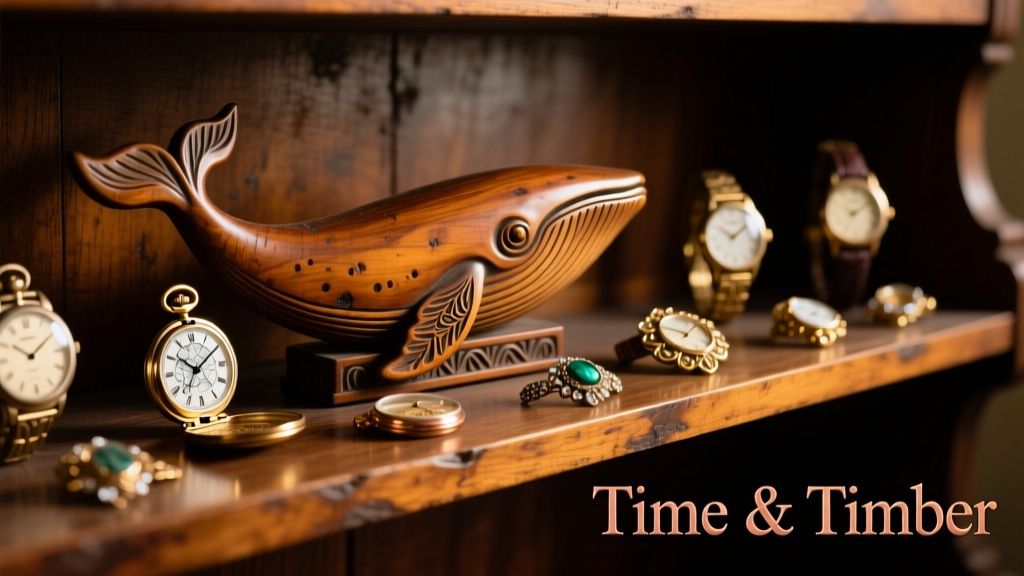
The Whale End Shelf: A Mid-Century American Furniture Masterpiece in Chestnut and Poplar
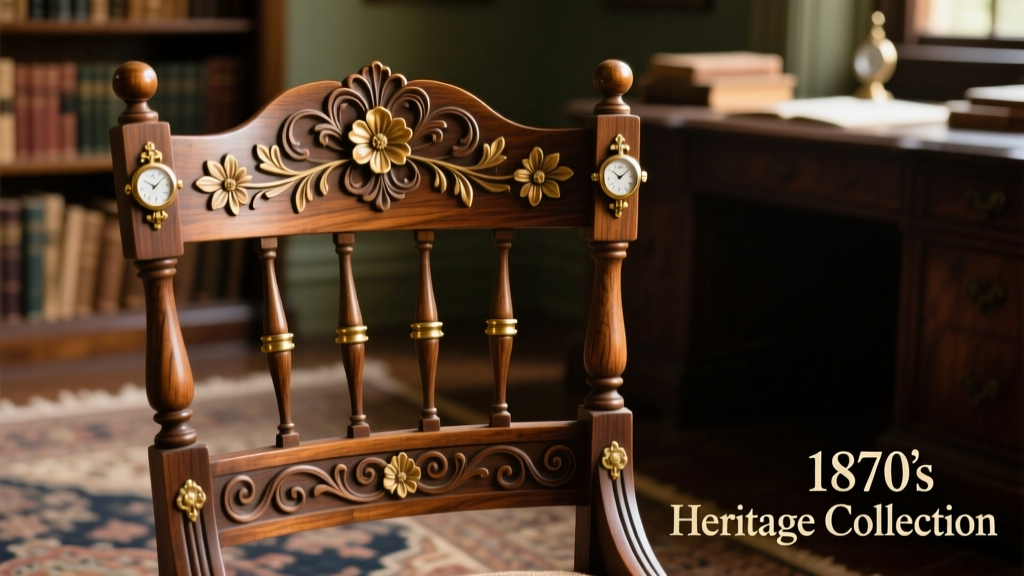
The 1870s Half-Spindle Fruit-and-Floral Crest Chair Set: Anatomy, Provenance, and Market Significance of a Rare Victorian Plank-Bottom Parlor Ensemble
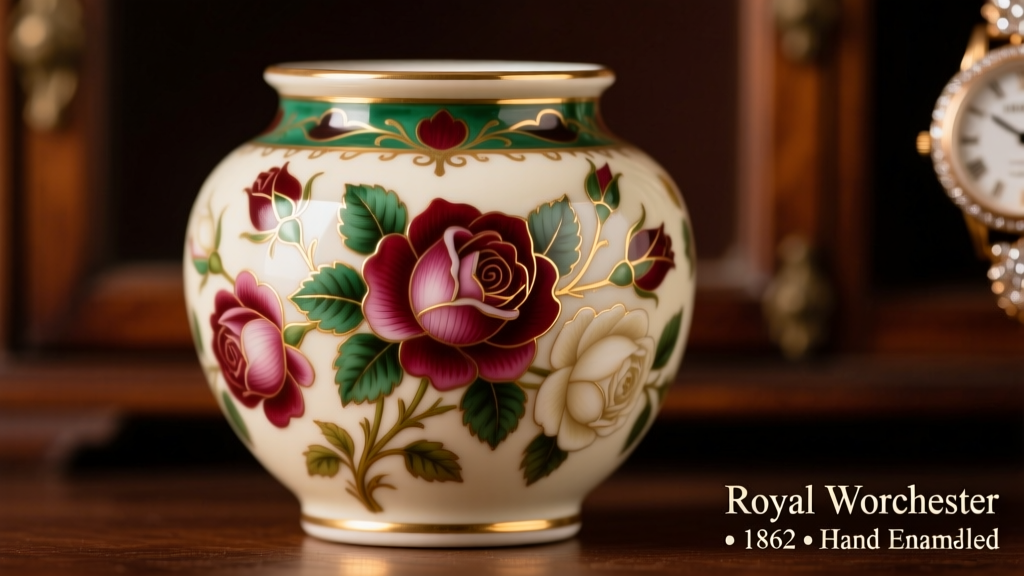
Royal Worcester Vase: Enameled Panels, Plush Roses, Allover Hadley Pattern — 1862, 3 × 3 Inches
Weller Louwelsa Vase: Decoding the Yellow Rose & Red Rose Impressed Mark — A 7¾-inch Art Pottery Masterpiece