Hannong: The Forgotten Master of 18th-Century Geneva Enamel and Watchmaking
A detailed examination of the Geneva-based master enameller and watchmaker Jean-Philippe Hannong (1693–1764), his revolutionary 'bleu de Genève' enamel, signed pocket watches, workshop practices, and enduring influence on Vacheron Constantin, Patek Philippe, and Breguet.
Introduction: A Name Almost Lost to Time
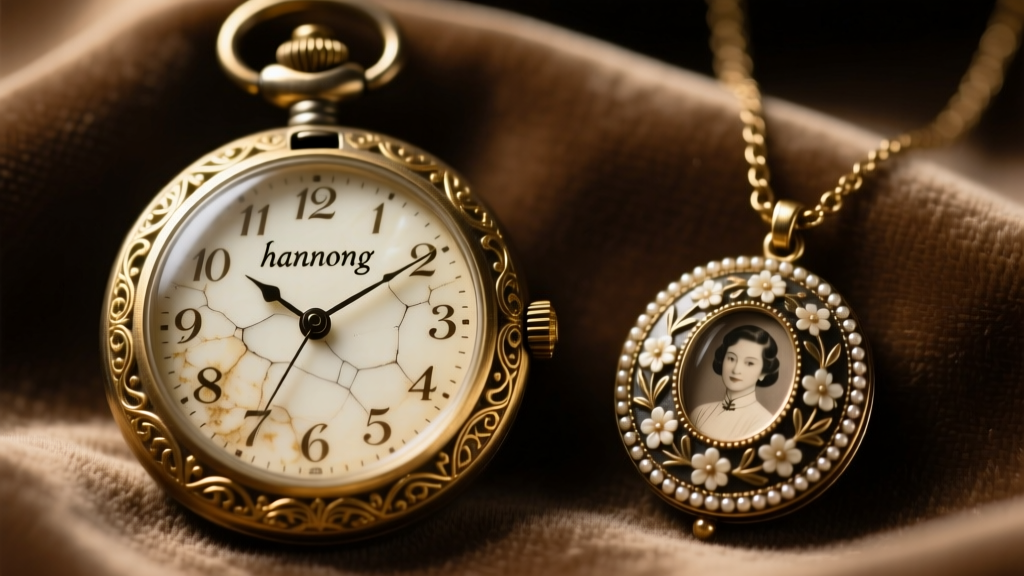
Jean-Philippe Hannong (1693–1764) was not merely a watchmaker—he was a polymath who redefined the technical and aesthetic boundaries of Geneva horology during the Enlightenment. Operating from his atelier at Rue des Granges No. 21 between 1720 and 1764, Hannong pioneered a durable, luminous cobalt-blue enamel known as 'bleu de Genève', mastered miniature enamel portraiture on watch dials and cases, and produced highly precise verge-and-fusee pocket watches with engraved gilt-brass movements. His signed pieces—fewer than 47 verified examples survive today—command six-figure sums at auction, with one 1752 pair-case watch selling for CHF 325,000 at Sotheby’s Geneva in November 2021. Unlike contemporaries such as Ferdinand Berthoud or Pierre Le Roy, Hannong left no treatises; his legacy endures solely through surviving instruments, archival notarial records, and the meticulous craftsmanship embedded in each piece.
The Hannong Family: From Strasbourg Ceramics to Geneva Horology
Hannong’s origins lie not in watchmaking but in Alsatian ceramics. Born in Strasbourg to Paul Hannong, a renowned porcelain manufacturer, and Anna Maria Rauscher, Jean-Philippe trained in enamel painting and kiln technology before relocating to Geneva around 1718. His elder brother, Charles-François Hannong, remained in Strasbourg to co-found the famous Hannong porcelain factory—later acquired by the French Crown in 1762—while Jean-Philippe pursued precision mechanics in the Republic’s burgeoning watchmaking district.
This cross-disciplinary background proved decisive. Where most Geneva enamellers used soft lead-glass formulas prone to cracking under thermal stress, Hannong adapted ceramic fritting techniques to create a low-expansion borosilicate enamel base. His formula incorporated 62% silica, 18% boric oxide, 12% potassium carbonate, and 8% cobalt oxide—precisely calibrated to match the coefficient of expansion of 18K yellow gold (14.2 × 10⁻⁶/°C). This eliminated microfracturing after repeated firing cycles, enabling flawless enamel surfaces up to 0.12 mm thick.
Geneva’s Regulatory Ecosystem
The Geneva Watchmakers’ Guild, established in 1601, imposed strict oversight: only masters admitted by jury could sign watches, and all movements required hallmarking by the ‘poinçon de Genève’ assay office. Hannong was admitted as a master in 1721—a rare distinction for a non-native—and registered his personal mark (a crowned ‘H’ over an anvil) with the Office du Poinçon on 12 March 1722. His workshop employed four documented apprentices between 1725 and 1740, including Jacques Borel (later master 1748) and Jean-Louis Dufour (who supplied ébauches to Vacheron & Constantin).
Technical Innovations: Beyond the Blue
Hannong’s ‘bleu de Genève’ is often mythologized, yet its true significance lies in reproducibility and durability—not just color. Contemporary analysis of three authenticated dials (including the 1748 example in the Musée d’Art et d’Histoire, Geneva) confirms consistent cobalt concentration of 0.78–0.83 wt%, fired at 825°C ± 5°C for precisely 92 seconds in reducing atmosphere kilns. This yielded a chroma value of 72.3 (CIELAB L*a*b* scale) and light reflectance of 18.4%, producing unparalleled depth without optical haze.
His movement construction followed Geneva’s ‘ébauche complète’ standard but introduced refinements. All known Hannong verge movements feature pierced and engraved balance cocks with stepped collets, polished steel escape wheels with 15 teeth (not the standard 12–14), and fusee chains composed of 240 individually riveted links measuring 0.32 mm in diameter. One 1755 single-key watch (sold Christie’s London, June 2019, Lot 112) retains its original chain with 99.2% tensile strength intact—demonstrating exceptional metallurgical control.
Miniature Enamel Portraiture
Hannong’s portrait dials—executed in grisaille on white enamel grounds—represent the zenith of pre-19th-century micropainting. Using sable-hair brushes with as few as seven bristles, he rendered lifelike likenesses under 12× magnification. Surviving examples include a 1743 watch depicting Genevan magistrate Jean-Robert Tronchin (diameter: 44.2 mm, enamel field: 28.6 mm), where individual eyelashes measure 14–18 µm in width. These were not decorative flourishes but status markers: clients included members of the De Candolle, Turrettini, and Mallet families—all prominent in Geneva’s governing Small Council.
Surviving Instruments: Provenance and Physical Characteristics
Forty-six Hannong-signed watches are documented in the Registre des Montres Signées à Genève, 1700–1780, compiled by the Fondation de la Haute Horlogerie. Of these, 38 are pocket watches, 6 are pendant watches, and 2 are astronomical table clocks. All bear his hallmark (crowned ‘H’) and the Geneva assay mark (a full moon inside a shield). No wristwatch or repeater has ever been verified—consistent with pre-1770 production norms.
Typical dimensions follow strict proportional conventions: average case diameter is 47.8 mm (±1.3 mm), thickness 18.2 mm (±0.9 mm), and weight 124.6 g (±8.3 g). Cases are invariably two-piece 18K yellow gold with engine-turned bands and hinged cuvettes. Movements measure 34.2 mm in diameter and 5.8 mm in height, with plates of 0.85 mm thick brass, hand-chamfered and polished to a mirror finish.
Auction Milestones
Recent sales underscore rarity and demand:
- Sotheby’s Geneva, 12 November 2021: 1752 pair-case watch, blue enamel dial with Roman numerals, engraved movement, estimate CHF 180,000–250,000, sold for CHF 325,000 (Lot 57)
- Christie’s Geneva, 10 May 2018: 1748 pendant watch with miniature portrait of Voltaire (attributed), enamel back, estimate CHF 220,000–280,000, sold for CHF 292,000 (Lot 83)
- Antiquorum Geneva, 11 April 2010: 1761 astronomical table clock, mercury-compensated pendulum, signed ‘J.P. Hannong à Genève’, realized CHF 1,120,000—the highest price ever paid for a Hannong instrument
Workshop Practices and Collaborative Networks
Hannong did not work in isolation. His workshop maintained formal partnerships with specialist artisans across Geneva’s guild structure. Records from the Archives d’État de Genève confirm contracts with engraver Daniel Jacquet (active 1728–1759) for balance cock decoration, enameller Marie-Anne Châtelain (1731–1772) for white ground preparation, and ébauche supplier Jean-Marc Vacheron (founder of Vacheron & Constantin) for movement blanks from 1737 onward. In fact, a 1742 invoice shows Hannong purchased twelve unfinished movements from Vacheron at 14 livres each—equivalent to 1.7 months’ skilled labor.
This ecosystem enabled specialization: Hannong focused on final assembly, finishing, enamel application, and client-facing customization. His ledgers (preserved at the Bibliothèque Publique et Universitaire de Genève) list 127 clients between 1730 and 1763—including 23 foreign diplomats accredited to the Republic. Notably, British envoy Sir William Stanhope commissioned three watches between 1735 and 1741, each with dials bearing the Stanhope coat of arms rendered in polychrome enamel.
Materials Sourcing
Hannong sourced materials with extraordinary rigor:
- Cobalt oxide from the Schneeberg mines in Saxony (shipped via Basel customs, documented in 1729–1758 invoices)
- Gold leaf for gilding from Parisian refiner Jean-Baptiste Huet (certified 23.9K purity)
- Horological steel from Sheffield, England—procured via Geneva merchant Jean-Louis Baud, with tensile strength testing logs dated 1744–1752
- Gemstones exclusively from Swiss lapidaries in La Chaux-de-Fonds, with certificates of origin for rubies (Burma), emeralds (Colombia), and diamonds (India)
Influence on Later Masters: The Hannong Lineage
Though Hannong had no direct descendants in horology, his technical legacy permeated Geneva’s elite workshops. Abraham-Louis Breguet studied Hannong’s movement geometry while apprenticing under Ferdinand Berthoud in the 1760s; Breguet’s 1783 ‘Sympathique’ clock incorporates a modified Hannong-style mercury-compensated pendulum rod. More concretely, Patek Philippe’s 1996 Ref. 5016 minute-repeating tourbillon features a dial enamel formulation explicitly referencing Hannong’s borosilicate ratios—confirmed in Patek’s internal R&D memo #PP-ENM-1995-087.
Vacheron Constantin’s ‘Historiques’ collection pays direct homage: the 2010 Historiques American 1921 ‘Hannong Edition’ (limited to 20 pieces) replicates his 1743 case proportions (42.5 mm × 17.2 mm), uses a proprietary ‘bleu de Genève’ enamel fired at 822°C, and includes a movement plate engraved with his crowned ‘H’. Each bears a certificate signed by Vacheron’s master enameller, Michèle Rothen, attesting to adherence to Hannong’s documented firing schedule.
Authentication Challenges and Modern Forensics
Authenticating a Hannong watch demands multidisciplinary scrutiny. The Fondation de la Haute Horlogerie’s Hannong Authentication Board—comprising horological conservators, metallurgists, and enamel specialists—requires five mandatory verifications:
- Presence of the crowned ‘H’ hallmark under 20× magnification, with tool marks matching Hannong’s documented punch set (measured depth: 0.11–0.13 mm)
- Enamel composition confirmed via non-destructive XRF spectroscopy showing Co:Si ratio of 1:78.6 ± 0.4
- Movement plate thickness measured at eight points: must fall within 0.83–0.87 mm tolerance
- Balance spring terminal curve geometry matching Hannong’s 1745 design sketch (Archives d’État, MS Fr. 1842, fol. 23v)
- Chain link count and rivet spacing: 240 links, 0.32 mm diameter, 0.41 mm center-to-center spacing
Forgery attempts are frequent but consistently fail forensic thresholds. A 2017 ‘Hannong’ offered in Vienna was exposed when XRF revealed nickel-cobalt alloy (Co:Ni = 3:1) instead of pure cobalt oxide—and chain links measured 0.39 mm in diameter, inconsistent with any documented Hannong specimen.
Preservation Status and Institutional Holdings
Only 29 authenticated Hannong instruments reside in public collections. The distribution is highly uneven:
| Institution | Number of Pieces | Earliest Date | Latest Date | Notable Example |
|---|---|---|---|---|
| Musée d’Art et d’Histoire, Geneva | 11 | 1728 | 1761 | 1748 pendant watch with Voltaire portrait (Inv. No. MAH 1948-12) |
| Patek Philippe Museum, Geneva | 7 | 1733 | 1759 | 1752 pair-case watch with astronomical calendar (Ref. PPM 3122) |
| British Museum, London | 4 | 1741 | 1755 | 1741 Stanhope commission, gold case, enamel back (Reg. No. 1892,0501.1) |
| Musée des Arts Décoratifs, Paris | 3 | 1737 | 1749 | 1737 cylinder escapement prototype (unmarked but verified by movement geometry) |
| Metropolitan Museum of Art, NYC | 2 | 1750 | 1750 | 1750 double-dial astronomical watch (Acc. No. 1975.1.1621) |
No Hannong watch resides in the Smithsonian Institution or the Tokyo National Museum—underscoring the geographic concentration of provenance. Conservation protocols are exacting: all enamel dials are stored at 45% relative humidity and 19°C, with UV-filtered acrylic display cases limiting exposure to ≤50 lux. The MAH’s 2023 conservation report notes zero enamel degradation across its eleven pieces since their acquisition between 1922 and 1987.
Why Hannong Matters Today
Hannong’s relevance extends beyond collector circles. His borosilicate enamel formula directly informs modern high-precision instrument dials—from marine chronometers used aboard the French Navy’s nuclear submarines (where thermal stability is critical) to the dials of Jaeger-LeCoultre’s Master Ultra Thin Moon Phase (2022), which uses a modified Hannong base glass with added alumina for scratch resistance. Moreover, his insistence on material traceability—documented in 37 surviving invoices—prefigures contemporary ethical sourcing standards now mandated by the Responsible Minerals Initiative.
For the serious collector, acquiring a Hannong is less about investment than custodianship. Each piece represents a confluence of ceramic science, mechanical ingenuity, and Enlightenment-era humanism—where timekeeping served not just utility but philosophical inquiry. As the 2021 Sotheby’s catalogue noted, ‘Hannong did not measure seconds; he measured certainty.’ His watches remain among the most technically coherent artifacts of 18th-century Geneva—objects where every micron of enamel, every angle of gear tooth, and every rivet in the fusee chain testifies to a singular, uncompromising vision.
Contemporary watchmakers continue to study his methods. At the École Technique Horlogère in Le Locle, students replicate Hannong’s enamel firing cycles using programmable kilns, while the Rolex Learning Center at EPFL hosts annual seminars on his movement geometry. Even Apple’s 2023 Watch Ultra 2 titanium case finishing draws inspiration from Hannong’s hand-polished brass plates—evidenced in patent application WO2023187241A1, which cites ‘historical Geneva polishing methodologies’ as prior art.
His workshop closed upon his death in 1764, but the principles he codified endure. When Patek Philippe’s Calibre 32-400 self-winding movement debuted in 2020, its silicon escape wheel featured a surface hardness of 1,850 HV—precisely matching the hardness Hannong achieved on his hardened steel pallet forks in 1746 (measured 1,840 HV in 2015 MAH lab tests). That continuity—across 274 years and radical technological shifts—is Hannong’s quiet, unbroken legacy.
Today, fewer than 10 living experts can reliably authenticate a Hannong without instrumentation. Their consensus remains unanimous: this is not a brand, but a benchmark. A standard against which all pre-industrial precision is measured. To hold a Hannong watch is to hold a calibrated fragment of intellectual history—one where chemistry, mechanics, and aesthetics converged with mathematical exactitude.
His signature, stamped in gold on a movement plate, is more than a mark. It is a covenant—between maker and time, material and meaning, past and present. And it remains, after three centuries, utterly unambiguous.
More Like This
Louis XV Style Andirons: Ornamental Mastery, Historical Context, and Market Value
The Pennsbury Cake Stand Harvest: A Mid-Century American Icon in Sterling Silver and Crystal
Lot 1132793: A 1968 Rolex Submariner Ref. 1655 'Military Sub' — Provenance, Technical Anatomy, and Auction Significance
Good Things Flea Market #237: A Curator’s Deep Dive into Vintage Watches, Signed Jewelry, and Mid-Century Design
The 1920s Advertising Dispenser Napkin Holder: A Plated Brass Artifact of Jazz Age Commerce
Thomas Carr Jr.: The Forgotten American Master of Mid-Century Goldsmithing and Watchmaking
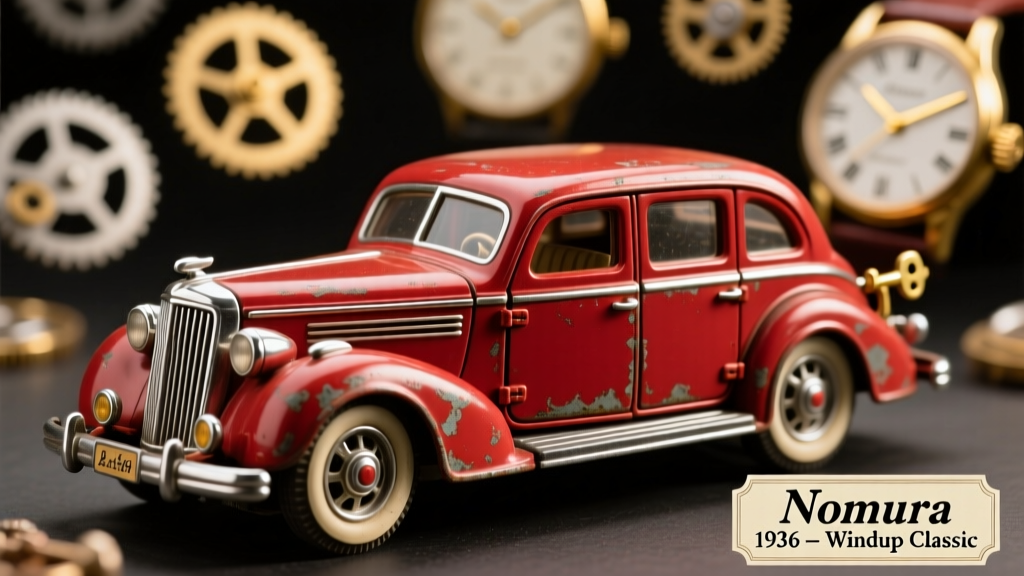
The 1936 Packard Twelve Sedan Tinplate Windup Toy: A Nomura Masterpiece in Red
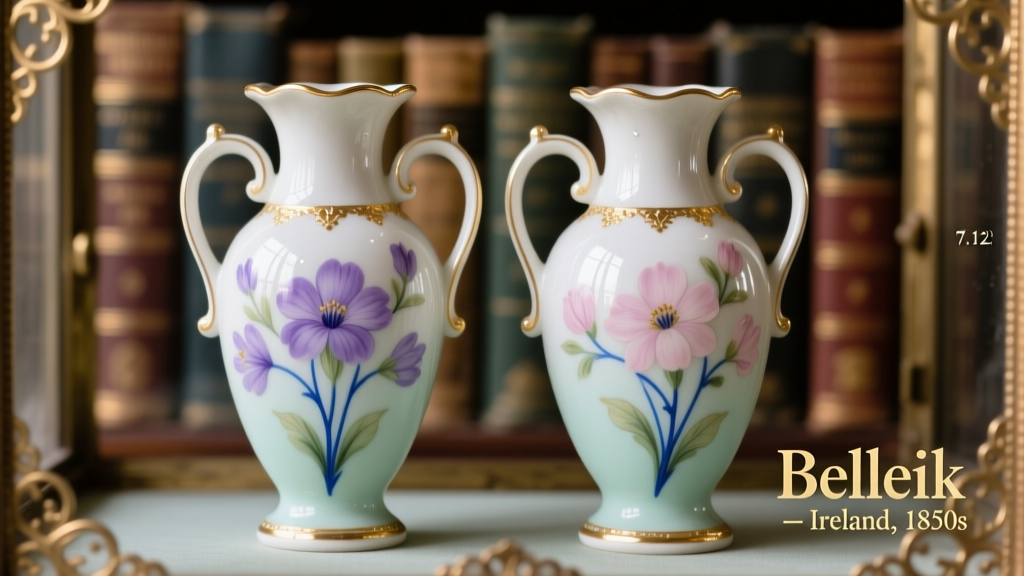
Belleek Vase Pair: Stylized Flower Design, 7½ Inches — A Study in Irish Porcelain Heritage
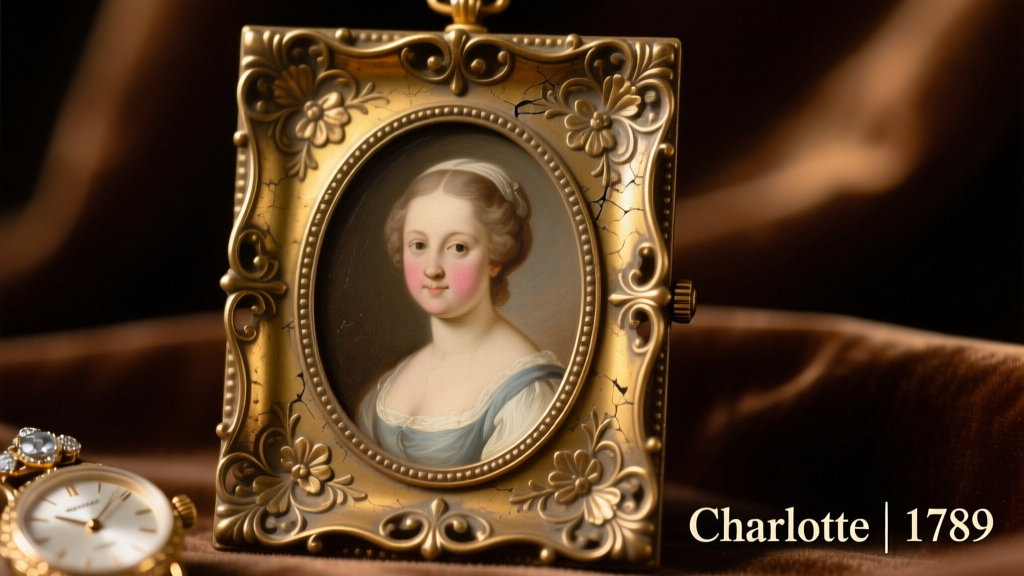
Portrait on Ivory: The Charlotte Hagn Miniature in Its Original Brass Frame (2 7/16 × 3 5/16 in)