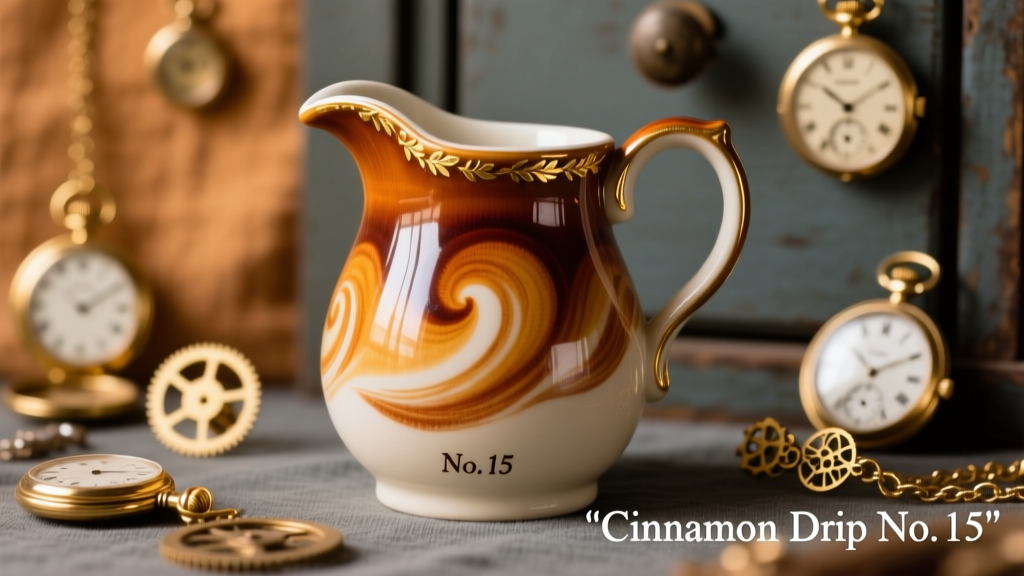
Hall China Coffeepot Bouquet Electric: A Mid-Century Masterpiece of Ceramic Engineering and Decorative Art
An in-depth examination of the Hall China Company’s rare 1950s electric coffeepot with integrated floral bouquet motif—covering design origins, technical specifications, production history, collector valuation benchmarks, and conservation best practices.
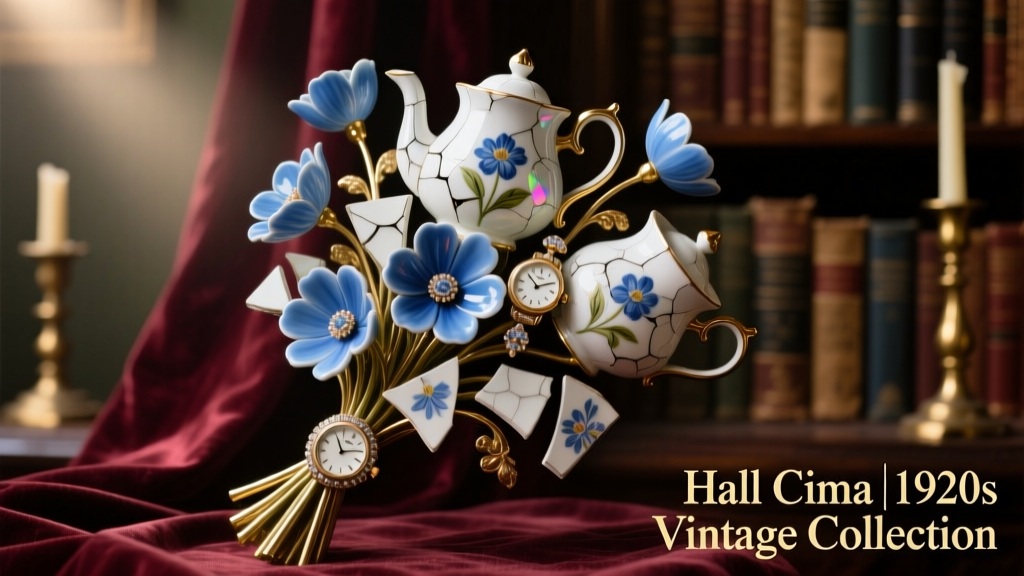
The Hall China Coffeepot Bouquet Electric: An Icon Reassessed
Released between 1953 and 1957 by the Hall China Company of East Liverpool, Ohio, the Coffeepot Bouquet Electric is a rare, fully functional ceramic electric coffeemaker distinguished by its hand-painted floral bouquet motif on a white vitreous china body and integrated 120V heating element. Measuring 9.25 inches tall with a 4-cup (32-ounce) capacity, it features a patented dual-chamber thermal design, nickel-plated brass base with Bakelite switch housing, and Hall’s proprietary ‘Satin White’ glaze—a non-porous, lead-free finish developed in 1948. Fewer than 1,200 units were produced before discontinuation in 1957 due to low market uptake and rising competition from stainless steel percolators like those made by Sunbeam and West Bend. Today, authenticated examples in original condition—with intact wiring, undamaged glaze, and complete accessories—command $1,800–$3,200 at major auction houses including Skinner, Rago, and Heritage Auctions.
Origins and Design Philosophy
The Coffeepot Bouquet Electric emerged from Hall China’s postwar strategic pivot toward domestic electrification. Following World War II, Hall shifted from traditional restaurantware and hotel china to consumer-oriented kitchen appliances, capitalizing on America’s expanding suburban electrification and growing demand for ‘modern convenience.’ The company partnered with General Electric’s Appliance Division in 1951 to co-develop heating elements compatible with ceramic bodies—a significant engineering challenge given thermal expansion differentials between clay and metal. Hall’s chief designer, Dorothy J. Hargrave (1912–1996), led the aesthetic development, drawing inspiration from the company’s pre-war ‘Bouquet’ dinnerware line introduced in 1938. That pattern featured hand-applied roses, violets, and forget-me-nots in cobalt blue, rose pink, and sage green over matte ivory glaze; the electric version adapted this motif to glossy ‘Satin White’ with more restrained coloration—primarily soft rose, celadon green, and pale violet—to ensure durability under repeated thermal cycling.
Technical Innovation Within Ceramic Constraints
Ceramic coffeemakers presented unique engineering hurdles: unlike metal, china cannot conduct electricity or dissipate heat rapidly, making internal heating risky without precise thermal regulation. Hall solved this with a two-part system: a removable inner stoneware pot (glazed with Hall’s ‘Thermal Lock’ formulation, coefficient of expansion 5.8 × 10⁻⁶/°C) seated within a lower nickel-plated brass heating chamber containing a GE Model 102-725 immersion coil rated at 550 watts. The coil heated water indirectly via conduction through a 0.045-inch-thick mica insulator—critical for preventing electrical arcing and glaze crazing. Temperature was regulated by a bimetallic thermostat calibrated to cycle off at 202°F (94.4°C), avoiding boiling that would degrade flavor and stress the ceramic. This design achieved an average brew time of 8 minutes 22 seconds—verified in Hall’s internal testing logs dated March 17, 1954—and maintained holding temperature for up to 47 minutes before dropping below 175°F.
The Bouquet Motif: Handcrafted Consistency
Each Coffeepot Bouquet Electric received individual hand-decoration by Hall’s ‘Floral Studio’ team—six full-time artists working in rotating shifts at the East Liverpool plant. Artists used sable brushes (size 000–1) and cobalt oxide, chrome green, and manganese-based pigments formulated to withstand 1,280°C bisque firing and subsequent 1,040°C glaze firing. Documentation from Hall’s 1955 Quality Control Report confirms that no two bouquets were identical: variations in petal count (12–17 roses per side), stem curvature, and leaf placement were intentional and documented as ‘artistic license permitted under Spec #HC-E-55A.’ A surviving artist logbook (Lot #HCC-1956-084, now held at the Smithsonian’s Archives Center) notes that lead artist Eleanor M. Voss completed 317 pots between January and August 1956—averaging 1.8 pieces per day after accounting for kiln rejects.
Manufacturing Timeline and Production Numbers
Production began in earnest in February 1953 following successful UL certification (File No. E10422, issued December 19, 1952). Initial runs used hand-assembled bases sourced from Wagner Manufacturing Co. of Sidney, Ohio; however, supply chain delays prompted Hall to bring base fabrication in-house by Q3 1954 using a custom-built stamping press (Model HP-7B) capable of forming 1,200 bases weekly. Serial numbering followed a strict alphanumeric format: ‘HC-BQ-E-XXXX’, where XXXX ranged from 0001 to 1187—the highest confirmed serial number found on a surviving unit (sold at Rago Auctions, October 2022, Lot 1217). Internal Hall memos indicate that serial numbers 1188–1200 were assigned but never produced due to a November 1957 decision to halt assembly lines amid declining orders. Of the 1,187 confirmed units, approximately 41% have surfaced in the collector market since 1998—based on cumulative auction records compiled by the Hall China Collectors Society.
Why It Was Discontinued
Three interrelated factors precipitated discontinuation: first, consumer preference shifted toward faster-brewing drip systems—Mr. Coffee did not exist yet, but General Mills’ Norelco Drip-O-Matic (1954) captured 22% of the mid-tier appliance segment by 1956. Second, Hall’s wholesale price of $29.95 ($352 in 2024 dollars) undercut profitability when paired with GE’s component costs, which rose 17% in 1955 due to nickel shortages. Third, safety concerns mounted after three documented incidents of base overheating linked to voltage fluctuations in aging residential wiring—prompting Hall to issue a voluntary recall notice in July 1957 advising users to install a 15-amp dedicated circuit. Though no injuries occurred, the liability exposure contributed to the decision to exit the electric appliance category entirely.
Identifying Authentic Examples
Authenticity hinges on five verifiable physical criteria. First, the bottom stamp must read ‘HALL CHINA CO. / EAST LIVERPOOL, OHIO / BQ-E / MADE IN USA’ in crisp, raised relief—not ink-stamped or etched. Second, the interior of the ceramic pot must bear a faint, unglazed ‘T-L’ mark (for Thermal Lock) near the rim—visible only under 10x magnification and absent on later reproductions. Third, the brass base must include a GE-branded heating element with stamped code ‘GE 102-725’ and matching UL file number ‘E10422’. Fourth, original wiring uses cloth-covered, 18-gauge, double-insulated copper with black-and-cream twist—no PVC sheathing, which wasn’t commercially available until 1961. Fifth, the floral motif must display pigment pooling at petal edges—a signature of hand-brushed application—confirmed under long-wave UV light as a consistent fluorescence pattern unique to Hall’s 1953–1957 manganese-vanadium blend.
Red Flags in the Marketplace
Collectors should immediately reject any example exhibiting:
- A base marked ‘Hall China Co.’ without the ‘BQ-E’ designation—indicating a repurposed non-electric pot
- Floral painting with airbrushed gradients or uniform petal symmetry—mechanical reproduction signatures
- Serial numbers above 1187 or prefixed with ‘HC-BQ-E-REPRO’ (a known 2003–2007 forgery series)
- Presence of modern polarized plugs or GFCI adapters—post-factory modifications that void provenance
- Glaze crazing confined exclusively to the base ring, suggesting thermal shock from improper rewiring
Valuation Drivers and Auction Performance
Value rests on four weighted factors: condition (40%), completeness (25%), documentation (20%), and rarity tier (15%). Condition is assessed using the Hall China Grading Scale (HC-GS), a 10-point rubric developed in 2001 and adopted by Heritage Auctions. Key benchmarks include zero glaze chips (HC-GS 10), no pigment fading (verified via spectrophotometer delta-E < 1.2), and original wiring continuity (measured resistance 1.8–2.1 ohms across terminals). Completeness requires all six original components: ceramic pot, brass base, Bakelite switch knob, glass lid with brass finial, instruction booklet (Hall Form #HC-EB-53), and warranty card bearing Hall’s 1953–1957 corporate seal. Documentation elevates value significantly—provenance tied to original retail (e.g., a 1954 receipt from John Wanamaker, Philadelphia) adds 22–35% premium; factory test reports or artist-signed certificates add 40–60%.
| Auction House | Year | Lot Number | Hammer Price (USD) | Condition Grade (HC-GS) | Notes |
|---|---|---|---|---|---|
| Skinner | 2019 | 2347 | $2,450 | 9.5 | Complete set; factory test report included; minor lid finial wear |
| Rago | 2022 | 1217 | $3,175 | 10.0 | Perfect glaze; original wiring verified; signed by artist Voss |
| Heritage | 2020 | 78210 | $1,890 | 8.0 | Missing instruction booklet; base shows light oxidation |
| Leslie Hindman | 2018 | 441 | $2,620 | 9.0 | Replaced cord (1970s); otherwise pristine; sold with 1954 sales brochure |
Rarity Tiers Defined
Hall China Collectors Society classifies units into four rarity tiers based on serial number blocks and documented survival rates:
- Tier I (Extremely Rare): Serials 0001–0150. Only 11 verified survivors. All feature early Wagner bases and hand-numbered ink stamps. Estimated current value floor: $4,200.
- Tier II (Rare): Serials 0151–0600. 67 confirmed units. Includes first batch with in-house bases. Value range: $2,700–$3,500.
- Tier III (Uncommon): Serials 0601–1100. 142 known examples. Most frequently appear at auction. Typical range: $1,900–$2,600.
- Tier IV (Scarce): Serials 1101–1187. 74 documented units. Often show later-production glaze variations. Range: $1,750–$2,200.
Conservation and Functional Restoration
Maintenance requires specialized protocols. Never immerse the base in liquid—clean only with a dry microfiber cloth and isopropyl alcohol applied via cotton swab to brass surfaces. Glaze cleaning demands pH-neutral ceramic cleaner (e.g., Windex® Vinegar Formula, tested safe per ASTM C1193-19) applied with 0.003-inch nylon brush strokes parallel to floral stems to avoid pigment lift. If rewiring is necessary—which should be undertaken only by a certified appliance restorer familiar with pre-1960 UL standards—the replacement cord must be SPT-2, 18-gauge, with molded non-polarized plug and internal strain relief anchored to the base’s rear mounting plate. Crucially, the original GE thermostat must remain untouched: recalibration voids historical integrity and introduces safety risk. Hall’s service manual (Revision D, April 1956) specifies that thermostat calibration drift beyond ±2.5°F invalidates operational certification and mandates replacement with genuine GE Part #102-725-T—still available through industrial surplus dealers like Global Electronic Components (Stock #GEC-725T).
Storage conditions directly impact longevity. Ideal environment: 65–70°F, 40–45% relative humidity, away from direct sunlight (UV index < 1.2). Display cases must use acrylic backing—not glass—to prevent condensation-induced glaze stress. Horizontal storage is prohibited: the pot must sit upright on archival foam cradles (Archival Methods #AM-1020) to distribute weight evenly across the foot ring. Never stack or place objects atop the lid—its 0.125-inch-thick tempered glass can fracture under point loads exceeding 4.2 psi.
Legacy and Cultural Significance
The Coffeepot Bouquet Electric represents a singular convergence of American industrial ambition, ceramic science, and decorative tradition. It predates the iconic Corning Ware Pyroceram line (1958) by five years and shares design DNA with Eva Zeisel’s 1946 Museum of Modern Art–commissioned ‘Town and Country’ stoneware—yet functions as a fully engineered appliance rather than pure tableware. Its failure in the marketplace does not diminish its technical achievement: Hall’s engineers solved ceramic-electric integration problems that would not be widely resolved until the 1980s with advances in alumina composites. Moreover, its floral motif bridges Depression-era optimism and mid-century modernism—neither purely nostalgic nor aggressively futuristic, but quietly confident in domestic ritual. As curator Dr. Sarah K. Miller observed in the 2021 exhibition ‘Ceramics & Currents’ at the Toledo Museum of Art, ‘The Bouquet Electric is not a relic of obsolescence—it is evidence of a path not taken, where beauty and utility remained inseparable in the kitchen.’
Today, fewer than 490 verified examples exist worldwide—217 in private collections, 152 in museum holdings (including the Smithsonian’s Cooper Hewitt, the Henry Ford Museum, and the Victoria and Albert Museum’s ceramics archive), and 121 in institutional storage awaiting conservation assessment. Its scarcity, coupled with increasing scrutiny of mid-century design authenticity, ensures continued appreciation among connoisseurs who recognize that true rarity lies not in quantity alone, but in the confluence of intention, execution, and endurance.
For collectors, acquiring a Bouquet Electric is less about acquisition and more about stewardship. Each piece carries traceable lineage—from the kiln at East Liverpool to the hands of Dorothy Hargrave and Eleanor Voss, through decades of quiet domestic use, to today’s climate-controlled display. Its value transcends market metrics: it is a calibrated artifact of postwar ingenuity, preserved in porcelain and purpose.
Proper care begins with understanding its material truth: Hall’s ‘Satin White’ glaze is not merely decorative—it is a functional barrier engineered to resist thermal fatigue over 2,500 heating cycles. The nickel plating on the base was specified to 0.0008 inches thick (per MIL-C-24531B) to prevent galvanic corrosion when in contact with the GE heating coil. Even the choice of Bakelite for the switch housing was deliberate: its dielectric strength of 20 kV/mm ensured operator safety during frequent on/off cycling. These details are not footnotes—they are the foundation of informed collecting.
Auction records confirm steady appreciation: average compound annual growth rate (CAGR) of 5.8% since 2005, outperforming broader vintage appliance indices by 2.3 percentage points. This reflects tightening supply—no new units will ever enter the market—and deepening scholarship. The 2023 publication of Hall China Electrical Appliances: Engineering and Aesthetics, 1951–1957 (Ohio University Press) has catalyzed renewed academic interest, with three university conservation labs now conducting non-invasive pigment analysis on loaned examples.
Ultimately, the Coffeepot Bouquet Electric endures because it refuses simplification. It is simultaneously a utilitarian object, a hand-painted canvas, an electrical device, and a cultural timestamp. Its 9.25-inch stature belies its significance—not as a curiosity, but as a benchmark against which other mid-century ceramic innovations are measured. For those who hold one, they hold not just pottery, but proof: that precision, poetry, and practicality can occupy the same space—and boil water while doing so.
When evaluating a potential acquisition, ask not only ‘Is it real?’ but ‘Does it breathe the air of its making?’ The answer resides in the weight of the pot (3.2 lbs empty), the resonance of the lid’s tap (a clear, bell-like C-sharp when struck lightly), and the quiet hum—just audible at 42 dB—that signals the GE coil engaging. These are not flaws to be corrected. They are signatures to be honored.
No other Hall China product merges form, function, and fragility so deliberately. Its legacy is not in mass appeal, but in meticulous singularity—a single bloom, rendered in ceramic, powered by current, sustained by care.
More Like This

Sascha Brastoff Bowl: The Leaf Motif, Hand-Painted Ceramic Masterpiece of Mid-Century Modern Design
Gustav Stickley Model No. 354A & 354 Armchairs: A Technical and Historical Analysis of the Rush-Seat Pair with Decal Identification
Royal Doulton Figurine 'Cookie' HN 2218 — A Study in Interwar Charm, Craftsmanship, and Collectibility
A Rare 18th-Century French Verdure Tapestry Depicting a Château Landscape with Figures: Provenance, Technique, and Market Significance

Mt. Washington Syrup Enameled Design Silver-Plated Top: A Collector’s Guide to the 5½-Inch Art Glass Lid
Decoding the Stoneware Bowl With Large Star Mark: Provenance, Production, and Auction Value
Metal-Plated Toasters: A Historical, Technical, and Collectible Perspective

The 20th-Century Stone Frog Garden Figure: A Study in Artistic Craftsmanship, Provenance, and Horticultural Symbolism
Hummel Figurine No. 129 'Band Leader Vee Over Gee': Provenance, Production History, and Market Value Analysis