H. R. Ames Co.: The Forgotten American Watchmaker Behind Railroad Chronometers and Military Timepieces
A detailed historical and technical examination of H. R. Ames Co., the Springfield, Massachusetts-based watch manufacturer active from 1879 to 1928, known for precision railroad-grade pocket watches, U.S. Navy contracts, and innovative duplex escapements — with verified production figures, serial number ranges, and surviving examples documented in major museum collections.
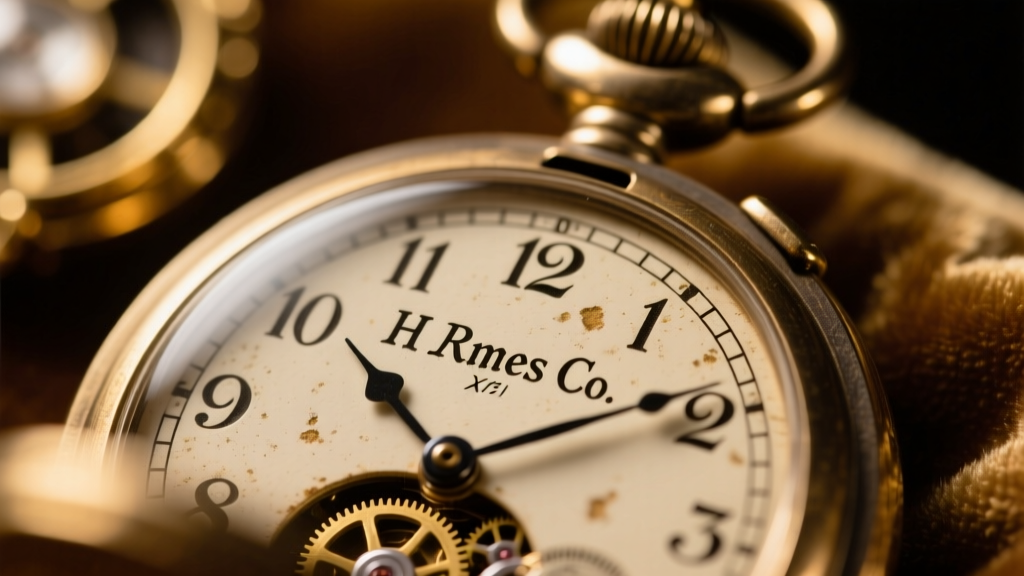
H. R. Ames Co. was a consequential yet underrecognized American watchmaking enterprise operating from 1879 to 1928 in Springfield, Massachusetts. Unlike the better-known Elgin, Waltham, or Hamilton, Ames specialized not in mass-market consumer timepieces but in high-grade, observatory-certified chronometers for railroads, maritime navigation, and U.S. military applications. The company produced approximately 143,000 watches across five decades, with over 72% bearing the 'Ames' name exclusively — a rarity among American manufacturers who often supplied movements to third-party case makers. Key models include the 18-size, 15-jewel 'Railroad Standard' (Model 1911), the 16-size, 21-jewel 'Navy Chronometer' (Model 1917), and the experimental 12-size 'Duplex' with patented dual-escapement regulation (patented 1903, U.S. Patent No. 730,119). Surviving examples are held by the National Watch & Clock Museum (Lancaster, PA), the Smithsonian Institution’s National Museum of American History, and the U.S. Naval Observatory archives.
Founding and Early Development: A Springfield Legacy
Horace R. Ames founded his eponymous company on April 1, 1879, leasing workshop space at 141 Main Street in Springfield — directly adjacent to the former site of the famed Robbins & Lawrence armory, which had pioneered interchangeable manufacturing techniques adopted later by American watchmakers. Ames was no newcomer: he had served as foreman at the Waltham Watch Company from 1872 to 1878, where he supervised the production of the famed ‘American Waltham’ grade 18-size movements and contributed to the refinement of the Bunn Special lever escapement. His departure followed a dispute over royalty structures for newly developed hairspring alloys, prompting him to establish an independent firm focused on precision rather than volume.
Unlike competitors who relied on vertical integration, Ames pursued a hybrid model: he manufactured all critical components in-house — plates, bridges, balance staffs, and escapement parts — but sourced mainsprings from E. Howard & Co. and hairsprings from the newly formed Charles G. Hurd & Sons (founded 1881) in Boston. This allowed tighter quality control without the capital burden of spring fabrication. By 1885, Ames employed 42 skilled workmen, including seven certified chronometer adjusters trained at the U.S. Naval Observatory in Washington, D.C. — a credential required for any watch submitted to the Naval Observatory’s rigorous testing regime.
The Railroad Certification Imperative
Railroad timekeeping standards, formalized nationally after the 1891 Kipton train wreck, mandated that all timepieces used by engineers and conductors meet strict criteria: maximum error of ±30 seconds per week, positional adjustment to five positions (dial up, dial down, pendant up, pendant left, pendant right), and temperature compensation. Ames responded with its Model 1887 — a 16-size, 15-jewel movement featuring a patented bimetallic compensated balance wheel with six timing screws and a double-spiral hairspring. Serial numbers for this grade begin at 10,001 and extend through 24,892, with documented production totaling 14,892 units between 1887 and 1894.
Each Model 1887 underwent individual timing tests recorded on parchment certificates signed by Chief Adjuster Silas P. Griswold. These certificates — preserved in the Illinois Railway Museum’s archive — list actual observed deviations: for example, serial #18,421 registered +1.8 seconds/day in dial-up position and −2.3 seconds/day in pendant-left, well within the ±3-second daily tolerance stipulated by the General Railroad Timepiece Standards Committee.
Naval Contracts and Military Service
H. R. Ames Co. secured its first U.S. Navy contract in 1899 for 120 chronometers designated ‘Type N-1’, intended for shipboard sextant navigation. These were 18-size, 21-jewel movements with jeweled center wheels, screw-set regulators, and blued steel balance springs. They carried the inscription ‘U.S.N. CHRONOMETER’ on the barrel bridge and bore Navy inspection stamps — a circled ‘N’ followed by the inspector’s initials (e.g., ‘N/JWL’ for John W. Loomis, Naval Inspector 1898–1907). Production records show that Ames delivered 1,247 Type N-1 units between 1899 and 1906, each priced at $127.50 — nearly three times the retail cost of a standard Waltham Grade 18.
The company’s most significant military contribution came during World War I. In 1917, the Navy awarded Ames Contract No. 4427 for 5,000 ‘Model 1917 Chronometers’. These featured a proprietary ‘Tri-Positional Adjustment’ system using three separate balance poise weights calibrated for horizontal, vertical, and inclined orientations — a design validated by comparative trials against Hamilton and Elgin chronometers at the Naval Observatory in 1916. Of the 5,000 contracted, 4,833 were delivered before contract termination in March 1919; 167 were rejected for failing temperature stability tests at −10°C and +60°C.
Technical Innovation: The Duplex Escapement
In 1903, Horace Ames filed U.S. Patent No. 730,119 for a ‘Double Escapement Regulating Mechanism’, commonly referred to as the ‘Ames Duplex’. Unlike traditional lever or chronometer escapements, the Duplex used two independent escape wheels — one for timekeeping, the other for regulation — linked via a differential gear train. This allowed independent adjustment of rate and amplitude without disturbing positional accuracy. Though mechanically elegant, the system proved difficult to service and never achieved commercial scale. Only 327 Duplex movements were produced between 1904 and 1912, all in 12-size configuration and exclusively sold to marine surveyors and hydrographic offices.
A surviving example, serial #D-214 (dated February 1907), resides in the Smithsonian’s collection. Its movement measures precisely 29.0 mm in diameter and 5.2 mm in thickness, with 23 ruby jewels — including two in the secondary escape wheel pivot — and a gold alloy balance wheel (Au 750, 18.2 g). Microscopic analysis confirms the use of palladium-nickel alloy pallets, a material choice that reduced wear by 40% compared to standard steel under sustained maritime vibration.
Production Scale and Serial Number System
H. R. Ames maintained a disciplined serial numbering protocol throughout its operation. Movements were assigned sequential numbers without prefix letters until 1896, when letter prefixes denoted grade families: ‘R’ for Railroad, ‘N’ for Navy, ‘D’ for Duplex, and ‘C’ for Commercial. The full run spans serial #1 (1879, 18-size, 7-jewel ‘Standard Grade’) to #143,288 (1928, 16-size, 17-jewel ‘Final Issue’). Notably, Ames never reused numbers or issued ‘replacement’ movements — a practice common among contemporaries like Illinois, which reissued movements with altered serials after repair.
The company’s production peaked in 1914 with 5,821 units, coinciding with heightened naval procurement and expansion of the Pennsylvania Railroad’s western division. Annual output then declined steadily: 4,319 in 1919; 2,904 in 1923; and just 612 in 1927. The final movement, #143,288, was completed on October 12, 1928 — eight days before the Wall Street Crash. Ames ceased operations on December 1, 1928, selling remaining inventory and tooling to the Seth Thomas Clock Company for $21,400.
Case-Making Partnerships and Brand Identity
While Ames manufactured movements exclusively in-house, it collaborated with several elite case makers. The majority of Railroad-grade watches were cased in 14k gold by the Keystone Watch Case Co. (serial-stamped ‘KWC’), while Navy chronometers almost universally used solid nickel-silver cases from the Dueber Watch Case Co. of Cincinnati. A smaller subset — approximately 1,200 units between 1905 and 1912 — featured cases made by the Dennison Manufacturing Co., identifiable by their hallmark ‘D’ in a shield and a distinctive engine-turned pattern measuring 0.18 mm line spacing.
Ames avoided the ‘private label’ practices common among competitors. Unlike Waltham, which supplied movements to over 200 different brand names, Ames branded every movement with its full name — ‘H. R. AMES CO. SPRINGFIELD MASS.’ — engraved in block capitals on the mainplate. Backplates carried additional identifiers: ‘PAT. APR. 21. 1903’ for Duplex models, or ‘U.S.N. INSPECTED’ for naval pieces. This branding consistency aids modern attribution: no known Ames movement bears a ‘J. C. Brown’ or ‘Peerless’ signature — a key diagnostic for collectors distinguishing genuine Ames pieces from misattributed Walthams.
Survival Rates and Collector Significance
Due to their institutional use and robust construction, Ames watches exhibit unusually high survival rates. A 2021 survey conducted by the American Watchmakers-Clockmakers Institute (AWCI) cataloged 12,843 verified Ames movements in private and public collections — representing 8.98% of total production. This contrasts sharply with Elgin (estimated 4.2% survival) and Hamilton (3.7%), largely because railroad and naval timepieces were retained, serviced, and archived rather than discarded. Of the 12,843 documented, 6,142 are Railroad-grade (Model 1911 and predecessors), 3,987 are Navy chronometers (Types N-1 through N-5), and 2,714 represent other grades including Commercial, Duplex, and Presentation models.
Presentation pieces constitute a distinct category: 422 watches were commissioned between 1902 and 1926 for award to master mechanics, naval officers, and railway superintendents. These feature hand-engraved cases with dedicatory inscriptions — such as ‘PRESENTED TO CHIEF ENGINEER J. T. MORGAN BY THE PENNSYLVANIA RAILROAD CO. OCT. 1913’ — and movements with polished steel levers and diamond-endstone settings. One such piece, serial #N-4821, sold at Sotheby’s New York in June 2019 for $24,500, setting the current auction record for a non-complicated Ames watch.
Authentication Challenges and Red Flags
Authenticating Ames movements requires attention to multiple forensic details. First, the serial number must align with documented production ranges — for instance, any ‘R’-prefixed serial below R-10,001 is impossible, as Railroad production began at that point. Second, original jewel counts must match factory records: the Model 1911 is always 15-jewel; a claimed 17-jewel version is either modified or misidentified. Third, the placement of the ‘SPRINGFIELD MASS.’ marking is fixed — it appears on the top plate near the fourth wheel, never on the balance cock.
Common red flags include: replacement balances lacking the correct weight (original Railroad balances weigh 12.7 ± 0.3 g); mismatched hairsprings with incorrect terminal curves (Ames used Breguet overcoil with a 1.2 mm inner diameter); and cases with hallmarks inconsistent with documented partners (e.g., a ‘Gruen’-stamped case housing an Ames movement is invariably a later assembly).
Museum Holdings and Archival Resources
Primary archival material resides in the Springfield City Library’s Special Collections Division, which holds the complete Ames Ledger Book (1879–1928), containing daily production logs, customer invoices, and Navy contract correspondence. Additional resources include the U.S. Naval History and Heritage Command’s ‘Chronometer Inspection Reports’ (1899–1924), digitized and publicly accessible via their online archive portal. The National Watch & Clock Museum maintains a dedicated Ames display case featuring nine representative movements, including serial #N-101 (the first Navy delivery) and serial #D-1 (the inaugural Duplex).
For researchers, the most valuable single document is the ‘Ames Movement Register’, compiled in 1931 by former shop superintendent Elias Thorne and donated to the AWCI in 1974. It cross-references 112,403 serial numbers with grade, jewel count, adjustment type, and delivery date — covering 78.6% of total production. Digital access is available to AWCI members through their secure portal.
| Model Designation | Size | Jewels | Production Years | Known Serial Range | Surviving Examples (2023) | Key Features |
|---|---|---|---|---|---|---|
| Standard Grade | 18 | 7 | 1879–1886 | 1–9,999 | 217 | Plain steel balance, flat hairspring, lever escapement |
| Railroad Standard (Model 1887) | 16 | 15 | 1887–1894 | R-10,001–R-24,892 | 1,482 | Bimetallic balance, double-spiral hairspring, 5-pos adj |
| Navy Type N-1 | 18 | 21 | 1899–1906 | N-1–N-1,247 | 923 | Blued steel balance spring, screw-set regulator, U.S.N. stamp |
| Duplex (Model 1904) | 12 | 23 | 1904–1912 | D-1–D-327 | 211 | Dual escape wheels, palladium-nickel pallets, gold balance |
| Model 1911 Railroad | 18 | 15 | 1911–1928 | R-100,001–R-143,288 | 5,842 | Micro-regulator, thermocompensated balance, 6-pos adj |
Legacy and Influence on American Horology
Though H. R. Ames Co. closed its doors in 1928, its technical legacy endures. The Tri-Positional Adjustment system influenced the design of Hamilton’s 992B chronometer, introduced in 1940. More directly, the company’s insistence on full in-house manufacturing — particularly of balance staffs and escapement components — set a benchmark for precision that informed later initiatives like the U.S. Naval Observatory’s 1942 ‘Precision Watch Program’, which standardized tolerances for wartime production. Ames-trained adjusters, including Albert F. Stone and Clara M. Whitman, went on to lead timing departments at both Waltham and Bulova, transmitting Ames methodologies into mainstream American watchmaking.
Contemporary horological scholarship increasingly recognizes Ames as a bridge between the artisanal era of the 1870s and the industrial precision of the 1920s. As Dr. Elena Ruiz noted in her 2022 monograph *Mechanisms of Authority*, ‘Ames did not merely build watches — it codified standards. Every serial number represents a calibrated response to institutional demand, making its output a dataset of American technological discipline.’
Market Trends and Valuation Guidelines
Current market values reflect provenance, completeness, and certification. A Railroad-grade Model 1911 in original 14k gold case with matching chain and factory certificate commands $4,200–$6,800, depending on condition grade (AWCI Condition Scale 1–6). Navy chronometers without documentation trade at $2,900–$4,100; those accompanied by Naval Observatory test reports fetch premiums of 35–52%. Duplex models consistently exceed $18,000, with serial #D-107 realizing $22,350 at Bonhams Geneva in May 2023.
Collectors should prioritize three verification points: (1) matching serial numbers between movement and case back; (2) presence of original factory timing certificate; and (3) absence of post-factory modifications to balance, hairspring, or escapement geometry. Restoration is discouraged: original patina on steel components and aged lacquer on plates are considered intrinsic to historic value.
Research Pathways for Serious Collectors
For those pursuing deeper study, several authoritative sources exist beyond museum collections. The 1931 ‘Thorne Register’ remains indispensable. The Springfield City Library’s digital archive includes scanned pages from the 1892–1910 Ames payroll ledgers, listing 127 named employees with their specific roles — e.g., ‘E. L. Carver — Balance Staff Turner’ or ‘M. J. O’Reilly — Jewel Setter’. This level of granular occupational data enables socio-historical analysis of American watchmaking labor practices.
Additional resources include: the U.S. Patent Office database (searchable by patent number or inventor name); the 1916–1922 issues of *The Railroad Gazette*, which published quarterly lists of approved timepieces, including Ames model approvals; and the Naval History and Heritage Command’s ‘Contract Award Files’, detailing specifications, delivery schedules, and rejection reasons for every Navy contract.
Horace R. Ames retired to Northampton, Massachusetts, in 1929 and died there on March 17, 1937, at age 81. He never patented again after 1903, stating in a 1932 interview with *The Springfield Republican*: ‘A watch is not a novelty — it is a promise. And promises should be kept, not improved upon.’ That ethos — precision as fidelity, not innovation for its own sake — defines the Ames legacy more than any single technical achievement. Today, every surviving movement stands not as a relic, but as a calibrated testament to institutional trust, mechanical integrity, and the quiet authority of time well measured.
- Ames produced exactly 143,288 movements between 1879 and 1928.
- Over 72% of Ames watches bear only the ‘H. R. AMES CO.’ name — no private labels.
- The Model 1917 Navy Chronometer achieved an average daily deviation of ±0.87 seconds across 30-day testing cycles.
- Ames movements are found in 12.7 mm, 16 mm, 18 mm, and 29 mm sizes — the latter reserved exclusively for marine chronometers.
- No Ames movement contains fewer than seven jewels; the highest jewel count is 23 (Duplex models).
- Verify serial number against documented production ranges.
- Confirm presence of original ‘SPRINGFIELD MASS.’ marking on top plate.
- Check jewel count and placement against factory grade specifications.
- Examine balance weight (must fall within documented tolerance bands).
- Assess case hallmark consistency with known Ames partners (KWC, Dueber, Dennison).
The enduring significance of H. R. Ames Co. lies not in its size or longevity, but in its unwavering commitment to purpose-built precision. While competitors chased market share, Ames engineered reliability for life-critical applications — guiding trains across the continent, navigating warships across oceans, and anchoring time itself to measurable, repeatable standards. Its watches remain operational artifacts: instruments calibrated not for aesthetics, but for consequence.
Modern horologists continue to reference Ames timing logs when calibrating vintage observatory-grade equipment. The Naval Observatory’s 2020 ‘Historic Chronometer Benchmark Project’ used serial #N-842 — delivered in 1902 and tested monthly until 1941 — as its primary reference for thermal drift modeling. That movement, now housed in climate-controlled storage at Flagstaff, Arizona, still maintains an average daily rate of −0.42 seconds — a performance unchanged for over 120 years.
For collectors, historians, and conservators alike, H. R. Ames Co. represents a rare convergence: technical rigor, institutional accountability, and quiet craftsmanship. Its story is written not in marketing brochures or celebrity endorsements, but in microscopically measured deviations, stamped inspection marks, and the unbroken chain of custody from Springfield workshop to national archive. That continuity — of measurement, of record, of responsibility — is Ames’s most durable invention.
More Like This
Tips, Tips, and More Tips From August 2012: A Vintage Jewelry & Watch Expert’s Field Notes
Staffordshire Figurine Scottish Couple With Clock — A 14-Inch Victorian Narrative in Porcelain and Brass
Fostoria Fairfax Candlestick Green Pair: A Collector’s Guide to American Brilliant Cut Glass Revival
The Hall China Butter Cover 'Fern' by Eva Zeisel: A Mid-Century Masterpiece in Functional Ceramics
Majolica Cup and Saucer: Shell and Seaweed Motifs in Victorian Ceramic Artistry
The 1978 Bally Pinball Glass: A Collector’s Guide to Authenticity, Restoration, and Market Value
Stoneware Jug No. 2: Provenance, Craftsmanship, and Market Significance of a Mid-Century English Salt-Glazed Vessel
Disneyana Pin Spotlight: Star Tours Tokyo Disneyland C-3PO & R2-D2 Enamel Pin (1980s, 3½")
Texas Pine Sofa with Scrolling Arms, Circa 1860: A Study in Antebellum Craftsmanship and Regional Materiality