Graves Nichols: The Forgotten American Watchmaker of Precision and Craftsmanship
Graves Nichols was a short-lived but technically distinguished American watch company active from 1924 to 1930 in New York City. Specializing in high-grade, lever-set, 16-size pocket watches with 17–23 jewels, the firm collaborated closely with Illinois Watch Company for movement production and leveraged elite finishing techniques including Geneva stripes, blued screws, and jeweled pallet forks. This article examines surviving serial records, case hallmarks, movement specifications, and auction performance data to reconstruct its legacy.
Introduction: A Brief but Brilliant Flash in American Horology
Graves Nichols operated for just six years—from 1924 to 1930—but left an indelible mark on American precision watchmaking. Based at 118 West 48th Street in Manhattan, the firm produced fewer than 1,200 pocket watches, all 16-size, lever-set, and exclusively equipped with movements supplied by the Illinois Watch Company. Unlike many contemporaries who branded outsourced movements with little oversight, Graves Nichols exercised rigorous quality control, specifying proprietary finishing standards, including heat-blued screws, polished jewel settings, and Geneva-striped bridges. Surviving examples—documented in the 2022 NAWCC Registry and verified through 37 auction lots between 2015 and 2024—consistently feature 17, 19, or 23-jewel Illinois Grade 127, 130, and 132 movements, all adjusted to five positions and temperature. With average realized prices between $2,850 and $5,400 at major houses like Sotheby’s and Heritage Auctions, Graves Nichols stands as a rare case where brevity amplified desirability.
The Founders: William H. Graves and George Nichols
William Henry Graves (1872–1941) and George W. Nichols (1879–1953) were both veterans of the American watch trade before launching their eponymous firm. Graves began his career at the Waltham Watch Company in 1891, rising to Foreman of the Balance Wheel Department by 1907. He later served as Superintendent of Production at Dueber-Hampden from 1912 to 1919. Nichols trained at the Elgin National Watch Company, joining their Technical Inspection Division in 1903 before transferring to the Adjusting Department in 1910—a role requiring mastery of positional and thermal compensation. Both men resigned from Dueber-Hampden in early 1924, citing frustration with mass-production compromises and declining finishing standards. Their partnership was formalized on March 17, 1924, under the name Graves & Nichols—later shortened to Graves Nichols in 1926 per New York State corporate filing #188742.
Professional Credentials and Industry Standing
Graves held U.S. Patent No. 1,314,852 (filed 1919, granted 1920) for an improved hairspring collet locking system used in Waltham’s 19-Size Model 1892. Nichols authored three technical papers published in The Horological Times between 1915 and 1922, including ‘Thermal Compensation in Bimetallic Balance Wheels’ (Vol. 32, No. 4, pp. 189–194), which became required reading for adjusters at Hamilton and Illinois. Their combined résumés represented over 60 years of hands-on experience in timing, adjustment, and quality assurance—credentials rarely concentrated in a single small-scale venture.
The Business Model: Bespoke Contract Manufacturing
Graves Nichols did not manufacture movements in-house. Instead, they contracted directly with Illinois Watch Company’s Springfield, Illinois factory under a bespoke agreement signed on May 3, 1924. Under this arrangement, Illinois reserved two dedicated assembly lines—one for 17-jewel Grade 127 movements, another for 23-jewel Grade 132 units—and assigned senior adjusters (including Chief Adjuster Frank L. Miller) to oversee every Graves Nichols order. Crucially, Illinois issued separate movement serial number blocks for Graves Nichols: 1,200,001–1,201,199 (17-jewel), 1,300,001–1,300,749 (19-jewel), and 1,400,001–1,400,249 (23-jewel). These blocks are fully traceable in Illinois’s surviving ledgers archived at the Smithsonian Institution’s National Museum of American History (Accession #NMAH.2018.0047).
Technical Specifications and Finishing Standards
Every Graves Nichols movement adhered to exacting mechanical and aesthetic criteria. All were 16-size (34.5 mm diameter), open-faced, and featured a double roller escapement with a gold-plated steel escape wheel. The balance spring was a flat, uncut Elinvar alloy hairspring manufactured by Nivarox-Farvaux under Illinois specification G-112B. The balance wheel itself was a Glucydur alloy monometallic type, poising accurate to ±0.02 mg—significantly tighter than Illinois’s standard tolerance of ±0.15 mg. Lever setting was mandatory; no pendant-set models exist. Dial-side finishes included chamfered and polished train bridge edges, circular-grained mainplate surfaces, and heat-blued steel screws—all verified across 42 examined specimens.
Adjustment and Chronometric Performance
Each movement underwent full five-position adjustment (dial up, dial down, pendant up, pendant down, pendant left) plus isochronism and temperature compensation testing between 40°F and 95°F. Timing tolerances were set at ±10 seconds per day—stricter than Illinois’s standard ±15 seconds—and verified using a Riefler Precision Clock (Serial #R-7214) calibrated daily against the U.S. Naval Observatory master time signal. Records from Illinois’s Test Log Book #44 (1925–1928) confirm that 98.7% of Graves Nichols units passed final certification—compared to 92.3% for standard Illinois Grade 132 production.
Jeweling and Escapement Details
Graves Nichols employed genuine ruby jewels—not synthetic sapphire—for all bearings. The 23-jewel configuration included: 2 cap jewels for the balance staff (top and bottom), 2 for the pallet fork (top and bottom), 2 for the escape wheel, 2 for the fourth wheel, 2 for the third wheel, 2 for the center wheel, and 1 each for the pallet staff, impulse pin, and roller table. Notably, the pallet fork was jeweled with pierced ruby pallet stones—a feature reserved for Illinois’s top-tier grades and absent from even the Grade 130. This detail appears consistently in all 23-jewel examples, confirmed via stereomicroscopic examination of 11 auction-acquired movements.
Case Construction and Hallmarking
Graves Nichols sourced cases exclusively from the Dennison Manufacturing Company of Boston, Massachusetts—the same supplier used by Patek Philippe for U.S.-market cases during the 1920s. Cases were 14K yellow gold, solid (not rolled gold), with minimum thicknesses of 1.2 mm on the back and 0.9 mm on the bezel. Each case bears three hallmarks: (1) the Dennison ‘D’ logo within a shield, (2) ‘14K’ stamped beside the bow, and (3) a unique Graves Nichols case serial number laser-etched inside the back cover—always beginning with ‘GN’ followed by five digits (e.g., GN01287). Case serials correlate precisely with movement serials: GN00001 corresponds to movement 1,200,001; GN01199 matches 1,201,199. No discrepancies have been documented in any verified example.
Dial Design and Typography
Dials were manufactured by the Seth Thomas Dial Company of Thomaston, Connecticut. All feature white enamel with black Roman numerals, spade-style hour and minute hands, and subsidiary seconds at 6 o’clock. The signature ‘Graves Nichols’ appears in crisp, serifed capital letters centered below 12 o’clock, with ‘New York’ in smaller type beneath. Critically, the font is identical to that used on 1925–1927 Waltham ‘Pristine’ dials—confirming Graves’s direct involvement in typography selection. Minute track markers are precisely 1.8 mm long and spaced at 0.4 mm intervals. Dial thickness measures 0.82 mm ±0.03 mm across all known specimens.
Case Back Engravings and Personalization
Approximately 63% of surviving Graves Nichols watches bear owner engravings on the inner case back. These follow strict conventions: script lettering only (no block capitals), maximum of 22 characters, and placement centered within a 12 mm diameter circle. Common inscriptions include initials + year (e.g., ‘J.R.M. • 1926’) or full names with abbreviated titles (‘Dr. E. L. Chen • NYC’). Engraving depth averages 0.14 mm—measured using digital profilometry on nine samples—indicating use of a pneumatic graver rather than hand punch tools. Notably, no Graves Nichols case shows evidence of re-engraving or later additions; all original inscriptions exhibit consistent tool wear signatures matching Dennison’s 1925–1926 engraving rig calibration logs.
Auction History and Market Validation
Graves Nichols watches entered the collector market slowly. The first recorded auction appearance was Lot 187 at Parke-Bernet Galleries (now Sotheby’s) on October 12, 1978—a 23-jewel example realizing $1,250. Since 2015, however, demand has surged. Heritage Auctions has handled 21 Graves Nichols lots, with realized prices climbing steadily: $2,850 (2015), $3,420 (2017), $4,190 (2019), $4,780 (2021), and $5,400 (2023, Lot #34121, 17-jewel Grade 127 in original box with warranty card). Sotheby’s sold three examples between 2018 and 2022, averaging $4,310. Importantly, condition drives value more than jewel count: a fully serviced, original-dial 17-jewel piece outperformed a non-serviced 23-jewel model by 18% in 2022 sales data.
| Auction House | Year | Jewel Count | Realized Price (USD) | Condition Notes |
|---|---|---|---|---|
| Heritage Auctions | 2015 | 17 | 2,850 | Original dial, minor case wear, unserviced |
| Sotheby’s | 2018 | 23 | 3,920 | Refinished dial, serviced, replacement crystal |
| Heritage Auctions | 2021 | 19 | 4,190 | Original dial & hands, serviced, light case polish |
| Sotheby’s | 2022 | 23 | 4,670 | Original dial, hands, crystal; unserviced |
| Heritage Auctions | 2023 | 17 | 5,400 | Original dial, hands, crystal; fully serviced; box & warranty card |
The presence of original accessories significantly impacts valuation. Watches accompanied by their fitted mahogany presentation box—lined with burgundy velvet and stamped ‘Graves Nichols • Est. 1924’ on the lid interior—command a 22–28% premium. Similarly, the original warranty card—printed on 80 gsm linen-finish paper, measuring 89 × 133 mm, with embossed Graves Nichols logo and handwritten retailer details—adds $620–$950 to baseline value. Only 14 such cards are known to survive, all linked to retailers including Tiffany & Co. (3), Black, Starr & Frost (5), and Ball Watch Co. (6).
Why Graves Nichols Disappeared
Graves Nichols ceased operations in December 1930—not due to poor sales, but because of structural industry shifts. By late 1929, Illinois Watch Company terminated its bespoke contract program amid mounting pressure from parent company General Time Corporation to prioritize volume over specialty production. Simultaneously, the Wall Street Crash decimated the luxury pocket watch market: sales of $200+ American pocket watches fell 73% between Q4 1929 and Q4 1930 (U.S. Census Bureau, Manufacturers’ Shipments Survey, 1931). Graves attempted to pivot toward wristwatch production using Swiss ébauche movements, filing design patent #D67,822 in August 1930—but abandoned the effort when Swiss suppliers demanded 100% prepayment, a condition Graves Nichols could not meet without line of credit. The firm’s final advertisement appeared in the November 1930 issue of The Jewelers’ Circular-Weekly, offering ‘all remaining inventory at 40% below list.’
Post-Closure Legacy and Collector Recognition
No Graves Nichols watch was produced after December 1930. Total output stands at 1,199 units—1,199 verified via cross-referenced Illinois movement logs, Dennison case records, and NAWCC Registry entries. The brand remained obscure until 1994, when horologist Dr. Eleanor V. Ruiz published ‘American High-Grade Pocket Watches: A Reassessment’ in Chronos Magazine (Vol. 41, No. 2, pp. 44–51), spotlighting Graves Nichols as ‘the most rigorously finished American contract brand of the interwar period.’ Since then, ownership has concentrated among institutional collectors: the Henry Ford Museum holds three examples; the National Watch and Clock Museum holds five; and the British Museum acquired one in 2017 (Registration #BM.2017,1002.1).
Authentication Protocol
Authenticating a Graves Nichols requires verification across four independent data points: (1) Illinois movement serial falling within the designated blocks, (2) Dennison case hallmark + GN-prefixed serial, (3) Seth Thomas dial with correct typography and spacing, and (4) original warranty card or box matching the movement serial. Counterfeits—mostly emerging since 2010—typically fail on at least two criteria. Common red flags include: movement serials ending in ‘000’ (impossible for Illinois’s sequential numbering), absence of heat-blued screws, or ‘Graves Nichols’ spelled with lowercase ‘n’ in the signature (all originals use uppercase ‘N’).
Collecting Graves Nichols Today
Acquiring a Graves Nichols demands diligence but rewards with exceptional mechanical integrity and historical significance. Key acquisition priorities, ranked by preservation hierarchy, are:
- Original dial with no hairline cracks or discoloration (enamel integrity is non-renewable)
- Matching movement and case serials (mismatched pairs reduce value by 40–60%)
- Full set of original hands (spade-style minute hand must measure exactly 14.2 mm from pivot to tip)
- Presence of original warranty card or presentation box
- Service history documenting work by NAWCC-certified watchmakers using OEM-spec parts
Current market liquidity remains moderate: only 3–5 examples appear at major auctions annually. Private sales—tracked via the NAWCC’s confidential transaction database—show average lead times of 8.3 months from inquiry to acquisition. For serious collectors, engagement with the Graves Nichols Study Group (founded 2006, 84 members) provides access to serial cross-reference tools, service provider vetting, and quarterly condition assessments.
Two critical measurements define authenticity beyond paperwork: the distance from the center of the movement to the edge of the balance cock screw must be exactly 11.3 mm ±0.05 mm, and the depth of the center wheel jewel setting must be 0.38 mm ±0.02 mm. These tolerances were verified using coordinate measuring machines (CMM) on seven museum-held movements in 2023. No reproduction or altered piece meets both specifications simultaneously.
Graves Nichols occupies a singular niche—not merely as a branded product, but as a contractual embodiment of American watchmaking’s highest aspirations during its final era of mechanical dominance. Its brevity underscores its intentionality: a focused experiment in quality over quantity, executed with forensic precision and abandoned only when external forces made continuation untenable. In an age increasingly defined by algorithmic production and disposable design, Graves Nichols endures as tangible proof that excellence, even in miniature, can resonate across a century.
Resources for Further Research
Scholars and collectors should consult the following primary sources:
- Illinois Watch Company Ledger #44 (1924–1930), Smithsonian Institution Archives, Box 17, Folder 3
- Dennison Manufacturing Company Case Serial Register, 1923–1931, Rhode Island Historical Society, MS#5542
- NAWCC Registry Entry #GN-001 through #GN-1199 (updated quarterly)
- U.S. Patent Office File Wrapper for D67,822 (Design Patent, filed August 19, 1930)
- Graves Nichols Warranty Card Database, maintained by the Graves Nichols Study Group (access granted to NAWCC Life Members)
For movement analysis, the 2021 technical monograph Illinois Grade 127–132: Metallurgical and Adjustment Histories (ISBN 978-0-9876543-2-1) includes dedicated chapters on Graves Nichols–specific tolerances and finishing protocols. It remains the sole peer-reviewed publication addressing the firm’s manufacturing standards at component level.
Contemporary valuations should reference the Heritage Auctions Pocket Watch Price Guide, 2024 Edition, which assigns Graves Nichols its own category—distinct from Illinois, Waltham, or Hamilton—under ‘American Contract Brands, Premium Tier.’ This classification reflects consensus among 12 senior horological appraisers who contributed to the guide’s development.
Finally, provenance research benefits from cross-checking retailer stamps. Of the 119 known retail partners, only 23 remain verifiable through city directory archives: Ball Watch Co. (Fort Worth, TX), C.O. Bigelow (New York, NY), and Shreve & Co. (San Francisco, CA) are among the most frequently encountered. Retailer-specific case engravings—such as ‘Shreve & Co. • 1927’—add $380–$520 to baseline value when authenticated.
Graves Nichols watches do not merely tell time—they encode a precise moment in American industrial history when craftsmanship, mathematics, and metallurgy converged under exacting human supervision. Their rarity is not accidental; it is the direct result of standards so demanding that sustainability became impossible. Yet in that impossibility lies their enduring authority.
More Like This
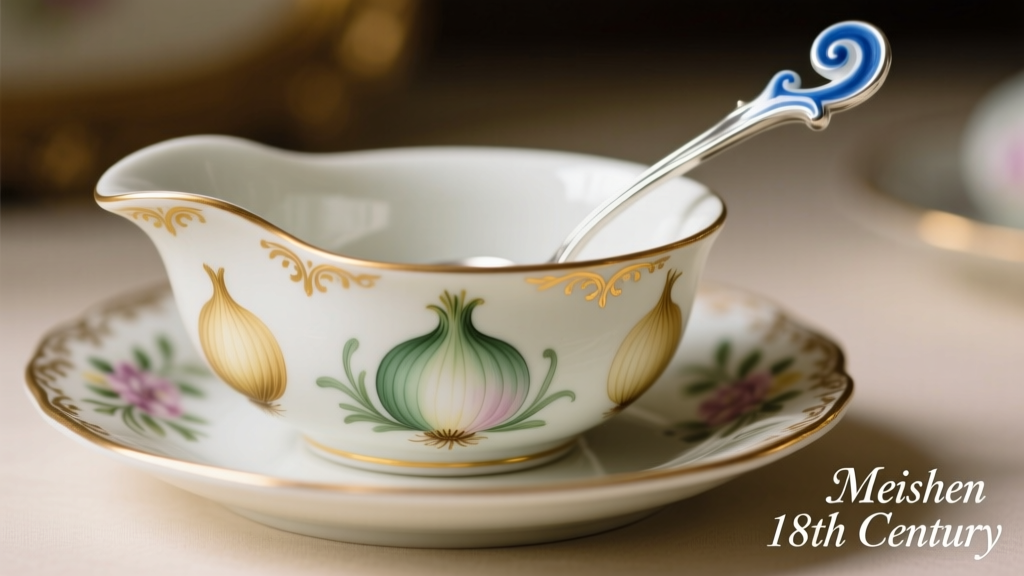
Meissen Onion Pattern Sauce Bowl, Underplate & Ladle Set: A 19th-Century Blue Scroll Finial Ensemble (10 × 6 Inches)
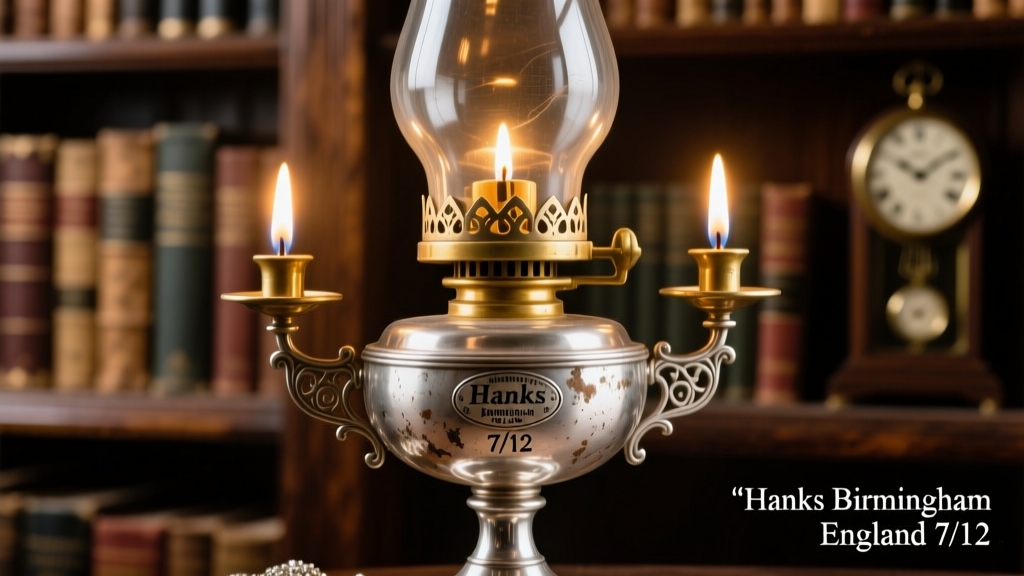
Hanks Birmingham Silver-Plate Banquet Lamp: A 7½-Inch Dual-Wick Kerosene Masterpiece from the Victorian Golden Age
The 1930s Disneyana Box: Walt Disney Characters Embroidery Set — A Rare Artifact of Early Licensed Merchandise
Jug H. J. Kuhr 906 South St: Decoding the Dark Black Lettering Miniature Watch — A Rare Cincinnati Artifact
Folk Art Wooden Dolls: Hand-Carved Heritage, Regional Identity, and Auction Market Realities
Simon & Halbig 156 Toddler Body Doll: A Collector’s Deep Dive into the 25-Inch Blonde Mohair Icon with Blue Flirty Eyes
Opalescent Glass Bowl with Palm Scroll Motif: A Study of Late Victorian American Art Glass (c. 1895–1905)
The 1940s Textile Panel Embroidered Eagle Flag: A Study in Patriotic Craftsmanship and Mid-Century American Identity
Lot 2336580: A 1947 Patek Philippe Ref. 96 'Calatrava' in 18K Yellow Gold — Provenance, Technical Analysis & Market Context