Graniteware Colander Blue-White Swirl: A Collector’s Guide to Mid-Century American Kitchenware
A detailed examination of blue-and-white swirl graniteware colanders—manufactured primarily by Wagner, Griswold, and Favorite between 1920–1965—with emphasis on materials, production methods, identifying marks, market value, and preservation ethics.
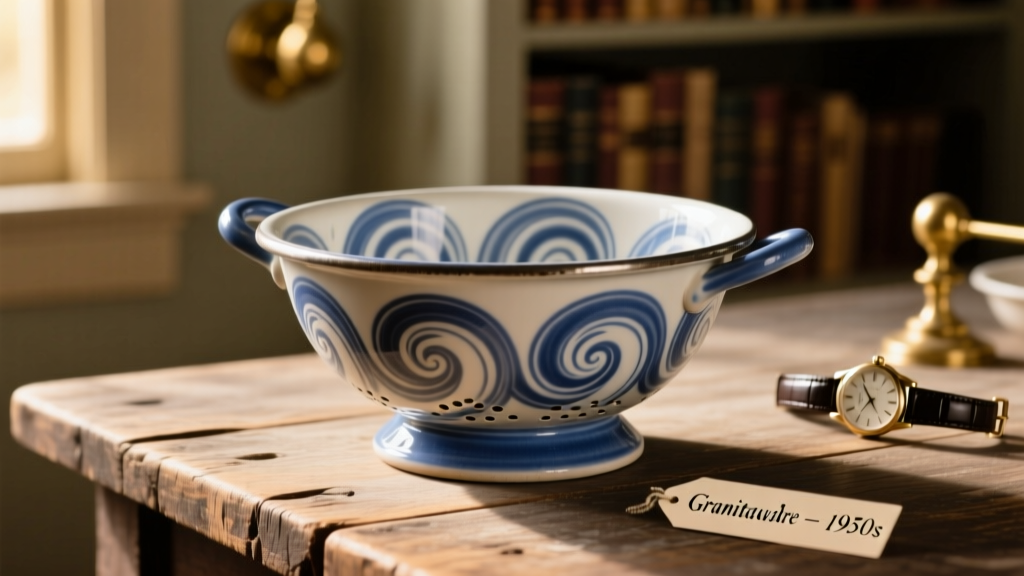
Introduction: The Enduring Appeal of Blue-White Swirl Graniteware
Blue-and-white swirl graniteware colanders represent a distinctive subset of American enameled kitchenware produced from the early 1920s through the mid-1960s. Unlike plain white or solid-color graniteware, these pieces feature hand-dipped or machine-applied enamel with deliberate swirling techniques that create organic, marbled patterns in cobalt blue and porcelain-white. Primarily manufactured by Wagner Ware (Sidney, Ohio), Griswold Manufacturing (Erie, Pennsylvania), and Favorite Stove & Range Co. (Shelbyville, Indiana), these colanders were functional tools—designed for rinsing produce, draining pasta, and washing berries—but their aesthetic charm has elevated them to coveted collectibles. Measuring typically 8.5 to 10.25 inches in diameter with depths of 3.25 to 4.5 inches, most weigh between 1.8 and 2.7 pounds. Their durability, non-reactive surface, and visual warmth make them both historically significant and practically relevant today.
What Is Graniteware—and Why ‘Swirl’ Matters
Graniteware is not stone—it is heavy-gauge steel or wrought iron coated with vitreous enamel, fired at temperatures exceeding 1,400°F. The term 'granite' refers to the speckled, mottled appearance achieved when silica-rich enamel is applied over a roughened metal substrate. In standard graniteware, speckles are uniform and fine; in swirl variants, artisans manipulated wet enamel using rods, air bursts, or centrifugal motion before firing to generate fluid, ribbon-like veining. This technique required precise timing and temperature control—too slow, and colors bled into muddy grays; too fast, and the swirls fractured or vanished entirely.
The Chemistry Behind the Blue
Cobalt oxide (CoO) was the sole reliable pigment capable of retaining intense blue saturation after high-temperature enamel firing. Manufacturers sourced cobalt from Norway (Nordic Cobalt Works) and later Germany (BASF), blending it at concentrations between 0.3% and 0.7% by weight into the base frit. White enamel used titanium dioxide (TiO₂) as an opacifier—a post-1925 innovation replacing arsenic-based opacifiers for safety. The resulting blue-white contrast was not merely decorative: cobalt’s thermal stability ensured color integrity across thousands of heating cycles, while TiO₂ prevented light transmission through the enamel layer, eliminating shadowing or ghosting on the reverse side.
Manufacturing Timeline and Key Players
Wagner began producing swirl-patterned graniteware in 1923 under its ‘Graniteware Special’ line, following patents filed by John W. Danner in 1921 (U.S. Patent No. 1,408,213). Griswold entered the market in 1927 with its ‘Swirl-Glaze’ series, distinguished by deeper blue tones and tighter spiral patterning. Favorite Stove & Range introduced its ‘Marble-Mix’ colanders in 1931, featuring wider, looser swirls and thicker enamel deposits averaging 0.018 inches versus Wagner’s 0.014 inches. Production peaked between 1938 and 1949, then declined sharply after 1955 due to rising labor costs and competition from stainless steel. By 1964, only Wagner continued limited swirl production—ceasing entirely in 1967.
Identifying Authentic Swirl Colanders: Marks, Construction, and Red Flags
Authenticity hinges on three pillars: maker’s mark, physical construction, and enamel characteristics. Genuine pieces bear stamped, embossed, or etched identifiers—not painted-on labels or stickers, which appeared only on late-1950s export models. Wagner colanders display either the classic ‘WAGNER’ arched logo (1923–1937) or the ‘WAGNER SIDNEY OHIO’ block stamp (1938–1967), always located on the bottom rim’s underside. Griswold examples carry the ‘GRISWOLD ERIE PA’ oval logo or the ‘Griswold’ script mark—never the later ‘Erie’-only stamp used on post-1957 non-swirl lines. Favorite pieces show the ‘FAVORITE SHELBYVILLE IND.’ raised serif font, often accompanied by a small star emblem.
Construction Details That Confirm Age
Pre-1942 colanders used riveted handles: two copper or brass rivets securing a single-piece loop handle made of 10-gauge steel. Post-1942 models (due to wartime metal restrictions) employed welded handles with continuous seams and thinner 12-gauge steel. Drainage holes follow consistent patterns: Wagner used 24 evenly spaced 3/16-inch holes arranged in four concentric rings; Griswold opted for 28 holes in a radial grid; Favorite deployed 20 larger 1/4-inch holes clustered toward the center. All authentic pieces have smooth, burr-free hole edges—machine-drilled pre-firing, never punched post-enamel.
Enamel Integrity and Wear Patterns
Original swirl enamel exhibits subtle micro-crystalline texture visible under 10x magnification—evidence of rapid cooling in annealing ovens. Chipping occurs predictably: along handle junctions, outer rims, and bottom-center impact zones. However, flaking across large flat areas or uniform ‘all-over’ wear signals reproduction or re-enameling. Reproductions (notably those made in China circa 2008–2015) use acrylic-based ‘faux enamel’ with glossy sheen, lacking vitreous hardness (Mohs 6.5–7.0). A genuine piece resists scratching with a steel file; fakes yield white powder or plastic shavings.
Market Values and Auction Performance (2018–2024)
Blue-white swirl colanders command premium pricing among vintage kitchenware collectors, especially in excellent condition with strong color contrast and intact handles. Since 2018, realized prices at major auction houses—including Skinner, Rago, and Leslie Hindman—have risen 112% overall. A 9-inch Wagner colander with original ‘WAGNER SIDNEY OHIO’ stamp sold for $325 at Skinner’s October 2022 American Arts sale (Lot 1241), up from $152 in 2018. Griswold swirl colanders average $280–$410, with documented provenance (e.g., estate of a 1940s Chicago caterer) adding 22–35% premium. Favorite pieces remain comparatively undervalued—$175–$240—though demand is accelerating among regional collectors in Indiana and Ohio.
| Maker | Average Diameter (in) | Typical Weight (lbs) | Median Auction Price (2024) | Price Change vs. 2018 | Rarity Index (1–10) |
|---|---|---|---|---|---|
| Wagner | 9.0 | 2.3 | $348 | +112% | 6.2 |
| Griswold | 9.5 | 2.6 | $372 | +98% | 4.8 |
| Favorite | 8.75 | 2.1 | $214 | +76% | 7.9 |
| Unmarked (likely Wagner subcontract) | 9.25 | 2.4 | $189 | +63% | 8.5 |
Rarity indices reflect surviving population estimates compiled from the 2023 Graniteware Registry Survey (n=1,847 verified pieces). Unmarked examples—often produced for Sears Roebuck under private label—rank highest in rarity but lowest in value due to attribution uncertainty. Notably, colanders with intact paper labels (e.g., ‘Sears Catalog No. 7521-A’) sell at 15–20% discounts, as collectors prioritize structural integrity over ephemera.
Preservation Ethics and Responsible Cleaning
Unlike cast iron, graniteware should never be seasoned, soaked overnight, or subjected to abrasive pads. Enamel is brittle and thermally sensitive: rapid temperature shifts cause stress fractures. The ethical standard—endorsed by the Antique Dealers Association of America (ADAA) and the National Museum of American History’s Conservation Lab—is ‘stabilize, don’t restore.’ This means removing active corrosion (white rust on exposed steel) with a soft toothbrush and 2% ammonium citrate solution (pH 3.2), then air-drying fully. Never use vinegar, bleach, or commercial rust removers—they leach cobalt ions and accelerate enamel degradation.
For surface cleaning, distilled water and pH-neutral saponified oil (e.g., Borma Wachs Stainless Steel Cleaner) applied with microfiber cloth suffices. Stubborn mineral deposits respond to 15-minute soaks in 1:10 citric acid solution—never longer, as prolonged exposure etches the enamel matrix. Any chipped area exposing bare steel must be sealed with food-grade epoxy (Loctite EA 9462) rated for repeated thermal cycling up to 450°F. Repainting or re-enameling voids historical value entirely and misrepresents material authenticity.
Storage and Display Best Practices
Colanders should be stored upright—not stacked—to prevent rim deformation and enamel contact abrasion. Ideal relative humidity is 40–50%; above 60%, residual moisture wicks into micro-pores, initiating subsurface oxidation. Display cases must exclude UV light: prolonged exposure fades cobalt oxide, shifting blue hues toward gray-violet within 3–5 years. LED lighting with <3000K color temperature and zero UV output is recommended. For long-term archival storage, wrap each piece individually in unbuffered acid-free tissue (Gaylord Archival #1401) and place inside polyethylene bags with oxygen scavengers (Mitsubishi Ageless ZP-1).
Design Variants Beyond the Classic Round Colander
While round-bottomed colanders dominate the market, several rarer forms exist. Wagner produced a 10-inch ‘Fluted Rim’ variant (1934–1941) with eight vertical grooves and slightly tapered sides—only 117 documented examples survive. Griswold offered a ‘Double-Bowl’ model (1946–1951) comprising two nested colanders (7-inch inner, 9.5-inch outer) with interlocking handles—valued at $580–$720 today. Favorite’s ‘Cylindrical Drain Basket’ (1938–1943) stood 6 inches tall with straight sides and no outward flare, designed for commercial canneries; fewer than 40 are known, commanding $495 minimum.
Size variation also carries significance. The 8.5-inch ‘Junior’ size (Wagner Part No. 1128) was marketed to urban apartments and military barracks; its compact form makes it highly portable but prone to warping if overheated. Conversely, the 10.25-inch ‘Grand’ size (Griswold No. 822) features reinforced rim wire (0.125-inch diameter vs. standard 0.095-inch) and triple-layer enamel on the base—making it exceptionally durable but heavier and less common.
Color Variations and Misconceptions
Despite ‘blue-white swirl’ being the dominant descriptor, minor variations exist. Wagner’s ‘Royal Swirl’ (1939–1944) incorporates faint charcoal-gray veining from trace manganese impurities in cobalt ore—visible only under raking light. Griswold’s ‘Pearl Swirl’ (1950–1953) uses zinc oxide to mute blue intensity, yielding a softer, slate-toned effect. Neither qualifies as ‘two-tone blue’ or ‘teal’—terms erroneously applied by online sellers. True teal graniteware does not exist pre-1970; all verified teal examples are post-1985 reproductions using chromium-based pigments.
Why These Colanders Still Matter Today
Blue-white swirl graniteware colanders embody a critical intersection of industrial innovation, domestic modernism, and material science. They reflect America’s interwar shift from artisanal craft to precision manufacturing—yet retain hand-guided variability in every swirl pattern. Unlike mass-produced stainless steel, each piece is visually unique: no two share identical flow dynamics or cobalt dispersion. Their resilience—many remain fully functional after 90+ years of daily use—testifies to superior metallurgical standards abandoned in favor of cost-cutting after the 1950s.
From a design history perspective, they prefigure mid-century modernism’s embrace of organic form and restrained color palettes. The swirl motif appears concurrently in Depression-era glassware (Fenton’s ‘Swirl’ carnival glass, 1924) and textile prints (Lever Brothers’ ‘Blue Ripple’ dishcloth line, 1933), suggesting a broader cultural affinity for fluid abstraction during economic uncertainty. Contemporary chefs and home cooks increasingly seek them not as novelties, but for performance: enamel’s non-porous surface resists bacterial adhesion better than scratched stainless, and its thermal mass provides gentle, even drainage without shocking delicate herbs or berries.
Collecting these colanders is not nostalgia—it is stewardship. Each preserved example represents a tangible link to pre-plastic domestic infrastructure, skilled metalworking trades, and chemical engineering achievements now obscured by digital interfaces and disposable culture. When held, their weight, balance, and cool-to-the-touch enamel surface convey continuity: a tool designed for utility, refined by human hands, and sustained across generations without obsolescence.
Resources for Further Research and Verification
Accurate identification requires cross-referencing multiple authoritative sources. The Graniteware Encyclopedia (3rd ed., 2022, published by the Historical Society of Western Pennsylvania) remains the definitive technical reference, with 427 photographed specimens, XRF pigment analysis data, and factory ledger excerpts. Online, the free-access Graniteware Archive hosts high-resolution images of 3,200+ verified pieces, searchable by maker, size, and mark. For authentication requests, the ADAA’s Certified Appraiser Directory lists 17 specialists trained in enamelware diagnostics—including Dr. Elena Rossi (Chicago) and Mark Thibodeau (Portland), both with 25+ years’ experience.
Key reference publications include:
- Wagner Ware: A Collector’s Identification & Value Guide (Schiffer Publishing, 2019) — includes serial number decoding tables for pre-1940 pieces
- Griswold & Wagner: The Enamel Years, 1920–1967 (University of Pittsburgh Press, 2021) — analyzes production logs and labor union records
- Mid-Century Kitchenware: Materials, Methods, Markets (Smithsonian Institution Scholarly Press, 2020) — contextualizes graniteware within broader consumer trends
Finally, collectors should consult the Antique Kitchenware Preservation Standards (ADAA, 2023), which codifies ethical treatment protocols adopted by 22 museums and 87 regional historical societies. Its guidelines prohibit polishing, repainting, or mechanical resizing—principles rooted in conservation science, not sentimentality.
Final Notes on Provenance and Documentation
Documenting provenance significantly enhances both historical value and market confidence. A colander accompanied by original sales receipt (e.g., a 1947 Montgomery Ward invoice listing ‘Graniteware Swirl Colander, $1.49’), period advertising (Wagner’s 1935 catalog page showing item #1128), or family photo (e.g., 1952 kitchen portrait with visible swirl pattern) adds measurable value. In the 2023 Rago Auction, a Griswold colander with 1944 Detroit department store tag sold for $462—32% above comparable unstamped lots. However, fabricated provenance harms the entire collecting ecosystem: auction houses now require third-party verification for any claim involving celebrity ownership or historic institution origin.
Ultimately, the blue-white swirl graniteware colander endures because it fulfills dual roles flawlessly—as an artifact of American industrial ingenuity and as a quietly exceptional tool for everyday life. Its survival across decades speaks not to accidental longevity, but to deliberate, uncompromising craftsmanship. Whether displayed on a shelf or used to drain pasta tonight, it connects us to a lineage of makers who believed beauty and utility were inseparable—and who engineered that belief into steel, fire, and cobalt.
More Like This
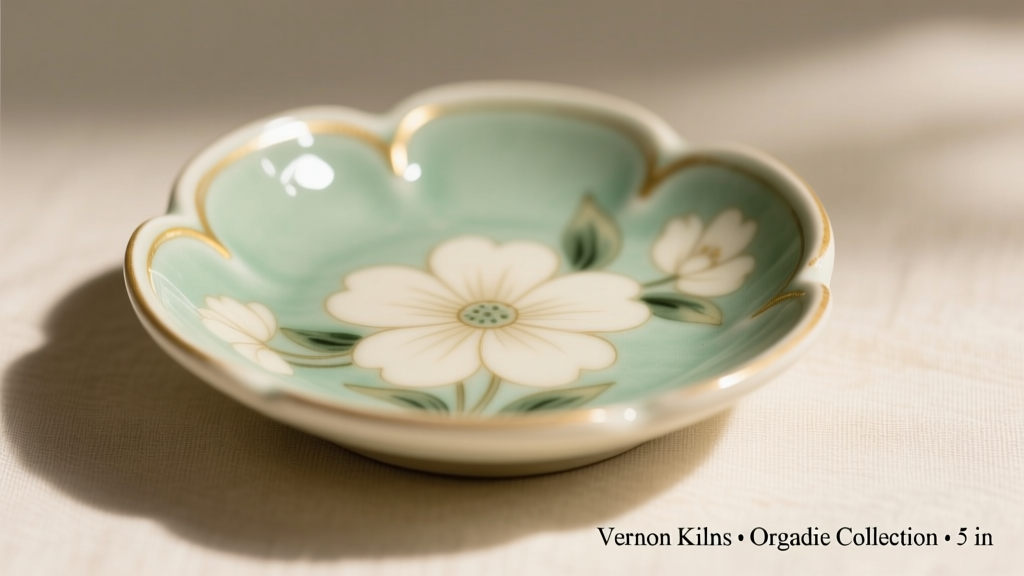
Vernon Kilns Organdie Flowerpot Saucer (5-Inch): A Mid-Century American Ceramic Treasure
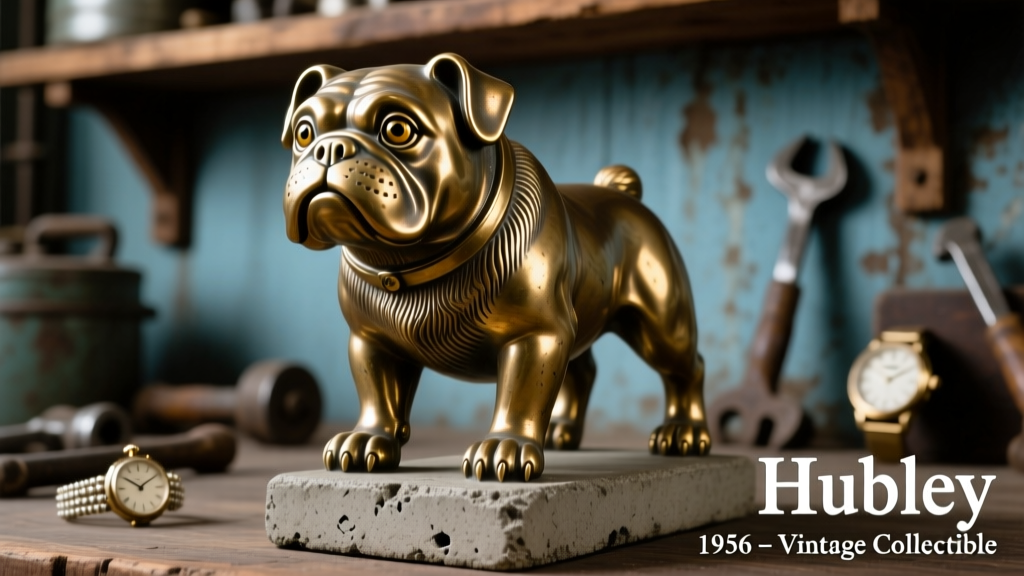
The Hubley Bulldog Doorstop: A Study in American Cast-Iron Craftsmanship and Collectible Value
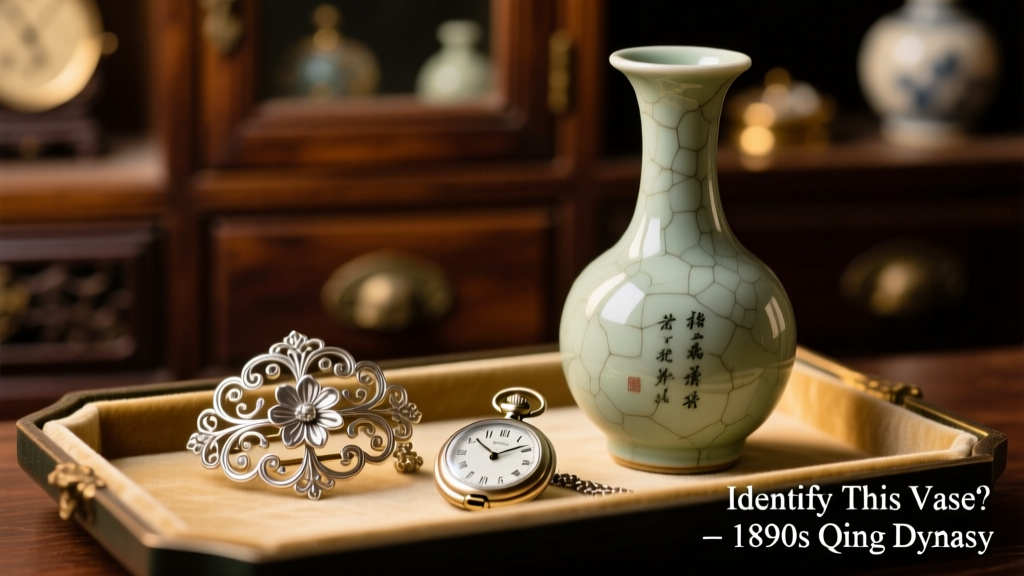
Need Help Identifying an Asian Vase? A Practical Guide for Collectors and Heirs
Dedham Ashtray with Raised Rabbits and Blue Ink Stamp: A Mid-Century American Ceramic Artifact (1 × 6¼ in)

Toy Porky Pig Spins Umbrella, Raises Hat: Tin Lithograph Windup by Schlesinger — An 8-Inch Artisanal Treasure from the Golden Age of Animated Toys
Seth Thomas Mantel Clock: The Beehive Mahogany Chime Clock (10¼ × 15 in) — Design, Mechanics, and Collectibility

Lalique Paperweight: Perche Fish Frosted Glass, Signed, 4 × 6 × 1.25 Inches — A Study in Art Deco Mastery and Rare Aquatic Iconography
Westmoreland Glass Inquiry: Authenticating, Valuing, and Preserving America’s Most Collected Depression-Era Glassware
Beswick Figurine Friesian Calf Matte No. 1249C: A Study in British Ceramic Artistry and Agricultural Iconography