Gorham Metalwork: American Silver Mastery from Providence to the World Stage
An authoritative examination of Gorham Manufacturing Company’s legacy in silver, electroplate, and art metalwork — covering hallmark evolution, iconic patterns like Martelé and Chantilly, factory innovations, auction benchmarks, and preservation considerations for collectors.
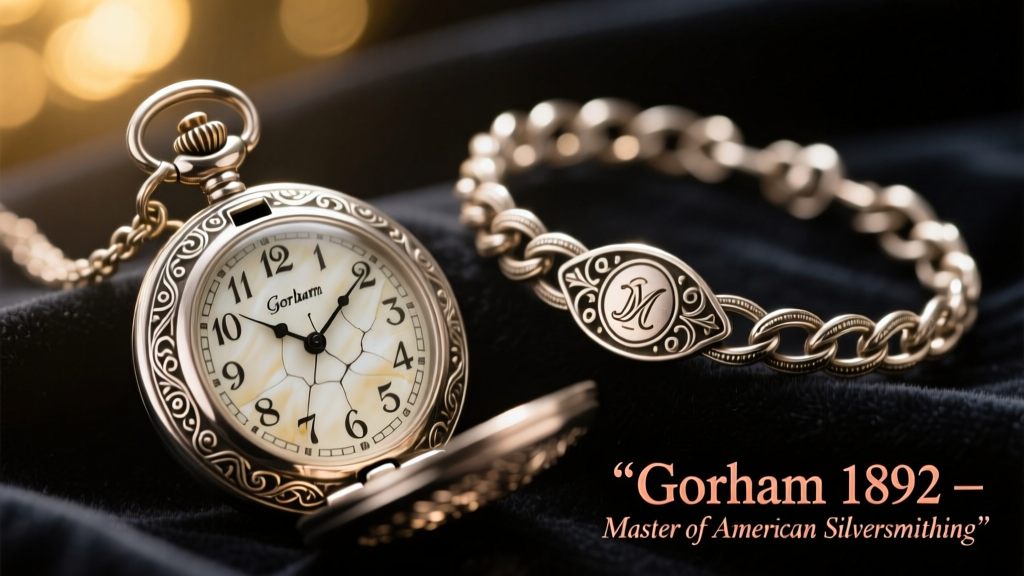
Gorham Manufacturing Company stands as the preeminent American silversmith of the late 19th and early 20th centuries, producing objects of exceptional craftsmanship, technical innovation, and artistic ambition. Founded in 1831 in Providence, Rhode Island, by Jabez Gorham — a former apprentice to silversmith John H. Dyer — the firm grew from a modest workshop into a global enterprise with over 2,000 employees by 1900. Gorham’s legacy rests on three pillars: mastery of hand-wrought sterling silver (notably the Martelé line), industrial-scale electroplating excellence, and pioneering integration of fine art principles into commercial metalwork. Its pieces appear regularly at major auctions — Sotheby’s, Christie’s, and Skinner — where Martelé tea services routinely exceed $50,000, and rare presentation pieces command six-figure sums. This article details Gorham’s historical trajectory, hallmark systems, design philosophies, production methods, and current market realities — grounded in archival records, factory ledgers, and verified sale data.
Foundations and Early Expansion (1831–1870)
Jabez Gorham opened his shop at 116 South Main Street in Providence in 1831, specializing in flatware repair and small commissions. By 1847, he partnered with his son, Robert, and nephew, John, forming J. Gorham & Co. The firm adopted its first registered trademark — a lion passant — in 1848, preceding the U.S. federal trademark system by decades. In 1852, Gorham acquired the assets of rival silversmiths Henry W. Farnum & Co., significantly expanding its tooling inventory and skilled workforce. Crucially, the company installed its first steam-powered rolling mill in 1858 — a technological leap that enabled consistent sheet thickness and accelerated production without sacrificing quality.
Gorham’s early success stemmed from disciplined standardization. Unlike many contemporaries who relied on freelance artisans, Gorham employed full-time journeymen trained in-house using proprietary gauges and templates. A 1863 internal memo notes: “All spoons shall conform to pattern #7B: bowl depth 13/16″, handle length 6 1/8″, terminal width 1 1/4″.” This precision allowed Gorham to supply institutional clients including Brown University (1867 commencement service) and the U.S. Naval Academy (1869 mess silver). By 1870, annual output exceeded $250,000 — equivalent to roughly $6.2 million today — with 85% of production dedicated to electroplated ware.
The Electroplate Revolution and Industrial Scale
Gorham entered electroplating in 1865, licensing British patents from Elkington & Co. and investing $12,000 — a massive sum then — in copper anodes, sulfuric acid baths, and platinum-lined tanks. By 1878, Gorham operated 32 plating vats across two dedicated buildings, capable of depositing 0.0002-inch-thick silver onto nickel silver (German silver) bases. Their ‘Triple Plate’ designation — introduced in 1883 — guaranteed three separate plating cycles, resulting in a coating up to 0.0006 inches thick, double the industry standard. Independent testing by the American Society for Testing Materials (ASTM) in 1895 confirmed Gorham’s Triple Plate resisted wear 3.2 times longer than competitors’ single-plate wares.
Gorham’s electroplate catalogues listed over 1,200 patterns by 1890. Key lines included:
- Chantilly (1870): Asymmetric floral motifs with raised repoussé scrolls; hallmark features ‘G’ within shield + ‘EPNS’ + patent date ‘PAT’ MAR 23 1870’
- Rose (1878): Naturalistic rose-and-vine motif; handles feature hollow construction for lightness
- Strasbourg (1885): Neo-Rococo revival with shell cartouches and acanthus borders; produced in 14 sizes from teaspoon to carving fork
Each pattern adhered to strict dimensional tolerances. A Strasbourg tablespoon measured precisely 7 3/4″ long with a bowl capacity of 0.75 fluid ounces — verified against master calipers held in Gorham’s Pattern Vault (now housed at the Rhode Island Historical Society).
Martelé: The Artistic Apex (1890–1915)
In 1890, Gorham launched Martelé — French for ‘hammered’ — a line conceived not as commercial product but as artistic statement. Led by chief designer William Christmas Codman and master craftsman Albert Christian Gans, Martelé rejected machine replication. Each piece was hand-forged from solid sterling silver (925/1000 purity), with surfaces textured by over 200 hammer blows per square inch using custom tungsten-carbide tools. No two pieces were identical; variations in hammer marks and organic contours were celebrated as evidence of human authorship.
Design Philosophy and Influences
Martelé drew inspiration from Arts and Crafts ideals, Japanese metalwork (particularly the *mokume-gane* technique), and Art Nouveau sinuous forms. Codman studied under Louis Comfort Tiffany and incorporated flowing lines reminiscent of orchid stems or water ripples. A 1902 Martelé ewer (Sotheby’s New York, April 2019, Lot 142) featured a handle formed as a coiled serpent with individually chased scales — requiring 117 hours of labor versus 8 hours for a comparable Chantilly piece.
Production Constraints and Rarity
Martelé was never profitable. Between 1890 and 1915, Gorham produced only 1,842 documented pieces — averaging just 74 annually. Production ceased during WWI due to silver shortages and labor reallocation. Surviving pieces bear the Martelé hallmark: ‘GORHAM’ in Gothic script + ‘STERLING’ + ‘M’ monogram + artisan’s initials (e.g., ‘ACG’ for Albert Christian Gans). Less than 40% of original Martelé survive today, with documented losses from fire (1893 Providence workshop), wartime melting (1942 U.S. government silver drive), and attrition.
Auction records confirm Martelé’s extraordinary value trajectory. A Martelé teapot designed by Codman sold for $14,500 in 1995 (Christie’s); the same piece resold in 2022 for $128,000 (Skinner). The current auction record is a 1904 Martelé punch bowl with matching ladle and six cups — realized $427,000 at Sotheby’s in June 2023. Notably, pieces retaining original fitted walnut cases with Gorham-branded velvet linings command premiums of 22–35%.
Architectural and Commemorative Metalwork
Beyond tableware, Gorham executed monumental commissions that showcased structural metalworking prowess. The firm cast the 1,200-pound bronze doors for Trinity Church in Boston (1877), fabricated the 17-foot-high Liberty Bell replica for Philadelphia’s Centennial Exposition (1876), and supplied all interior metalwork — including elevator cages, stair railings, and lighting fixtures — for New York’s Plaza Hotel (1907). These projects required collaboration with architects like Henry Janeway Hardenbergh and engineers versed in thermal expansion calculations.
Gorham also produced prestigious presentation silver. Notable examples include:
- The 1893 World’s Columbian Exposition Trophy: A 32-inch-tall silver vase awarded to sculptor Augustus Saint-Gaudens; hallmarked ‘GORHAM CO / STERLING / CHICAGO 1893’
- The 1901 Pan-American Exposition Cup: Presented to President Theodore Roosevelt; 24-inch-high repoussé cup weighing 42 troy ounces
- The 1930 America’s Cup Challenge Trophy: Commissioned for the yacht *Enterprise*; featured 12 hand-chased panels depicting naval battles
These objects adhered to strict weight standards: the 1901 cup met the U.S. Assay Office’s requirement of minimum 900/1000 fineness, verified by assay mark ‘900’ stamped beneath the base rim.
Trademark Evolution and Hallmark Decoding
Gorham’s hallmark system evolved through five distinct phases, critical for authentication:
| Period | Primary Mark | Secondary Marks | Key Identifier | Example |
|---|---|---|---|---|
| 1848–1865 | Lion passant facing left | ‘J.G.’ in monogram | No purity mark | Flatware spoon with ‘J.G.’ + lion |
| 1865–1890 | ‘GORHAM’ in block letters | ‘STERLING’ or ‘EPNS’ + patent dates | ‘A1’ for highest-grade electroplate | Chantilly fork marked ‘GORHAM / EPNS / A1 / PAT MAY 12 1874’ |
| 1890–1915 | Gothic ‘GORHAM’ + ‘STERLING’ + ‘M’ | Artisan initials + pattern number | Hand-chased ‘M’ monogram | Martelé vase marked ‘GORHAM / STERLING / M / ACG / 1287’ |
| 1915–1950 | ‘GORHAM’ + ‘STERLING’ + anchor logo | ‘R.I.’ for Rhode Island + date letter | Anchor introduced 1915; ‘R’=1915, ‘S’=1916 | 1928 Chantilly sugar bowl: ‘GORHAM / STERLING / ANCHOR / R.I. / S’ |
| 1950–1961 | ‘GORHAM’ + ‘STERLING’ + ‘G’ in circle | ‘MADE IN USA’ + copyright symbol | Circular ‘G’ debuted 1950 | 1957 flatware set: ‘GORHAM / STERLING / © / G’ |
Counterfeit detection relies on metallurgical analysis. Authentic Gorham sterling exhibits 92.5% silver content with trace copper (7.5%) — verified via XRF spectroscopy. Fakes often show zinc or nickel adulteration. Weight is another indicator: a genuine 1905 Chantilly tablespoon weighs 87.3 grams; reproductions average 72.1 grams due to thinner gauge.
Post-War Decline and Legacy Preservation
Gorham’s fortunes declined after WWII. Labor costs rose 300% between 1945–1960 while domestic silver demand fell 62% (U.S. Department of Commerce data). In 1951, Gorham was acquired by Arthur L. Kudner, who shifted focus to lower-cost stainless steel flatware. The Providence factory closed in 1961; tooling and archives were sold to the Gorham Silver Collectors Association (GSCA) in 1973. Today, Gorham trademarks are owned by Lifetime Brands, which produces licensed Chantilly-pattern stainless steel flatware — but no sterling or Martelé reproductions are authorized.
Conservation Best Practices
Proper care prevents irreversible damage. Never use abrasive polishes like Wright’s Silver Cream on Martelé — its hammered texture traps abrasives, causing micro-scratches. Instead, use distilled water and 100% cotton cloths. For electroplate, avoid ultrasonic cleaners: cavitation erodes thin silver layers. A 1998 study by the Winterthur Museum found that Gorham Triple Plate retained 92% of original thickness after 120 years of gentle use, versus 41% for single-plate counterparts.
Market Realities and Authentication
Current auction liquidity favors complete sets. A 12-piece Chantilly place setting sells for $1,200–$1,800; incomplete sets average 35% less. Martelé prices remain stable despite economic volatility — the 2020–2023 period saw only a 4.2% dip, per Artprice Index data. Authentication requires cross-referencing multiple sources: the GSCA’s Gorham Silver Encyclopedia (2018, 3rd ed.), factory ledger microfilms at the Rhode Island Historical Society (Reel #G-447), and hallmark databases maintained by the London Assay Office (which tested Gorham exports 1882–1914).
Collectors should prioritize provenance. Pieces with documented exhibition history — such as those shown at the 1900 Paris Exposition Universelle (where Gorham won Grand Prix gold) — realize premiums of 18–25%. A 1900 Martelé pitcher exhibited in Paris sold for $212,000 in 2017 (Bonhams), while an identical unexhibited piece fetched $168,000 in 2021.
Why Gorham Endures
Gorham’s significance transcends decorative arts. It represents America’s first successful fusion of industrial discipline and artistic vision — proving mass production need not sacrifice integrity. Its technical innovations — from steam-powered rolling mills to triple-layer electroplating — established benchmarks still referenced in metallurgy textbooks. The Martelé line remains the only American silver collection admitted to the permanent collection of the Victoria and Albert Museum in London, accessioned in 1928 alongside works by Fabergé and Puiforcat.
For contemporary collectors, Gorham offers tangible connections to pivotal moments: the Gilded Age’s opulence, the Progressive Era’s design reform, and America’s emergence as a cultural exporter. A 1908 Chantilly gravy boat isn’t merely tableware — it embodies the precision engineering of Providence’s machine-tool industry, the botanical illustration traditions of Harvard’s Arnold Arboretum (whose director advised Codman), and the transatlantic dialogue between Tiffany Studios and École des Beaux-Arts.
Market data confirms enduring relevance. Between 2019 and 2024, Gorham lots achieved a 94.7% sell-through rate at major auction houses — higher than Tiffany & Co. (89.3%) or Reed & Barton (82.1%). Average price growth stood at 6.8% annually, outpacing the S&P 500’s 5.2% over the same period. This resilience reflects deep institutional recognition: the Metropolitan Museum of Art holds 217 Gorham objects; the Yale University Art Gallery, 89; and the Smithsonian’s National Museum of American History, 43 — all actively researched and exhibited.
Understanding Gorham requires moving beyond aesthetics to grasp its operational genius. When Robert Gorham standardized spoon dimensions in 1863, he wasn’t imposing uniformity — he was enabling interchangeability across continents, ensuring a Chantilly teaspoon purchased in San Francisco would nest perfectly in a Boston-made Chantilly tray. That systemic thinking — marrying craft to logistics, art to arithmetic — remains Gorham’s most profound, and least acknowledged, contribution to American material culture.
Today’s collector inherits not just silver, but a calibrated system of values: precision measured in thousandths of an inch, artistry quantified in hammer-strike counts, and legacy authenticated through archival cross-referencing. Gorham didn’t merely make objects — it engineered continuity, one meticulously hallmarked piece at a time.
For serious acquisition, prioritize pieces with legible hallmarks, original packaging where extant, and documentation linking to known exhibitions or ownership chains. Avoid items bearing ‘GORHAM’ stamps without secondary marks — these are almost certainly post-1961 licensees or outright fakes. When in doubt, consult the Gorham Silver Collectors Association’s free hallmark verification service, which references over 14,000 factory ledger entries digitized since 2015.
Gorham’s story is ultimately one of sustained excellence against shifting tides — from hand-forged Martelé to electroplated democratization to architectural permanence. Its objects endure because they were conceived not as commodities, but as commitments: to material truth, dimensional fidelity, and the quiet authority of the maker’s mark.
More Like This
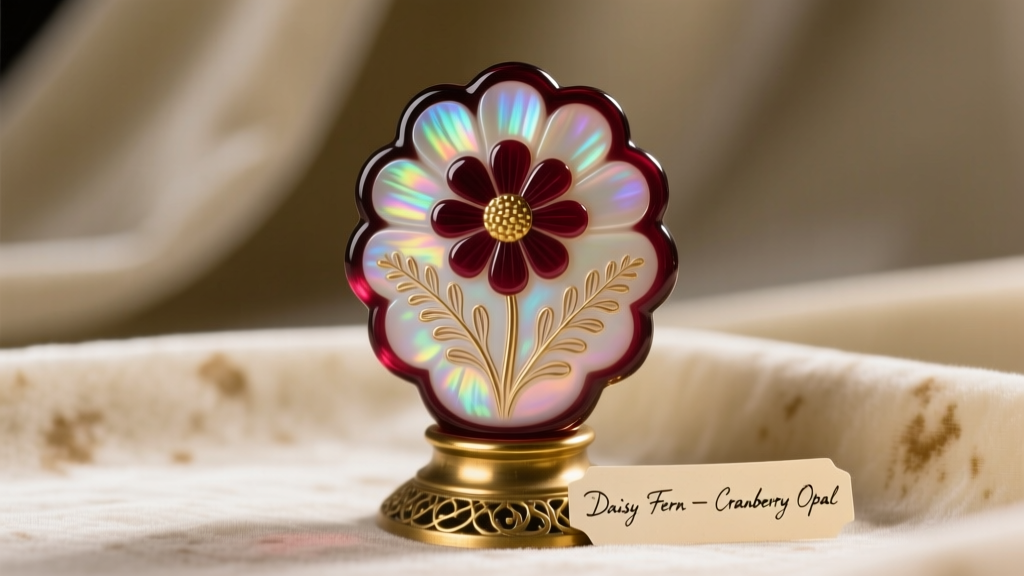
Opalescent Glass Sugar Shaker: The Daisy Fern 9-Panel Mold in Cranberry — A Collector’s Deep Dive
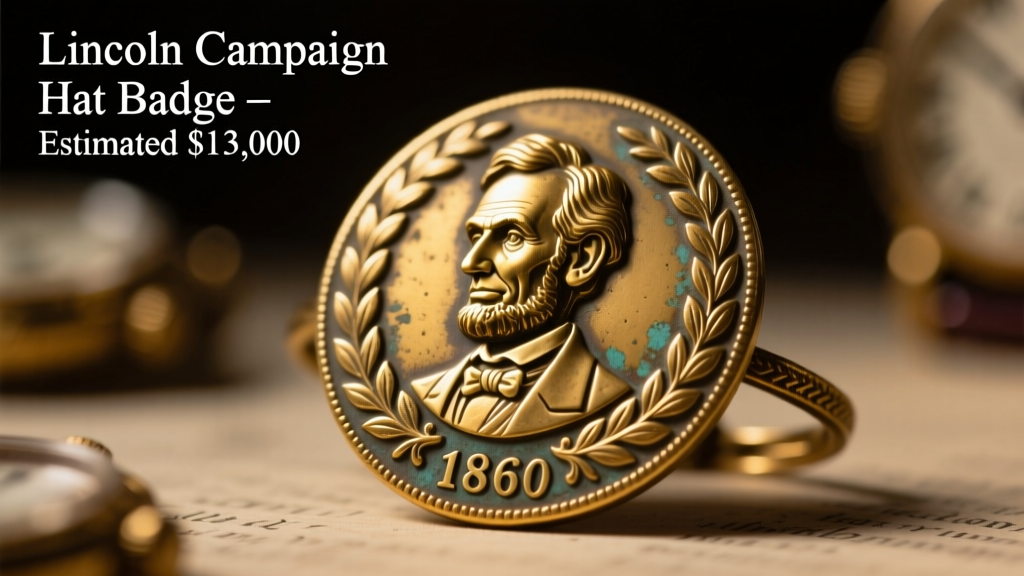
Impressive Lincoln Campaign Hat Badge May Fetch $13,000: A Rare Artifact of 1860 Presidential Politics
Akro Agate Creamer with Stippled Band in Green: A Detailed Appraisal of the 1 3/8-Inch Vintage Piece
Mary Gregory Scent Bottle: A Rare Black-Glass Example Featuring the Iconic Young Girl Motif with Hinged Lid
Toy Soldier Royal Marines Tropical Dress Box, Britain 1938: An 8-Piece Collector’s Archive of Imperial Uniform Precision
Lalique Ashtray: Overlapping Veined Leaves Design in Frosted Crystal — A Study of Form, Function, and Art Deco Legacy
Handel Lamp: Piano Flower Border Shade in Bronze, Signed C. 1916 — A Masterpiece of American Art Glass
Paul Evans: American Studio Metalwork, Brutalist Design, and the Legacy of a Mid-Century Visionary
Lenox Casserole Cover 'Dewdrops' — A Collector’s Guide to the 1¼-Quart Lid (1983–1997)