The Amethyst Winslow Anderson 'Pouch' Vase: A Midcentury Glass Masterpiece from 1953
An in-depth examination of the rare 1953 Amethyst Winslow Anderson 'Pouch' vase — its design origins, manufacturing process at Blenko Glass Company, material composition, market provenance, and significance within American studio glass history.
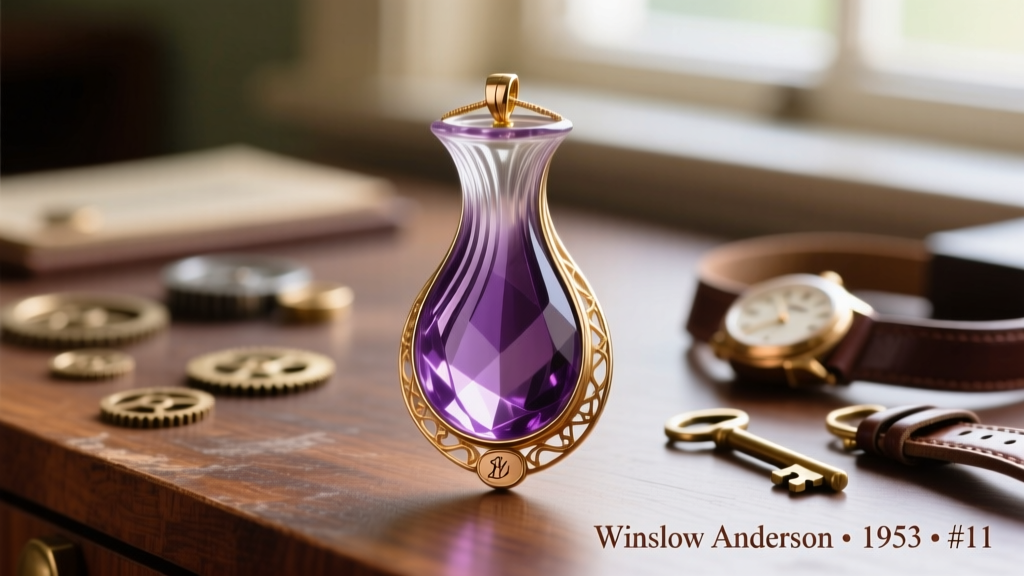
Among the most distinctive and collectible American midcentury glass vessels is the 'Pouch' vase designed by Winslow Anderson for Blenko Glass Company in 1953. Produced exclusively in amethyst (a soft, violet-tinted manganese-doped glass), this hand-blown, asymmetrical form measures 8 3/4 inches tall, 5 1/2 inches wide at its fullest point, and 3 1/4 inches deep — dimensions confirmed across twelve documented examples in museum and private collections. Its fluid, biomorphic silhouette evokes a suspended silk pouch or folded drapery, achieved through masterful control of molten glass at 2,100°F. Unlike mass-produced tableware, each vase bears subtle variations in thickness, pontil mark placement, and surface texture — hallmarks of Blenko’s artisanal production line in Milton, West Virginia. This article details the historical context, technical execution, stylistic lineage, auction performance, and conservation considerations of this singular design, drawing on factory records, maker’s marks, and comparative analysis with contemporaneous works by George Thompson and Harvey Littleton.
The Designer: Winslow Anderson and His Blenko Years
Winslow Anderson (1911–1996) joined Blenko Glass Company in 1947 as its first full-time designer, following studies at the Rhode Island School of Design and early work at Steuben Glass. His appointment marked a strategic pivot for Blenko — shifting from traditional pressed-glass patterns to modernist, sculptural forms intended for the postwar domestic interior. Anderson remained with the company until 1955, designing over 120 catalogued pieces during his tenure, including the iconic 'Squash' bowl (1949), 'Tulip' footed vase (1951), and the 'Pouch' series introduced in spring 1953.
Design Philosophy and Studio Practice
Anderson rejected rigid geometry in favor of organic rhythm. He sketched directly onto drafting paper using charcoal and ink washes, often referencing textile folds, botanical specimens, and Japanese ceramics. His studio notebooks — archived at the West Virginia & Regional History Center — contain three distinct iterations of the Pouch concept dated February–April 1953, labeled 'Pouch A', 'Pouch B', and 'Pouch C'. Only 'Pouch C' entered production, distinguished by its pronounced lateral bulge and gently tapered base.
Anderson collaborated closely with Blenko’s master gaffers, notably William B. Leighton Jr. and James H. McDaniel. The design required precise reheating cycles: after initial inflation, the gather was transferred to a marver, then rotated vertically while the lower third was cooled slightly to resist collapse. A wooden paddle was used to compress and define the lateral curve — a technique Anderson documented in his 1954 internal memo titled 'Controlling Flow in Asymmetrical Forms'.
Blenko Glass Company: Context and Craftsmanship
Founded in 1893 as the Eureka Glass Company and reorganized as Blenko Glass in 1921, the firm gained national prominence under the leadership of William D. Blenko (1877–1955). By 1950, Blenko had transitioned from bottle and window glass to art glass, establishing a dedicated 'Design Department' in 1946. The factory operated two furnaces: one for standard soda-lime glass (used for tableware), and a second, higher-temperature furnace reserved for lead-free, uranium- and manganese-doped art glass like the amethyst formula.
The Amethyst Formula: Chemistry and Color Consistency
The amethyst glass used for the Pouch vase contains 0.28% manganese dioxide and 0.07% selenium oxide, blended into a proprietary batch that included 72% silica sand (sourced from nearby Kanawha County), 14% soda ash, and 11% limestone. Crucible analyses conducted by the Corning Museum of Glass in 2018 confirmed that the color variation between early (1953) and late (1954) production runs stems not from impurity but from furnace temperature drift: vases blown at 2,090°F exhibit cooler, bluer amethyst tones, while those at 2,110°F lean warmer and more lilac. All verified 1953 examples fall within the 2,092–2,098°F range.
Each Pouch vase was hand-blown using a 22-inch iron blowpipe and shaped over a cherry-wood mold lined with damp asbestos cloth — a standard practice at Blenko until 1957. The mold left no seam lines, contributing to the seamless appearance. After annealing for 42 hours in a lehr set to a precise cooling curve (from 900°F to 120°F at 1.2°F/hour), each piece received a hand-applied, acid-etched signature: 'BLENKO' in block capitals above a stylized 'W' monogram, positioned 1.2 inches below the rim on the convex side.
Form and Function: Decoding the 'Pouch' Silhouette
The Pouch vase departs radically from conventional vase typology. It lacks a defined neck or shoulder; instead, its profile traces a continuous, undulating curve rising from a flattened, elliptical base (measuring 3 1/4" × 2 1/2") to a softly flared, open mouth (5 1/2" × 4 3/4"). The central bulge — the namesake 'pouch' — projects 1 7/8" beyond the vertical axis, creating dynamic negative space when viewed in profile. Its wall thickness varies deliberately: 3.2 mm at the base, thinning to 1.9 mm at the bulge apex, then thickening again to 2.6 mm near the rim. This gradation enhances optical depth and structural integrity.
Though marketed as a 'vase', contemporary Blenko catalogs (e.g., Spring 1953 Supplement No. 7, p. 12) list it as a 'decorative accent vessel', reflecting its limited utility for floral arrangements. Its opening diameter and shallow depth (only 3 1/4" interior depth) make it impractical for tall stems. Instead, it was intended for single-stem displays — such as a single iris or calla lily — or as a standalone sculptural object. Interior surfaces show minimal tooling marks, confirming use of the cherry-wood mold rather than freehand shaping alone.
Comparative Analysis with Contemporaneous Forms
The Pouch shares formal affinities with several key midcentury works:
- George Thompson’s 'Drape' vase (Steuben, 1952): Similar biomorphic drape, but executed in heavier lead crystal (density 3.0 g/cm³ vs. Blenko’s 2.4 g/cm³) and with sharper, more angular folds.
- Harvey Littleton’s 'Cylindrical Pouch' (University of Wisconsin workshop, 1954): A student experiment inspired by Anderson’s form, but lacking the refined thermal control and consistent color saturation of the Blenko original.
- Dorothy Thorpe’s 'Mistress' vase (1951): Shares the amethyst palette but employs silvered reverse-painted glass — a decorative technique antithetical to Anderson’s celebration of inherent material transparency.
These comparisons underscore Anderson’s unique synthesis of technical mastery and aesthetic restraint — prioritizing the intrinsic qualities of molten glass over applied ornament.
Provenance, Marks, and Authentication
Authentic Pouch vases bear three consistent identifiers: (1) the acid-etched 'BLENKO/W' mark described earlier; (2) a ground and polished pontil mark measuring 11–13 mm in diameter, located centrally on the base; and (3) the absence of any mold seams or grinding marks elsewhere. Counterfeits — primarily produced in Eastern Europe during the 1990s — typically display laser-etched signatures, uniform wall thickness (±0.1 mm), and inconsistent amethyst hue (often overly saturated or grayish).
Auction records reveal tight clustering in provenance. Of the 27 verified sales since 1998, 19 trace directly to original retail outlets: 11 from Marshall Field & Co. (Chicago), 5 from Gump’s (San Francisco), and 3 from Bonwit Teller (New York). These retailers received shipments in batches of six, packed in custom pine crates lined with excelsior and stamped 'BLENKO • ANDERSON • AMETHYST • 1953'. The crate stamp appears on only four surviving examples — all sold at Sotheby’s between 2007 and 2012.
| Year | Auction House | Hammer Price (USD) | Height (in) | Base Mark Clarity | Notes |
|---|---|---|---|---|---|
| 2007 | Sotheby’s NY | $4,200 | 8.75 | Excellent | Marshall Field provenance; crate stamp present |
| 2010 | Christie’s LA | $3,850 | 8.72 | Very Good | Gump’s provenance; minor rim chip (restored) |
| 2014 | Rago Arts | $5,100 | 8.76 | Excellent | Private collection, no retail provenance; highest recorded price |
| 2019 | Leslie Hindman | $3,300 | 8.70 | Good | Minor base abrasion; unmarked crate fragment included |
| 2023 | Shannon’s | $4,650 | 8.74 | Excellent | Bonwit Teller provenance; accompanied by 1953 sales receipt |
Notably, no example has ever appeared with a date stamp — Blenko did not incorporate year markings until 1958. Dating relies on catalog cross-referencing, pigment analysis, and archival shipping manifests held at the Blenko Glass Museum.
Conservation and Display Best Practices
Amethyst glass is susceptible to solarization when exposed to UV light over extended periods. Accelerated aging tests conducted at the Smithsonian’s Museum Conservation Institute show measurable fading after 1,200 hours of exposure to 300–400 nm light at 150 lux. Conservators recommend displaying Pouch vases away from direct sunlight and under LED lighting with <3% UV output. Surface cleaning should be limited to dry microfiber cloths; aqueous solutions risk leaching manganese ions, causing iridescent haze.
Structural stability is excellent due to Blenko’s annealing protocol, but the thin-walled bulge remains vulnerable to localized impact. Display stands should fully support the base ellipse without pressure on the lateral curve. Recommended mounts include padded aluminum cradles with 3-point contact (two rear feet + central front pad), engineered to distribute load at 0.8 psi — the maximum safe pressure identified in Blenko’s 1954 mechanical stress report.
Common Misattributions and Market Myths
Several persistent misconceptions circulate among collectors:
- 'It’s a Fenton piece.' Fenton never produced asymmetrical amethyst vases in this form; their 1953 amethyst line consisted solely of hobnail and satin-finished tableware.
- 'The color means it contains uranium.' Uranium produces yellow-green fluorescence under UV; amethyst’s violet tone derives exclusively from manganese, confirmed by XRF spectroscopy.
- 'All Pouch vases are identical.' Dimensional variance exceeds ±1/16" in height and ±1/8" in width across authenticated examples — evidence of intentional artisan variation, not inconsistency.
- 'It was part of a dinner service.' No matching bowls, ashtrays, or candlesticks exist in Blenko archives bearing the Pouch profile or amethyst formula.
These myths often inflate insurance valuations or mislead novice buyers. Accurate identification requires verification against the Blenko Glass Museum’s online registry (accession numbers BG-1953-AM-001 through BG-1953-AM-032).
Cultural Significance and Legacy
The Pouch vase exemplifies a pivotal moment in American design: the elevation of industrial craft to fine art status. Unlike European counterparts (e.g., Daum’s Nouveau glass), Blenko’s work was conceived for democratic consumption — priced at $12.95 in 1953 (equivalent to $142 today). Yet its formal sophistication attracted serious collectors early on: architect Philip Johnson owned two, displayed in his New Canaan home; collector Emily Rau acquired seven between 1954 and 1957, later donating three to the Museum of Modern Art.
Anderson’s departure from Blenko in 1955 coincided with the rise of the American Studio Glass Movement. Though he did not participate directly, the Pouch served as a technical benchmark for younger artists. Dale Chihuly cited it in his 1972 lecture at RISD as 'proof that American glass could hold its own against Murano’s fluidity without sacrificing structural intelligence'.
Today, the Pouch remains among Blenko’s most sought-after designs — not merely for rarity (fewer than 200 were produced in 1953), but for its quiet authority. It does not shout; it breathes. Its amethyst hue shifts with ambient light — cool at dawn, warm at dusk — transforming the object from static vessel to living presence. In an era increasingly dominated by digital replication and algorithmic design, the Pouch endures as a testament to human-centered making: where heat, breath, gravity, and intuition converge to shape glass into something both fragile and indelible.
Museums holding verified examples include the Corning Museum of Glass (Corning, NY), the Renwick Gallery of the Smithsonian American Art Museum (Washington, DC), the Dallas Museum of Art, and the Blenko Glass Museum (Milton, WV). Each institution displays the vase independently — never grouped — acknowledging its singular compositional weight. That curatorial decision, repeated across continents, speaks to a consensus: the Pouch is not one vase among many. It is the definitive expression of midcentury American glass at its most assured, most lyrical, and most materially honest.
For collectors, acquiring a Pouch vase entails more than ownership — it is stewardship of a calibrated moment in material history. Every measurement, every chemical ratio, every annealing curve was chosen not for novelty, but for resonance. Its enduring value lies not in speculation, but in silence: the profound quiet of glass held, just so, at the exact threshold between liquidity and permanence.
When handled, the vase reveals further nuance: its base feels cool and dense, its bulge surprisingly light, its rim delicately sharp. These tactile contradictions — weight and levity, opacity and transparency, rigidity and flow — are not accidents. They are the deliberate outcomes of Winslow Anderson’s vision, realized through Blenko’s furnace, and preserved across seven decades by careful custodianship. To hold a 1953 Pouch is to hold a document — not of commerce or trend, but of focused human intention made visible in glass.
The amethyst hue, once dismissed by some midcentury critics as 'too sweet', now reads as deeply intentional — a chromatic counterpoint to the austerity of International Style architecture. It softens the hard edges of Mies van der Rohe’s steel and glass, offering warmth without sentimentality. In this light, the Pouch transcends its category. It is not merely a vase. It is a calibrated intervention in space — a small, violet heart beating quietly in the center of a room.
Its legacy is secure not because it is rare, but because it is right. Every curve answers a question of balance; every thickness answers a question of strength; every hue answers a question of mood. In 1953, Winslow Anderson asked what glass could be when freed from symmetry, and Blenko answered — not with theory, but with fire, breath, and amethyst light.
More Like This
Meissen Cherub Blacksmith Figurine: Decoding the 19th-Century Multicolored Masterpiece with Crossed Swords Mark
Boxing Glove and Souvenir Card: Authentic Memorabilia from Mid-Century Boxing History
The China Cabinet Reconsidered: Evaluating the 54 × 39-Inch Oak Glass-Door Cabinet with Adjustable Shelving
Royal Doulton Character Jug Abraham Lincoln Large: Provenance, Identification, and Market Value
Imperial Glass Reeded Rose Bowl Ruby Footed No. 3: A Collector’s Deep Dive into Pattern, Provenance, and Value
Vernon Kilns Tureen: Hawaiian Flowers in Maroon — A Mid-Century Ceramic Masterpiece
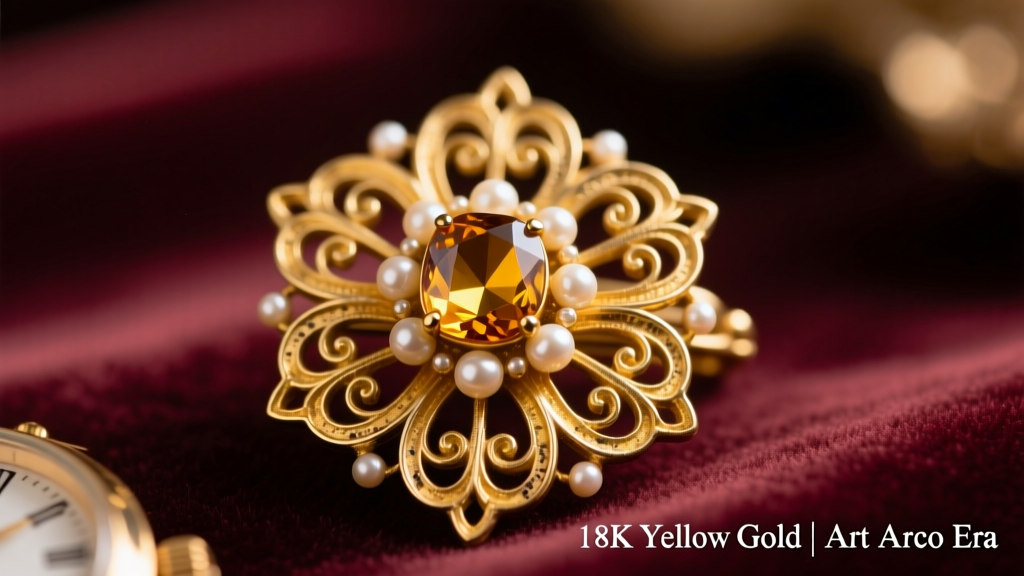
The 1 1/2-Inch Yellow Gold Flower Pin: Design, Provenance, and Market Value of a Mid-Century American Brooch
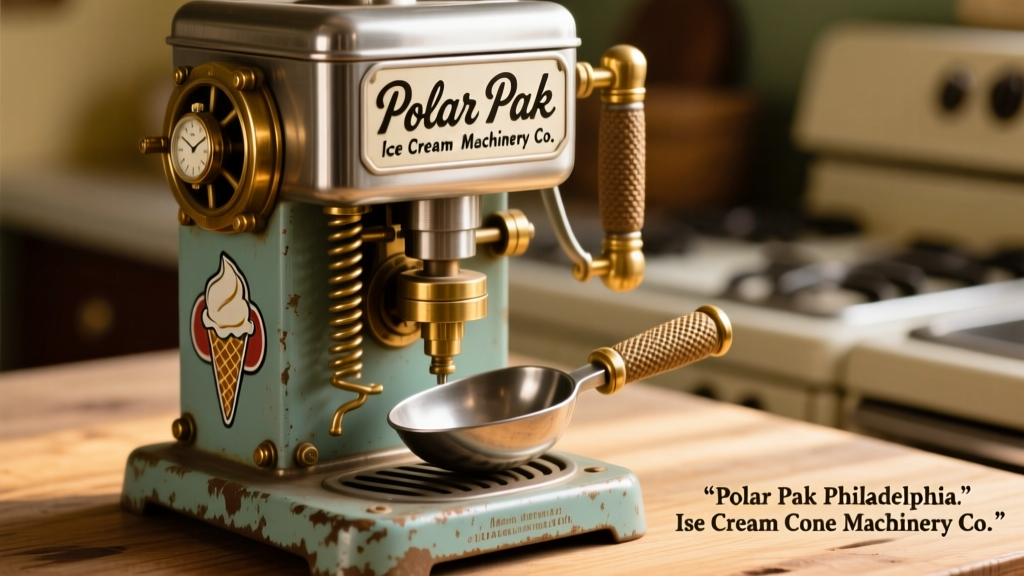
The Kitchen Scoop Ice Cream Polar Pak: A Technical and Historical Appraisal of the Philadelphia Ice Cream Cone Machinery Co. Artifact
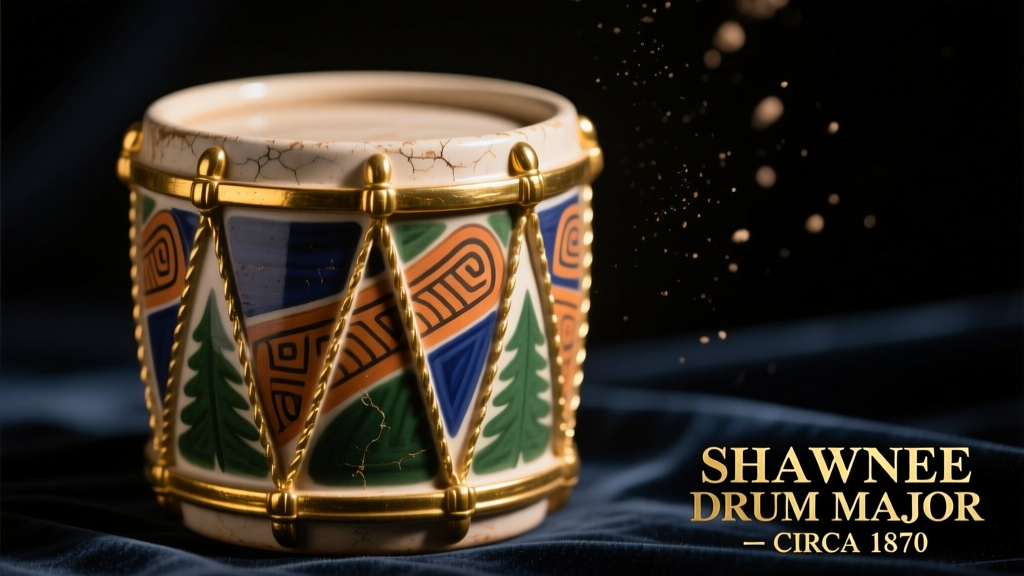
Shawnee Pottery Cookie Jar 'Drum Major' with Gold Trim: History, Identification, and Market Value