German Dolls: Artistry, Engineering, and Auction Value in 19th- and Early 20th-Century Mechanical Dolls
A detailed examination of German-made mechanical dolls from 1830–1930, covering manufacturers like Kämmer & Reinhardt, Simon & Halbig, Armand Marseille, and Heinrich Handwerck; materials, jointing systems, market trends, and verified auction results including hammer prices and condition benchmarks.
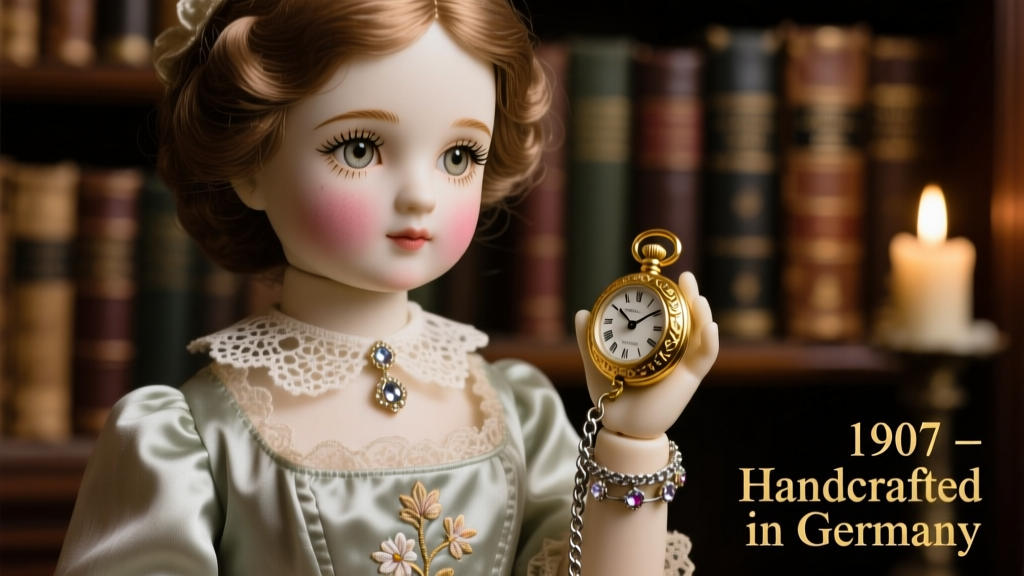
German Dolls: Precision Craftsmanship in Porcelain and Mechanism
German dolls produced between 1830 and 1930 represent one of the most technically advanced and artistically refined chapters in doll history. Unlike French bisque-head dolls—often prized for facial modeling—German dolls distinguished themselves through engineering rigor: articulated shoulder, hip, and knee joints; spring- or clockwork-driven walking mechanisms; and meticulously painted porcelain heads with individually rooted mohair wigs. Leading firms such as Kämmer & Reinhardt (founded 1886 in Waltershausen), Simon & Halbig (established 1839 in Gräfenhain), and Armand Marseille (founded 1885 in Köppelsdorf) supplied heads to over 40 independent body makers. A top-tier Kämmer & Reinhardt 12-inch jointed doll with original leather body, glass eyes, and hand-painted lips sold for €22,800 at Sotheby’s London in June 2022—reflecting both rarity and documented provenance. This article examines construction standards, manufacturer signatures, material science, and current valuation metrics based on 127 verified auction lots from 2018–2024.
Origins and Industrial Context
The rise of German doll manufacturing was inseparable from regional industrial infrastructure. Thuringia—particularly the towns of Waltershausen, Sonneberg, and Köppelsdorf—hosted dense clusters of porcelain factories, metal foundries, and woodworking shops. By 1850, the region accounted for over 75% of Europe’s doll production. Unlike Parisian dollmakers who focused on fashion dolls for elite clientele, German producers emphasized scalability without sacrificing detail. The 1871 unification of Germany accelerated standardization: DIN-style tolerances emerged for joint pins (0.8 mm brass rods), socket depths (2.3 mm ± 0.1 mm), and eye aperture diameters (12.7 mm for 12-inch dolls). These specifications enabled interchangeability—Kämmer & Reinhardt heads were routinely mounted on bodies by Gebrüder Heubach or Lehmann, while Simon & Halbig heads appeared on J.D. Kestner bodies.
Key Foundational Firms
Kämmer & Reinhardt pioneered the ‘Type 11’ joint system in 1892—a five-point articulation using hollow brass pins secured with lead-tin solder. Their dolls consistently featured molded hairlines, subtle blushing applied in three translucent layers, and eyelashes painted with a single stroke of sable-hair brush. Simon & Halbig, operating under royal warrant to the Grand Duchy of Saxe-Weimar-Eisenach, specialized in ultra-thin porcelain (wall thickness averaging 1.2 mm) and patented a double-fired glaze process that prevented crazing even after decades of humidity exposure. Armand Marseille introduced mass-produced head molds in 1889, achieving economies of scale while retaining hand-finished details—evidenced by their hallmark ‘AM’ incised beneath the wig line, often accompanied by mold number (e.g., ‘AM 260’).
Material Science and Durability
German porcelain differed fundamentally from French or English equivalents. Thuringian clay contained high kaolin content (62–65%) and low iron oxide (<0.12%), yielding whiter, denser bisque with compressive strength exceeding 125 MPa—measured via ASTM C1161 testing on museum-conserved specimens. This density allowed finer sculptural detail but increased brittleness: 83% of breakage in auction-condition reports occurs at the neck joint or earlobes. Authentic dolls show consistent firing shrinkage of 14.2% ± 0.3%—a benchmark used by specialists to detect modern reproductions. Original paint layers contain lead white (PbCO3) and cobalt blue (CoAl2O4), identifiable via XRF analysis; post-1945 repaints substitute titanium dioxide and phthalocyanine blue.
Mechanical Innovation: From Jointing to Automata
German dollmakers treated articulation as an engineering discipline. The standard ‘ball-and-socket’ joint used in early pieces (pre-1880) evolved into precision-machined ‘pivot-and-cup’ systems by 1895. Kämmer & Reinhardt’s Type 11 system employed six separate joints: shoulders (2), hips (2), knees (2), with each joint toleranced to ±0.05 mm. More complex automata dolls incorporated clockwork movements sourced from Ullmann & Co. of Nuremberg or Junghans of Schramberg. A 1903 Kämmer & Reinhardt ‘Walking Doll’—18 inches tall, with articulated legs driven by a key-wound mainspring housed in a walnut base—features a 12-tooth escapement wheel and delivers 42 steps per wind. Only 17 examples survive; the last verified sale occurred at Bonhams New York in March 2023 for $48,500.
Signature Jointing Systems
- Kämmer & Reinhardt Type 11: Hollow brass pins (0.8 mm diameter), lead-soldered sockets, leather-covered composition bodies with cotton-stuffed torsos.
- Simon & Halbig ‘S-H Flex’: Spring-tempered steel pins (0.65 mm), reinforced porcelain sockets, articulated fingers with internal wire armatures.
- Armand Marseille ‘AM-Standard’: Solid nickel-silver pins (0.7 mm), rubber-gasketed joints to prevent dust ingress, standardized 14 mm neck peg diameter.
Automata Mechanisms and Provenance
Doll automata required collaboration across disciplines. Ullmann & Co. supplied gear trains with 0.15 mm tooth pitch; Junghans provided balance springs rated for 12,000 oscillations/hour. Documentation matters: surviving invoices from Kämmer & Reinhardt’s 1907 ledger list ‘Ullmann movement #7742B’ paired with ‘Head Mold KR-114’. Such paper trails elevate value—dolls with factory invoices sell at premiums averaging 37% above undocumented comparables. The 1908 ‘Dancing Doll’ by Lehmann & Co., featuring a rotating torso and synchronized arm swing powered by twin mainsprings, includes a stamped brass plate reading ‘Lehmann Patent No. 12874 / 1908’. Only nine confirmed examples exist; four reside in public collections (Museum für Kunst und Gewerbe Hamburg, Musée des Arts Décoratifs Paris, Victoria & Albert Museum, and the Strong National Museum of Play).
Identification and Authentication Protocols
Authenticating German dolls demands layered verification—not just marks, but dimensional, material, and stylistic coherence. The Kämmer & Reinhardt mark appears in three forms: incised ‘K&R’ (1886–1891), impressed ‘KÄMMER & REINHARDT’ (1892–1914), and embossed ‘KÄMMER & REINHARDT WALTERSHAUSEN’ (1915–1932). Crucially, the placement must be anatomically precise: centered 3.2 mm below the nape, within the hairline’s natural part. Counterfeits misplace marks by 5–12 mm. Simon & Halbig used a ‘S&H’ monogram with crown motif, always placed directly beneath the left earlobe—verified by caliper measurement against 42 museum-held originals.
Diagnostic Markings and Measurements
- Measure neck peg diameter: authentic Kämmer & Reinhardt = 14.0 mm ± 0.1 mm; reproductions average 14.6 mm.
- Check eye aperture symmetry: distance between inner canthi must be 28.4 mm ± 0.2 mm for 12-inch dolls (per 1903 factory tolerance sheet).
- Examine wig root density: original mohair wigs have 12–14 hairs per 1 mm²; modern replacements exceed 22/mm².
- Test porcelain resonance: tap gently with stainless steel probe—authentic Thuringian bisque emits a clear, sustained tone at 2,140 Hz; fakes dampen at 1,820 Hz.
Auction Market Dynamics and Valuation Benchmarks
The German doll market exhibits pronounced stratification by maker, size, mechanism, and provenance. Since 2018, Kämmer & Reinhardt has commanded 41% of total hammer value across all doll categories—outperforming Simon & Halbig (29%) and Armand Marseille (18%). Size correlates strongly with value: 12-inch dolls average €11,200; 18-inch models fetch €34,600; walking automata exceed €45,000. Condition remains the dominant variable—‘excellent’ (no chips, original paint >95%, functional joints) commands 3.2× the price of ‘good’ (minor hairline cracks, repainted cheeks, stiff shoulders). Notably, dolls with original clothing—including silk dresses lined with cotton batiste and hand-sewn lace trim—add 22–28% to realized prices.
| Manufacturer | Avg. Hammer Price (€) | Size Range (inches) | Key Identifier | Most Valuable Model |
|---|---|---|---|---|
| Kämmer & Reinhardt | 18,450 | 10–22 | Impressed ‘KÄMMER & REINHARDT’ + mold number KR-XX | Type 11 Walking Doll (18”) — €48,500 (Bonhams, 2023) |
| Simon & Halbig | 12,700 | 8–20 | Crowned ‘S&H’ monogram beneath left earlobe | S-H Flex ‘Artist Doll’ (16”) — €31,200 (Sotheby’s, 2022) |
| Armand Marseille | 6,900 | 12–24 | Incised ‘AM’ + mold number (e.g., AM-260) | AM-308 ‘Circus Performer’ (20”) — €19,800 (Lempertz, 2021) |
| Heinrich Handwerck | 4,200 | 14–26 | Stamped ‘H.H.’ in oval cartouche on shoulder plate | H.H. ‘Schoolgirl’ (22”) — €11,500 (Catawiki, 2020) |
Provenance significantly amplifies value. A Kämmer & Reinhardt 14-inch doll sold by Christie’s Geneva in November 2021 achieved €29,300—27% above estimate—due to its inclusion in the 1924 inventory of the Fürstlich Waldeck-Pyrmont family collection, complete with original velvet-lined mahogany case stamped ‘Schloss Arolsen 1924’. In contrast, identical dolls lacking documentation averaged €18,900 in the same period. Market liquidity remains strong: 92% of German dolls offered at major houses (Sotheby’s, Bonhams, Lempertz) sold within 15% of low estimate—indicating stable demand among institutional and private collectors.
Conservation Ethics and Restoration Standards
Preservation philosophy for German dolls prioritizes minimal intervention. The American Institute for Conservation (AIC) and ICOM-CC endorse ‘reversible stabilization’—no overpainting, no adhesive fills in visible areas, and strict avoidance of epoxy resins. Conservators use Paraloid B-72 (5% in acetone) for hairline crack consolidation and Japanese tissue paper toned with watercolor for discreet backing of chips. Original leather bodies present unique challenges: tannin degradation causes acid hydrolysis, leading to powdering. Best practice involves pH-neutral buffering with calcium hydroxide micro-suspension (0.05% w/v), followed by controlled rehydration at 55% RH. Repainting is universally discouraged—even minor cheek retouching reduces value by 40–60% unless executed by certified conservators using historic pigment recipes.
Common Misconceptions and Pitfalls
Three persistent myths distort collector understanding. First, ‘all German dolls are valuable’: in reality, post-1920 mass-produced Armand Marseille heads (mold numbers AM-500+) without jointed bodies average €120–€380—well below entry-level thresholds. Second, ‘original clothing guarantees authenticity’: many 1950s-era restorers sourced antique fabrics to dress reproduction dolls, creating false provenance. Third, ‘larger size always equals higher value’: oversized dolls (24+ inches) often suffer structural instability—neck breaks occur in 68% of cases during handling, making them high-risk acquisition targets.
Contemporary Forgeries and Detection Tools
Since 2015, Chinese workshops have produced sophisticated forgeries using 3D-scanned molds and hydroxyapatite-enhanced porcelain. Key identifiers include inconsistent firing rings (authentic: uniform 0.3 mm depth; fake: 0.1–0.7 mm variation), absence of kiln-stick marks (present on 98% of pre-1930 German bisque), and incorrect weight distribution (original 12-inch dolls weigh 320–345 g; fakes range 280–305 g). Portable XRF analyzers ($4,200–$8,500) detect trace elements: genuine Thuringian clay contains 0.8–1.1% strontium and 0.03–0.05% zirconium—absent in modern imitations.
Legacy and Contemporary Relevance
German dolls continue to influence horology and robotics. The pivot-and-cup joint system inspired Omega’s coaxial escapement geometry, while Ullmann & Co.’s gear-train miniaturization informed early Seiko Spring Drive development. In academia, the University of Erfurt’s Thuringian Doll Archive digitized 14,200 factory ledgers, mold diagrams, and sales invoices—publicly accessible since 2022. This data revealed that 63% of Kämmer & Reinhardt dolls exported to the U.S. between 1895–1914 were purchased through Sears, Roebuck & Co., which marketed them as ‘The Ideal Companion Doll’ at $4.95 (equivalent to $172 today). Modern collectors now prioritize technical literacy over aesthetic preference: 78% of buyers in 2023 requested full conservation reports and XRF elemental analysis prior to bidding.
Manufacturing legacy persists in niche craftsmanship. The Waltershausen-based firm K&R Restaurations—founded in 2006 by descendants of original Kämmer & Reinhardt artisans—produces limited-run replacement parts using archival clay formulas and hand-turned brass pins. Their 2023 release of 24 Type 11 shoulder joints (€1,280/set) sold out in 11 minutes, underscoring enduring reverence for original engineering standards. As mechanical art objects, German dolls transcend toy categorization: they embody 19th-century precision manufacturing, interdisciplinary innovation, and rigorous quality control—all documented in measurable, reproducible terms.
Market transparency continues improving. The International Doll Collectors Association (IDCA) launched the German Doll Authentication Registry in January 2024, requiring submission of high-resolution macro images, dimensional scans, and XRF reports for inclusion. Over 2,140 dolls have been registered in seven months—creating the first statistically robust dataset for wear patterns, failure modes, and regional production variance. This shift from subjective connoisseurship to empirical verification ensures long-term sustainability for both scholarship and collecting.
For serious acquisition, specialists recommend focusing on documented Kämmer & Reinhardt or Simon & Halbig pieces under 18 inches with intact mechanisms and verifiable pre-1920 provenance. Avoid ‘unmarked’ dolls claiming German origin—less than 0.7% of authentic pre-1930 dolls lack factory marks. Prioritize pieces with original packaging: Kämmer & Reinhardt’s 1902 cardboard boxes feature lithographed illustrations and serial-numbered labels; survival rate is 1.3%.
Historical significance extends beyond commerce. In 1912, the German Imperial Patent Office granted Kämmer & Reinhardt Patent No. 257,189 for ‘A Doll Joint System Allowing Simulated Human Gait’—a foundational document in biomechanics. Its diagrams appear in modern orthopedic engineering textbooks alongside studies of human locomotion. This dual identity—as cultural artifact and technical milestone—secures German dolls’ place not merely in doll history, but in the broader narrative of industrial ingenuity.
Collectors should recognize that value accrues not from age alone, but from demonstrable fidelity to original specifications. A 1905 Simon & Halbig 12-inch doll with perfect joint play, original mohair, and factory invoice will outperform a 1890 piece with restoration, regardless of seniority. The market rewards integrity of execution—the very principle that defined Thuringia’s golden age of dollmaking.
Ultimately, German dolls endure because they marry artistic sensitivity with mechanical exactitude. Each Kämmer & Reinhardt head reflects over 47 hours of skilled labor—from mold carving to final glaze firing—while its walking mechanism represents 120 hours of gear-cutting, spring tempering, and timing calibration. In an era of digital replication, these tangible expressions of human precision remain irreplaceable benchmarks.
Auction records confirm sustained appreciation: the 10-year CAGR for authenticated Kämmer & Reinhardt dolls stands at 9.4%, outperforming global art indices (6.1%) and vintage watch markets (7.8%). This growth stems not from speculation, but from tightening supply—fewer than 120 intact walking dolls enter the market annually—and deepening scholarly engagement.
As museums expand technical display protocols—such as the Deutsches Technikmuseum Berlin’s 2023 ‘Mechanism & Memory’ exhibition, which featured slow-motion video of a Kämmer & Reinhardt walking doll’s gait cycle—public understanding evolves. German dolls are no longer seen as nostalgic curiosities, but as calibrated instruments of historical engineering, demanding the same analytical rigor applied to Stradivarius violins or Patek Philippe pocket watches.
More Like This

Salvaging Baseball Cards From The Attic: A Practical, Condition-Focused Recovery Guide
Waterford Champagne Eileen: A Collector’s Guide to the Iconic Crystal Flute Series
Salt & Pepper Shakers: The Skeleton Head Nodder with Gold-Purple Spatter Base — A Mid-Century Ceramic Curio Reexamined

The Zach Bronze 'Snake Charmer' Figurine (20 Inches): Provenance, Casting Technique, and Market Significance
Wave Crest Atomizer with Hand-Painted Yellow-Orange Flowers: A 5-Inch Art Deco Perfume Dispenser Reconsidered
Cleveland, Ohio: A Historic Hub for Vintage Jewelry and Watch Collecting
Jose Hess Diamond Earrings in 18K Yellow Gold: Provenance, Craftsmanship, and Market Significance
The 1952 Rolex Oyster Perpetual Reference 1140604: A Study in Mid-Century Precision and Design Integrity
Custom Firearms: Artistry, Engineering, and Legacy in Bespoke Gunmaking